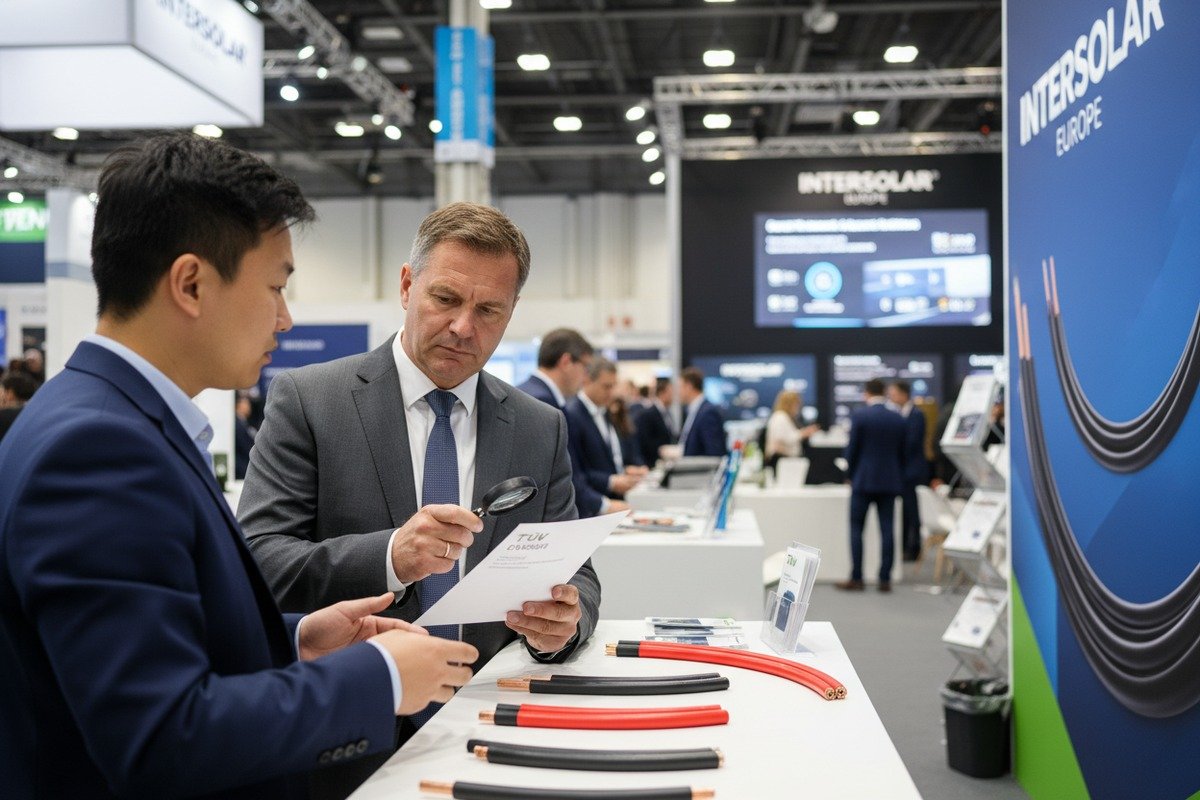

Every year, we see buyers lose tens of thousands of dollars on ADSS cable orders that go wrong — not because the cable itself was flawed at the design stage, but because the trade terms and payment structure left them exposed.
To reduce risk when sourcing ADSS optical cables from China, buyers should use FOB or CIF Incoterms for shipping control, structure payments with Letters of Credit or milestone-based T/T splits, mandate pre-shipment inspections, and embed penalty clauses for delays and material downgrading in their contracts.
This guide breaks down the specific trade terms, payment methods, and negotiation strategies that protect your investment FOB (Free On Board) 1. Whether you are a telecom contractor, a power grid EPC firm, or a regional distributor, you will find practical steps below.
Which Incoterms should I use to ensure my ADSS cables are delivered safely to my project site?
Shipping 20 km of ADSS cable across an ocean is not the same as ordering consumer electronics. Our production team has watched pallets of perfectly manufactured cable get damaged because the wrong Incoterm left nobody accountable during transit.
For ADSS cable imports, FOB (Free On Board) gives buyers the best balance of control and risk. CIF works well with trusted suppliers. Avoid EXW unless you have a local freight agent in China, as export logistics there are complex and error-prone for overseas buyers.

Understanding the Four Key Incoterms
Incoterms 2 are standardized trade rules published by the International Chamber of Commerce 3. They define who pays for what, who bears risk at each stage, and where responsibility transfers from seller to buyer. For bulky, high-value ADSS cables on wooden reels, choosing the right Incoterm is critical.
FOB (Free On Board) is the most popular choice among our overseas clients. Under FOB, we handle everything up to loading the cable drums onto the vessel at the Chinese port. Once the goods cross the ship's rail, risk transfers to you. This means you pick your own freight forwarder, negotiate ocean rates, and control the routing. For first-time buyers, FOB also allows you to arrange a pre-shipment inspection at the port before the container is sealed. pre-shipment inspections 4
CIF (Cost, Insurance, Freight) shifts more responsibility to the seller. We arrange and pay for freight and marine insurance to your destination port. This sounds convenient, but there is a catch: if a dispute arises, the insurance policy is in our name, and claims can get complicated. Use CIF only when you have an established relationship with your supplier.
EXW (Ex Works) means the buyer handles everything from the factory gate. For international buyers unfamiliar with Chinese customs brokers, export documentation, and inland trucking, this is a minefield. We generally advise against EXW unless you have a trusted agent on the ground in China.
FCA (Free Carrier) is a flexible middle option. The seller delivers goods to a named carrier or location. It works well for air freight or multimodal shipments, and it lets you insert a pre-shipment inspection checkpoint before the cargo leaves China.
Incoterms Comparison Table for ADSS Cable Sourcing
| Incoterm | Buyer Risk Level | Seller Responsibility | Best For |
|---|---|---|---|
| FOB | Medium | Production, inland transport, export clearance, loading | First-time buyers who want shipping control |
| CIF | Low-Medium | All of FOB + ocean freight + insurance | Repeat buyers with trusted suppliers |
| FCA | Medium | Production, delivery to named carrier | Air freight or multimodal shipments |
| EXW | High | Production only; buyer handles everything else | Buyers with a local China agent |
| DDP | Lowest | Full door-to-door including import duties | Small trial orders or sample shipments |
Why FOB Is the Sweet Spot for ADSS Projects
ADSS cables are shipped on heavy wooden or steel reels, sometimes weighing over 500 kg each. The reels must be secured properly inside containers to prevent shifting during ocean transit. Under FOB, you choose the carrier and can specify loading requirements. You also control the insurance policy, which means filing a claim is straightforward if damage occurs.
One practical tip from our export team: always request photos of the container loading process. We provide these as standard practice, but not every factory does. Under FOB, you have the contractual right to oversee or delegate oversight of this step.
For large backbone projects requiring 288-fiber or 864-fiber ADSS cables, the shipment value can easily exceed $100,000. At that scale, every percentage point of risk matters. FOB plus a third-party loading inspection is the safest combination.
How can I structure my payments to protect myself from material downgrading or quality issues?
Material downgrading is one of the biggest fears we hear from procurement managers. A cable that looks identical on the outside might use inferior aramid yarn 5, thinner PE jacketing, or non-compliant G.652D fiber 6 inside. Our quality team has seen competitor cables fail tensile tests because corners were cut on materials buyers could not visually verify.
Structure your payments in milestones tied to verifiable quality checkpoints. A common safe structure is 30% deposit on order confirmation, 30% after passing a pre-shipment third-party inspection, and 40% against shipping documents or upon arrival testing. Never pay 100% upfront.

The Problem With Lump-Sum Payments
When you pay everything before shipment, you lose all leverage. If the cable arrives with attenuation readings above spec or a jacket thickness below the agreed 2.0 mm, you have no financial tool to compel the supplier to act. Chargebacks are nearly impossible with wire transfers. Disputes drag on for months.
Material downgrading often happens silently. The factory substitutes a cheaper aramid yarn brand, reduces the number of FRP strength members, or uses recycled PE for the outer sheath. These cuts save the factory 5–10% on production costs but can cause cable sag, premature jacket cracking, or fiber breakage under wind load. The buyer discovers the problem months after installation — long after the money is gone.
Milestone Payment Structure
Here is a payment milestone structure we recommend to our clients and use regularly in our own contracts:
| Milestone | Payment % | Trigger Event | Buyer Protection |
|---|---|---|---|
| Order Confirmation | 20–30% | Signed contract + proforma invoice | Locks in pricing and production slot |
| Raw Material Verification | 0% (inspection only) | Supplier provides fiber and aramid yarn certificates | Confirms genuine materials before production starts |
| Pre-Shipment Inspection | 30% | Independent inspector (SGS/Bureau Veritas) passes cable | Verifies attenuation, jacket thickness, tensile strength |
| Against Shipping Documents | 30–40% | Bill of Lading 7 + packing list + test report | Ensures goods are actually shipped |
| Post-Arrival Testing | 10% (optional holdback) | Buyer's lab confirms specs on arrival | Final quality gate for high-value orders |
Tying Payment to Test Results
For ADSS cables, the critical specs to verify before releasing payment include:
- Attenuation: ≤0.36 dB/km at 1310 nm and ≤0.22 dB/km at 1550 nm for G.652D fiber.
- Tensile strength: Must meet the rated span and sag requirements per the design wind speed.
- Jacket thickness: Minimum 2.0 mm for standard PE; confirm LSZH if specified.
- Fiber count and color coding: Match the purchase order exactly.
At our factory, we provide individual OTDR test reports for every reel. But we always encourage buyers to have an independent lab verify at least 10% of reels on arrival. This is not about distrust — it is about professional due diligence.
What If the Supplier Refuses Milestone Payments?
A reputable factory will not resist reasonable milestones. If a supplier insists on 50% or more upfront with the balance before shipment, treat that as a red flag. Legitimate manufacturers understand that milestone payments protect both parties. We have found that the negotiation process itself reveals a lot about a supplier's reliability.
What are the safest payment methods I can use when sourcing high-value fiber optic cables from China?
Over the past 30 years, our finance team has processed orders through nearly every payment method available in international trade. Some protect both sides. Others leave one party dangerously exposed. The method you choose can be the difference between a successful project and a costly legal battle.
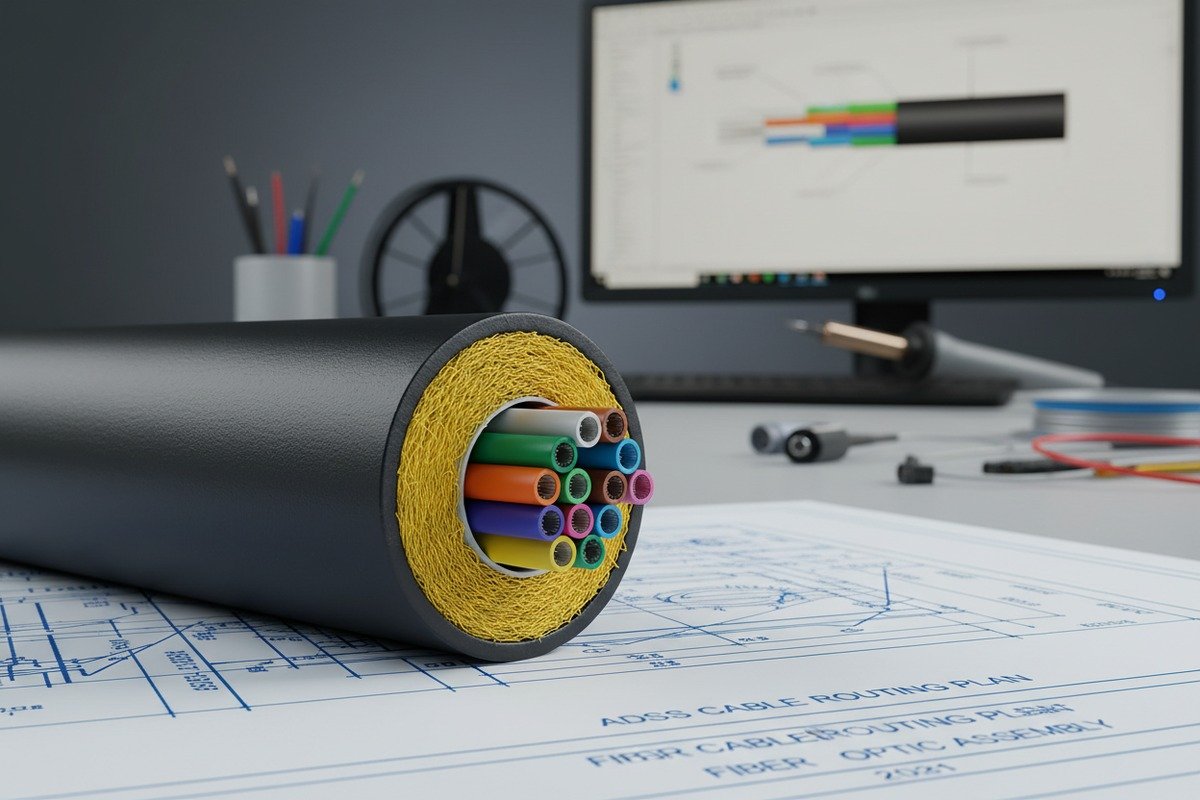
Letters of Credit (L/C) are the safest payment method for high-value ADSS cable orders, offering bank-guaranteed protection for both buyer and seller. For mid-range orders, Alibaba Trade Assurance or milestone T/T with escrow provide reasonable security. Avoid Western Union or MoneyGram for any amount above sample value.
Letters of Credit: The Gold Standard
A Letter of Credit is a bank instrument. Your bank guarantees payment to the supplier's bank, but only when the supplier presents compliant documents — typically the Bill of Lading, commercial invoice, packing list, certificate of origin, and quality inspection report. If the documents do not match the L/C terms, the bank rejects them, and no money moves.
For ADSS cable orders above $50,000, we strongly recommend L/C. The ICC estimates that L/C disputes are resolved successfully over 95% of the time. Yes, there are bank fees (typically 1–3% of order value) and the process takes longer. But the protection is unmatched.
T/T With Milestones: Practical but Riskier
Telegraphic Transfer 8 (wire transfer) is the most common payment method in China trade. It is fast and cheap. The risk depends entirely on how you structure it. A 30/70 split — 30% deposit and 70% against copies of shipping documents — is standard. But here is the danger: if the supplier ships substandard goods, you have already paid 30%, and stopping the remaining 70% requires you to act fast before documents clear.
To reduce T/T risk, always verify that the bank account belongs to the registered company, not a personal account. Cross-check the company name on the business license with the account name. Any mismatch is an immediate red flag.
Payment Methods Ranked by Risk
| Payment Method | Buyer Risk Level | Best For | Key Limitation |
|---|---|---|---|
| Irrevocable L/C | Lowest | Orders >$50K, new suppliers | Higher fees (1–3%), slower processing |
| Alibaba Trade Assurance | Low | Orders $5K–$50K, platform suppliers | Limited to Alibaba transactions |
| T/T with milestones (30/30/40) | Medium | Established suppliers, repeat orders | Requires trust; no bank guarantee |
| T/T (50/50 or 30/70) | Medium-High | Known suppliers with track record | Deposit at risk if supplier defaults |
| PayPal | Medium | Sample orders <$5K | High fees, limited for bulk |
| Western Union / MoneyGram | Very High | Never for production orders | No recourse; favored by scammers |
Trade Assurance and Escrow
Alibaba Trade Assurance holds your payment and releases it only after you confirm delivery and quality. It also provides dispute mediation. For small-to-medium orders from platform suppliers, this is a practical option. However, it has limitations — coverage caps may not fully protect very large orders, and the dispute process can be slow.
Some buyers are now exploring blockchain-backed smart contracts that automatically release payment when verified milestones are met, such as a factory gate scan or an uploaded inspection report. This technology is still emerging, but it represents the future of secure international payments.
A Note on Sinosure Export Credit Insurance
For bulk ADSS orders destined for infrastructure projects, consider pairing your L/C with Sinosure credit insurance. Sinosure Export Credit Insurance 9 Sinosure is China's official export credit agency. When a supplier has Sinosure coverage, it signals financial stability and government vetting. It adds another layer of protection for both parties.
How do I negotiate trade terms that guarantee my lead times and prevent shipping delays?
Idle construction crews waiting for cable that never arrives on time — that is one of the most expensive problems in telecom infrastructure. When we schedule production runs at our 230,000 m² facility, we know that even a one-week delay can cascade into missed project deadlines and financial penalties for our clients.
To guarantee lead times, negotiate contracts with specific production and shipping deadlines, penalty clauses for late delivery (typically 0.5–1% per week), force majeure definitions, and a right to cancel if delays exceed an agreed threshold. Pair these terms with FOB or CIF to maintain visibility over the shipping timeline.

Why Delays Happen and How to Prevent Them
ADSS cable production involves multiple stages: fiber drawing, loose tube stranding, aramid yarn laying, jacketing, and testing. A delay at any stage pushes the entire timeline. Common causes include raw material shortages (especially specialty fiber like G.657A2), equipment maintenance, domestic order prioritization, and port congestion.
Here is what we tell every buyer during contract negotiation: put the delivery date in writing with consequences attached. Verbal promises mean nothing in international trade.
Key Contract Clauses for Lead Time Protection
Liquidated damages clause: Specify a penalty for each week of delay, typically 0.5% to 1% of the total order value, capped at 5–10%. This keeps the factory motivated without making the penalty so severe that they refuse to sign.
Milestone reporting: Require the factory to send weekly production updates with photos. At our factory, we provide this as standard service — images of fiber loading, stranding progress, jacket extrusion, and finished reels on the testing bench.
Right to cancel: If the delay exceeds a defined period (usually 30–45 days beyond the agreed delivery date), you should have the contractual right to cancel the order and receive a full refund of deposits paid.
Force majeure: Define it narrowly. Vague force majeure clauses let suppliers excuse almost any delay. Limit it to genuinely unforeseeable events — natural disasters, government shutdowns, port closures — not routine issues like raw material price increases or labor shortages.
Shipping Delay Mitigation Strategies
Once the cable leaves the factory, delays can still occur at the port or during ocean transit. Here are practical steps:
- Book vessel space early. Under FOB, coordinate with your freight forwarder at least two weeks before the factory's estimated completion date.
- Avoid peak shipping seasons. Chinese New Year (January–February) and the pre-holiday rush in Q4 cause massive congestion. Plan production schedules to avoid these windows.
- Use container GPS tracking. For high-value ADSS shipments, real-time tracking lets you monitor transit and react quickly to port diversions or customs holds.
- Insure with an All-Risk marine policy. This covers not just physical damage but also delays caused by vessel breakdown, piracy, or port strikes.
Typical Lead Times for ADSS Cable Orders
Understanding realistic lead times helps you set expectations and spot red flags. If a supplier promises 7 days for a custom 288-fiber ADSS cable, they are either lying or pulling from questionable leftover stock.
| Order Type | Typical Lead Time | Notes |
|---|---|---|
| Stock ADSS (12–48 fiber, standard span) | 15–20 days | From confirmed order to FOB loading |
| Custom ADSS (96–144 fiber, specific span/jacket) | 25–35 days | Includes fiber procurement and testing |
| High-capacity ADSS (288–864 fiber) | 35–50 days | Complex stranding; extended QC testing |
| Urgent/expedited orders | 10–15 days | Premium pricing; limited to common specs |
At Lonsoncable, we maintain buffer stock of common fiber types (G.652D, G.657A1) specifically to shorten lead times for our international clients. But for unusual specifications or very high fiber counts, honest communication about realistic timelines is more valuable than false promises.
The Negotiation Itself
Approach lead time negotiation the same way you approach pricing: with data. Know the standard production cycle for your cable spec. Reference competing quotes and timelines. And always confirm in writing — email confirmations, signed addenda, or contract appendices. A supplier who resists putting delivery dates in the contract is signaling that they do not intend to meet them.
Conclusion
Smart trade terms and secure payment methods are your first line of defense when sourcing ADSS cables from China. Choose FOB, use L/C or milestone payments, demand inspections, and put every commitment in writing.
Footnotes
1. Explanation of FOB Incoterms from an authoritative source. ↩︎
2. Official source defining international trade terms. ↩︎
3. Official website of the global business organization. ↩︎
4. Overview of pre-shipment inspections in supply chain management. ↩︎
5. Details on aramid yarn's role in cable reinforcement. ↩︎
6. ITU-T recommendation for single-mode optical fiber characteristics. ↩︎
7. Comprehensive overview of the Bill of Lading document. ↩︎
8. Definition and history of telegraphic transfers in finance. ↩︎
9. Replaced with an authoritative source from the Berne Union, an international association of export credit agencies, detailing Sinosure. ↩︎
10. Legal definition and explanation of Letters of Credit. ↩︎