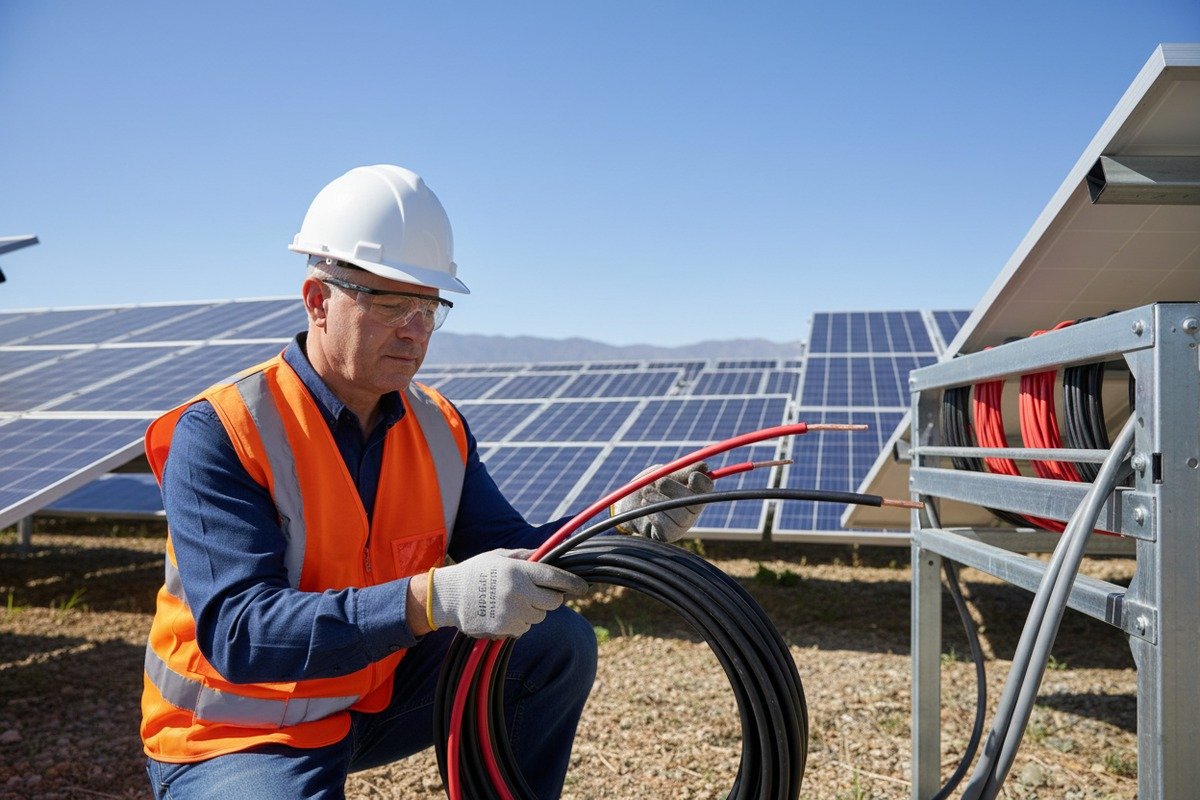

Every year, our production line ships thousands of kilometers of ADSS cable 1 to US utilities and contractors. The most common problem we see? Buyers pick the wrong specs for their span lengths, voltage environments, or NESC loading zones 2 — and the cable fails within two years.
When buying ADSS fiber optic cables for US aerial lines, the key technical specifications include tensile strength matched to your span length and NESC loading zone, jacket type (standard PE or track-resistant AT) based on voltage exposure, fiber count and type for capacity needs, and verified compliance with mechanical, optical, and environmental performance standards.
This guide breaks down each critical specification so you can make an informed purchasing decision. We will cover tensile strength 3 calculations, jacket material selection, NESC compliance verification, and how to request custom cross-section diagrams before placing your order. Let's get into the details.
How do I calculate the required tensile strength and aramid yarn density for my specific span lengths?
We have helped hundreds of US contractors size their ADSS cables correctly. The single biggest mistake we see is underestimating the mechanical load, especially in NESC Heavy loading zones across northern states.
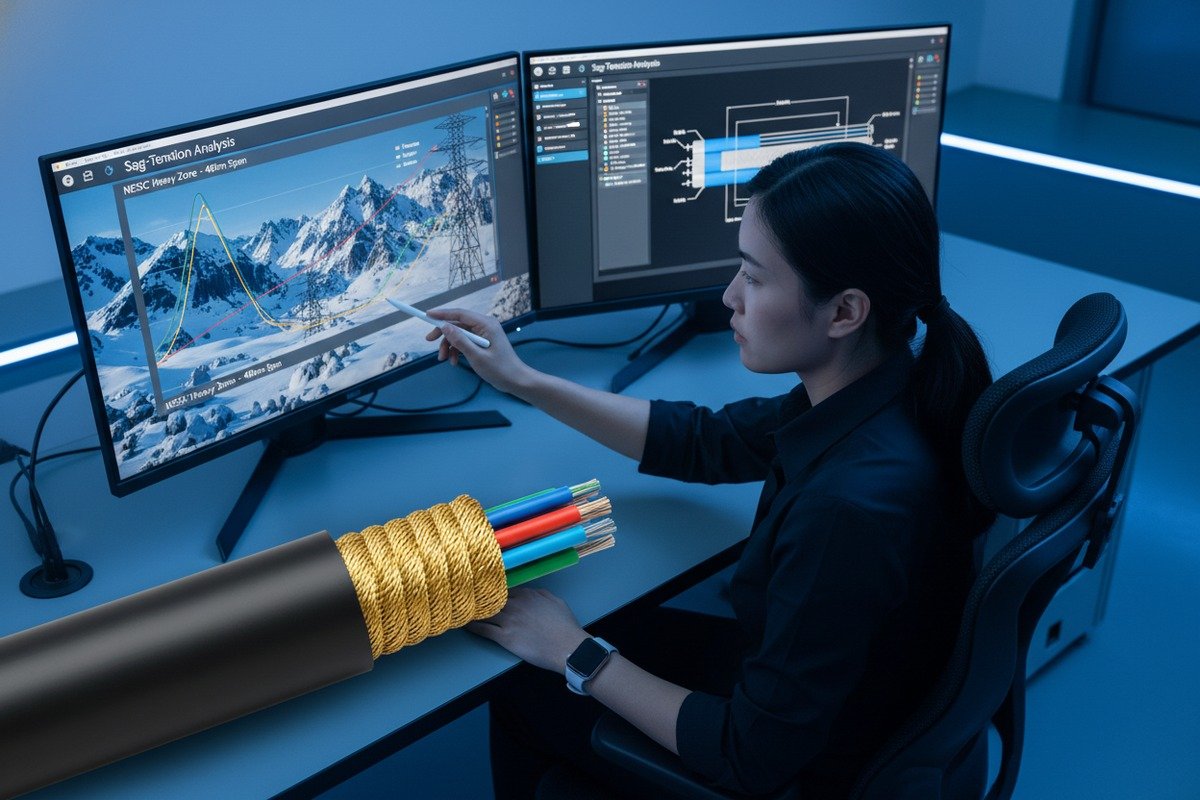
To calculate required tensile strength, first identify your NESC loading zone (light, medium, or heavy), then determine your span length and expected ice/wind loads. Use sag-tension software to find the Maximum Allowable Tension (MAT) that keeps fiber strain below 0.1%. Aramid yarn density increases proportionally with span length and load requirements.
Understanding NESC Loading Zones
The National Electrical Safety Code 4 divides the US into three loading zones: Light, Medium, and Heavy. Each zone defines specific ice thickness, wind pressure, and temperature assumptions that directly affect how much tension your ADSS cable must handle. A cable designed for a Light zone in southern Texas will not survive a Heavy zone winter in Minnesota.
Here is a quick reference:
| NESC Loading Zone | Ice Thickness | Wind Pressure | Temperature | Typical US Regions |
|---|---|---|---|---|
| Heavy | 12.5 mm (0.5 in) | 190 Pa (4 psf) | -18°C (0°F) | Northern states (MN, WI, MI, NY) |
| Medium | 6.4 mm (0.25 in) | 190 Pa (4 psf) | -9°C (15°F) | Mid-Atlantic, Midwest |
| Light | 0 mm | 430 Pa (9 psf) | -1°C (30°F) | Southern states (TX, FL, CA) |
Matching Span Length to Cable Design
Span length is the distance between two consecutive poles or towers. It is the single most important factor for selecting your cable's mechanical design. Short spans under 150 meters can use central tube designs with lower tensile ratings. Long spans from 150 to 1000 meters demand stranded or layered twist designs with significantly more aramid yarn reinforcement.
Our engineering team generally recommends the following:
| Span Length | Recommended Structure | Typical Tensile Range | Aramid Yarn Density | Best For |
|---|---|---|---|---|
| 50–150 m | Central tube | 1,000–3,000 N | Standard | Urban distribution, short drops |
| 150–400 m | Stranded loose tube | 3,000–8,000 N | Medium-high | Suburban transmission, utility backbone |
| 400–700 m | Layered twist, double jacket | 8,000–15,000 N | High | Rural long spans, river crossings |
| 700–1,000 m+ | Heavy-duty layered twist | 15,000–20,000 N | Maximum | Mountain terrain, extreme spans |
The MAT Calculation Process
Maximum Allowable Tension (MAT) 5 is the highest tension the cable will experience under full NESC weather loading. You must keep fiber strain below 0.05%–0.1% at MAT to prevent attenuation increases. Here is the basic process:
- Input your span length, pole heights, and elevation difference into sag-tension software (such as PLS-CADD or Alcoa SAG10).
- Apply NESC loading conditions for your zone.
- The software outputs the required MAT and everyday tension.
- Select a cable whose rated MAT exceeds your calculated value by at least 10–15%.
When we design cables for US customers, we run these calculations in-house and share the sag-tension charts before production. This avoids the common problem of a cable that looks right on paper but sags excessively in the first ice storm. Aramid yarn — specifically Kevlar from DuPont 6 or Twaron from Teijin — provides the dielectric tensile strength. More aramid means higher tensile rating, but also more weight and cost. The right balance depends on your specific span and loading zone.
For aeolian vibration on spans exceeding 300 meters, especially in open terrain with sustained winds, consider specifying Stockbridge dampers or spiral vibration dampeners at attachment points. This prevents fatigue damage over the cable's 30-year design life.
Should I specify a tracking-resistant jacket or a standard PE sheath for my aerial installation?
One question our US sales team gets on nearly every project quote is about the jacket material. The wrong choice here can cause catastrophic cable failure within months, not years.
If your ADSS cable will be installed near power lines carrying 110 kV or higher, you must specify a track-resistant (AT) jacket. Standard PE sheaths are only suitable for installations below 110 kV or far from high electric field zones. The AT jacket prevents dry-band arcing and electrical tracking that erodes standard polyethylene.

What Is Electrical Tracking and Why Does It Destroy PE Jackets?
When ADSS cable runs near high-voltage power lines, it sits inside a space potential — an electric field created by the conductors around it. Rain, pollution, and humidity form a thin conductive film on the cable surface. As parts of this film dry unevenly, dry bands form. Voltage arcs across these dry bands, generating intense localized heat. On a standard PE jacket, this arcing carbonizes the surface, creating conductive carbon tracks. Over time, these tracks deepen until the jacket burns through entirely. We have seen PE-jacketed cables fail within six months on 230 kV lines.
Track-resistant (AT) jackets use specially formulated polyethylene compounds with additives — often alumina trihydrate (ATH) 7 — that release water vapor when heated. This extinguishes the arc before it can carbonize the surface. The result is dramatically longer service life near high-voltage lines.
When to Use Each Jacket Type
The decision is straightforward once you know the voltage environment:
- Standard PE sheath: Use for installations below 110 kV, or where the cable is positioned far from the phase conductors (low space potential). Also suitable for distribution lines where the electric field is minimal.
- Single AT jacket: Use for installations near 110 kV to 230 kV lines. Provides adequate tracking resistance for moderate electric field exposure.
- Double AT jacket: Use for installations on or near 345 kV to 500 kV transmission structures. The double layer provides maximum protection against severe dry-band arcing 8.
The cost difference between PE and AT is real — typically 15–30% more per kilometer for AT. But the cost of replacing a failed cable on a live transmission line is orders of magnitude higher. In our experience exporting to the US market, nearly every utility-grade project above 110 kV now specifies AT as a minimum requirement.
Single Jacket vs. Double Jacket
Beyond the AT vs. PE decision, you need to decide on single or double jacket construction. A double jacket adds an inner sheath layer — usually PE — beneath the outer AT jacket. This provides an extra barrier against moisture ingress and adds mechanical protection. For long spans exceeding 400 meters, or any installation above 230 kV, we strongly recommend double jacket construction.
The trade-off is weight. A double-jacket cable weighs 10–20% more per kilometer, which increases pole loading. This matters for older wooden poles that may already be near their load limits. You should always run a pole loading analysis before specifying double-jacket cables on existing infrastructure.
UV resistance is another factor buyers overlook. Both PE and AT jackets should include carbon black or UV stabilizers. In southern US states with intense solar exposure, an unstabilized jacket degrades noticeably within 5–7 years. Our standard formulation includes 2.5% carbon black for UV protection, which extends outdoor life to 25+ years.
How can I ensure my ADSS cable meets NESC loading standards and includes authentic factory test reports?
This is where many procurement managers — especially those sourcing from overseas — face their biggest frustration. Our quality assurance team understands this concern deeply because we have invested heavily in third-party testing specifically to address it.
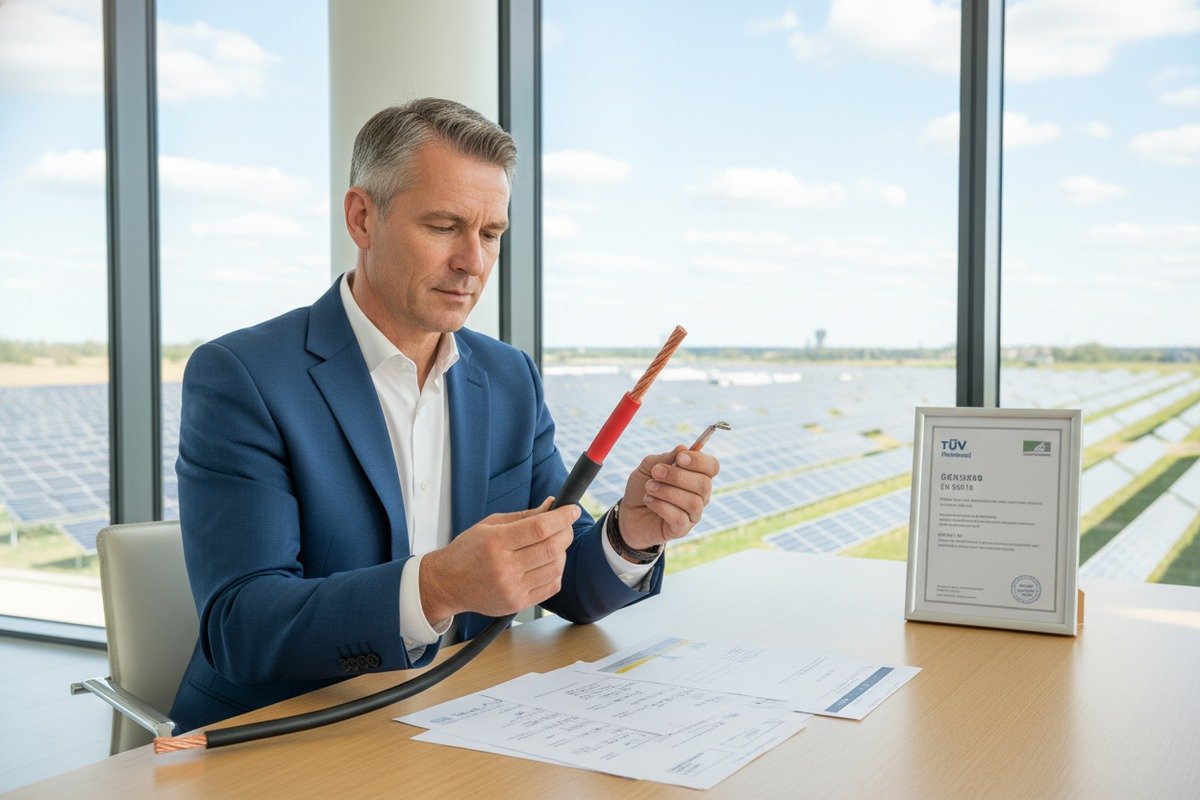
To ensure NESC compliance, require your supplier to provide sag-tension calculations specific to your loading zone, certified OTDR test reports for every reel, and third-party test certificates from recognized labs (such as UL, CSA, or SGS). Cross-reference the mechanical test data — tensile strength, crush resistance, and temperature cycling — against the NESC Rule 261 requirements for your project.

What NESC Standards Apply to ADSS Cable?
NESC Rule 261 governs the installation of communication cables on utility poles. It specifies minimum ground clearances, pole loading requirements, and separation distances from power conductors. Your ADSS cable must meet the mechanical performance needed to maintain these clearances under worst-case loading conditions throughout its service life.
Key NESC requirements for ADSS cable include:
- Sag at maximum loading must not violate minimum ground clearance.
- The cable must withstand the rated ice and wind loads without exceeding its MAT.
- Long-term creep must be accounted for in sag calculations to ensure clearance over 30+ years.
- The cable must not impose excessive loads on the supporting poles.
What Factory Test Reports Should You Demand?
When we ship ADSS cable to US projects, our standard documentation package includes several categories of test data. Here is what you should expect — and what you should refuse to accept a cable without:
| Test Category | Specific Tests | What It Proves | Document Type |
|---|---|---|---|
| Optical | OTDR trace per fiber 9, attenuation at 1310/1550 nm, PMD | Signal quality, fiber integrity | Per-reel OTDR report with trace images |
| Mechanical | Tensile strength, elongation, crush resistance, impact | Structural integrity under load | Type test report + routine test data |
| Environmental | Temperature cycling (-40°C to +70°C), water penetration, UV aging | Long-term outdoor durability | Type test certificate from third-party lab |
| Electrical | Tracking resistance (for AT jacket), dry-band arc resistance | High-voltage environment safety | IEC 60587 10 or equivalent test certificate |
Red Flags in Test Reports
We have seen competitors issue test reports that look professional but contain fabricated data. Here are the red flags our US customers have learned to watch for:
- Generic reports not tied to specific reel numbers. Every OTDR report should reference a specific reel serial number, production date, and cable length.
- Missing fiber-level data. A legitimate report shows attenuation for each individual fiber, not just an average. If you ordered a 96-fiber cable, you should see 96 attenuation values.
- No third-party certification marks. Look for UL, CSA, CE, or ISO 9001 marks from accredited bodies. Ask for the certificate number and verify it on the certifying organization's website.
- Unusually perfect numbers. Real test data has minor variation between fibers and reels. If every fiber reads exactly 0.19 dB/km at 1550 nm across every reel, the data was likely fabricated.
For federally funded projects — including BEAD and other broadband grant programs — Buy America/BABA compliance is now mandatory. This requires the cable to be manufactured in the US or meet specific domestic content requirements. If your project falls under these rules, verify compliance documentation separately from technical certifications. Not all overseas manufacturers can supply BABA-compliant products, but some US-based companies source components internationally and assemble domestically to meet these requirements.
Our approach at Lonsoncable is to provide full transparency. We invite customers or their third-party inspectors to witness factory acceptance testing (FAT). We ship the actual OTDR test equipment printouts, not recreated reports. And every reel carries a unique QR code linked to its complete test data in our system.
Can I request custom cross-section diagrams to verify the cable's mechanical parameters before I place my order?
Too many buyers discover after delivery that the cable they received does not match what they expected. Our engineering department created a pre-order verification process specifically to eliminate this problem.
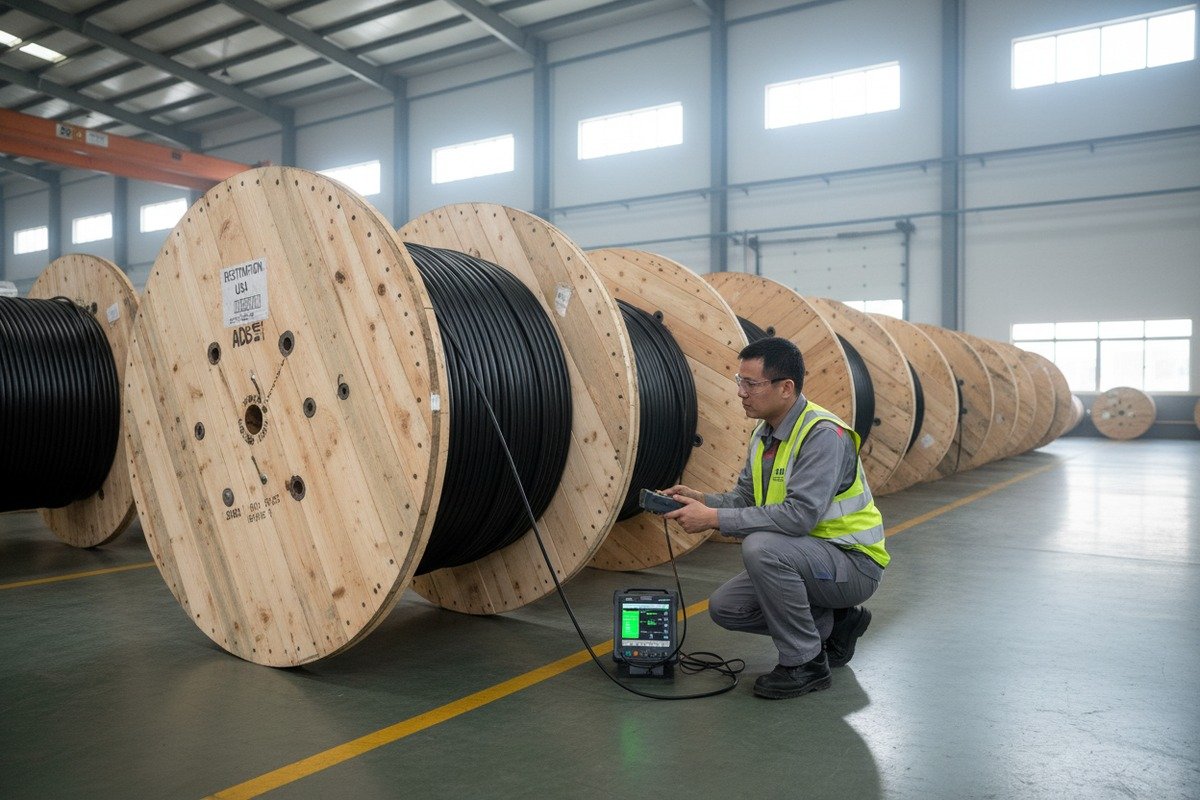
Yes, you should always request custom cross-section diagrams before ordering. A reputable manufacturer will provide detailed CAD drawings showing the exact cable structure — fiber tube arrangement, aramid yarn layers, FRP strength member dimensions, and jacket thickness — along with calculated mechanical parameters like tensile strength, weight, and minimum bend radius specific to your configuration.
Why Cross-Section Diagrams Matter
A cross-section diagram is not just a marketing image. It is an engineering document that reveals the true construction of the cable. When our engineers prepare a custom diagram for a US project, it shows:
- The central strength member type and diameter (typically FRP rod, 2.0–5.0 mm depending on tensile requirement).
- Number, size, and arrangement of loose tubes around the core.
- Fiber count per tube and total fiber count.
- Aramid yarn layer thickness and estimated denier count.
- Water-blocking material type (gel-filled or dry tape).
- Inner jacket dimensions (if double jacket).
- Outer jacket material (PE or AT) and thickness.
- Overall cable outer diameter and calculated weight per kilometer.
This level of detail lets you verify that the cable matches your mechanical requirements before a single meter is produced. It also provides a reference document for quality inspection upon delivery — you can measure the actual cable and compare it to the diagram.
What to Look For in the Diagram
Pay close attention to the aramid yarn layer. This is where cost-cutting most commonly happens. If a manufacturer quotes an unusually low price, the aramid layer is often the first place they reduce material. On the cross-section diagram, the aramid layer should be clearly labeled with its nominal thickness or total denier count. Compare this against the stated tensile strength — the numbers must be consistent.
Also verify the FRP strength member diameter. A 2.0 mm FRP rod provides far less rigidity than a 4.0 mm rod. For spans over 300 meters, you generally need 3.0 mm or larger to maintain acceptable sag performance.
Requesting a Complete Pre-Order Package
Beyond the cross-section diagram, here is what we recommend requesting from any ADSS cable supplier before confirming your order:
- Custom cross-section CAD drawing with all dimensions labeled.
- Mechanical data sheet showing rated tensile strength, MAT, installation tension, crush resistance, impact resistance, minimum bend radius (static and dynamic), and weight.
- Optical data sheet with fiber type, attenuation specs, PMD, and chromatic dispersion values.
- Sag-tension table or chart calculated for your specific span length and NESC loading zone.
- Sample of the outer jacket material for visual and tactile inspection, if possible.
- Reference list of similar projects supplied, ideally in the US.
When we prepare these packages for our US customers, the turnaround is typically 3–5 business days. The cross-section drawing is generated from the same CAD files we use to program our production equipment, so what you see on paper is exactly what gets manufactured. This eliminates the guesswork and builds confidence before you commit to a large purchase order.
One final point: if a supplier refuses to provide a custom cross-section diagram or claims it is proprietary, treat that as a serious warning sign. The construction of an ADSS cable is not a trade secret — it follows well-established industry standards. Transparency at this stage is a strong indicator of the manufacturer's overall reliability and honesty.
Conclusion
Selecting the right ADSS cable for US aerial lines comes down to four things: matching tensile strength to your span and NESC zone, choosing the correct jacket for your voltage environment, demanding authentic test documentation, and verifying construction through custom cross-section diagrams before you order.
Footnotes
1. Provides a general overview and definition of ADSS cables. ↩︎
2. Explains the concept of NESC loading zones in relation to ADSS cables. ↩︎
3. Defines and explains the importance of tensile strength in materials. ↩︎
4. Provides official information about the NESC standard. ↩︎
5. Explains MAT in the context of ADSS cable design and stress. ↩︎
6. Replaced HTTP 403 with the official DuPont Kevlar product page, an authoritative source. ↩︎
7. Describes the role and flame retardant mechanism of ATH in polymers. ↩︎
8. Explains the phenomenon of dry-band arcing on cable surfaces. ↩︎
9. Explains the function and principles of OTDR testing for fiber integrity. ↩︎
10. Replaced HTTP 403 with the official IEC standard page for IEC 60587, an authoritative source. ↩︎