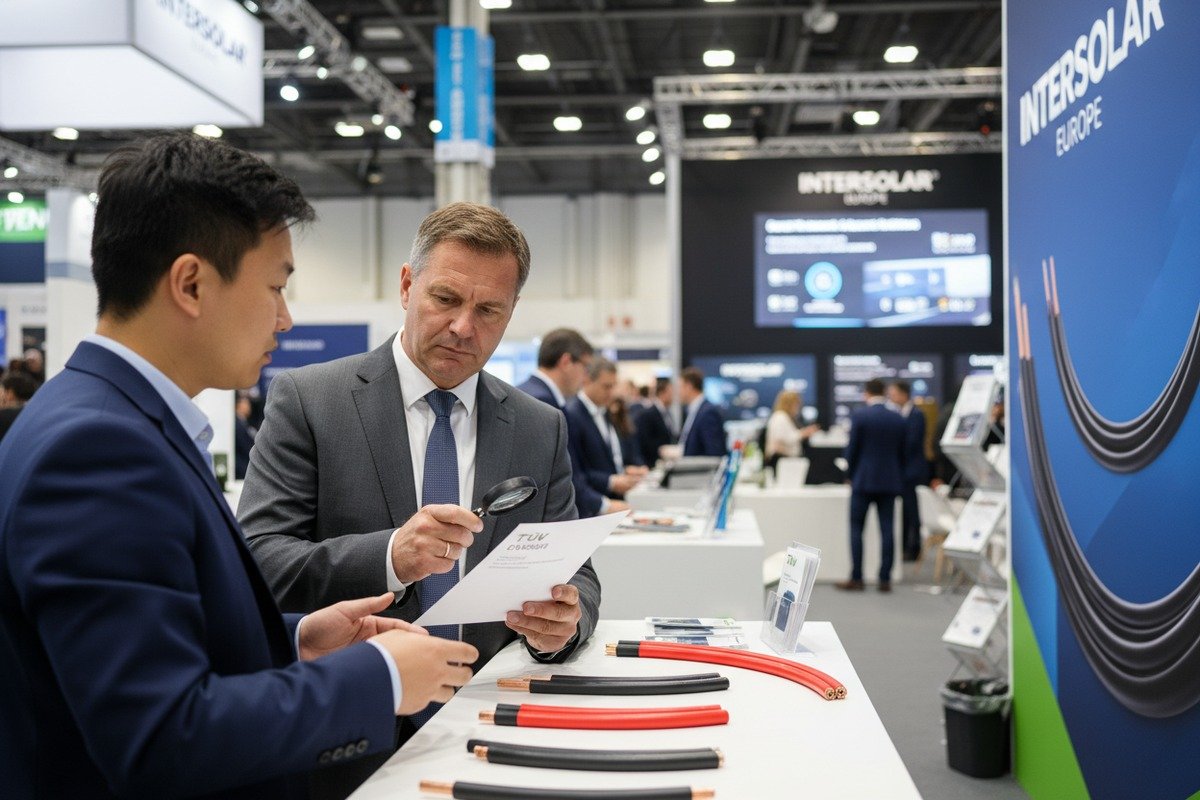

Every year, our customer service team hears the same painful stories from buyers who got burned on their first ADSS cable purchase — cables that snapped mid-span, jackets that cracked within months near high-voltage lines, or shipments that arrived on crushed wooden reels after weeks of delay ISO 9001 quality management certification 1. These are not rare edge cases. They happen when procurement newcomers skip critical checkpoints.
Procurement newcomers sourcing ADSS fiber optic cables should focus on four key areas: matching span and tensile strength to their route, verifying genuine aramid yarn and material quality, requesting proper certifications and test reports, and confirming packaging standards and realistic lead times before placing orders.
This guide walks you through each of those areas step by step IEEE 1222 standards 2. Whether you are a first-time buyer or an experienced procurement manager expanding into fiber optics, the sections below cover the technical, commercial, and logistical details you need to get your ADSS cable order right the first time.
How do I determine the correct span and tensile strength requirements for my ADSS cable installation?
One mistake we see repeatedly on incoming RFQs is buyers guessing their span requirements instead of calculating them. That single shortcut has caused more mid-project failures than almost any other error in aerial fiber optic deployments.
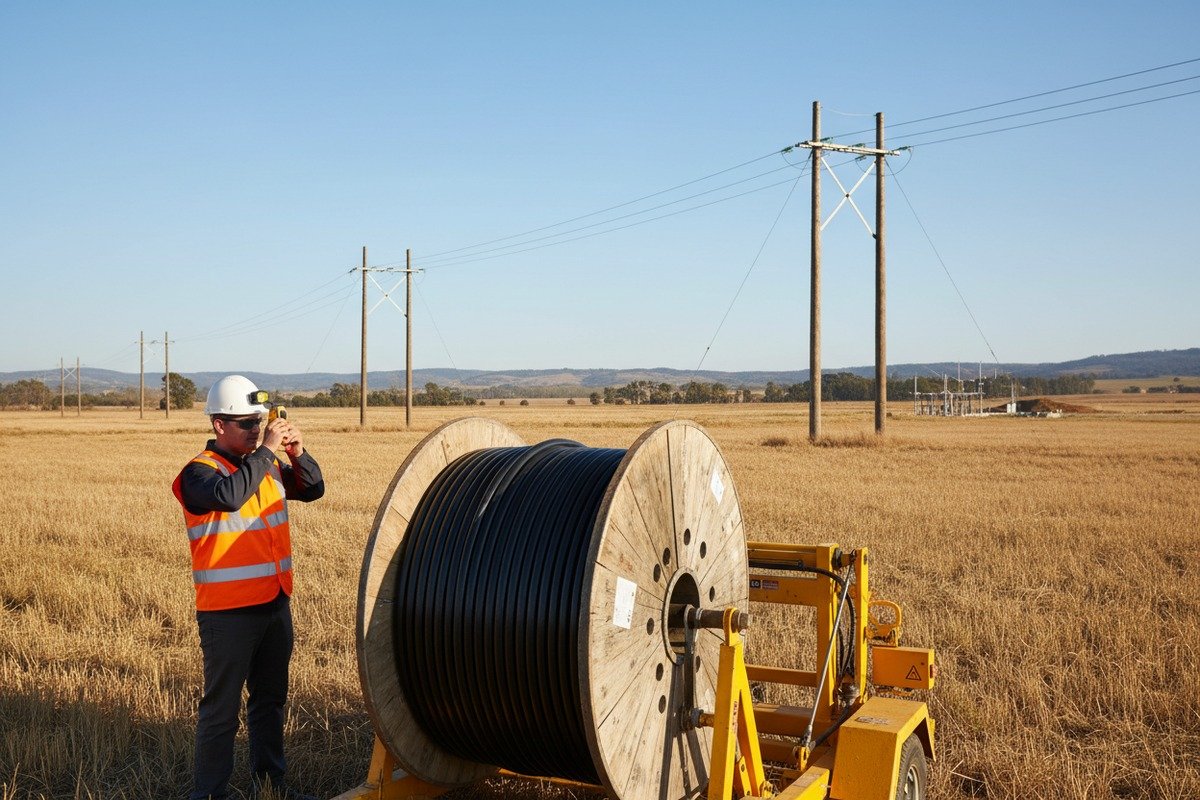
To determine correct span and tensile strength, measure the actual distance between each pair of support poles on your route, then factor in wind load, ice load, and installation tension. Central loose tube ADSS cables handle spans up to 150 meters, while stranded (layered) designs support spans up to 300 meters or more.
Why Span Length Matters More Than You Think
Span length is not just a distance number. It directly determines the cable's required Rated Tensile Strength (RTS) 3, its sag behavior, and the type of hardware you need. If you underestimate the span, the cable experiences more tension than it was designed for. Over time, this leads to fiber strain 4, increased attenuation, and eventual breakage.
On our production line, we classify ADSS cables into two primary structural categories based on span capability:
| Structure Type | Typical Span Range | Core Count Range | Best Use Case |
|---|---|---|---|
| Central Loose Tube | Up to 150 m | 2–24 cores | Urban distribution, short pole spans |
| Stranded (Layered) | 150–300 m | 12–144 cores | Rural backbone, river crossings |
| Stranded (Heavy-Duty) | 300–1000+ m | 24–288+ cores | Mountain terrain, long river spans |
How to Calculate the Tensile Strength You Need
You need three pieces of data: span length, expected wind speed, and ice thickness. In most regions of the US, NESC (National Electrical Safety Code) 5 Heavy, Medium, or Light loading districts define the environmental loads. Here is a simplified reference:
| NESC Loading District | Ice Thickness | Wind Pressure | Temperature |
|---|---|---|---|
| Heavy | 12.5 mm | 190 Pa | -20°C |
| Medium | 6.4 mm | 190 Pa | -10°C |
| Light | 0 mm | 430 Pa | -1°C |
When we run mechanical calculations for a customer's route, we use these inputs along with the cable's weight per meter and diameter to compute the Maximum Allowable Span (MAS). If you send us your pole coordinates and local weather data, our engineering team can generate a span chart specific to your project. This is not an upsell — it is standard practice that prevents costly rework.
Don't Forget Sag and Clearance
Even if your cable can handle a 300-meter span mechanically, the sag at mid-span might violate minimum ground clearance or the required separation from power conductors. Always check your local utility clearance codes. A cable with a higher RTS will sag less at the same span, but it will also cost more and weigh more, which increases pole loading.
A Quick Rule of Thumb
If all your spans are under 100 meters in an urban setting with minimal wind exposure, a central tube ADSS cable with 4–6 kN RTS is usually sufficient. For spans between 100 and 300 meters, you need a stranded design with 10–20 kN RTS. Anything beyond 300 meters requires detailed engineering and custom tensile ratings, sometimes exceeding 40 kN. Do not guess. Ask your manufacturer for a span table before you finalize the order.
How can I verify that my supplier is using genuine aramid yarn instead of cutting corners on materials?
This question comes up in nearly every serious conversation we have with new overseas buyers, and honestly, it should. Aramid yarn is the most expensive raw material in an ADSS cable, and it is also the single biggest temptation for unscrupulous manufacturers to downgrade.
Verify aramid yarn authenticity by requesting the yarn supplier's original certificate of origin (e.g., Kevlar® from DuPont or Twaron® from Teijin), checking the cable's actual tensile test results against the rated strength, and conducting an independent burn test — genuine aramid chars without melting, while substitutes melt or drip.
Why Aramid Yarn Is the Heart of an ADSS Cable
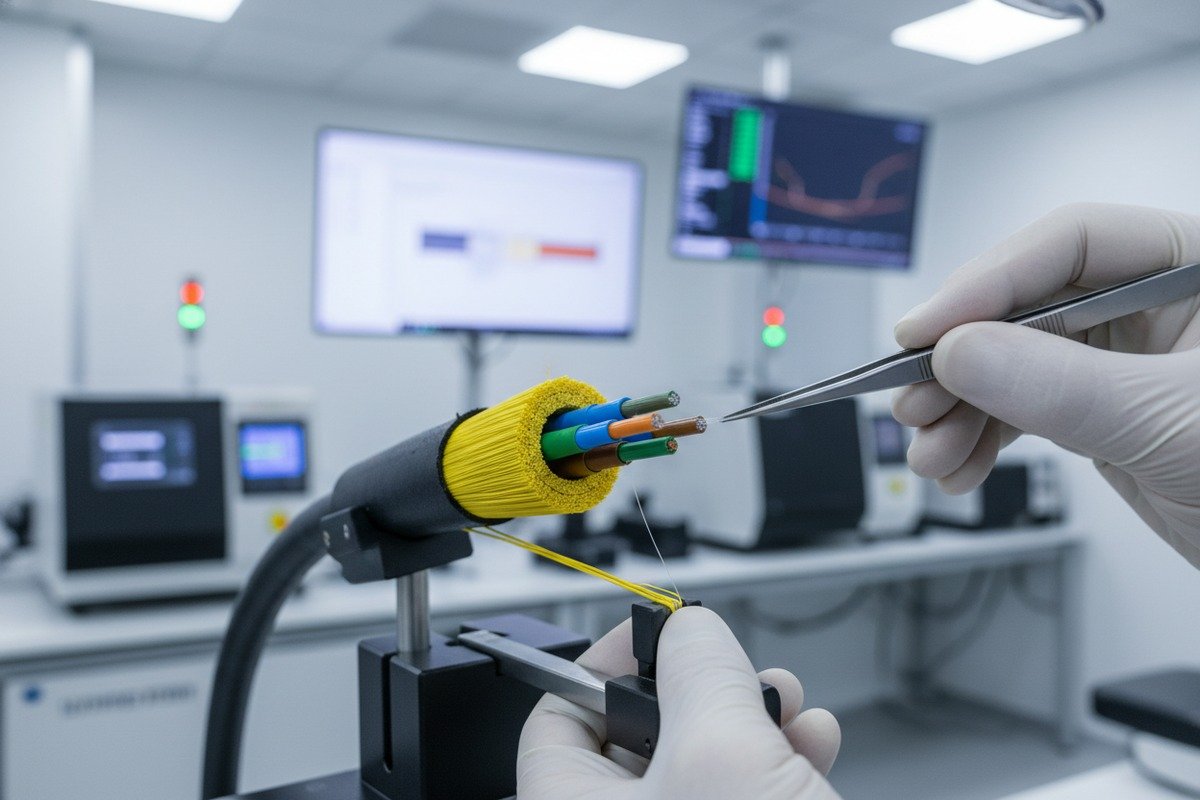
ADSS cables have no metallic components. They rely entirely on aramid yarn for tensile strength. This is what holds the cable up between poles. If a manufacturer substitutes cheaper fiberglass roving or low-grade synthetic yarn for genuine aramid, the cable might look identical on the outside. But under load, in wind, or in ice conditions, it will fail.
In our factory, we source aramid yarn exclusively from Dupont (Kevlar®) and Teijin (Twaron®). Twaron® from Teijin 7 Kevlar® from DuPont 8 Every incoming batch comes with a material certificate that lists the yarn denier, tensile modulus, and lot number. We keep these records on file and can share them with any buyer upon request.
Three Ways to Verify Aramid Quality
Here are practical steps you can take, even if you are not an engineer:
1. Request Material Certificates
Ask your supplier to provide the original purchase invoice or certificate from the aramid yarn manufacturer. Legitimate factories have no problem sharing this. If a supplier hesitates or provides only their own internal document, that is a red flag.
2. Check the Tensile Test Report
Every ADSS cable should undergo a tensile strength test during production. The result should match or exceed the rated tensile strength (RTS) printed on the datasheet. If a cable rated at 12 kN only tests at 8 kN, the aramid content is likely insufficient.
3. Conduct a Simple Burn Test
Genuine aramid yarn chars and forms a black residue when exposed to flame. It does not melt, drip, or produce a strong chemical smell. Polyester and polypropylene substitutes will melt and drip. You can perform this test on a small sample cut from the cable end.
Common Material Substitution Tricks
| What Should Be Used | What Gets Substituted | How to Detect |
|---|---|---|
| Kevlar® / Twaron® aramid yarn | Low-cost polyester yarn | Burn test: polyester melts and drips |
| Full aramid fill per design spec | Reduced aramid quantity (fewer strands) | Tensile test falls below RTS |
| AT (anti-tracking) outer sheath | Standard PE sheath labeled as AT | Request third-party tracking resistance test |
| G.652D or G.657 fiber | Off-spec or recycled fiber | OTDR test shows higher attenuation than spec |
What We Do Differently
On every production run at our facility, we photograph the aramid yarn spools with visible brand labels and lot numbers. These photos are included in the quality documentation package we send to our export customers. We also perform 100% tensile testing on finished cable drums, not just random sampling. This costs us more in production time, but it eliminates the ambiguity that causes trust issues in international trade.
If you are sourcing from any factory — ours or a competitor's — never accept "trust us" as an answer on materials. Demand documentation. Demand test results. And if possible, have a third-party inspection firm visit the factory during your production run.
What technical certifications and test reports should I request to verify my cable's performance?
When our export team reviews purchase orders from first-time buyers, we notice that many skip the certification step entirely. They assume that if a cable ships, it must be certified. That assumption has cost some of our competitors' customers dearly when cables failed inspections on-site.
Request ISO 9001 quality management certification, product-specific test reports per IEC 60794 or IEEE 1222 standards, third-party lab certifications (such as UL or CSA), factory OTDR test results for every drum, and anti-tracking test reports (IEC 60587) if the cable will be installed near high-voltage power lines.

Understanding the Certification Landscape
Not all certifications carry the same weight. Some are about the factory's management system. Others are about the specific product. You need both.
Factory-level certifications like ISO 9001 prove that the manufacturer follows documented quality procedures. This does not guarantee a specific cable is good, but it means the factory has systems in place to maintain consistency.
Product-level certifications like UL listing, CSA approval, or CE marking prove that specific cable designs have been independently tested and meet defined performance standards. These are harder to get and more meaningful for your project.
The Essential Test Reports
Here is what you should request for every ADSS cable order:
OTDR Test Report: This is the optical time-domain reflectometer test. It measures fiber attenuation, splice loss, and fiber length for every single fiber in the cable. A reputable factory provides one OTDR report per drum. If your supplier says they only test "representative samples," push back. At our facility, every drum gets a full OTDR test, and the report is shipped with the cable.
Tensile Strength Test: This confirms the cable can withstand its Rated Tensile Strength without fiber strain exceeding 0.01 dB/km additional attenuation. Ask for the actual test value, not just a pass/fail statement.
Crush and Impact Tests: Per IEC 60794 9-1-2, these simulate rough handling during transport and installation. They matter especially for cables traveling long distances by sea freight.
Anti-Tracking Test (IEC 60587): This is critical for AT-sheath cables designed for high-voltage environments. The test measures the sheath material's resistance to electrical tracking — the surface degradation caused by dry band arcing near power lines. If your cable will run within the electric field of 110 kV lines or higher, this report is non-negotiable.
Certifications by Market
| Target Market | Recommended Certifications | Key Standards |
|---|---|---|
| United States | UL Listed, NESC compliance | IEEE 1222, ANSI/ICEA |
| Canada | CSA approved | CSA C22.2 |
| European Union | CE marking | IEC 60794, EN 50397 |
| General International | ISO 9001, IEC compliance | IEC 60794-4 (ADSS specific) |
Red Flags in Documentation
Watch out for test reports that do not include a specific cable model number, production date, or drum serial number. Generic reports that seem to apply to "all products" are often fabricated or reused from older production runs. Every legitimate test report should be traceable to the exact drums you are receiving.
Also, verify that third-party test reports come from accredited labs. A report from an unknown lab with no ILAC or CNAS accreditation is essentially worthless. Our cables are tested by nationally accredited labs, and we are happy to provide the lab's accreditation certificate alongside the test report itself.
Why This Protects You Long-Term
Certifications and test reports are not just paperwork. They are your insurance policy. If a cable fails in the field and you have proper documentation, you can hold the manufacturer accountable. Without it, you are absorbing the cost of replacement cable, labor to re-string, and project downtime — which can easily exceed the cost of the cable itself ten times over.
How do I ensure my manufacturer's packaging and lead times won't cause delays for my project?
We learned this lesson the hard way years ago when a customer in West Africa received a 40-foot container of cable drums with three reels crushed because the wooden packaging could not handle the humidity and stacking pressure during the six-week sea voyage. That single incident taught us that packaging is not an afterthought — it is part of the product.
Ensure delay-free delivery by confirming your manufacturer uses export-grade fumigated wooden reels (ISPM-15 compliant), requesting photos of packed drums before shipping, locking in production schedules with written lead time commitments, and building a two-to-three week buffer into your project timeline for customs clearance and inland transport.
Packaging That Survives the Journey
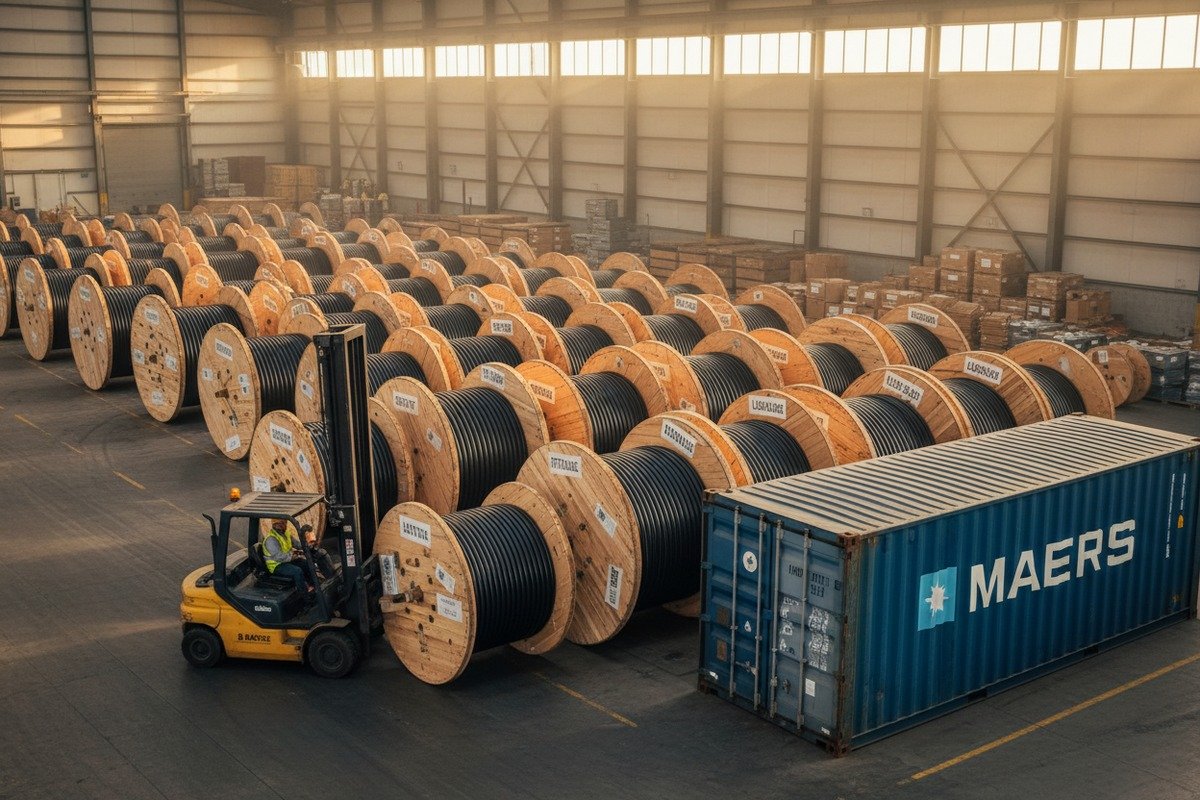
ADSS cable is wound onto large wooden or steel reels. For international shipping, wooden reels must be heat-treated or fumigated per ISPM-15 (International Standards for Phytosanitary Measures No. 15) to pass customs in most countries. If the reels are not ISPM-15 stamped, your shipment can be quarantined or rejected at the port of entry.
Beyond compliance, the reel itself must be structurally sound. A fully loaded reel of 4 km ADSS cable can weigh several hundred kilograms. During ocean transit, containers shift and vibrate. Cheap, thin-walled reels crack under this stress. At our factory, we use reinforced plywood reels with steel-rimmed flanges for all export orders. Each reel is wrapped in stretch film and secured with steel strapping to prevent rotation during transport.
What to Ask About Packaging
Here is a checklist you can use:
- Are the wooden reels ISPM-15 compliant 10 with visible stamps?
- What is the reel's weight capacity relative to the cable loaded on it?
- Is the cable end sealed and protected from moisture ingress?
- Will you send photos of the packed drums before container loading?
- How are the reels secured inside the container (blocking and bracing)?
Lead Time Realities
For stock configurations — say a 24-core single-mode ADSS cable with standard PE sheath and spans under 200 meters — our typical production lead time is 15 to 20 days. Custom configurations with AT sheaths, unusual fiber counts, or extra-long span ratings can take 25 to 35 days, depending on raw material availability.
Here is what you should know about lead time variables:
| Factor | Impact on Lead Time | How to Mitigate |
|---|---|---|
| Custom fiber count or type | +5 to 10 days | Confirm fiber availability before ordering |
| AT sheath material | +3 to 7 days | Order during off-peak season if possible |
| Large order (50+ km) | +7 to 15 days | Split into phased shipments |
| Peak season (Q3–Q4) | +5 to 10 days | Place orders in Q1 or Q2 |
| Third-party inspection | +3 to 5 days | Schedule inspector early |
How to Protect Your Project Timeline
First, get the lead time in writing. A verbal promise means nothing if your cable is three weeks late and your installation crew is idle. We include a confirmed ship date in every proforma invoice and update customers weekly on production status with photos.
Second, plan for logistics beyond the factory gate. Ocean freight from China to the US East Coast typically takes 30 to 35 days. Add a week for customs clearance and another few days for inland trucking. If you need the cable on-site by a specific date, count backward and add a buffer.
Third, consider phased delivery. If your project spans multiple regions or phases, we can ship partial quantities as each batch comes off the production line. This lets your field crews start work while the remaining cable is still in production or transit.
The Cost of Getting This Wrong
A one-week project delay due to late cable delivery does not just cost you a week. It means idle labor, equipment rental extensions, and potentially contractual penalties from your end client. For a mid-sized aerial fiber project, we have seen delay costs reach $5,000 to $15,000 per week. Spending an extra $500 on better packaging and verified lead times is the cheapest insurance you will ever buy.
Conclusion
Sourcing ADSS cable successfully comes down to doing the homework before the purchase order — not after the cable is in the ground. Match your span and tensile needs precisely, verify materials with documentation, demand real certifications, and lock down packaging and delivery timelines. If you need help with any of these steps, reach out to our team at lonsoncable.com and we will walk you through it.
Footnotes
1. Authoritative resource on ISO 9001 quality management systems and certification. ↩︎
2. Direct link to the IEEE standard for All-Dielectric Self-Supporting Fiber Optic Cable. ↩︎
3. Defines Rated Tensile Strength (RTS) for fiber optic cables and its importance. ↩︎
4. Technical paper discussing measurement of fiber strain in optical cables. ↩︎
5. Found the official and working page for the National Electrical Safety Code (NESC) on the IEEE Standards Association website, which is the authoritative publisher. ↩︎
6. Explains aramid fiber properties and applications from an industry leader. ↩︎
7. Official product page for Twaron® from Teijin Aramid, detailing its high-performance features. ↩︎
8. Official product page for Kevlar® from DuPont, highlighting its properties and uses. ↩︎
9. Official website of the International Electrotechnical Commission, source for IEC standards. ↩︎
10. Official document from IPPC detailing ISPM-15 regulations for wood packaging material. ↩︎