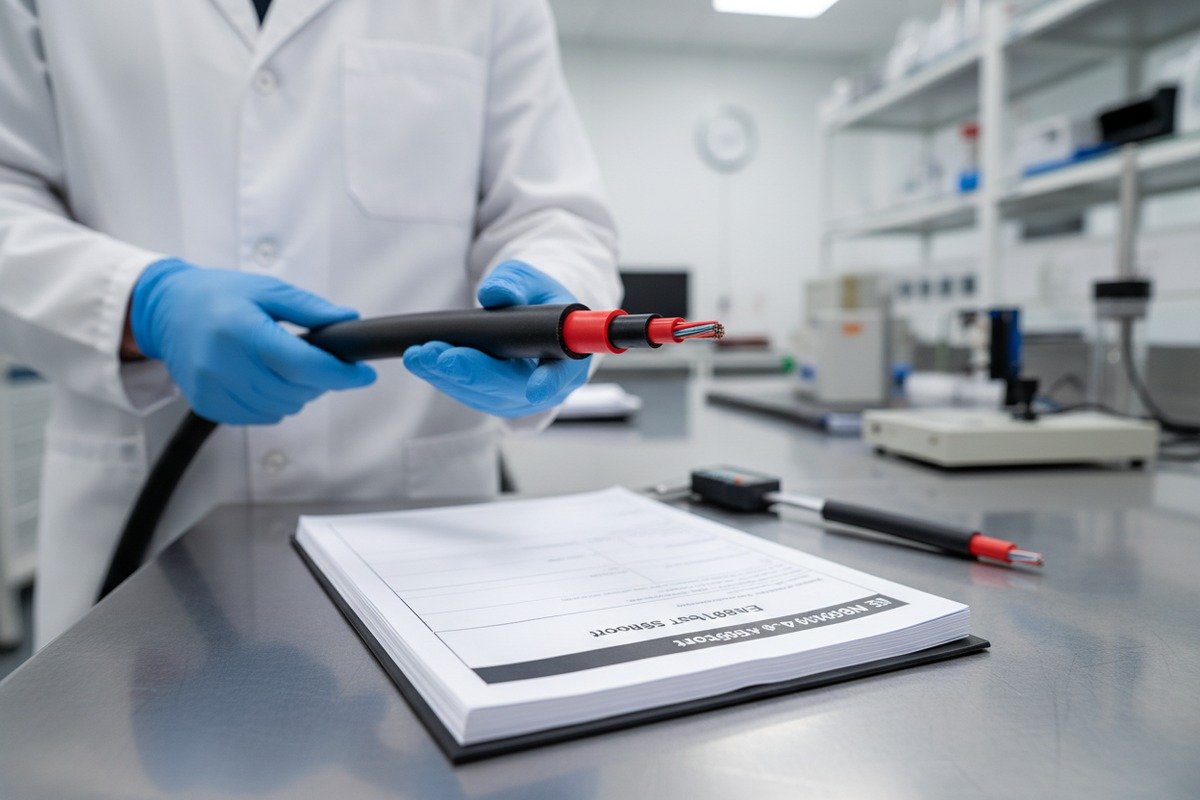

Every year, our sales team fields dozens of inquiries from procurement managers who got burned by a previous supplier's exaggerated claims about ADSS cable 1 project experience.
To verify an ADSS fiber optic cable supplier's project experience, request documented case studies with installation photos, OTDR test reports, IEEE 1222 compliance proof, third-party certifications, and arrange factory audits. Cross-check references by contacting past clients directly and reviewing independently tested performance data.
Choosing the wrong ADSS cable supplier can mean project delays, safety hazards near high-voltage lines, and costly re-installations IEEE 1222 compliance 2. Below, we break down four critical areas you should investigate before signing any purchase order.
How can I verify the authenticity of a supplier's previous ADSS cable project references?
Over the past 30 years on our production floor, we have seen competitors present fabricated case studies to win bids, and the damage only shows up after installation begins.
Verify ADSS project references by requesting specific project details — client names, installation dates, cable lengths, span configurations, and OTDR test reports. Then independently contact the end-user or contractor to confirm the supplier's role, delivery performance, and post-installation cable condition.

Start With Documented Case Studies
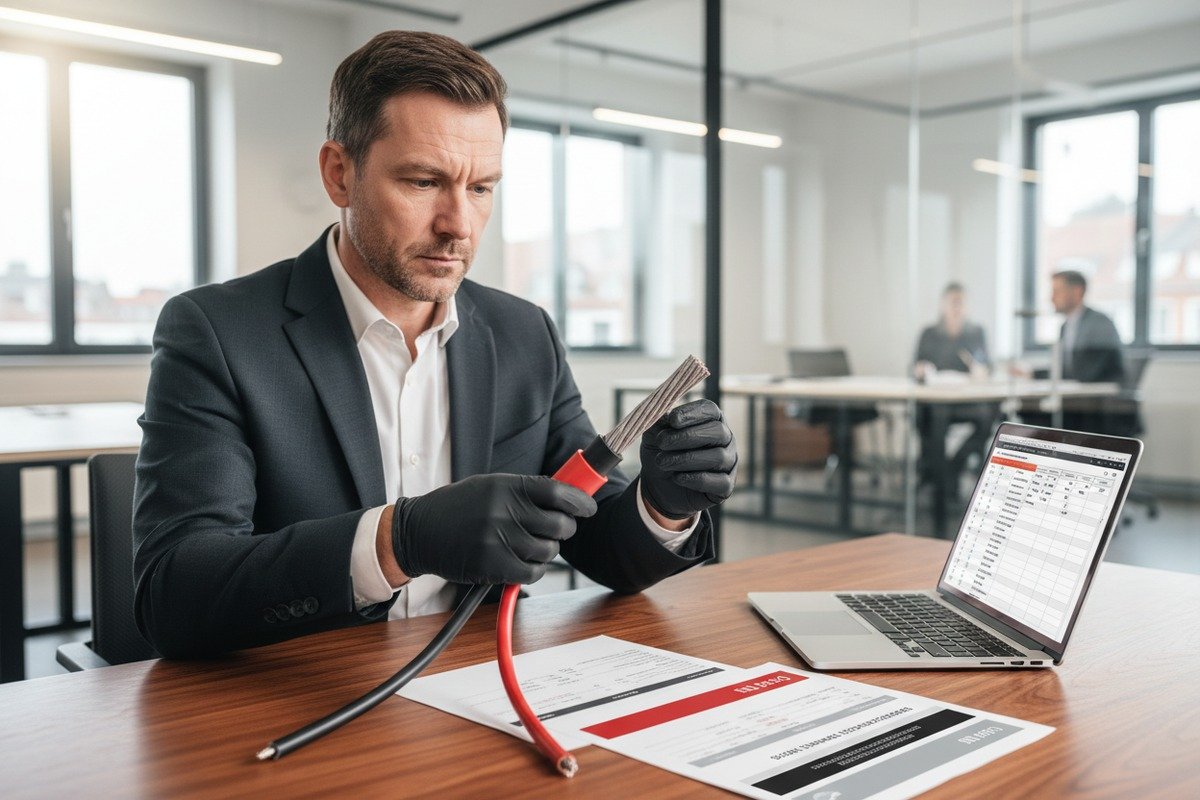
A credible supplier should provide more than a paragraph on their website. Ask for a complete project dossier. This should include pre-survey reports, route maps, pole span data, installation photographs at different stages, and final acceptance test results. If a supplier hesitates to share these, treat it as a red flag.
At our facility, we maintain archived project files for every major deployment. These include photos of cable reels on-site, stringing operations, and signed acceptance forms. A legitimate manufacturer will have similar records.
Contact the End-User Directly
Do not rely solely on testimonial letters. Ask the supplier for the contact information of the project owner or general contractor. Then make a phone call or send an email. Ask specific questions:
- Did the cable arrive on time and undamaged?
- Were the fiber counts and attenuation values as specified?
- Has the cable shown any degradation after one year or more?
- Did the supplier provide technical support during installation?
Cross-Reference With Public Records
Many utility projects are publicly documented. Search for the project name, utility company, or contractor in public procurement databases. In the United States, municipal utility authorities like JEA publish specifications and awarded contracts. In Southeast Asia and Latin America, government telecom projects often have publicly accessible bid results.
Red Flags to Watch For
| Warning Sign | What It Means | What to Do |
|---|---|---|
| Supplier refuses to share client contact info | Possible fabricated reference | Remove from shortlist |
| Photos look generic or stock-quality | May not be from actual projects | Request timestamped, geotagged images |
| Case study lacks technical specifics (span, tension, fiber count) | Superficial involvement or resale only | Ask for engineering calculations used |
| Only domestic references, no export cases | Limited international experience | Probe logistics and compliance capability |
| All references are less than 1 year old | New entrant or rebranded company | Verify years in business through registration records |
Verify Business Registration and History
Check the supplier's business license, date of establishment, and registered capital. In China, you can verify this through the National Enterprise Credit Information Publicity System. A manufacturer with 10 or more years of continuous operation and a factory area that matches their claims is far more trustworthy than one registered last year.
What technical documentation should I request to prove their ADSS cable performance in the field?
When our engineers prepare shipment documentation, they know that savvy buyers will scrutinize every data sheet — and that is exactly how it should be.
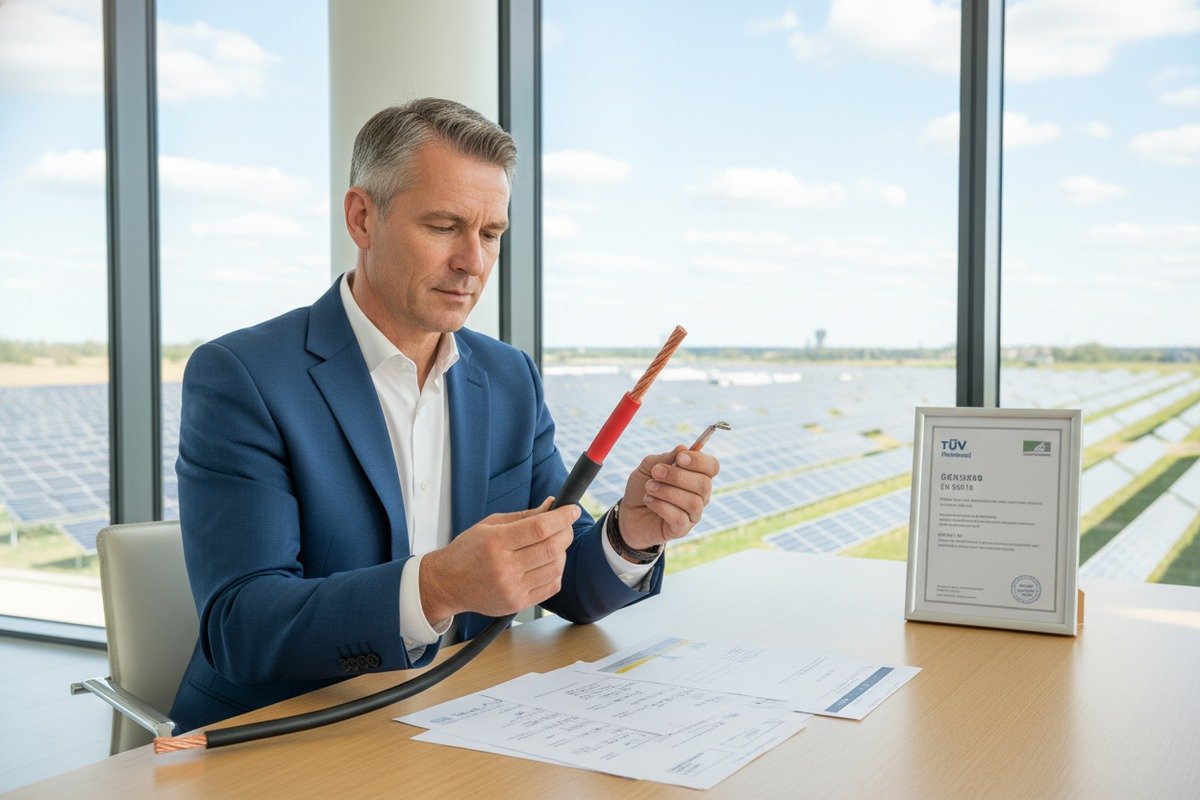
Request factory OTDR test reports for every fiber, IEEE 1222 compliance certificates, tensile strength and crush resistance test data, aging test results, and independent third-party lab certifications. These documents together prove that ADSS cables perform reliably under real-world electrical and mechanical stress.

The Essential Documentation Checklist
Not all test reports carry equal weight. Some documents come from the manufacturer's own lab, while others come from independent facilities. You need both. Here is what to request:
| Document Type | Source | What It Proves |
|---|---|---|
| OTDR test report (per fiber) | Factory lab | Attenuation, splice loss, continuity for each fiber |
| IEEE 1222 (2019) compliance report | Third-party lab or self-declaration with evidence | Cable meets utility power line performance standards |
| IEC 60794-4-20 3 (2018) test report | Accredited lab | Cable meets international aerial optical cable specifications |
| Tensile strength / MRCL test data | Factory or third-party | Maximum rated cable load and everyday load values are accurate |
| Crush resistance test data | Factory lab | Cable survives mechanical stress during installation and service |
| Dry-band arcing 4 resistance report | Third-party recommended | Jacket withstands electrical tracking in high-voltage environments |
| Aging / life expectancy test report | Independent lab (e.g., Kinectrics) | Cable maintains performance over 20–30 year expected lifespan |
| UL / CSA / CE certificates | Certification body | Cable meets safety and quality standards for target market |
Why OTDR Reports Matter Most
OTDR (Optical Time-Domain Reflectometer 5) testing is the gold standard for verifying fiber performance. Each fiber in every cable reel should have its own OTDR trace. This trace shows attenuation per kilometer, event locations (splices, connectors, bends), and total link loss.
At our testing lab, we run OTDR tests at both 1310 nm and 1550 nm wavelengths before any reel leaves the factory. We include these reports with every shipment. If a supplier cannot provide per-fiber OTDR data, they either lack proper testing equipment or are hiding subpar results.
JEA's ADSS specifications, for example, mandate OTDR testing on every fiber post-installation to confirm parameters match design criteria. Your supplier should already be providing this data at the factory level.
The Role of Third-Party Testing
In-house test reports are a starting point, but independent validation eliminates bias. Labs like Kinectrics specialize in testing ADSS, OPGW, and OPPC cables. They perform aged sample analysis — pulling cables that have been in service for years and testing them against original specifications. This reveals whether the cable's aramid yarn 6, sheath material, and fiber performance have degraded.
Some manufacturers argue that in-house labs are sufficient and more cost-effective. While that may be true for routine quality checks, third-party testing is essential for high-stakes projects, especially those on transmission lines above 69 kV where dry-band arcing can destroy cables with inadequate anti-tracking sheaths.
Ask About Dry-Band Arcing Protocols
For ADSS cables installed near high-voltage lines, dry-band arcing is a serious failure mode. The cable's outer sheath must resist electrical tracking caused by pollution and moisture. IEEE 1222 (2019) addresses this directly. Ask the supplier:
- What sheath material do they use? (AT or anti-tracking grade PE is standard.)
- Have they tested to IEEE 1222 dry-band arcing requirements?
- Can they provide a third-party arcing resistance report?
Our production line uses anti-tracking polyethylene compounds specifically formulated for high-voltage environments. We test every batch of sheath material before extrusion. This is not optional — it is a safety requirement.
How do I confirm if a manufacturer has experience with the specific span and tension requirements of my project?
Our engineering team regularly receives project specs calling for 600-meter spans in coastal wind zones or ice-heavy regions at 1,500 meters elevation — and the technical calculations differ dramatically for each scenario.
Confirm span and tension experience by requesting the supplier's sag-tension calculation tables for your specific NESC loading district, proof of cables deployed at similar span lengths, and mechanical design data showing the cable's rated tensile strength matches your project's maximum working load.
Why Span and Tension Are Non-Negotiable
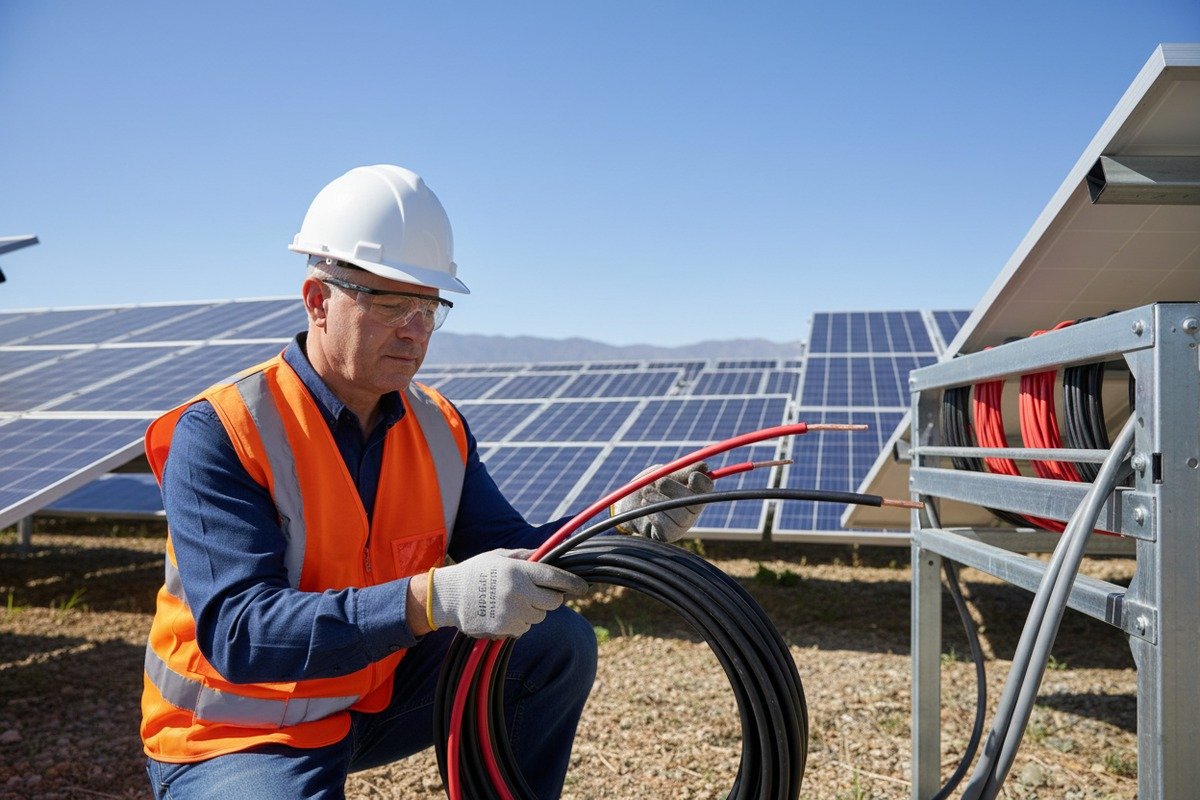
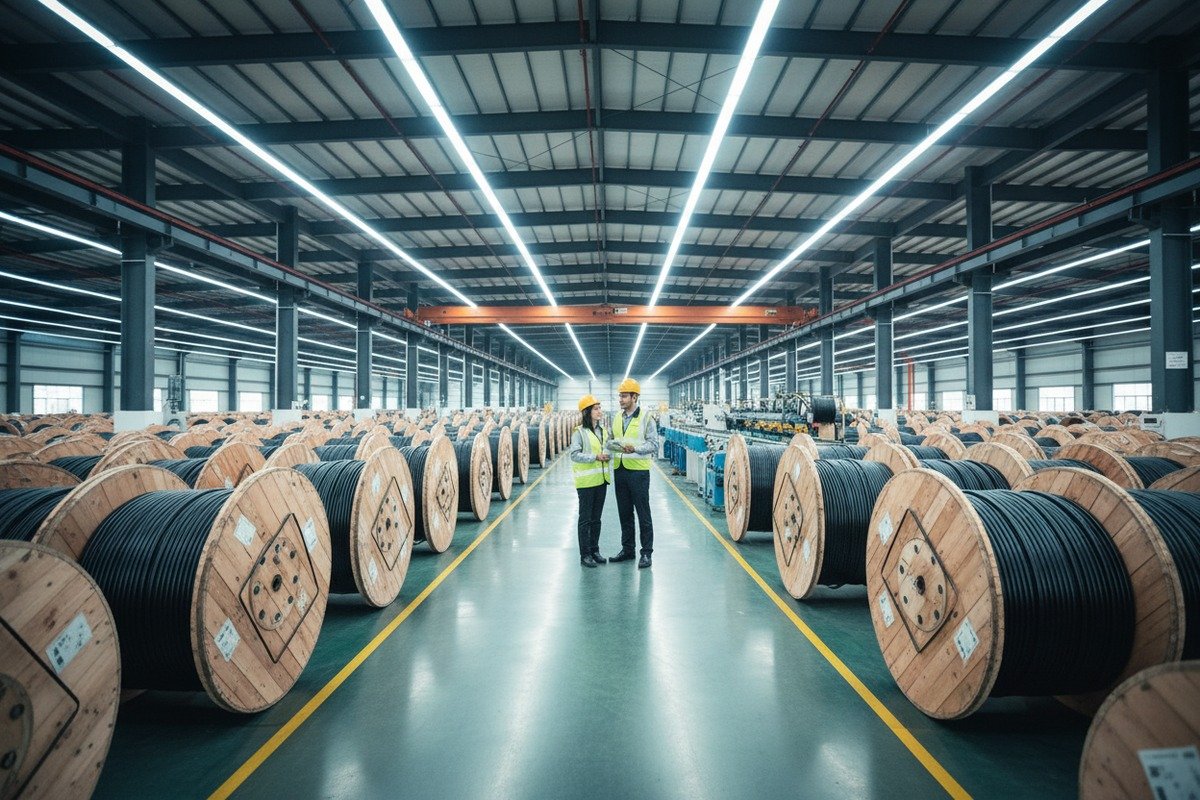
ADSS cables are self-supporting. They carry their own weight plus ice and wind loads without a separate messenger wire. This means the cable's mechanical design must precisely match the span length, environmental loading, and attachment hardware of your specific route. A cable designed for 100-meter spans in a light loading district will fail catastrophically in a 400-meter heavy loading zone.
Request Custom Sag-Tension Tables
Every legitimate ADSS manufacturer should be able to produce sag-tension tables 7 customized to your project parameters. These tables account for:
- Span length (e.g., 100 m, 200 m, 350 ft, 600 m)
- NESC loading district 8 (Heavy, Medium, Light, or custom)
- Temperature range (minimum, everyday, maximum)
- Cable weight, diameter, and rated tensile strength (RTS)
- Maximum allowable sag at each condition
At our design center, we generate these tables using stringing software that models the cable's catenary behavior under every specified condition. If a supplier cannot produce these tables — or provides only generic ones — they likely lack the engineering depth to support your project.
Match Cable Type to Loading Conditions
| NESC Loading District | Ice Thickness | Wind Pressure | Temperature | Typical Regions |
|---|---|---|---|---|
| Heavy | 12.5 mm (0.5 in) | 190 Pa (4 psf) | -20°C (-4°F) | Northern US, Canada |
| Medium | 6.4 mm (0.25 in) | 190 Pa (4 psf) | -10°C (14°F) | Central US |
| Light | 0 mm | 430 Pa (9 psf) | -1°C (30°F) | Southern US, coastal |
Different loading conditions demand different cable constructions. A heavy loading district needs higher aramid yarn content and a larger cable cross-section to handle the combined ice and wind load over long spans. Ask the supplier which loading conditions their cables have been deployed in, and request the engineering calculations to prove it.
Verify With Real Project Data
Ask the supplier for at least two or three completed projects with span and tension requirements similar to yours. For each, request:
- The actual span lengths installed
- The NESC or IEC loading conditions applied
- The sag values achieved versus designed
- Any post-installation issues related to mechanical performance
If a supplier claims experience with 350-foot spans in a light loading zone (similar to JEA's standard ADSS spec of 24-fiber cable at 0.52-inch diameter with 3.5-foot sag), they should be able to show you the sag-tension tables they provided and the installation acceptance data.
Evaluate Pre-Survey Capabilities
A quality manufacturer does not just ship cable. They participate in the pre-survey phase. This means reviewing pole line drawings, assessing clearances, identifying span variations, and recommending cable types accordingly. On our recent projects in Southeast Asia and Latin America, our engineers reviewed the entire route profile before recommending a specific ADSS model and fiber count. If a supplier skips this step, they are selling cable — not providing a solution.
For structures above 69 kV, the pre-survey must also include safety practice reviews for installation crews working near live lines. This is a requirement under IEEE and NESC guidelines. Ask your supplier if they provide installation guidance documentation for high-voltage environments.
Can I request a factory audit or video inspection to see their ADSS production and testing capacity firsthand?
When buyers visit our 230,000-square-meter facility in person, they often tell us it is the single most convincing step in their entire supplier evaluation process.
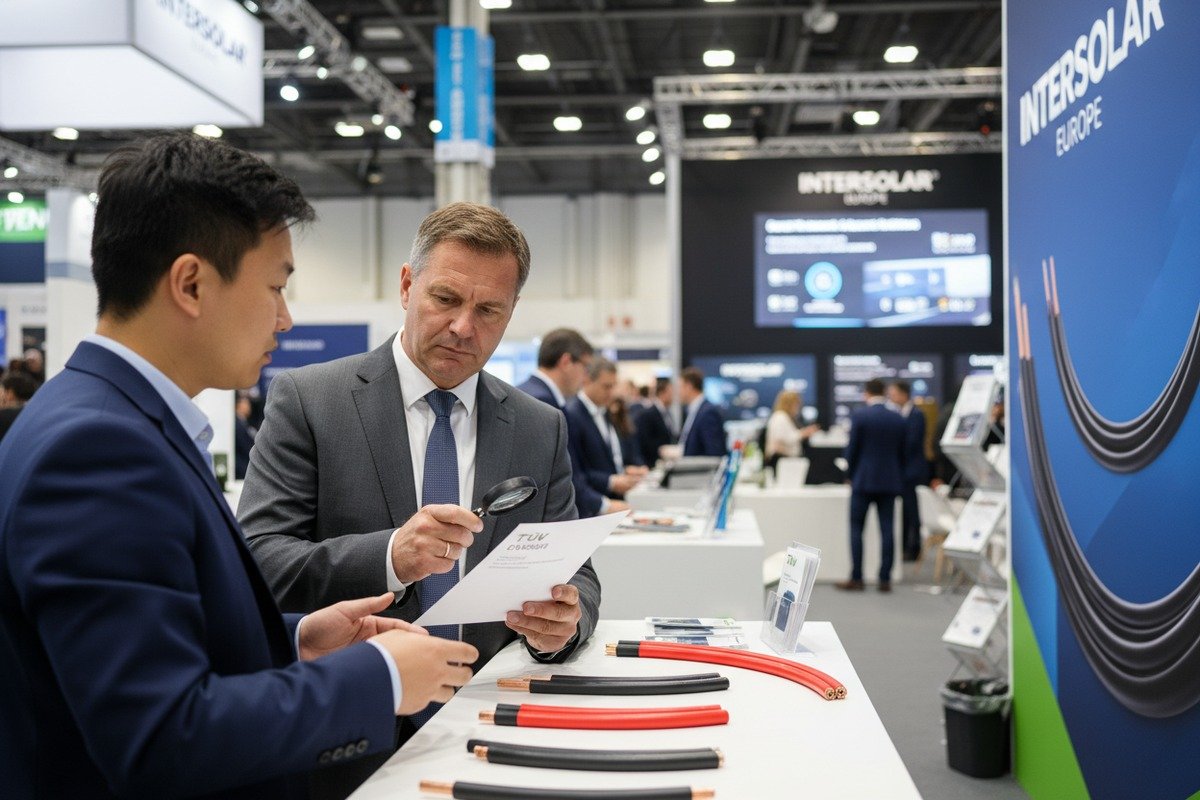
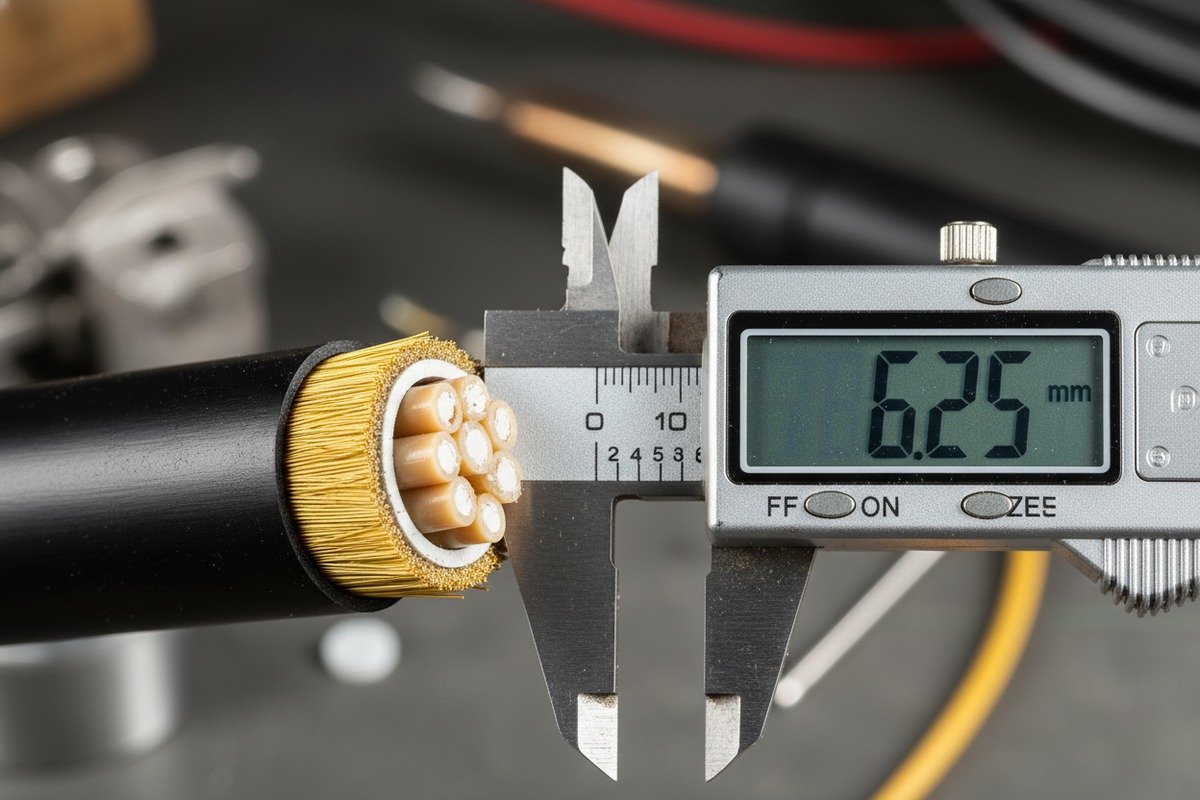
Yes, you should absolutely request a factory audit or live video inspection. Reputable ADSS manufacturers welcome on-site visits or real-time video tours covering raw material storage, fiber coloring, loose tube production, cable stranding, sheathing lines, and in-house testing labs including OTDR and tensile testing equipment.
What to Look for During a Factory Audit
A factory audit 9 is not just a walk-through. It is a structured evaluation of the manufacturer's capacity, quality systems, and process control. Whether you visit in person or conduct a video inspection, focus on these areas:
Raw Material Inspection
Check the raw material warehouse. Look for branded fiber (Corning, YOFC, Fujikura, or equivalent). Inspect the aramid yarn spools — the brand and grade should be visible. For ADSS cables, the aramid yarn is the primary strength member, and any downgrade here directly affects the cable's rated tensile strength. We store our raw materials in a climate-controlled environment and maintain traceability records from incoming inspection through final production.
Production Line Walkthrough
Follow the production flow from start to finish:
- Fiber coloring — Are fibers colored in-house or purchased pre-colored?
- Loose tube extrusion — Check that gel filling is consistent and tubes are properly sized.
- Stranding — Watch the SZ stranding or helical stranding process. Count the loose tubes and verify they match the cable design.
- Aramid yarn application — Observe how aramid layers are applied. This is critical for ADSS mechanical performance.
- Sheathing — Confirm anti-tracking PE is used for high-voltage ADSS models. Check sheath thickness and concentricity.
- Printing — Verify cable markings include meter marks, model, and manufacturer identification.
Testing Lab Evaluation
The testing lab is where claims become facts. A vertically integrated manufacturer should have:
| Test Equipment | Purpose | What to Verify |
|---|---|---|
| OTDR (multiple wavelengths) | Fiber attenuation and event detection | Calibration certificates current, test records archived |
| Tensile testing machine | Cable and component strength | Capacity matches cable RTS (e.g., 20 kN, 40 kN) |
| Crush resistance tester | Mechanical durability | Test procedure follows IEC standards |
| Temperature cycling chamber | Thermal performance | Range covers -40°C to +70°C or project-specific |
| Aging test setup | Long-term reliability | Samples under continuous stress for extended periods |
| Eccentricity gauge | Sheath uniformity | Measures concentricity of outer jacket |
Ask to see recent test records — not just the equipment. A lab full of dusty machines that have not been calibrated in two years is useless.
Video Inspection as an Alternative
If travel is not feasible, a live video inspection is a practical substitute. Schedule a real-time video call where the supplier's quality team walks you through the factory. You should be able to direct the camera — ask them to zoom in on fiber spool labels, aramid yarn branding, test equipment calibration stickers, and in-process cables on the production line.
We regularly conduct video factory tours for our clients in the US, Europe, and Latin America. These sessions typically last 60 to 90 minutes and cover every stage from raw materials to finished cable on the reel.
Third-Party Audit Services
For maximum objectivity, hire a third-party inspection company (such as SGS, Bureau Veritas, or TÜV) to conduct the audit on your behalf. Third-Party Audit Services 10 They follow standardized audit protocols and produce detailed reports with photos and non-conformance findings. This is especially valuable if you are placing a large order or entering a long-term supply agreement.
Vertical Integration Matters
A factory that controls the entire process — from fiber coloring through cable testing — can respond faster to quality issues and customization requests. A factory that outsources loose tube production or sheathing introduces additional quality variables outside their control. During your audit, confirm which processes are in-house and which are subcontracted.
Conclusion
Verifying your ADSS cable supplier's project experience requires effort — but it protects your investment, your timeline, and your reputation on every project you deliver.
Footnotes
1. Provides a comprehensive definition and overview of ADSS cable technology. ↩︎
2. Direct reference to the IEEE standard for ADSS cable testing and performance. ↩︎
3. Provides information on the international standard for aerial optical cables along power lines. ↩︎
4. Explains the phenomenon of dry-band arcing and its impact on ADSS cables. ↩︎
5. Wikipedia provides a comprehensive and authoritative explanation of an Optical Time-Domain Reflectometer (OTDR). ↩︎
6. Explains the function of aramid yarn as a strength member in fiber optic cables. ↩︎
7. Details the importance and components of sag-tension tables for ADSS cable design. ↩︎
8. Explains the National Electrical Safety Code (NESC) loading districts for overhead lines. ↩︎
9. Defines factory audits and outlines their importance in supplier evaluation. ↩︎
10. Explains the benefits and scope of third-party supplier audit services. ↩︎