Every year, our shipping team handles thousands of ADSS cable drums 1 destined for power grid projects across sixty countries. Yet even with rigorous quality control 2 on a 230,000 m² production floor, the reality of international logistics and complex installations means defects and damage claims still land on our desks. When a cable drum arrives crushed, or an OTDR test 3 fails weeks after installation, the frustration is real — and the financial stakes are high.
To handle claims for ADSS fiber optic cable defects from China, you must document all damage immediately upon arrival, gather photographic and test-report evidence, reference your contract's warranty and quality clauses, and negotiate directly with the supplier using a structured, evidence-based approach for repair, replacement, or refund.
This guide walks you through every stage of the claims process — from the moment you open a damaged shipment to the final negotiation for a fair resolution. Let's break it down step by step.
What immediate steps should I take if my ADSS cable arrives with visible shipping damage?
Over the past three decades producing fiber optic cable 4, our logistics team has seen every kind of shipping incident — collapsed wooden reels, punctured outer sheaths, and crushed cable ends from rough container handling. The panic is understandable, but what you do in the first 48 hours determines whether your claim succeeds or fails.
Immediately photograph all damage, refuse to sign delivery receipts without noting exceptions, preserve all packaging materials, and notify both your freight forwarder and the Chinese supplier within 24 hours with written documentation including photos, video, and shipment reference numbers.
Stop, Don't Unpack Everything
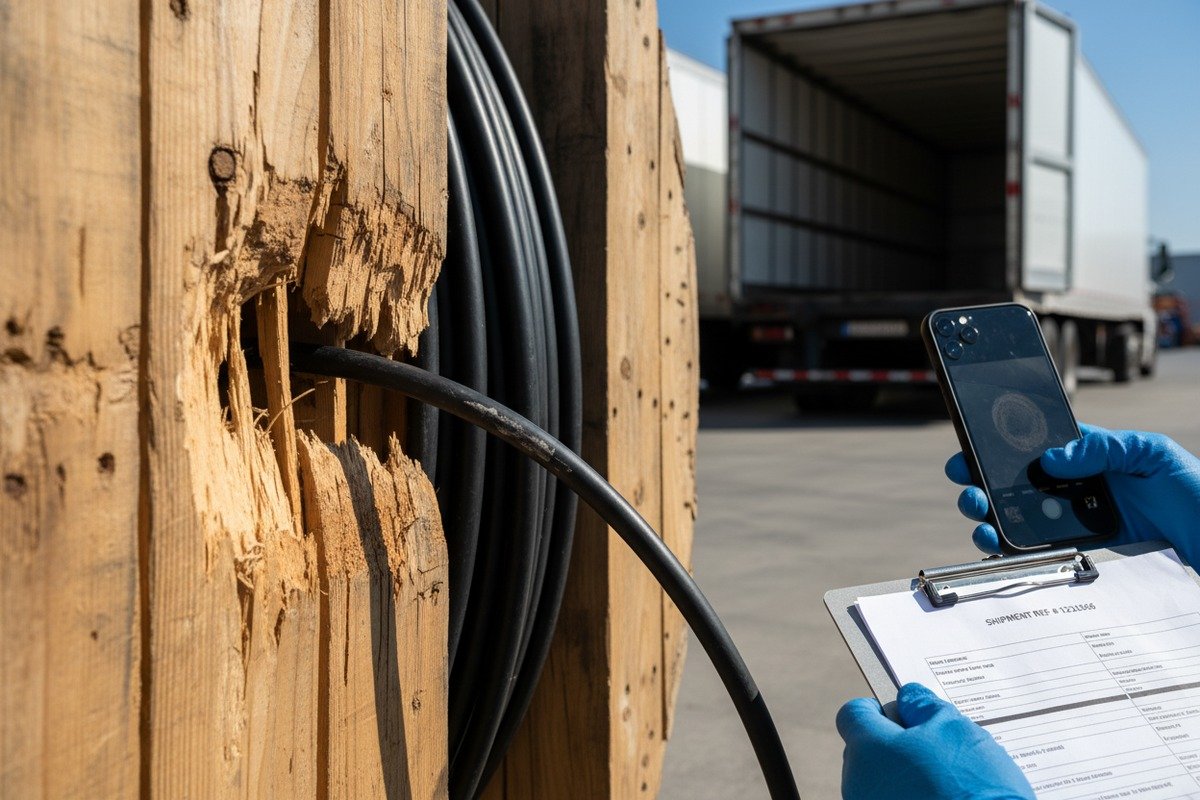
When a shipment arrives and you see visible damage on the outer packaging or the cable drum, resist the urge to tear everything open. First, take wide-angle photos of the entire container or pallet in its as-received state. Then photograph each drum individually before touching it. This preserves the chain of evidence.
If your Bill of Lading 5 or packing list references specific drum numbers, match each photo to its drum ID. This is critical for tracing the damage back to a specific production batch.
Document on the Delivery Receipt
Never sign a clean delivery receipt if damage is visible. Write "Received with visible damage — subject to inspection" on the carrier's paperwork. This protects your right to file a freight claim later.
Notify All Parties in Writing
Send a written notice — email is fine — to your Chinese supplier, your freight forwarder, and your insurance provider within 24 hours. Include the following:
- Purchase order number and invoice number
- Container or tracking number
- Photos and a brief description of the damage
- A request for inspection instructions from the supplier
What to Include in Your Damage Report
| Item | Details to Record | Why It Matters |
|---|---|---|
| Drum/Reel ID | Serial number, batch number | Links damage to specific production run |
| Outer Packaging | Condition of wooden reel, stretch wrap, corner protectors | Proves whether packaging was adequate |
| Cable Sheath | Cuts, abrasions, crush marks, discoloration | Indicates mechanical damage during transit |
| Cable Ends | Sealed or exposed, moisture ingress signs | Open ends allow water damage to fibers |
| Environmental Data | Temperature/humidity logger readings if IoT sensors 6 were used | Attributes damage to transit conditions |
Consider IoT Monitoring for Future Shipments
Some of our customers now deploy small IoT sensors inside cable containers. These sensors track shock events, temperature spikes, and humidity levels throughout the voyage. When a claim arises, the sensor data provides immutable evidence of exactly when and where damage occurred. This is especially useful for DDP shipments where the supplier retains risk until final delivery.
File the Freight Insurance Claim Early
Most marine cargo insurance policies 7 require notification within 3–7 days of delivery. Missing this window can void your coverage entirely. Gather your photos, the annotated delivery receipt, and the IoT data (if available), and submit them to your insurer promptly.
How do I document technical defects like insufficient aramid yarn or failed OTDR tests for a claim?
When our quality engineers investigate a customer complaint about fiber performance, the first thing they ask for is structured test data. Vague statements like "the cable doesn't work" never lead to fast resolutions. Technical defects require technical proof, and the way you organize that proof makes all the difference.
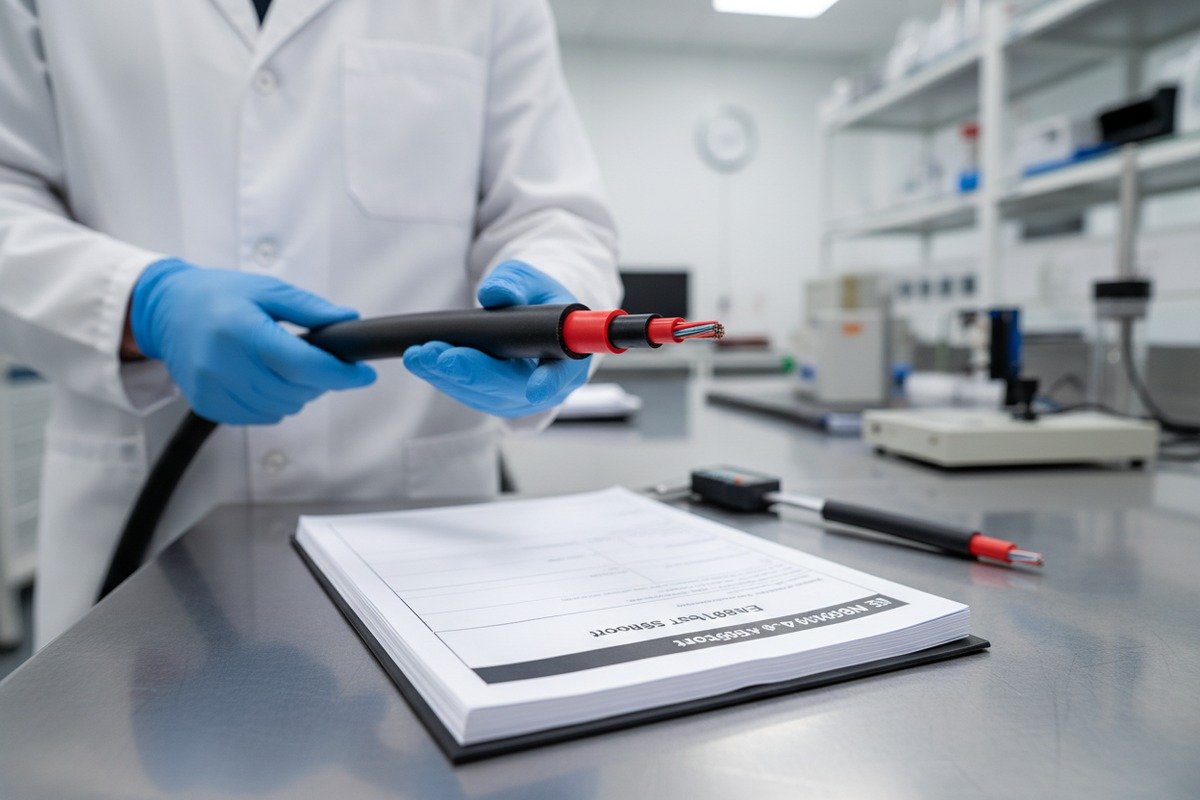
Document technical defects by performing standardized OTDR testing on every fiber, measuring attenuation against contract specifications, photographing cross-sections to verify aramid yarn count and construction, and compiling results into a formal test report referencing IEC or TIA standards your contract specifies.

OTDR Testing Is Your Best Friend
An Optical Time-Domain Reflectometer 8 (OTDR) test is the gold standard for proving fiber defects. It shows attenuation per kilometer, splice losses, connector losses, and any breaks or macro-bends along the fiber route. For a valid claim, run OTDR tests at both 1310 nm and 1550 nm wavelengths.
Compare your results against the supplier's factory test report. Reputable manufacturers — including our facility — ship every drum with an individual OTDR report. If the field results differ significantly from the factory report, you have strong evidence of either shipping damage or a manufacturing defect.
Key Specifications to Verify
| Parameter | Typical ADSS Spec | How to Test | Red Flag |
|---|---|---|---|
| Attenuation at 1310 nm | ≤ 0.35 dB/km | OTDR or power meter | Values exceeding 0.40 dB/km |
| Attenuation at 1550 nm | ≤ 0.22 dB/km | OTDR or power meter | Values exceeding 0.25 dB/km |
| Crush Resistance | ≥ 220 N/100mm | Lab crush test | Sheath deformation under lower loads |
| Water Penetration | No ingress after 24 hours | Water immersion test | Moisture inside loose tubes |
| Minimum Bending Radius | ≥ 10x cable diameter | Physical measurement | Fiber stress or breakage below this radius |
| Aramid Yarn Strength | Per design tensile rating | Cross-section inspection + pull test | Fewer yarn strands than specified |
Cross-Section Inspection for Material Fraud
One of the most serious — and unfortunately not uncommon — defects is material downgrading. This happens when a manufacturer substitutes lower-grade aramid yarn, uses fewer strands than specified, or replaces aramid with cheaper fiberglass without disclosure. To check this, cut a clean cross-section of the cable and photograph it next to the specification drawing from your contract. Count the aramid strands. Measure the sheath thickness with calipers.
If you agreed on a 100 kN rated tensile strength ADSS cable and the cross-section reveals half the expected aramid fill, that's a clear manufacturing defect — not an installation issue.
Build a Formal Defect Report
Your report should include:
- Contract and PO references
- Factory test report (provided at shipment)
- Your independent OTDR results (with equipment model and calibration date)
- Cross-section photographs with measurements
- A clear statement of which specification was not met
- Reference to the applicable standard (IEC 60794, TIA-455, or as specified in your contract) IEC or TIA standards 9
Third-Party Lab Testing
For high-value claims, consider sending cable samples to an independent testing lab. Labs accredited by CNAS or ILAC carry weight in international disputes. The cost is usually modest compared to the value of a failed cable project, and the impartial report removes any "he said, she said" from the negotiation.
What specific evidence do I need to provide to ensure my Chinese supplier honors the warranty?
We have processed hundreds of warranty claims at our Hainan headquarters, and the single biggest reason claims get denied — by any manufacturer, not just us — is incomplete evidence. A strong warranty claim is built like a legal case: specific, documented, and tied directly to the contract terms.
To ensure your Chinese supplier honors the warranty, provide your original contract with warranty clauses, factory test reports, independent field test results, timestamped photographs, installation records proving correct procedures, and a written claim letter referencing specific contract terms and international standards.

Your Contract Is the Foundation
Everything starts with the contract. If your purchase agreement does not include explicit warranty terms, testing standards, acceptance criteria, and dispute resolution mechanisms, your leverage is significantly reduced. Before your next order, make sure the following items are clearly written into your agreement:
- Warranty period (typically 20–25 years for ADSS cable)
- Specific performance parameters guaranteed (attenuation, tensile strength, temperature range)
- Testing standards to be applied (IEC, TIA, or customer-specified)
- Procedure for filing claims (timeframe, required documentation, point of contact)
- Dispute resolution clause (arbitration venue, governing law)
Evidence Checklist for a Successful Claim
| Evidence Type | What to Provide | Purpose |
|---|---|---|
| Purchase Contract | Signed agreement with warranty and spec clauses | Establishes the legal basis for your claim |
| Factory Test Reports | OTDR reports, material certificates shipped with the cable | Proves what the supplier committed to delivering |
| Independent Test Results | Your own OTDR, crush, and water penetration tests | Shows the cable fails to meet those commitments |
| Photographic Evidence | Timestamped, high-resolution images of defects | Visual proof of the defect's nature and severity |
| Installation Records | Tension logs, sag calculations, span records, crew certifications | Proves the cable was installed correctly per guidelines |
| Environmental Data | Site pollution levels, voltage of adjacent power lines | Addresses the supplier's likely defense that environment caused the failure |
| Communication Records | Emails, WeChat messages, meeting notes with the supplier | Documents the supplier's awareness and responses |
Why Installation Records Matter So Much
Chinese ADSS manufacturers — and honestly, any cable manufacturer worldwide — will first question whether the cable was installed correctly. This is a legitimate concern. ADSS cables installed at incorrect tension, with wrong sag calculations, or at spans exceeding the cable's rated maximum will fail prematurely. That failure is not a manufacturing defect.
So you must document your installation process. Keep records of the stringing tension used, the span lengths, the hardware fittings applied, and the proximity to high-voltage conductors. If your cable failed due to electrical corrosion 10 (a common ADSS failure mode near high-voltage lines), show that the cable was installed in the correct zone and that the sheath material was rated for your voltage environment.
Electrical Corrosion: A Special Case
Electrical corrosion is one of the three primary failure modes for ADSS cables in power line environments. It manifests as:
- Breakdown corrosion: Arc-induced perforation of the sheath, usually sudden and catastrophic
- Trace corrosion: Surface burning marks from tracking currents
- Gradual sheath corrosion: Slow thinning from leakage current heating
If your cable shows signs of electrical corrosion, the supplier may argue it is an environmental or installation issue, not a manufacturing defect. To counter this, you need evidence that the cable's AT (anti-tracking) sheath grade matched the voltage environment specified in your contract. If you ordered a Class B tracking-resistant sheath for a 110 kV line, and the supplier shipped a standard PE sheath, that is a clear warranty violation.
Use a Local Agent If Needed
If the supplier is unresponsive or disputes your evidence, consider engaging a local agent or legal counsel in China. They can visit the factory, review production records, and apply pressure that international emails often cannot. This is particularly effective for claims involving material substitution, where a physical factory audit may reveal the truth faster than any test report.
How can I negotiate a fair resolution or replacement if my fiber optic cable fails after installation?
In our thirty years of exporting fiber optic cable, we have learned that the best claim resolutions come from structured, professional negotiations — not from angry emails or threats. Both sides have legitimate interests, and understanding those interests gives you the leverage to reach a fair outcome.
Negotiate a fair resolution by presenting organized evidence to the supplier, proposing specific remedies (replacement cable, partial refund, or credit), setting clear deadlines for response, and escalating through arbitration clauses in your contract if direct negotiation fails.

Start with a Formal Claim Letter
Your first move should be a formal, written claim letter sent to the supplier's quality department (not just the sales contact). This letter should include:
- A summary of the defect or damage
- Reference to the specific contract clause that was violated
- Your proposed resolution (replacement, refund, credit, or a combination)
- A deadline for the supplier's response (typically 7–14 business days)
- A statement that you reserve the right to escalate if not resolved
Keep the tone professional. Emotional language weakens your position and slows the process.
Understand the Supplier's Perspective
A reputable Chinese manufacturer wants to keep your business. Replacement cable or a partial refund is usually cheaper for them than losing a long-term customer. Approach the negotiation with this in mind. Frame the resolution as a way to strengthen the partnership, not end it.
However, if the defect was caused by material downgrading or fraudulent certifications, the dynamic changes. In these cases, the supplier knows they are at fault, and your evidence (cross-section photos, third-party lab reports) gives you strong leverage.
Common Resolution Options
Here are the most common outcomes for ADSS cable claims:
- Full replacement: The supplier ships new cable at their cost. This is typical for major manufacturing defects affecting entire batches.
- Partial replacement: Only defective drums are replaced. Common when damage is isolated to specific reels.
- Credit on next order: The supplier offers a discount or free goods on your next purchase. This works well in long-term relationships.
- Partial refund: A cash return for the defective portion. More common when the buyer has already installed alternative cable from another source.
- Shared cost: Both parties split the replacement cost, usually when liability is genuinely shared (e.g., cable was marginally spec-compliant and installed in a harsher-than-specified environment).
Escalation Path
If direct negotiation stalls, follow this escalation path:
- Escalate within the supplier's organization — contact the factory general manager or owner directly.
- Engage a local agent in China — they can visit the factory and negotiate face-to-face, which carries cultural weight.
- Formal mediation — organizations like the China Council for the Promotion of International Trade (CCPIT) offer mediation services.
- Arbitration — if your contract specifies an arbitration venue (such as the Singapore International Arbitration Centre or the Hong Kong International Arbitration Centre), file a formal request. Chinese courts generally enforce arbitration awards.
- Legal action — this is the last resort and is typically slow and expensive. It should only be considered for very large claims where all other options have failed.
Protect Yourself on Future Orders
The best claim is the one you never have to file. After resolving a defect issue, implement these safeguards for future purchases:
- Require mandatory third-party pre-shipment inspections at the factory
- Specify raw material traceability clauses in your contract (aramid yarn brand, fiber manufacturer)
- Use IoT transit monitoring sensors on every container
- Conduct factory audits annually, verifying actual production capabilities versus marketing claims
- Build in a quality hold on final payment — release the last 10–15% only after on-site acceptance testing
These steps align with what we recommend to all our customers at Lonsoncable. Transparency protects both sides and builds the kind of trust that sustains a 20-year business relationship.
Conclusion
Handling ADSS cable claims from China requires speed, evidence, and professionalism. Document everything from day one, test rigorously against contract specifications, and negotiate with structured proposals backed by data. Your preparation today prevents your losses tomorrow.
Footnotes
- Provides a general overview of ADSS fiber optic cables. ↩︎
- Wikipedia provides a comprehensive and authoritative overview of quality control. ↩︎
- Describes the function and importance of OTDR testing in fiber optics. ↩︎
- Provides fundamental information about fiber optic cable technology. ↩︎
- Wikipedia offers a reliable and detailed explanation of a Bill of Lading. ↩︎
- IBM provides an authoritative overview of the Internet of Things (IoT) and the role of sensors within it. ↩︎
- The Insurance Information Institute (III) is an authoritative source providing information on marine cargo insurance policies. ↩︎
- Provides a detailed explanation of the OTDR instrument and its working principles. ↩︎
- Fiber Optic Center provides a relevant and authoritative explanation of both IEC and TIA standards for optical cable assemblies. ↩︎
- Explains the phenomenon of electrical corrosion in ADSS cables. ↩︎