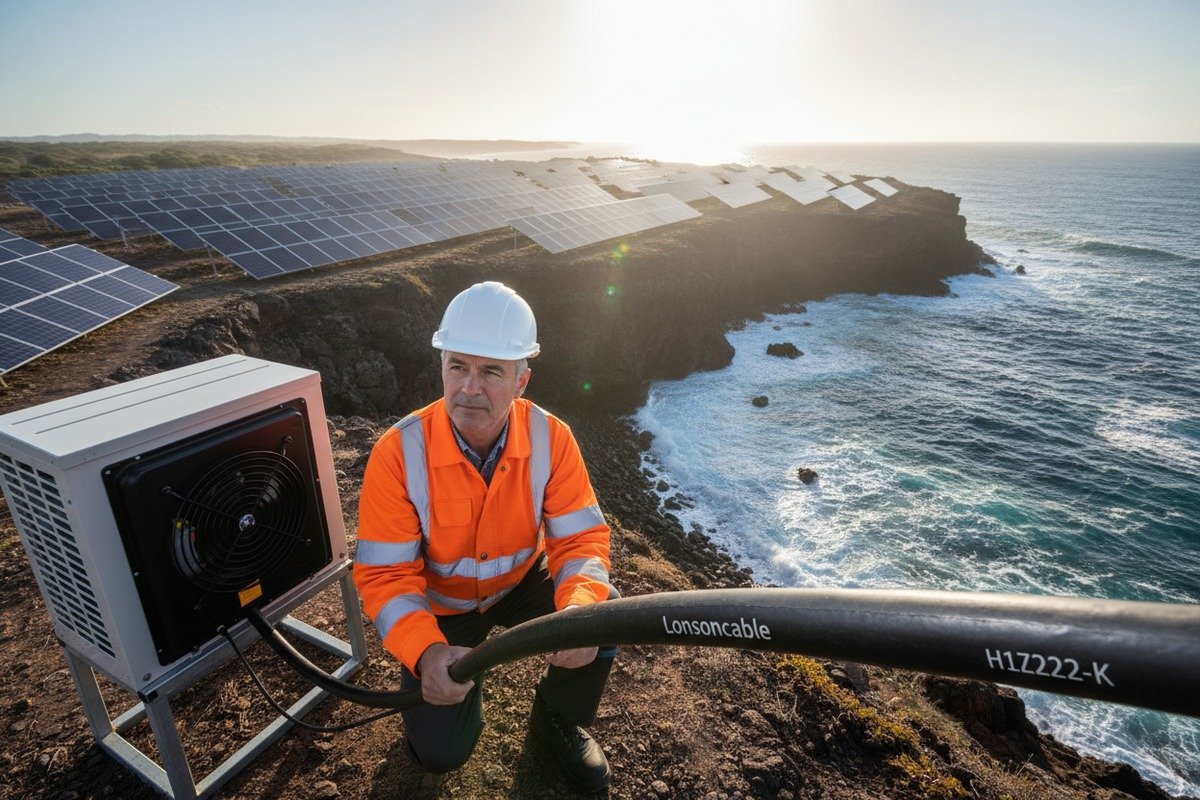
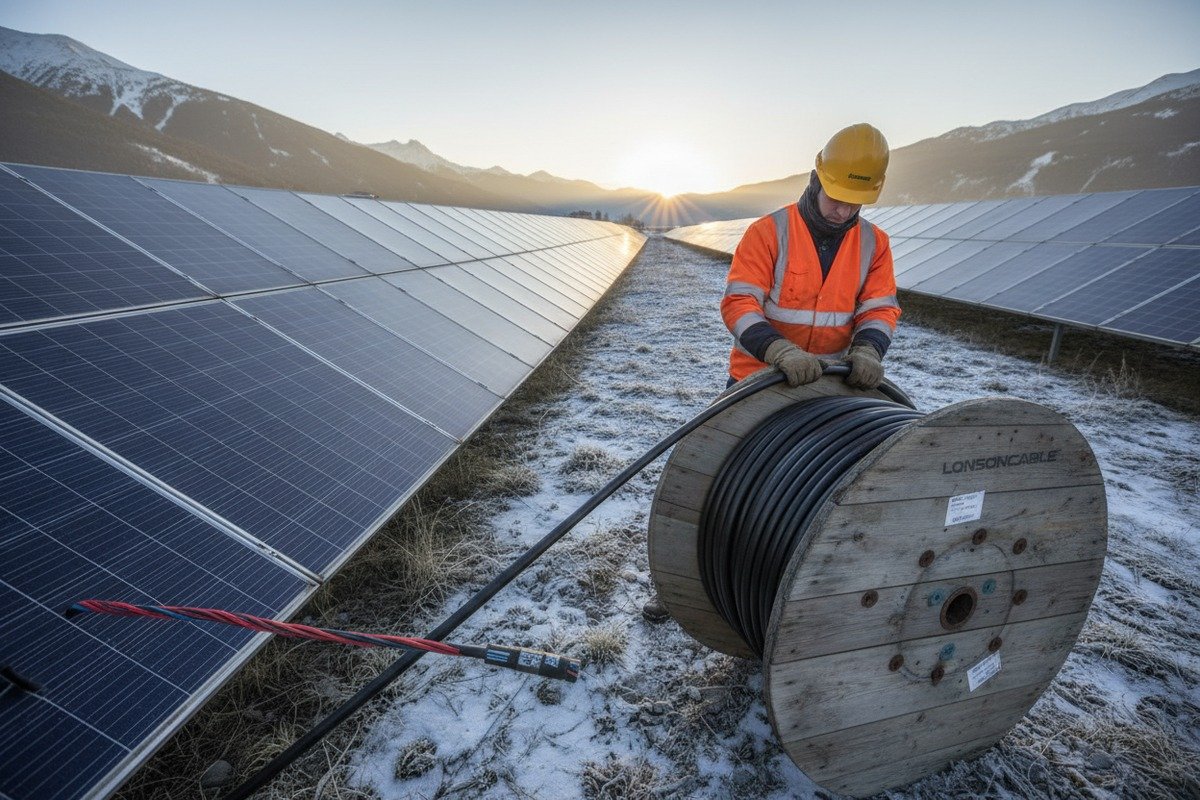
Every year, we see project managers across Europe lose weeks of construction time because their solar cables fail mid-installation or crack after a single winter XLPE cross-linked insulation 1. From our production lines in Hainan, we ship thousands of kilometers of PV cable to climates we study obsessively.
To choose solar PV cable specifications for European climates, prioritize EN 50618-certified H1Z2Z2-K cables with XLPE cross-linked insulation, a temperature rating of -40°C to +90°C, UV and ozone resistance, halogen-free construction, CPR fire classification, and a minimum 4mm² cross-section to ensure safe, efficient performance over a 25-year lifespan.
Europe's climate zones throw everything at solar cables — from Scandinavian frost to Mediterranean heat CPR fire classification 2. Each region demands different priorities. Let me walk you through exactly what to look for, step by step, so you never get burned by a bad cable purchase again.
How can I ensure my H1Z2Z2-K cables comply with the latest TUV EN50618 standards for European projects?
We have seen firsthand how a single expired certificate can halt an entire shipment at a European port. Our quality control team tests every production batch against EN 50618 3 requirements before anything leaves the factory floor.
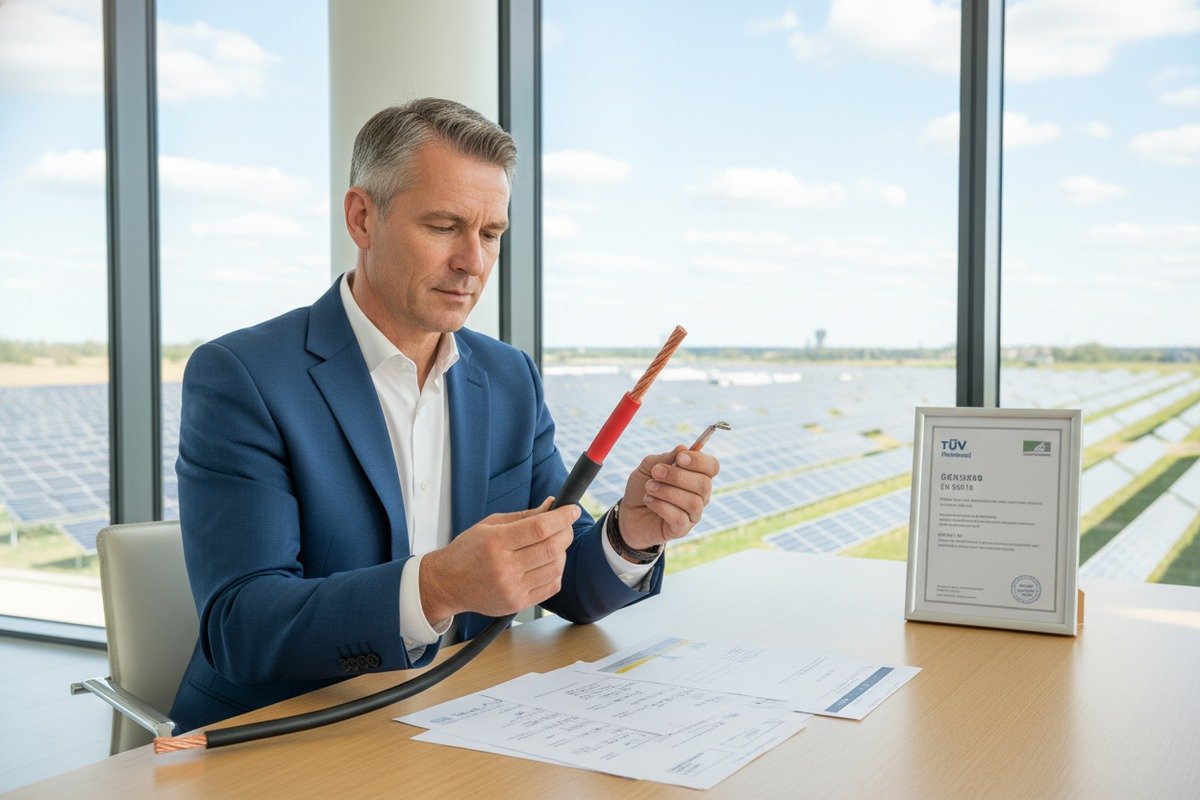
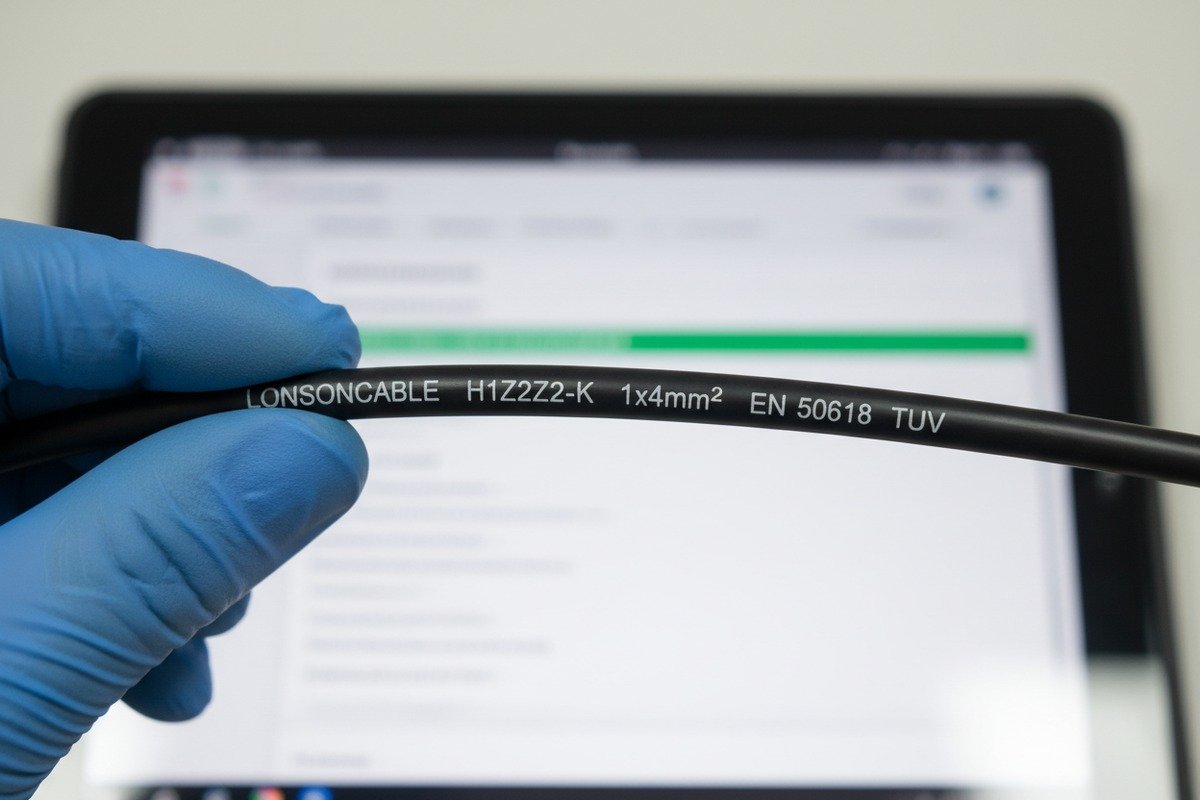
To ensure H1Z2Z2-K cables comply with TUV EN50618, verify the cable bears a valid TUV mark, confirm the certificate number on the certifier's online database, check for the correct H1Z2Z2-K designation printed on the sheath, and request third-party test reports covering voltage, temperature, and mechanical performance requirements.
Understanding the EN 50618 Standard
EN 50618 is the harmonized European standard for solar PV cables. It replaced the older TÜV 2PfG 1169/08.2007 guideline, though you still see PV1-F cables on the market from legacy stock. The key difference? EN 50618 is a formal CENELEC standard. It carries legal weight under EU product directives. The old TÜV guideline was a voluntary industry benchmark.
EN 50618 specifies cables rated for 1.5kV DC. It covers conductor sizes from 1.5mm² to 400mm². The standard demands tinned copper conductors 4 (per EN 60228), cross-linked insulation, and halogen-free sheath materials. It also sets strict tests for UV resistance, ozone aging, cold bend performance at -40°C, and flame retardancy.
How to Verify Authenticity
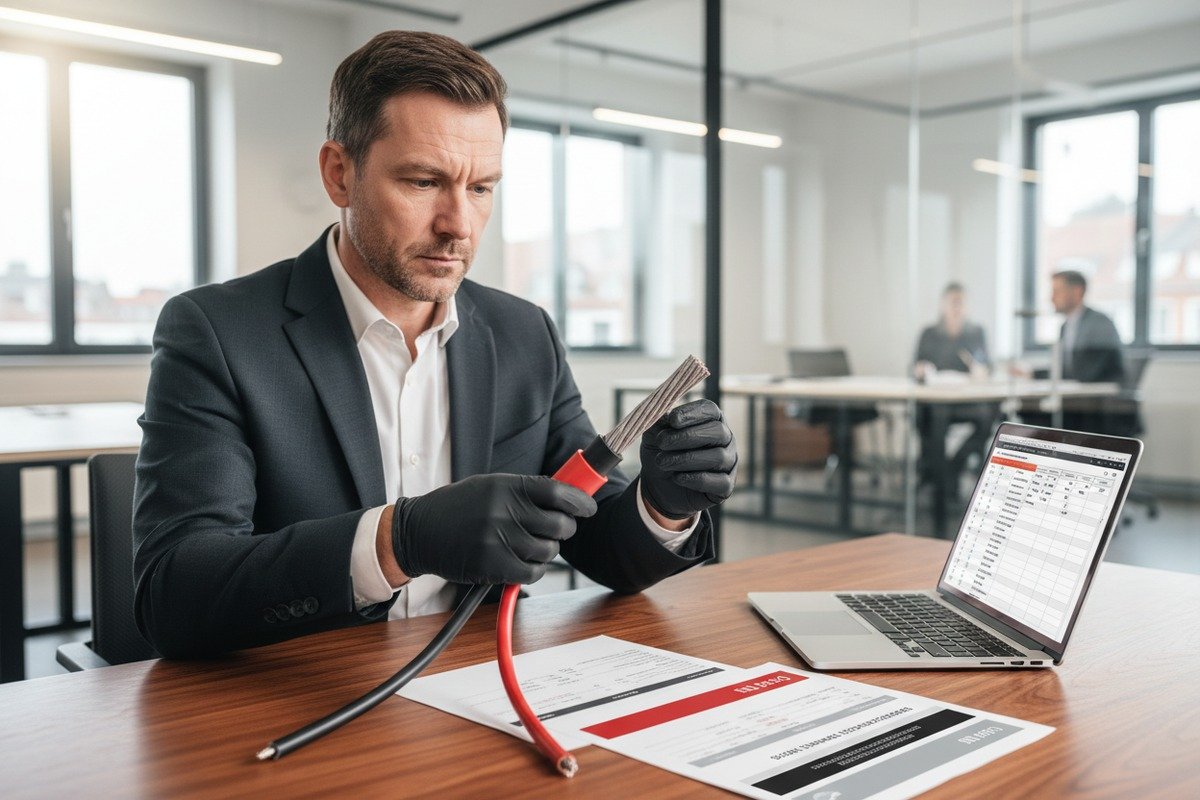
Certification fraud is a real problem. We have encountered competitors selling cables with photocopied TÜV logos and no actual certification behind them. Here is how you can protect yourself:
- Check the sheath print. A genuine H1Z2Z2-K cable 5 has the designation printed continuously along its length. Look for the manufacturer name, standard reference, voltage rating, and cross-section.
- Verify online. TÜV Rheinland 6 and TÜV SÜD both maintain public certificate databases. Enter the certificate number. If it does not appear, walk away.
- Request the full test report. A real manufacturer will provide detailed test results — not just a one-page summary.
- Ask for a factory audit report. Certification is not just about the product. It covers the manufacturing process too.
Key Differences Between Standards
| Feature | EN 50618 (H1Z2Z2-K) | IEC 62930 | TÜV 2PfG 1169 (PV1-F) |
|---|---|---|---|
| Status | EU Harmonized Standard | International Reference | Legacy Voluntary Guideline |
| Max DC Voltage | 1.5 kV | 1.8 kV | 1.5 kV |
| Temperature Range | -40°C to +90°C (conductor +120°C) | -40°C to +120°C | -40°C to +90°C |
| Conductor | Tinned Cu, 1.5–400mm² | Tinned Cu/Al | Tinned Cu |
| Fire Behavior | Halogen-free, flame retardant | Halogen-free | Flame retardant |
| CPR Compliance | Required for EU installations | Not specified | Not applicable |
For any project on European soil, EN 50618 is your safest bet. IEC 62930 is useful if your project spans multiple continents. And PV1-F? It still works for older systems, but new installations should move forward with H1Z2Z2-K.
A Practical Tip from Our Export Team
When we ship to Germany, the Netherlands, or Spain, we always include a compliance package: the original TÜV certificate, the latest test report, a declaration of performance for CPR, and our ISO 9001 documentation. We learned years ago that European customs officers and building inspectors will check. Having everything ready saves weeks.
What insulation materials should I choose to prevent cable degradation from extreme UV and ozone exposure?
Our R&D team spent considerable time testing insulation compounds under accelerated UV aging chambers because we knew Mediterranean rooftop temperatures and UV intensity would push materials to their limits.
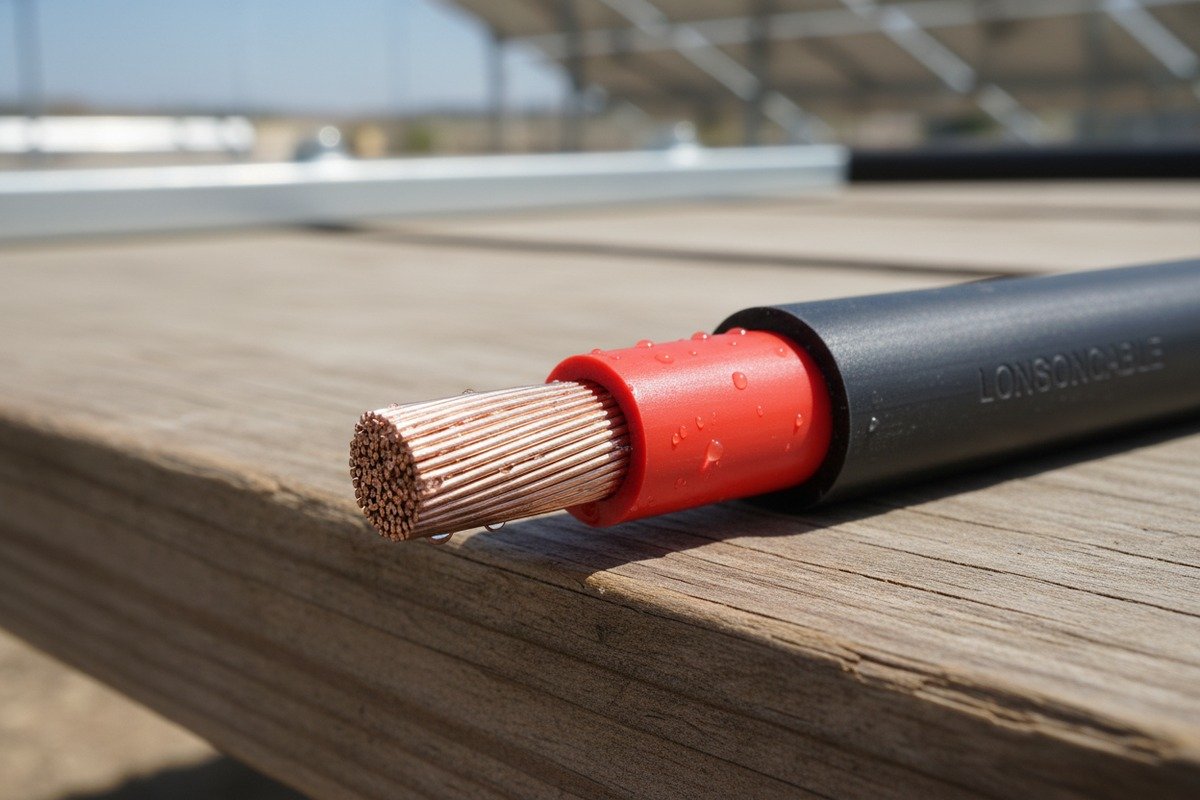
Choose cross-linked polyolefin (XLPO) or electron-beam cross-linked polyethylene (XLPE) insulation with a halogen-free outer sheath. These materials resist UV degradation, ozone cracking, and thermal aging far better than standard PVC or non-cross-linked compounds, maintaining mechanical integrity for 25+ years under direct sunlight exposure.
Why Cross-Linking Matters
Standard polyethylene melts and deforms under heat. Cross-linking changes the molecular structure. It creates chemical bonds between polymer chains. The result is a material that resists heat, stays flexible in cold, and does not crack under UV radiation.
There are two main cross-linking methods:
- Chemical cross-linking (silane or peroxide method): Used widely for cost-effective production. It gives good results but can vary in consistency.
- Electron-beam (E-beam) cross-linking: This is what we use on our premium H1Z2Z2-K lines. An electron beam bombards the insulation after extrusion. It creates a more uniform cross-link density. The result is more consistent UV and thermal performance across the entire cable length.
Comparing Insulation Materials
| Property | XLPE (Cross-linked PE) | XLPO (Cross-linked Polyolefin) | Standard PVC | EPR (Ethylene Propylene Rubber) |
|---|---|---|---|---|
| UV Resistance | Excellent | Excellent | Poor | Good |
| Ozone Resistance | Excellent | Excellent | Moderate | Excellent |
| Temperature Range | -40°C to +120°C | -40°C to +120°C | -20°C to +70°C | -40°C to +90°C |
| Halogen-Free | Yes | Yes | No (contains chlorine) | Yes |
| Flexibility | Good | Very Good | Moderate | Excellent |
| Cost | Medium | Medium-High | Low | High |
| Lifespan (Outdoor) | 25–30 years | 25–30 years | 8–15 years | 20–25 years |
PVC is cheap. But it contains halogens. It releases toxic fumes when burned. And it cracks after a few years of UV exposure on a rooftop. It is simply not suitable for solar PV applications in Europe.
The Dual-Layer Advantage
EN 50618 requires a dual-layer construction: an inner insulation and an outer sheath. Both layers serve distinct purposes.
The inner insulation provides electrical isolation. It must withstand the rated voltage (1.5kV DC) without breakdown. XLPE is the most common choice here.
The outer sheath protects against mechanical damage, UV, moisture, and chemical exposure. It is typically made from a halogen-free, cross-linked polyolefin compound. This sheath is what faces the sun, rain, and wind every single day for decades.
Real-World Degradation Risks
Southern European countries like Spain, Italy, and Greece see over 2,500 hours of direct sunlight per year. Rooftop installations push cable surface temperatures well beyond ambient air temperature — sometimes reaching 80–90°C on dark surfaces. Ozone concentration also rises in urban and industrial areas.
If the insulation compound is not properly cross-linked, you will see:
- Surface cracking within 3–5 years
- Reduced insulation resistance
- Increased risk of ground faults and arc faults
- Warranty claims and costly cable replacements
Our engineers have tested cable samples from failed installations. In almost every case, the root cause was a low-quality insulation compound that was either not properly cross-linked or was substituted with a cheaper, non-UV-stabilized material. This is why we insist on E-beam cross-linking and add UV stabilizers to both layers of our H1Z2Z2-K cable.
How do I verify that the solar cables meet the strict CPR fire safety classifications required for my installation site?
We have had customers in the Netherlands and Germany whose entire cable shipments were held at customs because the Declaration of Performance was missing or listed an incorrect CPR class. This is an expensive lesson we help our clients avoid.
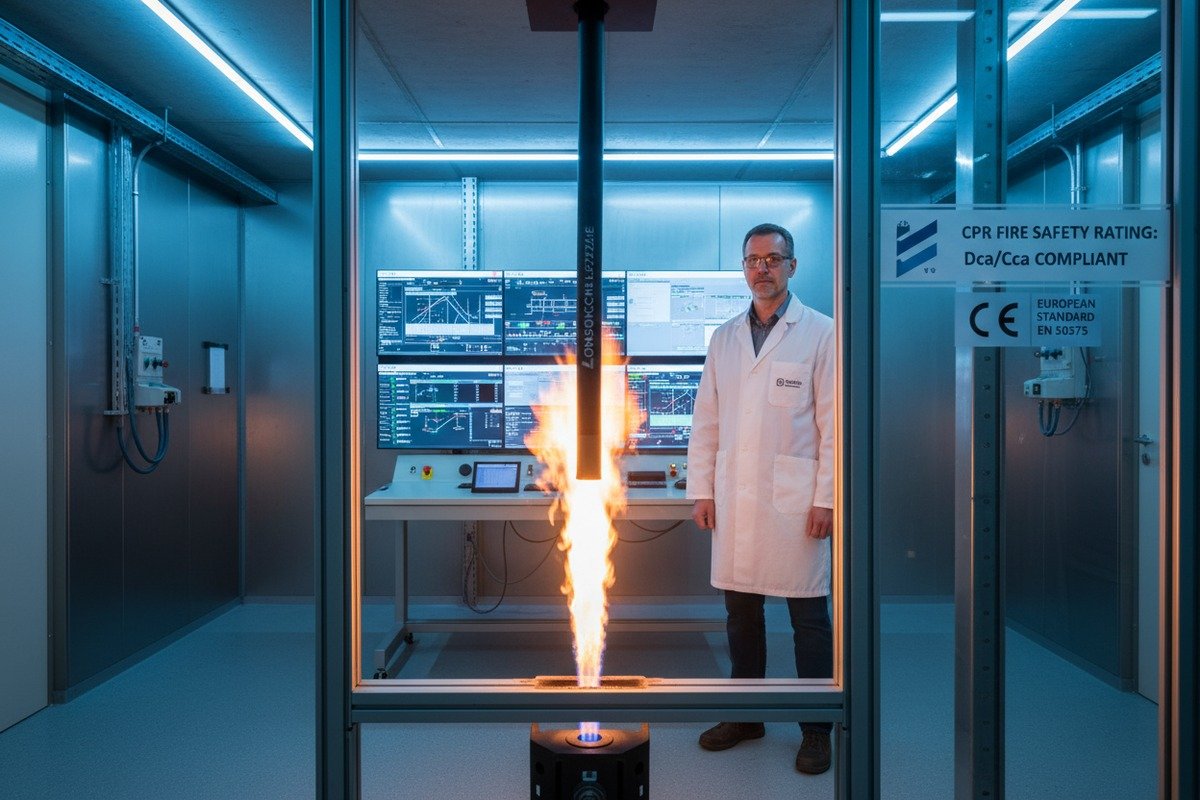
Verify CPR compliance by requesting the cable's Declaration of Performance (DoP) document, confirming the Euroclass fire rating (typically Eca, Dca, or Cca), checking that the notified body's number matches a recognized EU testing laboratory, and ensuring the CE marking on the cable sheath references the correct Construction Products Regulation classification.
What Is CPR and Why Does It Matter?
The Construction Products Regulation (EU) No. 305/2011 7 requires that cables permanently installed in buildings or construction works carry a CE marking with a declared fire performance class. Since July 2017, this has been mandatory across the EU.
For solar PV cables, CPR applies when cables are installed on or within buildings — rooftop systems, building-integrated PV, carport structures, and similar setups. Ground-mounted solar farms may have different local requirements, but many authorities still request CPR-rated cables for consistency.
CPR Fire Classes Explained
The Euroclass system 8 ranks cables from highest fire performance to lowest:
| Euroclass | Fire Performance Level | Typical Application | Additional Tests Required |
|---|---|---|---|
| Aca | Highest — virtually non-combustible | Critical infrastructure, tunnels | Heat release, flame spread, smoke, droplets, acidity |
| B1ca | Very high | Hospitals, public buildings | Heat release, flame spread, smoke, droplets, acidity |
| B2ca | High | Commercial buildings | Heat release, flame spread, smoke, droplets, acidity |
| Cca | Moderate-high | Offices, schools | Flame spread, smoke, droplets, acidity |
| Dca | Moderate | Residential, standard commercial | Flame spread, smoke, droplets |
| Eca | Basic | General installations | Single flame test (EN 60332-1-2) |
| Fca | No performance declared | Not recommended | None |
Most solar PV installations require Eca as a minimum. However, German building codes, Dutch NEN standards, and Scandinavian regulations increasingly demand Dca or even Cca for rooftop installations on public or commercial buildings.
How to Read the Declaration of Performance
Every CPR-compliant cable must come with a DoP. Declaration of Performance (DoP) document 9 This document states:
- The manufacturer's name and address
- The product's unique identification code
- The intended use
- The Euroclass fire rating
- The notified body that supervised factory production control
- The relevant test standard (EN 50575)
When we prepare shipments for European projects, our compliance team generates a DoP for each cable type and batch. We include the notified body number so the buyer can cross-check with the EU's NANDO database (New Approach Notified and Designated Organisations).
Practical Steps for Buyers
- Before ordering, specify your required CPR class in the purchase order. Do not assume the supplier knows your local requirement.
- During production, request photos of the sheath printing. The CPR class and CE mark should be printed directly on the cable.
- Upon delivery, compare the DoP against the physical cable markings. They must match.
- Keep records. Building inspectors may request DoP documents years after installation. Store them with your project documentation.
The Cost of Getting It Wrong
If cables arrive at your job site without proper CPR classification, local building authorities can reject the installation. You may face fines. Worse, you might need to pull installed cables and replace them — an operation that can cost tens of thousands of euros in labor alone, not counting project delays and grid-connection penalties.
What specifications should I prioritize to guarantee my PV cables maintain performance over a 25-year lifespan in cold climates?
Our testing chambers simulate Nordic winters at -40°C. We bend cables, twist them, and pull them across sharp edges at those temperatures because we know that a cable that cracks during a January installation in Finland is a cable that will cost our clients a project.
For 25-year performance in cold climates, prioritize cables rated to -40°C with flexible tinned copper stranded conductors, E-beam cross-linked XLPE insulation, a minimum 4mm² cross-section, proper ampacity derating for ambient temperature, and verified cold bend and cold impact test results per EN 50618 and IEC 60811-504.
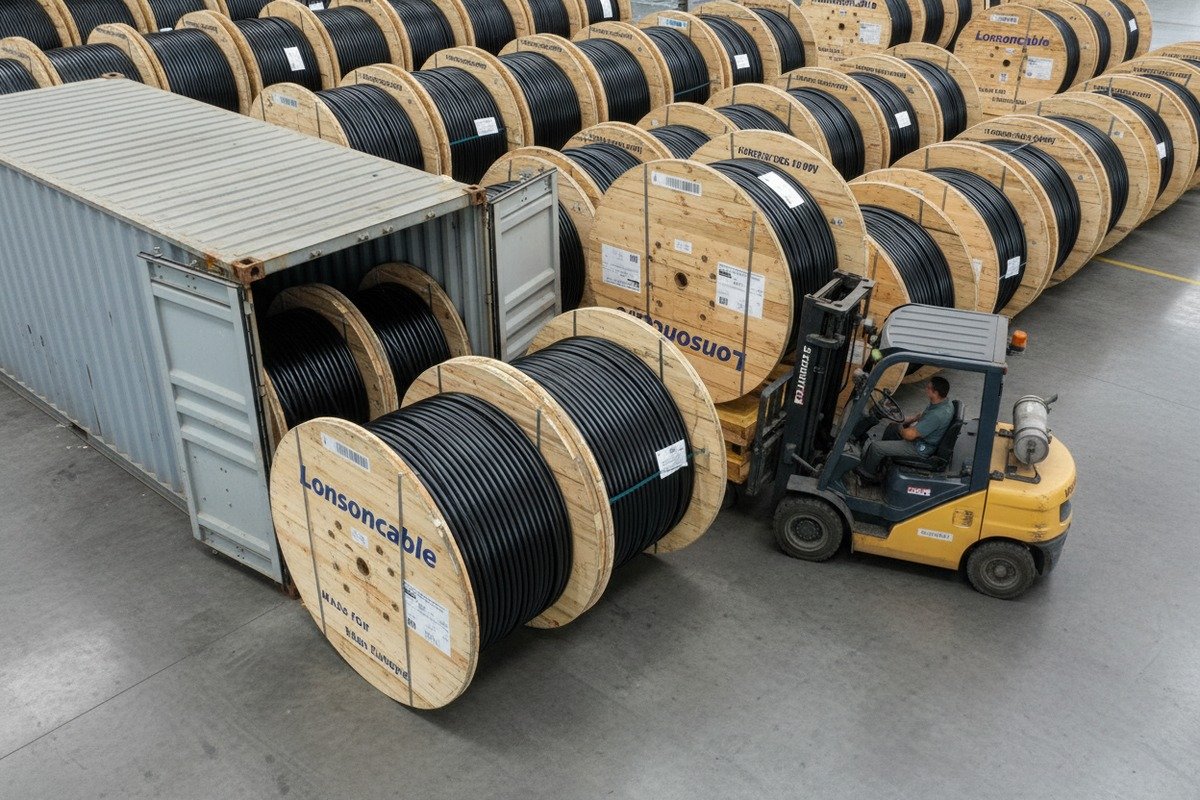
Cold Climate Challenges for PV Cables
Cold weather attacks cables in ways that heat does not. When temperatures drop below -20°C, standard insulation compounds become rigid. They lose flexibility. If you try to bend a cold, rigid cable around a mounting bracket, it can crack. That crack exposes the conductor to moisture. Moisture leads to corrosion. Corrosion leads to resistance increases, hot spots, and eventually, cable failure.
Northern Europe — Scandinavia, the Baltics, northern Germany, and alpine regions — regularly sees temperatures below -20°C. Some areas reach -40°C. Snow loads on cable trays add mechanical stress. Ice formation can crush poorly supported cable runs.
Key Specifications for Cold Climate Performance
Here is what you should demand from your supplier:
Conductor: Use Class 5 (flexible) tinned copper stranded conductors per EN 60228. Stranded conductors handle repeated thermal cycling better than solid cores. Tinning prevents oxidation when moisture inevitably contacts the copper over decades.
Insulation and Sheath: XLPE or XLPO compounds rated for -40°C cold bend. The cold bend test (IEC 60811-504 10) wraps the cable around a mandrel at -40°C and checks for cracks. If the cable passes, it will survive Nordic installation conditions.
Cross-section: Minimum 4mm² for string cables. In cold climates, voltage drop is less of an issue (cold conductors have lower resistance), but mechanical robustness matters more. Thinner cables are more fragile.
Derating Factors: Cold climates actually benefit ampacity. A cable rated 50A at 30°C ambient may carry more current at -10°C ambient. But do not ignore summer temperatures — even in Scandinavia, rooftop cables can reach 50–60°C in July.
Regional Climate Mapping for Cable Selection
| European Region | Winter Low | Summer High (Rooftop) | Primary Cable Concern | Recommended Min Cross-Section |
|---|---|---|---|---|
| Nordic (Sweden, Norway, Finland) | -40°C | +50°C | Cold flexibility, snow load | 6mm² |
| Baltic (Estonia, Latvia, Lithuania) | -30°C | +55°C | Cold flexibility, humidity | 6mm² |
| Alpine (Switzerland, Austria) | -25°C | +60°C | UV at altitude, cold flex | 4–6mm² |
| Central (Germany, Netherlands, Poland) | -20°C | +65°C | Balanced UV/cold performance | 4mm² |
| Mediterranean (Spain, Italy, Greece) | -5°C | +85°C | Extreme heat, UV, ozone | 6mm² (for heat derating) |
Derating and Oversizing: A Balanced Approach
There is an ongoing debate in the industry about oversizing cables. A 6mm² cable costs roughly 30–40% more per meter than a 4mm² cable. For a large solar farm with hundreds of kilometers of string cable, that difference adds up fast.
However, oversizing reduces resistive losses (I²R losses). Over 25 years, those reduced losses translate into more energy harvested and more revenue. Our engineering team typically recommends running a simple payback calculation: compare the additional cable cost against the energy savings over the system's lifetime. In most cases, stepping up from 4mm² to 6mm² pays for itself within 5–7 years.
Long-Term Durability Factors
A 25-year lifespan is not just about the cable material. It also depends on:
- Connection quality. Use MC4 or equivalent connectors rated for the same temperature range. A good cable with a bad connector will still fail.
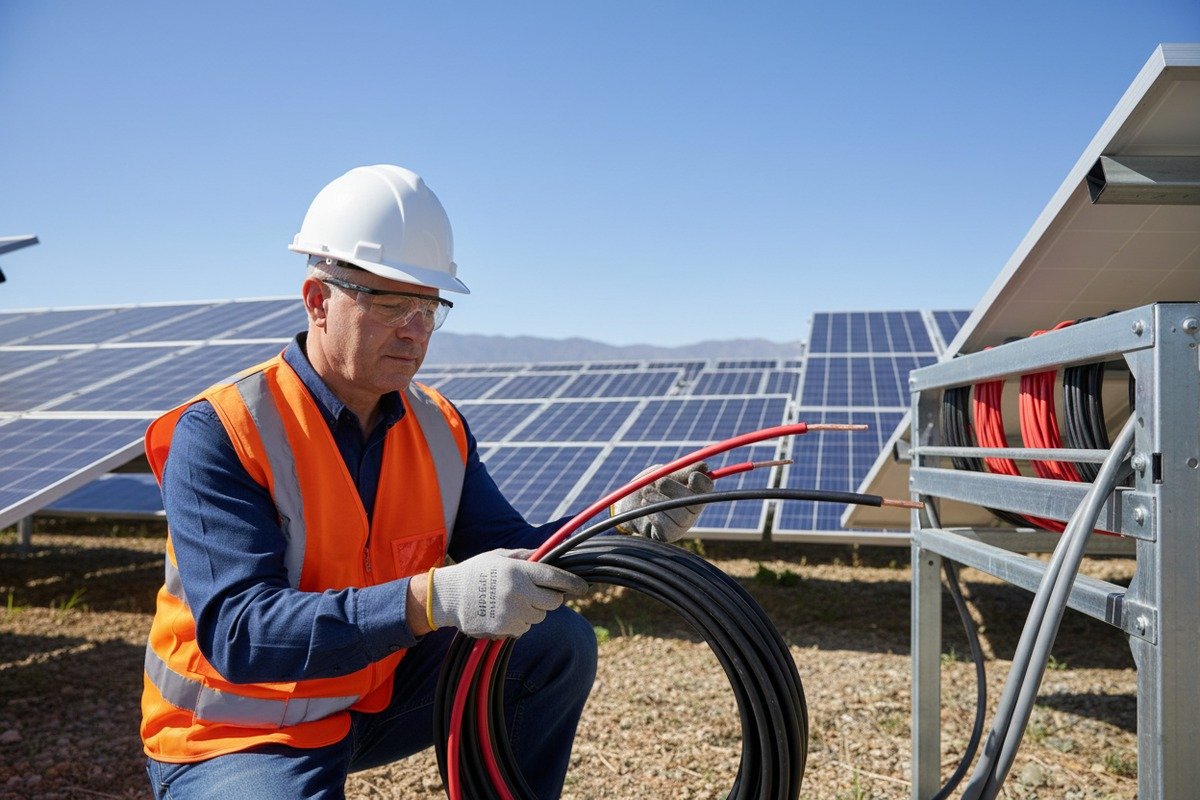
- Installation practice. Avoid sharp bends below the minimum bend radius (typically 4× the outer diameter). Secure cables to prevent wind-induced abrasion.
- UV exposure management. Even UV-resistant cables benefit from cable trays or conduits where possible. Less direct exposure means slower aging.
- Periodic inspection. Check cables every 3–5 years for signs of sheath discoloration, cracking, or connector corrosion. Early detection prevents catastrophic failure.
When we manufacture cables for Nordic projects, we include a detailed installation guide in English, German, and Swedish. It covers bend radius, torque values for connectors, and recommended inspection intervals. Small details like these can be the difference between a 25-year cable and a 10-year cable.
Conclusion
Choosing the right solar PV cable for European climates comes down to verified EN 50618 certification, proper insulation materials, CPR compliance, and specifications matched to your specific region's temperature extremes. Get these right, and your cables will outlast the panels they connect.
Footnotes
1. Details the properties and advantages of XLPE insulation in electrical cables. ↩︎
2. Explains the Construction Products Regulation (CPR) and its fire classification system for cables. ↩︎
3. Found a working and authoritative URL describing the EN 50618 standard. ↩︎
4. Explains the benefits of tinned copper conductors, including corrosion resistance and extended lifespan. ↩︎
5. Explains the H1Z2Z2-K designation and its importance for solar PV cable performance. ↩︎
6. Official website of a leading international testing and certification service provider. ↩︎
7. Provides an overview of the EU regulation governing construction products, including cables. ↩︎
8. Explains the Euroclass system for classifying cable fire performance under CPR. ↩︎
9. Found a working and authoritative government URL explaining the Declaration of Performance (DoP) document. ↩︎
10. Details the cold bend test procedure for electrical cables as specified by IEC 60811-504. ↩︎