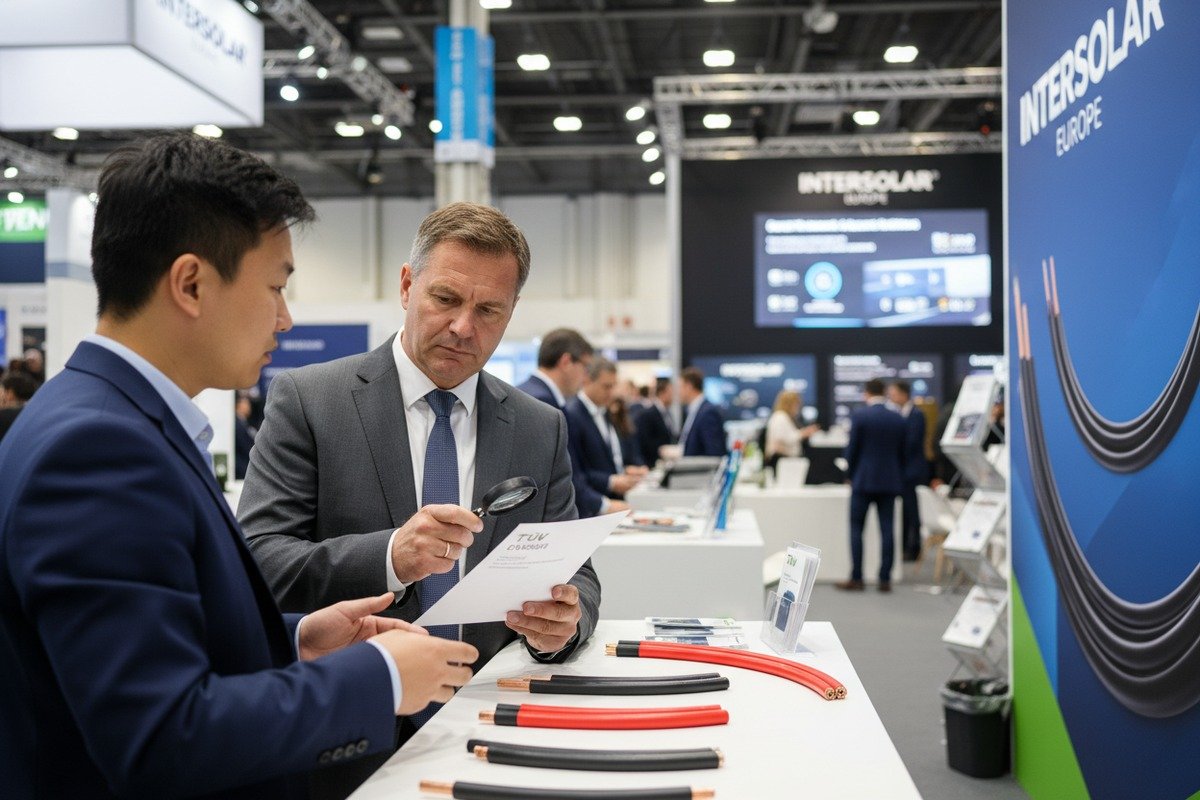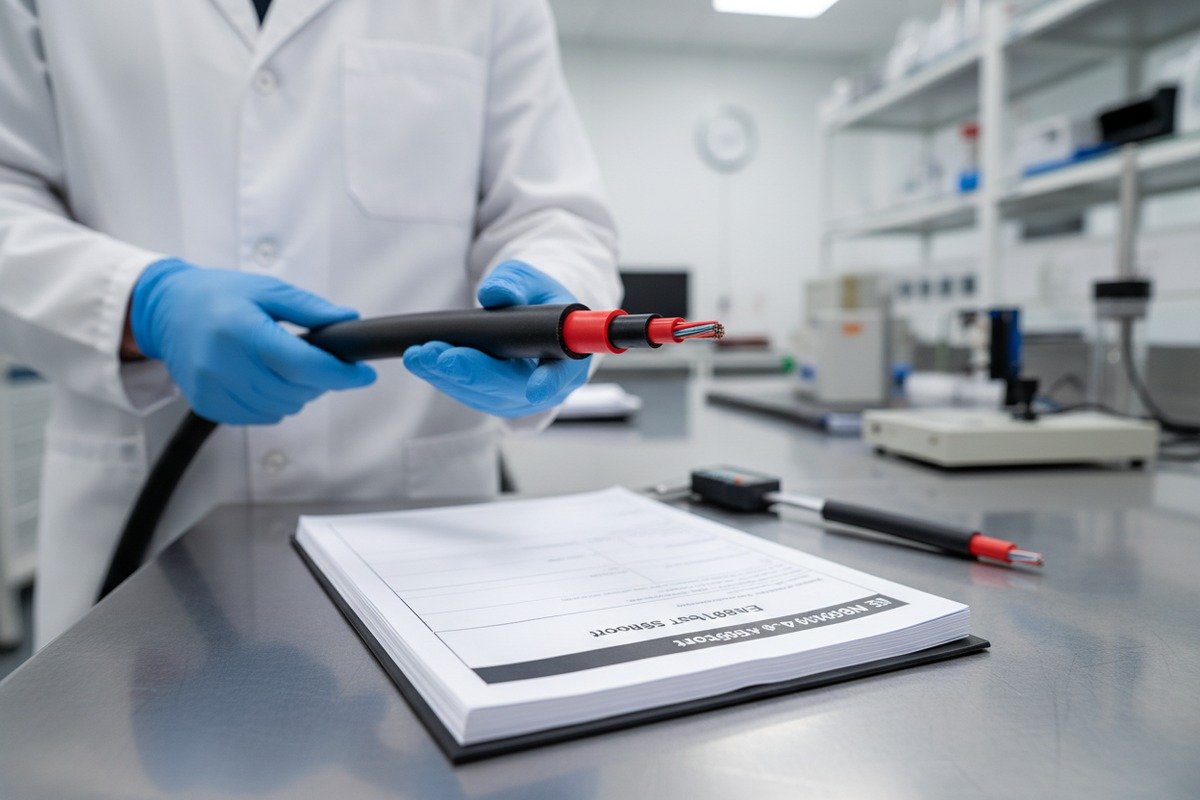
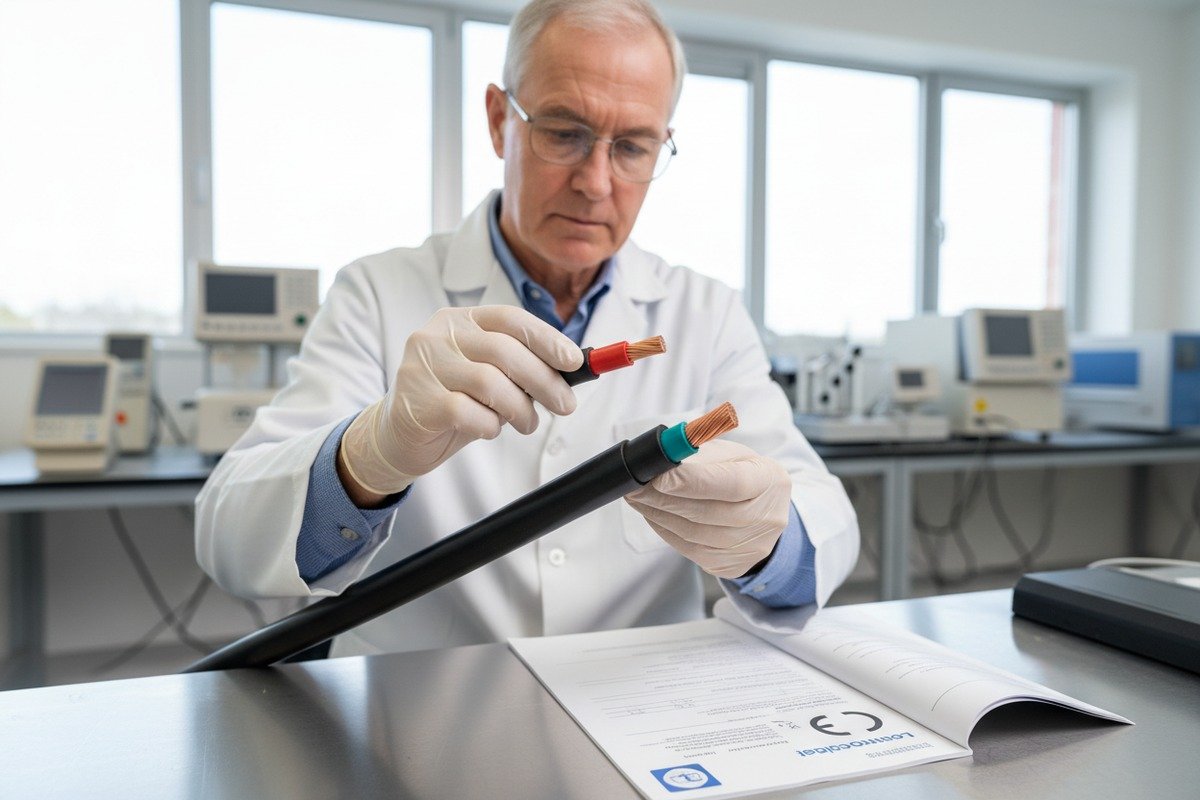
Every year, we ship thousands of cable drums from our production lines in China to solar farms across Europe. One recurring question from procurement teams keeps coming back: what fire ratings do these cables actually need? The stakes are enormous. A single non-compliant shipment can be blocked at customs, rejected at inspection, or worse — contribute to a rooftop fire that endangers lives.
Solar PV cables sold in the European market must comply with EN 50618 for construction and performance standards and the Construction Products Regulation (CPR 305/2011/EU) for fire reaction ratings. Most rooftop and commercial installations require a minimum Euroclass of Dca, with Cca or B2ca often demanded for buildings. Cables must also be halogen-free, low-smoke, and CE-marked with a valid Declaration of Performance.
This guide breaks down each fire rating requirement, explains how to verify supplier certifications, and gives you a practical roadmap for passing European grid inspections. Let's go step by step.
How do I determine whether my project requires a Dca or Cca CPR fire rating for solar cables?
Choosing between Dca and Cca is one of the most common headaches we hear about from our EPC partners in Germany and the Netherlands. The wrong choice means rejected shipments or costly project delays.
Your project's required CPR fire class depends on the building type, cable routing, and national regulations. Residential and commercial rooftop PV systems typically require Cca-s1b,d1,a1 or higher. Ground-mount utility projects with cables in open air may only need Dca. Always check the specific national annex of your country, as requirements vary across EU member states.
Understanding the CPR Euroclass System
The Construction Products Regulation 1 (EU 305/2011) requires all cables permanently installed in buildings to carry a CE mark and a Declaration of Performance 2 (DoP). The fire reaction performance is classified using the Euroclass system 3, which ranges from Aca (non-combustible) down to Fca (no performance determined).
For solar PV cables, the most relevant classes are B2ca, Cca, and Dca. Each class is tested under EN 50399 4 (heat release and smoke production) and EN 60332-1-2 (single cable flame propagation). Additional sub-classifications cover smoke production (s), flaming droplets (d), and acidity (a).
Euroclass Ratings at a Glance
| Euroclass | Fire Performance | Smoke (s) | Droplets (d) | Acidity (a) | Typical Application |
|---|---|---|---|---|---|
| B2ca | Very limited fire spread, low heat release | s1a, s1b | d0, d1 | a1, a2, a3 | High-rise buildings, hospitals, tunnels |
| Cca | Limited fire spread | s1a, s1b | d0, d1 | a1, a2, a3 | Commercial rooftops, residential buildings |
| Dca | Medium fire contribution | s2 | d2 | a2, a3 | Ground-mount PV, industrial open-air runs |
| Eca | Small flame, single cable test only | — | — | — | Low-risk temporary installations |
| Fca | No performance determined | — | — | — | Not acceptable for EU construction use |
How National Annexes Change the Rules
Here is an important point many buyers miss. The CPR sets the framework, but each EU member state publishes its own national annex that specifies the minimum Euroclass for different building types. In Germany, the Bauregelliste and state building codes often require Cca for cables inside residential and commercial structures. In France, the NF C 15-100 standard pushes toward B2ca for public-access buildings. The Netherlands follows a similar pattern.
Our engineering team always recommends that clients confirm the national requirement before placing an order. We have seen cases where a buyer ordered Dca-rated cables for a rooftop project in Belgium, only to have the local authority reject them and demand Cca. That mistake cost months of delay.
When Dca Is Enough
Ground-mount utility-scale solar farms with cables routed through outdoor trenches or conduits often fall outside the "construction product" definition. In those cases, Dca may be sufficient. But the moment a cable enters a building — even a utility room or inverter shed — the higher Cca or B2ca requirement kicks in.
If your project involves both outdoor and indoor cable runs, specify two separate cable types or choose the higher rating throughout. It costs a bit more, but it eliminates compliance risk entirely.
How can I verify that my supplier's TUV fire safety certificates are authentic and compliant with European law?
Certification fraud is a problem we have fought against for years. When we invest in genuine TÜV and VDE audits for our H1Z2Z2-K cables, it frustrates us deeply to see competitors selling products with forged or expired certificates.
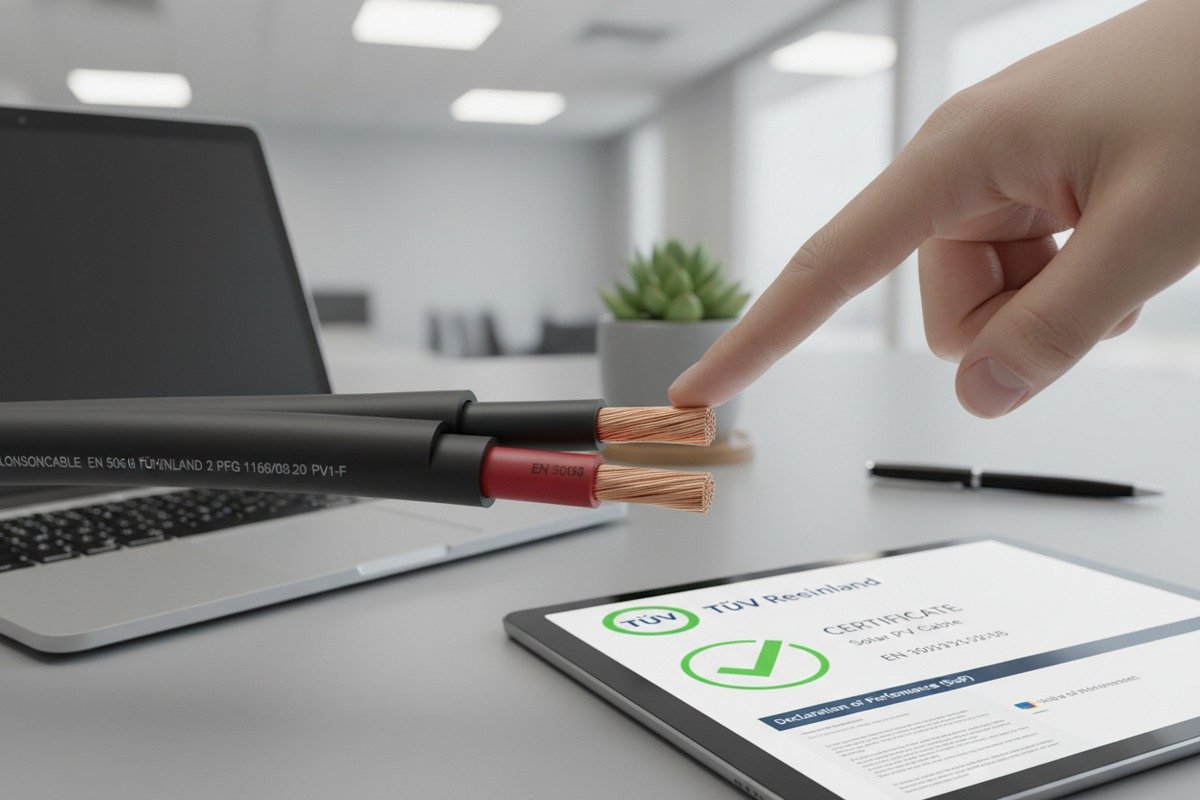
To verify a supplier's TÜV certificate, cross-check the certificate number directly on the TÜV Rheinland or TÜV SÜD online database (Certipedia). Confirm the certificate holder name matches the manufacturer, check the expiry date, and ensure the tested standard (EN 50618 or IEC 62930) matches your project requirement. Request the original Declaration of Performance (DoP) and verify its consistency with the CE marking on the cable.
Step-by-Step Verification Process
First, ask your supplier for a clear PDF or scan of the TÜV certificate. Look for the certificate number, the issuing body (TÜV Rheinland, TÜV SÜD, etc.), the product model, and the tested standard. Then go to the Certipedia website 5 (www.certipedia.com) and enter the certificate number. The database will show you the certificate holder, product scope, and validity dates.
If the certificate does not appear in the database, it is either fake or has been withdrawn. We have had European clients tell us they discovered fake certificates only after goods arrived at port. That is a costly lesson.
Key Documents to Request
| Document | Purpose | Where to Verify |
|---|---|---|
| TÜV Certificate (EN 50618 6) | Confirms cable design, insulation, and fire properties meet EU standard | Certipedia or TÜV issuing body website |
| Declaration of Performance (DoP) | Legal CPR requirement; states fire Euroclass, smoke, droplets, acidity | Manufacturer's website or on request |
| CE Marking Label | Proves CPR conformity assessment was completed | Physical cable jacket print |
| Factory Audit Report | Confirms production site passed quality management inspection | Request from certification body |
| Test Report (EN 50399 / EN 60332) | Detailed fire test data from accredited laboratory | Accredited lab that issued the report |
Red Flags to Watch For
Pay attention to these warning signs. If the certificate lists a trading company instead of the actual factory, ask questions. If the cable model on the certificate does not exactly match the product being offered, reject it. If the supplier cannot provide a DoP, they are not CPR compliant — period.
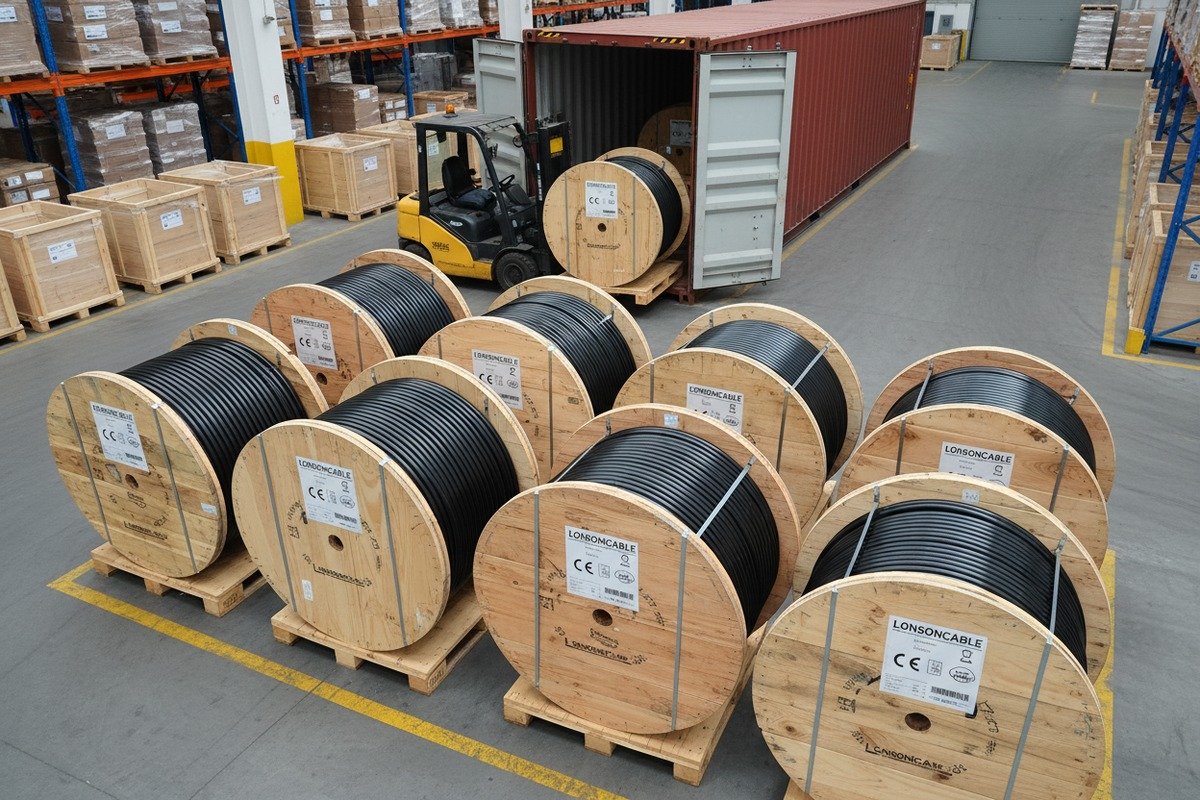
At our factory, every cable drum carries a printed label with the CE mark, our DoP reference number, and the TÜV certificate number. We encourage clients to physically inspect sample drums before approving bulk shipments.
Why Authentic Certification Matters Beyond Compliance
Fake certificates do not just risk customs seizure. They expose you to liability. If a fire occurs and the cables are found to be non-compliant, the EPC company and the distributor can face criminal prosecution under EU product safety law. Our advice: spend the time upfront to verify. It is far cheaper than a lawsuit.
What specific fire performance standards must my PV cables meet to pass local grid inspections?
When we prepare documentation packages for our European distributors, we always include every test report the grid inspector might ask for. Missing even one report can stall an entire project.
To pass European grid inspections, solar PV cables must demonstrate compliance with EN 50618 (cable construction and halogen-free fire properties), CPR Euroclass fire reaction rating (tested per EN 50399 and EN 50575), single cable flame propagation (EN 60332-1-2), and low-smoke zero-halogen (LSZH) material composition. A valid CE mark, Declaration of Performance, and matching TÜV or VDE certificate must accompany the installation.
The Core Testing Standards Explained
EN 50618 is the primary European harmonized standard for photovoltaic cables. It defines requirements for single-core cables rated up to 1500V DC. The standard mandates double insulation, UV resistance, ozone resistance, and — critically — the use of halogen-free, low-smoke materials. Cables meeting this standard are typically designated H1Z2Z2-K.
The fire performance testing sits on top of this. EN 50399 measures heat release rate, total heat release, and smoke production when cables are burned in a bundle configuration. EN 60332-1-2 7 tests flame propagation on a single vertical cable. Together, these tests determine the Euroclass rating.
How EN 50618 and CPR Work Together
Think of EN 50618 as the "construction blueprint" for the cable. It tells you what materials, dimensions, and performance criteria the cable must meet. The CPR Euroclass rating is the "fire report card." You need both.
A cable can be perfectly designed to EN 50618 but still only achieve a Dca fire rating. If your project requires Cca, that cable will not pass inspection. This is why we always confirm the target Euroclass with clients before production begins.
Fire Test Standards Summary
| Test Standard | What It Measures | Role in Compliance |
|---|---|---|
| EN 50399 | Heat release rate, total heat release, smoke production, flame spread in cable bundle | Primary test for CPR Euroclass classification |
| EN 60332-1-2 | Flame propagation on single vertical cable | Baseline flame retardancy check |
| EN 50575 | Assessment and verification of constancy of performance for CPR | Defines the system for factory production control 8 and third-party audits |
| EN 61034 | Smoke density measurement | Supports LSZH verification |
| IEC 60754-1/2 | Halogen content and acidity of combustion gases | Confirms halogen-free and low-acid properties |
What Grid Inspectors Actually Check On-Site
Based on feedback from our clients, grid inspectors typically check three things. First, they verify the cable jacket markings match the DoP and CE certificate. Second, they may request test reports for the specific batch. Third, they inspect the installation — proper cable routing, separation distances, and use of non-combustible cable trays.
CFPA-E (Confederation of Fire Protection Associations Europe) guidelines recommend non-flame-propagating cable management systems. Metal trays are sometimes avoided because sharp edges can damage cable insulation, increasing arc fault risk. Our production team always advises using smooth-edged or coated cable support systems.
Separation Distances Matter
Fire safety is not just about the cable itself. FRISSBE guidelines and VdS 2234 recommend 1 to 2 meters of clearance between PV arrays and fire walls. VdS specifies keeping arrays at least 1.25 meters from roof edges. Array sizes should not exceed roughly 40 × 40 meters without fire breaks. These layout rules directly affect whether your installation passes inspection, even if your cables are perfectly rated.
How do I ensure the fire-retardant properties of my cables will actually last for the full 25-year lifespan?
On our production floor, we test XLPO insulation samples under accelerated aging conditions that simulate decades of UV exposure, thermal cycling, and moisture. The results often surprise people — not all "fire-rated" cables stay fire-rated over time.
To ensure 25-year fire retardancy, specify cables made with cross-linked polyolefin (XLPO) insulation that has been tested for long-term thermal aging (EN 60216), UV resistance (EN 50618 weathering tests), and mechanical durability under cyclic stress. Request accelerated aging test reports, confirm the cable's temperature rating covers your site conditions (-40°C to +90°C or +120°C), and choose suppliers with ISO 9001-certified production and ongoing factory audits by TÜV or VDE.
Why Fire Retardancy Degrades Over Time
Fire-retardant compounds in cable insulation work by releasing gas or forming a char barrier when exposed to flame. But over 25 years on a rooftop, UV radiation breaks down polymer chains. Heat cycling causes micro-cracks. Moisture ingress can wash out flame-retardant additives. If the base XLPO material is low quality, the cable may lose its fire rating within just 5 to 10 years.
This is a serious concern. Post-2023 analyses from TÜV and Fraunhofer have highlighted material degradation as a leading cause of PV cable failures. Cheap cross-linking processes or insufficient additive concentrations are the root causes.
What to Look For in Material Quality
At our facility, we use electron beam (EB) cross-linked polyolefin 9 with carefully calibrated flame-retardant additive packages. EB cross-linking produces a more uniform molecular structure compared to silane or peroxide methods, which means more consistent long-term performance.
Ask your supplier these questions:
- What cross-linking method do you use? (EB is preferred for uniformity.)
- What is the gel content after cross-linking? (Should be above 65% for reliable long-term performance.)
- Have you conducted accelerated thermal aging per EN 60216 10 or IEC 60216?
- Can you provide UV exposure test results per EN 50618 Annex requirements?
- What is the temperature index (TI) of the insulation material?
Testing for Long-Term Performance
| Test | Standard | What It Proves |
|---|---|---|
| Thermal endurance | EN 60216 / IEC 60216 | Insulation retains properties at rated temperature over decades |
| UV weathering | EN 50618 (UV exposure protocol) | Jacket and insulation resist degradation from sunlight |
| Ozone resistance | EN 50396 | Material does not crack under atmospheric ozone exposure |
| Mechanical cycling | EN 50618 (bend test, abrasion) | Cable withstands installation stress and thermal expansion |
| Hot set test | IEC 60811-507 | Cross-linking quality verified under heat and mechanical load |
| Flame retardancy after aging | Internal protocols (TÜV recommended) | Fire performance maintained after simulated 25-year aging |
The Role of Factory Production Control
CPR compliance is not a one-time event. Under EN 50575, manufacturers must maintain an ongoing Factory Production Control (FPC) system, audited annually by a notified body. This ensures that every batch of cable leaving the factory meets the same fire performance as the originally tested sample.
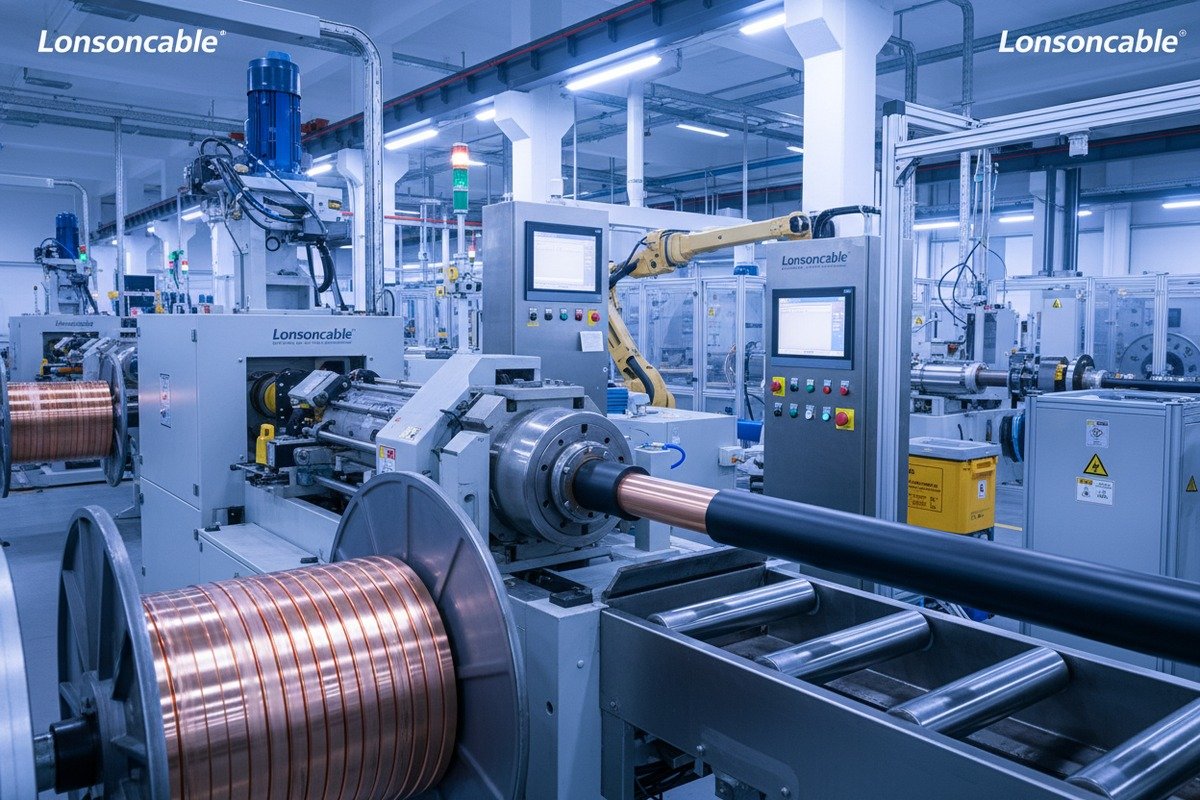
We welcome our clients to visit our 230,000 m² production facility to see this system in action. Our FPC covers raw material incoming inspection, cross-linking process parameters, flame test sampling, and final product marking verification. Every production batch is traceable.
Practical Tips for Installers
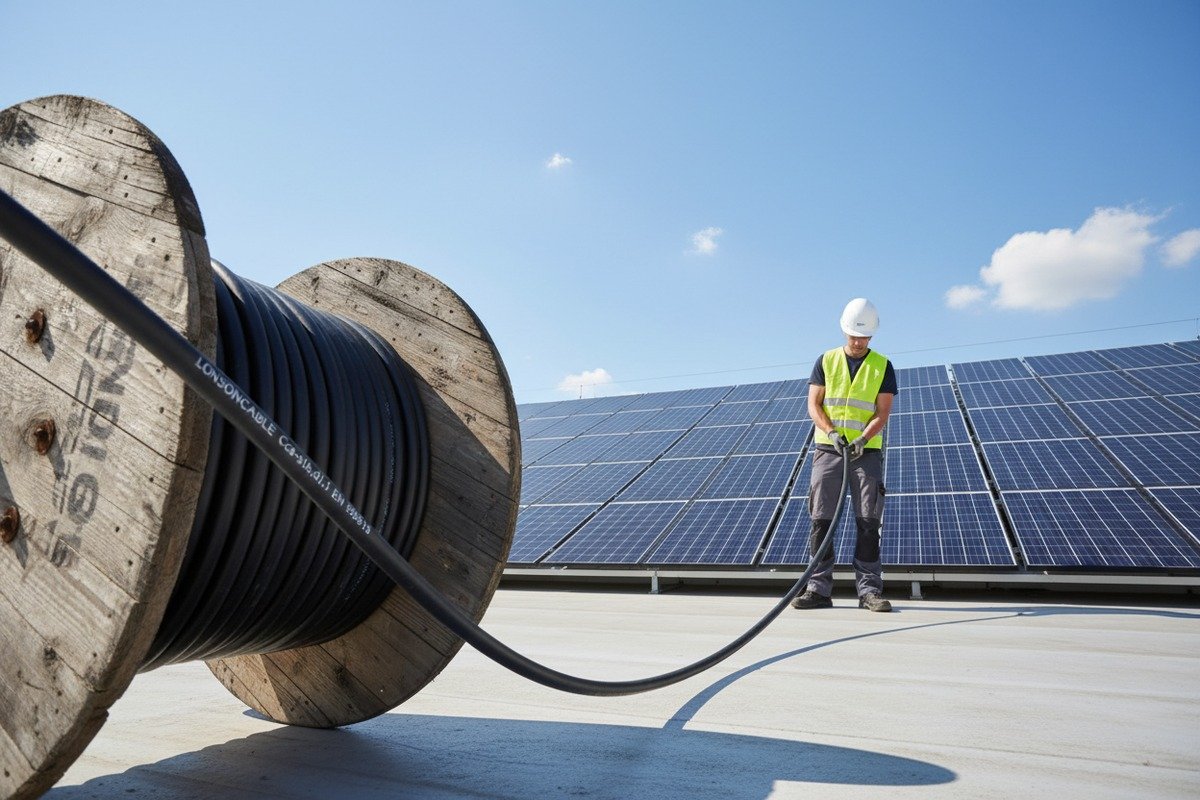
Even the best cable will degrade faster if installed incorrectly. Avoid sharp bends that stress the insulation. Use UV-rated cable ties, not standard nylon ones. Keep cables off hot roof surfaces using proper clips or conduit. And follow CFPA-E recommendations for cable tray materials — avoid bare metal edges that can abrade the jacket over time.
A 25-year lifespan is achievable. But it requires the right material, the right production process, and the right installation practices working together.
Conclusion
European fire rating requirements for solar PV cables are strict, multi-layered, and enforced at every stage from customs to grid inspection. Getting them right protects your project, your reputation, and ultimately, lives.
Footnotes
1. Wikipedia provides a comprehensive overview of the CPR (EU 305/2011) and its objectives. ↩︎
2. European Commission page explaining the Declaration of Performance as a key CPR requirement. ↩︎
3. Explains the Euroclass system for fire reaction performance of construction products, including cables. ↩︎
4. Details the fire test method EN 50399 for heat release and smoke production in cables. ↩︎
5. Official TÜV Rheinland Certipedia database for certified products and services. ↩︎
6. Provides detailed scope and requirements of EN 50618:2014 standard. ↩︎
7. Specifies the procedure for testing vertical flame propagation for a single insulated cable. ↩︎
8. Explains Factory Production Control (FPC) certification under the Construction Products Regulation. ↩︎
9. Discusses XLPO as a material for solar cable insulation, highlighting its properties. ↩︎
10. Defines procedures for deriving thermal endurance properties of electrical insulating materials. ↩︎