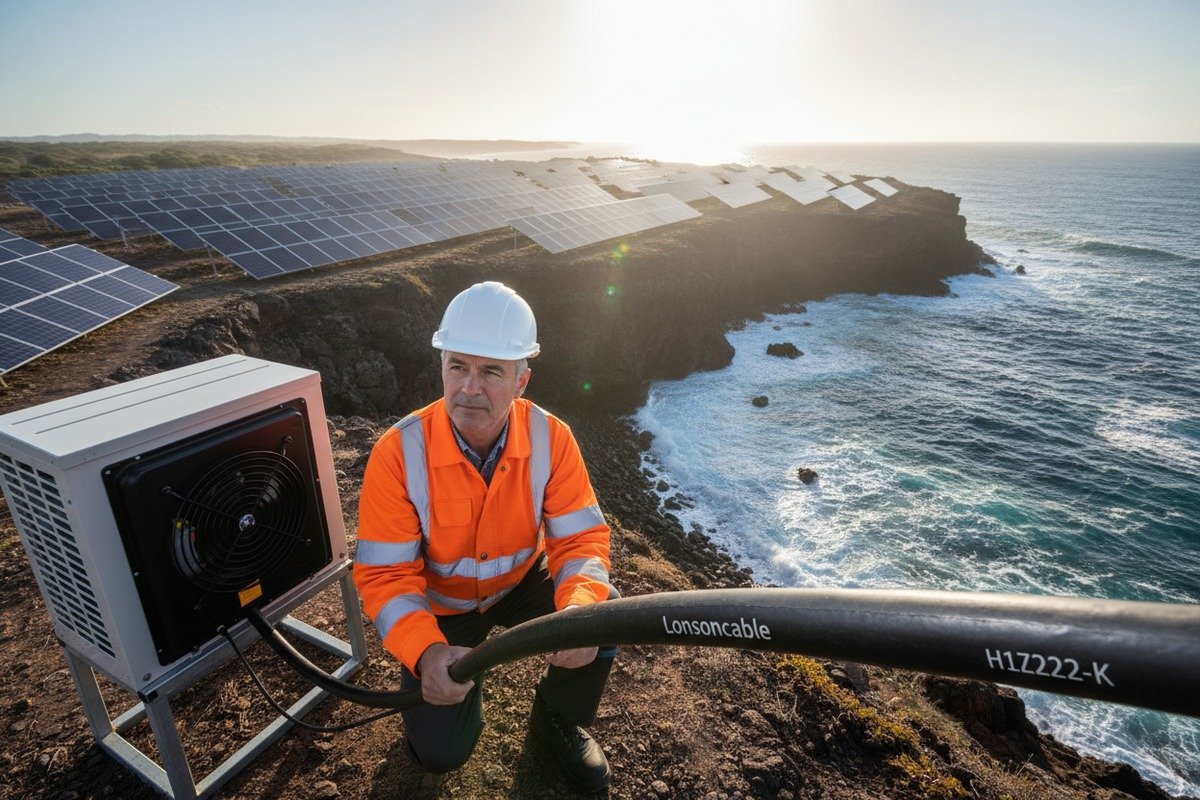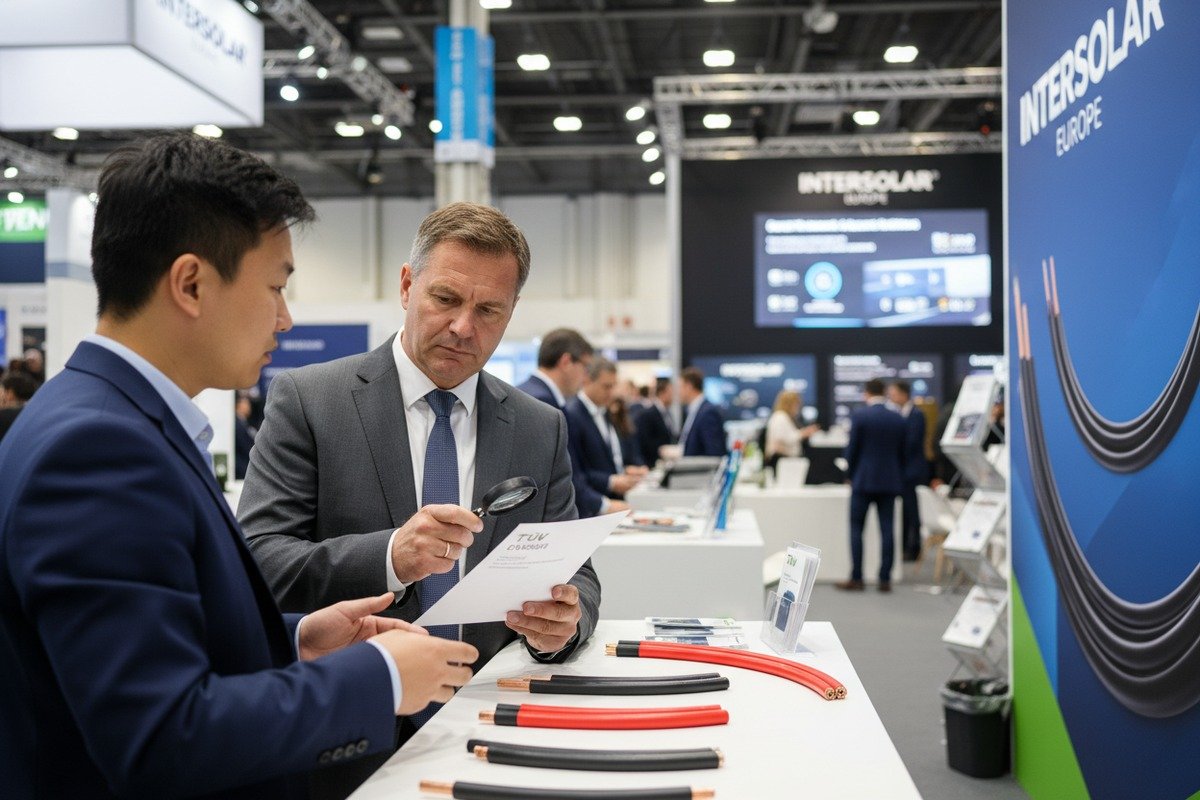

Choosing the wrong fiber type for an ADSS cable project is a costly mistake we see too often on our production floor. ADSS optical cables 1
Fiber type selection in ADSS optical cables directly determines attenuation, chromatic dispersion, bend sensitivity, and bandwidth capacity. Choosing G.652D, G.655, or G.657 fibers affects signal integrity over distance, mechanical resilience under environmental stress, and long-term reliability in high-voltage overhead installations.
This guide breaks down how each fiber type performs in real ADSS deployments. We will cover loss metrics, bend performance, sourcing verification, and cost trade-offs so you can make a confident procurement decision.
How do I choose between G.652D and G.657 fibers to minimize signal loss in my ADSS installation?
Every week, our engineering team fields calls from buyers unsure whether standard single-mode fiber 2 is enough or if bend-insensitive fiber is worth the premium.
For spans under 300 meters in mild environments, G.652D provides adequate performance at ~0.35 dB/km attenuation at 1550 nm. For spans over 500 meters, high-wind zones, or tight routing, G.657.A2 or B3 fibers reduce bending losses by 20–30%, keeping attenuation below 0.4 dB/km even at 10 mm bend radii.
Understanding the Core Difference
G.652D 3 is the workhorse of single-mode fiber. It operates at both 1310 nm and 1550 nm wavelengths. It handles most standard telecom and power utility applications. The fiber core is about 8.2 microns in diameter. It meets ITU-T standards for chromatic dispersion 4 and PMD.
G.657 was designed specifically for environments where the cable bends sharply or vibrates constantly. ADSS cables strung between power line towers face wind loads, galloping, and ice accumulation. These forces create micro and macro bends along the cable route. Standard G.652D fiber can suffer an extra 0.5–1 dB/km of attenuation under these conditions. G.657 fibers 5 resist this loss.
When G.652D Is the Right Call
If your ADSS project involves short urban spans below 200 meters, low wind exposure, and voltage levels at or below 110 kV, G.652D is often sufficient. The cost per kilometer is lower. Splicing equipment and techniques are well-established. Most field technicians are trained on G.652D.
We have shipped thousands of kilometers of G.652D-based ADSS cable to Southeast Asian telecom operators. In those flat, sheltered corridors, the fiber performs within spec for decades.
When G.657 Becomes Essential
Long spans over 500 meters, mountain crossings, river crossings, and routes near 220 kV or 500 kV lines demand G.657. The vibration and sag cycles on these spans are intense. Our factory tests show that G.657.A2 maintains less than 0.1 dB additional loss at a 15 mm bend radius, while G.652D can exceed 0.5 dB under the same condition.
For 5G backhaul projects and smart grid upgrades, G.657.B3 is gaining traction. It tolerates bend radii as tight as 5 mm. This matters when ADSS cables route through compact fittings at dead-end towers.
Quick Comparison Table
| Parameter | G.652D | G.657.A2 | G.657.B3 |
|---|---|---|---|
| Attenuation at 1550 nm | ≤0.35 dB/km | ≤0.35 dB/km | ≤0.35 dB/km |
| Macro-bend loss (10 mm radius, 1 turn) | Not specified | ≤0.1 dB | ≤0.03 dB |
| Macro-bend loss (15 mm radius, 10 turns) | ≤0.5 dB | ≤0.03 dB | ≤0.01 dB |
| Recommended span length | ≤300 m | 300–800 m | 500–1500 m |
| Typical voltage environment | ≤110 kV | 110–220 kV | 220–500 kV |
| Relative cost | Baseline | +8–12% | +15–20% |
The key takeaway: do not default to G.652D simply because it is cheaper. Match the fiber to your actual span, wind zone, and voltage class.
Will the fiber grade I select affect the long-term reliability of my transmission over high-voltage power lines?
Our quality assurance lab has tested ADSS cables under simulated 30-year aging conditions, and the fiber grade consistently determines how much optical performance degrades over time.
Yes, fiber grade directly affects long-term reliability. Higher-grade fibers like G.657.A2 and low-water-peak variants resist hydrogen aging, micro-bend fatigue, and temperature-induced attenuation growth, maintaining stable transmission over 15–25 years in 110–500 kV environments where inferior fibers would degrade.
The Aging Problem in High-Voltage Corridors
ADSS cables near high-voltage lines face a unique combination of stresses. Electromagnetic interference does not directly affect the optical signal because the cable is all-dielectric. But the mechanical and thermal environment is harsh. Temperature swings from -40°C to +70°C cause the cable to expand and contract. This cyclical stress fatigues lower-grade fibers.
Hydrogen from moisture ingress can bond with silica in the fiber core. This creates absorption peaks, especially around 1383 nm. Low-water-peak fibers 6 (like those meeting G.652.D with zero water peak specifications) resist this degradation. Standard fibers without this treatment can see attenuation increase by 0.05–0.1 dB/km over 10 years.
Mechanical Fatigue and Fiber Strain
On our production lines, we control fiber excess length within the loose tube buffer very carefully. If the fiber is too tight, tension transfers directly to the glass. Over years of wind vibration, this causes micro-cracks in the coating and eventually raises attenuation. If the fiber has proper excess length (typically 0.1–0.3%), it floats freely inside the tube and absorbs mechanical cycles without strain.
Higher-grade fibers from reputable preform manufacturers have more uniform core geometry. This uniformity means fewer weak points along the fiber length. In a 1000-meter span exposed to galloping conditions, a fiber with inconsistent geometry can develop localized loss points within 5–7 years.
Reliability Metrics You Should Request
| Reliability Factor | Lower-Grade Fiber | Higher-Grade Fiber (G.657.A2 + LWP) |
|---|---|---|
| Hydrogen aging resistance | Moderate; +0.05 dB/km over 10 years | High; <0.01 dB/km over 10 years |
| Temperature cycling stability (-40 to +70°C) | May exceed 0.05 dB/km drift | Stable within 0.02 dB/km |
| Micro-bend fatigue life | ~10 years under constant vibration | ~25 years under constant vibration |
| PMD 7 stability over time | Can drift >0.1 ps/√km | Stays below 0.04 ps/√km |
| Recommended for voltage class | ≤110 kV, sheltered spans | 110–500 kV, exposed spans |
The Real Cost of Failure
When a fiber degrades mid-span on a 500 kV transmission corridor, the repair cost is enormous. You need a hot-line crew, a bucket truck, splice equipment, and potentially a traffic or power outage window. One of our clients in Latin America saved over $40,000 in avoided repairs by upgrading from generic fiber to G.657.A2 with low-water-peak treatment across a 60-kilometer route. The upfront cost difference was less than $3,000.
Long-term reliability is not just an optical parameter. It is a financial decision.
How can I verify that my supplier is using high-quality fiber cores to prevent attenuation in my long-span projects?
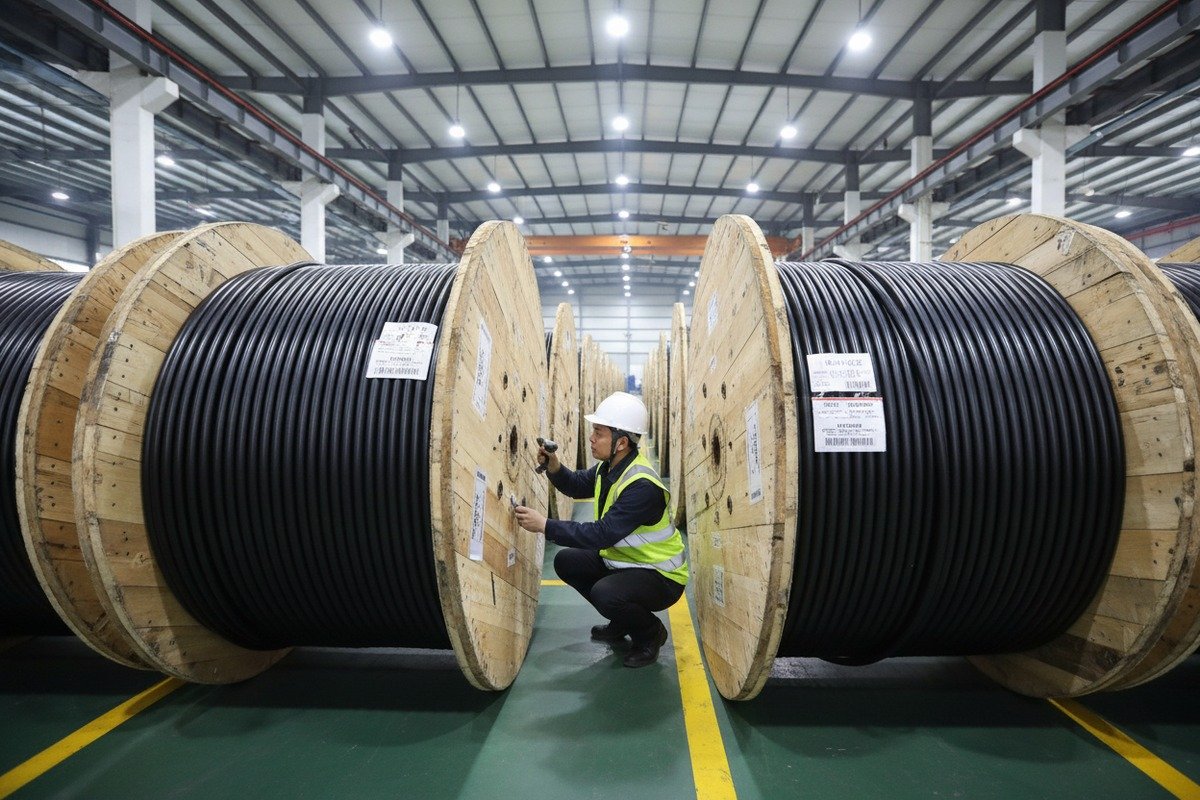
When we welcome buyers to our 230,000 m² facility in China, the first thing we show them is the incoming fiber inspection process—because that is where quality begins or fails.
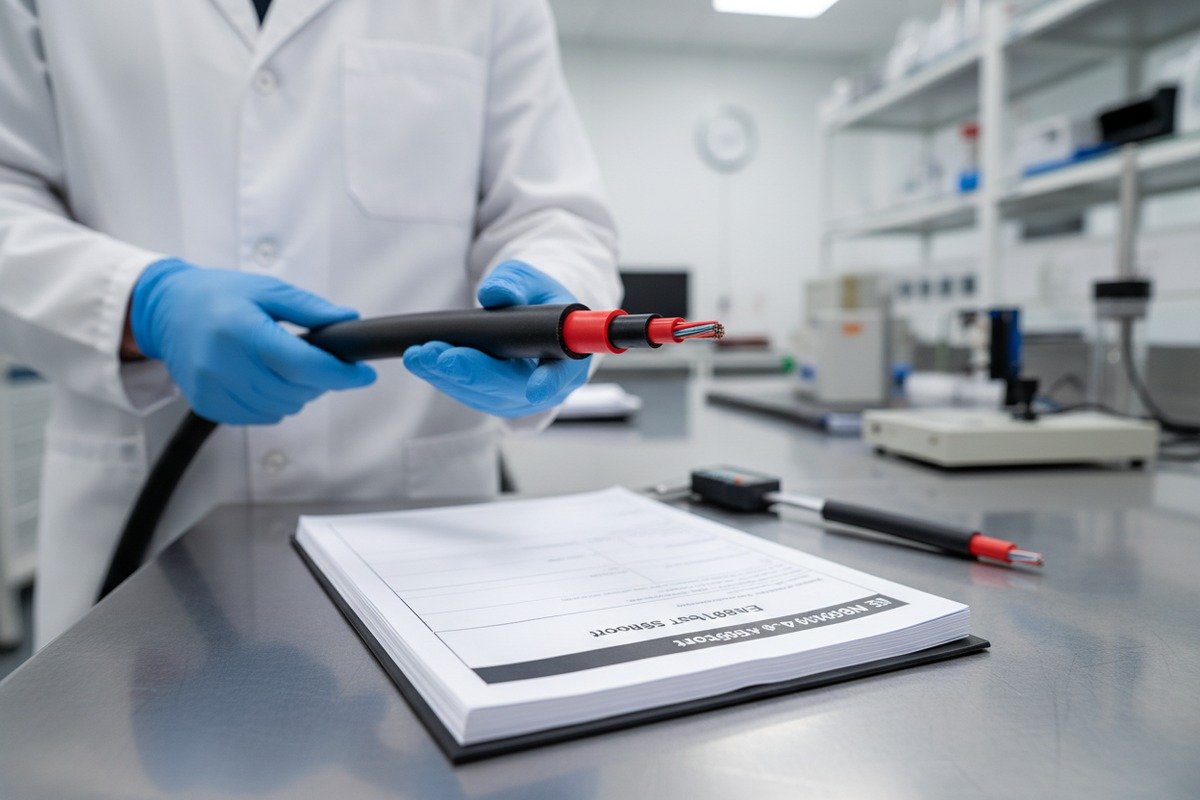
To verify fiber core quality, request factory OTDR test reports for every reel, confirm the fiber brand and preform origin, ask for ITU-T compliance certificates, and conduct independent third-party testing. Reputable suppliers provide traceable fiber specifications showing attenuation, PMD, and chromatic dispersion per kilometer.
Why Verification Matters More Than You Think
The fiber optic cable market has a well-known problem: material downgrading. Some manufacturers substitute branded fiber preforms with generic alternatives to cut costs by 10–15%. The cable looks identical on the outside. The jacket is the same MDPE. The aramid strength member weighs the same. But the fiber inside may have inconsistent attenuation, higher PMD, or poor bend performance.
For a short 50-meter patch, this might not matter. For a 600-meter ADSS span crossing a river at 220 kV, it can mean the difference between a stable 10 Gbps link and a link that drops packets every time the wind picks up.
Step-by-Step Verification Checklist
Here is the process our experienced export clients follow:
Step 1: Request the fiber brand and batch number. Legitimate manufacturers will tell you whether they use Corning, YOFC, Fujikura, or another preform supplier. If a factory cannot name the fiber brand, that is a red flag.
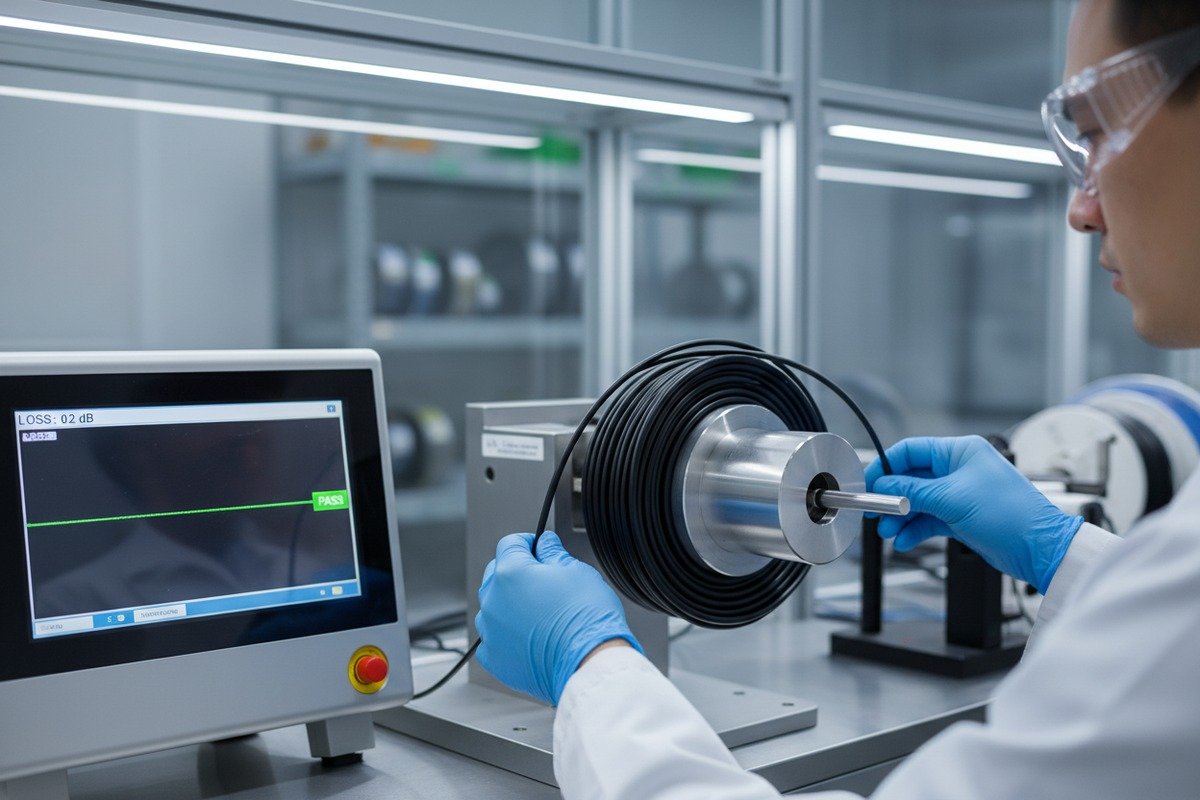
Step 2: Ask for incoming fiber test data. Before the fiber is even cabled, it should be tested on an OTDR 8. The results should show attenuation at 1310 nm and 1550 nm, plus PMD values. We provide this data to every client as a standard part of our quality documentation.
Step 3: Request finished cable OTDR traces. After the cable is manufactured, each reel should be tested again. The OTDR trace should show continuous, smooth attenuation along the entire length. Any spikes indicate splice defects, micro-bends, or damage during cabling.
Step 4: Verify third-party certifications. Look for UL, CSA, CE, or ISO 9001 9 certificates. These are not just paperwork—they represent audited manufacturing processes. Ask for the certificate numbers and verify them on the issuing body's website.
Step 5: Conduct independent testing. For large orders (especially those exceeding 100 km), hire a third-party lab or send your own technician to the factory. We regularly host client engineers who bring their own OTDR equipment and test random reels from our warehouse.
Red Flags in Supplier Responses
| What You Ask | Good Supplier Response | Suspicious Supplier Response |
|---|---|---|
| What fiber brand do you use? | "We use YOFC G.652D, batch #XXXX" | "We use high-quality imported fiber" (no specifics) |
| Can I see OTDR test reports? | Provides per-reel PDF reports immediately | "We can provide after shipment" |
| Do you have UL/CE certification? | Shares certificate number for online verification | Shows a scanned image with no verifiable number |
| Can I visit the factory? | "Yes, we will arrange a tour of our fiber testing lab" | Deflects or delays scheduling |
| What is the fiber attenuation guarantee? | "≤0.35 dB/km at 1550 nm per ITU-T G.652D" | "Very low loss, best quality" |
The OTDR Report Is Your Best Friend
An OTDR (Optical Time-Domain Reflectometer) trace is a graph of signal loss along the fiber length. It shows every event—connectors, splices, bends, and the fiber's baseline attenuation. When we deliver ADSS cable, each drum includes an OTDR report covering both 1310 nm and 1550 nm wavelengths. The report includes the total length, average attenuation, and any event losses.
If your supplier cannot provide this, walk away. There is no substitute for measured data.
What impact does fiber type customization have on the overall cost and performance of my ADSS cable order?
Our sales engineers spend considerable time helping buyers balance fiber specifications against budget constraints—because customization done right saves money in the long run.
Fiber type customization in ADSS cables typically adds 8–20% to the per-kilometer cost compared to standard G.652D configurations, but it can reduce total project cost by 20–30% through fewer repeaters, lower maintenance, and extended service life tailored to specific span lengths, voltage classes, and environmental conditions.

What Customization Actually Means
When we talk about fiber type customization for ADSS cables, we mean selecting the specific ITU-T fiber standard, the fiber count, the coating type, and optionally the fiber brand. This is not about inventing a new fiber. It is about choosing the right combination from proven options and integrating them into a cable design that matches your project's exact requirements.
For example, a 48-core ADSS cable with G.657.A2 fiber, designed for a 700-meter span at 220 kV with AT (anti-tracking) sheath, is a customized product. The same cable with G.652D fiber and standard PE sheath for a 150-meter span at 35 kV is a very different product. Both are ADSS. Both look similar. But they perform differently and cost differently.
Cost Breakdown: Where the Money Goes
The fiber itself typically accounts for 30–40% of the total ADSS cable cost. The remaining cost comes from the aramid yarn strength member, the loose tube buffer, the central strength member (if applicable), the outer sheath, and manufacturing overhead.
When you upgrade from G.652D to G.657.A2, the fiber cost increases by roughly 8–12%. But this upgrade often eliminates the need for one or two optical amplifiers or regenerators on a long route. Each amplifier costs $5,000–$15,000 installed. So a $2/km fiber upgrade across 50 km ($100 total increase) can save $10,000+ in active equipment.
Performance Gains from Smart Customization
Choosing the right fiber count matters too. Over-specifying (ordering 144 cores when 48 will do) wastes money and increases cable diameter, which increases wind load. Under-specifying forces expensive mid-span splicing or parallel cable runs later.
Our OEM/ODM model lets buyers specify exact configurations. We have produced ADSS cables with mixed fiber types in the same cable—G.652D on some tubes for standard telecom traffic and G.655 on others for DWDM long-haul channels. This hybrid approach optimizes both cost and performance.
ROI Comparison: Standard vs. Customized
| Cost/Performance Factor | Standard G.652D ADSS | Customized G.657.A2 ADSS |
|---|---|---|
| Fiber cost per km | $80–$120 | $95–$145 |
| Total cable cost per km (48-core) | $250–$400 | $290–$460 |
| Repeater spacing | 40–60 km | 60–80 km |
| Estimated repeater savings (100 km route) | Baseline | $10,000–$30,000 |
| Maintenance cost over 15 years | Higher (bend-related repairs) | Lower (bend-resistant design) |
| Suitability for future 100G/400G upgrade | Limited | High |
Future-Proofing Your Investment
The telecom industry is moving toward 400 Gbps and 800 Gbps coherent transmission. These systems are sensitive to PMD and chromatic dispersion. If you install G.652D today on a route that will carry coherent traffic in 5 years, you may need to replace the cable. G.657.A2 and G.655 fibers have tighter PMD specifications that support these advanced modulation formats.
When we cons
Footnotes
1. Explains what ADSS cables are and their key characteristics. ↩︎
2. Provides a comprehensive definition and characteristics of single-mode optical fiber. ↩︎
3. Provides the official characteristics and specifications for G.652D fiber. ↩︎
4. Explains the causes and effects of chromatic dispersion in optical fibers. ↩︎
5. Details the characteristics of bend-loss insensitive single-mode optical fibers. ↩︎
6. Discusses how G.652D standards reduce the water peak for broader wavelength use. ↩︎
7. Replaced HTTP 403 link with a comprehensive and authoritative explanation of Polarization Mode Dispersion from Wikipedia. ↩︎
8. Provides a comprehensive explanation of what an OTDR is and how it functions. ↩︎
9. Explains ISO 9001 as an internationally recognized standard for quality management systems. ↩︎