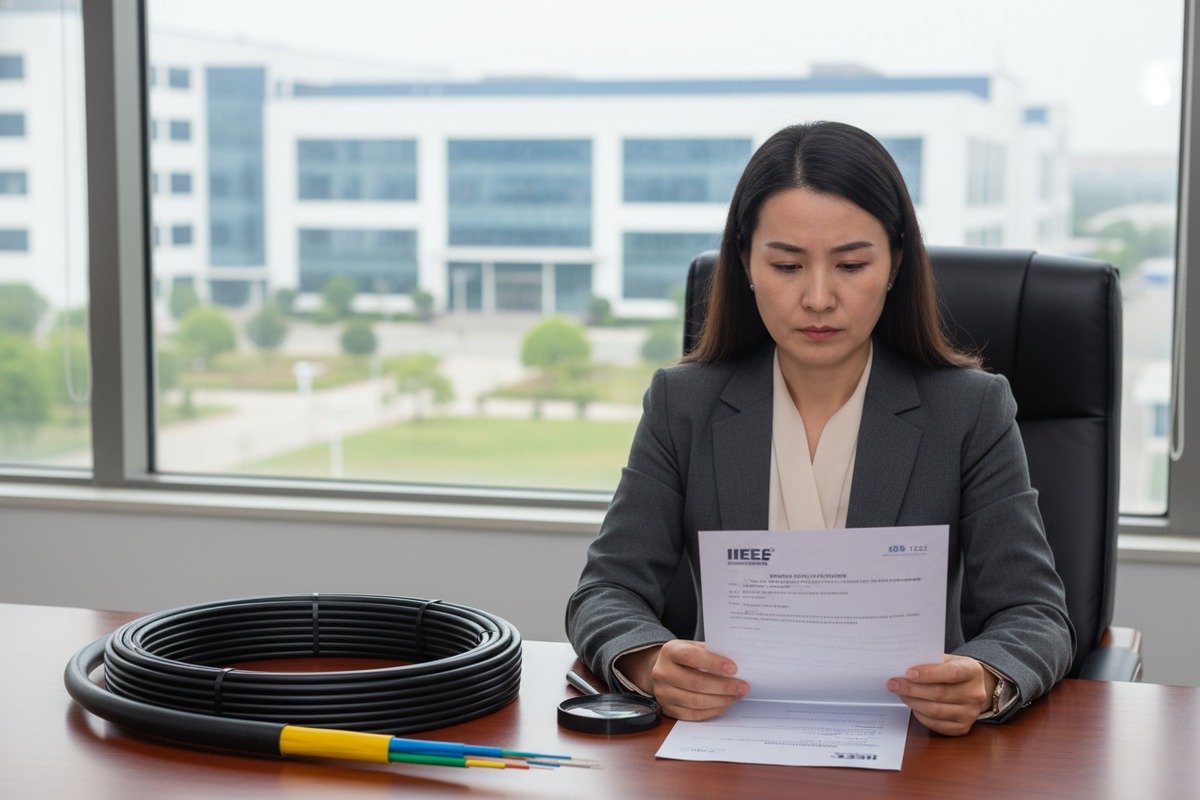
Choosing the wrong ADSS cable supplier can cost you an entire project NESC weather zone requirements 1. Over 30 years on our production lines, we have seen US buyers receive cables that snap under ice loads because the manufacturer cut corners on aramid yarn 2 or misunderstood NESC weather zone requirements.
To evaluate an ADSS optic cable supplier for US custom production, verify their IEEE 1222 compliance, request documented span-and-sag engineering calculations, confirm genuine aramid yarn certifications, assess real production capacity against your timeline, and inspect packaging standards for long-distance sea freight durability.
This guide breaks the evaluation process into four practical areas IEEE 1222 compliance 3. Each section gives you specific checks, tables, and questions so you can separate capable manufacturers from those who simply claim capability. Let's start with the most technical piece first.
How can I verify if a manufacturer can meet my specific US technical requirements for ADSS span and tension?
When our engineering team receives a new inquiry from a US contractor, the first question is always about span length and NESC loading zone span-and-sag engineering calculations 4. Getting this wrong means cable failure in the field, and we have seen competitors ship undersized cables that broke within months of installation.
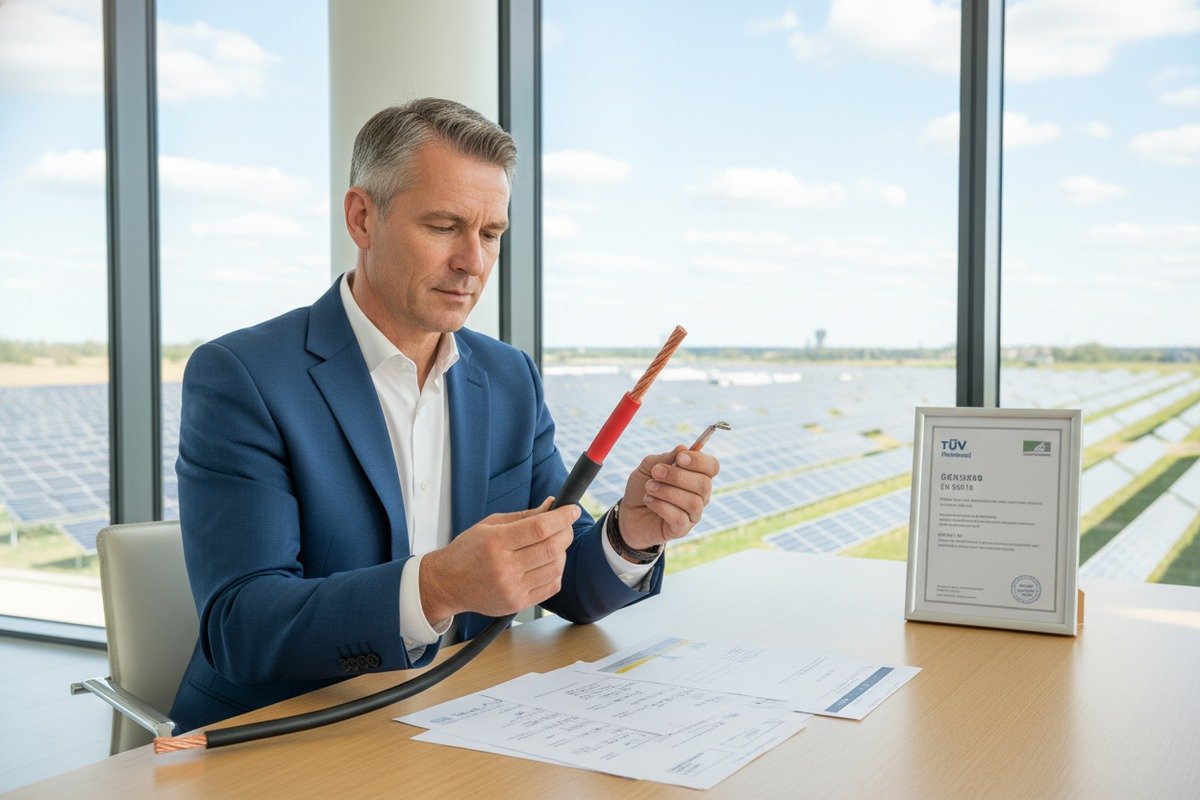
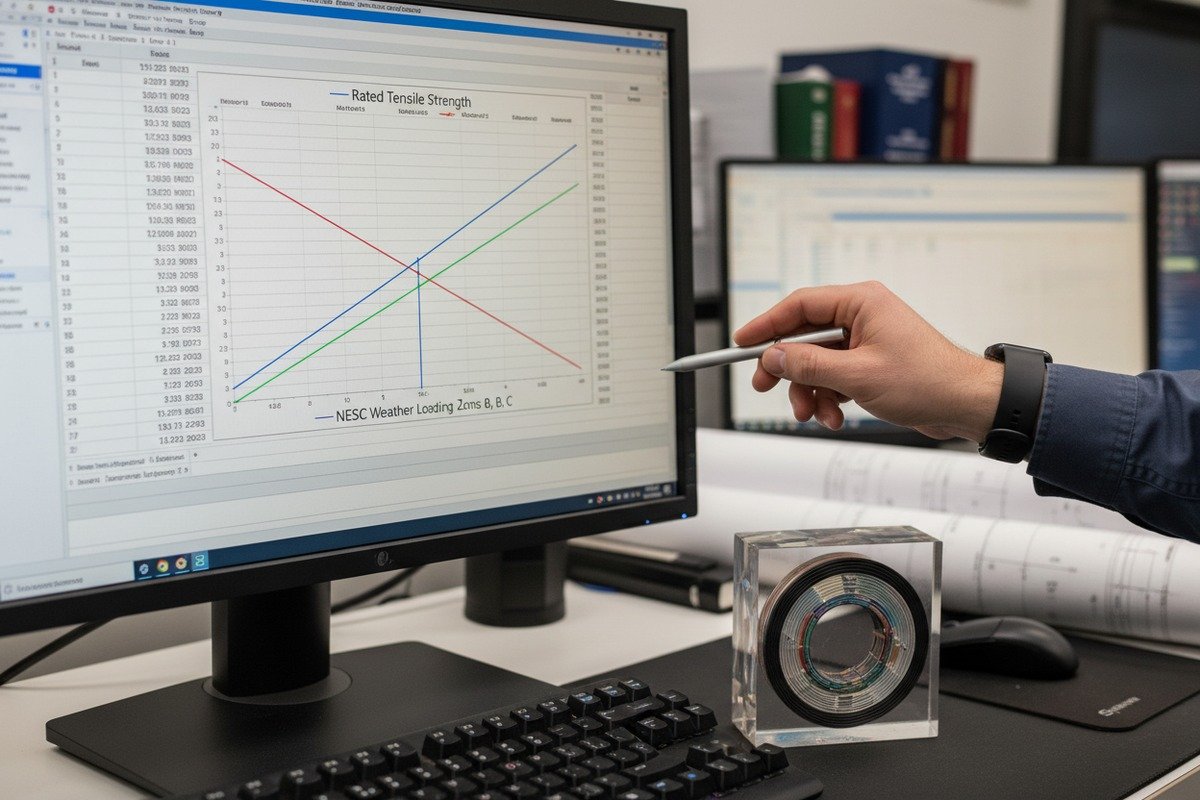
Request the supplier's span-and-sag calculation sheet for your exact span length, NESC weather loading zone, and installation conditions. A capable manufacturer will provide Rated Tensile Strength calculations, aramid yarn count, and jacket specifications without charging engineering fees.
Why Span and Tension Calculations Matter
ADSS cable is not a commodity product you pick off a shelf Teijin for Twaron 5. Every deployment has unique variables: the distance between poles, the local wind speed, ice accumulation potential, and temperature range. These factors determine the Rated Tensile Strength (RTS) that the cable must handle.
If the RTS is too low, the cable sags excessively in summer heat and snaps under winter ice loads. If the RTS is too high, you overspend on aramid yarn and get a stiffer cable that is harder to install.
A competent supplier will ask you for at least these inputs before quoting:
- Span length in feet or meters
- NESC weather loading zone (Heavy, Medium, or Light)
- Elevation and terrain type
- Maximum and minimum temperature range
- Fiber count and cable configuration
How to Test a Supplier's Engineering Capability
Send the same specification request to three or four suppliers. Compare the responses. A manufacturer with real engineering depth will return a detailed calculation sheet. A reseller or low-capability factory will return a generic datasheet.
Here is what each response type looks like:
| Response Quality | What You Receive | What It Tells You |
|---|---|---|
| High capability | Custom RTS calculation, sag table, aramid yarn count, recommended jacket type, cross-section diagram | The supplier has in-house engineering staff who understand US deployment conditions |
| Medium capability | Generic datasheet with a note saying "suitable for 200m–600m spans" | The supplier may manufacture cable but lacks project-specific engineering |
| Low capability | Price quote only, no technical documents | The supplier is likely a trading company or lacks engineering resources |
Key Standards to Reference
Always confirm the supplier designs to IEEE 1222, which is the governing standard for ADSS cable. Additionally, verify they understand NESC loading districts 6. The table below shows the three NESC loading zones and their ice/wind parameters:
| NESC Loading Zone | Radial Ice Thickness | Wind Pressure | Temperature |
|---|---|---|---|
| Heavy | 12.7 mm (0.5 in) | 190 Pa (4 psf) | -20°C (-4°F) |
| Medium | 6.4 mm (0.25 in) | 190 Pa (4 psf) | -10°C (14°F) |
| Light | 0 mm | 430 Pa (9 psf) | -1°C (30°F) |
On our production floor, we calibrate every ADSS order to the buyer's specific loading zone. A cable designed for the Light zone will fail catastrophically in a Heavy zone. This is not optional engineering—it is the foundation of a safe installation.
Ask for a Cross-Section Diagram
A trustworthy manufacturer can produce a cable cross-section diagram showing the fiber tubes 7, aramid yarn layer, water-blocking material, and outer jacket. If a supplier cannot provide this document, they likely do not control the design process. Our engineering team generates these diagrams for every custom order as part of our standard workflow.
Request Reference Projects
Ask if the supplier has shipped ADSS cable to the US market before. Request project references, including the span length, fiber count, and loading zone. A supplier with US export experience will understand the regulatory environment and installation practices that differ from other markets.
What should I look for to ensure my supplier uses genuine aramid yarn and provides authentic certification?
Material fraud is one of the most damaging risks in international cable sourcing. In our factory audits and quality control processes, we have encountered cases where competitors substitute lower-grade fillers for genuine aramid yarn—a shortcut that saves pennies per meter but can cause total cable failure under load.
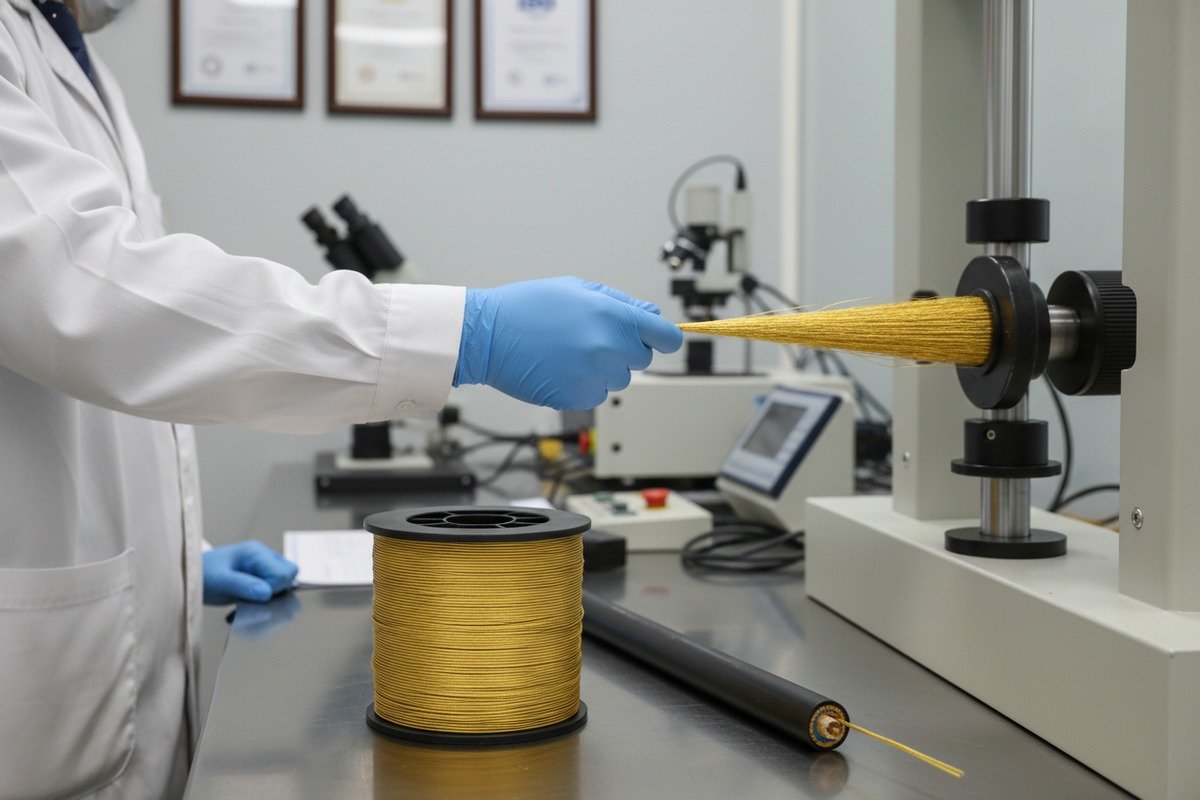
Verify aramid yarn authenticity by requesting the yarn manufacturer's original lot certificate, cross-referencing the yarn brand (such as Kevlar or Twaron) with the producer's database, and requiring third-party tensile test reports on the finished cable to confirm the Rated Tensile Strength matches the specification.
Why Aramid Yarn Quality Is Non-Negotiable
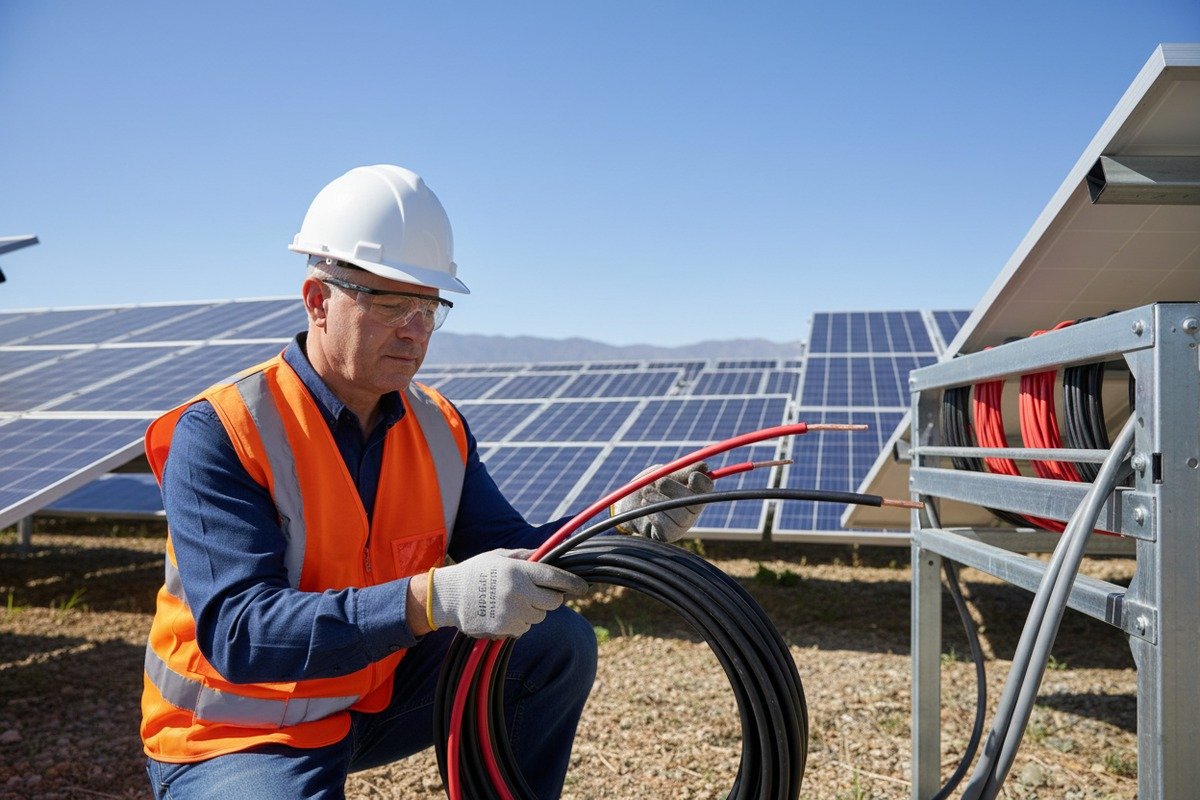
Aramid yarn is the structural backbone of every ADSS cable. It carries all the mechanical load—wind, ice, self-weight, and installation tension. If a manufacturer substitutes cheaper fiberglass or low-grade synthetic yarn, the cable will have a lower actual RTS than what is printed on the datasheet.
This kind of failure does not show up during installation. It appears months or years later when a heavy ice storm hits and the cable snaps. By then, the project warranty may have expired and the contractor faces a costly emergency repair.
Documents to Request
When evaluating a supplier's material integrity, request these specific documents:
- Aramid yarn lot certificate — This comes directly from the yarn producer (DuPont for Kevlar 9, Teijin for Twaron). It shows the exact yarn type, denier, lot number, and tested tensile properties.
- Material purchase records — A transparent manufacturer will show purchase orders proving they bought the stated quantity of aramid yarn from an authorized distributor.
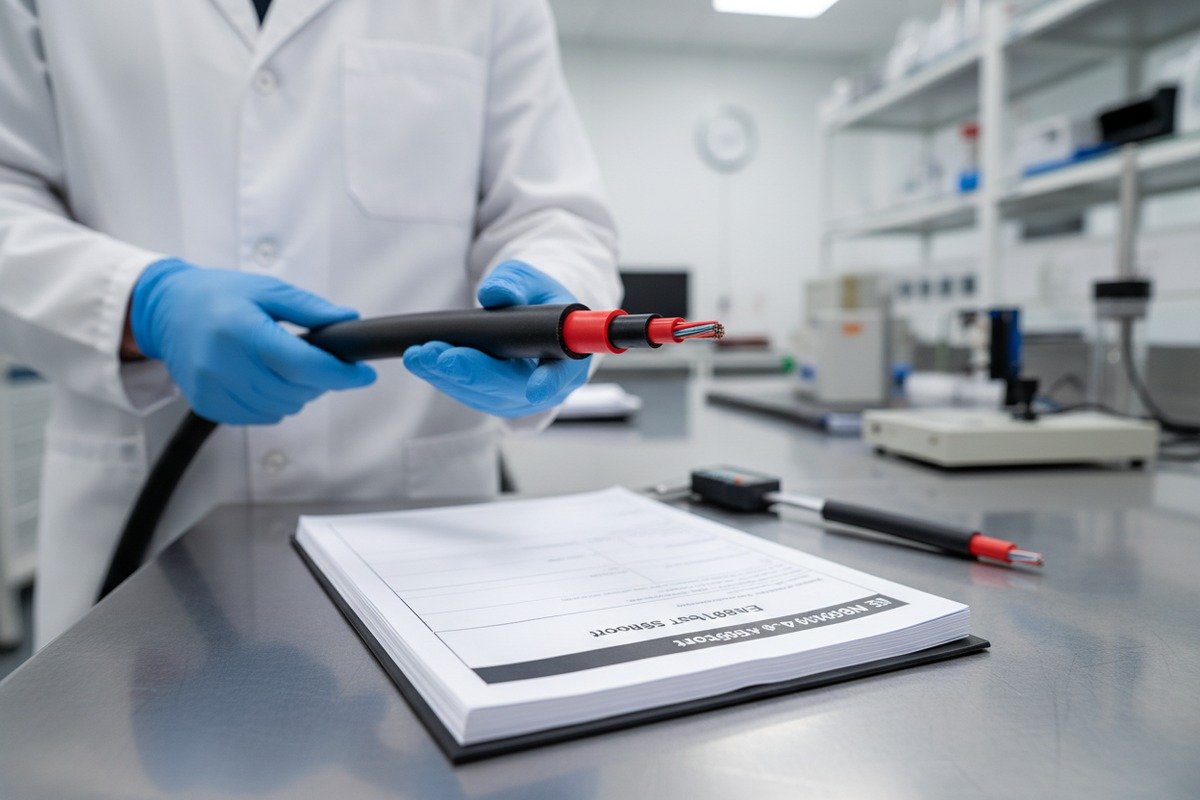
- Finished cable tensile test report — An in-house or third-party lab should pull-test the finished cable to verify the actual breaking strength matches the designed RTS.
- Third-party certification — Certifications from UL, CSA, or an accredited testing lab confirm the cable was manufactured and tested to stated standards.
Red Flags That Signal Material Fraud
Watch for these warning signs during the evaluation process:
| Red Flag | What It Suggests | Your Action |
|---|---|---|
| Price significantly below market average | Possible material substitution | Request aramid yarn lot certificate and third-party test report |
| Supplier cannot name the aramid yarn brand | May be using generic or recycled filler | Ask for yarn producer name, lot number, and original certificate |
| Tensile test report shows RTS exactly at specification with zero margin | Report may be fabricated | Request a video of the tensile test or visit the factory |
| No third-party certification (UL, CSA, CE) | Quality system may not be audited | Require at minimum ISO 9001 10 and one product-level certification |
At our facility, we source aramid yarn from recognized global producers and maintain full traceability from the yarn spool to the finished cable reel. Every lot certificate is archived and available to buyers on request. We also perform in-house tensile testing on every production run and can provide video documentation of the test.
How to Cross-Reference Certifications
Do not accept a PDF certificate at face value. Contact the issuing body directly. For example, UL maintains a public database where you can search a manufacturer's name and verify whether their ADSS cable holds an active listing. This takes five minutes and can prevent a six-figure procurement mistake.
Also verify that the certificate covers the specific product you are ordering. A supplier may hold UL certification for one cable type but not for the ADSS model they are quoting you. Read the certificate scope carefully.
The Cost of Cutting Corners
We have had customers come to us after a failed project with another supplier. In one case, a 48-fiber ADSS cable installed in a Medium loading zone broke at multiple spans after the first winter storm. The post-failure analysis revealed the cable contained roughly 60% of the specified aramid yarn count. The savings amounted to less than $0.50 per meter. The replacement cost exceeded $200,000 including labor, permits, and downtime.
This is why we strongly encourage buyers to treat material verification as a non-negotiable step in supplier evaluation.
How do I evaluate if a factory's production capacity can truly support my custom project deadlines?
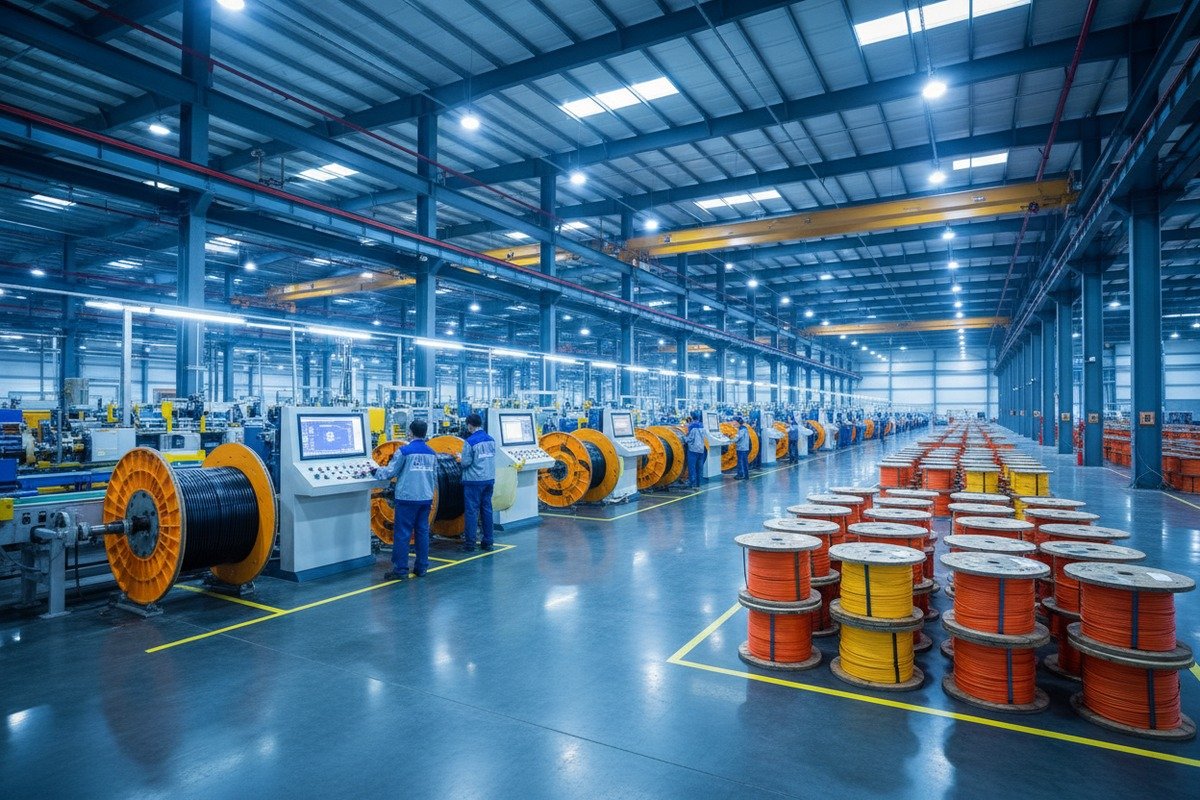
Missing a project deadline because your cable supplier could not deliver on time is a nightmare scenario. Our production planning team manages a 230,000 square meter facility, and even with that scale, we know that capacity claims mean nothing without verifiable evidence behind them.
Evaluate production capacity by requesting the factory's current order backlog, monthly output in core-kilometers, number of active production lines, and a written production schedule showing your order's start and completion dates with milestone checkpoints.
Why Claimed Capacity Often Differs from Reality
Many manufacturers quote their theoretical maximum capacity. This number assumes all production lines are running 24/7, with zero downtime for maintenance, changeovers, or quality holds. Real-world output is typically 60–75% of theoretical capacity.
Additionally, some factories prioritize large domestic orders over export orders. If a factory has a major domestic telco contract consuming 80% of its lines, your 50-kilometer export order may sit in queue for weeks regardless of what the salesperson promised.
Questions to Ask About Production Scheduling
Before committing to a supplier, ask these direct questions:
- How many ADSS production lines do you operate?
- What is your current monthly output in core-kilometers?
- What percentage of your current capacity is already committed to other orders?
- Can you provide a written production schedule for my order with start date, milestones, and ship date?
- What happens if you miss the agreed delivery date? Is there a penalty clause or compensation?
A factory that answers these questions with specific numbers and written commitments is far more reliable than one that says "don't worry, we can handle it."
Comparing Domestic vs. International Lead Times
For US buyers, the choice between domestic and international suppliers involves a trade-off between manufacturing time and shipping time. Here is a realistic comparison:
| Factor | US Domestic Supplier | International Supplier (China) |
|---|---|---|
| Custom manufacturing time | 6–8 weeks | 10–20 days |
| Shipping time to US job site | 3–7 days (ground) | 25–35 days (sea freight) |
| Total lead time | 7–9 weeks | 5–8 weeks |
| Risk of backlog delays | High (Tier-1 telcos book capacity) | Moderate (export-focused factories) |
| Cost per meter | Higher | Lower |
At our facility, we typically complete custom ADSS production in 15–20 days. Combined with sea freight, total delivery to US ports is often competitive with—or faster than—domestic suppliers who are booked months in advance by major telco contracts.
Verify with a Factory Tour or Video Audit
If you cannot visit the factory in person, request a live video walk-through of the production floor. Ask to see the ADSS line specifically—not just a general factory tour. Look for:
- Dedicated ADSS extrusion and stranding equipment
- Aramid yarn spools on the line (confirming material availability)
- Quality checkpoints at key stages (fiber testing, tensile testing, jacket measurement)
- Finished goods warehouse with labeled reels
We regularly host video audits for US and European buyers. A transparent manufacturer will welcome this scrutiny. A factory that refuses or delays a video audit is hiding something.
Build Buffer into Your Timeline
Even with the most reliable supplier, build 1–2 weeks of buffer into your project timeline. Sea freight can be delayed by port congestion, customs clearance, or weather. Having a buffer prevents your construction crew from sitting idle while waiting for cable delivery.
How can I be certain that the supplier's packaging will protect my fiber optic reels during long-distance shipping?
One of the most frustrating losses in this industry happens after the cable is perfectly manufactured. A reel collapses during ocean transit, the cable gets crushed or kinked, and the entire shipment becomes unusable. On our shipping dock, we treat packaging as the final quality gate—because a flawless cable on a broken reel is still a failed delivery.
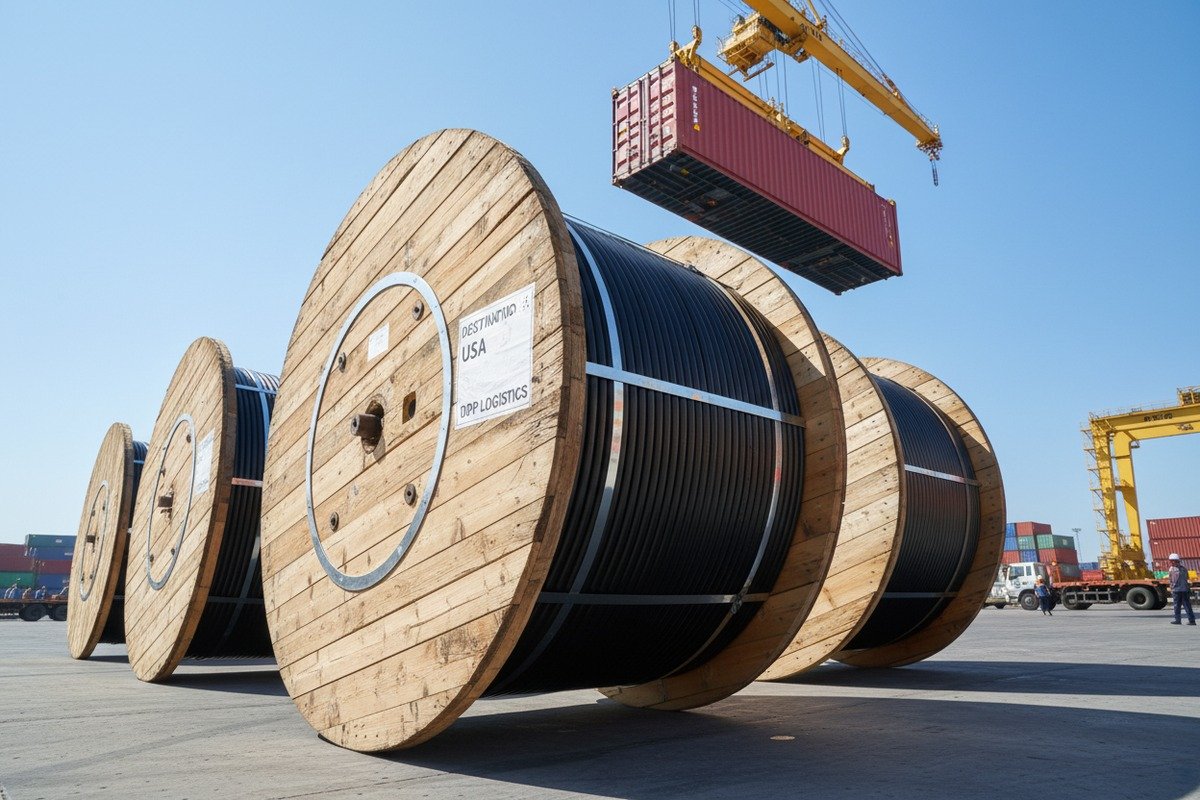
Ensure shipping protection by requiring fumigation-treated wooden reels rated for ocean freight weight loads, steel-reinforced reel flanges for stacking, waterproof wrapping over the cable surface, and photographic documentation of packing and container loading procedures before shipment.
The Real Cost of Packaging Failure
A single reel of 48-fiber ADSS cable can represent $5,000–$15,000 in product value depending on length and specification. If the reel breaks during a 30-day sea voyage, the cable may suffer micro-bending damage that increases attenuation beyond acceptable limits. Even if the cable looks fine externally, the optical performance may be degraded.
Worse, if the damage is discovered only after installation, the troubleshooting and replacement cost multiplies dramatically. This is why packaging is not an afterthought—it is a critical part of the supplier evaluation.
What Good ADSS Packaging Looks Like
Here are the specific packaging features to require from your supplier:
Reel Construction: The wooden reel must be made from hardwood or plywood with sufficient thickness to support the cable weight during stacking and handling. For export shipments, the wood must be ISPM-15 fumigation-treated to pass US customs without phytosanitary holds.
Reel Flanges: Steel reinforcement on the reel flanges prevents cracking when reels are stacked in a shipping container. Without reinforcement, the bottom reel in a stack can collapse under the weight of upper reels.
Cable Protection: The cable surface should be wrapped in stretch film or waterproof paper to prevent moisture ingress and abrasion during transit. The cable end should be sealed with a heat-shrink cap to prevent water from entering the loose tubes.
Container Loading: The reels should be secured inside the container using wooden chocks, ratchet straps, or bracing timber to prevent rolling during ocean transit. The supplier should provide photographic or video documentation of the loading process.
Packaging Inspection Checklist
Use this checklist when evaluating a supplier's packaging standards:
- Reel wood type and thickness documented
- ISPM-15 fumigation stamp visible on reel
- Steel flange reinforcement present
- Cable surface wrapped in protective film
- Cable ends sealed against moisture
- Reel labeled with product specification, length, and lot number
- Container loading photos provided before vessel departure
- Insurance documentation covers full replacement value
Our Approach to Export Packaging
At our facility, we use reinforced wooden reels with steel-banded flanges for all ocean freight shipments. Every reel receives stretch-wrap protection, and cable ends are heat-shrink sealed. Before the container doors close, our logistics team photographs every reel position and emails the images to the buyer. This practice has reduced our shipping damage claims to near zero over the past five years.
We also offer customized reel sizes. Some US contractors prefer smaller reels that can be handled with a standard pickup truck and reel trailer, rather than the large industrial drums that require a crane. Discussing reel dimensions early in the order process avoids problems at the job site.
Insurance and Claims
Even with excellent packaging, you should ensure your shipment is covered by marine cargo insurance for the full replacement value. Ask your supplier whether they include insurance in their CIF or DDP pricing, or whether you need to arrange your own coverage. A reliable supplier will help facilitate the insurance process and provide all necessary documentation for any claims.
Conclusion
Evaluating an ADSS cable supplier for US custom production requires checking engineering capability, material authenticity, real production capacity, and export packaging quality. Take the time to verify these four areas, and your project stays on schedule with reliable cable in the air.
Footnotes
1. Official IEEE standard for National Electrical Safety Code, relevant to weather zones. ↩︎
2. Explains what aramid yarn is and its properties. ↩︎
3. Direct link to the IEEE standard for All-Dielectric Self-Supporting (ADSS) fiber optic cable. ↩︎
4. Provides engineering principles and calculations for sag and tension in overhead lines. ↩︎
5. Official website for Teijin Twaron, another major aramid yarn producer. ↩︎
6. General information about the National Electrical Safety Code and its loading zones. ↩︎
7. Describes the construction of fiber optic cables, including loose tubes. ↩︎
8. Explains the definition and importance of tensile strength in materials. ↩︎
9. Official website for DuPont Kevlar, a leading aramid yarn producer. ↩︎
10. Official ISO page detailing the ISO 9001 standard for quality management systems. ↩︎