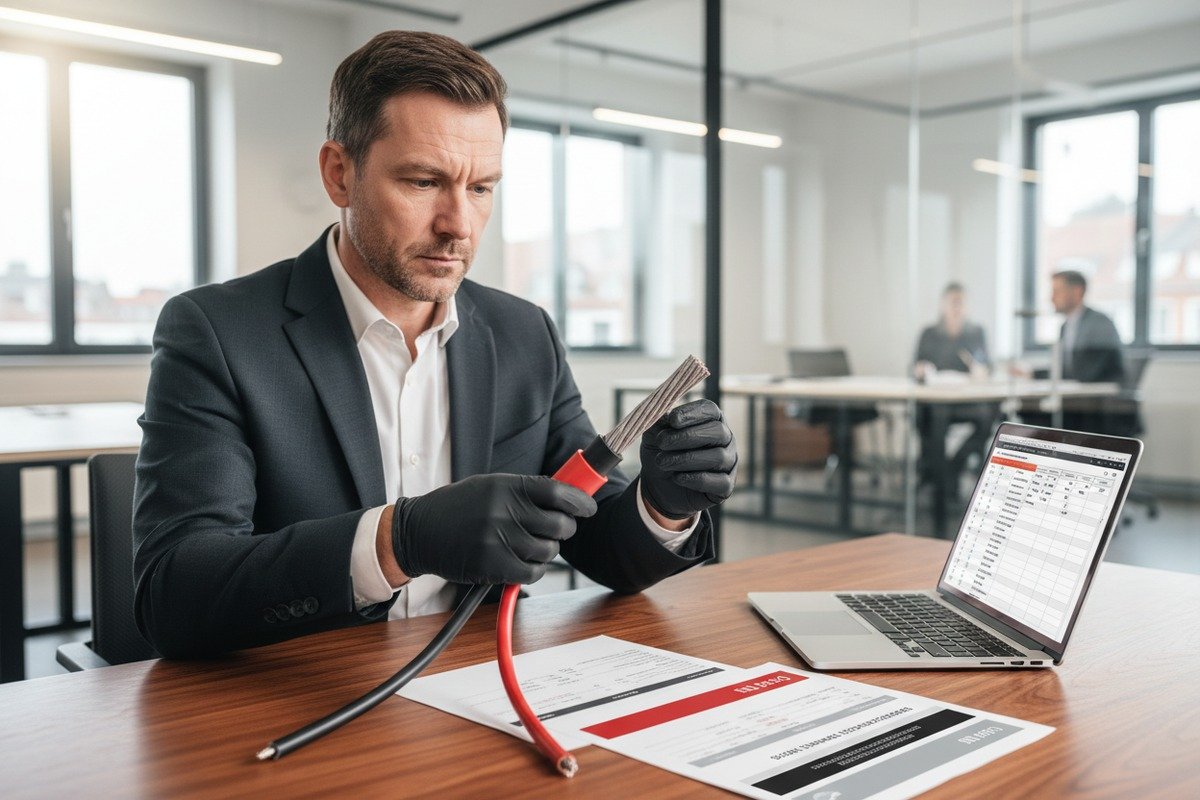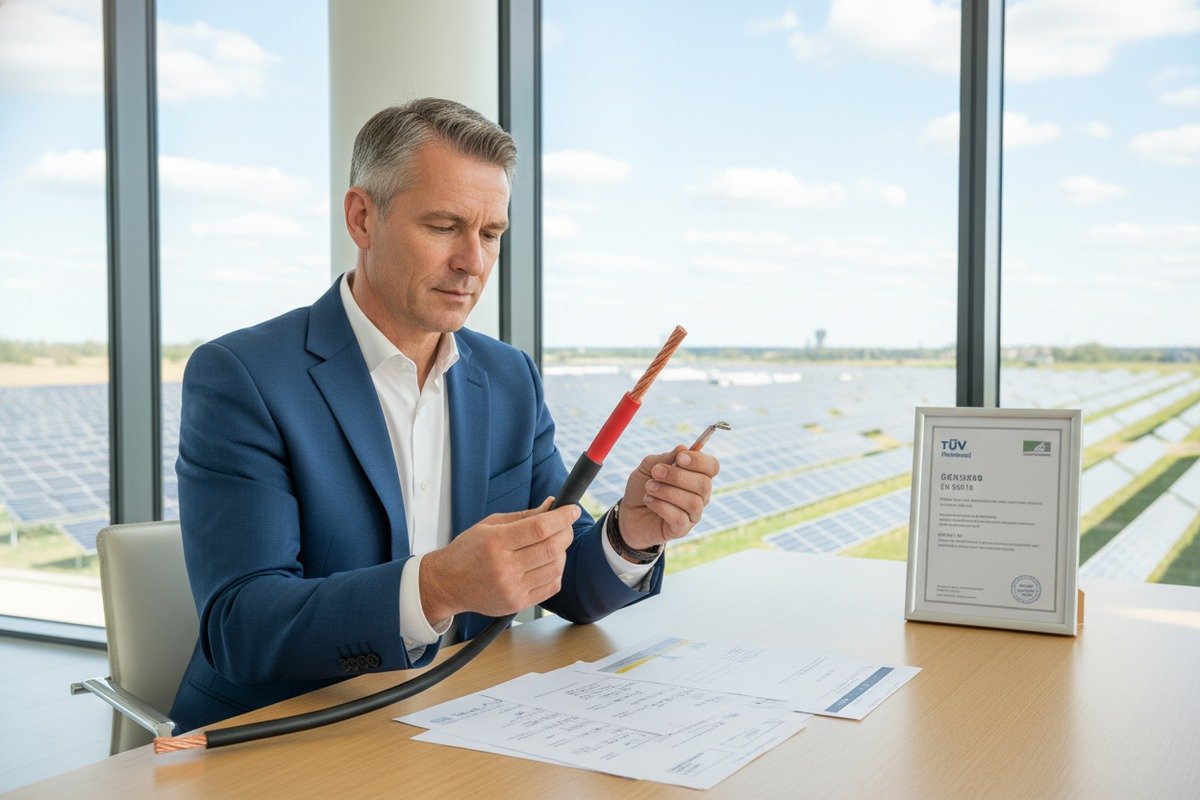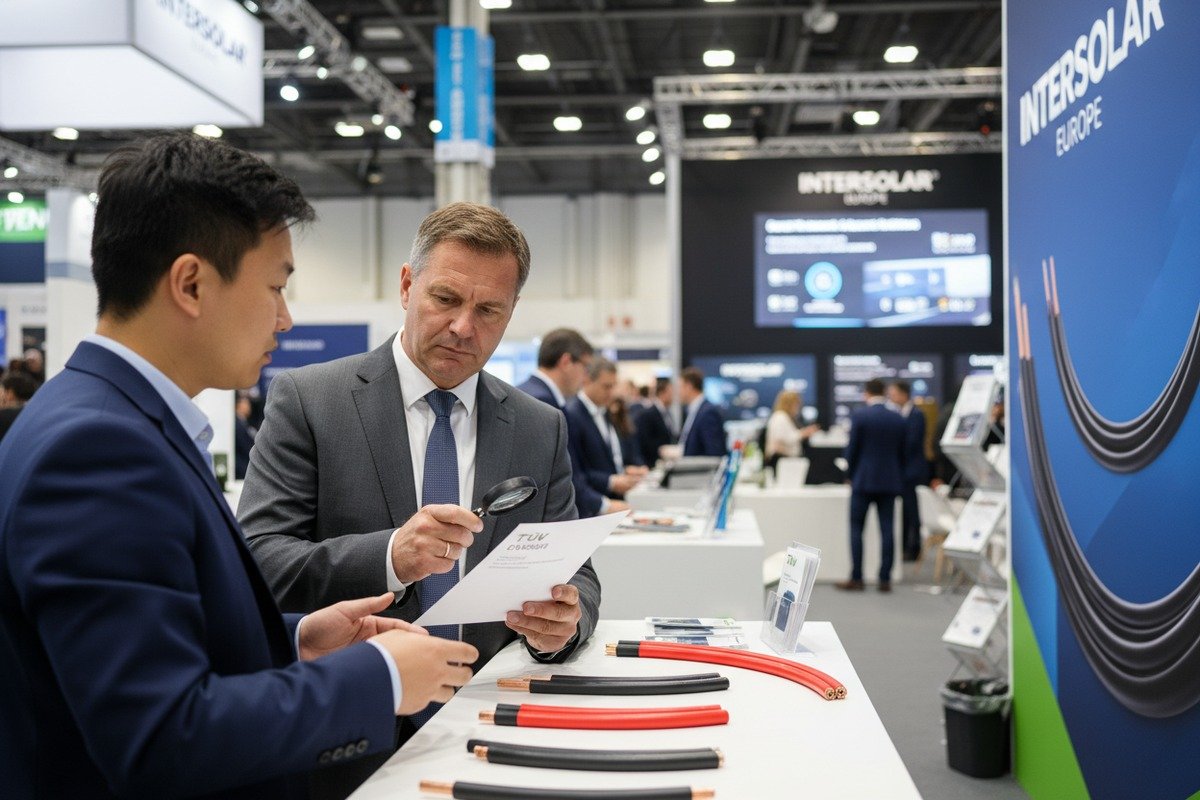
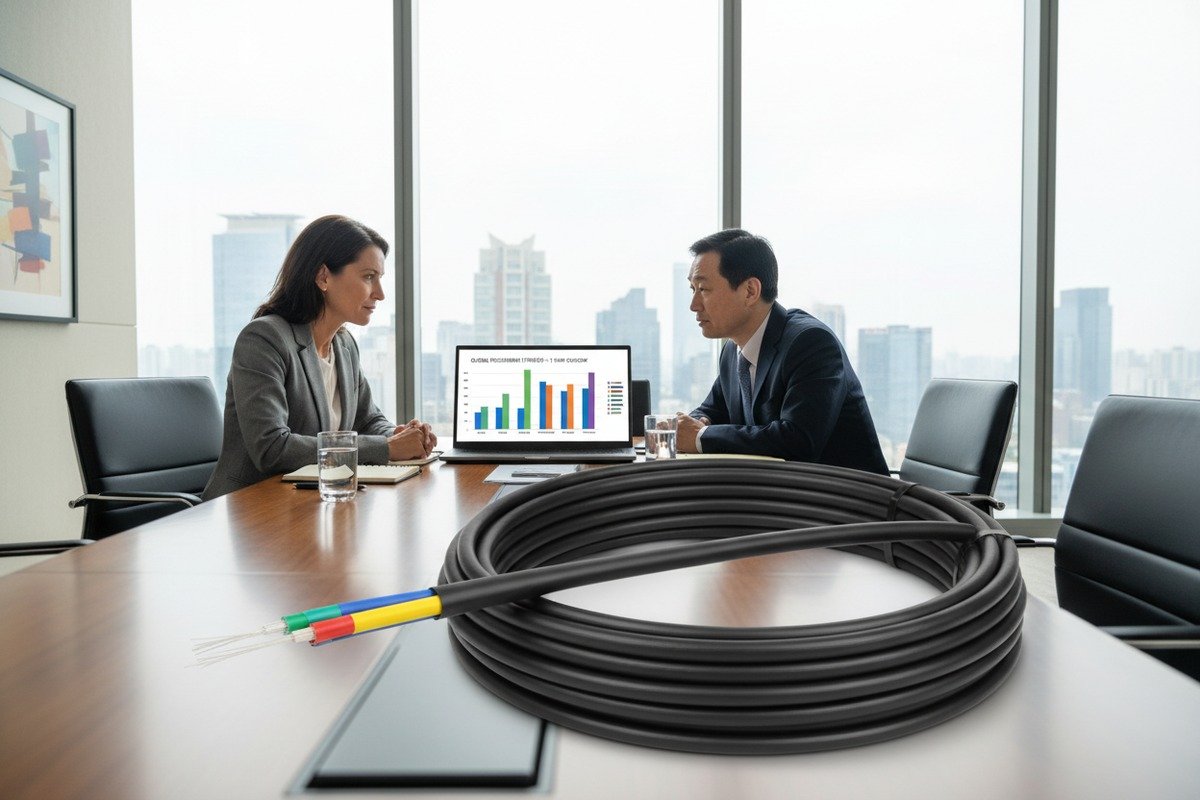
Every week, our sales team receives inquiries from overseas buyers who want to test ADSS cable quality 1 before committing to large volumes—but they hit a wall when they see the MOQ.
To negotiate a lower ADSS optical cable MOQ with Chinese suppliers for a trial order, frame your request as a partnership opportunity, offer a unit price premium, align with existing production schedules, leverage stock materials, and clearly demonstrate your long-term procurement roadmap with concrete market data.
This guide breaks down exactly how to approach the conversation, what to offer, and what to avoid ITU-T G.652D standards 2. Each section below covers a specific angle—from persuasion tactics to production scheduling—so you can walk into your next supplier negotiation fully prepared.
How can I convince a Chinese factory to lower the ADSS cable MOQ for my first trial order?
When our export team sits down with a new buyer, the first question is almost always about quantity TÜV 3. It is the single biggest friction point in starting a new supplier relationship.
Convince a Chinese factory to lower the ADSS cable MOQ by presenting your trial as a structured evaluation with a clear reorder timeline, offering a 20–30% unit price premium, and providing market evidence such as project contracts or sales screenshots that prove genuine future demand.

Why Factories Set High MOQs in the First Place
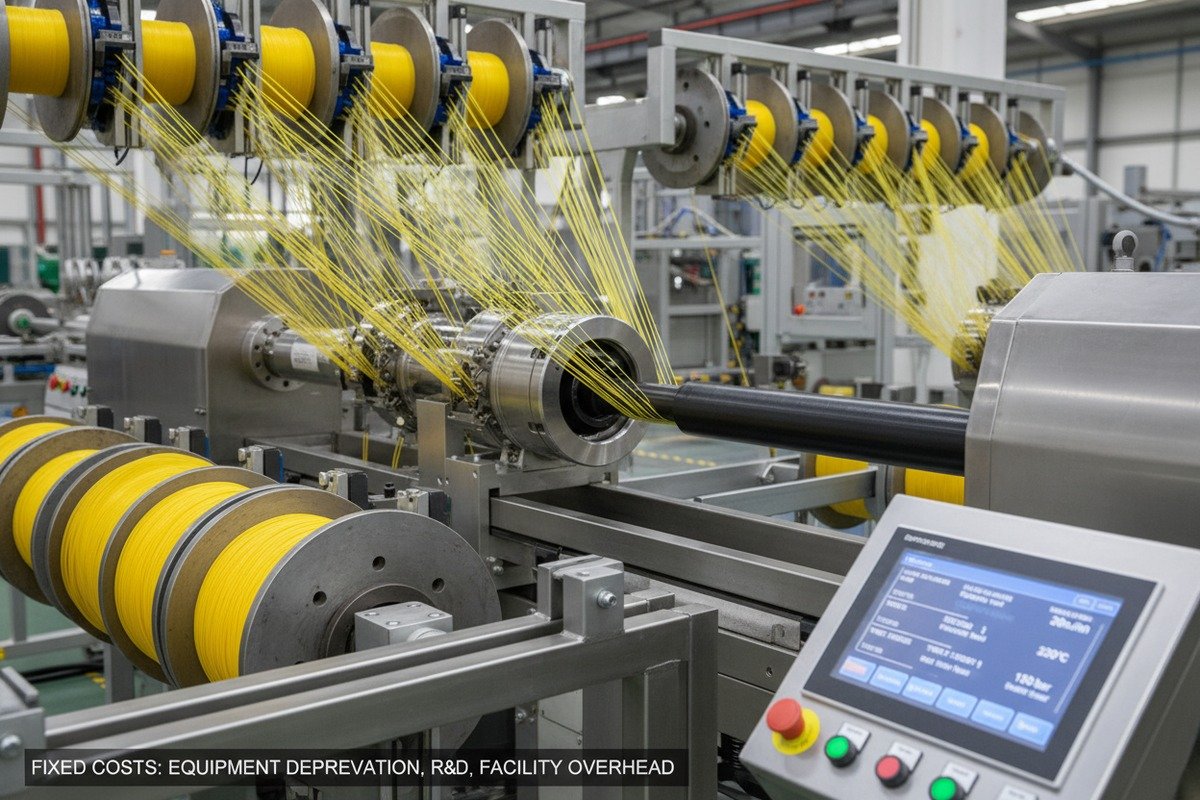
Before you negotiate, you need to understand why the number exists. ADSS cable production involves several fixed costs that do not shrink just because you order less. The extrusion line 4 must be calibrated for a specific outer diameter and jacket thickness. Aramid yarn 5 must be loaded in precise tension. Color-coded loose tubes need to be prepared for the exact fiber count. Each of these steps takes time and material, whether you order 500 meters or 5,000 meters.
At our facility, a single production changeover for a new ADSS specification can take 4–6 hours. The raw materials—especially aramid yarn and UV-resistant PE sheathing 6—often come in bulk quantities from upstream suppliers with their own MOQs. So when a factory quotes you a 3,000-meter minimum, they are not being difficult. They are covering real costs.
The Psychology of the "Trial Order" Pitch
Chinese suppliers hear "trial order" constantly. Many of those buyers never come back. So your job is to separate yourself from the crowd. Here is how:
- Use specific numbers. Instead of saying "we plan to order more later," say "our target is 20 km in Q3 and 50 km by year-end."
- Share documentation. A project tender, a purchase forecast, or even a screenshot of your distribution pipeline tells the supplier you are serious.
- Name your timeline. "We need 500 meters now to test installation on a 200-meter span, and we will place the full order within 60 days of approval."
What Premium Should You Expect to Pay?
Most suppliers will agree to a reduced MOQ if the margin compensates for inefficiency. Here is a general benchmark based on our experience with ADSS cable pricing:
| Order Quantity | Typical Unit Price (12-core ADSS, 100m span) | Price Premium vs. Full MOQ |
|---|---|---|
| 3,000 m (standard MOQ) | $0.95 – $1.10/m | Baseline |
| 1,000 m (reduced trial) | $1.15 – $1.35/m | +15–25% |
| 500 m (minimum trial) | $1.30 – $1.55/m | +25–40% |
This premium is not a penalty. It reflects real production inefficiency. When you acknowledge this openly in your negotiation, the supplier sees you as someone who understands manufacturing. That builds trust fast.
Scripts That Work
Try this approach in your email or WeChat message:
"We are evaluating ADSS suppliers for a regional FTTH rollout. We need 500 meters of 24-core, 200m span ADSS to validate installation performance. We are prepared to accept a higher unit price for this trial. Our projected annual volume is 80–120 km. Can you support a 500m first order?"
This message works because it states the trial purpose, shows a real project context, accepts the cost implication, and paints the long-term picture.
What strategies should I use to negotiate flexible MOQ terms without compromising on my technical specifications?
Our engineering team has seen cases where buyers accepted cheaper, lower-spec ADSS cable just to meet a lower MOQ—and the cable failed within months of installation.
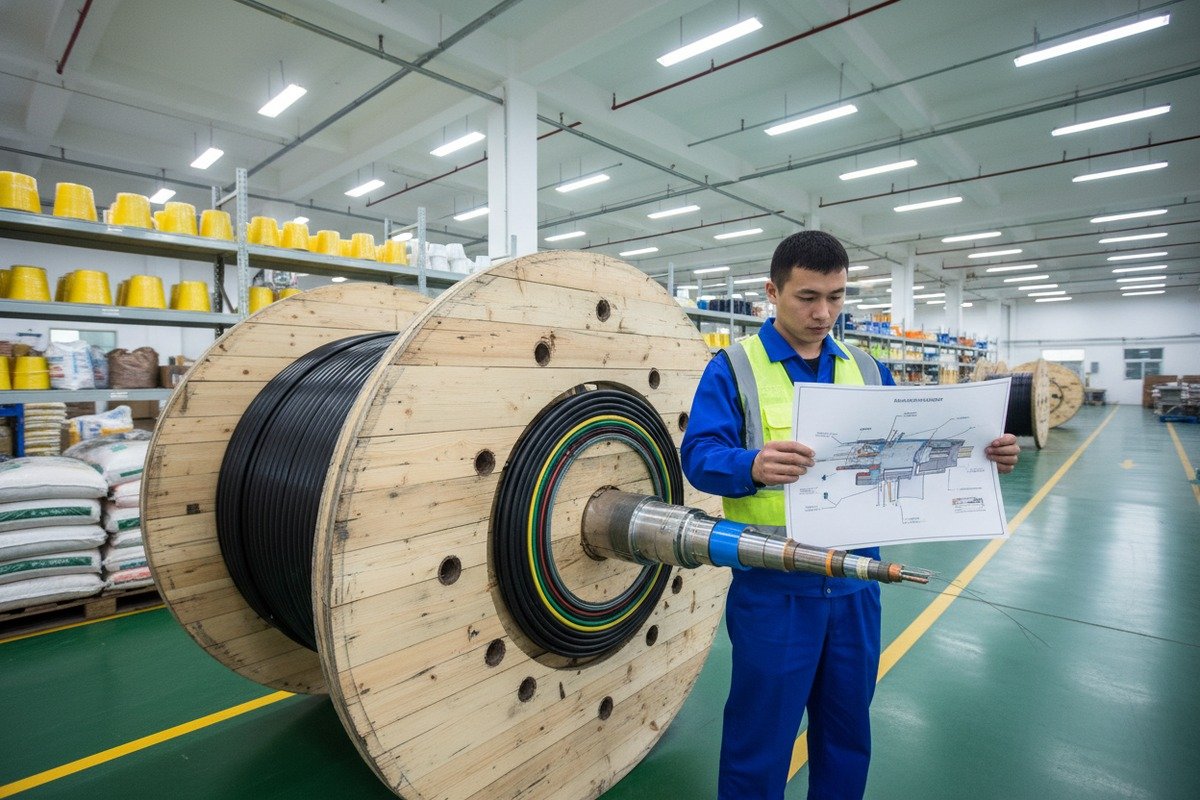
Negotiate flexible MOQ terms without sacrificing technical specs by requesting white-label standard configurations, proposing phased deliveries, leveraging stock materials from the supplier's inventory, and insisting on full OTDR testing and third-party inspection even for small quantities.
Never Trade Quality for Quantity
The temptation is real. A supplier might say, "We can do 300 meters if you accept a thinner jacket" or "We have leftover cable with 8 fibers instead of 12." Resist this unless the change genuinely fits your project. ADSS cables operate under mechanical stress from wind, ice, and their own weight. Cutting corners on aramid yarn fill, jacket thickness, or span rating can lead to catastrophic sag or even cable breakage.
At our production lines, we test every ADSS reel for tensile strength, attenuation, and crush resistance per IEC 60794 7 and ITU-T G.652D standards. These tests happen regardless of order size. If a supplier offers to skip testing to lower your cost, walk away.
Choose Standard Configurations
Custom specifications—unusual fiber counts, non-standard span lengths, special sheath colors—require dedicated production setups. Standard configurations are easier to produce in small batches because the factory likely has materials on hand.
| Specification Type | Example | Impact on MOQ |
|---|---|---|
| Standard (easier to negotiate) | 12-core, 100m span, black PE jacket | MOQ can drop to 500m |
| Semi-custom | 24-core, 200m span, black PE jacket | MOQ typically 1,000m |
| Fully custom | 48-core, 300m span, double jacket, printed sheath | MOQ often 3,000m+ |
If your project allows, start your trial with a standard spec. Validate the supplier's production quality, delivery reliability, and communication. Then move to custom specs on the larger follow-up order.
Phased Delivery Approach
Another strategy is to negotiate a full MOQ but split the delivery. For example, agree to purchase 2,000 meters but receive the first 500 meters now and the remaining 1,500 meters over the next 90 days. This reduces your upfront capital commitment while giving the supplier the total volume they need.
This works especially well when you pair it with a payment structure like 50% deposit on the first shipment and the balance paid before each subsequent delivery.
Insist on Quality Verification
For any trial order, demand the following regardless of quantity:
- Factory OTDR test report 8 for every reel
- Material certificates for aramid yarn and fiber
- Third-party inspection option (SGS, Bureau Veritas 9, or TÜV)
- Sample of the finished cable before bulk shipment
When our team prepares a trial shipment, we provide a complete test data package. This is non-negotiable. Any supplier who resists sharing test reports for a small order is a red flag.
How do I demonstrate my long-term procurement potential to get a better deal on a small initial quantity?
In our decades of exporting fiber optic cable, the buyers who get the best trial terms are never the ones who beg for low prices—they are the ones who show us a future worth investing in.
Demonstrate long-term procurement potential by sharing project pipelines, regional market data, annual volume forecasts with specific timelines, existing distributor relationships, and relevant certifications or tender documents that prove your capacity to place substantial repeat orders.
Build a Buyer Profile That Commands Respect
Chinese suppliers evaluate buyers based on perceived potential. A well-prepared buyer profile can shift the negotiation dramatically. Before your first message, assemble the following:
- Company introduction with your market region, years in business, and team size
- Project pipeline listing current and upcoming installations
- Volume forecast for the next 12–24 months, broken into quarterly targets
- Reference photos of past cable installations or your warehouse
- Import licenses or certifications relevant to your country
When we receive a buyer inquiry that includes even half of these items, our internal classification immediately moves that buyer to "priority partner" status. That means faster quotes, more flexibility on MOQ, and direct access to our technical engineers.
Show, Don't Just Tell
Anyone can write "we plan to buy 100 km next year." Proof is what separates you. Consider sharing:
- Screenshots of your online storefront or distribution network
- A signed letter of intent from your end customer
- Import records or customs clearance documents from previous cable purchases
- Photos of your team on a job site installing aerial fiber
One of our most successful partnerships started when a buyer in Southeast Asia sent us a 3-minute video of their installation crew working on a rural FTTH project. That single video convinced our production team to approve a 500-meter trial at near-standard pricing.
Use a Tiered Commitment Framework
Present your procurement plan in stages. This gives the supplier confidence without requiring you to sign a binding contract upfront.
| Phase | Timeline | Estimated Volume | Purpose |
|---|---|---|---|
| Trial | Month 1–2 | 500–1,000 m | Validate quality, logistics, and communication |
| First Reorder | Month 3–4 | 3,000–5,000 m | Supply initial project phase |
| Quarterly Orders | Month 5–12 | 10,000–20,000 m/quarter | Ongoing project supply |
| Annual Contract | Year 2 | 50,000–100,000 m | Long-term framework agreement |
This framework tells the supplier exactly where they fit in your business plan. It transforms a one-time 500-meter request into the beginning of a six-figure relationship.
Leverage Market Intelligence as Currency
Chinese suppliers are hungry for information about overseas markets. If you can explain regional trends—upcoming 5G rollouts, government broadband mandates, rural electrification programs—you become more than a buyer. You become a strategic partner.
Share details like: "Our government just approved a $200M rural fiber deployment. We need a reliable ADSS supplier who can scale from trial to 80 km per quarter." That statement alone can unlock MOQ concessions that no amount of price haggling can achieve.
Can I request a lower MOQ by aligning my trial order with the supplier's existing production schedule?
When we schedule ADSS cable production runs, there are always small windows where adding a trial batch costs us almost nothing extra—if the specs match what is already on the line.
Yes, you can request a lower MOQ by asking the supplier to piggyback your trial order onto an existing production run with matching specifications, which minimizes changeover costs and lets them fill your order without dedicating a separate setup to your small quantity.

How Production Scheduling Creates Opportunities
ADSS cable manufacturing runs in batches. A typical production line at a mid-to-large Chinese factory might run a specific spec—say, 24-core, 200m span, PE black jacket—for 3–5 days straight to fulfill a major order. At the end of that run, there is often capacity to add a few hundred extra meters before the line switches to a different configuration.
This is the sweet spot for your trial order. If your specifications match an upcoming production batch, the factory can add your 500–1,000 meters with minimal incremental cost. No extra setup. No wasted material. No special scheduling.
How to Ask the Right Question
Most buyers never think to ask about production schedules. Here is how to frame it:
"We need 500 meters of 24-core ADSS, 200m span, black PE jacket. If this matches any production run you have scheduled in the next 30–60 days, we would like to add our trial order to that batch. We are flexible on delivery timing."
This message signals three things: you have realistic specs, you understand manufacturing, and you are not demanding priority scheduling for a small order.
Timing Your Request
Certain periods offer better leverage for this approach:
- Post-Chinese New Year (March–April): Factories restart production with a backlog of orders. Your specs are more likely to match something already queued.
- Pre-peak season (May–June): Production lines run at full capacity. Adding small volumes to existing runs is easiest here.
- Avoid November–January: Factory schedules tighten before Chinese New Year. Suppliers are less willing to accommodate special requests.
Stock and Remnant Materials
Beyond active production runs, many factories hold inventory from canceled orders or overproduction. At our warehouse, we regularly have standard ADSS cable in popular configurations—12-core and 24-core with 100m or 200m spans—available in quantities of 500–2,000 meters.
Ask directly: "Do you have any stock ADSS cable in standard configurations available for immediate shipment?" You might be surprised. Stock cable eliminates the MOQ conversation entirely because it is already produced and sitting on a reel.
Working With Sourcing Agents
If direct negotiation with the factory proves difficult, a sourcing agent 10 based in Guangdong or Zhejiang can help. These agents often have relationships with multiple cable factories and can consolidate your trial needs with other small buyers to meet a factory's MOQ collectively.
However, be cautious. Agents add a markup of 5–15%, and you lose direct communication with the production team. For a technical product like ADSS cable, where span calculations and mechanical specifications matter, direct factory communication is almost always better.
The Walk-Away Technique
If a supplier says no to your first MOQ request, do not argue. Respond with:
"I understand. Thank you for your time. We will continue evaluating other suppliers and may revisit this when our volumes increase."
In our experience, about 40–50% of suppliers follow up within a week with a revised offer. The walk-away works because it signals that you have alternatives, and no factory wants to lose a potentially large customer over a trial order dispute.
Conclusion
Negotiating a lower ADSS cable MOQ is not about pressure—it is about preparation, proof, and partnership. Show the supplier you are worth the investment, and the numbers will follow.
Footnotes
1. IEEE standard for ADSS cable construction, performance, and testing. ↩︎
2. Replaced with the official and most recent ITU-T Recommendation G.652, which includes G.652D specifications, from the authoritative ITU website. ↩︎
3. Explains TÜV as a group of German organizations providing testing, inspection, and certification services. ↩︎
4. Explains the cable extrusion process, its purpose, and key steps in manufacturing. ↩︎
5. Explains aramid yarn's properties and its critical role as a strength member in cables. ↩︎
6. Explains polyethylene's properties as a cable jacket, including its UV resistance for outdoor use. ↩︎
7. International standard defining general specifications and test procedures for optical fiber cables. ↩︎
8. Explains what an OTDR is, how it works, and its importance for testing fiber optic cable integrity. ↩︎
9. Global leader in testing, inspection, and certification services, ensuring product and system compliance. ↩︎
10. Defines a sourcing agent as a professional who helps businesses find suppliers and manage procurement. ↩︎