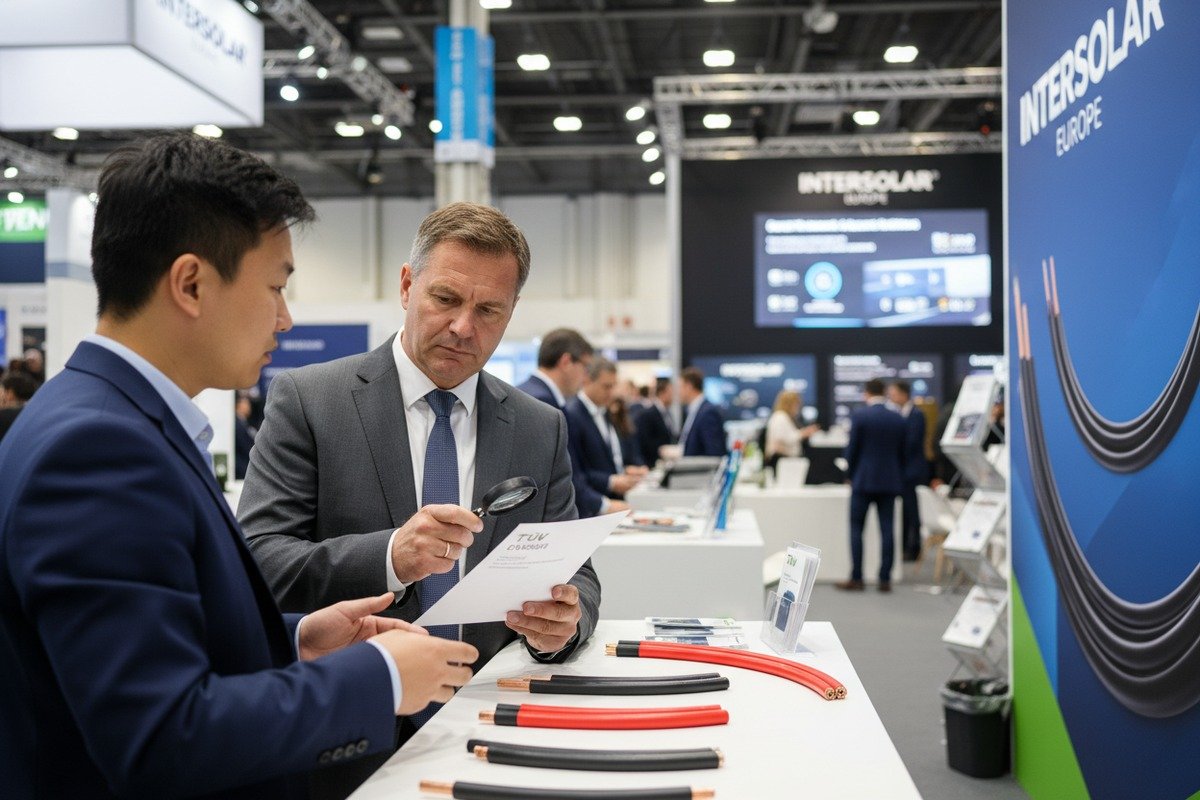

Every delayed cable reel means idle construction crews, blown budgets, and angry clients ADSS fiber optic cable 1. After 30 years running production lines at our 230,000 m² facility, we have seen how a single logistics misstep can cascade into weeks of project downtime.
To ensure on-time delivery and high inventory turnover for ADSS fiber optic cable from China, you need to vet supplier production capacity, use precise demand forecasting, secure contractual lead-time guarantees, implement just-in-time procurement strategies, and leverage real-time digital tracking across the entire supply chain from factory floor to final mile.
This guide breaks down the exact steps—from evaluating a Chinese manufacturer's production line to managing your warehouse like a lean operation supply chain management 2. Each section tackles a specific pain point that procurement managers face when sourcing ADSS cable internationally. Let's get into it.
How can I evaluate a manufacturer's production capacity to ensure my ADSS cable order stays on schedule?
We have had buyers visit our Hainan facility expecting a small workshop and walk away surprised by automated IPC+PLC production lines running around the clock. The real problem is not finding a supplier—it is finding one whose capacity actually matches their promises.
Evaluate a manufacturer's production capacity by auditing their daily output rate, checking dedicated ADSS production lines with aramid reinforcement and FRP strength member capability, verifying certifications like ISO 9001 and UL, and confirming they can handle your specific fiber count and span requirements within 15–20 day lead times.

Why Daily Output Rate Matters More Than Factory Size
A massive factory does not guarantee fast delivery. What matters is the daily throughput of finished ADSS cable. At our facility, we maintain an $800 million annual production capacity with lines capable of producing over 2,000 km of fiber optic cable per day. When the 2026 G657A2 shortage hit, manufacturers without dedicated high-speed lines saw lead times balloon from 3 weeks to 8 weeks. Buyers who had already vetted their supplier's actual output avoided this trap entirely.
Ask your supplier for their daily production rate in kilometers. Then do the math. If you need 500 km of 48-fiber ADSS cable and their line runs at 200 km/day, your production window is roughly 2.5 days plus curing and testing time. Add packaging, quality inspection, and staging for shipment. A realistic total is 10–15 working days for standard specs.
Key Metrics to Audit Before Placing an Order
Here is a checklist we recommend to every procurement manager:
| Evaluation Criteria | What to Look For | Red Flag |
|---|---|---|
| Daily output (km/day) | 1,000–2,000+ km for large facilities | Below 500 km with no expansion plan |
| Dedicated ADSS line | Separate line with aramid yarn and FRP processing FRP strength member 3 | Shared line with GYTA or GYXTW only |
| Certifications | UL 4, CSA, CE, ISO 9001 5 | Missing or expired certifications |
| Lead time commitment | 15–20 days for stock; 25–30 for custom | Vague timelines or no contractual clause |
| Testing capability | In-house OTDR, tensile, and UV resistance testing | Outsourced testing with no lab on-site |
| Raw material sourcing | Stable fiber preform and aramid supply chain | Single-source dependency for G.652D fiber |
Production Line Technology to Verify
Modern ADSS manufacturing relies on automated systems with laser diameter monitoring, precision jelly filling, and UV-resistant PE jacket extrusion. Our HK-50 lines achieve stable high-speed output with less than 1% downtime. When you visit or conduct a virtual factory audit, ask to see the extrusion line in operation. Look for consistent jacket thickness, proper color-coding on loose tubes, and real-time diameter displays.
Also verify whether the factory runs separate lines for central tube versus stranded structure ADSS. Central tube designs are lighter and cheaper but limit fiber count. Stranded structures offer better waterproofing for long spans in harsh environments. A factory that can produce both gives you flexibility without switching suppliers.
The Customization Question
If your project requires non-standard specs—say, a 144-fiber ADSS with double PE jacket for a 1,200-meter span near high-voltage lines—confirm that the manufacturer handles OEM/ODM work regularly. At our plant, roughly 60% of export orders involve some degree of customization. Factories that only run catalog products may struggle with your timeline when changes arise.
What logistics strategies should I use to minimize shipping delays and protect my cable reels from damage?
One of the most painful calls we have ever received was from a buyer in Brazil whose entire container of ADSS cable arrived with three collapsed wooden reels. Months of planning, gone. The cable itself was fine—but the packaging failed during ocean transit.
Minimize shipping delays by booking freight early, using reinforced steel-frame or hardwood reels rated for ocean transport, selecting experienced freight forwarders familiar with fiber optic customs codes, insuring every shipment, and building a 7–10 day buffer into your project timeline for customs clearance and last-mile delivery.

Understanding the Full Timeline From Factory to Your Warehouse
The production cycle is only one piece of the puzzle. Here is a realistic breakdown of the total lead time for ADSS cable shipped from China to a US port:
| Phase | Typical Duration | Variables |
|---|---|---|
| Production | 15–20 days (standard) | Fiber count, jacket type, customization |
| Factory QC and packing | 2–3 days | OTDR testing 6, reel wrapping |
| Inland transport to port | 1–3 days | Factory location relative to Shenzhen/Shanghai |
| Ocean freight to US West Coast | 14–18 days | Carrier schedule, port congestion |
| Ocean freight to US East Coast | 25–30 days | Via Panama Canal or transshipment |
| Customs clearance | 3–7 days | HS code accuracy, documentation completeness |
| Last-mile delivery | 1–5 days | Warehouse location, trucking availability |
| Total estimated | 36–68 days | Plan for 45–50 days as baseline |
Reel Protection Is Non-Negotiable
ADSS cable reels weigh hundreds of kilograms. During a 30-day ocean voyage, they endure vibration, humidity, and stacking pressure. We switched to reinforced hardwood reels with steel-banded flanges three years ago after analyzing damage claims. The result was a 90% reduction in transit damage complaints.
Ask your supplier about reel specifications. Plywood reels may save $20 per unit but cost you thousands if they crack. Insist on fumigation-treated wood to avoid customs holds in countries with ISPM-15 requirements. Shrink-wrapping each reel adds another layer of moisture protection.
Customs and Documentation Tips
Fiber optic cable falls under specific HS codes 7 (typically 8544.70 for optical fiber cables). Incorrect classification triggers delays and potential penalties. Work with a freight forwarder who has handled fiber optic imports before. They will know to prepare the commercial invoice with exact fiber type (G.652D), cable structure (ADSS with FRP), and intended application.
For DDP (Delivered Duty Paid) shipments, confirm that your Chinese supplier's logistics partner can handle customs brokerage on your end. At Lonsoncable, we offer DDP service to simplify this for buyers who do not want to manage import paperwork themselves.
Insurance and Contingency Planning
Always insure the full replacement value plus freight cost. Marine cargo insurance typically costs 0.3–0.5% of the declared value. It is cheap protection against a very expensive problem. Additionally, maintain a relationship with at least two freight forwarders so you can pivot quickly if one carrier faces port delays or schedule changes.
How do I balance my inventory levels to prevent project downtime while maintaining high turnover?
When our engineering team talks with distributors in Southeast Asia or Latin America, the same tension always surfaces: "I need cable on hand for my next project, but I cannot afford to sit on $200,000 of inventory for six months."
Balance ADSS inventory by targeting a 4–6x annual turnover ratio, using demand forecasting tied to your project pipeline, stocking only high-demand configurations like 24- and 48-fiber counts in central tube or stranded designs, and establishing quick-ship agreements with your Chinese supplier for specialty orders to avoid overstocking slow-moving SKUs.

Calculating Your Ideal Inventory Turnover Ratio
Inventory turnover ratio 8 equals cost of goods sold divided by average inventory value. For ADSS cable distributors, the sweet spot is 4–6 turns per year. Below 4, you are tying up too much capital. Above 6, you risk stockouts during demand spikes—especially dangerous in the current 2026 market where G657A2 fiber 9 shortages have extended lead times industry-wide.
Here is a practical example. Say your annual ADSS cable sales equal $1.2 million at cost. To hit 5 turns, your average inventory should hover around $240,000. That means roughly two months of supply on hand at any given time.
Stocking Strategy: What to Hold vs. What to Order on Demand
Not all ADSS cables move at the same speed. Our export data shows clear patterns:
| Cable Configuration | Demand Level | Stocking Recommendation |
|---|---|---|
| 12-fiber ADSS, single PE jacket | Medium | Stock 1 month supply |
| 24-fiber ADSS, AT jacket | High | Stock 2–3 months supply |
| 48-fiber ADSS, double PE jacket | High | Stock 2–3 months supply |
| 96-fiber ADSS, stranded structure | Low-Medium | Order on demand with 15-day lead clause |
| 144-fiber ADSS, long-span design | Low | Custom order only |
High-demand SKUs deserve warehouse space. Low-demand specialty cables should be ordered per project with contractual lead-time guarantees from your supplier.
Central Tube vs. Stranded: Inventory Implications
Central tube ADSS cables are lighter, cheaper, and easier to install. They suit short to medium spans and lower fiber counts. Stranded structure cables offer superior waterproofing and mechanical strength for long spans, harsh environments, and higher fiber counts. The trade-off affects your inventory directly.
If you serve urban telecom projects, central tube dominates your demand. If your customers are power grid contractors running cables across mountain spans or lightning-prone regions, stranded structure is the safer bet. Stocking the wrong ratio ties up capital in slow-moving inventory.
The 2026 Shortage Factor
The AI-driven demand surge has shifted fiber production priorities. China Mobile bid at ceiling prices in early 2026, and G657A2 supply remains constrained. Chinese manufacturers with emergency stock and high daily output—like our 2,000 km/day capacity—provide a hedge. Lock in a long-term supply agreement now. The market favors sellers through at least 2027, and spot pricing will only climb.
Some buyers advocate bulk purchasing to hedge against further shortages, arguing that ADSS cable's 20–30 year lifespan means you will use it eventually. Others prefer just-in-time to avoid capital lockup during volatile pricing. The right answer depends on your cash flow and project visibility. If you have confirmed contracts for the next 12 months, buy ahead. If your pipeline is uncertain, lean on supplier quick-ship agreements instead.
Can I rely on real-time production updates from my supplier to better manage my local distribution timeline?
During a recent shipment of 48-fiber ADSS cable to a contractor in Mexico, our project coordination team sent daily production photos and OTDR test snapshots through a shared dashboard. The buyer adjusted their installation crew schedule twice based on our updates—and still hit their project deadline.
Yes, you can rely on real-time production updates if your supplier uses digital tracking systems like ERP dashboards, provides daily or milestone-based reports with photos and test data, and contractually commits to communication protocols—this visibility lets you synchronize local distribution, crew scheduling, and just-in-time warehouse receiving with actual production progress.
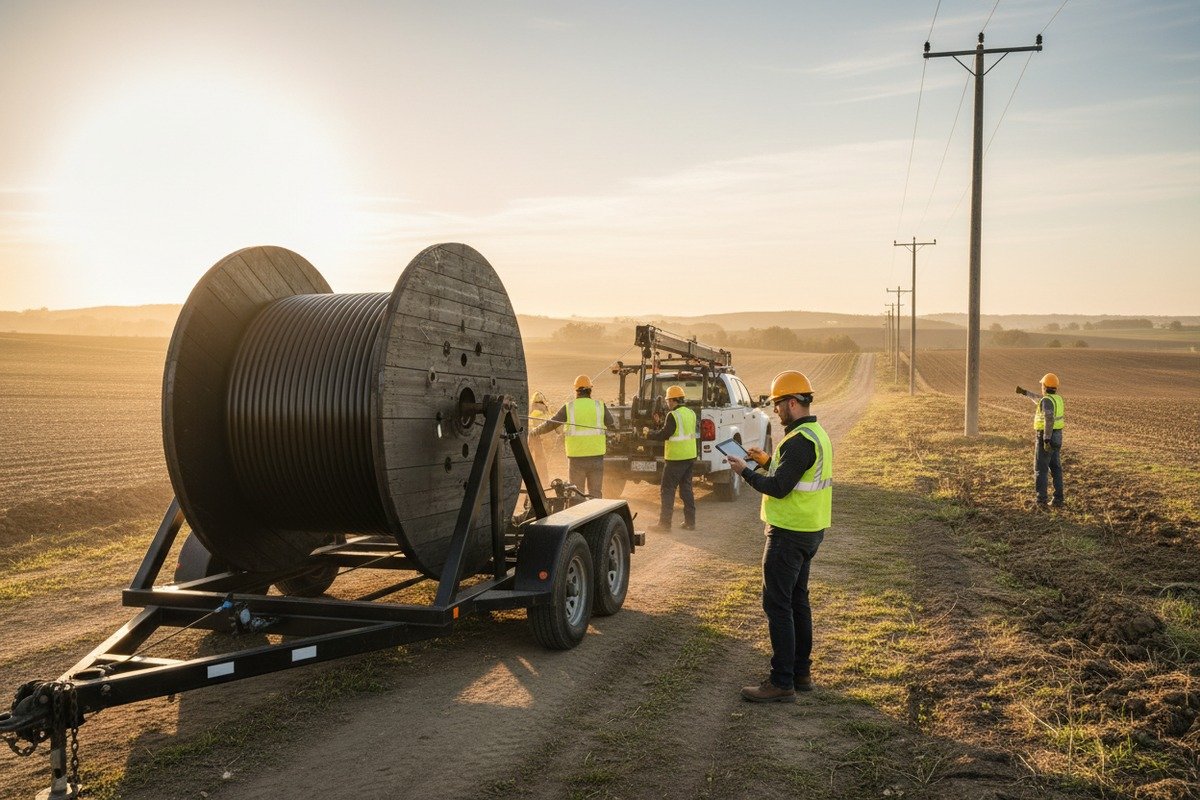
What "Real-Time" Actually Looks Like in Practice
True real-time tracking means you know where your order stands at any moment. At our facility, we use an integrated ERP system 10 that logs each production milestone: fiber drawing, loose tube coloring, stranding, jacketing, coiling, and final QC. Buyers with active orders receive milestone notifications via email or messaging apps.
However, not every Chinese manufacturer offers this level of transparency. Before committing to a supplier, ask these questions:
- Do you provide production photos at key stages?
- Can I access a tracking portal or dashboard?
- Will you share OTDR test reports before shipment?
- How quickly do you notify me of delays or material issues?
If the answer to any of these is vague or "we will try," that is a warning sign.
How Production Visibility Improves Your Distribution
When you know your ADSS cable will finish production on Day 12 and ship on Day 15, you can pre-book trucking from your port warehouse, alert your installation crews, and confirm delivery windows with your end clients. Without this visibility, you are guessing—and guessing leads to idle crews costing $5,000–$10,000 per day on large aerial installation projects.
For smart city and 5G backhaul projects where ADSS enables measurable improvements—25% traffic flow gains, 40% faster emergency response—delays are not just financial. They are reputational. Your client chose you because you promised reliability. Real-time supplier updates are how you deliver on that promise.
Digital Tools That Add Value
Beyond basic email updates, advanced supply chain platforms offer predictive analytics on lead times, automated compliance checks for customs documentation, and even blockchain-based records of the cable's journey from raw fiber to delivered reel. While blockchain adoption is still emerging in the fiber optic industry, some forward-thinking distributors are already using it to create immutable audit trails for quality-sensitive government and utility contracts.
At minimum, insist on the following digital touchpoints with your Chinese supplier:
- Weekly summary email with production percentage complete
- Photo documentation at stranding, jacketing, and QC stages
- Shipping notification with container number and vessel tracking link
- Post-shipment OTDR and mechanical test report delivery within 24 hours of dispatch
Building Contractual Safeguards
Real-time updates are valuable, but they are not enough on their own. Your purchase contract should include penalty clauses for late delivery—typically 0.5–1% of order value per week of delay, capped at 5–10%. This creates financial accountability. It also motivates the factory to prioritize your order during peak seasons when domestic demand from Chinese telecom operators competes for production slots.
We have seen the best outcomes when buyers combine digital visibility with contractual teeth. The updates tell you what is happening. The contract ensures something happens on time.
Multi-Supplier Strategy as a Backup
Even the best supplier can face unexpected disruptions—a raw material shortage, a power outage, a port closure. Developing relationships with two qualified ADSS manufacturers in China gives you a fallback. Keep your primary supplier for 70–80% of volume and your secondary supplier qualified and ready for overflow or emergency orders. This approach costs slightly more in relationship management but pays for itself the first time a single-source plan fails.
Conclusion
On-time delivery and strong inventory turnover for ADSS cable from China come down to supplier vetting, logistics planning, smart stocking, and digital visibility. Get these four pillars right, and your projects stay on schedule.
Footnotes
1. Provides a comprehensive definition and overview of ADSS fiber optic cable. ↩︎
2. Replaced with a Wikipedia article providing a comprehensive definition of supply chain management. ↩︎
3. Details the purpose and advantages of FRP strength members in fiber optic cables. ↩︎
4. Defines UL certification and its importance for product safety and compliance. ↩︎
5. Official information on the ISO 9001 standard for quality management systems. ↩︎
6. Replaced with a working page on the original domain (VIAVI Solutions) that directly addresses OTDR testing. ↩︎
7. Provides information on Harmonized System (HS) codes for optical fiber cables. ↩︎
8. Defines and explains how to calculate the inventory turnover ratio. ↩︎
9. Replaced with the official ITU-T Recommendation G.657 document, which is the most authoritative source for G657A2 fiber specifications. ↩︎
10. Describes Enterprise Resource Planning (ERP) systems and their role in business. ↩︎