
Every year, our production lines push out thousands of kilometers of ADSS cable destined for power grids across four continents IEEE 1222 dry-band arcing results 1. Yet the question that keeps coming back from procurement teams haunts us too: how do you actually prove a cable will last 25 years when the oldest field installs are barely past that mark? The gap between lab claims and real-world failures is where projects bleed money—and where trust between buyer and supplier either holds or collapses.
Before signing any ADSS cable contract, you should confirm the supplier's accelerated aging test data, aramid yarn grade certifications, factory-specific OTDR reports, mechanical span calculation sheets, IEEE 1222 dry-band arcing results, and field failure rate records per 1,000 km per year. These documents separate credible manufacturers from those selling recycled-PE jackets that fail in under five years.
Below, we break down exactly what data to demand, why each document matters, and where common supplier claims fall apart under scrutiny. If you are a procurement manager, EPC contractor, or telecom operator sourcing ADSS cable from China or anywhere else, this guide gives you a concrete checklist.
How can I verify that the aramid yarn and jacket materials will actually last 25 years?
Our engineers spend weeks selecting aramid yarn grades for each ADSS project because the wrong choice can cut a cable's life in half. When we ship to humid coastal regions in Southeast Asia or UV-intense deserts in the Middle East, material selection is the single biggest lifespan variable.
To verify 25-year material durability, request the supplier's aramid yarn tensile retention data after accelerated aging, the PE jacket's carbon black content test report (≥2.5% by weight for UV resistance), and third-party confirmation that fibers meet ITU-T G.652.D with proof testing at or above 1% strain.
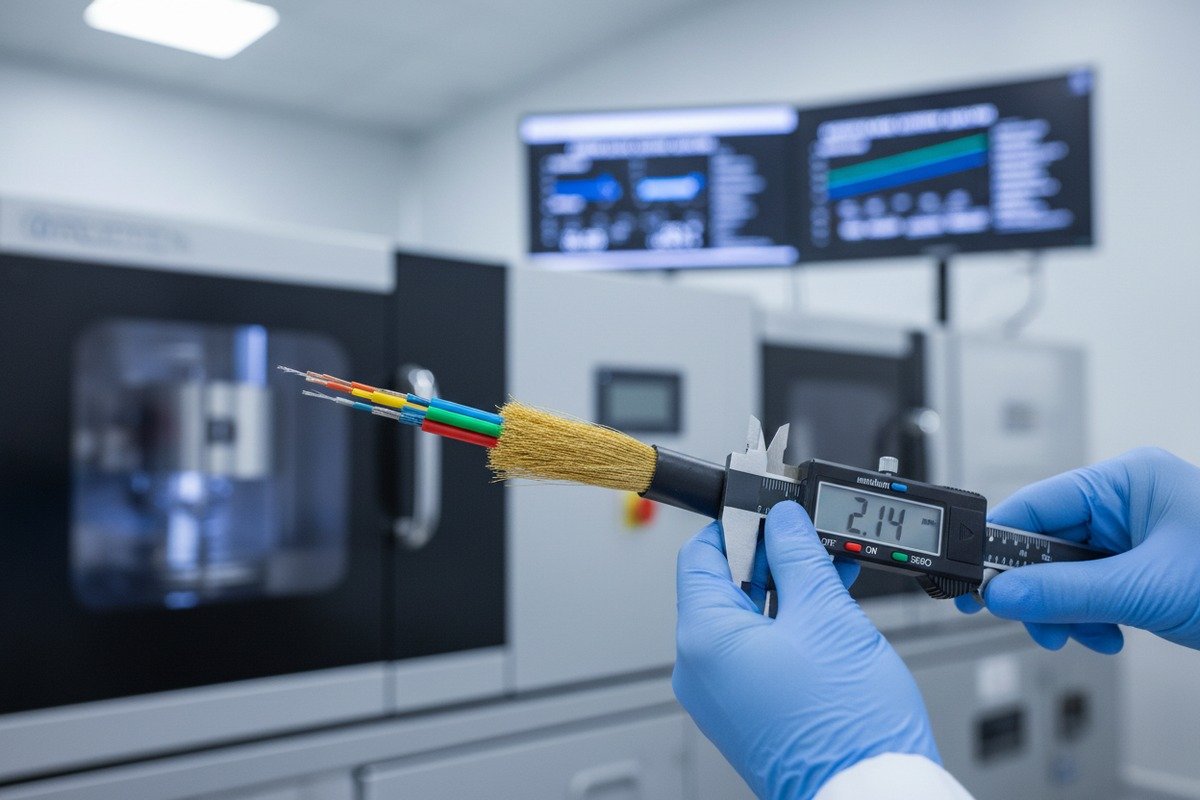
Why Aramid Yarn Grade Matters More Than You Think
Aramid yarn is the strength backbone of every ADSS cable. It carries the mechanical load, resists creep, and determines how much the cable sags over decades. But not all aramid is equal. High-tenacity Kevlar 49 2 from DuPont or Twaron from Teijin are the gold standards. Some budget suppliers substitute lower-grade para-aramid or even blend in cheaper polyester to cut costs. On our production floor, we test every incoming aramid batch for tensile strength (≥2,920 MPa), elongation at break, and creep rate at 50% rated load over 1,000 hours.
Ask your supplier these specific questions:
- What is the aramid yarn brand and grade?
- Can you provide the manufacturer's certificate of analysis for each batch?
- What is the long-term creep rate at 20% and 50% of rated breaking strength?
PE Jacket: The First Line of Defense
The outer polyethylene jacket protects everything inside from UV, rain, pollution, and abrasion. A high-density PE jacket with proper carbon black dispersion 3 (≥2.5% by weight, particle size 10–25 nm) can last 20–25 years. Without it, UV degradation begins cracking the surface within 10–15 years. In our experience exporting to Africa and the Middle East, cables installed without anti-tracking (AT) jackets near high-voltage lines have failed from dry-band arcing in as few as 3–4 years.
| Material Parameter | Minimum Acceptable Value | Red Flag Value |
|---|---|---|
| Aramid yarn tensile strength | ≥ 2,920 MPa | < 2,500 MPa |
| PE jacket carbon black content | ≥ 2.5% by weight | < 2.0% or unspecified |
| Carbon black particle size | 10–25 nm | > 40 nm or unspecified |
| Fiber proof test level | ≥ 1.0% strain | < 0.8% strain |
| Jacket anti-tracking rating | Class B or higher (IEC 60587 4) | No tracking resistance data |
The Recycled PE Trap
One of the most common cost-cutting tricks in the cable industry is using recycled polyethylene for the outer jacket. Recycled PE often contains impurities and inconsistent molecular weight distributions. In the field, these jackets crack, chalk, and lose mechanical integrity within 3–5 years. We have seen competing cables arrive at project sites with visible surface roughness and discoloration—signs of recycled or blended PE. Always request a material data sheet specifying virgin HDPE and ask for melt flow index (MFI) test results. If a supplier cannot produce these documents, walk away.
Accelerated Aging: The Proof Behind the Promise
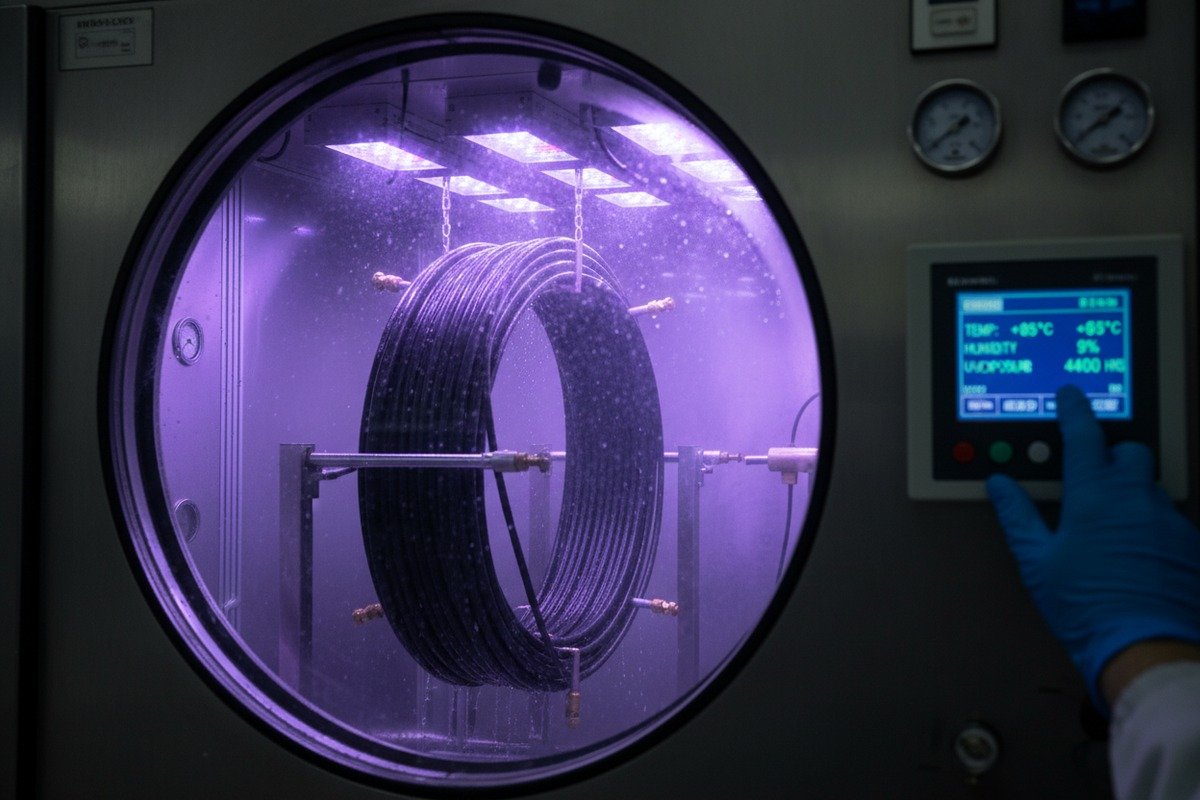
No one can wait 25 years to validate a cable. Instead, the industry relies on accelerated aging tests. UV weathering per ASTM G154 5 or ISO 4892-2 simulates years of sun exposure in weeks. Tensile retention testing after thermal cycling (−40°C to +70°C, 100+ cycles) reveals how materials behave over decades. When we run these tests in-house and through third-party labs, we provide clients with full reports showing tensile retention above 85% after equivalent 25-year exposure. Demand these reports—not just a warranty statement on paper.
What mechanical calculation sheets and span ratings should I demand from my supplier?
When our technical team receives a project inquiry from a power grid contractor in the Philippines or Colombia, the first thing we build is a site-specific mechanical calculation sheet. Without it, a cable rated for 200 m spans could be strung across 280 m—and fail within two monsoon seasons.
Demand a project-specific sag-tension calculation showing maximum allowable tension (MAT), rated tensile strength (RTS), everyday stress (EDS), and fiber strain under worst-case wind and ice loading for your exact span length, altitude, and local weather data. Generic datasheets are not sufficient.
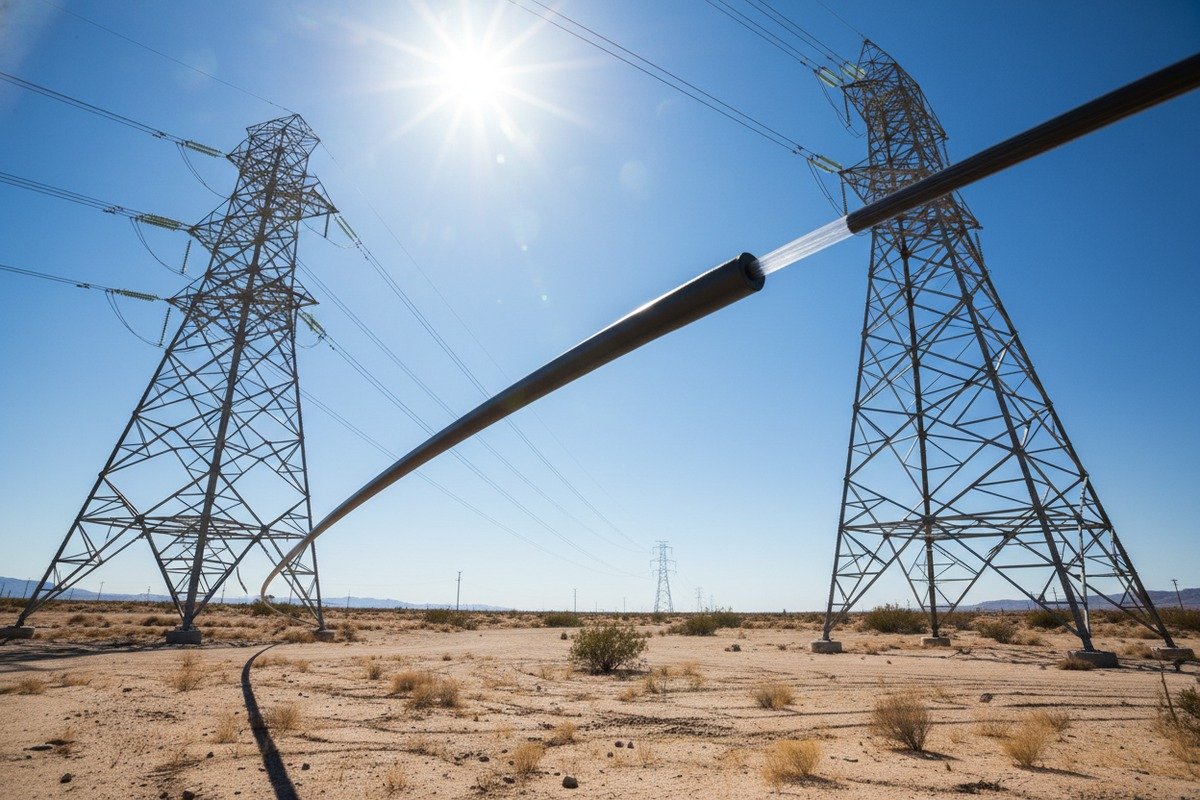
What a Proper Calculation Sheet Includes
A legitimate mechanical calculation sheet is not a one-page table from a catalog. It is a multi-page engineering document tailored to your project. It should include:
- Cable weight per meter (including ice loading if applicable)
- Wind pressure assumptions (based on local meteorological data)
- Span length and attachment point heights
- Sag at installation temperature and at extremes (−20°C and +50°C typical)
- Maximum fiber strain under worst-case combined loading
- EDS (Every Day Stress) as a percentage of RTS
The critical number is long-term fiber strain. For a 25-year design life, strain must stay below 0.6% per IEC 60794-1-21 6. If a supplier's calculation shows strain approaching 0.5% under everyday conditions, you have almost no margin for unexpected loads like heavy ice storms or sustained high winds.
Span Ratings: Generic vs. Project-Specific
Most ADSS catalogs list span ratings of 100 m, 200 m, or up to 300 m. These are reference values based on idealized conditions. Real installations face unique terrain, elevation differences between towers, and local wind zones. A cable rated for 300 m in a catalog might only be safe for 220 m in a coastal zone with frequent typhoons.
| Parameter | Catalog Value (Typical) | Project-Specific Value (Example: Coastal Philippines) |
|---|---|---|
| Maximum span | 300 m | 220 m |
| Wind speed assumption | 25 m/s | 42 m/s (typhoon zone) |
| Ice loading | 0 mm | 0 mm (tropical) |
| EDS (% of RTS) | 18% | 22% |
| Max fiber strain at worst case | 0.45% | 0.58% |
| Sag at 40°C | 2.8 m | 4.1 m |
Aeolian Vibration: The Silent Killer
Aeolian vibration 7 occurs when steady wind at 10–40 Hz causes the cable to oscillate. Over millions of cycles, this micro-bending fatigues the aramid yarn and can induce fiber strain at clamp points. In coastal installations, cables can hit 200 million vibration cycles in roughly 7 years. If the supplier does not address vibration dampers or anti-vibration clamp designs in the mechanical package, push back hard. Our team always includes vibration analysis and damper recommendations for spans exceeding 120 m in wind-prone areas.
What to Do If the Supplier Cannot Provide Calculations
If a sales representative cannot produce a sag-tension calculation within a few days of receiving your span data, it usually means one of two things: either they lack engineering staff, or they are reselling cables from another factory and have no direct access to design data. Both are deal-breaking red flags. A credible ADSS manufacturer with 30 years of experience—like our team at Lonsoncable—will have dedicated engineers running PLS-CADD or similar software and can deliver custom calculations within 48–72 hours.
How do I ensure the factory OTDR test reports and certifications are authentic and project-specific?
One frustrating pattern we see in export markets is buyers receiving beautiful test reports that turn out to be templates—same trace data copied across different purchase orders. On our production line, every reel gets its own OTDR test, and we tie each report to a unique drum number and production date. But not every factory operates this way.
To verify OTDR report authenticity, cross-check the drum serial number on the report against the physical reel label, confirm the test date falls within the production window, request the raw .sor trace files (not just PDFs), and verify that the fiber count, cable length, and attenuation values match your purchase order specifications exactly.
Why Generic OTDR Reports Are Dangerous
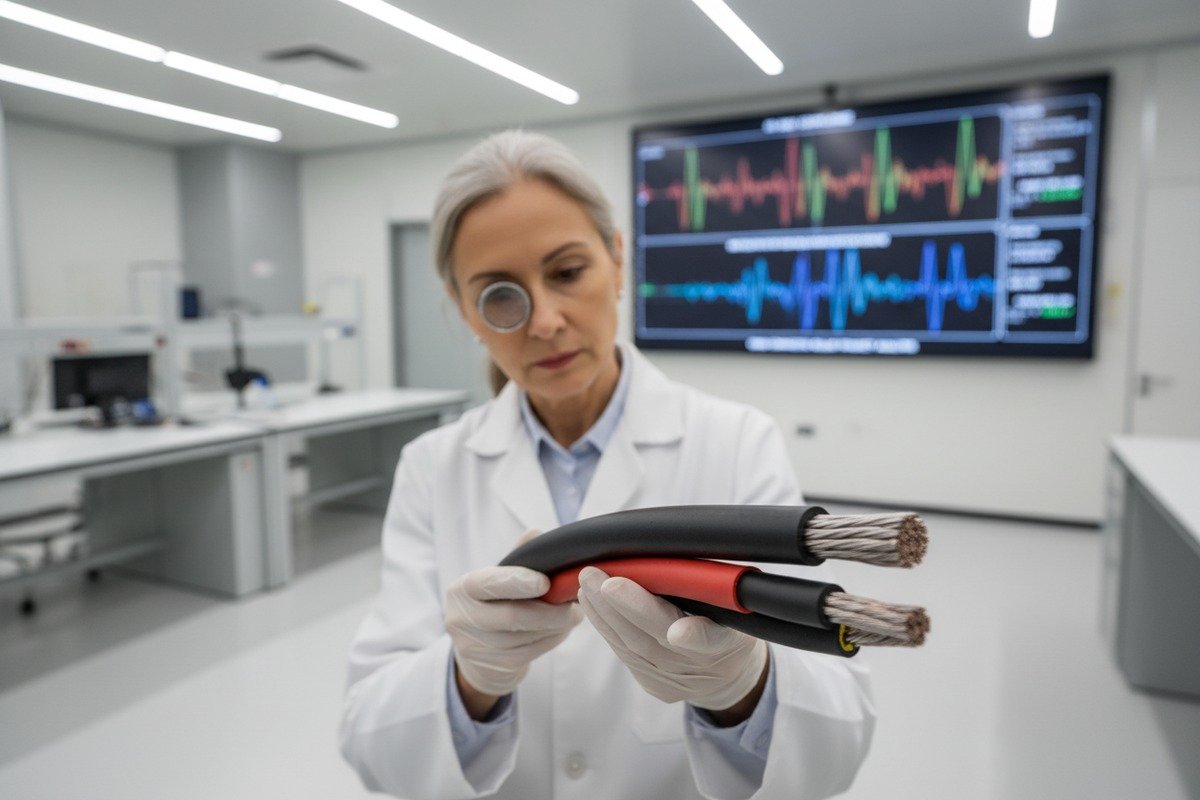
An OTDR (Optical Time-Domain Reflectometer) 8 test report is the cable's medical record. It shows attenuation per kilometer, splice events, connector losses, and overall fiber health. When a supplier hands you a generic report—one not tied to your specific production run—you have zero assurance that the cable on your reel matches the tested sample. We have heard from contractors in Africa who discovered 0.5 dB/km attenuation on reels whose attached reports claimed 0.34 dB/km. The project failed its acceptance test, and the contractor had to re-pull cable at enormous cost.
How to Spot a Fake or Recycled Report
Here is a quick checklist:
- Drum number mismatch: The serial number on the OTDR report must match the number printed or stamped on the wooden reel. If they do not match, reject the reel.
- Date inconsistency: If your order was placed in March and the test report is dated January of the previous year, the report likely belongs to a different production batch.
- Identical trace data across reels: If every reel in a shipment has the exact same attenuation values to three decimal places, the data was almost certainly copied.
- No .sor files available: A legitimate OTDR test generates a .sor file that can be opened in any OTDR viewer software. If the supplier only provides PDFs and refuses to share .sor files, question the report's validity.
Certifications: Beyond the Logo
Certifications like ISO 9001, UL, CSA, and CE are essential, but the logo on a datasheet is not proof. Ask for the certificate number and verify it directly on the issuing body's website. For UL listings, search at ul.com/verify. For ISO 9001, contact the accreditation body listed on the certificate. In our case, we encourage every client to verify our certifications independently—it builds trust and removes doubt.
| Verification Step | What to Check | How to Check |
|---|---|---|
| OTDR drum number | Matches physical reel label | Visual inspection at receiving dock |
| OTDR test date | Within production window of your PO | Compare against PO date and lead time |
| .sor trace files | Raw data files, not just PDF summaries | Open in OTDR viewer software (e.g., Noyes OFS-100) |
| Attenuation values | ≤ 0.35 dB/km at 1310 nm, ≤ 0.21 dB/km at 1550 nm for G.652.D | Compare report values against ITU-T G.652.D 9 spec |
| Certification numbers | UL, CSA, CE, ISO listed on documents | Verify on issuing body's website directly |
| Fiber count and cable length | Matches your purchase order | Cross-reference PO against report header |
The 25-Year Attenuation Margin
A new ADSS cable with G.652.D fiber might show 0.33 dB/km at 1310 nm. Over 25 years, environmental aging, hydrogen absorption, and micro-bending add roughly 0.05 dB/km of degradation. If your initial test report already shows borderline attenuation, you have no margin for aging. Our engineers flag any reel testing above 0.32 dB/km at 1310 nm during production QC—those reels get re-tested or rejected before they ever reach the shipping dock.
Post-Installation Monitoring and Warranty Integration
A growing best practice is to submit OTDR data annually for the first five years, then every five years after that. This creates a degradation baseline that can trigger warranty claims before catastrophic failure. We recommend this approach to all our clients and provide a monitoring template with every shipment. Ask your supplier if they support—or even require—this kind of ongoing data exchange as part of their warranty terms.
What environmental aging data should I review to prevent premature cable failure in my local climate?
Our cables land in places as different as the frozen highlands of Peru and the salt-spray coasts of Indonesia. Every environment attacks ADSS cable differently—UV in the desert, humidity in the tropics, ice in northern climates, and pollution near industrial zones. When we lost a warranty negotiation early in our export history because we had not matched jacket chemistry to a client's specific micro-climate, it changed how we approach every quote.
Review the supplier's accelerated UV aging results (ASTM G154 or ISO 4892-2), salt fog corrosion test data (ISO 9227), thermal cycling reports (−40°C to +70°C), and dry-band arcing resistance per IEEE 1222. Match these results against your local climate conditions—desert UV, coastal salt, tropical humidity, or ice-loading zones—to predict real-world cable performance.

Climate-Specific Failure Modes
Different climates attack different parts of the cable. Understanding which failure mode applies to your region lets you ask the right questions.
- Desert / High UV: Jacket cracking and chalking. Carbon black content and dispersion quality are the primary defense.
- Coastal / Salt spray: Surface contamination leads to dry-band arcing on high-voltage lines. AT (anti-tracking) jackets and proper grading rod design are essential.
- Tropical / High humidity: Hydrogen ingress through micro-cracks increases fiber attenuation over time. Water-blocking compounds and gel-filled loose tubes become critical.
- Cold / Ice zones: Ice loading increases mechanical stress. Cable weight per meter with ice must be factored into sag-tension calculations.
- Industrial / Pollution zones: Conductive pollutants on the cable surface accelerate electrical tracking. IEEE 1222 dry-band arcing resistance is non-negotiable.
The Saudi Arabia and Norway Cases
Two well-documented field cases illustrate the gap between lab promises and real-world outcomes. In Saudi Arabia, ADSS cables installed on 380 kV lines experienced dry-band arcing failures as early as year 4. The desert environment combined with dust contamination created conductive surface layers that the standard PE jacket could not resist. In Norway, a 66 kV ADSS installation was replaced after 23 years—not because the cable broke, but because jacket wear had reached 30%, and attenuation had degraded to the point of operational inefficiency. Both cases show that climate-specific aging data is not optional—it is the difference between a cable that lasts and one that becomes a liability.
North American Field Data
Utilities in North America report fiber events (measurable degradation, not full failure) appearing at 15–18 years. More rapid failures cluster around the 22–25 year mark. This aligns with a general pattern: the silica glass core can theoretically last 30–50 years, but the outer protective layers degrade first, allowing water, UV, and hydrogen to attack the fibers from outside in.
Hydrogen Aging: The Hidden Threat
In humid environments, hydrogen can diffuse into the fiber over years, causing increased attenuation—especially at the 1550 nm wavelength. This degradation is invisible without periodic OTDR testing. Ask your supplier for hydrogen aging test data per IEC 60793-2-50 and confirm the fiber's resistance class. If your installation is near water bodies, swamps, or in consistently humid climates above 80% RH, this test is critical.
Matching Data to Your Project
When reviewing a supplier's environmental data package, create a simple matrix that maps your local conditions to the relevant test standards:
| Your Local Condition | Relevant Test Standard | Key Metric to Confirm |
|---|---|---|
| High UV exposure (desert, equatorial) | ASTM G154 / ISO 4892-2 10 | Tensile retention > 85% after 25-year equivalent |
| Coastal salt spray | ISO 9227 / IEEE 1222 | No arcing failure after 1,000+ hours salt fog |
| Tropical humidity (>80% RH) | IEC 60793-2-50 (hydrogen aging) | Attenuation increase < 0.02 dB/km at 1550 nm |
| Ice loading (>10 mm radial) | IEC 60794-1-21 mechanical tests | Fiber strain < 0.6% under combined ice + wind |
| Industrial pollution | IEEE 1222 dry-band arcing | AT jacket with IEC 60587 Class B or higher |
| Extreme temperature cycling | IEC 60794-1-21 F1/F5 | No jacket cracking after 100 cycles (−40°C to +70°C) |
20-Year Maintenance Plans Cut Failure Risk by 90%
The data is clear: utilities that implement structured 20-year maintenance plans—including periodic OTDR testing every 5 years, post-storm inspections, sag monitoring, and clamp inspections—reduce failure risk by up to 90% compared to install-and-forget approaches. Our team provides a recommended maintenance schedule with every ADSS shipment, but the key is that maintenance data feeds back into lifespan predictions. If your supplier does not discuss post-installation monitoring, their 25-year warranty is just a piece of paper.
Conclusion
Confirming lifespan and reliability data is not about trusting promises—it is about verifying evidence. Demand project-specific OTDR reports, climate-matched aging tests, real mechanical calculations, and material certifications before you commit. Your network depends on it.
Footnotes
1. Standard for testing dry-band arcing resistance in ADSS cables. ↩︎
2. Replaced with DuPont's official Kevlar product page, which details various Kevlar types including Kevlar 49 and its high-performance characteristics. ↩︎
3. Explains the role of carbon black in UV protection for polyethylene. ↩︎
4. Standard for evaluating resistance to tracking and erosion of electrical insulating materials. ↩︎
5. Replaced with the official ASTM International page for the ASTM G154 standard. ↩︎
6. Standard for mechanical test methods for optical fiber cables. ↩︎
7. Replaced with a scholarly article from PubMed Central (PMC) that explains aeolian vibration in overhead transmission lines. ↩︎
8. Provides a general explanation of OTDR technology and its function. ↩︎
9. International standard for single-mode optical fiber characteristics. ↩︎
10. Standard for methods of exposure to laboratory light sources for plastics. ↩︎