
Every year, our shipping team handles hundreds of containers of solar PV cables headed to Europe, Latin America, and beyond Subheading 8544.60 1. The one issue that causes the most headaches? Wrong HS codes and incomplete customs paperwork. A single digit off on a tariff classification can hold your shipment at port for weeks—or worse, trigger fines that eat into your project margins.
Solar PV cables from China are primarily classified under HS codes 8544.49 or 8544.60, depending on voltage rating and insulation type. Importers must prepare commercial invoices, certificates of origin, TUV or UL certifications, and comply with country-specific duties ranging from 0% to over 5%, plus potential anti-dumping levies.
This guide breaks down the exact HS codes, duty rates, required certifications, and logistics strategies you need to source solar PV cables from China without delays or surprises. Let's walk through it step by step.
How do I identify the correct HS code for my H1Z2Z2-K solar cable order from China?
When we prepare export documentation at our factory, the HS code question comes up on nearly every order. Buyers often assume there is one universal code for solar cables. That assumption leads to costly errors at customs.
The H1Z2Z2-K solar cable typically falls under HS 8544.49 (insulated conductors for voltages not exceeding 1,000V) or HS 8544.60 (for voltages exceeding 1,000V). The exact 8- or 10-digit code depends on your destination country's tariff schedule and the cable's rated voltage.
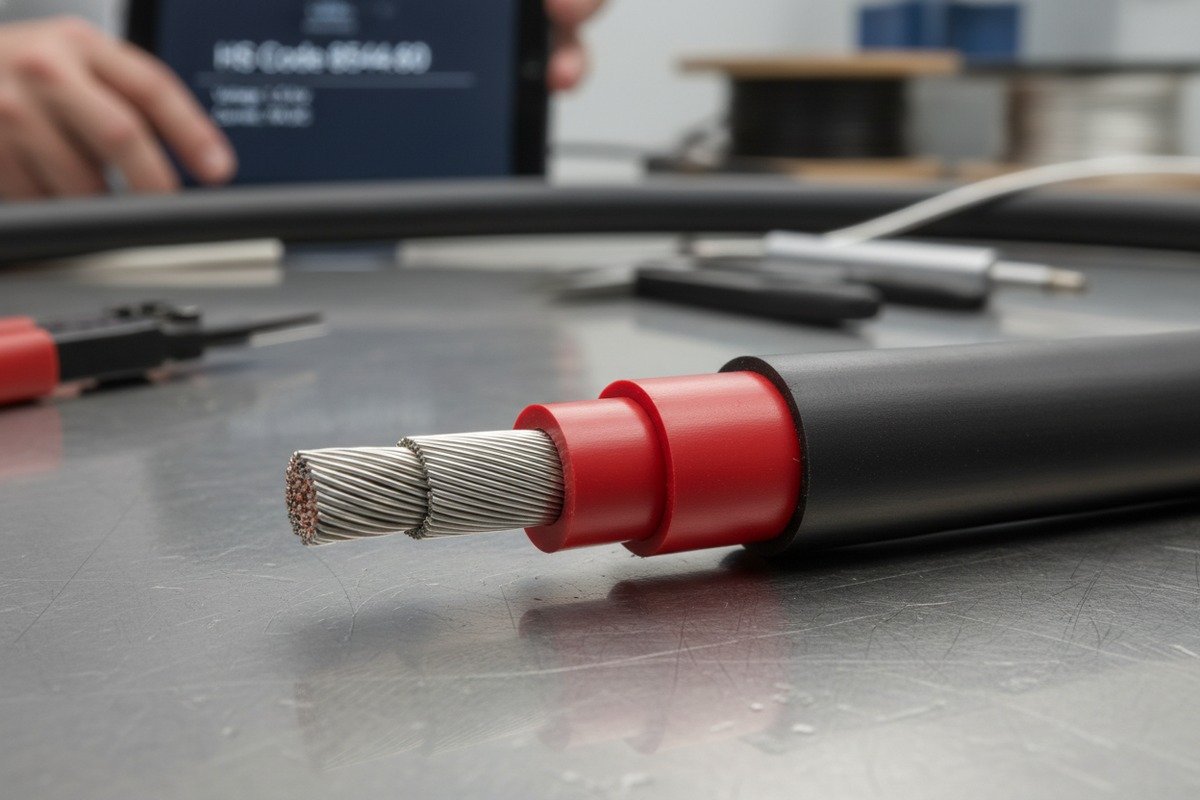
Understanding the HS Code Structure
The Harmonized System 2 works like a tree. It starts broad and gets specific. Here is how it applies to solar PV cables:
- Chapter 85: Electrical machinery and equipment.
- Heading 8544: Insulated wire, cable, and other insulated electric conductors.
- Subheading 8544.49: Other electric conductors, for a voltage not exceeding 1,000V.
- Subheading 8544.60: Other electric conductors, for a voltage exceeding 1,000V but not exceeding 2,000V.
Most H1Z2Z2-K cables we produce are rated at 1,500V DC or 1,800V DC. This means they often fall under 8544.60 at the international 6-digit level. However, some older 1,000V-rated versions sit under 8544.49.
Why the Voltage Rating Matters So Much
The boundary between 8544.49 and 8544.60 is the 1,000V threshold. Our engineering team rates our standard H1Z2Z2-K cables for 1,500V DC operation. If you declare these under 8544.49, customs authorities will flag the mismatch. This triggers inspection, delays, and potential penalties.
Country-Specific Extensions
The 6-digit code is universal. But each country adds digits. Here is a comparison:
| Destination | HS Code Example | Description |
|---|---|---|
| International (6-digit) | 8544.60 | Insulated conductors, 1,000V–2,000V |
| China Export (10-digit) | 8544.601000 | Solar PV specific insulated cable |
| US HTSUS (10-digit) | 8544.60.6000 | Other insulated conductors >1,000V |
| EU CN Code (8-digit) | 8544.60.90 | Other insulated conductors >1,000V |
| India ITC-HS (8-digit) | 8544.49.29 | Other insulated conductors ≤1,000V |
Common Misclassification Traps
One trap we see regularly: importers classify solar cable kits (cable plus MC4 connectors) as a system component under 8501.31. US Customs rulings like NY N259242 have bundled cables with panels into different headings when shipped as kits. If you order cables separately, you avoid this.
Another trap is confusing solar cells (HS 8541.40) with solar cables. These are completely different product categories. Some freight forwarders mix them up on documentation.
Use Digital Tools to Verify
We always recommend buyers double-check codes using the US ITC HTS Search tool, EU TARIC database, or China's Single Window system. AI-powered classification tools like those on FreightAmigo can also help. But never rely solely on your supplier's code—verify it yourself or through your customs broker.
What import duties and taxes should I expect when sourcing solar PV cables for my project?
Our export team fields duty-related questions almost daily, especially from European and American buyers trying to lock in landed costs for large solar farm projects. The truth is, duty rates vary dramatically depending on where you are importing.
Import duties on Chinese solar PV cables typically range from 0% to 5% under MFN (Most Favored Nation) rates for most countries. However, US importers face additional Section 301 tariffs of up to 25%, and potential AD/CVD duties if cables are bundled with solar panels. EU importers should prepare for CBAM reporting from 2026.
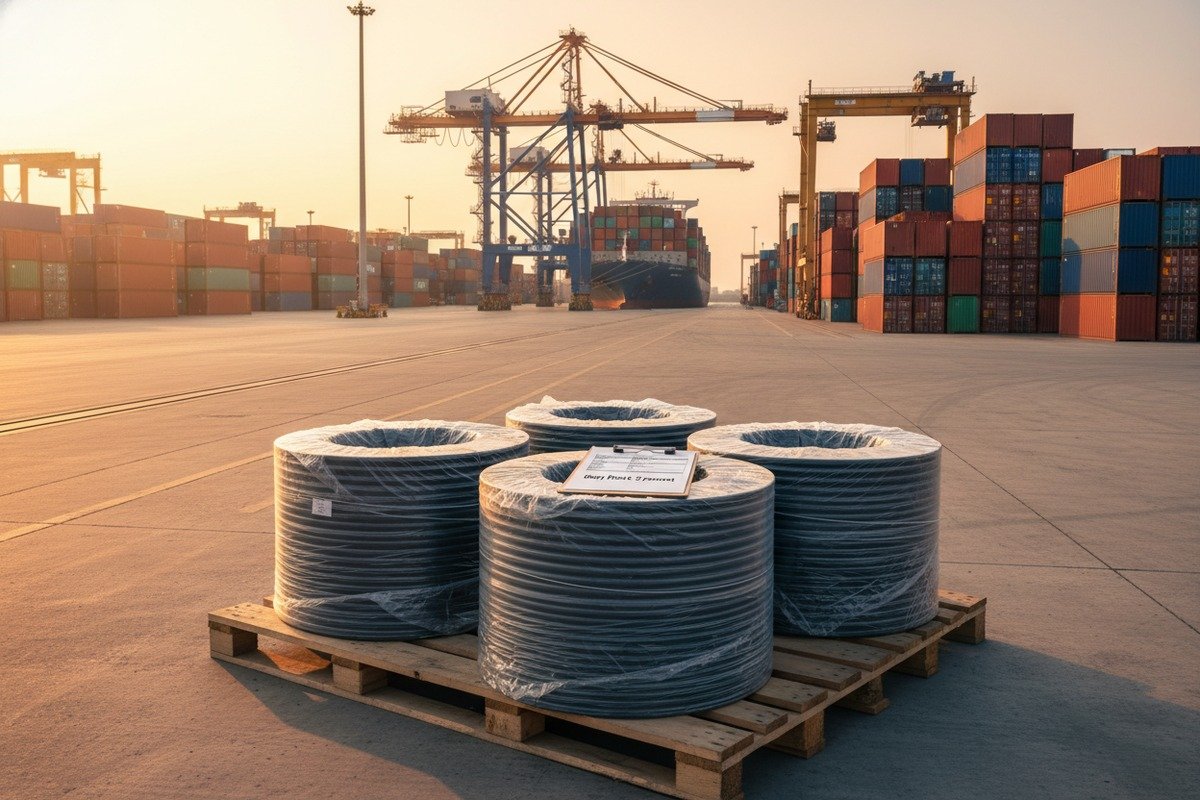
Base MFN Duty Rates by Region
Most countries apply a standard MFN rate to HS 8544.60 or 8544.49 imports. Here is a snapshot:
| Importing Country/Region | HS Subheading | MFN Duty Rate | Additional Levies |
|---|---|---|---|
| United States | 8544.60.6000 | 3.5% | Section 301: up to 25%; AD/CVD risk if scoped |
| European Union | 8544.60.90 | 3.3% | CBAM reporting (2026+); VAT 19–27% |
| Brazil | 8544.49.00 | 14% | ICMS state tax varies |
| India | 8544.49.29 | 7.5% | 18% IGST; BIS certification required |
| Australia | 8544.60 | 5% | 10% GST |
| Chile (FTA with China) | 8544.60 | 0% | VAT 19% |
The US Tariff Landscape Is Complex
US importers face layers of duties. The base MFN rate is 3.5%. But Section 301 tariffs 3 on Chinese goods can add 25% on top. As of 2025–2026, solar panels face AD/CVD duties up to 250%. Cables are not currently scoped into AD/CVD orders—but if you ship cables as part of a solar kit or system, US Customs may reclassify the entire shipment.
We have seen buyers save significant money by ordering cables separately from panels and inverters. Keep your shipments clean and product-specific.
EU CBAM and Its Impact
Starting in 2026, the EU's Carbon Border Adjustment Mechanism 4 requires importers to report embedded carbon emissions in certain product categories. While cables are not a primary CBAM target today, the PV supply chain is under growing scrutiny. Having your supplier provide carbon footprint data now puts you ahead.
FTA Advantages
China has free trade agreements with many countries. If you are importing into Chile, Peru, Pakistan, or ASEAN nations, your duty rate on solar cables could drop to 0%. We ship significant volumes to Southeast Asia under ASEAN-China FTA terms. Always request a Certificate of Origin 5 Form E or Form F from your supplier to claim preferential rates.
How to Calculate Your Landed Cost
A simple formula: Landed Cost = CIF Value + Import Duty + Merchandise Processing Fee + Harbor Maintenance Fee + Local Taxes (VAT/GST)
For a US import example on a $50,000 shipment:
- CIF Value: $50,000
- MFN Duty (3.5%): $1,750
- Section 301 (25%): $12,500
- MPF (0.3464%): $173.20
- HMF (0.125%): $62.50
- Total landed (before local sales tax): $64,485.70
That is a 29% markup before the cable even reaches your project site. Planning ahead is essential.
Which certifications and customs documents must my Chinese supplier provide for my shipment?
Over our 30 years of manufacturing solar cables, we have learned one lesson the hard way: a missing certificate can be more expensive than a wrong price. Our quality team now runs a 15-point documentation checklist before any container leaves our 230,000 m² facility.
Your Chinese supplier must provide a commercial invoice, packing list, Bill of Lading, Certificate of Origin, and relevant product certifications such as TUV (EN 50618), UL 4703, or IEC 62930. For EU imports, CPR fire safety classification documents and RoHS/REACH compliance declarations are also required.
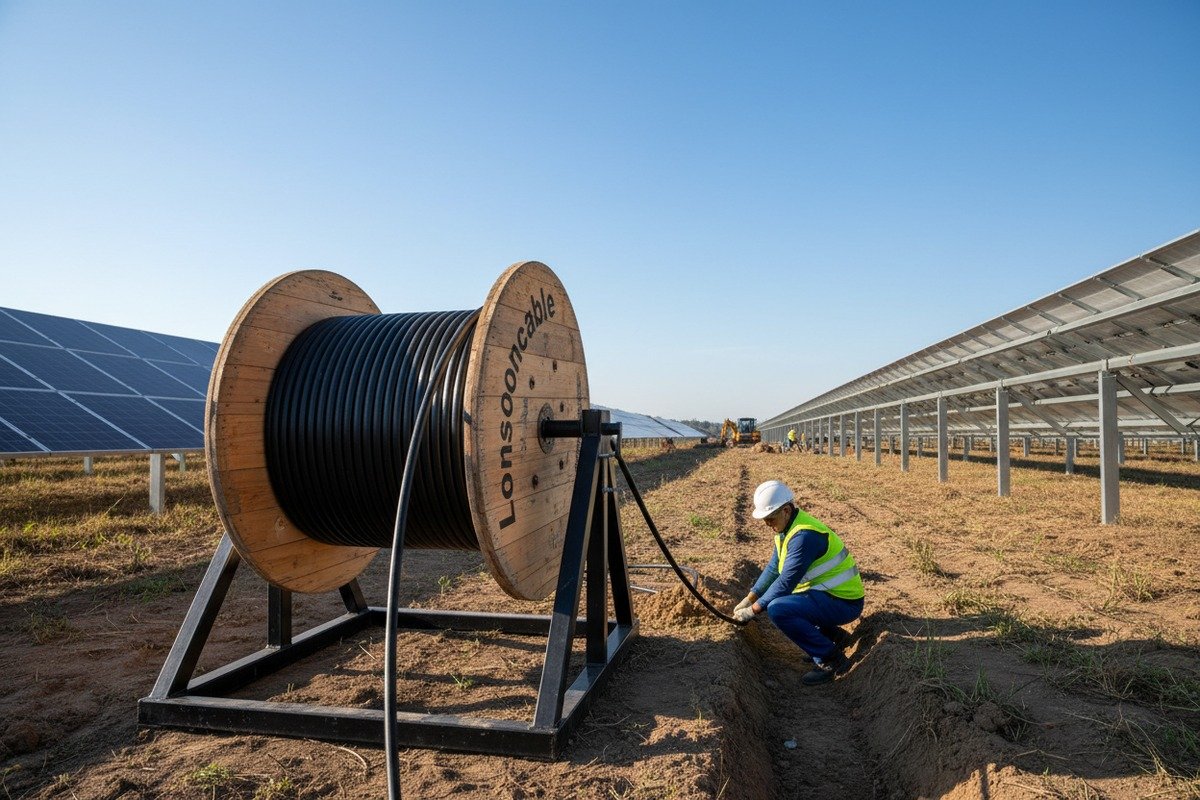
The Core Shipping Documents
Every international shipment of solar PV cables from China requires these baseline documents:
- Commercial Invoice: Lists product description, HS code, unit price, total value, Incoterms, and payment terms.
- Packing List: Details the number of drums/coils, net and gross weight, dimensions, and cable length per drum.
- Bill of Lading (B/L): The shipping contract between exporter and carrier. Ocean B/L for sea freight; Air Waybill for air.
- Certificate of Origin (CO): Proves the goods were manufactured in China. Essential for FTA preferential duty claims. Form E for ASEAN, Form F for Chile, etc.
- CIQ Inspection Certificate: China's quality inspection authority may issue this for cable exports.
Product Certifications by Market
Different markets demand different certifications. Here is what our team prepares based on destination:
| Destination Market | Required Certification | Standard | Purpose |
|---|---|---|---|
| Europe | TUV certificate | EN 50618 / IEC 62930 | Product safety and performance |
| Europe | CPR DoP (Declaration of Performance) | EN 50575 | Fire safety classification (Dca, Cca) |
| United States | UL listing | UL 4703 6 | National Electrical Code compliance |
| Canada | CSA certification | CSA C22.2 | Canadian safety standard |
| Australia | SAA approval | AS/NZS 5000.1 | Local electrical safety |
| China domestic | CQC mark | GB/T 33733 | National quality certification |
| Global | RoHS declaration 7 | EU Directive 2011/65/EU | Restricted hazardous substances |
| Global | REACH compliance | EC 1907/2006 | Chemical safety |
Why TUV Certification Requires Extra Scrutiny
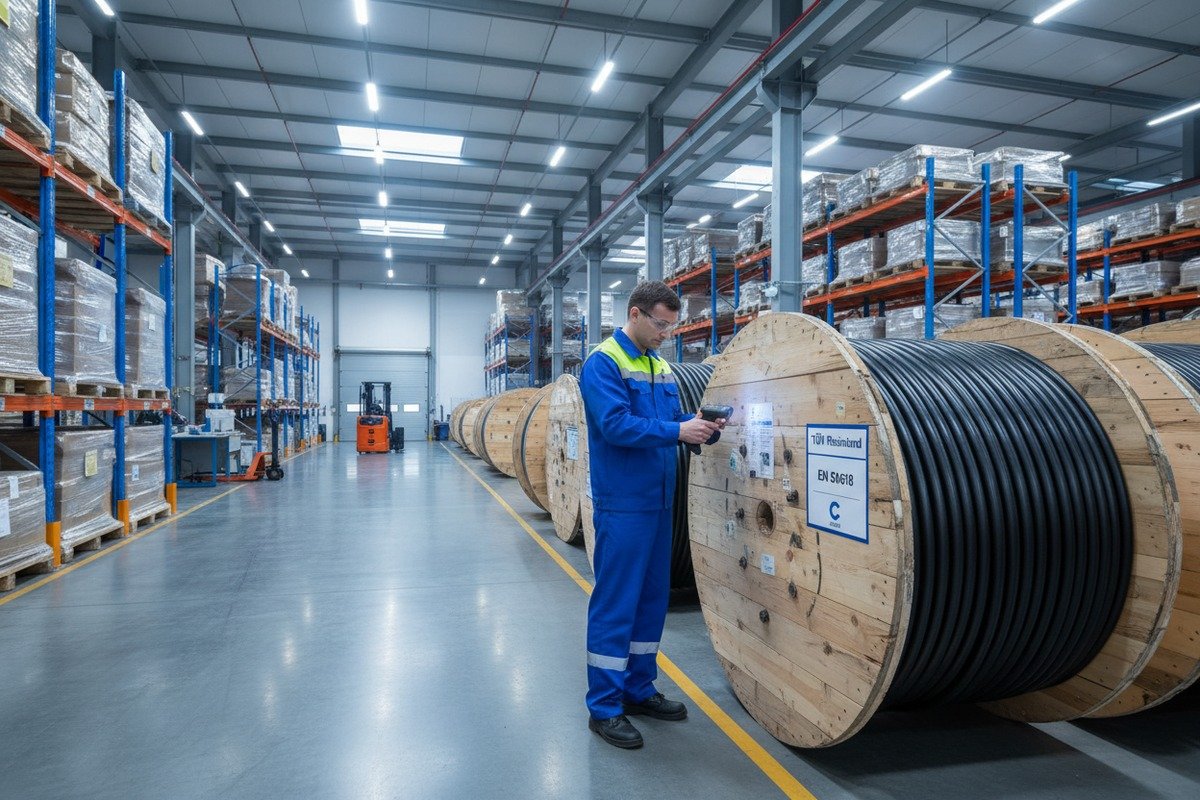
We know from direct experience that TUV certification fraud is a real problem in the solar cable industry. Some manufacturers present expired certificates, or certificates issued for a different product line. Our advice: always verify the TUV certificate number directly on the TUV Rheinland or TUV SÜD website. Cross-reference the certificate holder name, product model, and validity date.
At our facility, we maintain active TUV EN 50618 certification 8 with annual factory audits. We provide buyers with the certificate number and direct verification links. This transparency is non-negotiable for professional EPC procurement.
UFLPA and Supply Chain Traceability
For US imports, the Uyghur Forced Labor Prevention Act 9 (UFLPA) adds another layer. While UFLPA enforcement has focused primarily on polysilicon and solar modules, cables containing materials sourced from restricted regions could face detention. We maintain full supply chain traceability documentation for our copper rod and XLPE compound sourcing.
Pre-Shipment Inspection
Many buyers, especially for projects above $100,000, request third-party pre-shipment inspection through SGS, Bureau Veritas, or TÜV. This covers visual inspection, dimensional checks, insulation resistance testing, and packaging integrity. We welcome these inspections and schedule them 3–5 days before container loading.
How can I manage the logistics and DDP requirements to avoid delays in my solar cable delivery?
Our logistics coordinator once told me that the cable itself is the easy part—getting it from our warehouse in Hainan to a solar farm in northern Germany on time is where the real challenge begins. After shipping to over 50 countries, we have developed systems to prevent the most common bottlenecks.
To avoid delivery delays, work with a freight forwarder experienced in solar products, confirm the HS code before shipping, pre-clear customs documentation, and specify DDP Incoterms only with suppliers who have established import duty payment channels in your destination country. Budget 35–55 days for sea freight from China to Europe.
Choosing the Right Incoterms
Incoterms define who pays for what, and where risk transfers. For solar cable imports, the most common options are:
- FOB (Free On Board): The buyer handles ocean freight, insurance, and import clearance. You have full control but more responsibility.
- CIF (Cost, Insurance, Freight): The supplier covers freight and insurance to your port. You still handle import customs.
- DDP (Delivered Duty Paid): The supplier handles everything, including import duties and delivery to your site.
DDP sounds ideal—but it is risky if your supplier does not have a reliable customs agent in your country. We offer DDP to select European destinations where we have established partnerships with local customs brokers. For other regions, we recommend CIF with the buyer handling local clearance.
Timeline Planning
A typical sea freight timeline from China to Europe looks like this:
| Stage | Duration | Notes |
|---|---|---|
| Production (standard order) | 15–20 days | Stock items ship faster |
| Inland transport to port | 2–3 days | Hainan to Shenzhen or Shanghai |
| Customs export clearance | 1–2 days | Electronic declaration via Single Window |
| Ocean transit to Rotterdam | 25–32 days | Via Suez Canal route |
| Destination customs clearance | 2–5 days | Depends on document completeness |
| Last-mile delivery to site | 1–3 days | Truck from port to project location |
| Total | 46–65 days | Plan for 50 days average |
Packaging That Survives the Journey
One of the biggest complaints we hear from new buyers is damaged cable drums on arrival. Standard wooden drums can crack or collapse during ocean transit if not properly braced inside the container. Our factory uses reinforced plywood drums rated for automated cable-laying machine compatibility. Each drum is secured with steel strapping and blocked inside the container with dunnage bags.
We also label every drum with the cable specification, length, lot number, and a QR code linking to the test report. This saves hours of sorting on the construction site.
Avoiding Common Customs Delays
Here are the top five reasons solar cable shipments get held at customs—and how to prevent them:
- HS code mismatch: The code on the commercial invoice does not match the product. Solution: verify before shipping.
- Missing certification: No TUV or UL certificate attached. Solution: include digital copies with every document set.
- Undervaluation suspicion: The declared value seems too low. Solution: provide a transparent price breakdown.
- Incomplete ISF/AMS filing: For US imports, the Importer Security Filing must be submitted 24 hours before vessel loading. Solution: share all data with your broker early.
- Origin verification: Customs requests proof of Chinese manufacturing origin. Solution: keep factory audit reports and production photos available.
Working With Your Freight Forwarder
Choose a freight forwarder who has handled solar energy equipment before. They will know the classification nuances and documentation quirks. Share your HS code, product datasheets, and certification documents with them at least two weeks before the shipment date. This gives everyone time to catch errors before the container sails.
We maintain a list of recommended freight partners in key markets. Our export team coordinates directly with your forwarder to ensure document alignment. This collaboration has cut our average customs clearance time from 5 days to under 2 days for repeat buyers.
Conclusion
Getting the HS codes, duties, certifications, and logistics right is the foundation of a successful solar cable import. Plan early, verify every document, and work with experienced partners. Visit www.lonsoncable.com or contact [email protected] for a detailed quote.
Footnotes
1. Replaced with a direct link to the Harmonized Tariff Schedule of the United States (USITC) for HS heading 8544.60, which is an authoritative government source. ↩︎
2. Official definition and purpose of the Harmonized System. ↩︎
3. Official information on US Section 301 tariffs on Chinese goods. ↩︎
4. Official EU page explaining the CBAM and its objectives. ↩︎
5. Defines Certificate of Origin and its role in international trade. ↩︎
6. Official UL Standards page for Photovoltaic Wire (UL 4703). ↩︎
7. Official EU page on the Restriction of Hazardous Substances (RoHS) Directive. ↩︎
8. TÜV Rheinland's services for PV component certification, including EN 50618. ↩︎
9. Official DHS page on the Uyghur Forced Labor Prevention Act (UFLPA). ↩︎
10. Official ICC page for Incoterms 2020, including DDP. ↩︎