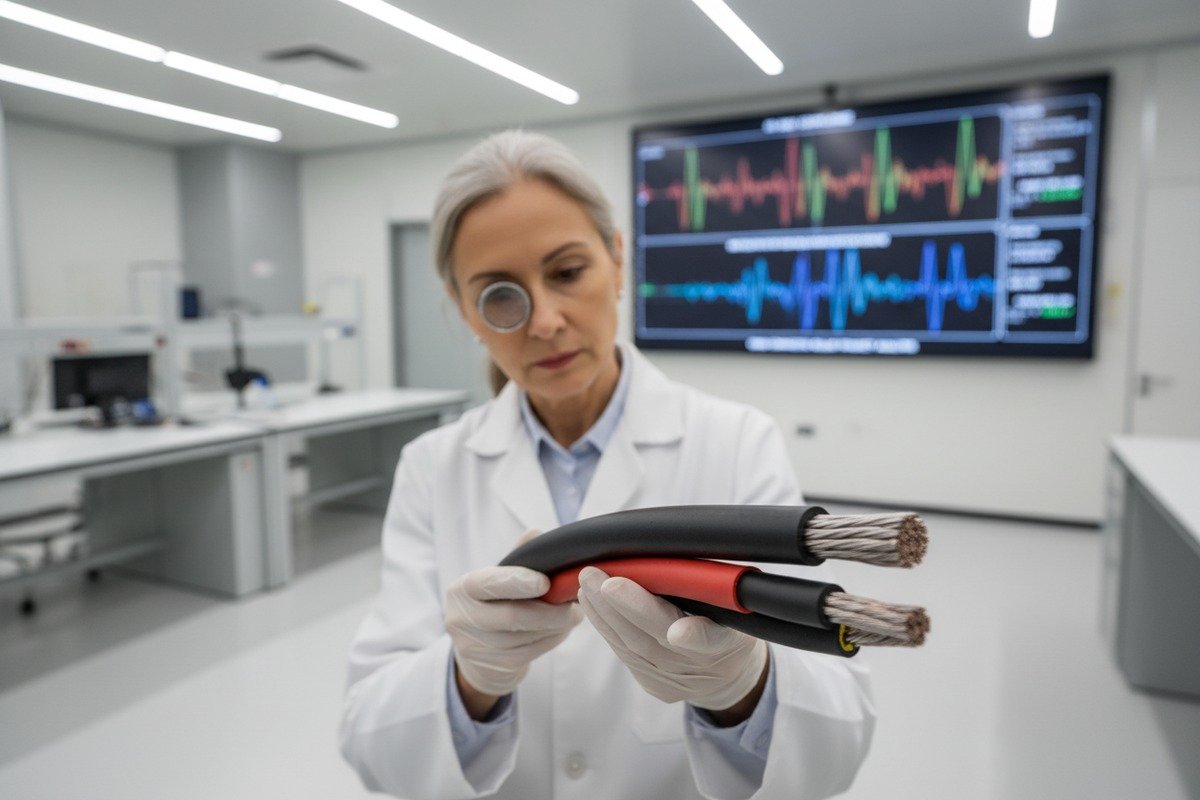

Every year, our production lines run thousands of kilometers of both ADSS and OPGW cable — and we still see buyers confuse the two.
Yes, understanding the difference between ADSS and OPGW fiber optic cables is essential before purchasing. These two cable types differ in construction, installation method, electrical function, cost, and environmental performance. Choosing the wrong one can lead to project failure, safety risks, and significant cost overruns that are entirely avoidable.
This article breaks down the key differences between ADSS and OPGW cables power line infrastructure 1. We will walk through infrastructure fit, cost impact, weather resilience, and supplier verification — so you can make the right call for your next project.
How do I determine whether ADSS or OPGW is the better fit for my power line infrastructure?
One question we hear from almost every new buyer visiting our Hainan facility is: "Which cable type fits my power lines?"
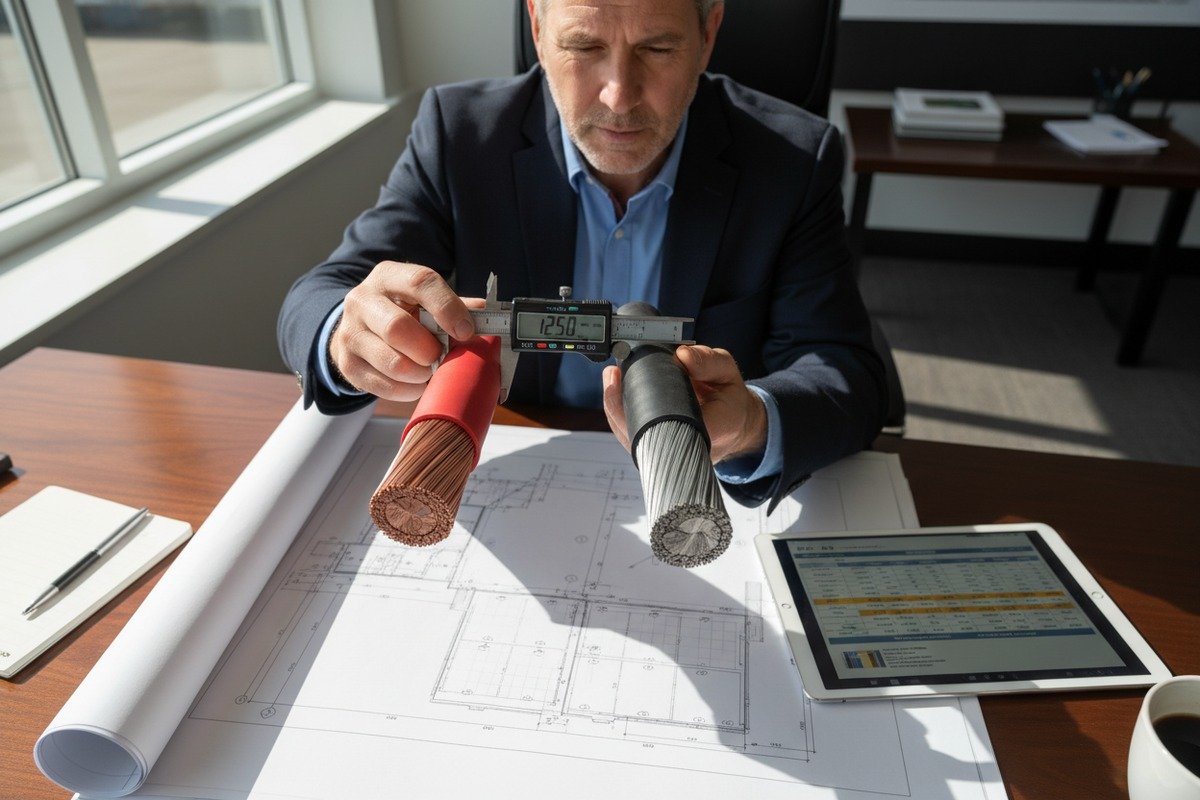
To determine the best fit, assess your voltage level, tower design, grounding requirements, and whether the line is new or existing. OPGW suits new high-voltage lines needing integrated lightning protection. ADSS fits retrofits and medium-voltage lines where electrical isolation and light weight matter most.
Start With Your Voltage Level
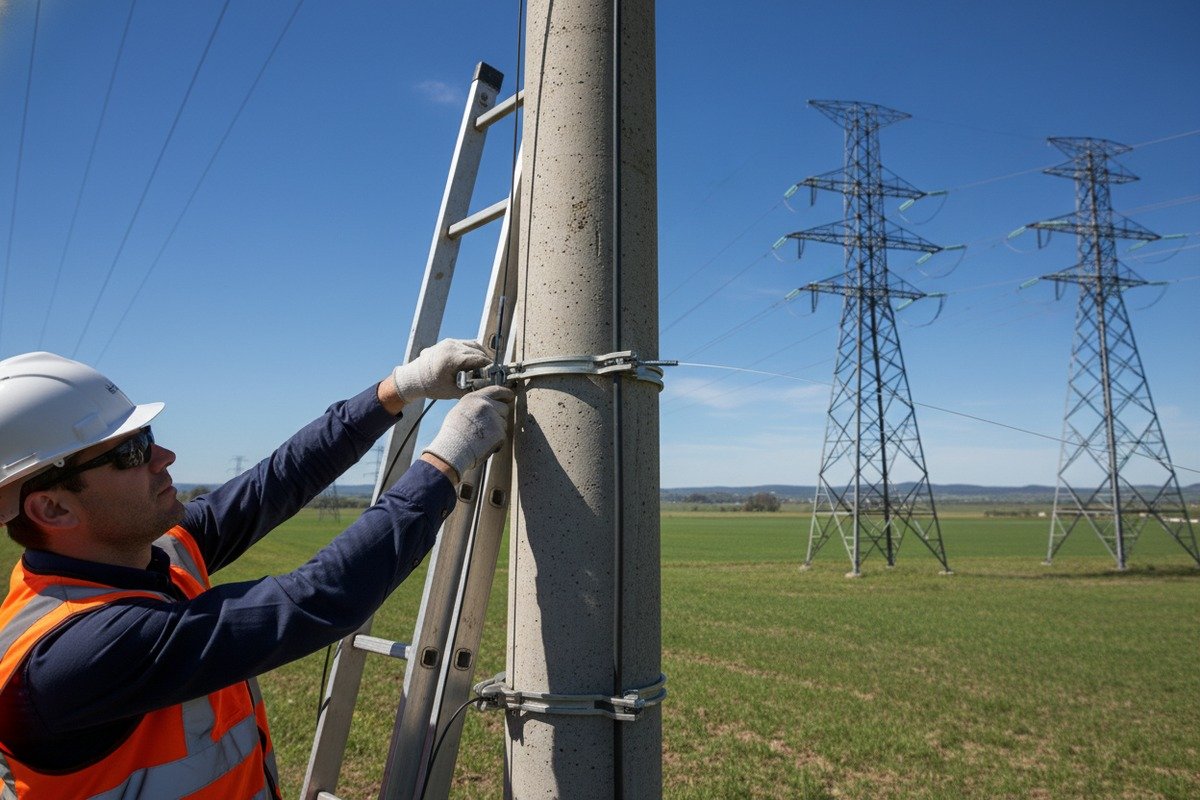
Voltage is the first filter. For high-voltage lines at 220kV and above, OPGW is the standard choice. It replaces the ground wire at the top of the tower, combining lightning protection with data transmission. For lines at 110kV or below, ADSS is often the smarter pick. It mounts on the tower side. It does not touch the electrical system at all.
New Build vs. Retrofit
This is a critical fork in the road. If you are building a brand-new transmission line, OPGW can be designed into the tower structure from day one. The towers are engineered for its weight. But if you are adding fiber to an existing power line, ADSS wins. It is lightweight — roughly one-third the weight of standard cables. It requires no power outage for installation. Our export clients in Southeast Asia and Latin America frequently choose ADSS for this exact reason: they cannot shut down active lines.
Grounding Needs
OPGW provides physical grounding. Its aluminum and steel jacket acts as a shield conductor. If your project requires integrated lightning protection 2, OPGW is non-negotiable. ADSS is all-dielectric. It has zero metallic components. It cannot serve as a ground wire.
Quick Decision Table
| Factor | Choose ADSS | Choose OPGW |
|---|---|---|
| Voltage level | ≤110kV (medium voltage) | ≥220kV (high/ultra-high voltage) |
| Line status | Existing (retrofit) | New construction |
| Lightning protection needed | No | Yes |
| Power outage for install | Not required | Typically required |
| Tower load capacity | Limited | Designed for heavier loads |
| Primary function | Data only | Data + grounding |
Span Length and Mechanical Load
ADSS supports spans of 500m to 1,000m, with some designs reaching 1,500m. OPGW handles 600m to 1,200m. Both can cover long distances, but the tower spacing on your route will narrow down which cable is feasible. We always ask our buyers for route survey data before recommending a solution.
A Real-World Scenario
A power grid contractor in the Philippines recently needed to add fiber to a 69kV distribution line. The towers were old. They could not handle extra weight at the top. ADSS was the only viable option. It installed on the tower side, within spec, with no outage. Had they chosen OPGW, they would have needed full tower reinforcements — tripling the project cost.
Will opting for ADSS over OPGW help me reduce my overall procurement and installation costs?
When we quote projects for buyers in Africa and the Middle East, cost is often the first topic on the table. It matters. But total cost is more than the price per meter.
ADSS generally costs less upfront in both material and installation, especially for retrofits. However, OPGW's dual function as ground wire and fiber medium can reduce total infrastructure spending on new high-voltage lines. The cheapest option depends on your full project scope, not just the cable price tag.
Material Cost Breakdown
ADSS uses aramid yarn 4 for tensile strength 5 and a polyethylene outer sheath. No metal. This makes it cheaper to produce. OPGW uses aluminum-clad steel wires, stainless steel tubes, and aluminum alloy rods. The raw materials alone cost more. On our production line, OPGW requires more complex layering and quality control steps, which adds to the unit cost.
Installation Cost Differences
ADSS installs on tower sides using simple suspension or dead-end clamps. No power outage needed. No crane at the tower top. A small crew can handle it. OPGW replaces the ground wire at the tower peak. This usually means a power shutdown, heavier equipment, and a larger installation team. In regions where downtime costs are high — like urban grids in Brazil or Mexico — ADSS can cut installation time by 30% to 40%.
Total Cost of Ownership
Here is where it gets nuanced. OPGW eliminates the need for a separate ground wire. On a new 500kV line, that savings is real. You install one cable instead of two. Maintenance is consolidated. Over 25 years, the total cost of ownership for OPGW on a new high-voltage line can actually be lower than running ADSS plus a separate ground wire.
Cost Comparison Table
| Cost Factor | ADSS | OPGW |
|---|---|---|
| Material cost per km | Lower | Higher (metallic components) |
| Installation labor | Smaller crew, no outage | Larger crew, outage needed |
| Tower modification | Rarely needed | Often designed in (new builds) |
| Separate ground wire | Still required | Not needed (built-in) |
| Corrosion maintenance | Very low (non-metallic) | Moderate (metallic jacket) |
| Typical lifespan | 25+ years | 30+ years |
| Best cost scenario | Retrofits, medium voltage | New high-voltage builds |
Hidden Costs to Watch
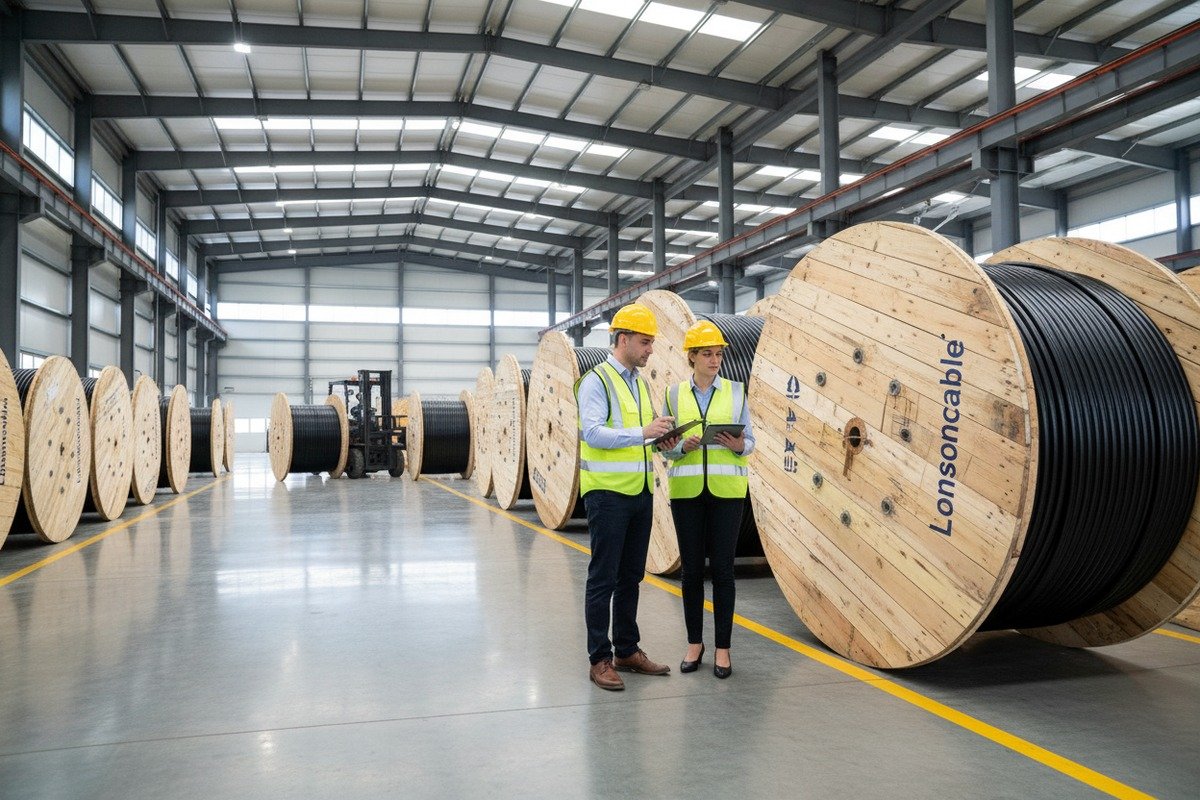
Buyers sometimes overlook shipping and packaging costs. OPGW is heavier. It needs stronger wooden reels. We have seen cases where low-quality reels collapsed during sea freight, destroying entire drums. At our facility, we use reinforced export-grade reels and conduct drop tests before shipping. This is a cost worth paying — a collapsed reel means total cable loss.
Another hidden cost: mis-specification. If you order ADSS with insufficient tensile strength for your span, the cable will sag or break. Replacing it costs 2x to 5x the original cable price. Always verify mechanical calculations before ordering.
Which technical differences should I prioritize to ensure my network remains reliable in harsh weather?
Our engineers have tested cables in conditions ranging from tropical monsoons in Indonesia to ice storms at high-altitude installations. Weather kills cables that are not spec'd correctly.
Prioritize tensile strength, temperature rating, ice and wind load resistance, UV stability, and corrosion resistance. OPGW handles wider temperature extremes (-40°C to 85°C) and higher tensile loads (up to 4,000N). ADSS offers superior electrical isolation and UV-resistant sheaths but has a narrower temperature ceiling of 70°C.
Tensile Strength and Mechanical Load
In regions with heavy ice loading — think mountainous terrain in Colombia or northern Europe — the cable must resist enormous mechanical stress. OPGW's metallic construction gives it a tensile strength of up to 4,000N. ADSS, relying on aramid yarn, reaches up to 3,000N. For most standard spans, ADSS is sufficient. But in extreme ice zones, OPGW's extra strength provides a crucial margin of safety.
Temperature Tolerance
OPGW operates reliably from -40°C to 85°C. ADSS covers -40°C to 70°C. That 15°C difference at the upper end matters in desert environments or near transformer stations where radiant heat pushes ambient temperatures higher. Recent advances in ADSS sheath coatings are closing this gap, but as of 2025, OPGW still holds the edge in extreme heat.
UV and Moisture Resistance
ADSS excels here. Its polyethylene outer sheath 6 is specifically formulated to resist UV degradation and moisture ingress. Modern ADSS cables from our factory undergo accelerated UV aging tests equivalent to 25 years of direct sun exposure. OPGW's metallic jacket resists UV naturally, but its aluminum components are vulnerable to galvanic corrosion 7 in coastal or high-humidity environments. Anti-corrosion coatings help, but they add cost and require periodic inspection.
Technical Specifications Comparison
| Specification | ADSS | OPGW |
|---|---|---|
| Tensile strength | Up to 3,000N | Up to 4,000N |
| Operating temperature | -40°C to 70°C | -40°C to 85°C |
| UV resistance | Excellent (PE sheath) | Good (metallic, no organic degradation) |
| Corrosion risk | Very low (non-metallic) | Moderate (aluminum/steel) |
| EMI immunity | Full (all-dielectric) | High (requires proper grounding) |
| Ice load tolerance | Good | Superior |
| Data capacity (WDM) | Up to 400 Gbps | Up to 400 Gbps |
| Span range | 500–1,500m | 600–1,200m |
| Weight per km | Light (~1/3 standard) | Heavy (metallic structure) |
EMI Immunity: A Closer Look
Both ADSS and OPGW resist electromagnetic interference 8 well over long distances. But the mechanisms differ. ADSS is inherently immune — no metal means no conductive path for interference. OPGW, when properly grounded at each tower, shields its fiber core effectively. However, if grounding is poor or termination points are not properly shielded, high-energy transients can potentially reach connected equipment. In EMI-prone industrial areas — near substations or heavy machinery — ADSS provides a simpler, more predictable solution.
Wind Loading
Wind creates lateral force on cables. ADSS, being lighter and smaller in diameter, experiences less wind load. This is a significant advantage on older towers with limited structural reserves. OPGW's larger diameter and heavier weight mean higher wind load. Tower designers must account for this in new builds.
Future-Proofing for Smart Grids
Both cable types support wavelength division multiplexing (WDM) 9 for data rates exceeding 400 Gbps. This aligns with 5G and emerging 6G backhaul requirements. OPGW is increasingly deployed in renewable energy grids — wind farms, solar installations — where combined monitoring and lightning protection are essential. ADSS is favored for urban smart grid retrofits where electrical isolation simplifies deployment.
How can I verify that my supplier is providing the exact mechanical calculations I need for my project?
When we receive RFQs at our Hainan headquarters, we assign dedicated engineers — not just sales reps — to review every project's technical requirements. But not all suppliers operate this way, and that gap causes real problems.
Verify supplier calculations by requesting detailed cable cross-section diagrams, span-tension sag calculations, ice and wind load models, and certified OTDR test reports. Cross-reference these against your route survey data. A credible supplier will provide project-specific mechanical analysis, not generic spec sheets, and welcome third-party audits.

Why Generic Spec Sheets Are Not Enough
A spec sheet tells you the cable's rated tensile strength, weight, and fiber count. It does not tell you whether that specific cable will perform on your specific route. Every power line project has unique variables: span length, tower height differences, elevation, wind zone, ice zone, and ambient temperature range. The cable's sag and tension must be calculated for each span. If your supplier hands you a one-page datasheet and calls it done, that is a red flag.
What to Request From Your Supplier
Here is a checklist of documents and data points to demand before placing an order:
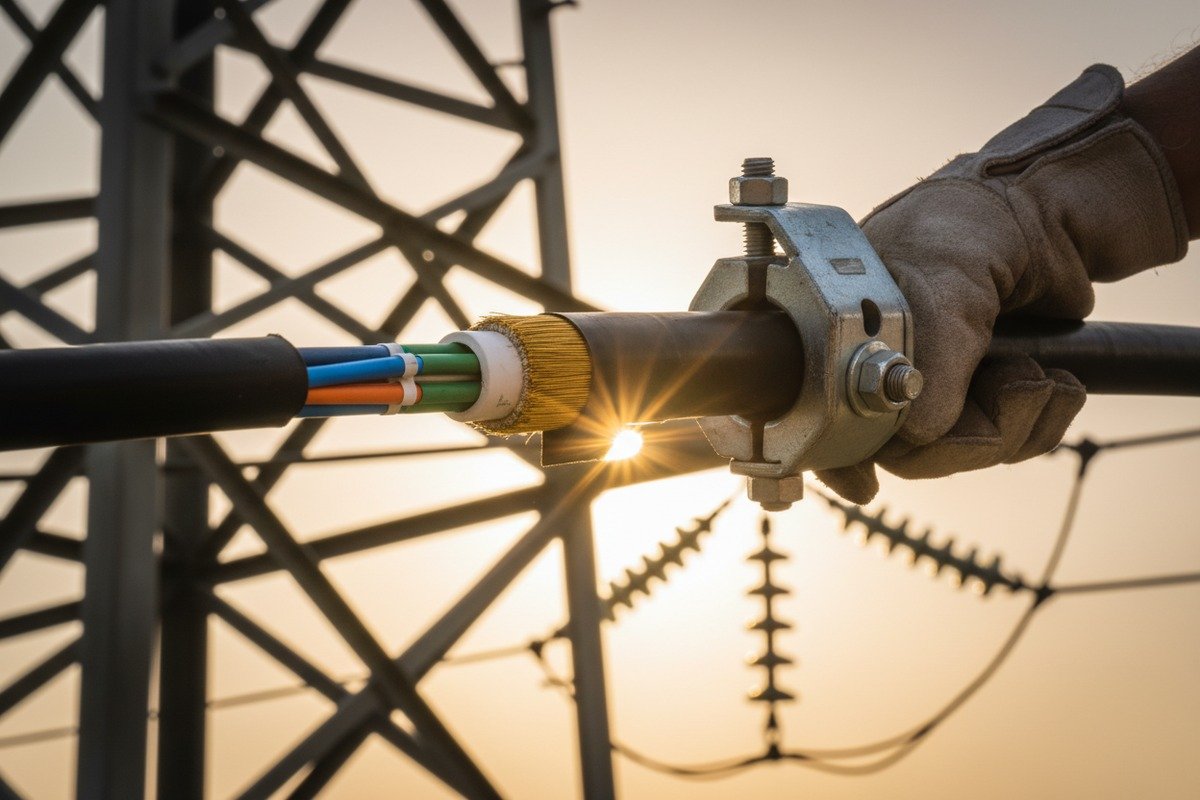
- Cable cross-section diagram: Shows exact layer structure, fiber tube arrangement, aramid yarn placement (ADSS), or metallic armor configuration (OPGW). This should match the cable you receive.
- Span-tension-sag calculation: Specific to your route. It should account for maximum working tension, everyday stress, and worst-case ice/wind loading.
- OTDR test report: Factory-generated optical time-domain reflectometer test for every drum. This verifies fiber attenuation, splice loss, and continuity. Insist on original reports, not copies.
- Third-party certifications: UL, CSA, CE, and ISO9001 are baseline. Ask for certificate numbers and verify them independently.
- Material traceability: Know the fiber brand (e.g., Corning, YOFC) and aramid yarn source. Some manufacturers substitute inferior materials to cut costs. This leads to cable breakage within 2–3 years.
Red Flags in Supplier Communication
If the sales representative cannot explain the difference between rated tensile strength and maximum allowable working tension, the supplier likely lacks engineering depth. If they cannot provide a sag-tension table within 48 hours of receiving your route data, they may not have the calculation software or expertise.
We have invested in dedicated sag-tension modeling tools and assign each export project to an engineer with at least five years of fiber optic cable design experience. This is not optional — it is what separates a reliable supplier from a risky one.
Packaging and Shipping Verification
Verify reel specifications before shipment. For sea freight — especially to Latin America, Africa, or Southeast Asia — wooden reels must withstand stacking, humidity, and rough handling. Ask for photos of the loaded reel, reel dimensions, and fumigation certificates. A collapsed reel during transit means total cable loss. We conduct physical reel drop tests and provide photographic documentation to every overseas buyer.
On-Site Acceptance Protocol
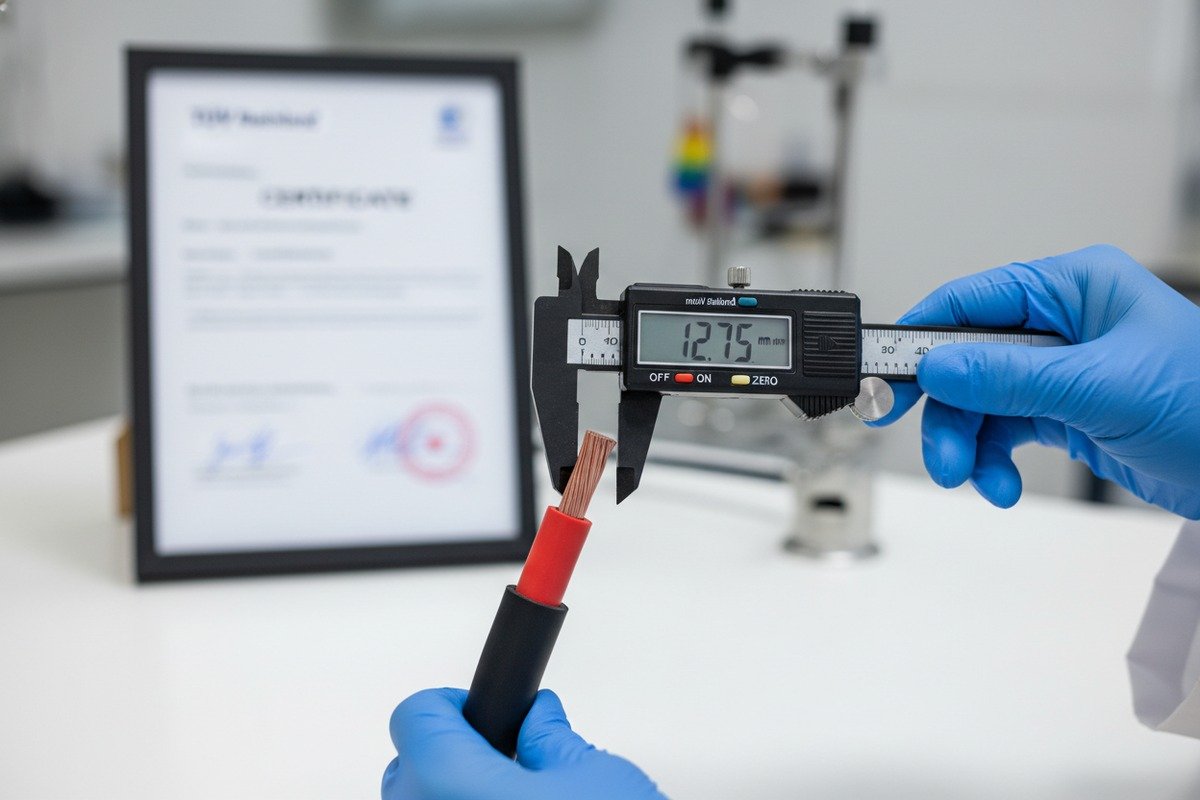
When the cable arrives, conduct your own acceptance tests. Measure outer diameter, check sheath integrity, and run a field OTDR test to compare against the factory report. If the numbers differ by more than the stated tolerance, reject the drum. A trustworthy supplier will stand behind their product and replace defective drums without dispute.
Conclusion
Choosing between ADSS and OPGW is not a guess — it is an engineering decision. Match the cable to your voltage, route, weather, and budget. Verify every calculation your supplier provides.
Footnotes
1. Explains the definition, components, and importance of power line infrastructure. ↩︎
2. Details integrated lightning protection technology specifically for power transmission lines. ↩︎
3. Provides a clear definition of all-dielectric self-supporting (ADSS) cable. ↩︎
4. Explains aramid yarn's properties and its critical role as a strength member in cables. ↩︎
5. Replaced HTTP 403 with an authoritative definition of tensile strength from Britannica. ↩︎
6. Describes polyethylene's properties and benefits as a protective outer sheathing for cables. ↩︎
7. Explains the electrochemical process where dissimilar metals corrode in an electrolyte. ↩︎
8. Replaced HTTP unknown with an authoritative definition of electromagnetic interference from Wikipedia. ↩︎
9. Replaced HTTP 403 with a comprehensive explanation of Wavelength Division Multiplexing from Wikipedia. ↩︎
10. Explains the purpose and function of an Optical Time Domain Reflectometer (OTDR) in fiber testing. ↩︎