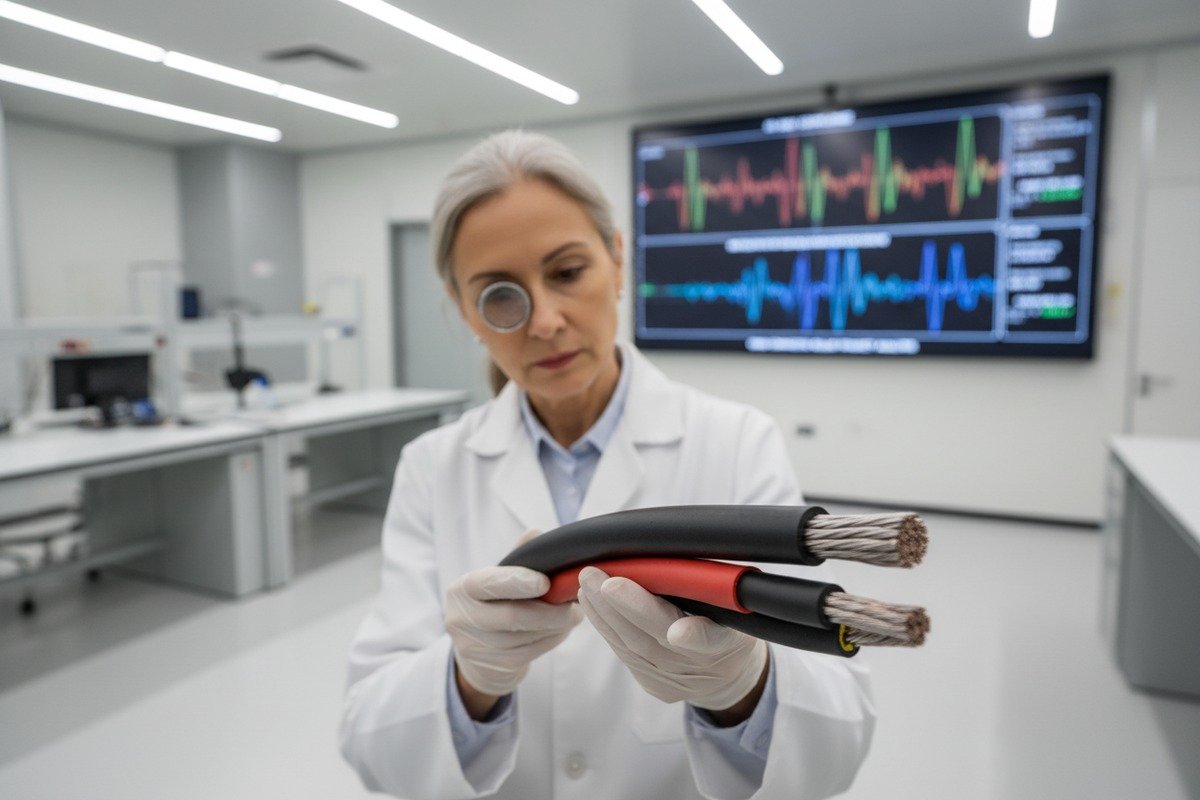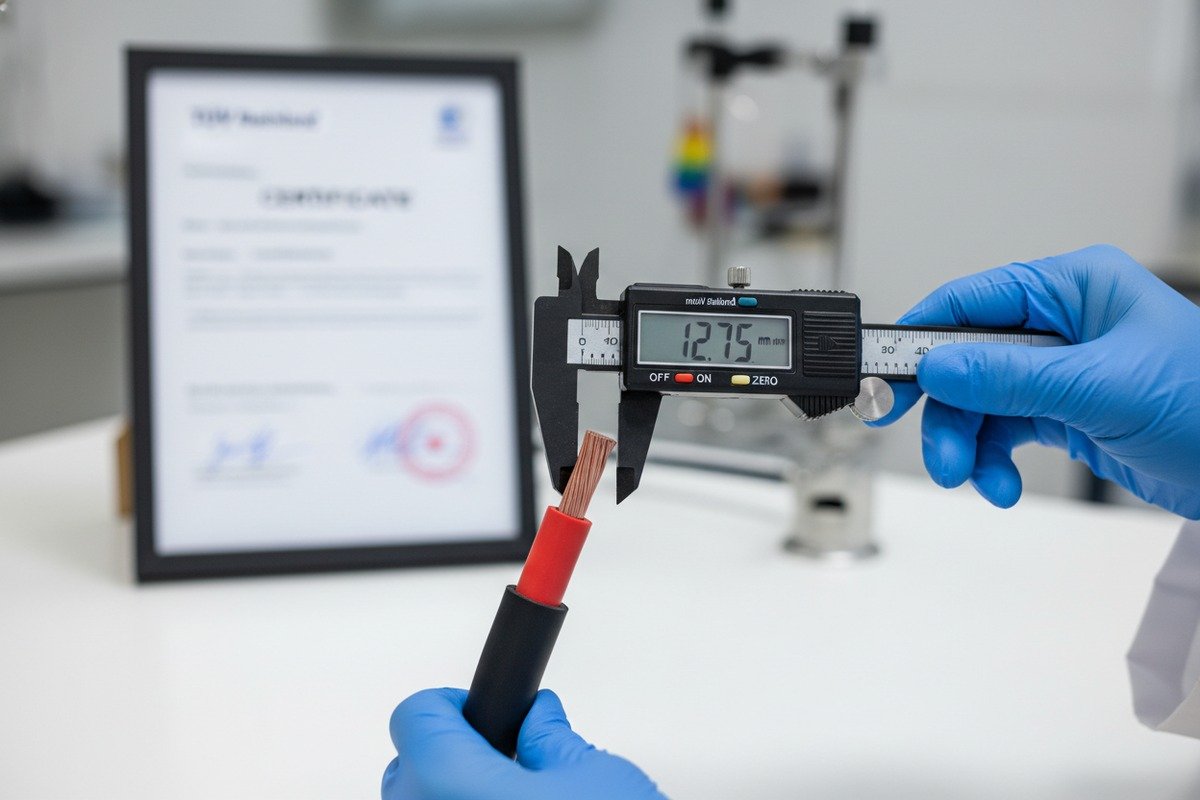
Every year, we see shipments rejected at US ports because the fire rating paperwork on ADSS cables does not hold up under scrutiny UL 1651 1. Procurement teams lose months and thousands of dollars when certifications turn out to be outdated or simply fake. On our production lines, we have learned the hard way that getting fire compliance right starts long before the cable ships.
To verify US fire rating compliance for ADSS optical cables, confirm the cable's Outside Plant (OSP) classification, check for UL-listed markings on any indoor transition segments, request third-party test reports per NEC Article 770, and validate certifications directly through the UL Product iQ database.
This guide breaks down every step you need to take UL Yellow Card 2. We will cover the specific UL standards that matter, how to spot fake certifications, which documents to demand from your supplier, and how to audit jacket materials. Let's dig in.
What specific UL fire safety standards should I look for when sourcing ADSS cables for the US market?
Many buyers assume a single fire rating covers all ADSS installations Telcordia GR-20 3. That assumption has caused project delays we have witnessed firsthand when our clients tried to run outdoor-rated cable straight into a building riser shaft.
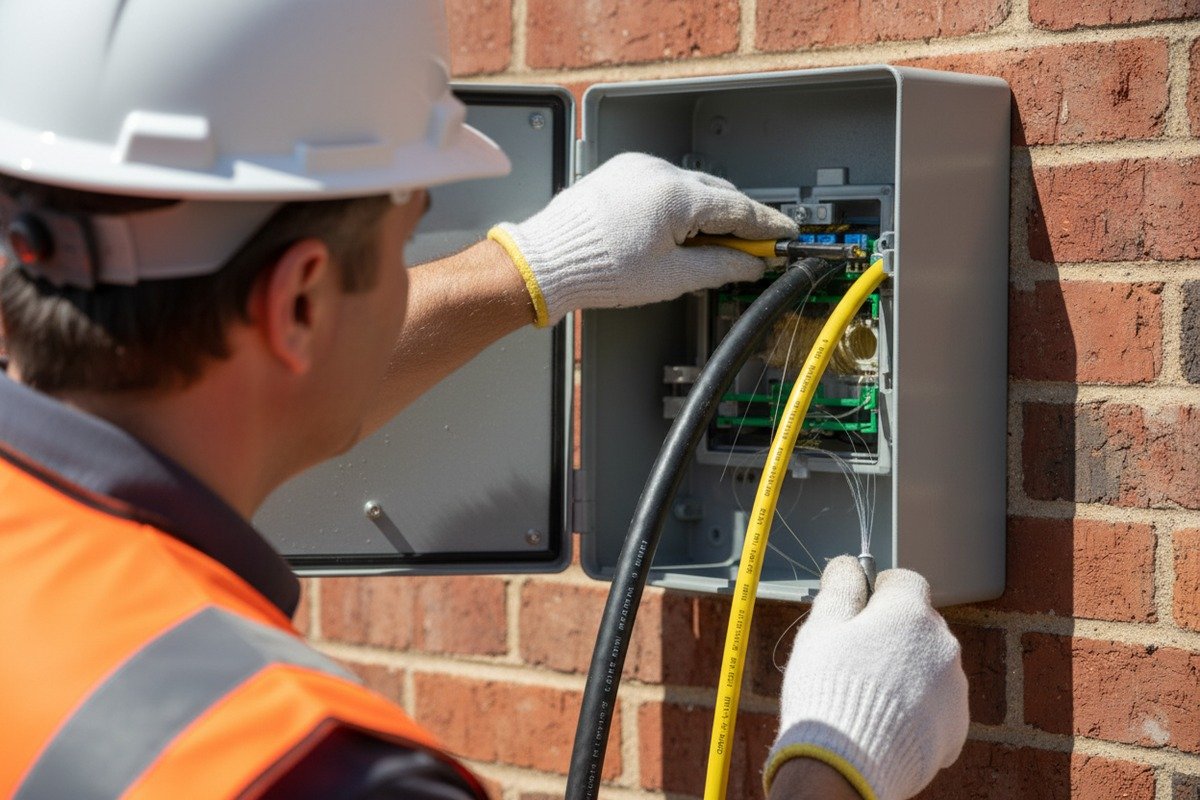
For the US market, ADSS cables are classified as Outside Plant (OSP) and are exempt from indoor fire ratings. However, any cable entering a building must transition to UL-listed segments rated OFNP (plenum), OFNR (riser), or OFN (general-purpose) per NEC Article 770 and tested under UL 1651.
Why ADSS Is Classified as OSP
ADSS — All-Dielectric Self-Supporting — cable is engineered for aerial spans between utility poles. It contains no metal. It uses aramid yarn for tensile strength, water-blocking elements, and a polyethylene or anti-tracking (AT) outer sheath. Because it lives outdoors, the NEC does not require it to pass plenum or riser flame tests. It sits outside the scope of UL indoor fire classifications.
But the moment that cable crosses a building wall, NEC Article 770 4 kicks in. The cable must either transition to a fire-rated indoor cable, pass through a listed conduit, or terminate in a listed splice enclosure within 15 meters of the entry point.
NEC Fire Rating Hierarchy for Optical Fiber Cables
Understanding the hierarchy is critical. Higher-rated cables can substitute downward, but never upward.
| NEC Marking | Full Name | Installation Area | Key Test Standard |
|---|---|---|---|
| OFNP / OFCP | Optical Fiber Nonconductive Plenum / Conductive Plenum | Plenum air-handling spaces | NFPA 262 5 |
| OFNR / OFCR | Optical Fiber Nonconductive Riser / Conductive Riser | Vertical riser shafts | UL 1666 6 |
| OFNG / OFCG | Optical Fiber Nonconductive General / Conductive General | General-purpose areas | UL 1581 |
| OFN / OFC | Optical Fiber Nonconductive / Conductive | Restricted general use | UL 1581 |
| OSP | Outside Plant | Outdoor aerial or buried | None (indoor fire) |
What This Means for Sourcing
When you order ADSS cable from us or any manufacturer, do not expect the main span cable to carry an OFNR or OFNP marking. It won't. That is normal. What you should look for is whether the supplier offers a hybrid solution — an ADSS span cable with a factory-spliced or connectorized indoor tail that carries the correct UL fire rating for your building entry scenario.
If the supplier tells you their outdoor ADSS cable is "fully fire compliant" for indoor use, walk away. That claim violates NEC fundamentals. In our experience shipping to North American utilities, the smartest buyers specify the transition method right in the purchase order.
Canadian Equivalents
For buyers serving both US and Canadian markets, the Canadian Electrical Code uses CSA-based ratings. FT6 is roughly equivalent to OFNP (plenum), and FT4 maps to OFNR (riser). FT4 is the most commonly required indoor rating in Canada. Dual certification — UL plus CSA — is possible but requires separate test submissions.
How can I verify that a manufacturer's fire rating certifications are authentic and up to date?
Our quality team once received a competitor's test report that a client forwarded for comparison. The report referenced a UL file number that did not exist. Counterfeit certifications are a real problem, especially when sourcing from overseas.
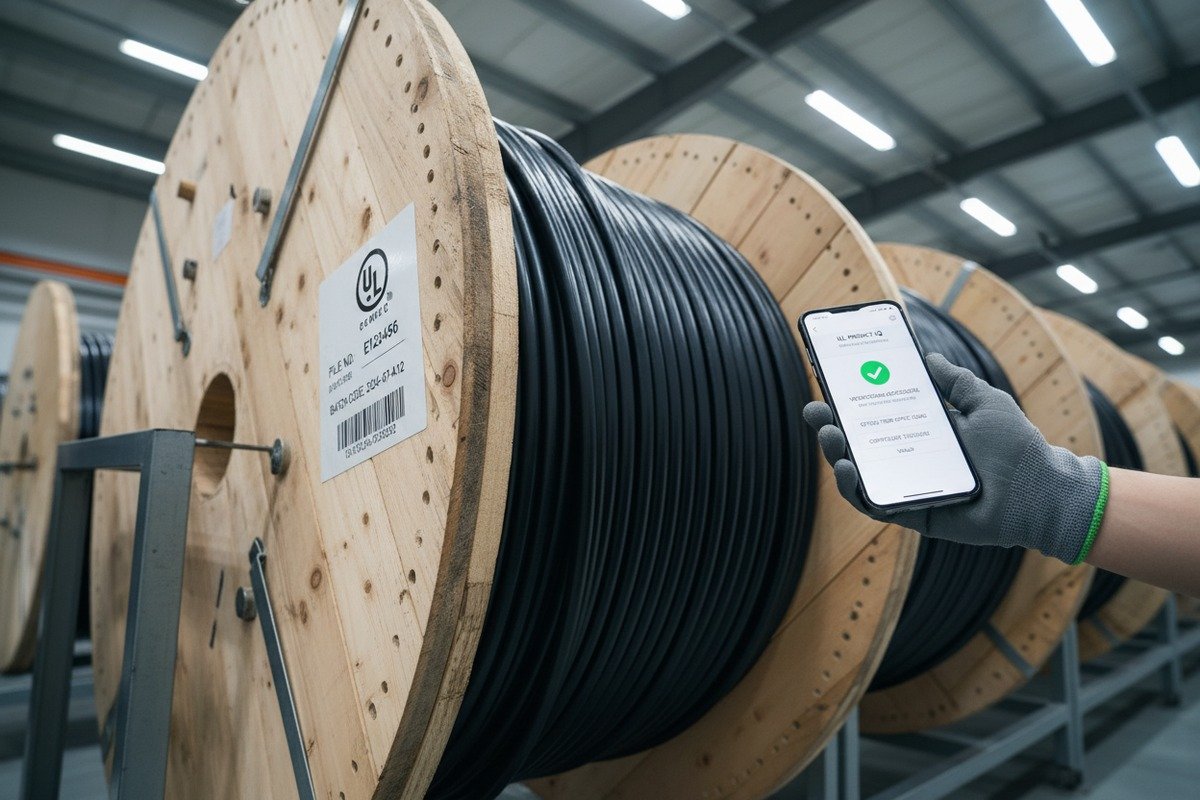
Verify fire rating certifications by searching the manufacturer's UL file number on UL's Product iQ database (productiq.ulprospector.com), confirming the certificate holder matches the supplier, checking the report date is current, and requesting the original test lab's contact information for direct confirmation.
Step-by-Step Verification Process
Start with the basics. Every UL-certified product is assigned a UL file number (e.g., E123456). The manufacturer should provide this number without hesitation. If they cannot, that is your first red flag.
Step 1: Search UL Product iQ. Go to productiq.ulprospector.com. Enter the file number or the manufacturer's name. The listing will show exactly which products are covered, which standards they passed, and whether the certification is active or expired.
Step 2: Match the certificate holder. The company name on the UL listing must match the entity selling you the cable. Some trading companies present factory certifications as their own. The UL listing belongs to the tested entity, not the middleman.
Step 3: Check report dates. UL certifications require periodic factory inspections. If the most recent follow-up inspection was more than 12 months ago, ask the supplier for proof of the latest audit. Certification can lapse quietly.
Step 4: Contact the test lab directly. For high-value orders, call or email the testing lab listed on the report. Provide the report number and ask them to confirm it is genuine. Reputable labs like UL, Intertek, and CSA will verify over email within a few business days.
Common Red Flags
| Red Flag | What It Means | Your Action |
|---|---|---|
| No UL file number provided | Certification may not exist | Reject the supplier |
| File number not found on Product iQ | Possible counterfeit | Request explanation, then verify independently |
| Certificate holder is a different company | Trading company may be misrepresenting | Confirm the actual factory identity |
| Report date older than 3 years | Certification may have lapsed | Ask for latest follow-up audit record |
| Self-declared test report (no NRTL logo) | Not a third-party certification | Does not meet NEC/NEC inspector requirements |
Why Third-Party NRTLs Matter
In the US, fire rating tests must be conducted by a Nationally Recognized Testing Laboratory 7 (NRTL). OSHA maintains the official NRTL list. UL, CSA Group, Intertek (ETL), and TÜV are all on it. A test report from a non-NRTL lab — no matter how detailed — will not satisfy a US electrical inspector.
We have invested heavily in maintaining our own UL and ISO certifications at our 230,000 m² factory. The annual audit process is expensive, but it is the only way our US-bound cables pass inspection without questions. For procurement managers like you, always ask: "Is your testing lab an OSHA-recognized NRTL?"
Post-2020 Supply Chain Realities
Since 2020, the increase in third-party UL verification for Chinese-sourced ADSS cables has been significant. US utilities and their contractors now routinely cross-check UL file numbers before accepting shipments. Some even require pre-shipment inspection by an independent agency. If your supplier resists this level of scrutiny, consider it a warning.
What technical documentation should I request to prove my ADSS cables meet flame retardant requirements?
When our export team prepares documentation packages for US-bound orders, we include far more than a basic data sheet. Yet we still receive calls from buyers who accepted bare-minimum paperwork from other suppliers and then failed a site inspection.
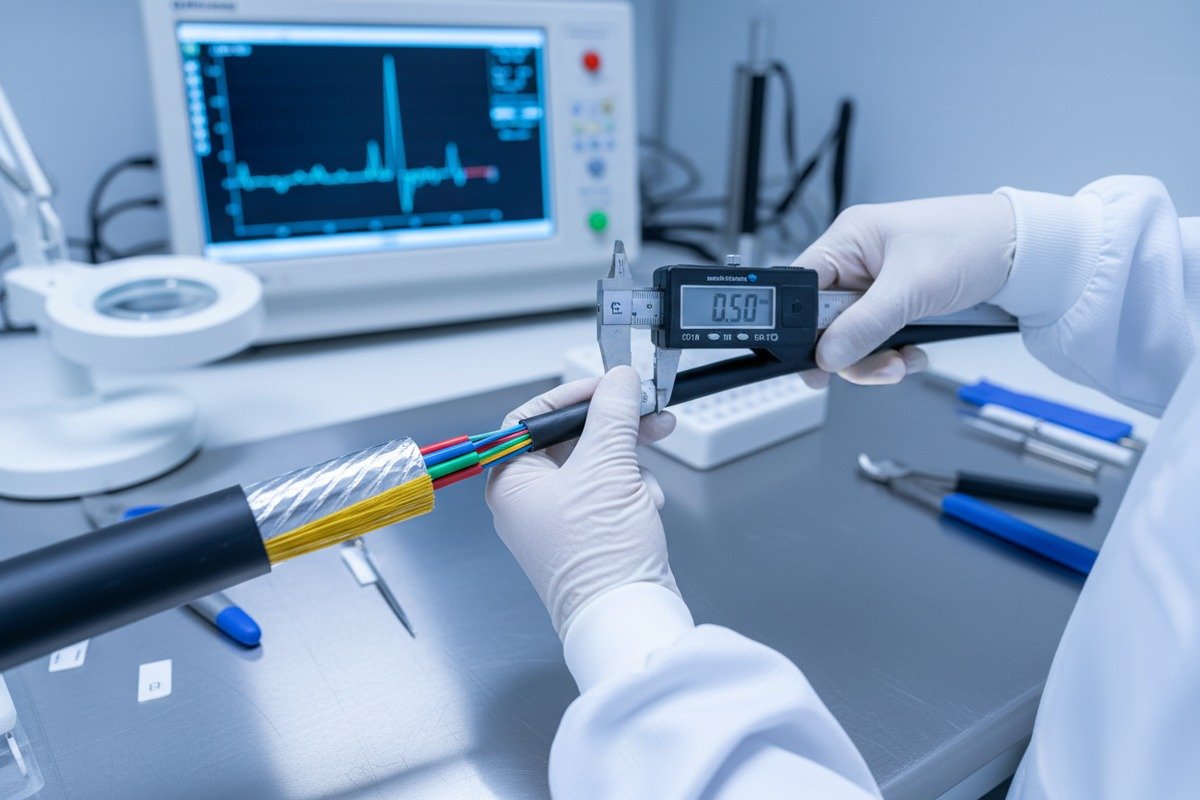
Request these documents: UL certification letter with active file number, NRTL fire test reports (UL 1666 or NFPA 262), material safety data sheets for jacket compounds, factory OTDR test results, NEC compliance declaration specifying Article 770 classification, and a written bill of materials confirming all raw material sources.
The Complete Documentation Checklist
Not every document carries equal weight. Some are legally required; others provide engineering confidence. Here is how to prioritize.
| Document | Purpose | Legally Required? | Who Issues It |
|---|---|---|---|
| UL Certification Letter | Proves product passed NRTL testing | Yes, for indoor-rated sections | UL or other NRTL |
| Fire Test Report (UL 1666 / NFPA 262) | Shows actual flame/smoke test results | Yes, for indoor-rated sections | NRTL test lab |
| Material Safety Data Sheet (MSDS/SDS) 9 | Identifies jacket compound chemistry | Recommended | Raw material supplier |
| Factory OTDR Test Report | Verifies optical performance per reel | Industry standard | Cable manufacturer |
| NEC Compliance Declaration | States the cable's Article 770 classification | Recommended for import | Cable manufacturer |
| Bill of Materials (BOM) | Lists all raw materials and sources | Recommended | Cable manufacturer |
| IEC / IEEE Compliance Certificate | Confirms mechanical and environmental specs | Depends on project spec | Third-party lab |
Understanding Fire Test Reports
The two key tests are UL 1666 and NFPA 262.
UL 1666 (Riser Cable Flame Test): A cable sample is mounted vertically in a shaft. A flame is applied at the base for 30 minutes. The cable must not propagate flame more than 12 feet above the burner. This test earns the OFNR rating.
NFPA 262 (Plenum Cable Flame and Smoke Test): The cable is placed horizontally in an air duct simulation. Flame spread must not exceed 5 feet. Peak optical smoke density must stay below 0.5. Passing this test earns the OFNP rating — the highest indoor fiber cable rating.
For your outdoor ADSS spans, these tests do not apply. But for any factory-terminated indoor tails or hybrid transition cables, they are mandatory.
Why the Bill of Materials Matters
A BOM tells you what is actually inside the cable. It should list the fiber type and count, the aramid yarn grade and weight, the water-blocking method (dry tape vs. gel), and the jacket compound (HDPE, MDPE, or AT-grade material). If the supplier refuses to share a BOM, they may be hiding material substitutions. We have seen cases where suppliers swapped high-quality Fujikura or Corning fiber for unmarked alternatives — and the buyer only discovered it after installation when attenuation readings failed.
Mechanical and Environmental Standards
Beyond fire, US utility buyers typically require compliance with IEEE 1222 (ADSS) 10, Telcordia GR-20 (generic fiber cable), or RUS 7 CFR 1755.900 (USDA Rural Utilities Service). These standards govern tensile strength, crush resistance (263 N/cm minimum per some specs), temperature range (-40°C to +70°C), and ice loading. Request test reports for these as well. They do not replace fire documentation, but they complete the compliance picture.
How do I ensure the jacket materials used in my ADSS cables actually comply with US fire safety codes?
The jacket is the first and last line of defense in a fire scenario. When our engineers select jacket compounds for US-market ADSS cables, they test multiple formulations — because the difference between a compliant jacket and a non-compliant one is invisible to the naked eye.
Ensure jacket compliance by requesting the jacket material's UL-recognized component status (UL Yellow Card), verifying the compound meets specific flame retardant requirements (e.g., LSZH or PVDF for indoor sections), and conducting independent sample burn tests per UL 1581 or VW-1 methodology before approving production.

Jacket Materials and Their Fire Behavior
Not all jacket materials behave the same way in a fire. The choice of material determines whether the cable can earn a plenum, riser, or general-purpose rating.
| Jacket Material | Typical Use | Flame Performance | Smoke/Toxicity | NEC Rating Potential |
|---|---|---|---|---|
| HDPE (High-Density Polyethylene) | Outdoor ADSS spans | Burns readily, self-extinguishes slowly | High smoke, moderate toxicity | OSP only (no indoor rating) |
| AT Sheath (Anti-Tracking Compound) | High-voltage ADSS (>12kV) | Better than HDPE, still not indoor-rated | Moderate smoke | OSP only |
| PVC (Polyvinyl Chloride) | General indoor cables | Self-extinguishes, decent flame resistance | High smoke, HCl gas emission | OFN / OFNG |
| LSZH (Low Smoke Zero Halogen) | Indoor riser or general | Good flame resistance | Low smoke, no halogen gases | OFNR / OFNG |
| PVDF (Polyvinylidene Fluoride) | Plenum cables | Excellent flame resistance | Very low smoke | OFNP |
The HDPE Misconception
Standard ADSS cable uses a black HDPE outer jacket. HDPE is excellent for UV resistance, moisture protection, and mechanical durability outdoors. But HDPE has poor fire performance. It melts and burns with significant smoke. This is exactly why outdoor ADSS cable cannot be used indoors without a transition.
Some buyers ask us to simply change the HDPE jacket to LSZH on an ADSS cable and call it "indoor rated." It is not that simple. The entire cable assembly — not just the jacket — must pass the fire test as a system. Changing the jacket material is a necessary first step, but it does not automatically guarantee the cable will pass UL 1666 or NFPA 262. Internal components like the central strength member, buffer tubes, and water-blocking materials also contribute to flame and smoke behavior.
How to Audit Jacket Materials
Request the UL Yellow Card. UL maintains a database of recognized component materials. The jacket compound should have its own UL recognition, separate from the finished cable. Ask the supplier for the compound's UL file number and verify it on UL Product iQ.
Ask for the compound supplier's identity. Reputable cable manufacturers use named compounds from established chemical companies. If the cable maker cannot tell you who supplies their jacket compound, or if they blend it in-house without UL recognition, the material quality is uncertain.
Conduct a sample burn test. For critical orders, request a 1.5-meter sample. Suspend it vertically and apply a flame for 60 seconds (riser test simulation) or 120 seconds (plenum test simulation). Measure char length and observe smoke behavior. This is not a substitute for a formal NRTL test, but it can quickly reveal obviously non-compliant materials.
Long-Term Degradation Concerns
Outdoor ADSS cables face UV radiation, temperature extremes (-50°C to +70°C in some specs), wind vibration, and pollution. Over 20+ years, these factors can degrade the jacket's mechanical properties and — critically — its fire retardant additives. For cables that will eventually enter buildings or that run near structures in wildfire-prone areas, consider specifying UV-stabilized LSZH or requesting accelerated aging test data from the manufacturer.
Special Fire-Rated ADSS Variants
A growing niche product is fire-rated ADSS cable designed to remain functional during a fire event for 180 minutes or more. These cables use ceramic-forming silicone or intumescent layers beneath the outer jacket. They cost 20–50% more than standard ADSS, but they are specified for metro fiber routes that pass through tunnels, bridges, or near critical infrastructure. If your project involves any of these scenarios, ask us about our InFire-class options.
Conclusion
Verifying fire rating compliance for ADSS cables is a process, not a checkbox. Use the UL database, demand NRTL test reports, audit jacket materials, and always plan your building entry transitions per NEC Article 770.
Footnotes
1. Official UL Standards page detailing the requirements for optical fiber cables. ↩︎
2. Official UL Solutions program describing the Yellow Card for plastics recognition and component certification. ↩︎
3. Ericsson's official page detailing Telcordia GR-20 generic requirements for optical fiber and optical fiber cables. ↩︎
4. Provides a clear explanation of NEC Article 770 for optical fiber cables. ↩︎
5. Official NFPA page for the standard method of test for flame travel and smoke of wires and cables. ↩︎
6. Official UL Standards page outlining the test for flame propagation height of electrical and optical-fiber cables. ↩︎
7. Official OSHA page for the Nationally Recognized Testing Laboratory (NRTL) Program. ↩︎
8. Official UL Solutions platform for verifying product certifications and accessing guide information. ↩︎
9. OSHA interpretation letter clarifying the purpose and requirements of Material Safety Data Sheets. ↩︎
10. Provides an overview of the IEEE 1222 standard for All-Dielectric Self-Supporting (ADSS) fiber optic cables. ↩︎