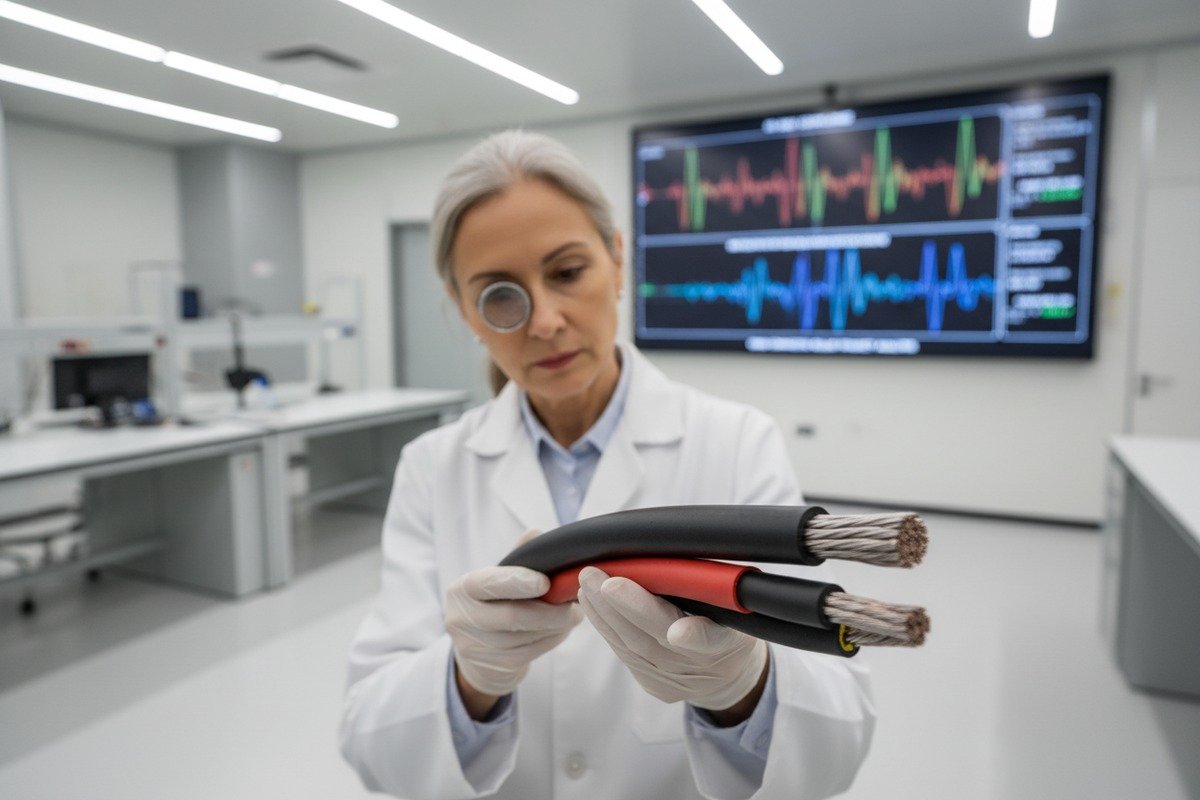

A single cable snap on a 700-meter aerial span can shut down an entire rural broadband project for weeks Teijin Technora 1. Our production team has seen returned cables from other factories where the aramid yarn 2 was so brittle it crumbled between fingers.
To verify reliable raw material sourcing, request named brand certifications for fiber and aramid, conduct on-site warehouse audits, demand batch-traceable test reports per IEC 60794 standards, and evaluate the supplier's vertical integration level and material buffer stock strategies before placing any order.
Below, we break down the exact steps you should take for each critical raw material in an ADSS cable IEC 60794 standards 3. Whether you are a procurement manager at a US utility or a regional distributor in Southeast Asia, these verification methods will protect your project from hidden material risks.
How can I confirm my supplier uses high-tenacity aramid yarn rather than low-cost alternatives?
Every year, our quality team rejects incoming aramid batches that fail tensile tests UV stabilizer content 4. If a manufacturer does not catch these issues, the cable you install on a 1-km span could sag, stretch, or snap within months.
Request the aramid yarn supplier's name, lot number, and tensile strength certificate for each batch. Genuine high-tenacity aramid from brands like DuPont Kevlar or Teijin Technora will show tensile strength above 3,000 MPa and a modulus exceeding 70 GPa on the data sheet.
Why Aramid Yarn Quality Matters So Much
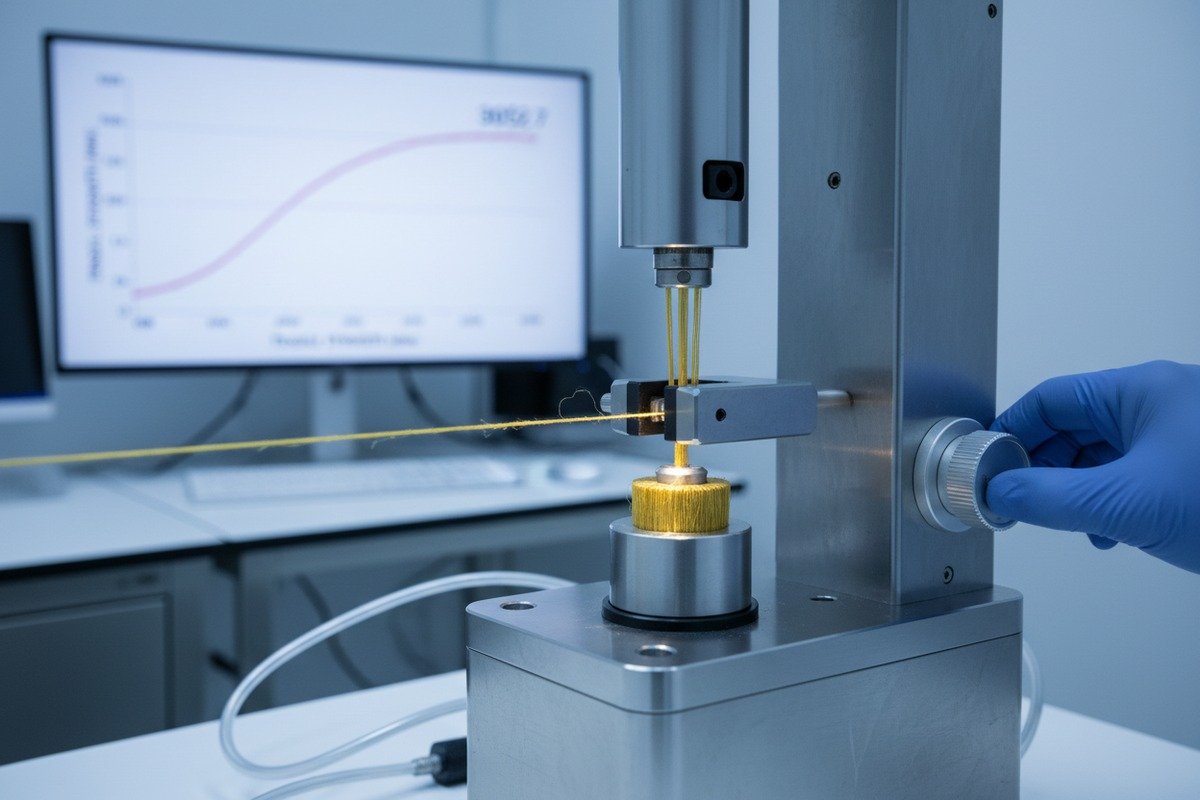
Aramid yarn is the backbone of every ADSS cable. It bears the mechanical load when the cable hangs between poles. In a typical 600-meter span, the aramid must handle wind loads, ice loads, and its own dead weight without permanent elongation. Low-cost alternatives often use recycled aramid or blended para-aramid fibers that look similar but lose 20–40% of their tensile strength over time.
How to Spot Low-Cost Substitutes
Here are common red flags when evaluating aramid sourcing:
- The supplier cannot name the aramid brand or provides only a generic "para-aramid" label.
- Tensile test values on the data sheet are suspiciously close to the minimum threshold.
- The price per kilometer is significantly below the market average without any clear explanation.
- No lot number or batch traceability is available.
When we receive aramid at our 230,000 m² facility, every single spool goes through incoming inspection. We verify the brand label, measure denier, and run a sample tensile pull test before it enters the production line. This is standard practice for any serious manufacturer, and you should ask your supplier if they do the same.
Aramid Yarn Comparison Table
| Property | DuPont Kevlar 5 49 | Teijin Technora | Generic Para-Aramid | Recycled Aramid |
|---|---|---|---|---|
| Tensile Strength (MPa) | 3,600 | 3,400 | 2,200–2,800 | 1,500–2,000 |
| Modulus (GPa) | 131 | 73 | 50–65 | 30–50 |
| Elongation at Break (%) | 2.4 | 4.4 | 3.5–5.0 | 5.0–8.0 |
| UV Resistance | Excellent | Excellent | Moderate | Poor |
| Traceability | Full batch certs | Full batch certs | Often unavailable | Rarely available |
Questions You Should Ask Your Sales Rep
- "What brand of aramid yarn do you use, and can you provide the manufacturer's certificate of analysis for my specific order?"
- "Do you perform incoming tensile testing on every aramid batch?"
- "Can I see your aramid supplier contract or purchase order history?"
If the sales rep cannot answer these questions clearly, that is a serious warning sign. A trustworthy supplier will share this information without hesitation. Our team at Lonsoncable provides aramid brand documentation as part of every quotation package because we know how critical this transparency is for overseas buyers.
What steps should I take to verify the authenticity of a factory's raw material certifications and test reports?
During a recent factory audit by one of our US utility clients, they cross-referenced every certificate number we provided with the original issuing body. That level of diligence saved them from a competitor whose ISO certificate had actually expired two years prior.
Cross-verify certifications directly with issuing bodies, request original test reports with unique serial numbers, confirm ISO 9001 and IEC 60794 compliance through accredited registrar databases, and insist on third-party lab results from recognized institutions like SGS, Bureau Veritas, or TÜV rather than relying solely on supplier-generated documents.

The Certification Landscape for ADSS Cables
ADSS cables sold internationally should carry multiple layers of certification. These include the manufacturer's own quality management system certifications and product-specific test reports. Here is what to look for:
- ISO 9001: Quality management system. Verify the certificate number on the registrar's website.
- ISO 14001: Environmental management. Important for sustainability-conscious buyers.
- IEC 60794: The international standard for optical fiber cables. Test reports should reference specific clauses.
- IEEE 1222: Standard for ADSS cables specifically. Covers mechanical and environmental requirements.
- UL / CSA: Required for many North American projects.
Step-by-Step Verification Process
Step 1: Ask the supplier for scanned copies of all relevant certifications with visible certificate numbers, issuing dates, and expiration dates.
Step 2: Visit the certification body's online verification portal. For example, ISO certificates can be checked through the IAF CertSearch database 6.
Step 3: Request the raw material test report for the specific batch allocated to your order. The report should include the test date, equipment serial number, operator name, and standard referenced.
Step 4: For optical fiber, ask for the OTDR 7 (Optical Time Domain Reflectometer) trace for each drum. This shows attenuation per kilometer and any splicing events. Our factory runs OTDR on 100% of production and includes the trace file with every shipment.
Step 5: Engage a third-party inspection company to witness testing at the factory before shipment. Companies like SGS, Bureau Veritas, and Intertek offer pre-shipment inspection services in China.
Certification Verification Checklist
| Certification | Where to Verify | Red Flag |
|---|---|---|
| ISO 9001 8 | IAF CertSearch (iafcertsearch.org) | Certificate number not found in database |
| IEC 60794 Test Report | Request original from accredited lab | Report lacks lab accreditation number |
| UL Listing | UL Product iQ (productiq.ulprospector.com) | Supplier cannot provide UL file number |
| OTDR Trace | Review raw .sor file, not just PDF | Only summary PDF provided, no raw data |
| Aramid CoA (Certificate of Analysis) | Contact aramid manufacturer directly | No lot number or manufacturer contact |
Why Supplier-Generated Reports Are Not Enough
Some factories produce their own internal test reports. While these are useful, they should never be your only source of verification. Internal reports can be manipulated. Third-party reports from accredited labs are far more reliable. When we ship ADSS cable from our Hainan facility, we include both our in-house OTDR results and third-party mechanical test data. This dual-layer approach gives our clients full confidence.
One practical tip: if your supplier claims certifications from bodies like TL9000 (telecom-specific quality), ask for the registration number and verify it at the TL9000 QuEST Forum public registry. Authentic suppliers welcome this scrutiny.
How do I evaluate if the PE jacket material is durable enough for my specific environmental conditions?
Our engineers have tested PE jacket compounds from over a dozen resin suppliers. The difference between a quality HDPE 9 jacket and a cheap recycled PE sheath becomes painfully obvious after just 12 months of UV exposure in tropical climates — the cheap one cracks and exposes the cable core.
Evaluate PE jacket durability by requesting the resin grade data sheet, confirming it is virgin HDPE (not recycled), verifying UV stabilizer content, reviewing salt-fog and UV accelerated aging test results per IEC 60794-1-2, and matching the jacket's anti-tracking (AT) properties to your specific installation environment — coastal, desert, or high-pollution zones.
Understanding PE Jacket Types
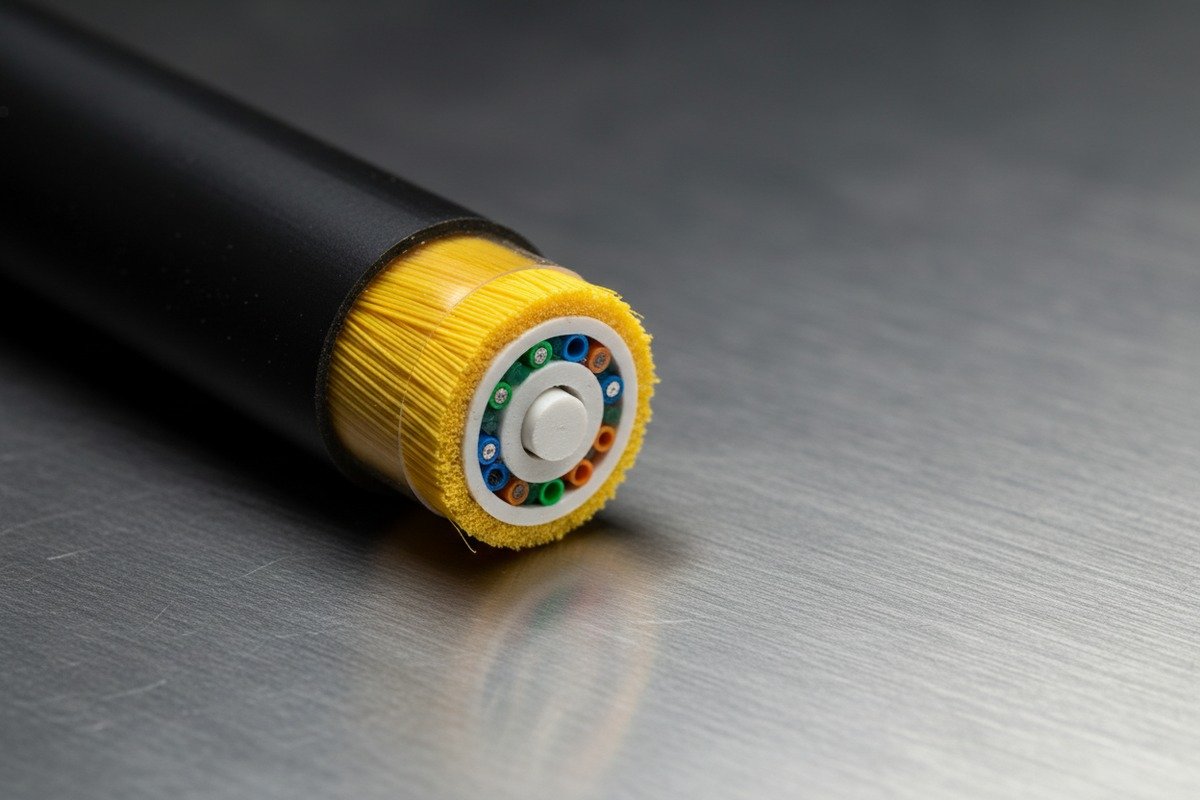
Not all polyethylene jackets are the same. For ADSS cables, there are three main categories:
- Standard PE (MDPE): Suitable for mild environments with low UV exposure and no pollution.
- HDPE: Higher density, better abrasion resistance, and improved UV stability. This is the minimum we recommend for any outdoor aerial installation.
- AT (Anti-Tracking) Jacket: Essential for high-voltage environments where electrical discharge can erode the cable surface. The AT compound resists carbon tracking caused by dry-band arcing.
How Environmental Conditions Affect Jacket Life
The operating environment dictates which jacket you need. Here is a practical guide:
| Environment | Key Threat | Recommended Jacket | Test Standard |
|---|---|---|---|
| Coastal / High Humidity | Salt spray corrosion, UV | HDPE with UV stabilizer | IEC 60794-1-2 Method E6 (Salt fog) |
| Desert / High UV | Intense solar radiation, sand abrasion | HDPE with carbon black ≥ 2.5% | ASTM G154 (UV aging) |
| Industrial / High Pollution | Chemical exposure, electrical tracking | AT (Anti-Tracking) sheath | IEC 60587 (Tracking resistance) |
| Cold Climate (< -30°C) | Brittleness, thermal cracking | Cold-resistant HDPE blend | IEC 60794-1-2 Method F1 |
| Tropical Forest | Rodent attack, fungal growth | HDPE with rodent-resistant additives | IEC 60794-1-2 Method F8 |
Key Tests to Request
When we compound our PE jacket material in-house, we run the following tests on every batch:
- Melt Flow Index (MFI): Confirms the resin grade has not been diluted or mixed with recycled material.
- Carbon Black Content: Should be 2.5% ± 0.5% for UV-stable black jackets. Measured per ISO 6964.
- Tensile Strength and Elongation at Break: Per IEC 60811. Virgin HDPE should show elongation > 350%.
- UV Accelerated Aging: 720 hours minimum under xenon arc lamp. The jacket should retain > 80% of its original tensile strength.
- Anti-Tracking Test (if applicable): Per IEC 60587. The jacket must withstand 4.5 kV without tracking failure.
Virgin vs. Recycled PE: A Critical Distinction
Recycled PE is significantly cheaper. Some factories use it to cut costs. The problem is recycled PE has inconsistent molecular weight distribution, lower elongation at break, and poor UV resistance. Over time, recycled PE jackets become brittle and crack. For a cable expected to last 25+ years on an aerial span, this is unacceptable.
Ask your supplier directly: "Is this virgin HDPE? Can you provide the resin supplier's certificate of origin?" At our facility, we only use virgin HDPE from established petrochemical suppliers, and every batch comes with full resin traceability documentation.
If your project is in a coastal or high-pollution area, insist on AT-grade jacketing and request the IEC 60587 tracking resistance test report. This is not optional — it is essential for cable longevity near high-voltage transmission lines.
Can I request a real-time inspection of the raw material warehouse to ensure my order's quality?
When a procurement team from a major Latin American telecom operator visited our warehouse last year, they physically counted aramid spools and checked fiber drum labels against our ERP system. They told us it was the most reassuring step in their entire supplier evaluation process.
Yes, you can and should request a real-time warehouse inspection. Reputable ADSS cable manufacturers welcome on-site visits where you can verify raw material stock levels, check brand labels on fiber drums and aramid spools, review incoming inspection records, and confirm that materials allocated to your order match the specifications in your purchase contract.
What to Look for During a Warehouse Visit
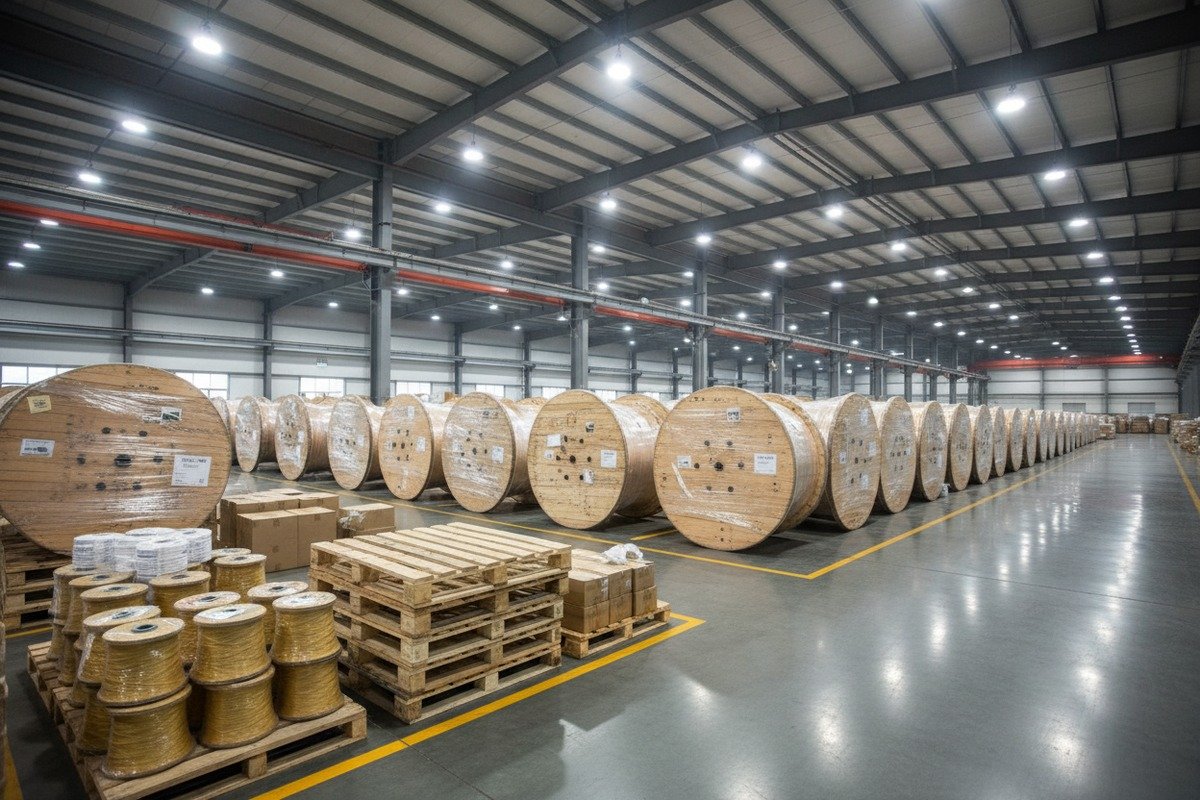
A raw material warehouse tells you everything about a factory's sourcing practices. Here is what you should inspect:
Fiber Drums: Each drum of bare optical fiber should carry a label from the fiber manufacturer (such as Corning, YOFC, Fujikura, or Futong). The label includes the fiber type (e.g., G.652.D 10), manufacturing date, attenuation values, and batch number. If you see unlabeled drums or labels that look hand-written, that is a serious concern.
Aramid Yarn Spools: Branded aramid comes on clearly marked spools with the manufacturer's logo, product grade, denier, and lot number. Count the spools and compare against the factory's production plan for your order.
PE Resin Bags: Virgin HDPE resin arrives in 25 kg bags with the petrochemical supplier's branding. Check for consistent bag markings and look at the production dates. Old or mixed batches suggest poor inventory management.
FRP Rods and Central Strength Members: These should be stored in dry conditions. Check for consistent diameter and surface quality. Warped or moisture-damaged FRP will cause cable geometry issues.
What If You Cannot Visit in Person?
Many of our overseas clients cannot fly to China for every order. In that case, you have several alternatives:
- Third-Party Inspection: Hire SGS, Bureau Veritas, or a local Chinese inspection firm to visit the warehouse on your behalf. They can photograph materials, verify labels, and confirm stock levels.
- Video Call Walkthrough: Ask your supplier for a live video tour of the warehouse. During the call, request close-ups of fiber drum labels and aramid spool markings.
- Photo Documentation Package: Before production begins, request timestamped photos of all raw materials allocated to your order, including close-ups of brand labels and batch numbers.
Factory Visit Inspection Checklist
| Inspection Point | What to Verify | Acceptable Evidence |
|---|---|---|
| Optical Fiber Drums | Brand label, G.652.D marking, batch number | Corning / YOFC / Fujikura label with QR code |
| Aramid Yarn Spools | Brand, denier, lot number | DuPont / Teijin label on each spool |
| PE Resin Bags | Supplier branding, production date, grade | Sealed bags from named petrochemical supplier |
| FRP Central Member | Diameter consistency, storage conditions | Dry storage, no visible warping |
| Incoming Inspection Log | Test results for each batch received | Signed log with dates, results, and inspector ID |
| ERP / Inventory System | Material allocation to your PO number | Digital record matching your order specs |
Why Warehouse Transparency Signals Long-Term Reliability
A factory that maintains an organized, well-labeled warehouse with clear incoming inspection procedures is one that takes quality seriously at the most fundamental level. If the raw materials are right, the finished cable has a much higher chance of meeting specifications. On the other hand, a messy warehouse with unlabeled materials and no traceability system is a factory where anything could end up in your cable.
Our warehouse in Hainan maintains a real-time ERP tracking system. Every spool of aramid, every drum of fiber, and every bag of PE resin is logged, inspected, and allocated to specific production orders. We encourage all prospective clients to visit — or send a representative — because we believe transparency builds the strongest business relationships.
One more thing worth mentioning: if a factory resists your inspection request or offers excuses about "proprietary processes," treat that as a dealbreaker. Legitimate manufacturers have nothing to hide in their raw material storage areas.
Conclusion
Verifying raw material sourcing is the single most important step in choosing a reliable ADSS cable supplier. Ask hard questions, demand documentation, and never skip the warehouse check.
Footnotes
1. Official product page for Teijin Technora, another key aramid fiber. ↩︎
2. Provides a general overview and properties of aramid fibers. ↩︎
3. Replaced with a direct link to IEC 60794-1-1:2023, a generic specification for optical fibre cables, from the official International Electrotechnical Commission (IEC) website. ↩︎
4. Explains the function and importance of UV stabilizers in polyethylene products. ↩︎
5. Official website for DuPont Kevlar, a leading aramid fiber brand. ↩︎
6. The official global database for verifying accredited ISO certifications. ↩︎
7. Replaced with the Wikipedia page for Optical Time-Domain Reflectometer (OTDR), offering a detailed explanation of the instrument. ↩︎
8. Replaced with the official ISO 9001 quality management systems overview page from the International Organization for Standardization (ISO) website. ↩︎
9. Replaced with the Wikipedia page for High-Density Polyethylene (HDPE), providing a comprehensive and accessible overview. ↩︎
10. Replaced with the official ITU-T Recommendation G.652 page, which describes the characteristics of single-mode optical fibre and cable, including G.652.D. ↩︎