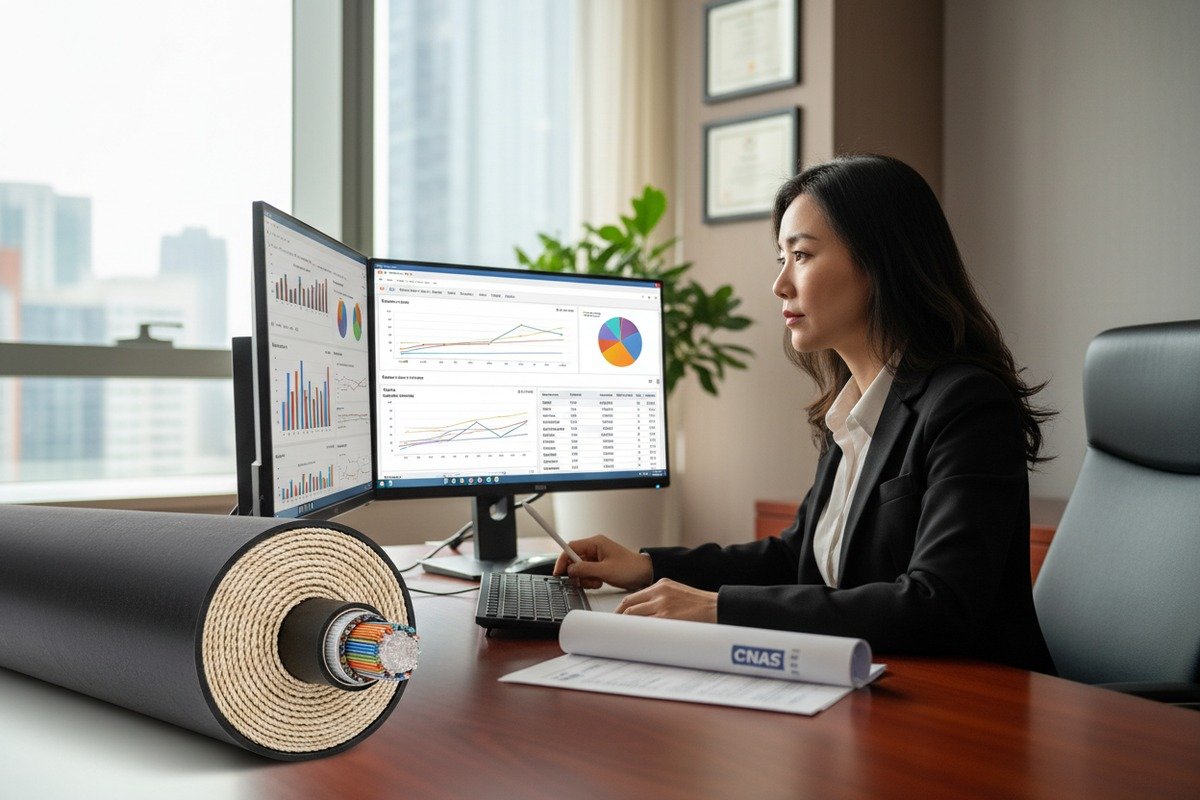
Every year, our sales team fields dozens of calls from US buyers who got burned by a previous supplier third-party factory audit 1. The cables looked fine on paper. The price was right. But when the shipment arrived, the ADSS cable failed ice-load testing 2, the aramid yarn turned out to be a cheap substitute, and the project stalled for months. That pain is real, and it costs more than just money — it costs credibility with your own clients.
To verify a China ADSS fiber optic cable supplier's US export track record, cross-check their customs shipment data on trade platforms, demand IEEE 1222 and UL certifications with verifiable test reports, request references from US utilities or ISPs, and schedule a third-party factory audit to confirm genuine materials and export-grade production lines.
China exported $2.59 billion worth of optical fiber cables in 2021 alone — far ahead of any other country. But volume does not equal quality. The gap between a reliable export-grade manufacturer and a low-cost domestic mill is enormous. This guide walks you through the exact steps to separate proven suppliers from risky ones, so your next US project stays on schedule and on spec.
How can I access a supplier's US customs data to prove they have actually shipped ADSS cables to America?
In our experience shipping ADSS and GYTA cables from our Hainan facility to North American ports, we know that real export data leaves a clear paper trail. The problem is most buyers never think to look for it — and some suppliers count on that.
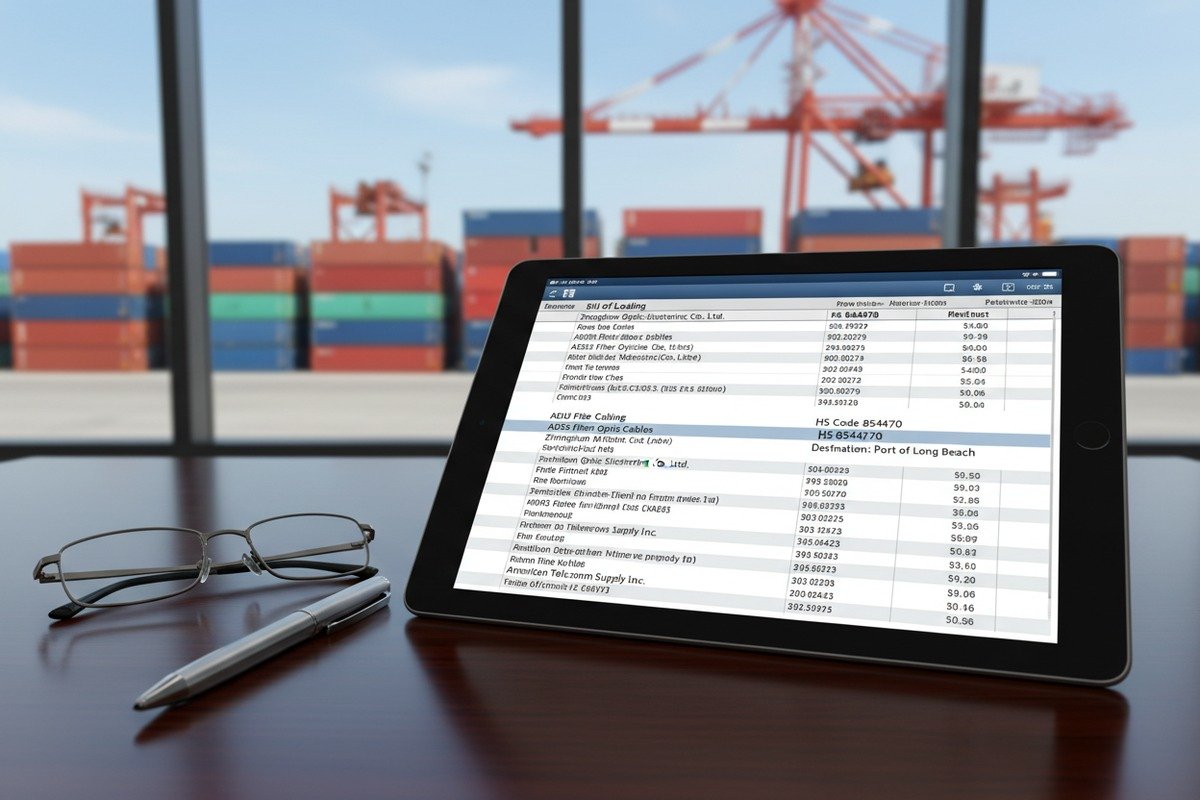
You can access a supplier's US customs data through global trade platforms like Volza, Seair Exim, Trade Data Pro, or UN Comtrade by searching HS code 854470 (optical fiber cables). These databases show shipment volumes, destination ports, buyer names, and frequency, giving you hard proof of actual US deliveries.
Where to Start: Public Trade Databases
The United Nations Comtrade database 3 and the World Integrated Trade Solution (WITS) are free tools. They let you search by HS code 854470 4, which covers optical fiber cables including ADSS types. You can filter by exporting country (China) and importing country (United States). This gives you macro-level data — total volumes, dollar values, and trends over time.
But macro data alone does not tell you about a specific supplier. For that, you need commercial platforms.
Commercial Platforms for Supplier-Level Data
Platforms like Volza, Seair Exim, ImportGenius, and Trade Data Pro pull data from US Customs and Border Protection 5 (CBP) bills of lading. When a container clears US customs, the shipper name, consignee, product description, port of entry, and weight are recorded. These platforms index that data and make it searchable.
Here is what to look for:
| Data Point | What It Tells You | Red Flag If... |
|---|---|---|
| Shipper name | Confirms the actual factory or trading company | Name does not match the supplier's registered entity |
| Number of shipments | Shows consistency of US exports | Only 1-2 shipments ever recorded |
| Product description | Confirms ADSS or fiber optic cable type | Vague descriptions like "cable" or "wire" |
| US consignee | Reveals their actual US clients | No recognizable utility, ISP, or distributor |
| Ports and dates | Shows logistics reliability | Irregular gaps or single port only |
Cross-Reference With the Supplier's Claims
Ask the supplier directly: "Which US ports have you shipped to in the last 24 months? Can you share bill of lading references?" Then check their answer against what the trade database shows. A trustworthy supplier will have no problem with this. At our facility, we keep records of every export shipment and can provide container tracking numbers on request.
Watch Out for Trading Companies
One common trap: the customs data shows a trading company as the shipper, not the actual factory. Many Chinese "manufacturers" are actually middlemen. If the shipper name on the bill of lading is different from the factory name, ask why. Legitimate scenarios exist — for example, our Hainan Free Trade Port entity handles exports with streamlined customs clearance — but the supplier should be able to explain the relationship clearly and provide documentation linking the trading entity to the production facility.
What specific UL or IEEE certifications should I demand to ensure my cables meet US safety and performance standards?
When our engineering team designs an ADSS cable for a US utility project, the first question is always about the loading district — Heavy, Medium, or Light — because that single variable dictates the entire mechanical design. Without the right certifications tied to those conditions, your cable could fail catastrophically in its first winter.
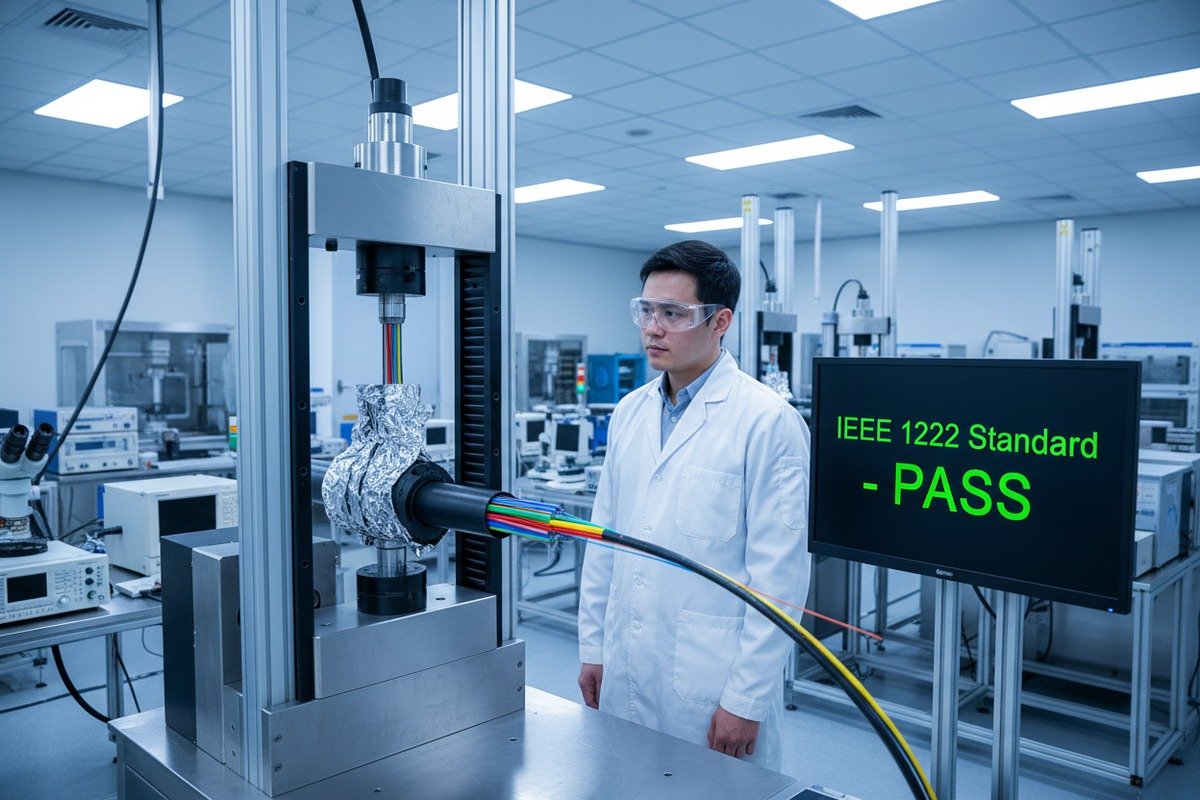
For US projects, demand IEEE 1222 (ADSS cable design and installation), NESC compliance for your specific loading district, UL certification for flame and safety ratings, and IEC 60794 for general optical cable performance. Always require original test reports from accredited labs, not just self-declared compliance statements.
The Core Standards You Must Know
IEEE 1222 6 is the primary standard for ADSS cable. It covers design requirements, testing methods, and installation guidelines for all-dielectric self-supporting cables used on overhead power lines. If your supplier cannot cite this standard fluently, that is a serious warning sign.
NESC 7 (National Electrical Safety Code) defines the mechanical loading requirements. The US is divided into Heavy, Medium, and Light loading districts based on ice and wind conditions. Your cable's Rated Tensile Strength (RTS) must be calculated for your specific district.
| Standard / Certification | What It Covers | Why It Matters for US Buyers |
|---|---|---|
| IEEE 1222 | ADSS cable design, testing, installation | The foundational US standard for ADSS cables |
| NESC (Heavy/Medium/Light) | Ice and wind loading requirements | Determines minimum RTS for your span and sag |
| UL Listed / Recognized | Fire safety, material safety | Required by many US utilities and building codes |
| IEC 60794 | Optical fiber cable construction and performance | International baseline for mechanical and optical specs |
| ITU-T G.652D / G.657A2 | Fiber performance specifications | Ensures signal quality and bend performance |
| ISO 9001 8 | Quality management system | Confirms consistent manufacturing processes |
| CSA (if applicable) | Canadian safety standards | Needed if cables cross into Canadian grid territory |
Demanding Real Test Reports
A certificate hanging on a wall means little without the test data behind it. Ask for:
- Tensile strength test reports showing RTS values at your required span length
- Ice loading simulation results per NESC district requirements
- Aeolian vibration and galloping test data for exposed installation sites
- UV aging test results for the PE or AT jacket material
- OTDR test reports for every reel, showing attenuation values at 1310 nm and 1550 nm
At our factory, every production reel gets an individual OTDR test, and we include that report with shipment documentation. If a supplier hesitates to provide reel-level test data, walk away.
UL Certification: More Than a Logo
UL certification 9 for fiber optic cables involves independent testing of flame spread, smoke generation, and material composition. Many US municipalities and utilities require UL-listed cables for overhead and underground installations. The UL mark should be physically printed on the cable jacket at regular intervals. Ask the supplier for their UL file number so you can verify it directly on the UL Product iQ database.
The RTS Calculation Question
Here is a simple litmus test: ask the supplier to calculate the required RTS for a 200-meter span in a NESC Heavy loading district with a specific ruling span and sag value. A competent manufacturer — one with real engineering staff — will return a detailed calculation within 24 hours. A trading company will stall or give a generic answer. Our engineers routinely perform these calculations as part of our technical support for US projects, and we include sag-tension tables with every quotation.
Can I ask for references or case studies from other US-based ISPs and power companies they currently supply?
One thing we have learned over 30 years of manufacturing fiber optic cable is that satisfied clients are the best sales tool. When a US power company calls to check on our track record, we want them to hear directly from someone who has already installed our ADSS on their poles. But not every supplier can deliver that level of transparency.
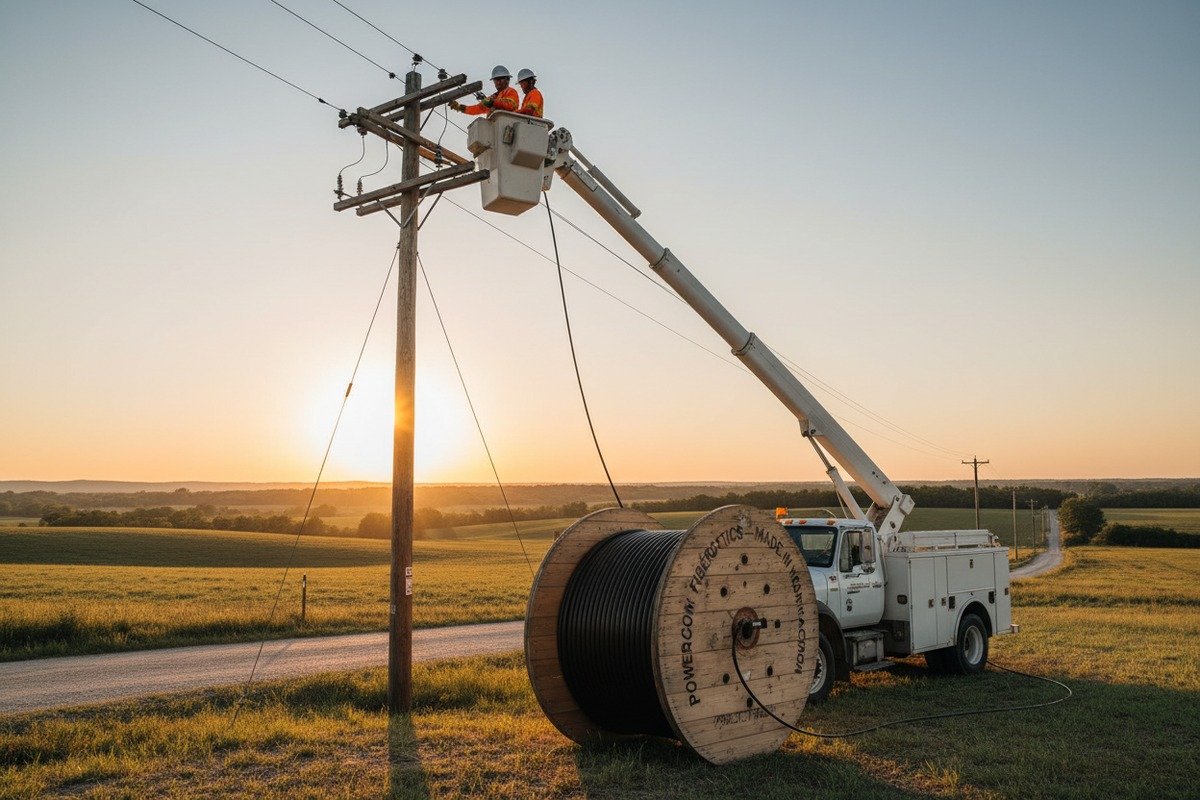
Yes, you should absolutely request verifiable references from US-based ISPs, utilities, or power companies. Ask for project names, contact persons, installation dates, and cable specifications used. A credible supplier will provide at least two to three references you can independently verify by phone or email.
Why References Matter More Than Brochures
A glossy PDF can say anything. A real phone call with a US project manager who installed 50 km of that supplier's ADSS cable last year — that is evidence. References serve multiple purposes:
- They confirm the supplier has actually delivered to the US market
- They reveal real-world installation performance (did the cable hold up?)
- They expose logistics reliability (did it arrive on time and undamaged?)
- They show after-sales support quality (did the supplier help with issues?)
What to Ask the Reference
When you get a reference contact, do not just ask "Was it good?" Be specific:
| Question to Ask | What You Learn |
|---|---|
| What ADSS model and fiber count did you order? | Confirms the supplier makes your needed spec |
| What NESC loading district is your installation in? | Confirms cables perform in real US conditions |
| Were there any failures during or after installation? | Reveals quality consistency |
| How was the packaging when it arrived at your site? | Wooden reel quality matters for sea freight |
| Did the supplier provide sag-tension calculations? | Shows engineering support capability |
| Would you reorder from them? | The ultimate trust signal |
Case Study Red Flags
Some suppliers will offer "case studies" that are actually stock photos with generic text. Look for:
- Specific project location (city, state, utility name)
- Exact cable specifications (fiber count, span length, RTS value)
- Installation photos showing the actual cable on poles
- Dated documentation (purchase orders, delivery receipts)
If the supplier can only show you projects in Southeast Asia or Africa but claims to serve US utilities, that gap should concern you. The US market has unique requirements — IEEE compliance, NESC loading, UL listings — that differ significantly from other regions.
The Fortune 500 Claim
Some large Chinese cable manufacturers like Hengtong (20,000+ employees, $6-7.5 billion revenue) and ZTT ($10.5-12 billion revenue) genuinely serve Fortune 500 companies and major global utilities. But claiming to be in the same league as these giants does not make it true for smaller suppliers. Verify every claim independently. A mid-sized manufacturer like ours can still deliver excellent quality to US projects, but we back that up with real references, real test data, and real container tracking numbers — not borrowed credibility from industry giants.
Confidentiality Considerations
Some US buyers have NDAs with their suppliers. A good Chinese manufacturer will respect this and offer references only from clients who have agreed to be contacted. If a supplier freely shares client names without any mention of permission, that is actually a concern about their professionalism and discretion.
How do I confirm the factory is using genuine aramid yarn and high-quality jackets for my US project requirements?
On our production floor, aramid yarn 10 is the most expensive single material in an ADSS cable — and it is also the most commonly downgraded by cost-cutting factories. We have seen competitor samples where the "aramid" was actually a low-grade polyester blend that would snap under half the rated tensile load. For a US project where cables hang over roads and power lines, that is not just a quality issue — it is a safety hazard.
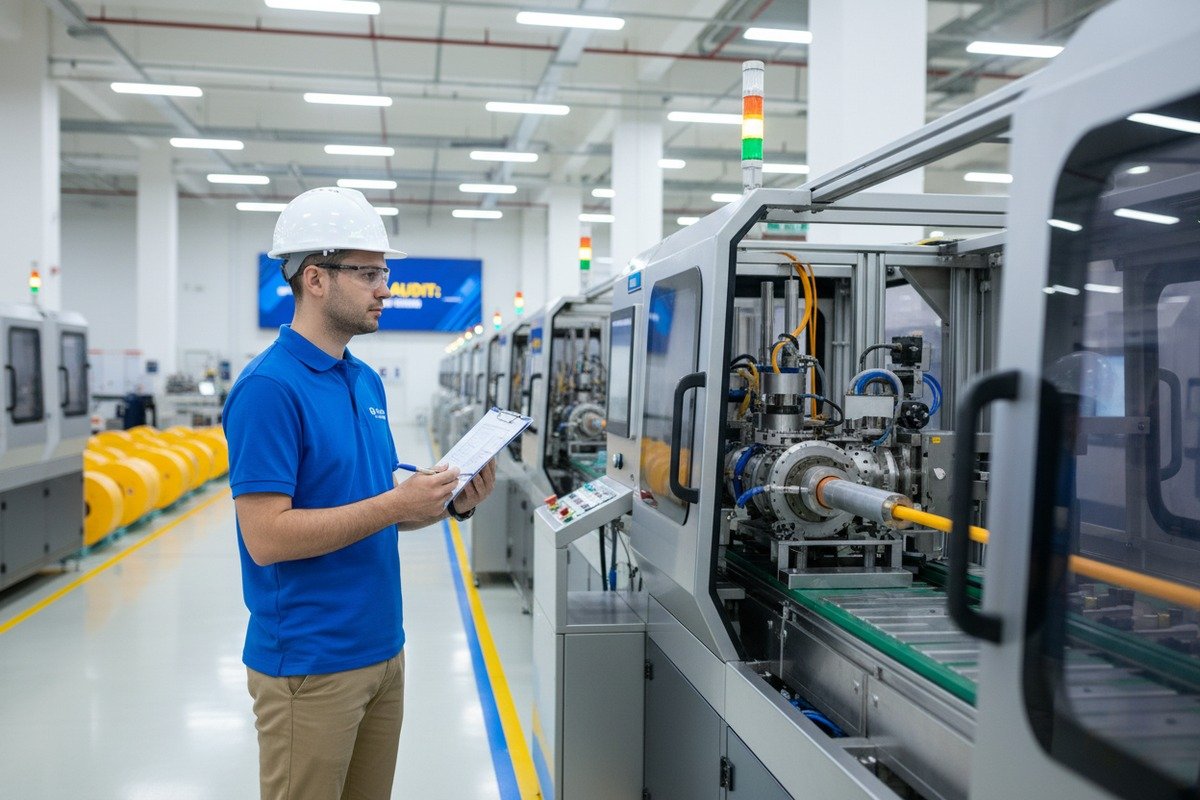
Confirm genuine aramid yarn by requesting material certificates from the yarn manufacturer (e.g., Kevlar by DuPont or Twaron by Teijin), scheduling a third-party factory audit during production, and testing sample cables for rated tensile strength. For jackets, demand UV-stabilized PE or AT-sheath material with verifiable supplier traceability and accelerated aging test reports.
The Aramid Yarn Problem
Aramid yarn (brand names include DuPont Kevlar and Teijin Twaron) provides the tensile strength that allows ADSS cable to span between poles without a messenger wire. It is what makes the cable "self-supporting." Genuine aramid yarn costs significantly more than substitutes. Some factories mix aramid with cheaper fiberglass reinforcing rods or use low-denier aramid to cut costs. The cable looks identical on the outside. The difference only shows up under load — or worse, during an ice storm.
How to Verify Materials
There are three layers of verification:
1. Material Certificates (Paper Trail)
Ask the supplier for purchase invoices and certificates of origin for their aramid yarn. DuPont and Teijin issue batch certificates. The supplier should be able to show you which batch of Kevlar or Twaron went into your specific production run.
2. Third-Party Factory Audit (Eyes on the Floor)
Hire an independent inspection firm — TÜV, SGS, Bureau Veritas, or Intertek — to visit the factory during your production run. The auditor should:
- Verify aramid yarn spools on the production line match the certificates
- Check jacket material pellets and extrusion settings
- Witness tensile strength testing on sample lengths
- Photograph the entire process for your records
3. Independent Lab Testing (Proof in the Data)
Send finished cable samples to an independent US lab for tensile testing. Compare the results against the supplier's claimed RTS. If the cable breaks below rated load, the aramid is suspect.
Jacket Quality: PE vs. AT Sheath
The outer jacket protects everything inside from UV, moisture, and abrasion. For US installations, you need UV-stabilized medium-density or high-density polyethylene (MDPE or HDPE). In areas near high-voltage lines, an anti-tracking (AT) sheath is essential to resist dry-band arcing.
| Jacket Type | Best For | Key Test | Typical Lifespan |
|---|---|---|---|
| MDPE (UV-stabilized) | Standard ADSS spans, moderate voltage | UV aging per ASTM G154 | 25-30 years |
| HDPE | High-abrasion environments | Abrasion resistance per IEC 60794 | 30+ years |
| AT Sheath | High-voltage crossings (>110 kV) | Tracking resistance per IEC 60587 | 25-30 years |
At our facility, we use carbon-black-compounded PE from verified resin suppliers. Every batch of jacket material comes with a material data sheet, and we run accelerated UV aging tests in-house. We also provide the resin supplier's name and batch number upon request — something many factories will not do because they source the cheapest material available.
The Real Cost of Cutting Corners
A US ISP once shared with us that they saved $0.15 per meter by choosing a cheaper Chinese supplier. Six months later, three spans failed during a moderate ice event. The replacement cost, including emergency crew mobilization and lost service revenue, exceeded $180,000. The original savings on the entire order was under $12,000. Genuine aramid and proper jacketing are not optional for US projects. They are the foundation of a cable that performs for 25+ years.
Automation and Consistency
Modern ADSS production requires precise tension control on aramid yarn application, consistent jacket extrusion thickness, and automated optical testing. Ask the supplier about their production line automation level. A factory with 230,000 square meters of floor space and automated SZ stranding, like ours, produces far more consistent results than a small workshop relying on manual processes. Request video of the production line or, better yet, visit in person.
Conclusion
Verifying a Chinese ADSS cable supplier takes effort, but every step — customs data checks, certification demands, reference calls, and factory audits — protects your US project from costly failures. Do the work upfront. Your infrastructure depends on it.
Footnotes
1. Explains the definition, process, and benefits of factory audits for supplier evaluation. ↩︎
2. Provides context on safety standards for utility systems, including environmental loading conditions. ↩︎
3. Official platform for global merchandise trade statistics, useful for macro-level data. ↩︎
4. Provides tariff classification and details for optical fiber cables under this specific HS code. ↩︎
5. Official website for the primary border control organization, regulating international trade. ↩︎
6. Official standard for all-dielectric self-supporting fiber optic cables on overhead power lines. ↩︎
7. Provides an overview of the US standard for safe installation and maintenance of utility systems. ↩︎
8. Explains ISO 9001 as the leading management system standard for consistent quality and customer satisfaction. ↩︎
9. Replaced HTTP 404 with a working UL Solutions page on optical fiber performance and reliability assessment. ↩︎
10. Explains the properties and uses of aramid fibers, a key material in ADSS cables. ↩︎