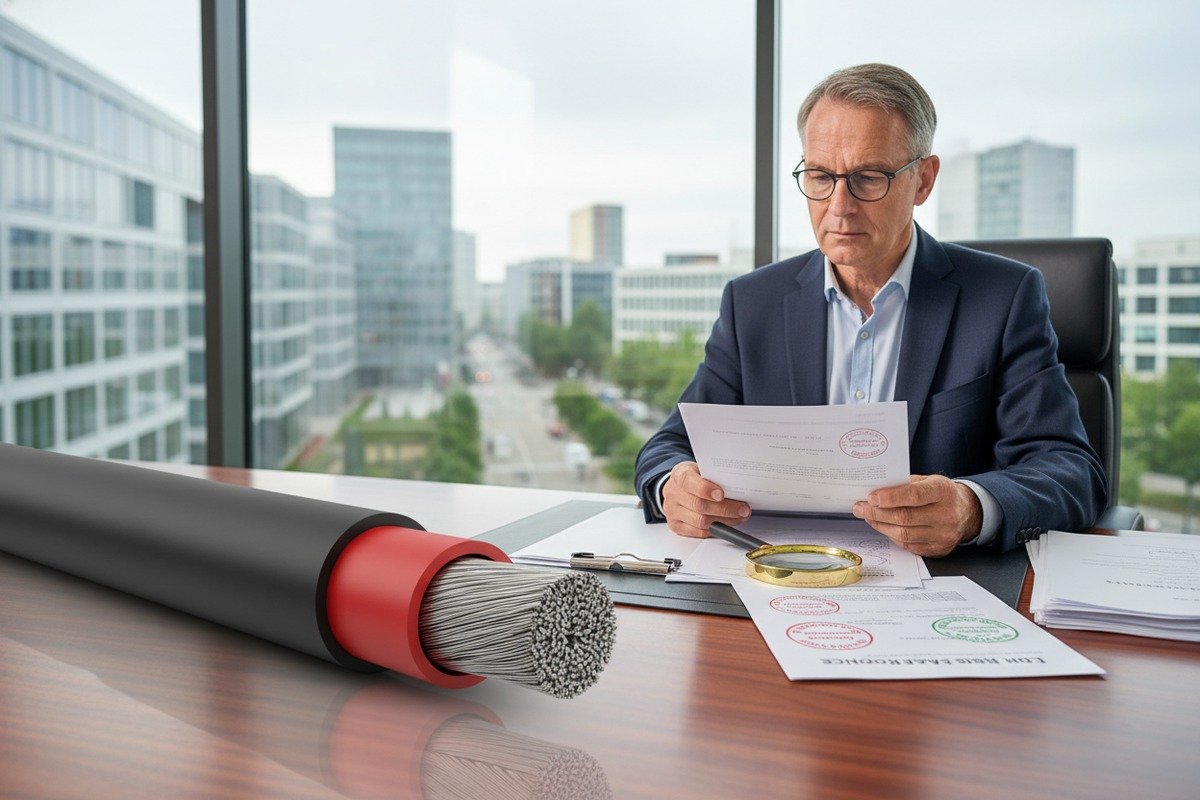
Every year, we see buyers lose entire shipments at EU customs because their solar PV cables fail hazardous substance testing. EU hazardous substance limits 1
Understanding EU hazardous substance limits for solar PV cables means mastering three core regulations—RoHS, REACH, and POPs—which restrict toxic materials like lead, cadmium, and mercury in cable insulation, sheathing, and conductor coatings to strict parts-per-million thresholds before any product can legally enter the European market.
This guide breaks down the exact substance limits, the standards you must follow, and the sourcing pitfalls that can derail your solar project. Let's walk through each critical question step by step.
How do I ensure my solar cables comply with the latest RoHS and REACH standards?
When our production team prepares cable batches destined for Germany or the Netherlands, the compliance checklist starts long before the copper even hits the extruder.
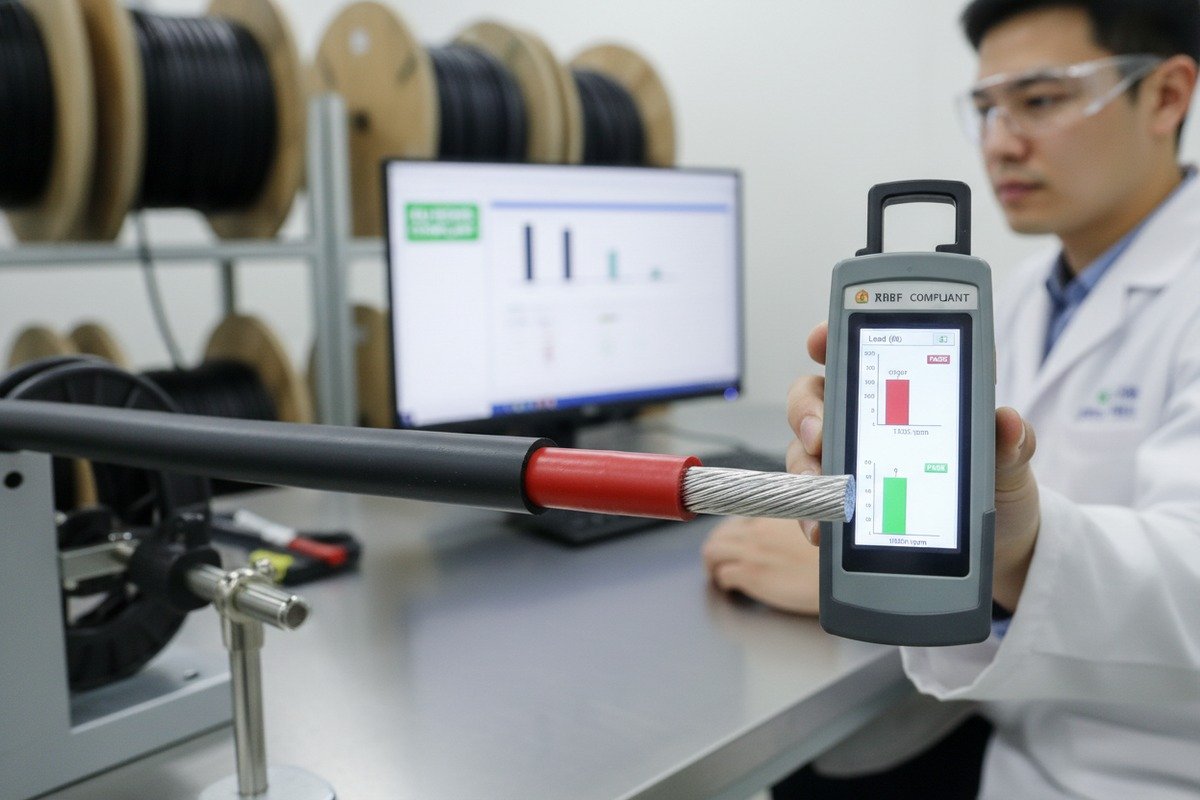
To ensure your solar cables comply with RoHS and REACH, you must verify that every homogeneous material layer—sheath, insulation, and conductor tin plating—tests below 1000 ppm for lead, mercury, and chromium VI, and below 100 ppm for cadmium, while cross-referencing the latest REACH SVHC Candidate List for newly restricted chemicals.
Know Which Regulations Apply to PV Cables Specifically
Here is an important distinction many buyers miss. Solar panels that are permanently installed enjoy a RoHS exemption. But PV cables do not. The European Commission treats cables as separate components of electrical and electronic equipment. This means your H1Z2Z2-K or EN 50618 solar cable must fully comply with RoHS Directive 2011/65/EU 2 (as amended by RoHS 3), regardless of whether the panel it connects to is exempt.
REACH adds another layer. Any cable imported into the EU is an "article" under REACH. If it contains a Substance of Very High Concern (SVHC) above 0.1% by weight, you must notify buyers and, in many cases, ECHA itself. The SVHC Candidate List is updated twice a year—January and July—so a cable formulation that passed last year might fail this year. REACH SVHC Candidate List 3
The RoHS 10-Substance Limit Table
Here is a quick-reference table our quality team uses during incoming material inspection:
| Substance | Abbreviation | Max Limit (ppm) | Typical Location in PV Cable |
|---|---|---|---|
| Lead | Pb | 1000 | Solder joints, tin plating, PVC stabilizers |
| Mercury | Hg | 1000 | Rarely present, but tested |
| Cadmium | Cd | 100 | Pigments, contact plating |
| Hexavalent Chromium | Cr(VI) | 1000 | Corrosion-resistant coatings |
| Polybrominated Biphenyls 4 | PBB | 1000 | Flame retardants in older insulation |
| Polybrominated Diphenyl Ethers | PBDE | 1000 | Flame retardants in older insulation |
| Bis(2-ethylhexyl) phthalate | DEHP | 1000 | PVC plasticizers |
| Butyl benzyl phthalate | BBP | 1000 | PVC plasticizers |
| Dibutyl phthalate | DBP | 1000 | PVC plasticizers |
| Diisobutyl phthalate | DIBP | 1000 | PVC plasticizers |
Note that the four phthalates (DEHP, BBP, DBP, DIBP) were added under RoHS 3 and apply to all EEE including cables since July 2019. Many legacy PVC-based cables still contain DEHP above 1000 ppm. This is a common trap for buyers sourcing older stock.
Practical Steps to Verify Compliance
First, ask your supplier for an ICP-OES or XRF test report dated within the last 12 months. The report must test each homogeneous material separately—not the whole cable as a single sample. A cable has at least three testable layers: the outer sheath, the inner insulation, and the conductor coating. Second, cross-check against the current REACH SVHC list. At our facility, we maintain a restricted substance database that is updated every six months. Third, confirm CE marking is backed by a Declaration of Conformity with a traceable technical file. Self-declaration without supporting lab data is a red flag.
Why should I insist on low-smoke zero-halogen materials for my European solar installations?
Our engineers shifted the entire EN 50618 cable line to cross-linked polyolefin (XLPO) insulation years ago, and the fire safety data made the decision obvious. low-smoke zero-halogen materials 5
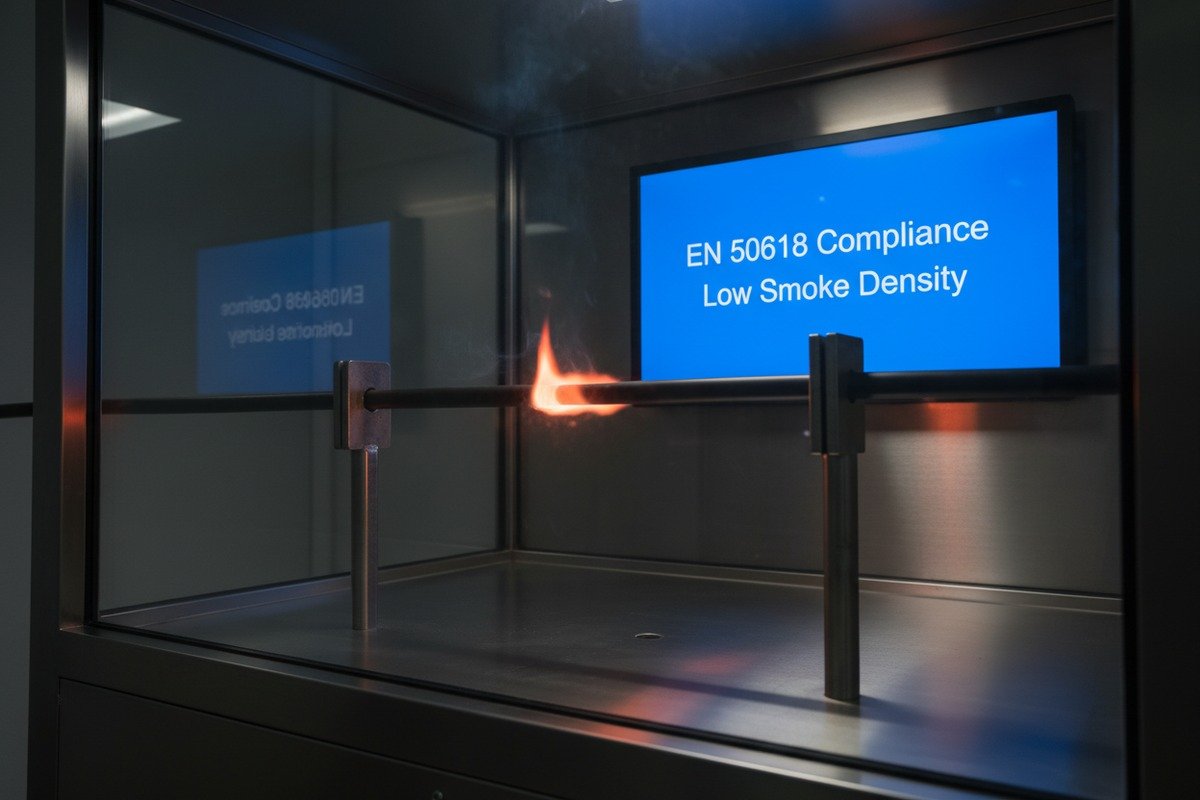
You should insist on low-smoke zero-halogen (LSZH) materials because EU fire safety standards EN 50618 and IEC 62930 require PV cables to emit less than 5 mg/g of acid gas and produce smoke density below 60% light transmittance reduction, protecting both people and equipment during a rooftop or ground-mount fire event.
What "Halogen-Free" Actually Means in Cable Terms
Halogens include chlorine, bromine, fluorine, and iodine. Traditional PVC cables contain chlorine. When PVC burns, it releases hydrochloric acid gas—corrosive, toxic, and deadly in enclosed spaces. LSZH compounds replace PVC with polyolefin-based materials that produce minimal smoke and no corrosive gas.
For PV cables, the relevant test standards are:
| Test Standard | What It Measures | Pass Criteria for EN 50618 |
|---|---|---|
| IEC 60754-1 6 | Acid gas emission (halogen content) | < 5 mg/g of HCl equivalent |
| IEC 60754-2 | pH and conductivity of gases | pH ≥ 4.3, conductivity ≤ 10 µS/mm |
| IEC 61034 | Smoke density in a 3m cube | Light transmittance ≥ 60% |
| IEC 60332-1-2 | Single cable flame propagation | Self-extinguish within 60 seconds |
The Real-World Fire Safety Argument
Between 2019 and 2023, multiple solar installations in Europe experienced arc faults that led to cable fires. In rooftop systems, firefighters face a critical decision: if cables emit dense toxic smoke, they cannot safely enter the building. LSZH cables buy time. They produce less smoke, giving occupants more time to evacuate and firefighters better visibility.
Some procurement managers push back on cost. LSZH cables typically cost 8–15% more than PVC equivalents. But consider the full picture. A single fire incident can result in millions of euros in liability, project insurance claims, and reputational damage. German building authorities increasingly require Cca or Dca fire classification under the Construction Products Regulation (CPR) 7 for cables installed in buildings. LSZH materials are the most straightforward path to meeting these ratings.
The CPR Connection
While CPR harmonized standards for general construction cables are well established, solar PV cables still operate in a gray area. However, many local German and Dutch building codes already mandate CPR-rated cables for rooftop installations. Our recommendation to buyers like Klaus is simple: specify LSZH and request CPR fire class documentation now, even if your local authority has not yet enforced it. Regulations only tighten. They never loosen.
The UV resistance factor also matters. XLPO insulation used in LSZH cables typically withstands 720+ hours of accelerated UV aging per IEC 62930, compared to some PVC formulations that degrade faster under prolonged solar exposure. This directly impacts the 25-year service life that European project developers demand.
How can I verify that my supplier's hazardous substance test reports are actually authentic?
In our three decades of cable manufacturing, we have encountered competitors whose test reports listed lab accreditation numbers that simply did not exist.
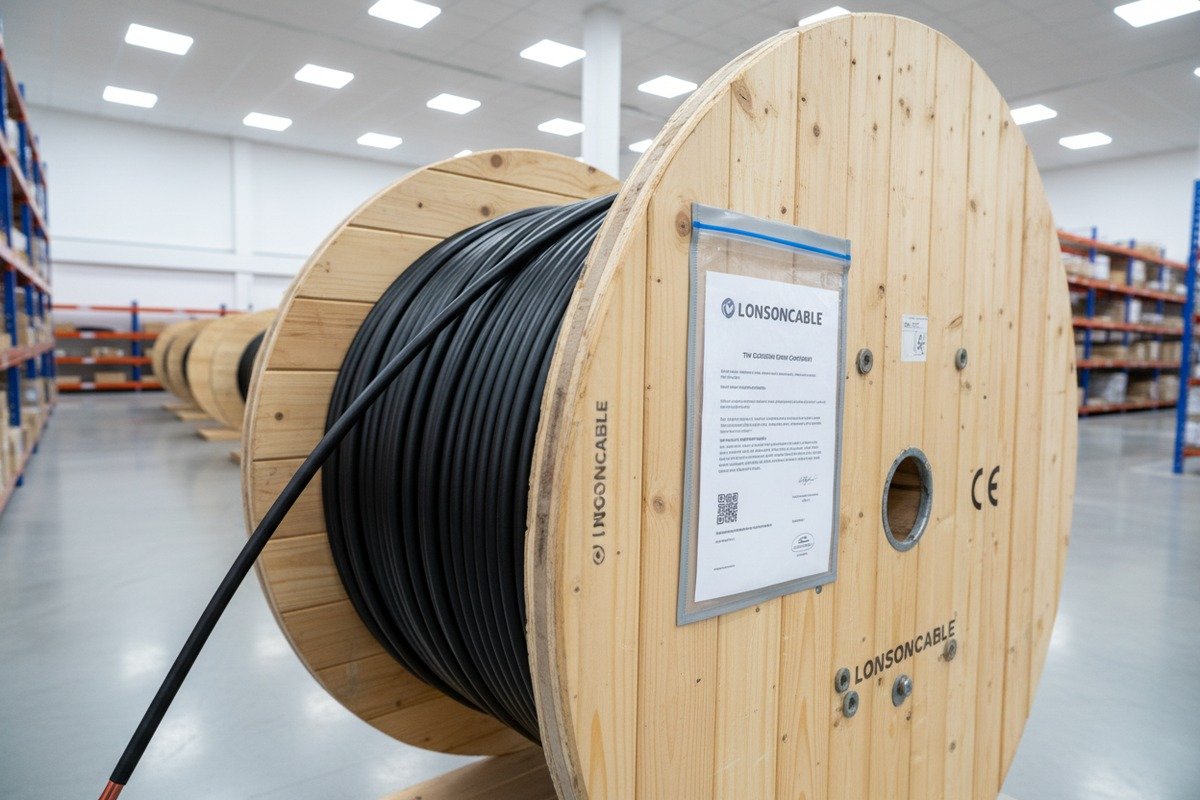
To verify authenticity, cross-check the test report's lab accreditation number against the issuing body's online database (e.g., TÜV's CERTIPEDIA or IECEE CB scheme), confirm the report references your specific cable model and production batch, and request split-sample retesting through an independent third-party laboratory like VDE, SGS, or Bureau Veritas.
Red Flags in Supplier Documentation
Fake or misleading test reports are more common than most buyers realize. Here are specific warning signs:
Generic model numbers. A legitimate test report should reference the exact cable model (e.g., H1Z2Z2-K 1×4mm²), the production date or batch number, and the manufacturing facility. If the report just says "solar cable" without specifics, question it.
Expired certifications. TÜV certificates for PV cables are typically valid for five years but require annual factory audits. Ask for the most recent audit confirmation. An original certificate from 2018 without subsequent audit records is essentially worthless.
Mismatched lab logos. Some suppliers paste logos from labs like TÜV SÜD or SGS onto in-house test documents. Always verify by going directly to the lab's public certificate database.
A Step-by-Step Verification Process
Here is the process our European customers follow:
-
Request the full report, not a summary. You need pages showing test methodology (ICP-OES for metals, GC-MS for phthalates), sample preparation, and individual results for each homogeneous material.
-
Check the lab's accreditation. The lab should be ISO 17025 accredited 8 for the specific tests performed. You can verify this on the national accreditation body's website (e.g., DAkkS for Germany, UKAS for the UK).
-
Contact the lab directly. Send the report number to the lab and ask them to confirm they issued it. Reputable labs respond within 48 hours.
-
Run a split-sample test. Take a sample from the delivered cable and send it to your own chosen lab. Compare results against the supplier's report. Discrepancies above 20% warrant serious concern.
-
Visit CERTIPEDIA. For TÜV-certified cables, enter the certificate number at certipedia.com. It will show the certificate holder, product scope, and validity status.
What Authentic Reports Should Include
| Report Element | What to Look For | Red Flag |
|---|---|---|
| Lab name and accreditation number | ISO 17025 accredited, verifiable online | No accreditation number or unverifiable number |
| Product identification | Exact model, batch, date of manufacture | Generic descriptions like "PV wire" |
| Test methodology | ICP-OES, XRF, GC-MS referenced | No method specified |
| Individual material results | Separate results for sheath, insulation, plating | Single combined result for whole cable |
| Signature and date | Authorized signatory with contact info | Unsigned or dated more than 12 months ago |
| Certificate validity | Clear start and end dates | No expiry date or expired certificate |
At our facility, every production batch generates a unique test file. When a European distributor or EPC company asks for documentation, we provide the specific batch report along with our TÜV certificate number for independent verification. This level of traceability is what separates reliable suppliers from risky ones.
The cost of not verifying? Fines up to €100,000 per non-compliant batch in Germany. Entire containers held at customs for weeks. And worst of all—project delays that trigger liquidated damages clauses worth far more than the cables themselves.
What are the long-term risks to my project if I overlook chemical limit compliance during procurement?
We once helped a client in Spain replace 12 kilometers of non-compliant cable mid-project—the rework cost more than triple the original cable purchase.
Overlooking chemical limit compliance risks project-halting customs seizures, rejected grid inspections, void insurance coverage, environmental remediation liabilities at end-of-life, and potential criminal prosecution under EU enforcement directives—any one of which can turn a profitable solar farm into a financial disaster.
Immediate Financial Consequences
The most visible risk is customs enforcement. EU member states conduct market surveillance through random testing of imported electrical products. If your PV cable shipment is sampled and found to exceed RoHS limits—say, cadmium at 150 ppm against a 100 ppm limit—the entire consignment can be detained. You then face three options: return the goods at your expense, destroy them, or prove compliance through retesting (which rarely reverses an initial failure).
For EPC contractors working on grid-connection deadlines, a detained cable shipment can delay energization by weeks. Many power purchase agreements include penalties of €500–€2,000 per day for late grid connection. A 30-day delay on a 10 MW project can easily cost €60,000 in penalties alone.
Insurance and Liability Exposure
Most project insurance policies contain compliance warranty clauses. If a fire occurs and the investigation reveals that cables contained restricted substances or did not meet EN 50618 specifications, the insurer may deny the claim. In Germany, the building owner, the EPC contractor, and the cable supplier can all face joint liability under product safety law.
Beyond fire, environmental liability is growing. The EU's circular economy regulations are pushing for full recyclability of solar components. Cables containing DEHP or other restricted phthalates above limits cannot be recycled through standard processes. At end-of-life (typically 25–30 years), the project owner may face hazardous waste disposal costs instead of simple recycling fees.
The Reputational Cascade
In the European solar industry, word travels fast. A single compliance failure can disqualify you from future tenders. Large utilities maintain approved vendor lists, and removal from those lists can take years to reverse. For distributors, a product recall erodes trust with their entire installer network.
Future Regulatory Tightening
The EU Digital Product Passport initiative 9, expected to apply to solar components by 2026–2027, will require machine-readable data on material composition, including hazardous substance content. Cables procured today without proper documentation will be impossible to register in this system, potentially rendering them unmarketable as spare parts or replacement stock.
REACH updates continue to add new SVHCs. Lead in copper alloys, certain flame retardants, and PFAS compounds are all under review. Buying cables that barely pass today's limits leaves no safety margin for tomorrow's restrictions.
The bottom line is this: compliance is not a cost center. It is risk insurance. The price difference between a fully compliant LSZH solar cable and a questionable alternative is typically 10–20%. The cost of failure is 10–100 times that amount.
Conclusion
EU hazardous substance compliance is not optional—it protects your project, your investment, and your reputation across a 25-year asset life.
Footnotes
1. Authoritative source (.europa.eu) providing an overview of EU hazardous substance regulations. ↩︎
2. Official European Commission page detailing the RoHS Directive 2011/65/EU. ↩︎
3. Links to the official list of Substances of Very High Concern under REACH. ↩︎
4. Wikipedia provides a comprehensive and accessible explanation of Polybrominated Biphenyls. ↩︎
5. Wikipedia provides a clear and concise definition of low-smoke zero-halogen materials. ↩︎
6. Specifies an international standard for testing acid gas emission from cables during combustion. ↩︎
7. Details the EU regulation for safety requirements of construction products, including cables. ↩︎
8. Explains the international standard for the competence of testing and calibration laboratories. ↩︎
9. Highlights an upcoming EU regulation impacting product traceability and compliance. ↩︎