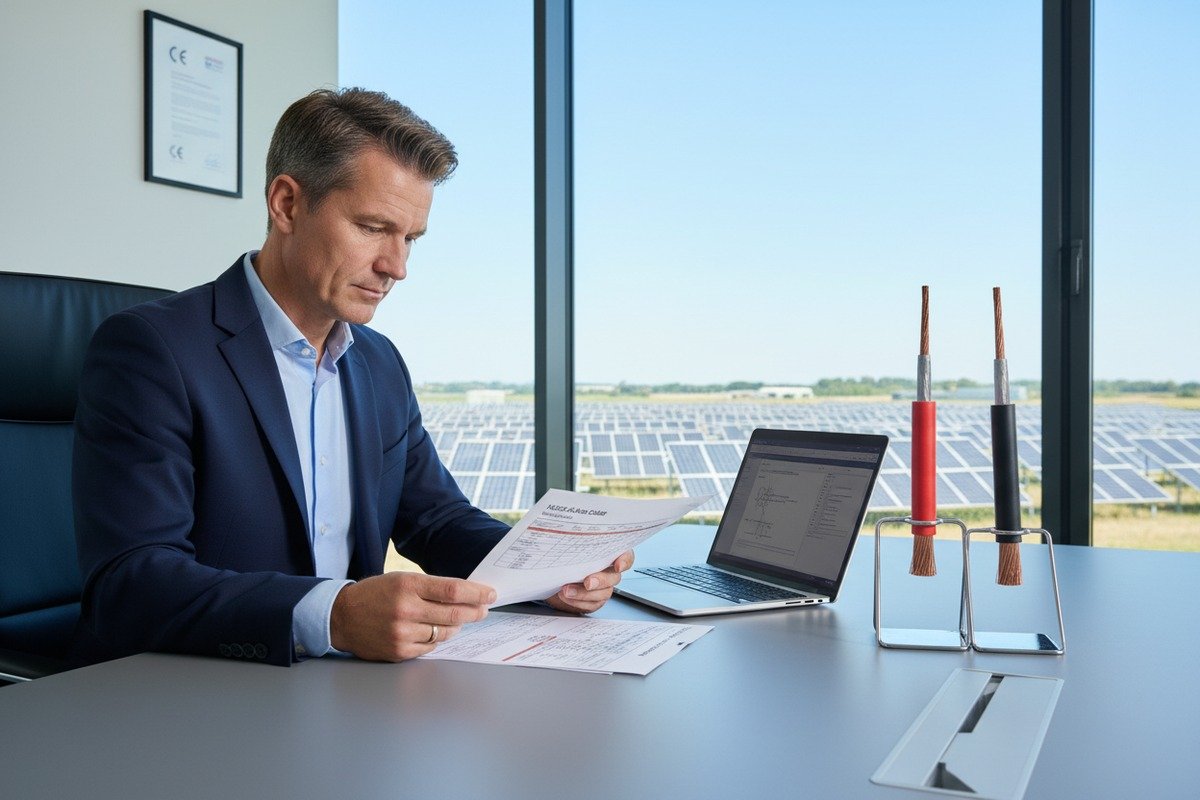
Every year, our shipping team handles cable orders destined for three or four different European countries — and the compliance paperwork is never the same twice.
Selecting solar PV cables for Germany, France, and the Netherlands requires understanding each country's unique overlay of national regulations on top of the harmonized EN 50618 standard, including differences in CPR fire safety classifications, plug-in PV power limits, oversizing ratios, and installation codes like VDE 0100, NF C 15-100, and NEN 1010.
This guide breaks down the real regulatory differences that affect your cable purchasing decisions. We will walk through cable standards, fire safety classes, lifespan engineering, and how to verify a supplier's certifications before your next European project shipment.
How do I choose between H1Z2Z2-K and other EN 50618 cables to meet specific German and French regulatory requirements?
When our engineering team configures cable specs for a German EPC client versus a French installer, the conversation starts the same but ends very differently.
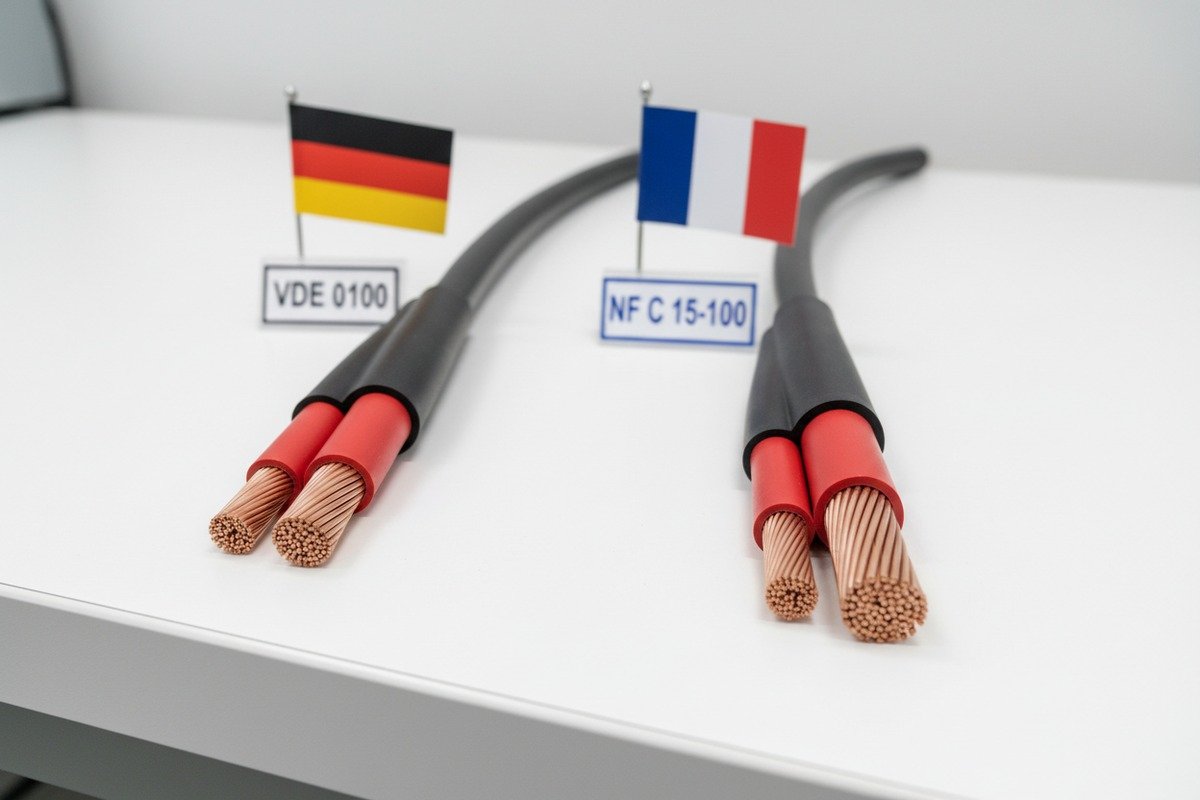
To meet German requirements, prioritize H1Z2Z2-K cables with full VDE 0100 compliance, CPR fire ratings, and 1.5kV DC minimum ratings. For France, ensure EN 50618 alignment with NF C 15-100 installation rules and account for up to 400% DC oversizing, which demands heavier cable gauges and robust thermal performance.
Understanding EN 50618 as the Baseline
EN 50618 replaced older national standards across Europe. In Germany, the well-known TÜV 2 PfG 1169/08.2007 standard (which defined the PV1-F cable type) was officially phased out by 2017. Today, EN 50618 is the harmonized reference for solar PV cables throughout the EU. It specifies cross-linked polyethylene (XLPE) 1 or halogen-free elastomer insulation, tinned copper Class 5 flexible stranded conductors, and voltage ratings up to 1.8kV DC. EN 50618 standard 2
However, EN 50618 is only the floor — not the ceiling. Each country adds its own layers.
Germany's Extra VDE Layer
Germany layers VDE 0100 3 (general low-voltage installation rules) and specific VDE application rules on top of EN 50618. For plug-in PV (balcony solar), the recent VDE-AR-N 4105:2026-03 and DIN VDE V 0126-95:2025-12 updates allow systems up to 2kWp DC with an 800VA AC output limit and a maximum 150% oversizing ratio. This means a cable rated for a 2kW DC string must handle that load safely, but oversizing beyond 150% is not permitted. The cable selection is straightforward — but the compliance documentation is strict. TÜV marks and CPR fire classification must appear on every drum.
France's Higher Oversizing Challenge
France permits up to 3kW DC input feeding just 600W AC output in plug-in solar systems. That is a 400% oversizing ratio. This creates a very different cable sizing problem. The DC-side cable must handle significantly higher current under peak irradiance conditions, which means you often need a larger cross-section — typically 6mm² instead of 4mm². French installers also follow NF C 15-100 4 for wiring rules, and NF-label compliance carries weight in project approvals.
Quick Comparison Table
| Parameter | Germany | France |
|---|---|---|
| Primary Cable Standard | EN 50618 (H1Z2Z2-K) | EN 50618 |
| Legacy Standard | TÜV 2 PfG 1169 (PV1-F) — phased out | N/A |
| Plug-In PV DC Limit | 2kW | 3kW |
| Plug-In PV AC Limit | 800VA | 600W |
| Max Oversizing Ratio | 150% | 400% |
| National Installation Code | VDE 0100 | NF C 15-100 |
| Typical DC Cable Size | 4mm² | 6mm² (due to oversizing) |
What This Means for Your Order
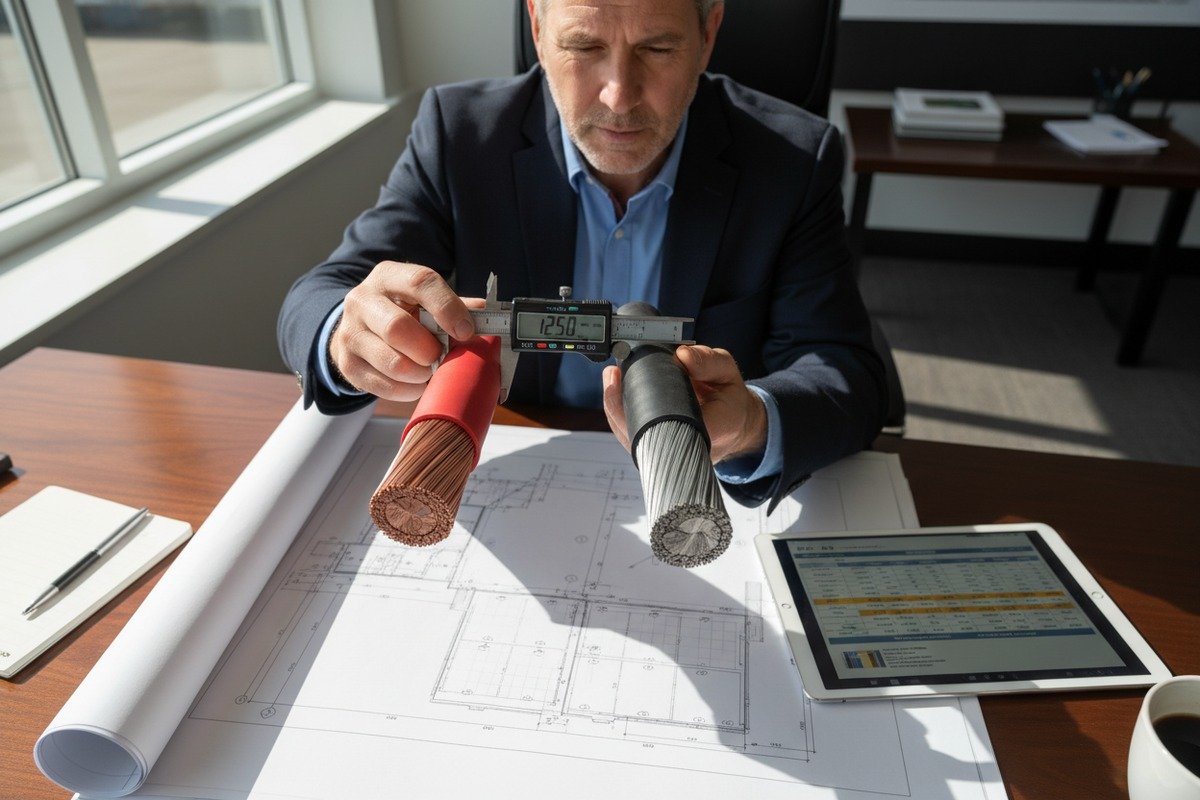
If you are sourcing for both countries, do not assume one cable specification fits all. Our production line regularly runs separate batches for German and French projects. The conductor size, testing documentation, and even the labeling differ. A 4mm² H1Z2Z2-K cable may pass every German audit but fall short on thermal capacity for a French 400%-oversized rooftop system. Always confirm the DC-side current load before locking in your cable cross-section.
How can I determine which CPR fire safety class is necessary for my solar installations in the Netherlands versus Germany?
Fire safety classification is one of the most common reasons we see shipments held at European customs — and the root cause is almost always a mismatch between the CPR class on the cable and the class required by the local building authority.
The Construction Products Regulation (CPR) requires solar cables to carry a fire safety classification. Germany typically requires Eca or Dca for standard outdoor installations, while the Netherlands often demands Dca or higher — especially for rooftop and building-integrated systems governed by NEN 1010. Always verify with the local building authority before ordering.

What Is CPR and Why Does It Matter?
The EU Construction Products Regulation (CPR) 6 classifies cables by their reaction to fire. The classes range from Fca (no performance determined) up to Aca (virtually non-combustible). For solar PV cables, the relevant range is usually Eca, Dca, and Cca. Each class is tested for flame spread, heat release, smoke production, and flaming droplets.
Germany's Approach
Germany applies CPR classifications but tends to be pragmatic for outdoor-only cable runs. Standard rooftop PV arrays with cables routed externally often require Eca as a minimum. However, when cables enter a building — through a wall penetration, inside a cable tray in a basement, or through a riser shaft — the requirement can jump to Dca or even Cca depending on the building type and local Bauordnung (building code).
The Netherlands' Stricter Stance
The Netherlands, guided by NEN 1010 7 and the Dutch Building Decree (Bouwbesluit), often takes a stricter position. Rooftop PV installations on commercial and multi-residential buildings frequently require Dca-s2,d2,a2 as a baseline. The "s2, d2, a2" suffixes relate to smoke production, flaming droplets, and acidity — additional parameters that Dutch inspectors check carefully.
CPR Classification Comparison
| CPR Class | Flame Spread | Typical Use (Germany) | Typical Use (Netherlands) |
|---|---|---|---|
| Eca | Basic reaction to fire | Outdoor rooftop PV runs | Rarely accepted alone |
| Dca-s2,d2,a2 | Controlled flame spread, limited smoke | Building entry points, indoor routing | Standard for rooftop and commercial PV |
| Cca-s1,d1,a1 | Very low flame spread, minimal smoke | High-rise buildings, tunnels | Required for sensitive buildings |
| B2ca / Aca | Near non-combustible | Rare, special cases | Rare, special cases |
Practical Advice for Procurement
When we prepare orders for Dutch distributors, we default to Dca-s2,d2,a2 unless told otherwise. It covers the vast majority of installation scenarios in the Netherlands. For German orders, we always ask: "Does the cable stay outside, or does it enter the building?" That single question determines whether Eca or Dca is needed. Getting this wrong can mean an entire container of cables sitting in a Rotterdam warehouse, unusable, while your project timeline bleeds money.
Also note that CPR classification must be printed on the cable sheath and included in the Declaration of Performance (DoP). Our quality control team verifies this on every production run. If your current supplier cannot provide a valid DoP with a consistent CPR class, that is a red flag.
What technical criteria should I use to select solar cables that guarantee a 25-year lifespan under varying European environmental standards?
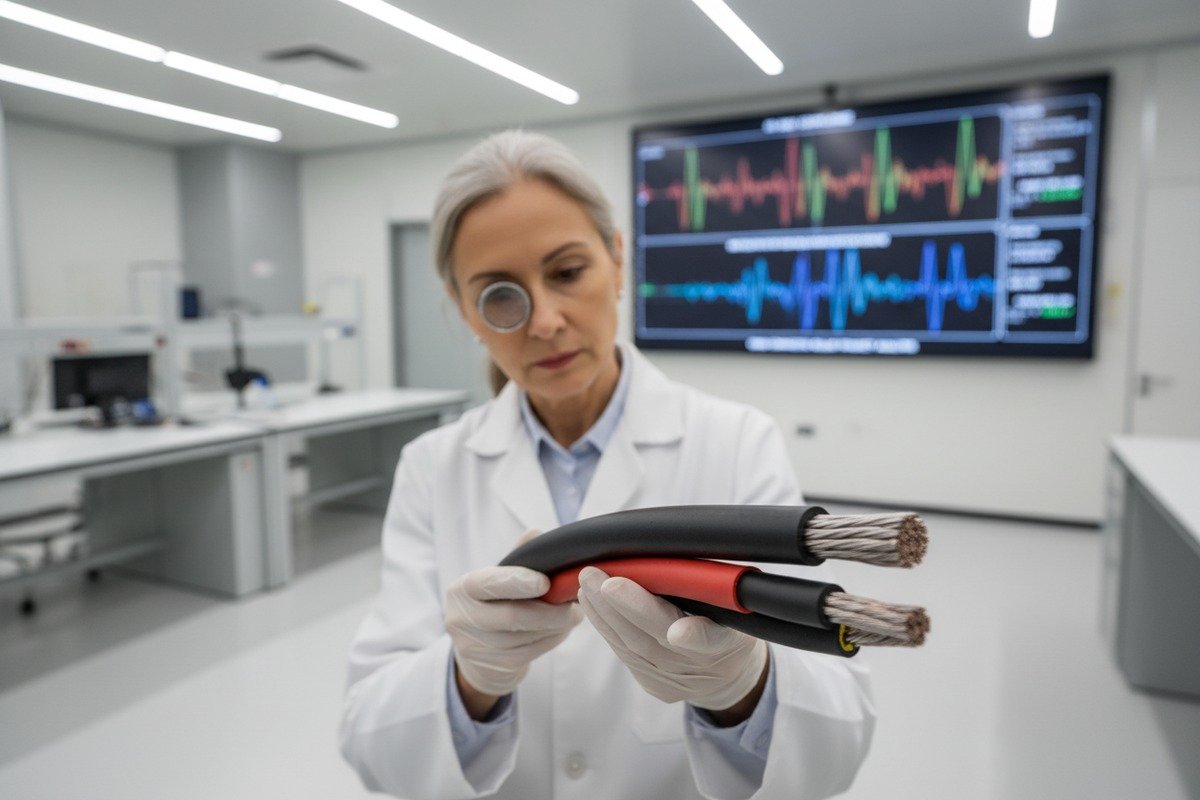
Over three decades of manufacturing cables, our R&D lab has learned that a 25-year lifespan is not a marketing number — it is an engineering outcome driven by very specific material and design choices.
To guarantee a 25-year cable lifespan, select EN 50618-compliant cables with XLPE or halogen-free LSZH insulation, tinned copper Class 5 conductors, proven UV resistance exceeding 720 hours of accelerated weathering, ozone resistance, a temperature range of -40°C to +90°C continuous, and verified compliance through independent third-party aging tests.
The Five Pillars of Cable Longevity
A 25-year cable lifespan depends on five measurable criteria. Let's break them down one by one.
1. Insulation Material: XLPE vs. LSZH Elastomer
Cross-linked polyethylene (XLPE) is the dominant insulation for solar PV cables. It resists heat aging, moisture ingress, and chemical attack. Halogen-free elastomer (LSZH) adds fire safety benefits — low smoke, zero halogen — which matters for building-integrated PV. Both materials meet EN 50618. The choice depends on your installation context. Outdoor ground-mount arrays can use standard XLPE. Rooftop and indoor-routed cables should use LSZH for CPR compliance.
2. Conductor Material and Design
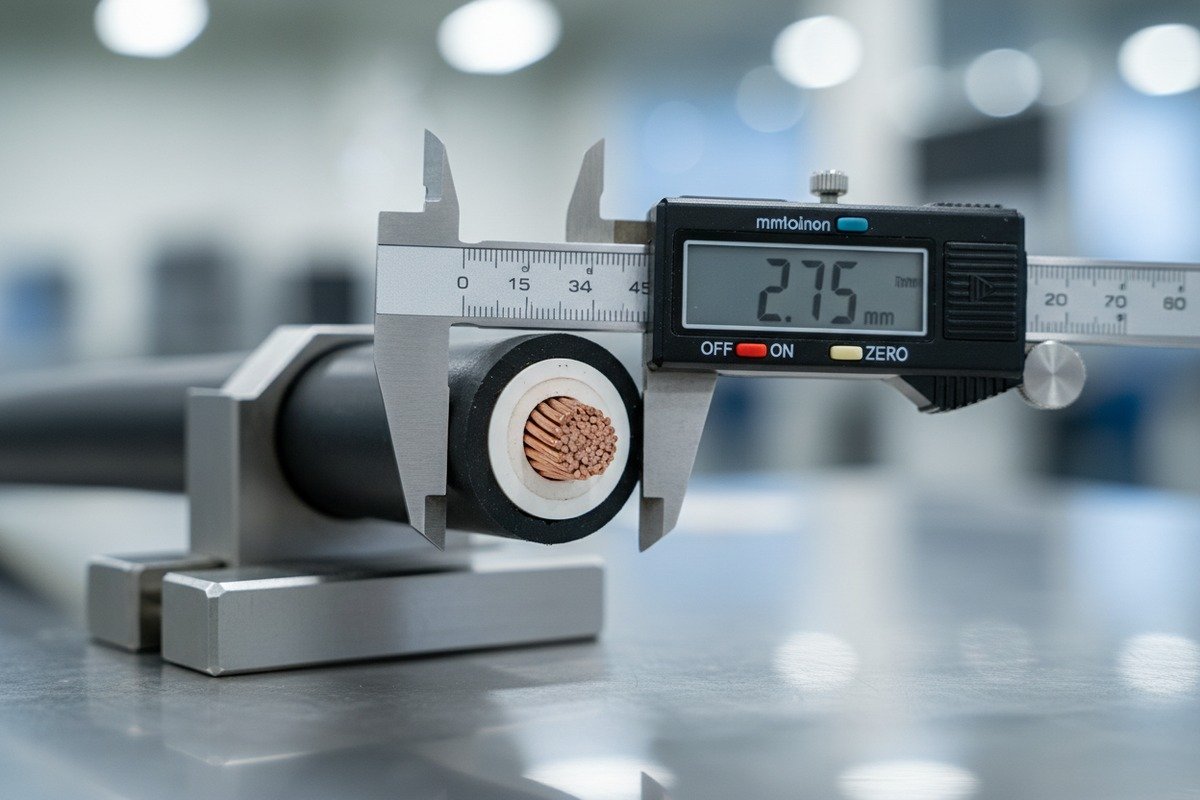
Tinned copper, Class 5 flexible stranded. This is non-negotiable for longevity. tinned copper Class 5 conductors 8 Tinning prevents oxidation at the copper surface, which would otherwise increase resistance over time and generate heat. Class 5 flexibility ensures the cable can handle bending during installation without micro-cracking the conductor strands.
3. UV and Ozone Resistance
European outdoor environments subject cables to intense UV exposure, especially at higher latitudes with long summer days and reflective snow in winter. EN 50618 requires UV resistance testing, but our internal standard exceeds 720 hours of accelerated UV weathering (per ISO 4892-2). Ozone resistance is equally critical — ozone attacks rubber and polymer surfaces, causing surface cracking that eventually exposes the conductor.
4. Temperature Performance
Cables must perform across a wide temperature range. The table below outlines the critical thresholds.
| Parameter | EN 50618 Requirement | Recommended for Northern Europe | Recommended for Southern Europe |
|---|---|---|---|
| Continuous Operating Temp | +90°C max | +90°C | +90°C |
| Minimum Ambient Temp | -40°C | -40°C | -25°C |
| Short-Circuit Temp (5s) | +200°C | +200°C | +200°C |
| UV Test Duration | Per EN standard | 720+ hours | 1000+ hours |
5. Mechanical and Water Resistance
Abrasion resistance protects cables routed through cable trays, clamps, and edge-of-module contact points. Water resistance (AD7 or AD8 per IEC classification) is essential for floating PV, coastal installations, and regions with heavy rainfall. Our cables undergo immersion testing at elevated temperatures to simulate decades of moisture exposure in just weeks.
Why Aging Tests Matter More Than Spec Sheets
Any manufacturer can print "25-year lifespan" on a datasheet. The real proof is in third-party accelerated aging tests. These simulate thermal cycling, UV bombardment, humidity exposure, and mechanical stress over compressed timeframes. When we submit cables for TÜV certification, these tests are mandatory. If a supplier cannot show you an independent aging test report — not just a factory self-test — proceed with extreme caution.
Rising extreme weather events across Europe also push the boundaries. Hailstorms in the Netherlands, heat waves in southern France, and sub-zero snaps in Germany all stress cables beyond normal parameters. Future-proofing means selecting cables that exceed, not merely meet, the EN 50618 minimums.
How do I evaluate a Chinese manufacturer's certifications to ensure they meet the strict compliance audits of French and German grid operators?
When our sales team first started working with large German EPCs, the certification questions went far deeper than we expected. Grid operators like TenneT, Amprion, or Enedis in France do not simply accept a certificate at face value — they verify.
Evaluate a Chinese manufacturer by confirming active TÜV EN 50618 certification through the certifying body's online database, requesting original CPR Declarations of Performance with a valid notified body number, verifying batch-level test reports match shipped product, and checking whether the manufacturer has passed on-site factory audits by recognized European testing agencies.
Step 1: Verify the TÜV Certificate Is Real and Current
TÜV Rheinland 9 and TÜV SÜD both maintain online certificate databases. Every legitimate certificate has a unique ID number. Enter that number on the TÜV website. If it does not appear, the certificate is either fake or expired. We have encountered competitors whose certificates were revoked two years ago but still appeared on their marketing materials. This is more common than you might think.
Step 2: Check the CPR Declaration of Performance (DoP)
Under EU law, any cable sold within the EU for use in construction must carry a valid DoP. This document lists the manufacturer, the notified body that supervised testing, the fire classification (e.g., Dca-s2,d2,a2), and the harmonized standard reference. The notified body must have a four-digit identification number registered with the European Commission's NANDO database 10. Cross-check it.
Step 3: Demand Batch-Level Test Reports
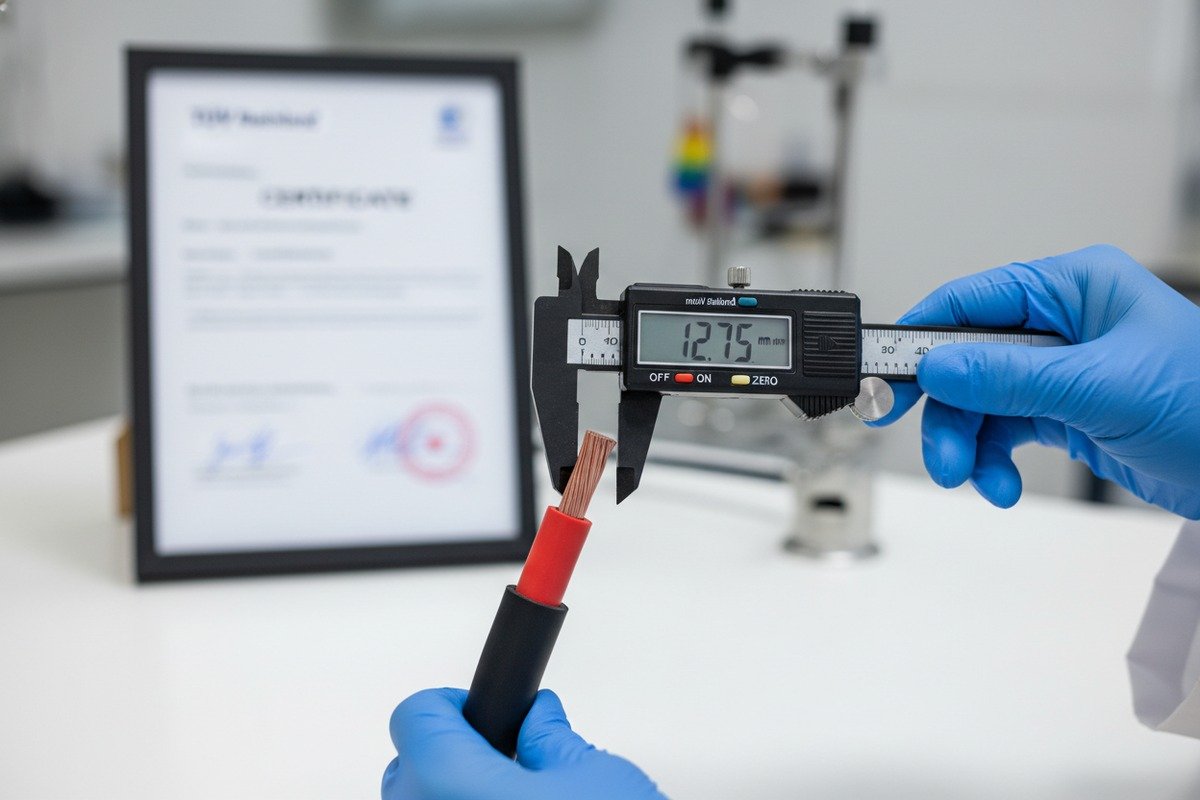
A product-type certificate proves the design passed testing. It does not prove that the batch sitting in your warehouse was manufactured to the same quality. Serious European buyers request batch-level test reports — including conductor resistance measurements, insulation thickness checks, and voltage withstand test results — for every shipment. Our quality assurance team generates these automatically as part of our ISO 9001 process, and they are included with every delivery.
Step 4: Ask About Factory Audit History
Has the factory been audited by TÜV, Bureau Veritas, or SGS in the last 12 months? A factory audit confirms that the production line, raw material sourcing, and quality management system are consistent with what was certified. At our facility, we maintain an open-door policy for third-party auditors. We host multiple audit visits per year, and our 230,000m² factory is structured specifically to support transparent inspection workflows.
Red Flags to Watch For
| Red Flag | What It Suggests | Your Action |
|---|---|---|
| Certificate number not found in TÜV online database | Fake or expired certificate | Reject the supplier |
| No DoP provided or DoP missing notified body number | Non-compliant with CPR | Do not import to EU |
| Supplier refuses to provide batch test reports | Inconsistent manufacturing quality | Request before payment |
| No record of third-party factory audits | Unverified production claims | Request audit report or schedule one |
| Pricing significantly below market average | Potential use of inferior materials | Request material datasheets and cross-check |
The Cost of Getting This Wrong
A failed grid inspection in Germany or France does not just mean replacing cables. It means project delays, financial penalties for missing grid-connection deadlines, and reputational damage that follows your company for years. One of our long-standing German partners told us that a single bad cable shipment from a previous supplier cost them over €200,000 in project penalties and rework. That experience is what led them to our factory — and to a supplier relationship built on verified, auditable compliance.
Our approach is simple: we provide every document before you ask for it. TÜV certificates with verifiable IDs, CPR DoP documents with valid notified body references, batch test reports, and open factory audit schedules. If a manufacturer hesitates to provide any of these, that hesitation is your answer.
Conclusion
Choosing solar PV cables for Germany, France, and the Netherlands demands attention to national regulation layers, CPR fire classes, longevity engineering, and rigorous supplier verification — not just a single EU standard.
Footnotes
1. Explanation of properties and advantages of XLPE insulation in cables. ↩︎
2. Official information on the European standard for photovoltaic cables. ↩︎
3. Official German standard for low-voltage electrical installations. ↩︎
4. French national standard for low-voltage electrical installations. ↩︎
5. Technical specifications and application details for H1Z2Z2-K solar cables. ↩︎
6. Official EU regulation for harmonized rules on construction products. ↩︎
7. Dutch national standard for low-voltage electrical installations. ↩︎
8. Benefits and applications of tinned copper conductors for longevity and corrosion resistance. ↩︎
9. Official website of a leading international testing and certification body. ↩︎
10. Official EU database for notified bodies under various product legislations. ↩︎