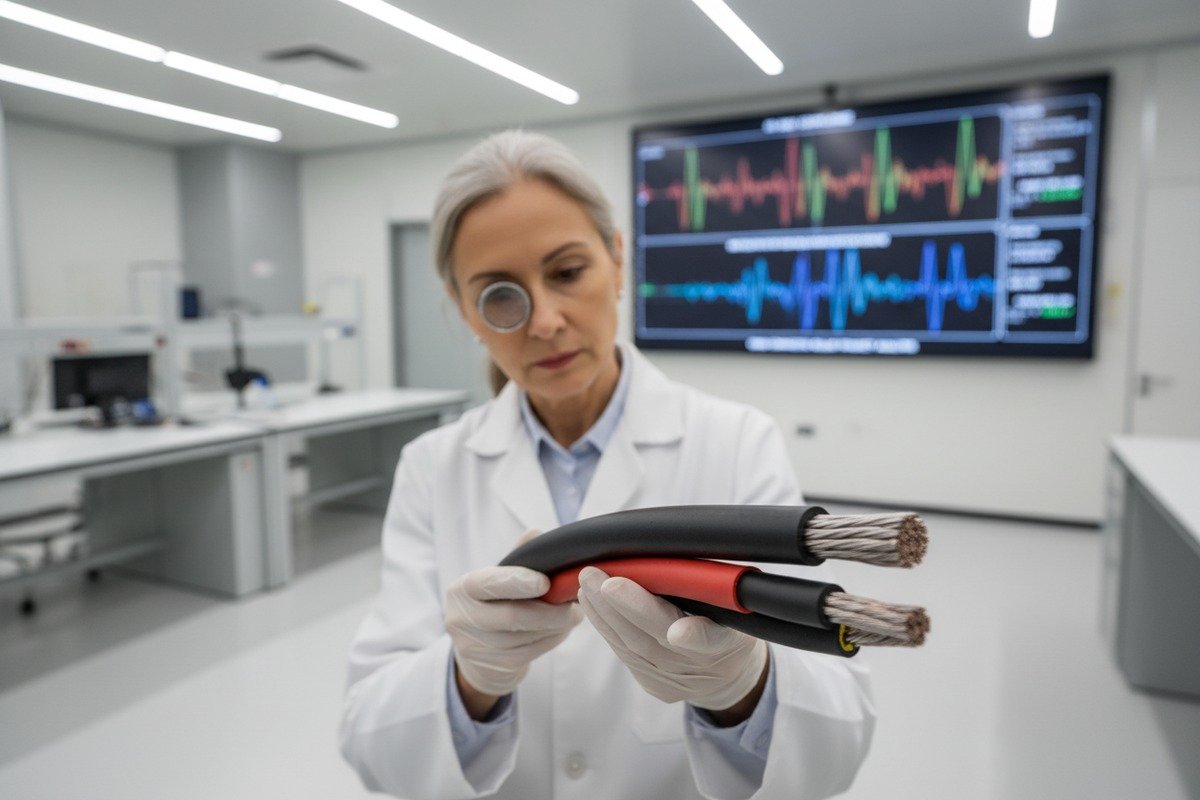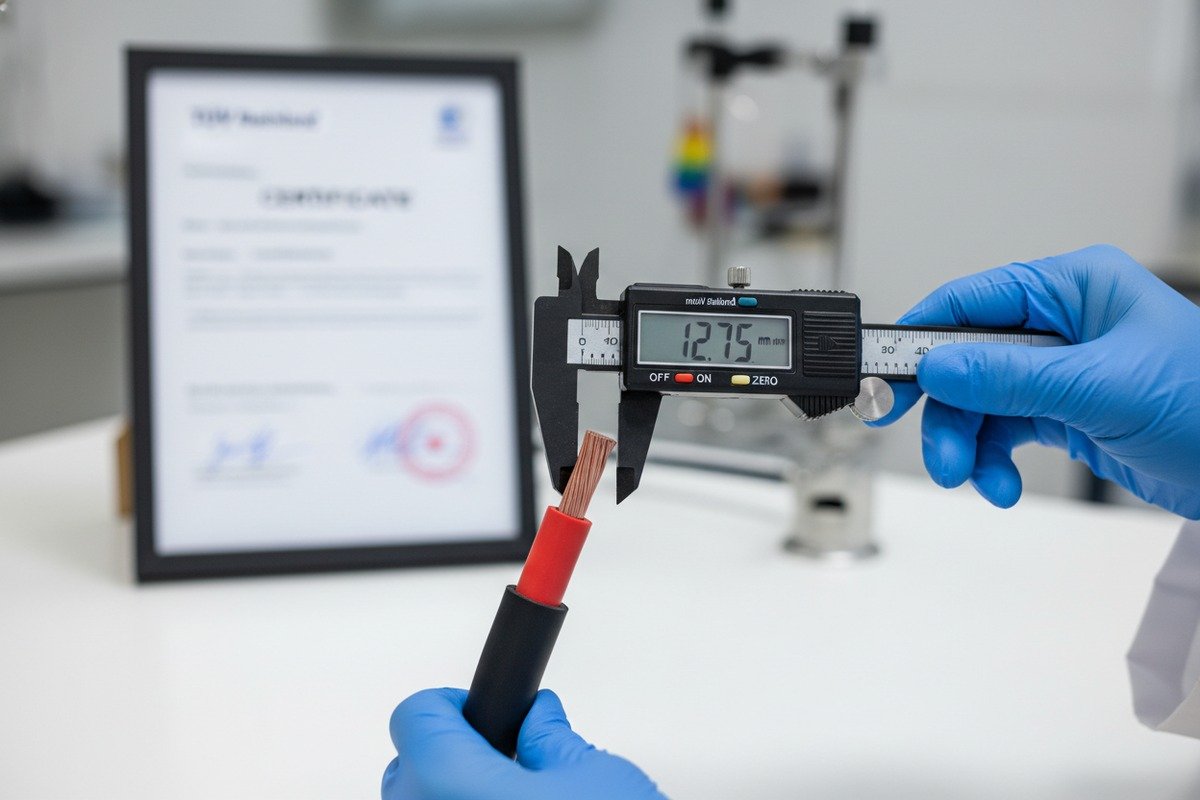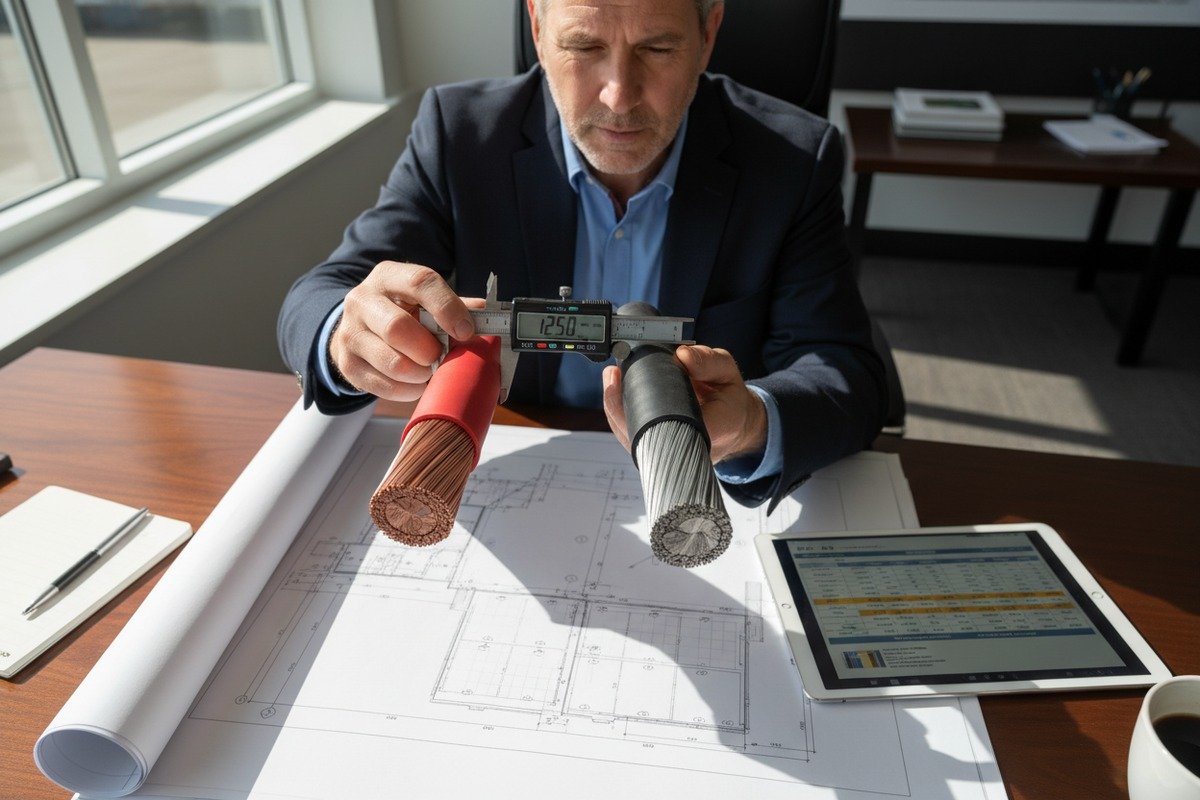
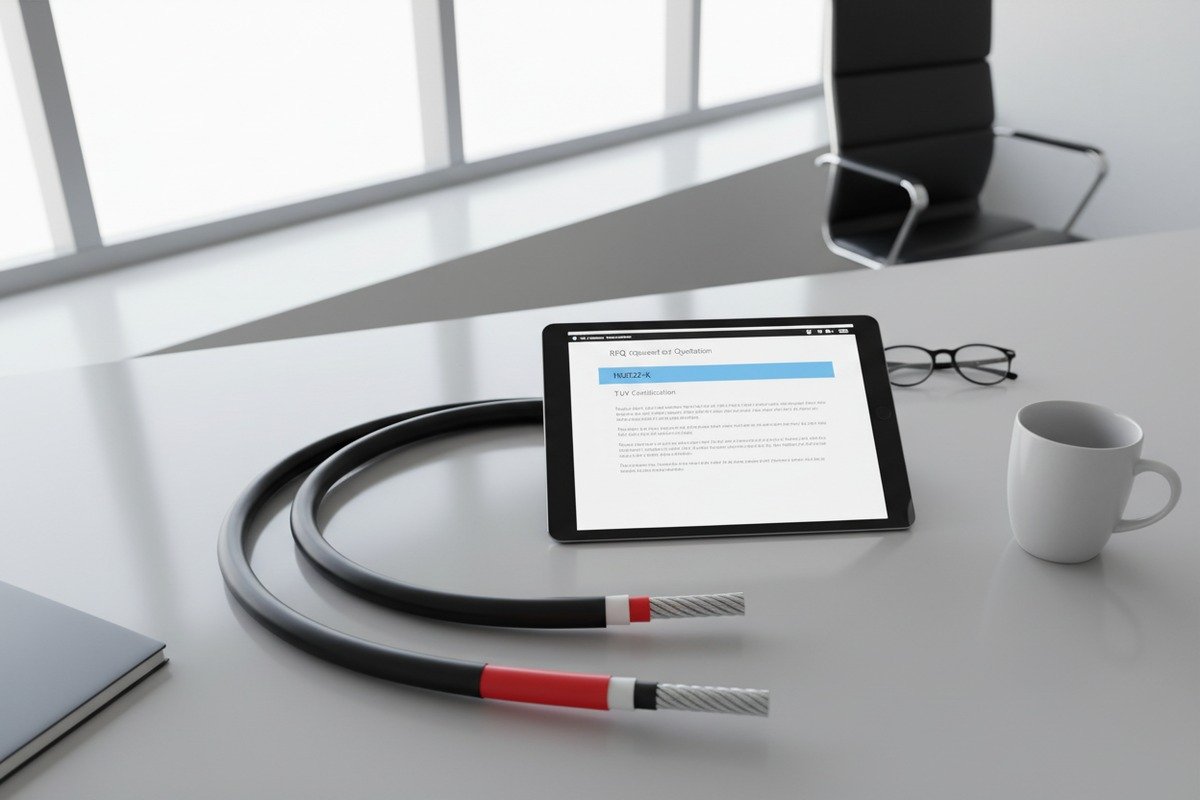
Every year, our quality team fields dozens of urgent calls from European EPC buyers who received cables that failed TUV verification 1 at the project site. The delays cost them thousands in penalties. The root cause is almost always the same: a vague or incomplete request for quotation that left room for suppliers to cut corners.
To request EN 50618 compliant solar PV cables, specify the H1Z2Z2-K designation, require valid TUV certification with certificate number, define conductor class, voltage rating, XLPO insulation type, CPR fire class, UV resistance data, and expected 25-year service life in your RFQ document before contacting any supplier.
This guide walks you through the exact steps to verify supplier credentials, write a bulletproof RFQ, evaluate delivery timelines, and confirm long-term insulation durability H1Z2Z2-K designation 2. Each section includes checklists and tables you can use right away.
How can I verify that my supplier's EN 50618 TUV certification is authentic and currently valid?
Our export team has seen a sharp rise in buyers requesting certificate verification before even discussing pricing. This tells us something important: fake or expired TUV certificates have become a real problem in the solar cable market. If you sign a contract based on a fraudulent certificate, your entire shipment could be rejected at customs or fail a grid-connection inspection.
To verify a supplier's TUV certification, request the original certificate number, then cross-check it directly on the TUV Rheinland or TUV SÜD online database. Confirm the certificate holder name matches the manufacturer, check the expiration date, and verify the exact product scope covers your required cable type and size.

Why Fake Certificates Are So Common
The solar cable market has grown fast. Some suppliers purchase one certified product sample, obtain a certificate, then manufacture a different product under that same certificate number. Others use expired certificates or certificates issued to a different company. The risk to buyers is enormous. A failed inspection in Germany or the Netherlands can halt a multi-megawatt project for weeks.
Step-by-Step Verification Process
Here is what we recommend to every buyer who contacts our sales team:
- Request the full certificate. Do not accept a partial scan or a cropped image. The certificate must show the certificate number, the issuing body (TUV Rheinland 3 or TUV SÜD), the certificate holder name, the factory address, the product designation, and the validity dates.
- Go to the TUV online database. TUV Rheinland offers a public certificate search tool called "Certipedia." TUV SÜD 4 has a similar portal. Enter the certificate number and verify that all details match.
- Check the product scope. A certificate might cover H1Z2Z2-K 4mm² but not 6mm² or 10mm². Make sure the specific cross-sectional areas you need are listed.
- Confirm the factory address. Some companies hold certificates for one factory but manufacture at a different, uncertified location. Ask whether the production site matches the certificate.
- Request the latest surveillance audit report. TUV conducts annual factory audits. Ask the supplier for the most recent audit report date.
Red Flags to Watch For
| Red Flag | What It Means | What to Do |
|---|---|---|
| Certificate number not found in TUV database | Likely fake or revoked | Reject the supplier immediately |
| Certificate holder name differs from company name | Could be a trading company reselling under another factory's cert | Ask for clarification and proof of relationship |
| Certificate expired more than 3 months ago | Supplier may have failed renewal audit | Request updated certificate or walk away |
| Only one cable size listed but supplier offers full range | Other sizes may not be certified | Request separate certificates for each size |
| Supplier refuses to share full certificate | Hiding something | Do not proceed |
Request a Sample With Markings
Every EN 50618 compliant cable must have clear, durable printing on the outer sheath. The markings should include: H1Z2Z2-K, cross-sectional area, manufacturer name, production date or batch number, and the EN 50618 reference. When we ship samples from our factory, we always include full marking so buyers can trace the product back to our production batch. If your supplier's sample lacks this marking, that is a serious warning sign.
What technical details must I include in my RFQ to ensure the solar cables meet H1Z2Z2-K standards?
When our engineering team reviews incoming RFQs from European buyers, we can immediately tell which ones will lead to a smooth project and which ones will cause problems. An incomplete RFQ forces the supplier to guess your requirements. That guessing leads to wrong products, failed inspections, and costly delays.
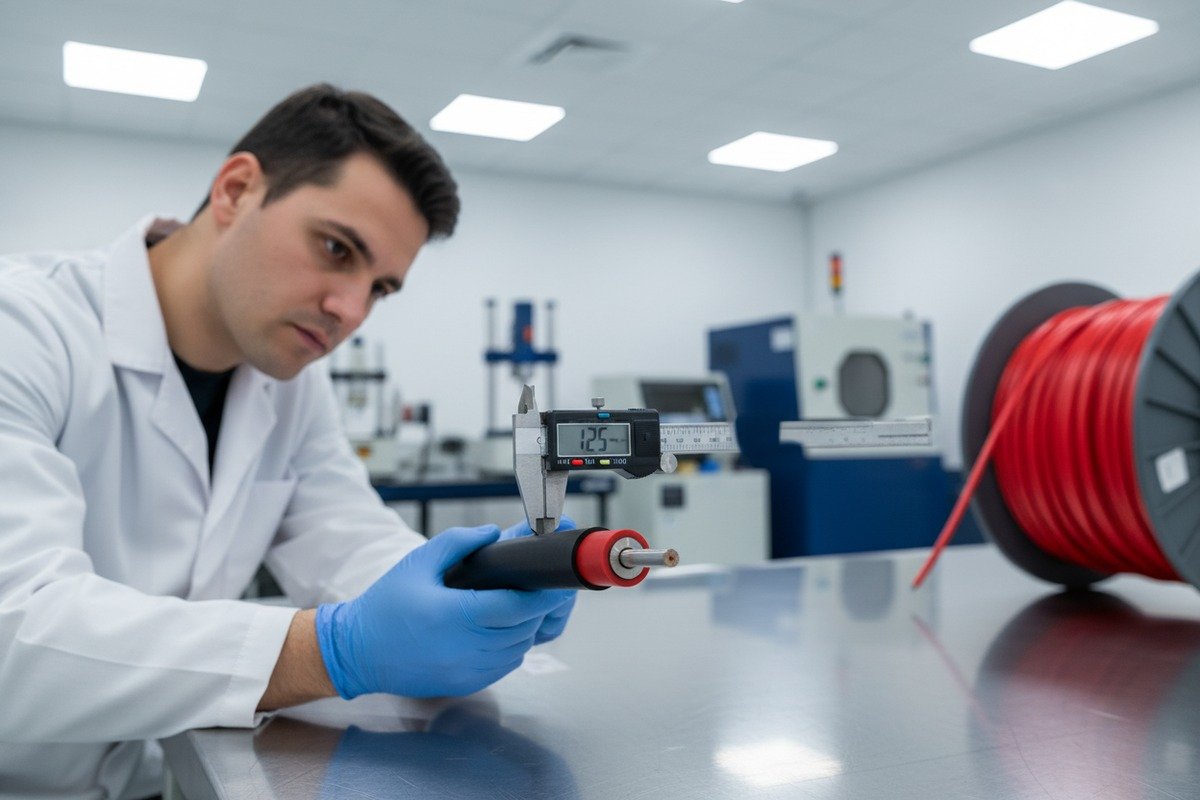
Your RFQ must include the cable designation H1Z2Z2-K, conductor material (tinned copper, Class 5 per EN 60228), cross-sectional area, rated voltage (1.5 kV DC), operating temperature range (-40°C to +90°C), insulation material (XLPO or XLPE), sheath color, required certifications, CPR fire class, connector compatibility, and total quantity with delivery schedule.
The Complete RFQ Specification Table
Below is a table covering every technical detail your RFQ should contain. We use this as our internal checklist when preparing quotations, and it ensures nothing gets missed.
| Specification | Required Detail | EN 50618 Reference |
|---|---|---|
| Cable designation | H1Z2Z2-K | EN 50618 Clause 1 |
| Conductor material | Tinned annealed copper | EN 60228 Class 5 5 |
| Cross-sectional area | 4mm², 6mm², 10mm², 16mm², etc. | Specify per system design |
| Nominal voltage | 1.5 kV DC (conductor-conductor and conductor-earth) | EN 50618 |
| Maximum voltage | 1.8 kV DC | EN 50618 |
| Conductor temperature (normal) | 90°C max | EN 50618 |
| Conductor temperature (overload) | 120°C max for up to 20,000 hours | EN 50618 |
| Ambient temperature range | -40°C to +90°C | EN 50618 |
| Insulation material | Cross-linked polyolefin (XLPO) or XLPE | EN 50618 |
| Sheath material | Low smoke halogen-free (LSZH) | EN 50618 |
| Sheath color | Black, red, or blue (specify) | Project requirement |
| UV resistance | Tested per EN 50618 UV protocol | EN 50618 |
| CPR fire class | Dca-s2,d2,a2 or Cca (specify) | EU Regulation 305/2011 |
| Connector compatibility | MC4 or specify alternative | Project requirement |
| Certifications required | TUV, CE, CPR DoP | EN 50618 + CPR |
| Cable marking | H1Z2Z2-K, size, manufacturer, date, EN 50618 | EN 50618 |
Why Conductor Class Matters
EN 50618 requires Class 5 flexible stranded conductors per EN 60228. This is not optional. Class 5 conductors have a higher number of fine strands, which makes them flexible enough for solar installations where cables must bend around mounting structures. If a supplier offers Class 2 conductors (solid or stranded but rigid), the cable does not meet the standard. Always specify "Class 5 flexible stranded, tinned copper" in your RFQ.
Connector Compatibility Is Often Overlooked
Many buyers forget to specify connector compatibility. If you plan to use MC4 connectors 6, the cable's outer diameter must fit the connector's sealing range. A 6mm² H1Z2Z2-K cable from one manufacturer might have a slightly different outer diameter than the same size from another manufacturer. This small difference can prevent a proper seal, leading to water ingress and arc faults. In our production process, we test every cable size against major MC4 connector brands to confirm fit. Include your connector brand and model in the RFQ so the supplier can verify compatibility.
Quantity and Packaging Details
Specify total length in meters, preferred drum sizes, and any restrictions for your cable-laying equipment. We have seen projects delayed because cable drums were too large for the site's handling equipment or too small for efficient automated laying. State whether you need wooden drums, steel drums, or coils, and specify maximum gross weight per drum if your logistics have weight limits.
How do I evaluate if a manufacturer can meet my project's delivery timeline and CPR fire safety ratings?
Our production planners know that for European solar EPC projects, missing a grid-connection deadline can cost a buyer tens of thousands of euros per day in penalty fees. That reality shapes how we manage our order pipeline. But not every manufacturer has the capacity or the CPR documentation to deliver on time and on spec.
Evaluate a manufacturer's delivery capability by requesting their current production capacity, order backlog, raw material stock levels, and confirmed lead times in writing. For CPR fire safety, require a valid Declaration of Performance (DoP) with the specific Euroclass rating (e.g., Dca-s2,d2,a2) and ask for recent third-party batch test reports to confirm ongoing compliance.
Assessing Production Capacity
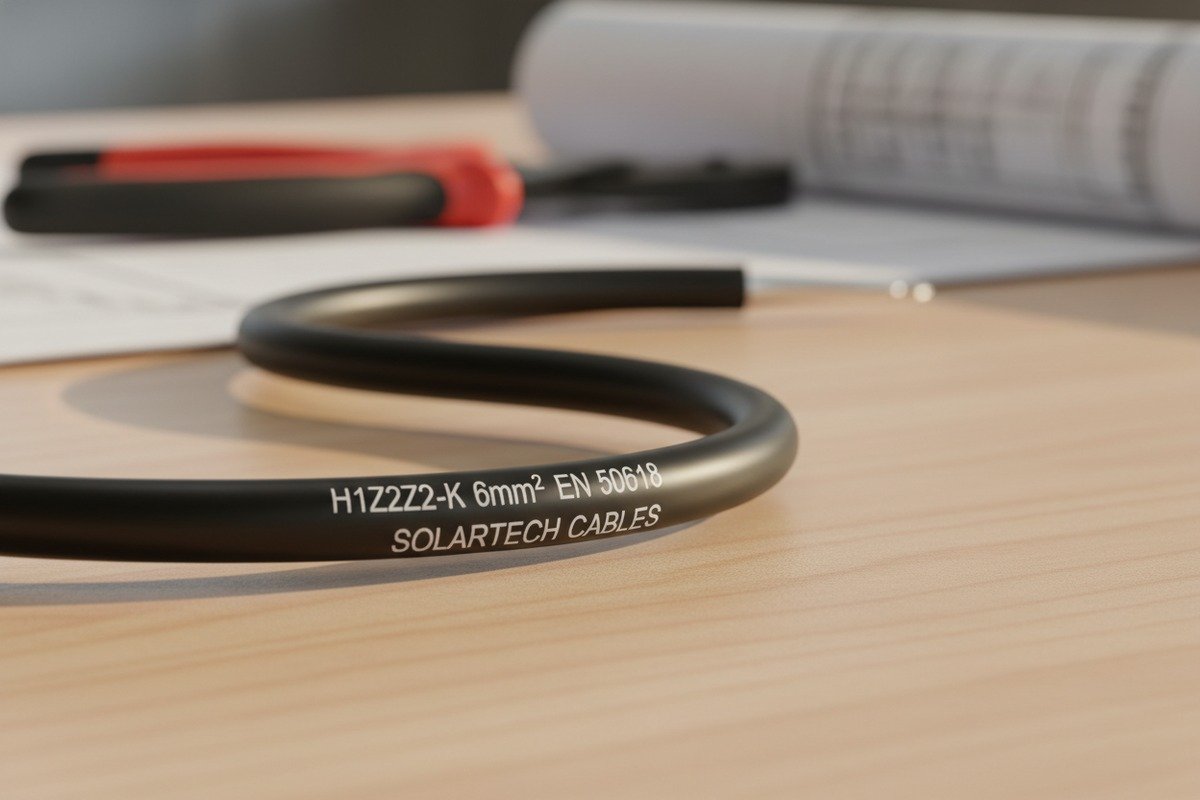
Ask the manufacturer for their annual production capacity in kilometers and their current utilization rate. A factory running at 95% capacity will struggle to accommodate rush orders. At our facility, we maintain a production capacity of over 800 million yuan annually across 230,000 m² of factory space, which gives us buffer capacity for urgent European orders. But you should not take any supplier's word for it without evidence. Request photos or videos of the production line. Better yet, schedule a factory audit.
Lead Time Verification
Get lead times in writing as part of your purchase contract. Standard stock items should ship within 15 to 20 days. Custom orders with special sizes or colors may take 30 to 45 days. Ask the supplier what happens if they miss the agreed delivery date. Will they cover air freight costs? Will they compensate for project delays? If a supplier hesitates to commit to penalty clauses, that tells you something about their confidence in meeting deadlines.
Understanding CPR Fire Safety Ratings
The Construction Products Regulation 7 (CPR) requires cables installed in buildings or construction works within the EU to carry a fire safety classification. For solar PV cables, the most commonly required classes are Dca and Cca.
| CPR Euroclass | Fire Performance Level | Typical Application |
|---|---|---|
| Eca | Basic fire performance | Minimal requirement, not suitable for most commercial projects |
| Dca-s2,d2,a2 | Moderate fire performance, limited smoke and droplets | Most common for rooftop and ground-mount solar installations |
| Cca-s1,d1,a1 | Higher fire performance, very low smoke | Required for installations in or near occupied buildings |
| B2ca or higher | Very high fire performance | Specialized applications, tunnels, high-risk areas |
How to Verify CPR Compliance
Request the Declaration of Performance (DoP) 8 document. This is a legal requirement under CPR. The DoP must reference the harmonized standard, state the Euroclass rating, and include the notified body number. Then ask for recent batch test reports from an accredited laboratory. Some manufacturers pass initial certification but then change materials to reduce costs, causing later batches to fail. Independent batch testing protects you from this risk.
We run internal CPR flame tests on every production batch before shipment. But we also encourage our European buyers to request third-party test reports, because that independent verification gives them the documentation they need for local building authority approvals.
What steps should I take to confirm the XLPO insulation material will actually last for 25 years?
Our R&D engineers spend months testing insulation compounds before approving them for production. Yet one of the most frequent questions we hear from German and Dutch buyers is: "How do I know this insulation will not crack or degrade after 10 years in the field?" It is a fair question. A solar cable is expected to perform for 25 years or more under extreme UV, heat, cold, and moisture. If the insulation fails, the entire system is at risk.
To confirm 25-year XLPO insulation durability, request accelerated aging test reports (thermal aging at 120°C for 20,000 hours), UV exposure test data per EN 50618, damp-heat cycling results, elongation-at-break retention data after aging, and independent laboratory verification. Also ask for the supplier's warranty terms and whether they guarantee material performance beyond the standard minimum.
What Makes XLPO Different From Standard PVC
Cross-linked polyolefin (XLPO) insulation 9 is fundamentally different from PVC or standard polyethylene. The cross-linking process creates chemical bonds between polymer chains, making the material resistant to heat deformation, chemical attack, and mechanical stress. This is why EN 50618 specifies cross-linked insulation. Standard PVC would soften, crack, or become brittle within a few years of outdoor solar exposure.
Key Tests That Prove Long-Term Durability
There are several tests you should request from any supplier claiming a 25-year cable lifespan:
Thermal aging test: The cable is exposed to 120°C continuously for up to 20,000 hours. After aging, the insulation must retain a minimum percentage of its original tensile strength and elongation at break. If the insulation becomes brittle or loses flexibility, it will crack in the field.
UV resistance test: EN 50618 specifies a UV exposure protocol. Cables are exposed to defined UV wavelengths and intensities for a set number of hours. After exposure, the sheath and insulation are tested for changes in tensile strength, elongation, and surface condition. Request the exact test duration and the property retention percentages.
Damp-heat cycling: Cables in tropical or humid climates face moisture ingress challenges. Damp-heat tests expose cables to high humidity and elevated temperatures in cycles, simulating years of outdoor exposure. Ask your supplier whether they have conducted damp-heat testing beyond the EN 50618 minimum.
Insulation resistance after aging: The cable's insulation resistance should remain well above the minimum threshold after all aging tests. A drop in insulation resistance indicates the material is degrading.
How to Read a Test Report
When you receive a test report, look for these specific data points:
| Test Parameter | What to Look For | Minimum Acceptable Result |
|---|---|---|
| Elongation at break (before aging) | Baseline flexibility | ≥ 200% (typical for XLPO) |
| Elongation at break (after thermal aging) | Retention of flexibility | ≥ 50% of original value |
| Tensile strength retention (after aging) | Structural integrity | ≥ 70% of original value |
| UV exposure duration | Test severity | ≥ 720 hours (per EN 50618) |
| Insulation resistance at 90°C | Electrical safety | Meets EN 50618 minimum |
| Hot set test (200°C) | Cross-linking degree | Elongation ≤ 175%, no cracking |
Ask About Extended Warranties
A supplier confident in their XLPO insulation will offer extended warranties. Ask whether the manufacturer provides a 10-year or 25-year product warranty. Then read the warranty terms carefully. Some warranties only cover manufacturing defects, not material degradation. A meaningful warranty should cover insulation performance under normal outdoor conditions for the stated period.
At our factory, we source XLPO compounds from pre-qualified compound suppliers and verify every incoming batch with hot-set testing and gel content analysis. This ensures the cross-linking degree meets our internal standards, which exceed the EN 50618 minimum. We believe this level of incoming material control is what separates reliable cables from those that fail prematurely.
Independent Laboratory Verification
Do not rely solely on the manufacturer's in-house test data. Request that the supplier provide test reports from an accredited third-party laboratory, such as TUV, DEKRA, or a nationally accredited cable testing lab. Third-party reports carry more weight with building authorities and grid operators, and they protect you from biased or manipulated data.
Conclusion
Requesting EN 50618 compliant solar PV cables 10 requires precision, verification, and clear documentation at every stage of the procurement process. Use the checklists and tables in this guide to protect your project from non-compliant products, certification fraud, and premature cable failures.
Footnotes
1. Describes the general process and importance of TUV certification. ↩︎
2. Defines the specific harmonized designation for solar cables. ↩︎
3. Official website of a leading international certification body. ↩︎
4. Official website of a leading international certification body. ↩︎
5. Explains the classification of conductors, specifically Class 5. ↩︎
6. Provides detailed information and specifications for MC4 connectors. ↩︎
7. Official European Commission page on the Construction Products Regulation, a highly authoritative source. ↩︎
8. Defines the mandatory document for construction products under CPR. ↩︎
9. Describes the properties and characteristics of XLPO insulation material. ↩︎
10. Explains the technical requirements of the EN 50618 standard. ↩︎