Over the past 30 years on our production floor, we have shipped ADSS cables to dozens of countries — and watched buyers lose thousands of dollars overnight because of currency swings they never planned for.
To manage exchange rate risks when procuring ADSS optical cables from China, buyers should combine forward contracts, USD-denominated pricing clauses, risk-sharing agreements, and diversified payment methods. These strategies together can reduce unexpected cost increases of 3–10% caused by RMB/USD fluctuations during volatile periods.
This guide breaks down four practical strategies you can use right now. Each section tackles a real question our overseas buyers ask us every week. Let's dig in.
How can I protect my ADSS cable budget from sudden RMB fluctuations?
When we quote ADSS cables for a 200-km power line project, the price looks solid on Monday — but by the time the buyer confirms on Friday, the RMB may have shifted enough to add thousands of dollars to the total cost.
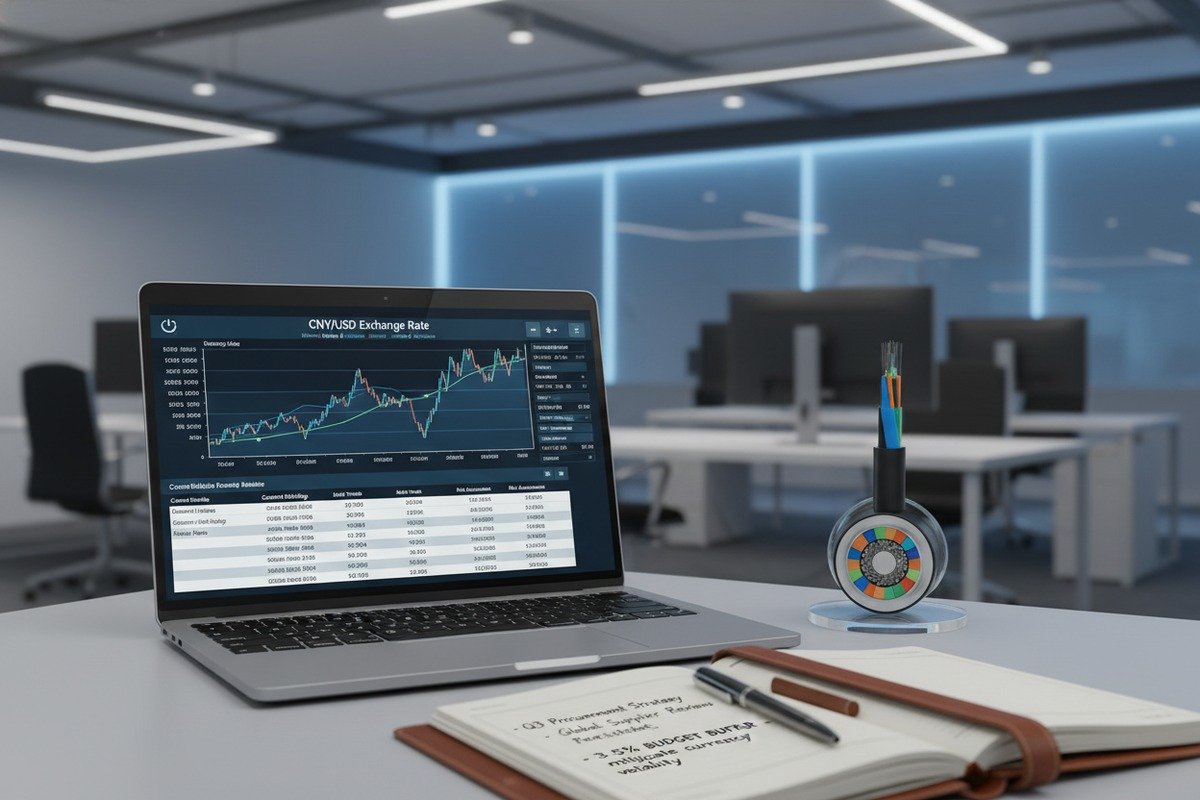
You can protect your ADSS cable budget by using financial hedging tools like forward contracts and currency options, setting clear budget buffers of 3–5%, and monitoring RMB/USD trends weekly. These steps give you cost predictability even during volatile currency periods.
Why RMB Fluctuations Hit ADSS Budgets Hard
ADSS cables are not small purchases. A typical order ranges from $50,000 to $500,000 or more. Even a 3% shift in the RMB/USD rate translates into real money. On a $200,000 order, that is $6,000 gone — enough to cover shipping for an entire container.
The problem gets worse with longer lead times. Our standard production cycle for custom ADSS cables is 15–20 days, but complex orders with special span lengths or jacket materials can take 30–45 days. During that window, currency rates can move significantly.
Financial Hedging Tools You Should Know
The most common tool is a forward contract. You lock in today's exchange rate for a future payment date. Your bank guarantees that rate regardless of what happens in the market. This is the simplest and most popular method for ADSS cable buyers.
A currency option gives you the right — but not the obligation — to exchange at a set rate. You pay a small premium (usually 0.5–2% of the transaction value), but you keep the upside if rates move in your favor.
| Hedging Tool | Cost | Flexibility | Best For |
|---|---|---|---|
| Forward Contract 1 | No upfront premium | Low — locked rate | Buyers with fixed budgets and confirmed orders |
| Currency Option 2 | 0.5–2% premium | High — choose to exercise or not | Buyers who want protection but also upside |
| Currency Swap | Varies by bank | Medium | Recurring large-volume buyers with quarterly shipments |
Build a Budget Buffer
Even with hedging, smart procurement managers add a 3–5% currency buffer to their project budgets. This is not wasted money. It is insurance. If rates stay stable, that buffer flows back into your project margin. If rates spike, you are covered.
Monitor Rates Weekly
Set up alerts through your bank or a free tool like Wise or XE. Track the USD/CNY pair 3 every Monday. If the RMB strengthens past your threshold, trigger your hedge early. Do not wait until payment day.
From our experience shipping to the US, Latin America, and Southeast Asia, the buyers who check rates weekly almost never get caught off guard. The ones who check only at invoice time are the ones who call us asking to renegotiate.
Should I request a fixed USD price in my long-term ADSS procurement contract?
Many of our long-term partners — power grid contractors and telecom distributors — ask us to lock prices in USD for 6 or even 12 months. It sounds simple, but there are trade-offs on both sides of the table.
Yes, requesting a fixed USD price is one of the most effective ways to eliminate exchange rate risk for ADSS cable procurement. However, suppliers may build a 2–5% currency risk premium into the fixed price, so buyers should negotiate transparent pricing and consider hybrid structures.

How Fixed USD Pricing Works in Practice
When you ask a Chinese ADSS cable manufacturer to quote in USD, the supplier takes on the currency risk. If the RMB strengthens against the dollar after the contract is signed, the supplier's revenue in local currency drops. To compensate, most factories add a hidden or explicit premium.
In our experience, this premium typically ranges from 2–5% depending on the contract length and the current volatility forecast. For a one-year frame agreement covering multiple shipments, the premium tends to sit around 3%.
The Real Cost Comparison
Let's model a hypothetical scenario. You are a US-based contractor procuring $500,000 of ADSS cable over 12 months.
| Scenario | Exchange Rate Assumption | Total Cost to Buyer | Notes |
|---|---|---|---|
| Fixed USD price (3% premium built in) | N/A — price locked | $515,000 | Predictable but slightly higher |
| Floating rate — RMB strengthens 5% | USD/CNY drops from 7.20 to 6.84 | $525,000 | Buyer absorbs full increase |
| Floating rate — RMB weakens 3% | USD/CNY rises from 7.20 to 7.42 | $485,000 | Buyer saves but took risk |
| Hybrid — fixed for 50%, spot for 50% | Mixed | ~$500,000–$510,000 | Balanced approach |
When Fixed USD Pricing Makes Sense
Fixed pricing works best when:
- Your project budget is approved and cannot absorb overruns.
- The RMB is trending stronger and you expect further appreciation.
- You are placing multiple orders over 6–12 months under one contract.
- You prefer simplicity over optimization.
When It Might Not Be the Best Choice
If the RMB is weakening or stable, you may overpay by accepting a fixed USD quote with a built-in premium. In that case, a floating price with a forward hedge through your own bank could save you 1–3%.
Our sales engineers always recommend that buyers run the numbers both ways before signing a long-term agreement. We are happy to provide dual quotes — one fixed in USD, one in RMB equivalent — so you can compare directly.
Hybrid Structures
Some of our most experienced buyers use a hybrid approach. They fix 50–70% of the contract value in USD and leave the rest floating. This gives budget certainty on the majority of the spend while preserving some upside if rates move favorably. It also reduces the premium the supplier needs to charge.
How do I negotiate exchange rate risk-sharing clauses with my Chinese fiber optic cable manufacturer?
On our end, we have seen dozens of contract templates from international buyers. Some are fair. Some push all the risk onto us. The best contracts are the ones where both sides share the exposure — because that builds trust and keeps the partnership alive through volatile markets.
Negotiate exchange rate risk-sharing clauses by defining a neutral rate at contract signing, setting a tolerance band (typically ±3–5%), and splitting costs or gains equally beyond that band. This approach protects both buyer and supplier while maintaining pricing fairness.
What Is a Risk-Sharing Clause?
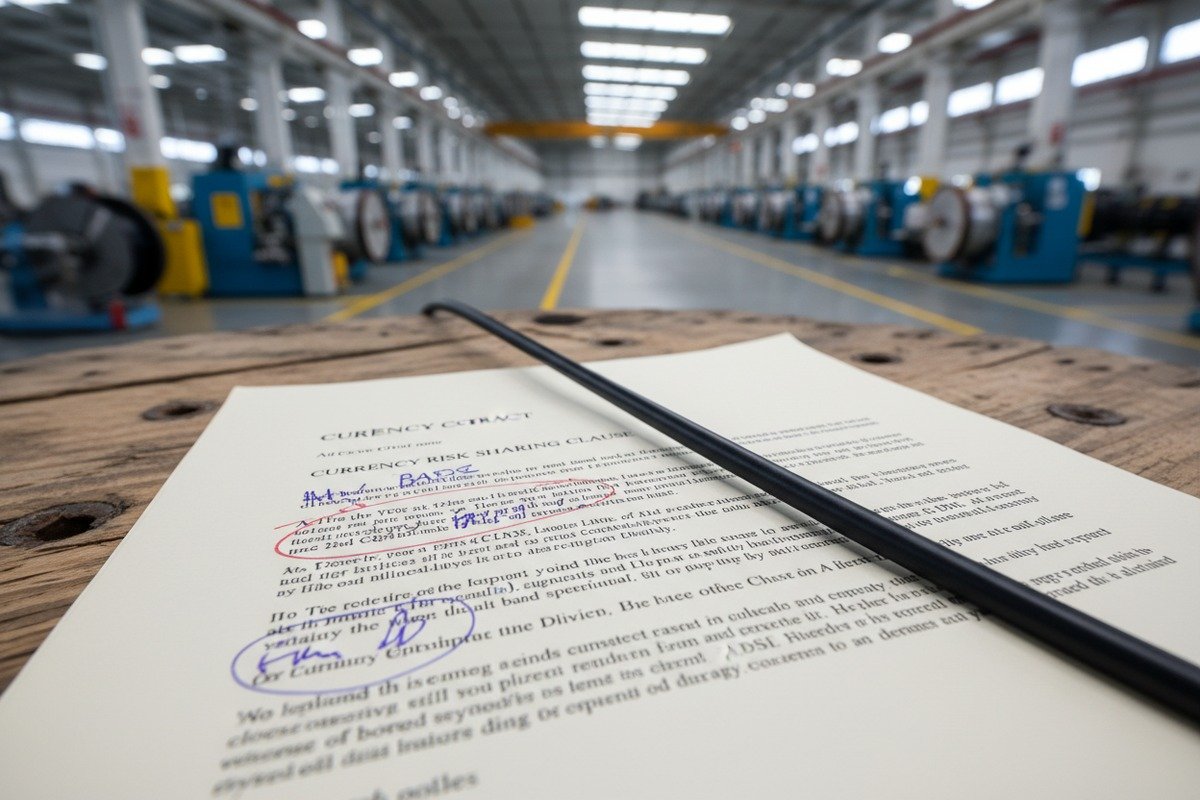
A risk-sharing clause 6 is a contract provision that defines how exchange rate gains or losses are divided between the buyer and the supplier. Instead of one party absorbing all the risk, both sides agree to a mechanism that kicks in when rates move beyond a predefined range.
How to Structure the Clause
Here is a proven framework that works well for ADSS cable procurement contracts:
- Set the base rate. At contract signing, agree on a reference USD/CNY rate (e.g., 7.20).
- Define the tolerance band. Agree that no adjustment occurs within ±3% of the base rate (i.e., between 6.98 and 7.42).
- Split the excess. If the rate moves beyond the band, buyer and supplier share the difference 50/50.
- Cap the adjustment. Set a maximum adjustment of ±8–10% to protect both parties from extreme events.
Example Calculation
| Rate Movement | USD/CNY Rate | Within Band? | Adjustment |
|---|---|---|---|
| Base rate | 7.20 | Yes | No adjustment |
| RMB strengthens 2% | 7.06 | Yes | No adjustment |
| RMB strengthens 5% | 6.84 | No — exceeds 3% band | Buyer pays extra for 2% excess, split 50/50 = 1% surcharge |
| RMB weakens 6% | 7.63 | No — exceeds 3% band | Buyer gets discount for 3% excess, split 50/50 = 1.5% discount |
Why Chinese Manufacturers Accept This
From our perspective, a risk-sharing clause is far better than a buyer demanding a fixed price with zero premium. It shows the buyer understands the reality of international trade. It also means we do not need to inflate our quote to cover worst-case scenarios.
In fact, when a buyer proposes a well-structured risk-sharing clause, our team sees it as a sign of a professional, long-term partner. We are more willing to offer competitive base pricing because our downside is capped.
Tips for the Negotiation
- Bring data. Show the supplier a 12-month USD/CNY chart and point to the volatility range.
- Propose the clause yourself. If you wait for the supplier to bring it up, they may not — and you lose leverage.
- Keep the language simple. Complex clauses create disputes. Use a clear formula with a worked example in the contract appendix.
- Review quarterly. Agree to revisit the base rate every 3–6 months for multi-year agreements.
What If the Supplier Refuses?
Some smaller factories may resist risk-sharing clauses because they lack financial sophistication or fear the complexity. In that case, consider requesting a fixed USD price with a transparent premium instead. At Lonsoncable, our finance team is experienced with these structures and can work through the details with your procurement department.
What are the best payment methods to minimize my currency conversion losses when buying ADSS cables?
Our finance department processes hundreds of international payments every month. We see every method — wire transfers 7, letters of credit, third-party platforms, and more. Each one has different conversion costs, and the differences add up fast on large ADSS cable orders.
The best payment methods to minimize currency conversion losses include direct USD wire transfers (T/T) to avoid double conversion, letters of credit with fixed-rate clauses, and multi-currency accounts through platforms like Wise or HSBC Global. Choosing the right method can save 1–3% per transaction.
Understanding Where Conversion Losses Happen
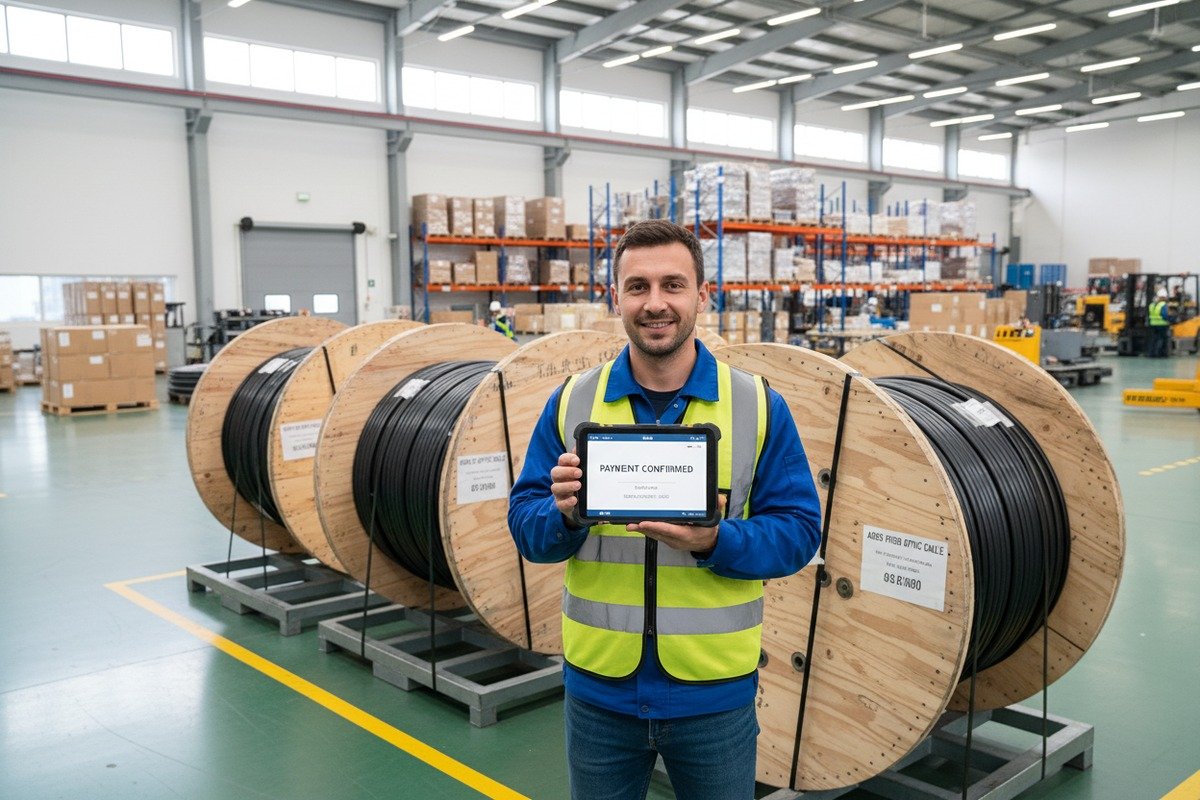
Every time your payment crosses a currency boundary, someone takes a cut. Your bank charges a spread on the exchange rate. The intermediary bank takes a fee. And if the payment converts twice (e.g., EUR → USD → CNY), you lose on both conversions.
For a $100,000 ADSS cable order, a 1.5% conversion loss means $1,500 gone before the cable even ships. Over a year of repeat orders, that adds up to $6,000–$15,000.
Comparing Payment Methods
| Payment Method | Typical FX Spread | Transfer Fee | Speed | Best For |
|---|---|---|---|---|
| Bank wire (T/T) in USD | 0.3–1.5% | $15–$50 | 1–3 days | Most ADSS orders — simple and widely accepted |
| Letter of Credit 8 (L/C) | 0.5–1.0% (bank sets rate) | $200–$500+ | 5–10 days | Large orders ($200K+) requiring payment security |
| Multi-currency account 9 (Wise, HSBC) | 0.1–0.5% | $5–$20 | 1–2 days | Repeat buyers optimizing conversion costs |
| PayPal / Alibaba Trade Assurance | 2–4% | Varies | Instant–3 days | Small sample orders only |
| Stablecoin (USDT/USDC) | ~0% conversion | Network fees ($1–$30) | Minutes | Emerging option — check supplier acceptance |
Direct USD Payment — The Simplest Win
If your contract is denominated in USD and you pay in USD, you avoid conversion entirely on your side. The supplier handles the USD-to-RMB conversion. This is the most common setup for ADSS cable transactions, and it is what we recommend to most buyers.
Make sure your wire goes through a single intermediary bank. Ask your bank to specify the correspondent bank to avoid routing through multiple institutions, which adds hidden fees.
Multi-Currency Accounts for Repeat Buyers
If you order ADSS cables quarterly or more often, open a multi-currency account. Platforms like Wise Business or HSBC Global Account let you hold USD and convert to CNY at near-market rates when timing is favorable. You can convert a large sum when rates are good and hold it until payment is due.
This approach turns you from a passive rate-taker into an active rate manager. Our buyers in Southeast Asia and Latin America have started using this method increasingly in 2025 and 2026.
Letters of Credit With Rate Clauses
For very large orders or first-time partnerships, a letter of credit provides payment security for both sides. You can negotiate a fixed exchange rate clause within the L/C terms, locking the rate at issuance. This adds a layer of FX protection on top of the payment guarantee.
Emerging Options: Stablecoins
A small but growing number of international buyers are exploring stablecoin payments (USDT or USDC). These digital dollars transfer instantly with near-zero conversion costs. However, regulatory acceptance varies by country, and not all Chinese manufacturers can receive them through compliant channels. We are monitoring this space closely and can discuss it with interested buyers on a case-by-case basis.
Timing Your Payments
Regardless of method, timing matters. Avoid converting currency on Fridays (lower liquidity, wider spreads) or during major economic announcements (Fed rate decisions, China PMI releases). Our finance team can share a quarterly calendar of key dates to help you plan payment timing.
Conclusion
Managing exchange rate risk is not optional when you procure ADSS cables from China — it is a core part of protecting your project budget. Use hedging tools, negotiate fair contract clauses, and choose smart payment methods to keep costs predictable.
Footnotes
- Replaced HTTP 404 with a Wikipedia page providing a comprehensive definition of forward contracts. ↩︎
- Defines currency options as derivative contracts used to hedge against unfavorable exchange rate movements. ↩︎
- Replaced HTTP 403 with a Wise article that discusses international B2B payments and currency fluctuations, which is relevant to the USD/CNY pair in the context of managing exchange rate risks. ↩︎
- Discusses the definition and types of exchange rate risk faced by firms in international operations. ↩︎
- Replaced HTTP 404 with an Alibaba.com Seller Central guide explaining international B2B trade. ↩︎
- Replaced HTTP 405 with a Cataligent article explaining risk-sharing agreements. ↩︎
- Describes wire transfers as an electronic payment method for secure, efficient, and high-value transactions. ↩︎
- Replaced HTTP 403 with a U.S. International Trade Administration (.gov) page explaining letters of credit, which is an authoritative source. ↩︎
- Explains multi-currency accounts for holding, sending, and receiving various currencies in one place. ↩︎
- Outlines various B2B payment methods, their costs, and suitability for international enterprises. ↩︎