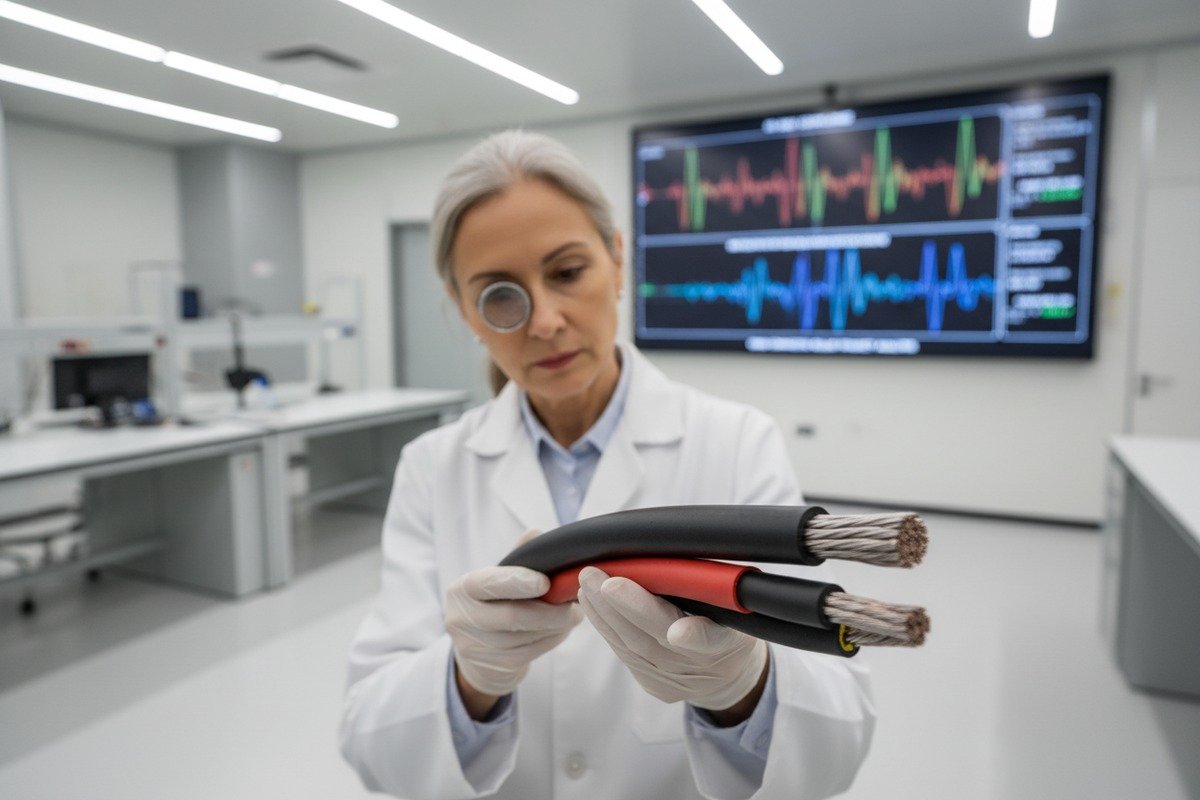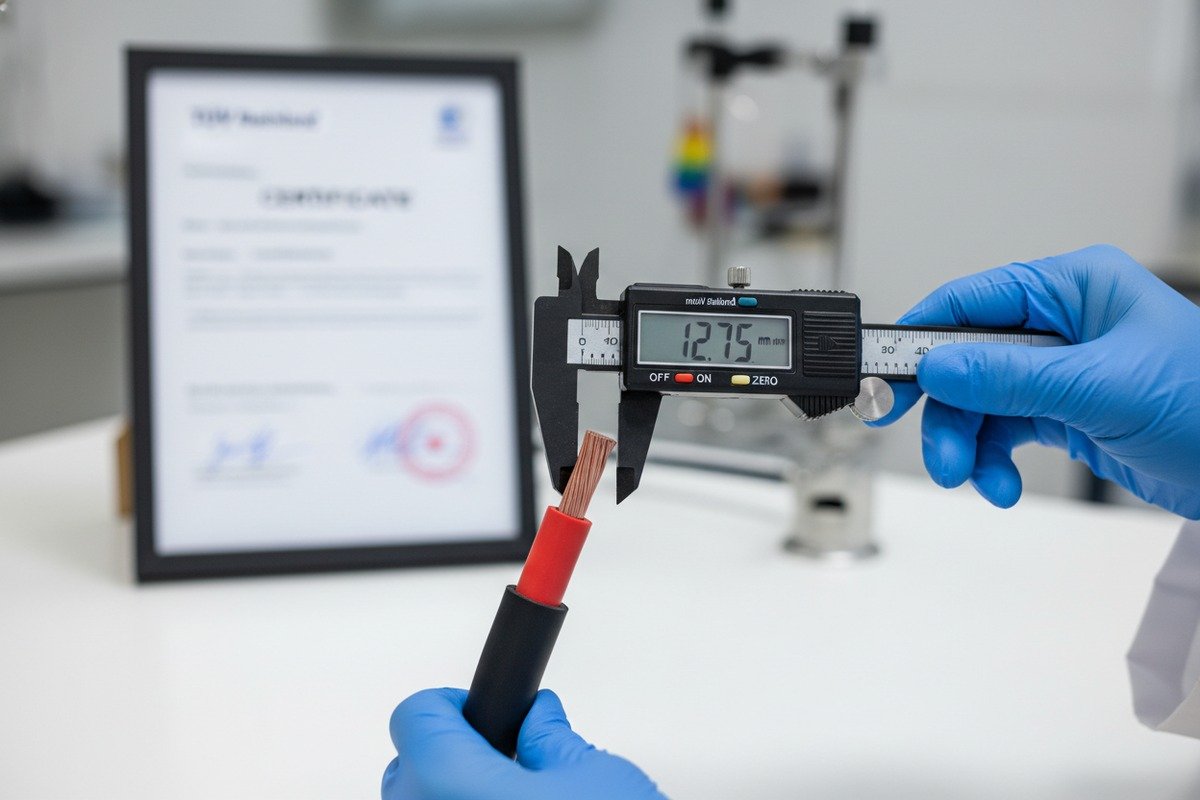

Importing ADSS cables into the US market without a clear compliance roadmap can cost you months of delays and thousands in penalties at the border.
To handle FDA and FCC compliance when sourcing ADSS optical cables from China, verify your supplier is not on the FCC Covered List, confirm FCC Part 15 testing for associated active hardware, gather proper customs documentation, and understand that passive ADSS cables generally do not require FDA laser safety registration.
Below, we break down each compliance step so you can source with confidence and avoid the most common pitfalls at US Customs.
How can I verify that my Chinese supplier's FCC and FDA certifications for ADSS cables are authentic?
Over the years, our export team has seen US buyers receive certificates that looked perfect on paper but turned out to be fabricated or expired. Fake certifications are a real risk when sourcing from unfamiliar suppliers.
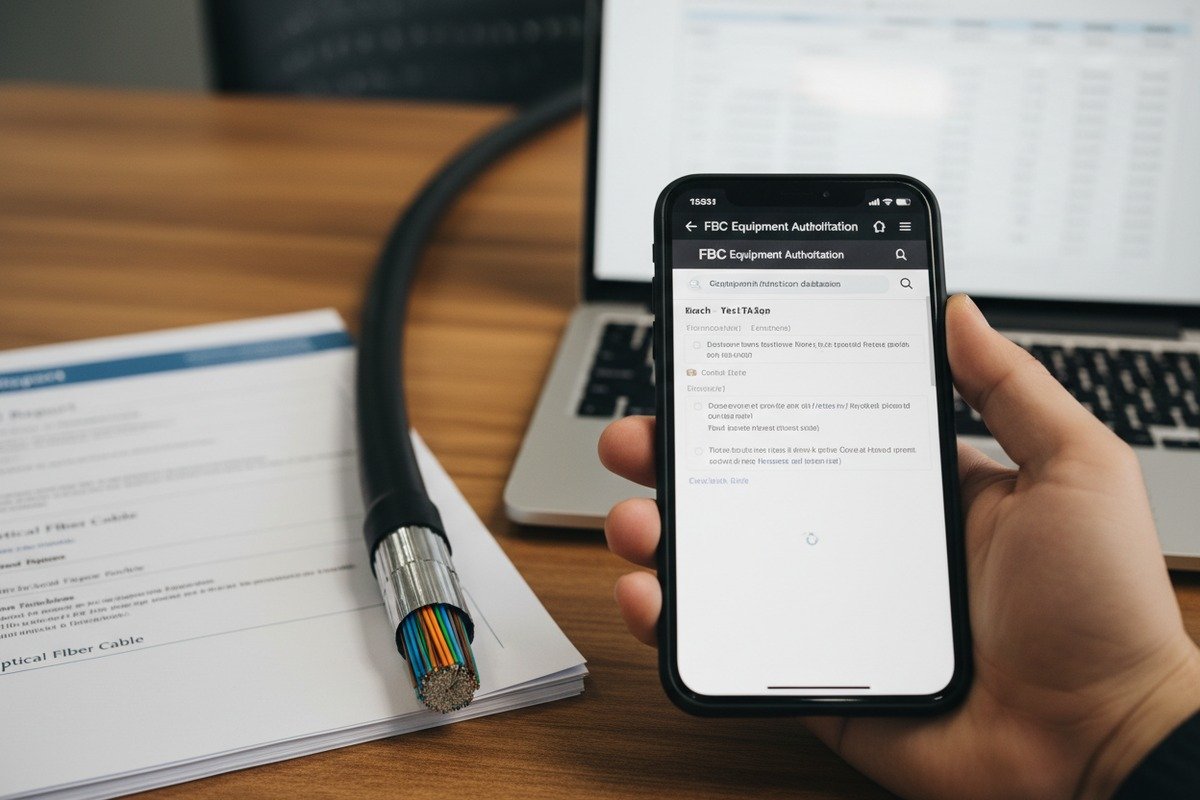
Verify FCC certifications by searching the FCC ID on the official FCC Equipment Authorization database. Cross-check FDA 510(k) numbers on the FDA's publicly accessible database. Always request original test reports from accredited labs and confirm the lab's identity independently.
Why Fake Certificates Are Common
The pressure to win export orders drives some factories to forge or photoshop certifications. A document that says "FCC Certified" means nothing without a traceable FCC ID number. The same applies to any claim of FDA clearance. You need to go straight to the source databases.
Step-by-Step Verification Process
Here is a simple process our US customers use:
- Ask for the FCC ID or Grantee Code. Every legitimately authorized device has one.
- Search the FCC OET database at apps.fcc.gov/oetcf/eas/reports/GenericSearch.cfm. Enter the FCC ID. If nothing comes up, the certification is not real.
- For FDA claims, go to the FDA 510(k) database 1 at accessdata.fda.gov. Search by company name or 510(k) number.
- Request the full test report, not just a summary. The report should name the testing laboratory.
- Contact the testing laboratory directly to confirm they issued the report.
Key Databases for Verification
| Certification Type | Official Database | What to Search |
|---|---|---|
| FCC Equipment Authorization | FCC OET Equipment Authorization Search | FCC ID or Grantee Code |
| FDA 510(k) Clearance | FDA 510(k) Premarket Notification Database | 510(k) Number or Applicant Name |
| ISO 9001 | IAF CertSearch (iafcertsearch.org) | Company Name and Certificate Number |
| UL Certification | UL Product iQ (iq.ulprospector.com) | UL File Number or Company Name |
Watch Out for Name Confusion
One issue we have seen trip up buyers involves a company called "Beijing ADSS Development Co." This firm holds FDA clearances (K231896, K231318, K161286), but these are for medical devices like diode lasers and electromagnetic stimulators under 21 CFR 878.4810 2. They have absolutely nothing to do with ADSS fiber optic cables. The shared "ADSS" name is pure coincidence. Do not let a supplier use this overlap to claim FDA relevance for a cable product.
Check the FCC Covered List
Before anything else, confirm your supplier is not affiliated with Huawei, ZTE, Hytera Communications, Hikvision, or Dahua Technology. FCC Covered List 3 These five companies and their subsidiaries are banned from US import and sale. Even if a cable itself is passive, any active component from a covered entity can block your entire shipment.
What specific compliance documents do I need from my manufacturer to clear US Customs without issues?
When we prepare export shipments for North American clients, our documentation team follows a strict checklist. Missing even one document can mean your container sits at port for weeks while storage fees pile up.
To clear US Customs smoothly, you need a commercial invoice, packing list, bill of lading, correct HS code classification, FCC compliance declaration (for active components), certificate of conformity, test reports from accredited labs, and a supplier declaration confirming non-Covered List status.

The Complete Documentation Checklist
Here is the full list of documents our logistics team prepares for every US-bound ADSS cable shipment:
| Document | Purpose | Who Provides It |
|---|---|---|
| Commercial Invoice | Declares value, origin, and product description | Manufacturer / Exporter |
| Packing List | Details quantity, weight, reel dimensions | Manufacturer |
| Bill of Lading (B/L) | Shipping contract and cargo receipt | Freight Forwarder |
| Certificate of Origin | Confirms country of manufacture | Chamber of Commerce or Manufacturer |
| HS Code Classification | Determines tariff rate and regulatory requirements | Customs Broker / Importer |
| FCC Declaration of Conformity | Proves compliance with FCC Part 15 (for active hardware) | Manufacturer with lab report |
| Test Reports (OTDR, mechanical, environmental) | Validates cable performance specs | Accredited Testing Lab |
| Non-Covered List Declaration | Attests supplier is not a banned entity | Manufacturer / Supplier |
| Material Safety Data Sheet (if applicable) | Chemical composition of jacket materials | Manufacturer |
| ISO 9001 Certificate | Confirms quality management system | Certification Body |
Getting the HS Code Right
ADSS optical cables typically fall under HS Code 8544.70 5, which covers optical fiber cables. Getting this wrong triggers delays, extra inspections, or incorrect duty calculations. Your customs broker should confirm the exact subheading based on whether your cable includes any metallic elements or is purely dielectric.
The 2026 Foreign Adversary Attestation Rule
Starting in early 2026, the FCC requires importers to provide attestations about foreign adversary control 6. This means you must formally declare whether your supplier or any component supplier is owned, controlled, or influenced by entities from countries the US considers foreign adversaries. The rule uses a three-tiered disclosure system. If your supplier has any connection to a covered entity, you must report it. Failure to attest can result in denial of equipment authorization.
Practical Tips from Our Export Experience
Our shipping department always includes redundant copies of key documents in the container and with the freight forwarder. We also recommend that buyers keep a digital folder with all compliance documents organized by shipment number. When Customs and Border Protection 7 requests documentation, response time matters. Having everything ready can mean the difference between a 2-day hold and a 2-week hold.
Does my ADSS fiber optic cable actually require FDA laser safety registration for US import?
This question comes up in almost every conversation we have with first-time US buyers. The confusion is understandable because fiber optics involve light transmission, and the FDA does regulate certain laser products.
Standard ADSS fiber optic cables are passive telecommunications infrastructure and do not require FDA laser safety registration. The FDA regulates laser products that emit radiation, but ADSS cables themselves contain no laser source. Only the active transmitter equipment at each end might fall under FDA laser safety rules.
Understanding the FDA's Jurisdiction
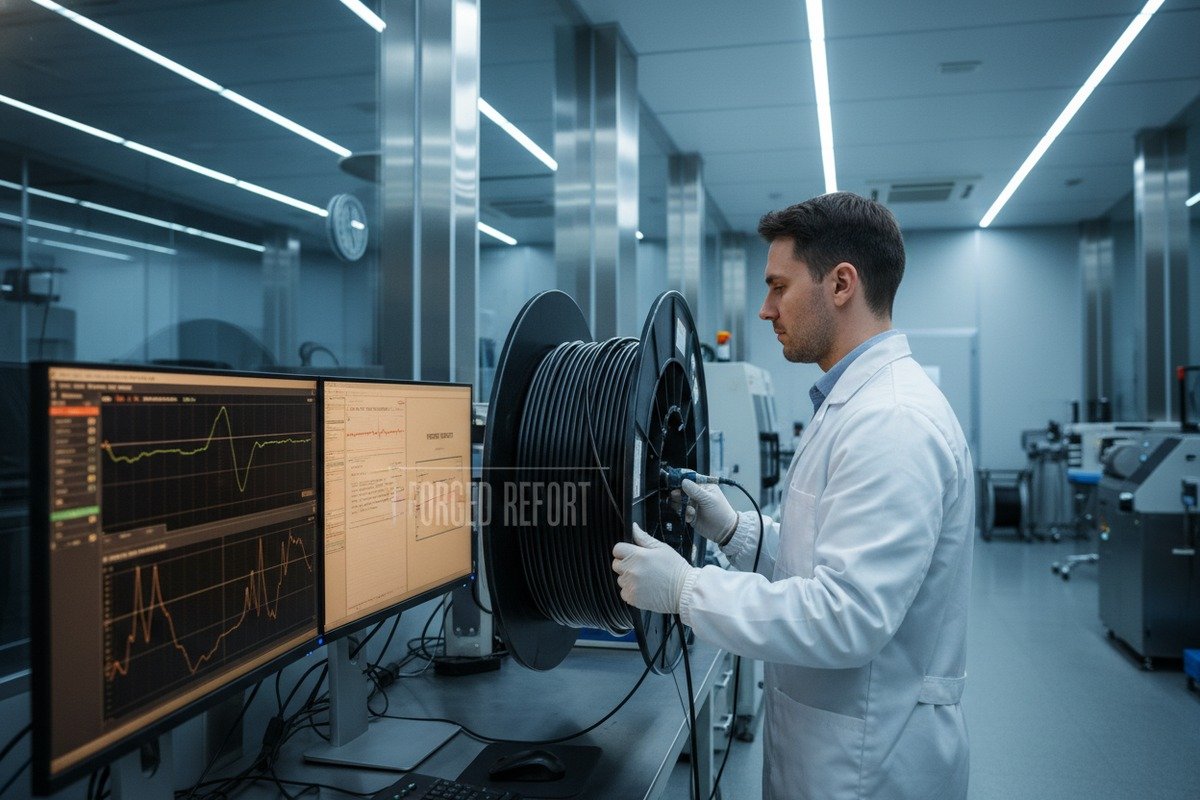
The FDA's Center for Devices and Radiological Health (CDRH) regulates products that emit electronic radiation. This includes laser products under 21 CFR Parts 1040.10 and 1040.11 8. The key word here is "emit." An ADSS cable does not emit anything. It is a passive medium that carries light signals generated by external equipment.
What the FDA Actually Regulates in Fiber Optics
| Component | FDA Regulated? | Reason |
|---|---|---|
| ADSS Fiber Optic Cable | No | Passive medium; does not emit radiation |
| Optical Transmitter (SFP/XFP module) | Potentially yes | Contains a laser diode that emits light |
| Optical Amplifier (EDFA) | Potentially yes | Amplifies optical signals using laser pump |
| Patch Cords and Connectors | No | Passive components |
| Splice Closures | No | Passive enclosures |
The Beijing ADSS Confusion
As mentioned earlier, FDA clearances exist for a company named "Beijing ADSS Development Co., Ltd." These clearances (K231896, K231318, K161286) are for medical devices classified under 21 CFR 878.4810, such as powered muscle stimulators and diode laser systems used in medical settings. This company has no connection to fiber optic cable manufacturing. The name overlap has confused many buyers. If a cable supplier references these FDA clearances, that is a red flag.
When You Might Need FDA Involvement
If you are importing a complete fiber optic system that includes active laser transmitters, those transmitters may require compliance with FDA laser safety classifications (Class I through Class IV). However, this obligation falls on the transmitter manufacturer, not the cable manufacturer. When we ship ADSS cables from our facility, the cable itself carries no FDA compliance burden. Your optical network equipment vendor handles that separately.
Bottom Line for Importers
Do not pay extra for a supplier who claims FDA certification for an ADSS cable. It is not required, and any supplier claiming otherwise either misunderstands the regulation or is attempting to justify a price premium with irrelevant documentation.
How do I ensure my Chinese manufacturer's production process meets all US regulatory and safety standards?
Our quality control department runs three inspection stages before any reel leaves our 230,000-square-meter facility. But not every factory in China operates this way, and trusting blindly can lead to project failures.
Ensure compliance by conducting factory audits (in-person or third-party), requesting OTDR test reports for every reel, verifying ISO 9001 and UL certifications through official databases, requiring material traceability documentation, and scheduling pre-shipment inspections with independent agencies before cargo leaves the port.
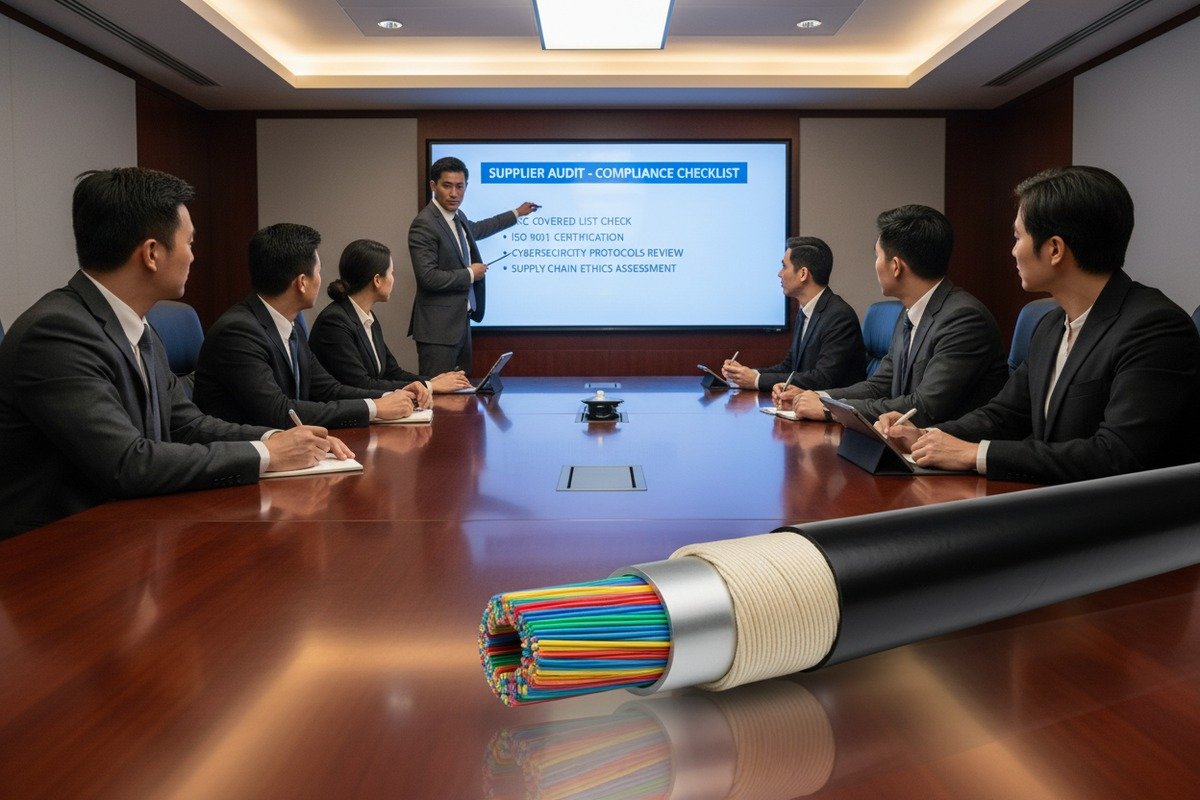
Factory Audits Are Non-Negotiable
Before placing a large order, visit the factory or hire a third-party auditor. Companies like SGS, Bureau Veritas, and TÜV offer factory audit services across China. An audit should cover raw material sourcing, production equipment calibration, testing procedures, and worker training records.
Key Quality Checkpoints in ADSS Cable Production
A reliable ADSS cable depends on quality at every production stage. Here are the critical points our engineers monitor:
- Fiber quality: We use Corning or equivalent-grade fibers. Ask your supplier for fiber specification sheets and batch traceability.
- Aramid yarn tensile strength: This is what holds the cable under tension on aerial spans. Some manufacturers substitute cheaper materials or reduce yarn count to cut costs. Request the exact aramid yarn specification and weight per kilometer.
- PE jacket thickness and UV resistance: The outer polyethylene jacket must withstand years of sun exposure and temperature cycling. Measure it. Do not accept verbal assurances.
- OTDR test reports: Every reel should come with an Optical Time-Domain Reflectometer test report showing attenuation values, splice points, and total link loss. OTDR test report 9 If a supplier cannot provide per-reel OTDR data, walk away.
Third-Party Testing in the US
Even with manufacturer-provided data, smart importers send samples to accredited US labs for independent verification. This gives you an unbiased assessment and creates a paper trail if disputes arise later.
Certifications That Matter
| Certification | What It Proves | Verification Method |
|---|---|---|
| ISO 9001:2015 | Quality management system in place | IAF CertSearch database |
| UL Listed / UL Recognized | Product tested to UL safety standards | UL Product iQ database |
| CE Marking | Meets European safety/EMC requirements | Request Declaration of Conformity and test report |
| RoHS Compliance | Free from restricted hazardous substances | Third-party lab test report |
| IEC 60794 | Meets international optical cable standards | Request test report referencing specific IEC clauses |
Addressing Material Downgrading Risks
One of the biggest fears our US buyers share is material downgrading. A supplier quotes high-quality aramid yarn and premium PE jacketing but ships with inferior substitutes. To mitigate this, include material specifications in your purchase contract with penalty clauses. Require the factory to provide raw material certificates from their suppliers. When possible, specify brand-name components (e.g., Corning fiber, DuPont Kevlar) and verify them during pre-shipment inspection.
Cybersecurity Considerations for Active Components
While ADSS cables themselves are passive and pose no cybersecurity risk, the broader system may include optical line terminals, switches, or monitoring equipment sourced from the same Chinese supplier. Evaluate whether any embedded firmware or software in these active components could introduce vulnerabilities. This is especially relevant given the FCC's increasing focus on supply chain security and the 2026 foreign adversary attestation requirements.
Building a Long-Term Compliance Partnership
Rather than treating compliance as a one-time checkbox exercise, build it into your supplier relationship. At our facility, we assign a dedicated quality liaison to each major account. This person shares production updates, test results, and shipping documentation in real time. Ask your manufacturer whether they offer this kind of transparency. If they hesitate, consider it a warning sign.
Conclusion
Navigating FDA and FCC compliance for ADSS cables from China is straightforward once you understand which rules actually apply and build verification into every step of your sourcing process.
Footnotes
1. Official database for FDA premarket notifications. ↩︎
2. Defines laser surgical instruments for general and plastic surgery. ↩︎
3. Identifies communications equipment and services posing national security risks. ↩︎
4. Official database for FCC equipment authorization. ↩︎
5. Official classification for optical fiber cables. ↩︎
6. Details FCC rules on foreign adversary control in telecommunications. ↩︎
7. Official government agency for US border security and trade. ↩︎
8. Federal regulations for laser product performance standards. ↩︎
9. Explains the purpose and analysis of OTDR test reports. ↩︎