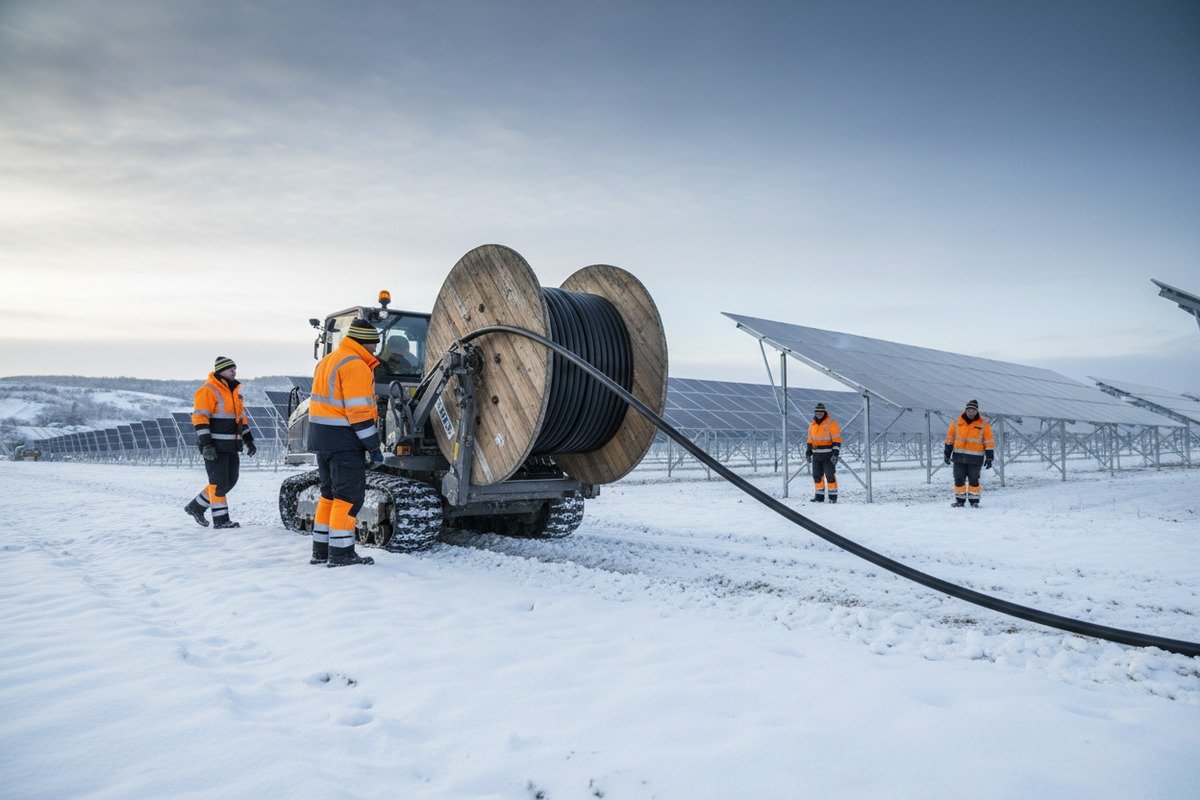
Every winter, our customer service team receives urgent calls about cracked cable jackets discovered on job sites across Northern Europe and Canada TUV SÜD 1. These failures halt construction, trigger penalty clauses, and cost project owners tens of thousands of euros in unplanned repairs.
To evaluate solar PV cable low-temperature flexibility when sourcing, verify the cable's rated operating range includes -40°C minimum, demand third-party cold bend and cold impact test reports per IEC 62930 or EN 50618, and confirm the insulation uses cross-linked materials like XLPE or XLPO that resist cracking in freezing conditions.
This guide walks you through the exact steps, tests, materials, and red flags you need to know cross-linked polyolefin (XLPO) 2. Let's start with the TUV-specific requirements that matter most for H1Z2Z2-K cables 3.
How do I verify that the H1Z2Z2-K cables I source meet the specific TUV requirements for low-temperature impact resistance?
When we ship H1Z2Z2-K cables to German EPC projects, the first document buyers ask for is the TUV certificate cross-linked polyethylene (XLPE) 4. But a certificate alone does not tell you if the cable will survive a -35°C morning in Bavaria.
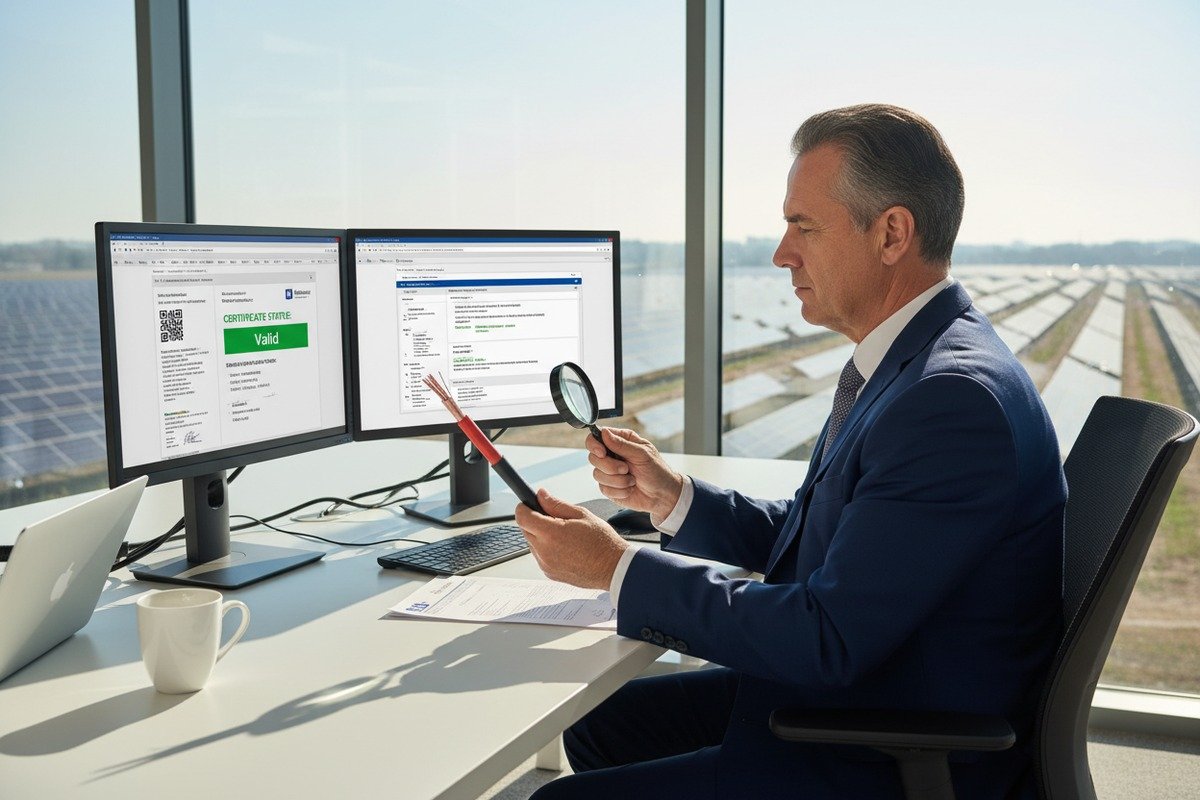
To verify TUV low-temperature impact compliance for H1Z2Z2-K cables, request the original TUV test report number, cross-check it on TUV's online database, and confirm the report includes cold impact testing at -40°C per EN 50618 with zero cracking on the sheath after conditioning.
What TUV Actually Tests
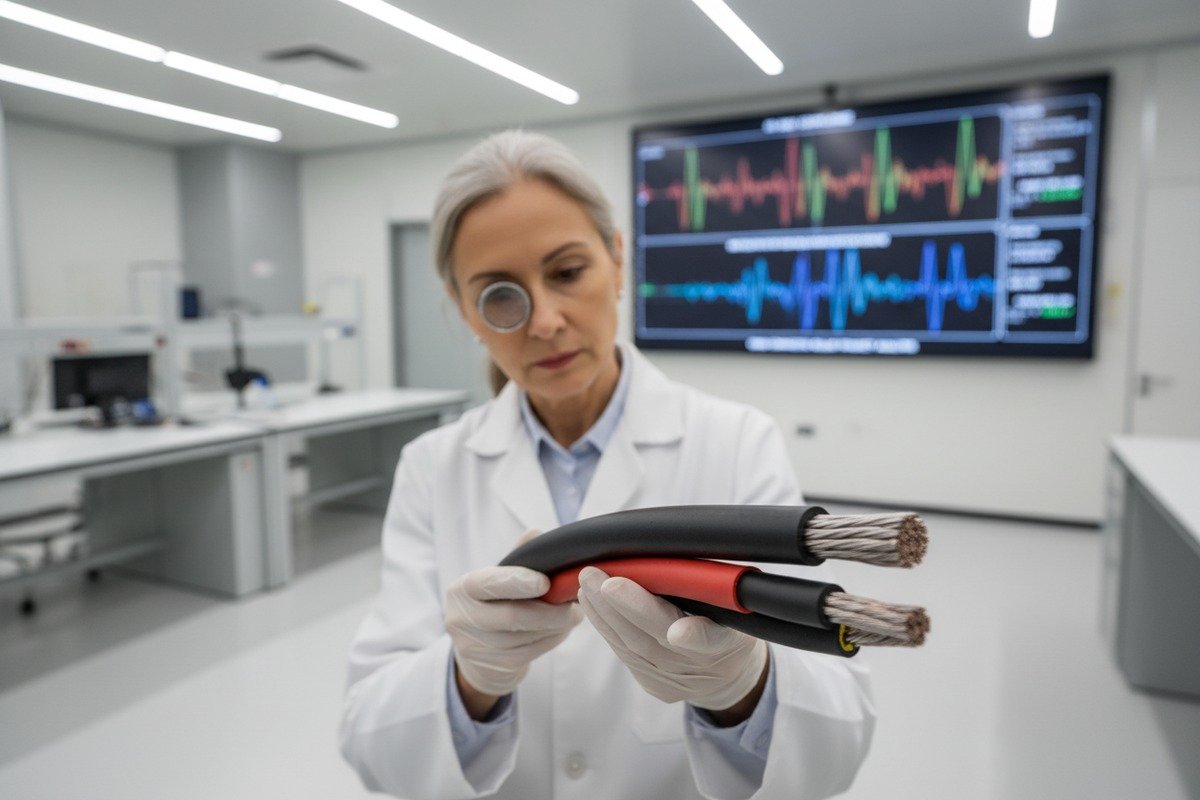
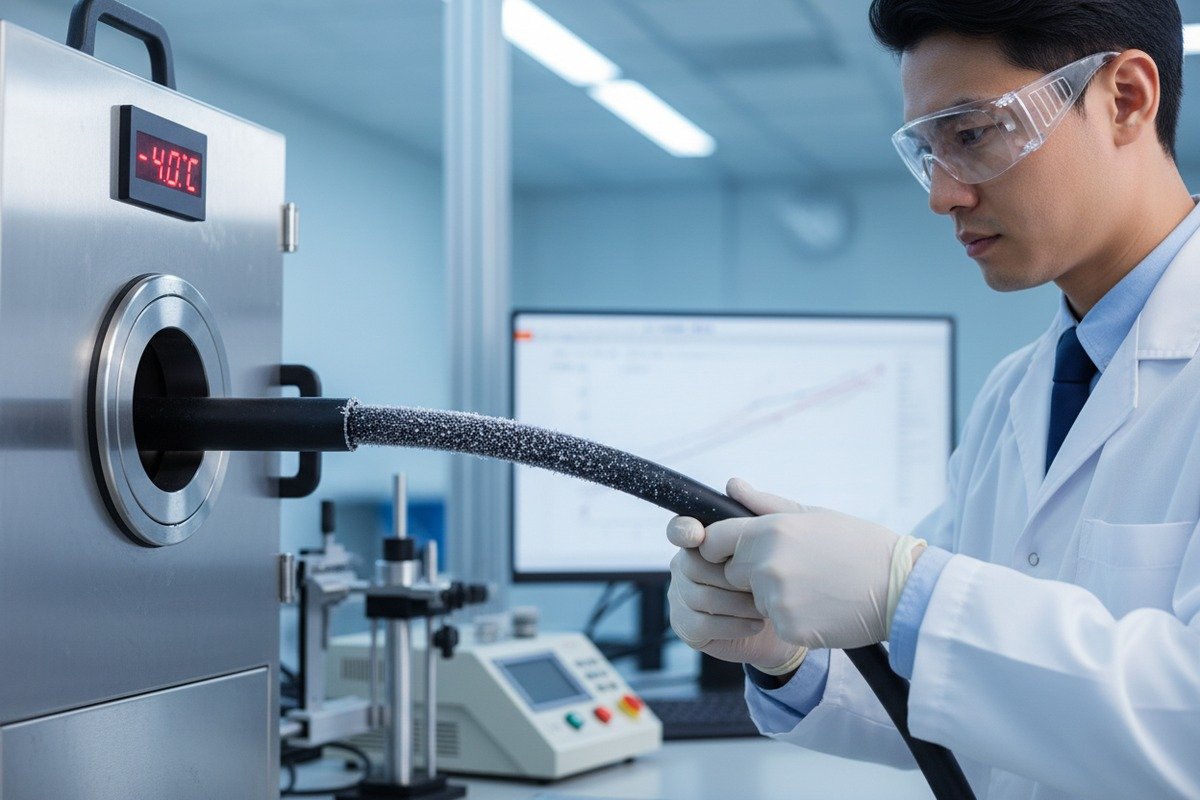
TUV does not just check electrical properties. For H1Z2Z2-K cables, the certification process includes a full mechanical evaluation thermal cycling test 5. The cold impact test is one of the most critical. Here is how it works: cable samples are conditioned at -40°C for at least two hours inside a climate chamber. A standardized weight is then dropped onto the cable from a fixed height. The examiner inspects the sheath under magnification. Any visible crack means failure.
How to Cross-Check a TUV Certificate
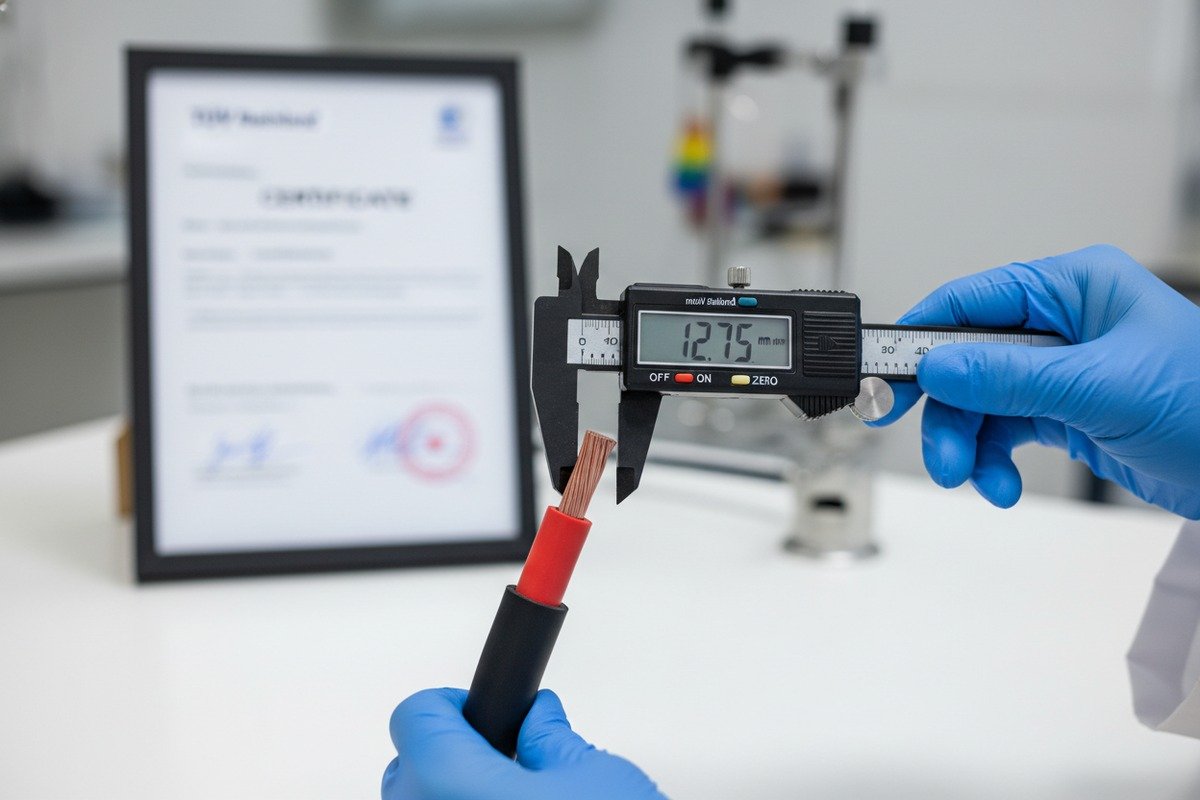
Many buyers accept a PDF certificate at face value. This is risky. On our production floor, we keep the full TUV test report on file — not just the summary certificate. You should ask your supplier for the report number and verify it directly on the TUV Rheinland 6 or TUV SÜD online portal. A valid certificate will show the specific standard tested (EN 50618 7 or 2PfG 1169), the cable model, the factory location, and the date of last audit.
Key TUV Test Parameters for Cold Performance
| TUV Test Parameter | Requirement | What to Check |
|---|---|---|
| Cold Impact Temperature | -40°C | Conditioning duration ≥ 2 hours |
| Impact Energy | Per EN 50618 Annex | Weight and drop height specified |
| Pass Criteria | No visible cracking | Sheath inspected under magnification |
| Certificate Validity | Typically 5 years | Check expiration and annual audit status |
| Factory Audit | Annual follow-up | Confirm audit was not skipped |
Watch Out for Expired or Transferred Certificates
One issue we see in the market is suppliers showing TUV certificates that belong to a different factory. When a manufacturer moves production or subcontracts to a cheaper facility, the original TUV certificate may no longer apply. Always confirm that the factory address on the certificate matches the actual production site. If the supplier cannot show you a recent annual audit report, treat that as a warning sign.
Another common mistake: assuming that because a cable carries the "H1Z2Z2-K" designation, it automatically meets TUV requirements. The designation describes the cable type. It does not guarantee any specific test was passed. Only a valid, verifiable TUV mark with a traceable report number provides that assurance.
Which material specifications should I look for to ensure my solar PV cable insulation stays flexible at -40°C?
Our R&D engineers spent years testing different insulation compounds before settling on the formulations we use today. The wrong material choice does not just fail a lab test — it causes real cracks on real job sites.
For -40°C flexibility, specify cables with cross-linked polyolefin (XLPO) or cross-linked polyethylene (XLPE) insulation and electron-beam or silane cross-linked sheaths. These materials maintain elongation above 20% at -40°C, preventing the brittle fracture that standard PVC or non-cross-linked compounds exhibit in freezing conditions.
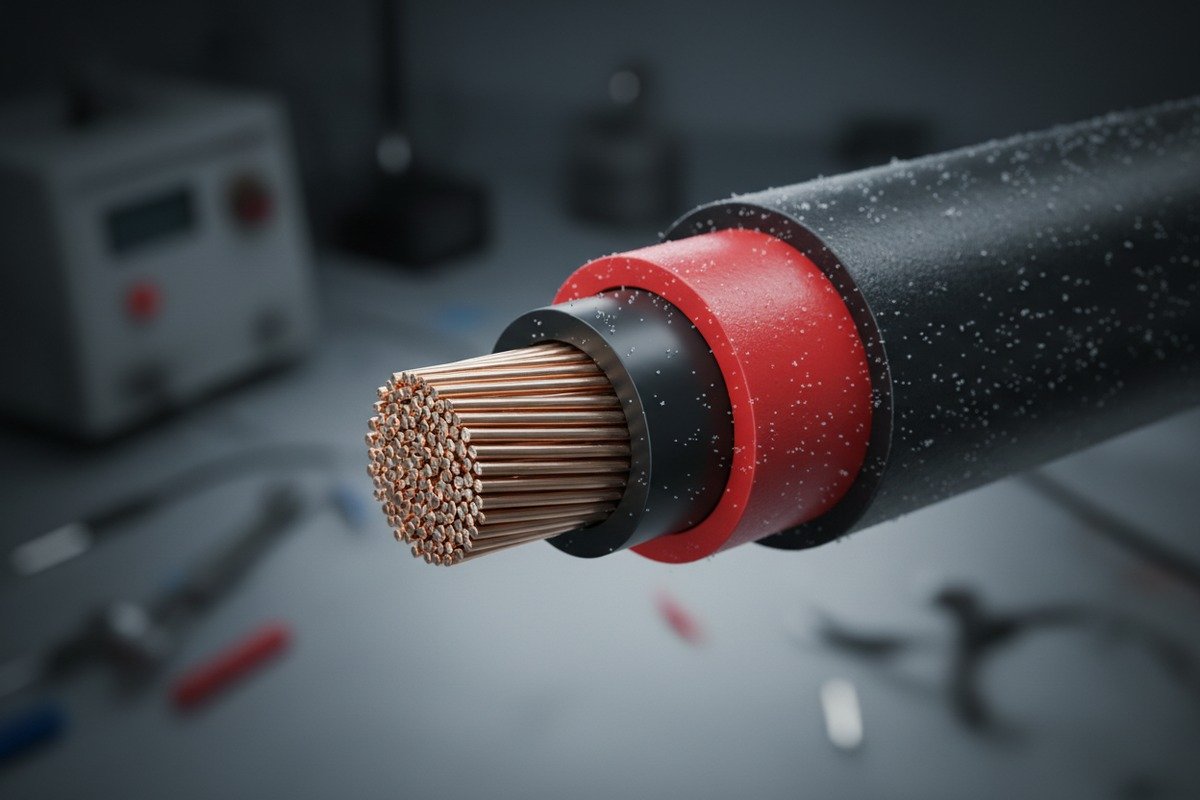
Why Cross-Linking Matters
Standard thermoplastic insulation becomes rigid as temperatures drop. The polymer chains lose their ability to slide past each other, and the material turns glassy and brittle. Cross-linking creates permanent chemical bonds between polymer chains. This molecular network keeps the material flexible even at extreme lows. Think of it like the difference between a rubber band and a hard plastic straw. Both are polymers. But the rubber band has been cross-linked, so it bends without snapping.
Material Comparison for Low-Temperature Performance
| Material | Flexibility at -40°C | UV Resistance | Typical Use | Cross-Linked? |
|---|---|---|---|---|
| XLPE | Excellent | Good | Insulation layer | Yes |
| XLPO | Excellent | Good to Excellent | Insulation and sheath | Yes |
| LSZH (cross-linked) | Good | Moderate | Outer sheath | Yes |
| Standard PVC | Poor — cracks below -10°C | Low | Not suitable for PV | No |
| TPE (non-cross-linked) | Moderate | Moderate | Budget cables | No |
Conductor Design Also Affects Cold Flexibility
Material is only half the story. The conductor itself matters. Finely stranded tinned copper conductors — Class 5 flexible per IEC 60228 8 — allow the cable to bend easily even when the jacket stiffens slightly in cold air. A rigid Class 2 conductor forces the installer to apply more bending force, which stresses the insulation right at its weakest point. For cables destined for -40°C environments, always specify Class 5 stranding.
What to Ask Your Supplier
Request the material data sheet for both the insulation and the outer sheath. Look for these numbers:
- Elongation at break after aging: Should remain above 120% of original value.
- Tensile strength after aging: Should not drop below 80% of pre-aging value.
- Low-temperature brittleness point: Must be rated at or below -40°C.
- Cross-linking method: Electron beam or silane. Avoid uncross-linked compounds.
When we prepare documentation for our European clients, we include both the raw material supplier's technical data sheet and our own in-house test results. If your cable supplier cannot produce both, it may indicate they do not fully control their material sourcing.
The UV and Cold Synergy Problem
A point many buyers overlook: UV degradation and cold embrittlement compound each other. A cable that survives -40°C testing when new may crack at -20°C after five years of sun exposure if the UV stabilizer package in the sheath is inadequate. Always check that the material includes carbon black loading of at least 2.5% for UV protection, alongside the cold-flex properties. This combination is what ensures a genuine 25-year outdoor service life.
What specific laboratory test reports should I demand from my supplier to prove cold-bend performance?
In our experience exporting to Nordic countries and Canada, buyers who skip the report verification step are the ones who call us after their first winter with cracked cables. The test report is your insurance policy.
Demand third-party laboratory reports for cold bend testing at -40°C per IEC 62930 clause 5.2 or EN 50618, cold impact testing at -40°C, and thermal cycling endurance. Each report must name the accredited lab, the specific cable model tested, sample conditioning time, mandrel diameter, and a clear pass/fail conclusion with photographic evidence.
The Three Tests You Cannot Skip
There are three mechanical cold-performance tests that form the backbone of any credible evaluation. Each one targets a different failure mode.
Cold bend test: The cable sample is conditioned at -40°C for a minimum of two hours. It is then wrapped around a mandrel with a diameter specified by the standard (typically a multiple of the cable's outer diameter). The insulation and sheath are inspected for cracks or deformation. This test simulates the bending that happens during winter installation.
Cold impact test: After the same -40°C conditioning, a weight is dropped onto the cable from a defined height. This simulates a tool being dropped on the cable or the cable striking a sharp edge during cold-weather handling. No cracking is permitted.
Thermal cycling test: The cable undergoes repeated cycles between extreme cold and elevated temperatures. This simulates the daily freeze-thaw stresses a cable experiences over its 25-year life. Some standards require hundreds of cycles.
What a Credible Test Report Must Include
| Report Element | Why It Matters |
|---|---|
| Accredited lab name and ID | Proves independence — not just the manufacturer's own lab |
| Standard referenced (IEC 62930 9, EN 50618) | Confirms which protocol was followed |
| Cable model and batch number | Links the report to the specific product you are buying |
| Conditioning temperature and duration | Must be -40°C for ≥ 2 hours |
| Mandrel diameter used | Verifies correct test setup per the standard |
| Photographic evidence | Visual proof of pass/fail — request this specifically |
| Date of test | Reports older than 2 years may not reflect current production |
In-House vs. Third-Party Testing
We run cold bend tests in our own quality lab on every production batch. But we also maintain current third-party test reports from accredited laboratories for each cable model. Here is the important distinction: in-house test results show the manufacturer is monitoring quality. Third-party reports from a lab like TUV, SGS, or Intertek prove that an independent party confirmed the results. You need both.
If a supplier only offers in-house test results and claims third-party testing is "unnecessary" or "too expensive," that is a red flag. The cost of a third-party cold bend test is a fraction of the cost of a single failed cable reel.
Beyond the Standard Tests
For projects in extreme environments — high-altitude solar farms, Arctic-adjacent regions — consider asking for additional data. Some of our clients request accelerated aging tests followed by cold bend testing 10. This combination checks whether the cable remains flexible at -40°C after simulated years of UV and thermal exposure. It is a tougher standard than the base IEC requirement, but it gives you far greater confidence in long-term performance.
Also ask about dynamic flexibility testing. Standard cold bend tests measure static flexibility — can the cable bend once without cracking? Dynamic tests measure repeated bending, which better reflects real installation conditions where cables are pulled, routed, and repositioned.
How can I identify if a manufacturer is using inferior materials that might lead to cable jacket cracking during winter installations?
Over the past 30 years on our production lines, we have seen competitors cut corners in ways that are invisible on a spec sheet but devastating in the field. Knowing what to look for can save your entire project from costly failures.
To identify inferior materials, compare the supplier's tensile strength and elongation data against IEC 62930 minimums, request a sample for independent cold bend testing at -40°C, check for inconsistent outer diameter tolerances, and verify that carbon black content meets the 2.5% minimum for UV protection — suppliers cutting costs often reduce these additives first.
The Economics of Material Shortcuts
Cross-linked polyolefin compounds suitable for -40°C operation cost significantly more than basic thermoplastic alternatives. When a supplier offers a price that seems too good, it is often because they have substituted a cheaper compound. The cable may look identical on the outside. It may even pass a room-temperature pull test. But when winter arrives, the jacket cracks like old pottery.
Red Flags in Documentation
Watch for these warning signs in a supplier's technical documents:
- Vague material descriptions: Phrases like "polymer insulation" or "special compound" without naming XLPE, XLPO, or a specific grade.
- Missing elongation data: If the data sheet does not list elongation at break before and after aging, the supplier may be hiding poor numbers.
- No cross-linking method stated: If the insulation is not described as cross-linked, it probably is not.
- Outdated test reports: Reports from more than three years ago may not reflect current production materials.
Physical Inspection Clues
When you receive cable samples, you can spot problems before any lab test:
| Inspection Point | Good Cable | Inferior Cable |
|---|---|---|
| Outer sheath surface | Smooth, consistent, matte finish | Rough, uneven, glossy or waxy |
| Jacket thickness | Uniform around circumference | Visibly uneven or thin spots |
| Flexibility at room temp | Easy to bend by hand | Notably stiff or overly soft |
| Printing quality | Sharp, permanent marking | Smudged, easily rubbed off |
| Cut cross-section | Clean layers, no voids | Air bubbles, delamination visible |
| Smell when cut | Neutral or faint | Strong chemical or burnt odor |
Request a Cold Bend Sample Test
The single most effective step: take a sample from the supplier's actual production batch and send it to an independent lab for a cold bend test at -40°C. This costs a few hundred euros. Compared to the risk of an entire shipment of defective cable — which could run into hundreds of thousands of euros for a utility-scale project — this is negligible.
When we onboard new material suppliers for our own sheath compounds, we test every new batch at -40°C before approving it for production. We reject batches that show any sign of stress whitening during bending, even if no actual crack forms. Stress whitening is an early indicator that the material is close to its brittle limit.
The Combined UV-Cold Degradation Trap
Here is a subtler issue. Some manufacturers use compounds that pass cold testing when new but degrade rapidly under combined UV and temperature cycling. After two or three years in the field, the UV stabilizer breaks down, the material loses its flexibility, and the next hard freeze causes cracking. To guard against this, ask for post-aging cold bend results — not just virgin material tests. IEC 62930 includes provisions for this, and any reputable manufacturer should have the data available.
Batch Consistency Matters
Even a manufacturer who uses good materials can produce defective cables if quality control is lax. Ask about batch testing frequency. On our lines, we pull samples from every production drum for dimensional checks and periodic mechanical tests. If a supplier only tests one sample per week from a high-volume line, there is a real risk that an off-spec batch slips through.
Conclusion
Evaluating low-temperature flexibility requires verified certifications, correct materials, credible lab reports, and vigilant inspection. Get these right, and your solar cables will perform reliably for decades — even in the harshest winters.
Footnotes
1. Links to the official 'About Us' page of a major certification body. ↩︎
2. Describes properties and applications of XLPO material in cables. ↩︎
3. Defines the specific type of solar PV cable with technical specifications. ↩︎
4. Explains characteristics and applications of XLPE insulation in cables. ↩︎
5. Page describing heat cycling test sets for power cables, referencing international standards, from a test equipment manufacturer. ↩︎
6. Official homepage for TUV Rheinland in the USA, an authoritative source. ↩︎
7. Explains the European standard for photovoltaic cables. ↩︎
8. Details the international standard for conductors in electric cables. ↩︎
9. Provides details on the international standard for PV cables. ↩︎
10. Explains the methodology and importance of cold bend tests for cables. ↩︎