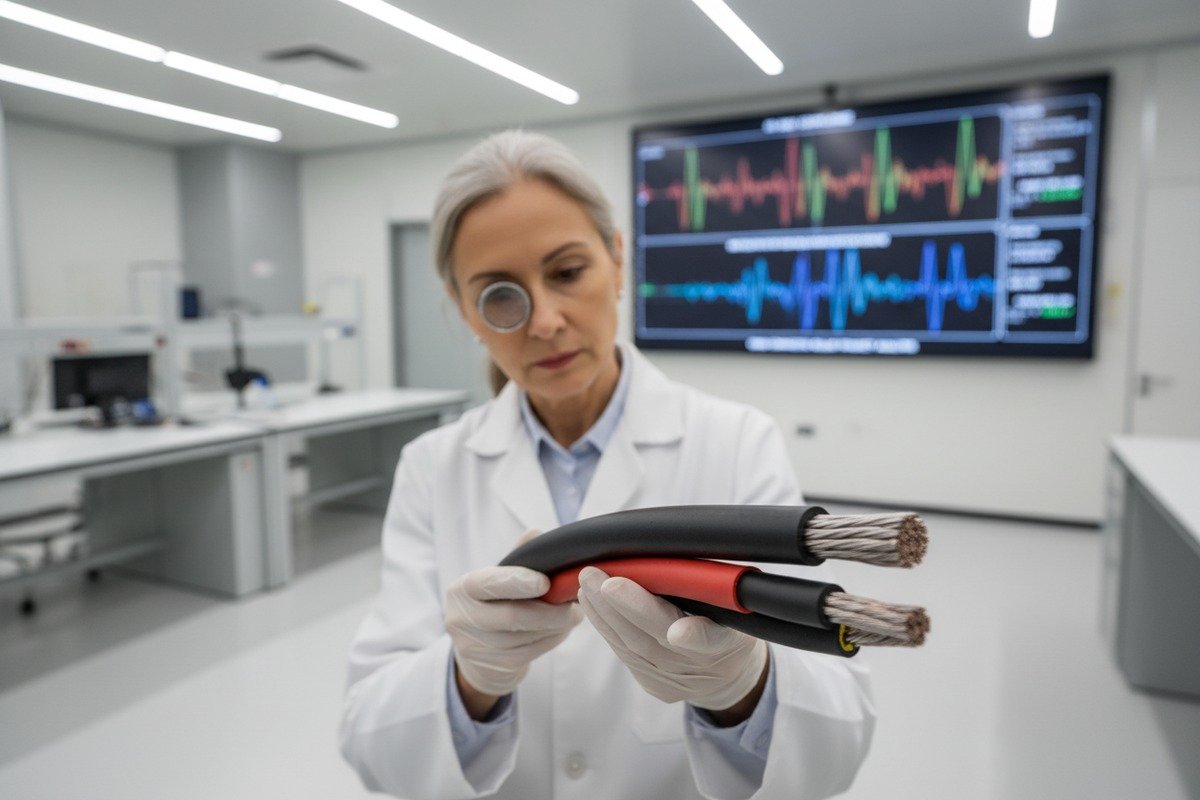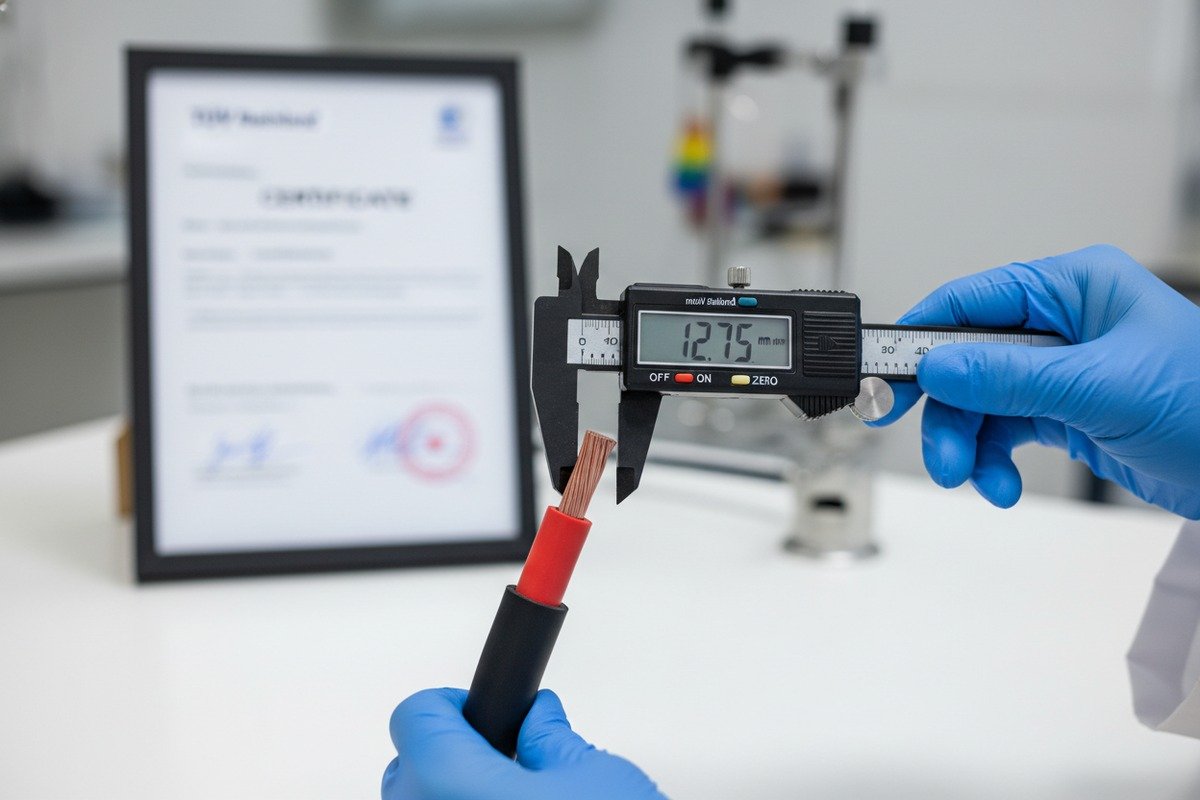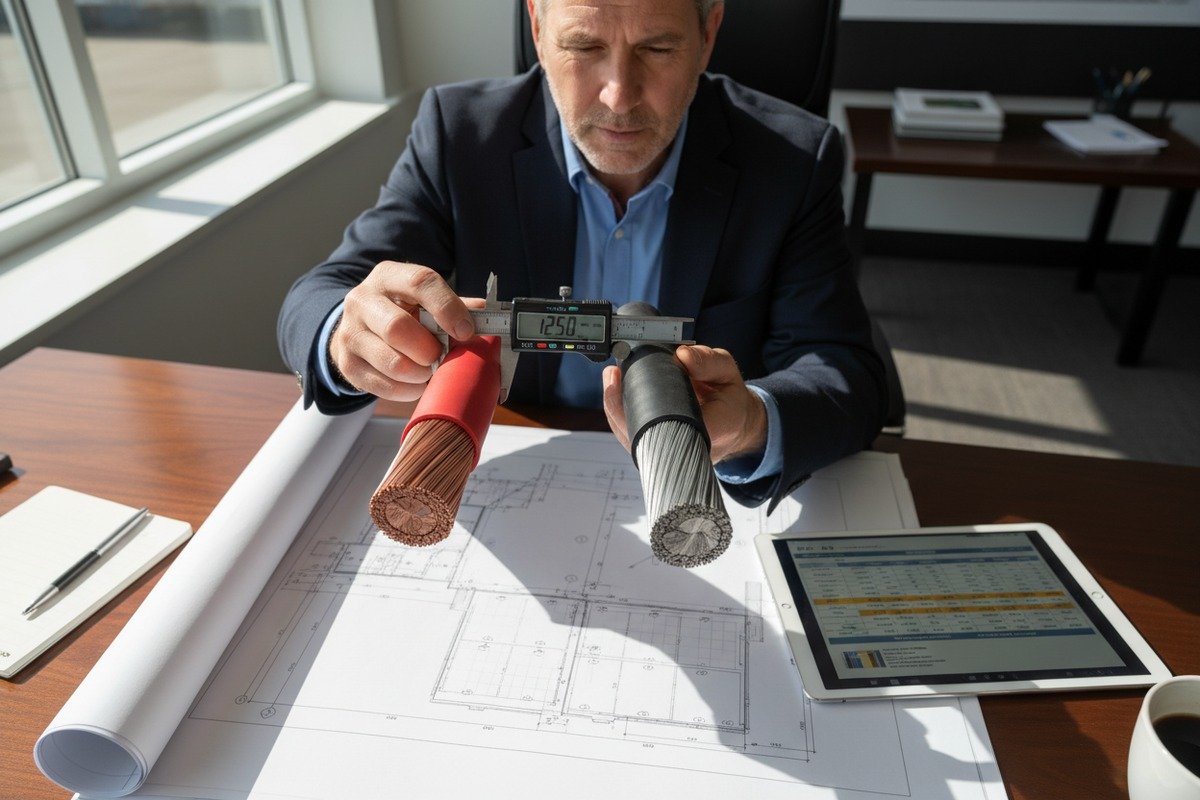
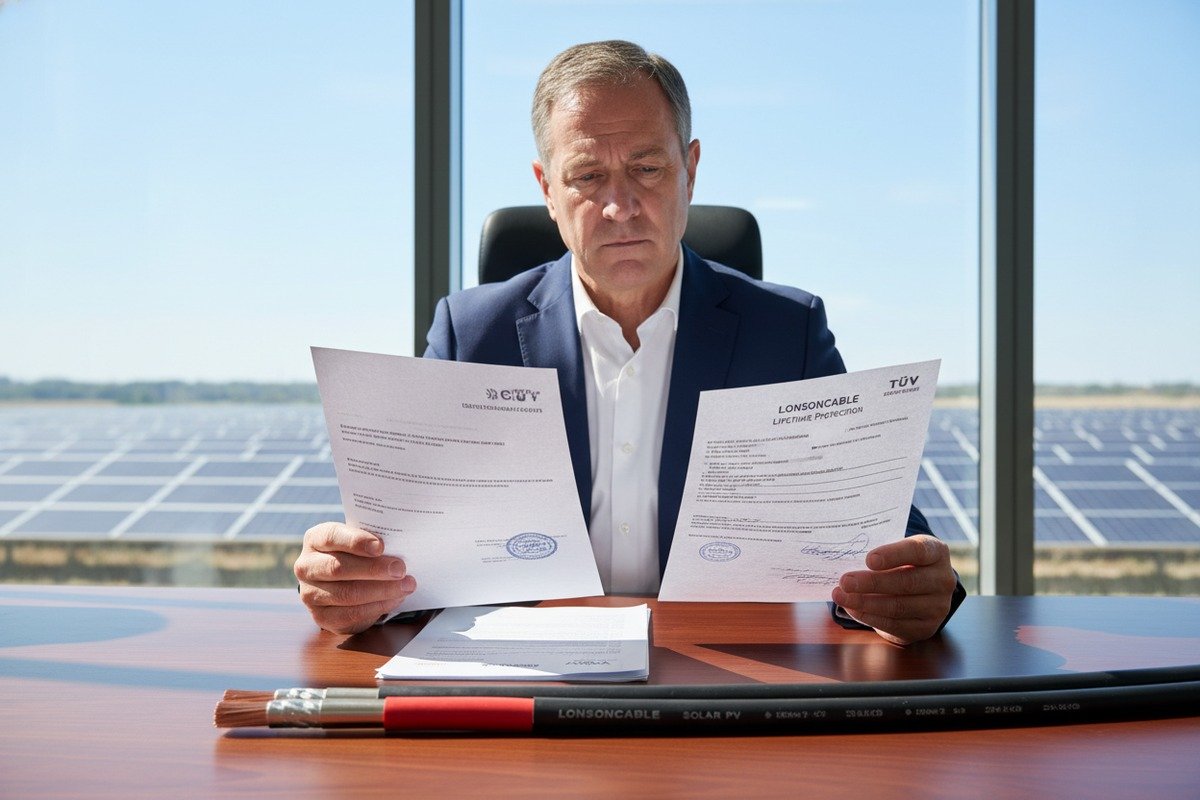
Every year, our quality team reviews field failure reports from solar farms in the Middle East and North Africa. The pattern is always the same — cables that looked fine during installation start cracking within five to eight years. The insulation turns brittle, power output drops, and the entire string needs replacement. It is a costly mistake that starts at the purchasing stage, not on the rooftop.
To evaluate solar PV cable insulation aging for high-temperature environments, buyers should verify XLPO or XLPE insulation quality through certified accelerated thermal aging test reports (per IEC 60216 and TUV 2PFG 1169), confirm UV and ozone resistance ratings, and demand documented Arrhenius lifetime projections from the manufacturer before placing any order.
This guide breaks down the exact tests, certifications, and red flags you should look for. Each section targets a specific concern that procurement professionals in hot climates face daily. Let us walk through them one by one.
How do I verify that the XLPO insulation will actually withstand extreme UV and heat?
When we ship H1Z2Z2-K cables to projects in Saudi Arabia or southern Spain, this is the first question our clients ask. They have been burned before — sometimes literally — by cables that degrade far too quickly under direct sun exposure.
Verify XLPO insulation performance by requesting UV exposure test results per ISO 4892 or EN 50618, checking for a minimum 720-hour accelerated weathering pass, and confirming the insulation retains at least 50% of its original tensile strength and elongation after thermal aging at 120°C for 240 hours.
Understanding What XLPO Actually Is
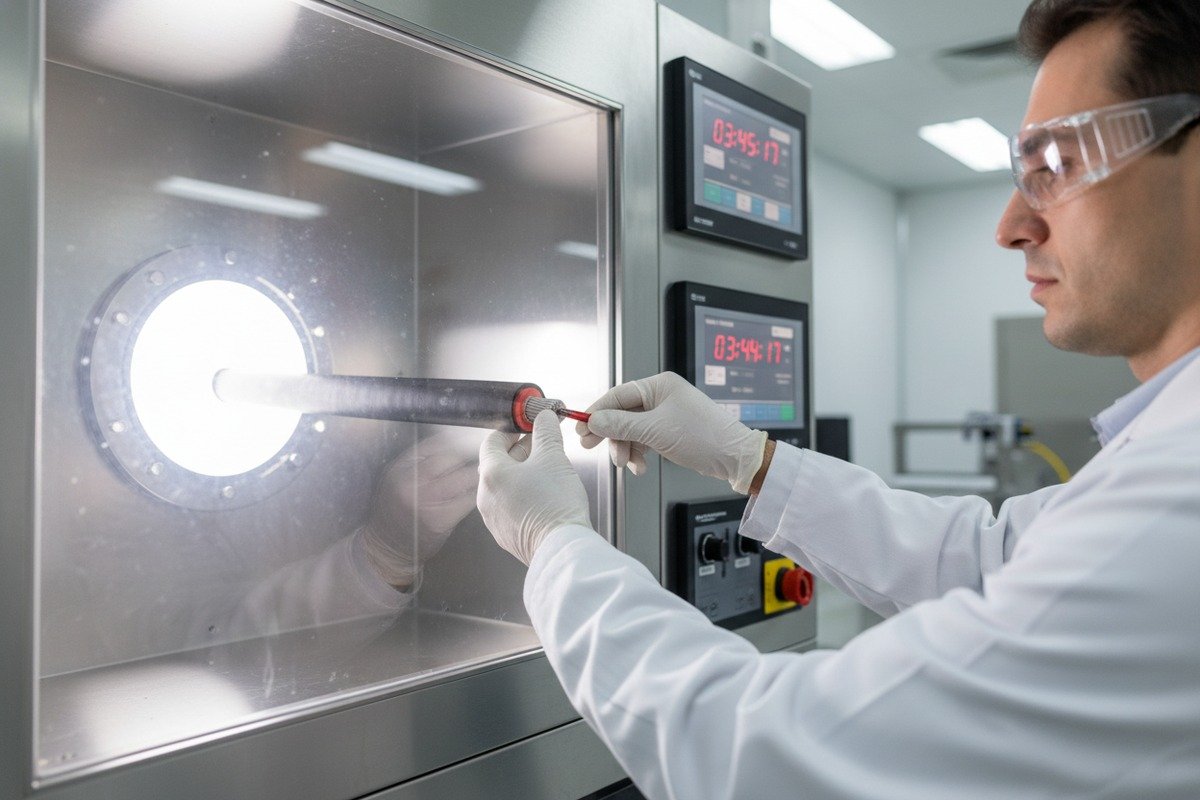
XLPO stands for cross-linked polyolefin. It is not the same as standard polyethylene. The cross-linking process creates chemical bonds 1 between polymer chains. These bonds make the material far more resistant to heat deformation. Standard polyethylene softens at around 110°C. XLPO holds its shape well beyond that point.
But here is the catch. Not all XLPO is made equal. The degree of cross-linking matters. A cable with 65% cross-linking will outperform one with only 50%. During our production runs, we test cross-linking degree 2 on every batch using the hot set test per EN 60811-507. If the elongation under load at 200°C exceeds 175%, the batch fails.
UV Degradation: The Silent Killer
UV radiation breaks polymer chains at the molecular level. Over months and years, the surface becomes chalky, then cracks appear, then moisture gets inside. This is not visible until it is too late. The real danger is that electrical insulation resistance drops before any physical crack is obvious.
To verify UV resistance, look for these specific tests:
| Test Standard | What It Measures | Pass Criteria |
|---|---|---|
| ISO 4892-2 (Xenon Arc) | Simulated sunlight aging | ≥720 hours, retain ≥50% elongation |
| EN 50618 Clause 5.2 | UV resistance for PV cables | No cracking after 720h UV exposure |
| UL 4703 Section 17 | Sunlight resistance (US standard) | Pass after 720h or 1440h exposure |
| ASTM G154 | UV fluorescent lamp aging | Appearance and mechanical retention |
Heat and UV Combined: The Worst-Case Scenario
In desert environments, cable surface temperatures can exceed 90°C easily. When a cable sits on a dark rooftop in Phoenix or Riyadh, the surface can hit 105°C during peak hours. At these temperatures, the Arrhenius model tells us that XLPE lifetime drops dramatically — from 40–60 years at 90°C to as low as 7–30 years at 95–105°C.
Our engineers recommend that buyers always ask for the hot set test 3 report, the UV weathering report 4, and the ozone resistance report as a combined package. Any supplier who only provides one of the three is likely hiding something.
Practical Tips for Procurement Teams
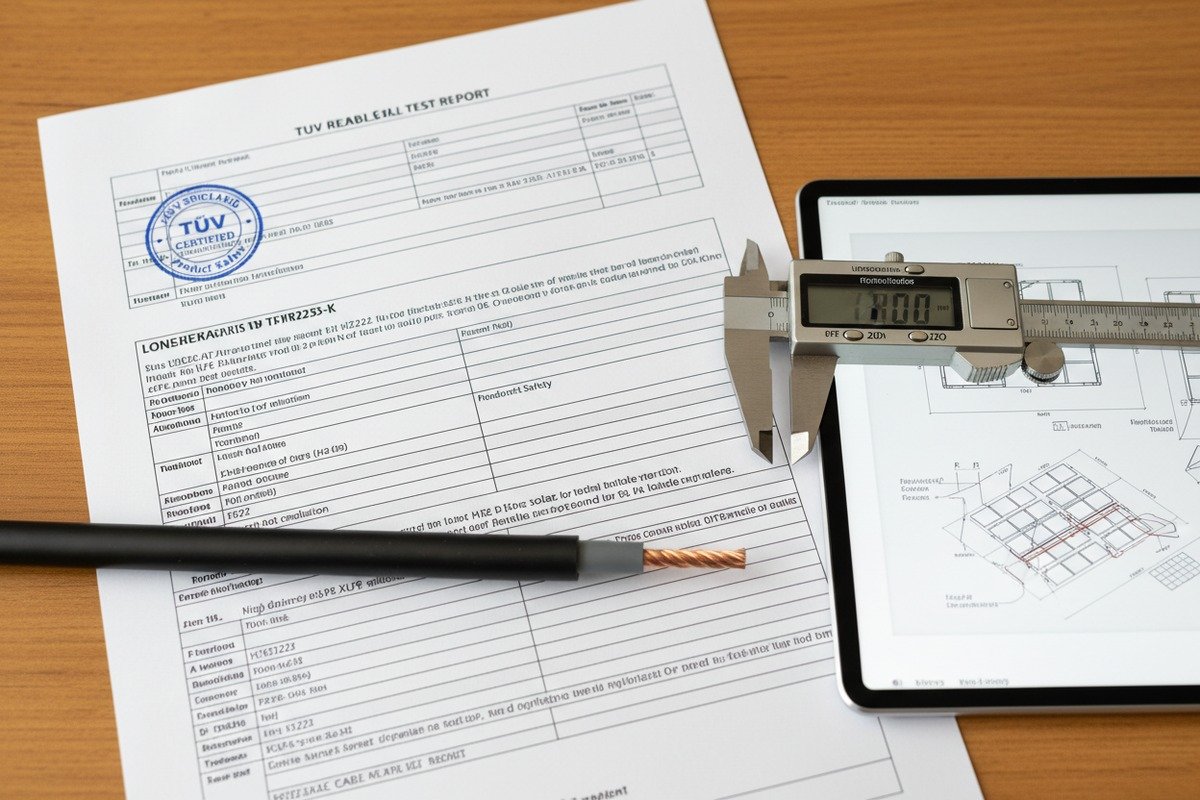
Do not rely on a single certification mark. Ask your supplier to show the actual test report — not just the certificate. A legitimate report will include specimen dimensions, test duration, temperature, and before/after measurements of tensile strength 5 and elongation. If the supplier hesitates, that is your red flag.
Which TUV aging test reports should I demand to see before placing my order?
Over the past 30 years of manufacturing solar PV cables, our sales team has learned that the single most important document in any deal is the TUV test report — not the certificate on the wall, but the actual detailed lab report.
Before ordering, demand TUV test reports covering thermal aging (EN 60811-401), UV resistance (EN 50618), ozone resistance (EN 50396), the hot set test (EN 60811-507), and fire behavior classification (EN 60332). These reports must reference the exact cable model and production facility you are sourcing from.
The Difference Between a Certificate and a Report
A TUV certificate 6 tells you that a cable passed testing at one point in time. A test report tells you how it passed, what the measured values were, and under what conditions. For procurement professionals like supply chain directors managing large EPC projects, the report is where the truth lives.
Here is a common problem we see. A supplier shows a TUV certificate for their H1Z2Z2-K cable. The certificate looks valid. But the certificate was issued for a cable produced at Factory A. The cable you are actually buying comes from Factory B. That certificate is worthless for your shipment.
Key TUV Reports and What to Look For
| Report / Test | Standard Reference | What It Proves | Key Values to Check |
|---|---|---|---|
| Thermal Aging | EN 60811-401 | Insulation survives prolonged heat | Tensile strength retention ≥ 70% after aging at 150°C × 168h |
| Hot Set Test | EN 60811-507 | Cross-linking quality | Elongation ≤ 175% at 200°C; permanent set ≤ 15% |
| UV Resistance | EN 50618 Clause 5.2 | Outdoor sunlight durability | No cracking after 720h xenon arc |
| Ozone Resistance 7 | EN 50396 | Resistance to atmospheric ozone | No cracking after 72h at 40°C |
| Flame Propagation | EN 60332-1-2 | Fire safety | Self-extinguishing within specified limits |
| Cold Bend | EN 60811-504 | Low-temperature flexibility | No cracking at -40°C |
How to Spot Fake or Expired Reports
This is a real concern, especially for buyers sourcing from unfamiliar markets. We have seen competitors present forged test documents. Here is how to verify authenticity:
- Check the TUV report number on TUV's official online portal. Legitimate reports can be traced.
- Compare the factory name on the report to the factory name on the purchase contract. They must match.
- Look at the date. Reports older than five years may not reflect current production quality.
- Check that the cable model number on the report matches exactly what you are purchasing.
CPR Fire Safety: A European-Specific Requirement
If your cables are destined for EU markets, the Construction Products Regulation 8 (CPR) applies. You need a Declaration of Performance (DoP) with a fire classification — typically Dca or Cca class for solar installations. Some manufacturers claim compliance but fail independent batch testing. During our supplier audit process, we maintain CPR documentation for every production batch and make it available to buyers upon request.
Ask for the third-party fire test report, not just a self-declared DoP. If the supplier cannot provide it within 48 hours, consider that a serious warning sign.
How can I be sure my cables will reach their 25-year lifespan in desert-like conditions?
When our export team works with clients building solar farms in the Sahara, the Atacama, or the Arabian Peninsula, the 25-year lifespan question comes up in every single meeting. The stakes are enormous — replacing cables mid-project can cost millions.
Ensure 25-year cable lifespan in deserts by selecting cables with XLPE or XLPO insulation rated for continuous 90°C operation, verified by Arrhenius-model accelerated life testing, combined with tinned copper conductors to resist corrosion, UV-stabilized outer sheaths, and proper installation practices that allow heat dissipation.
The Arrhenius Model: Your Best Prediction Tool
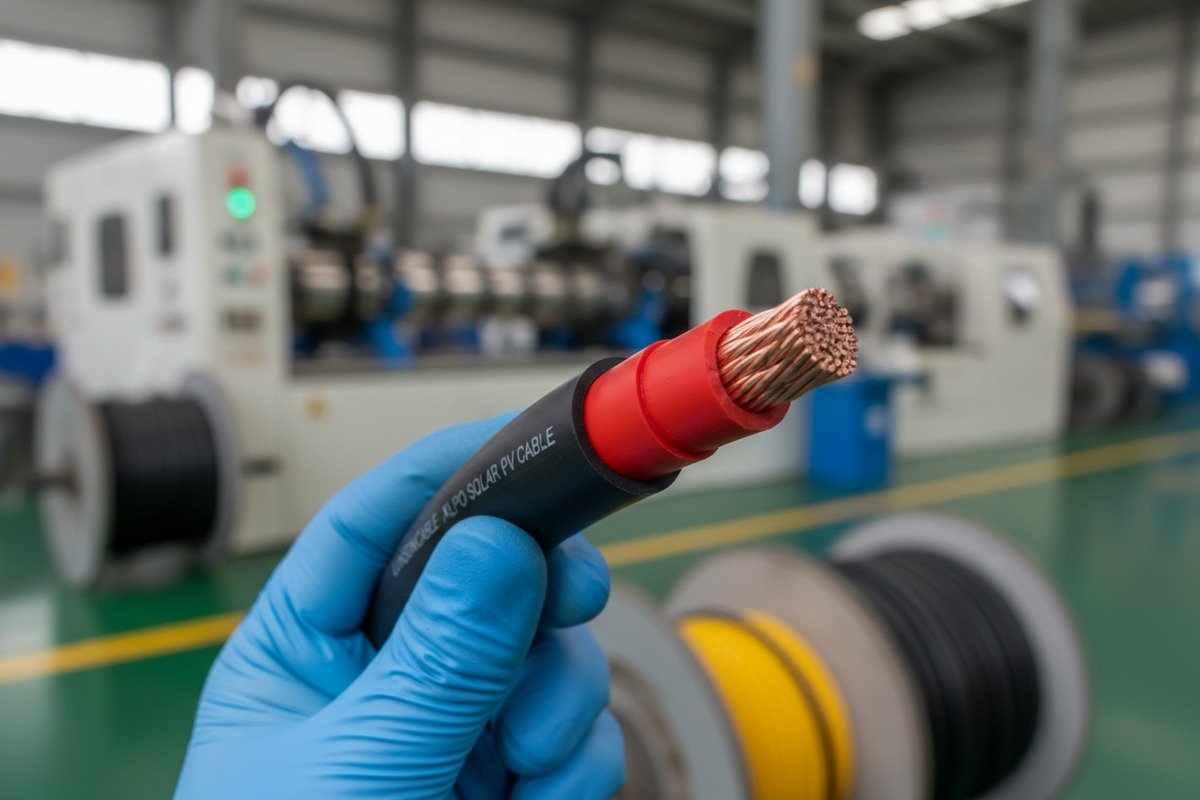
The Arrhenius equation is the industry standard for predicting insulation lifespan. It works by testing cables at elevated temperatures (95°C, 100°C, 105°C, 110°C) and measuring how quickly insulation properties degrade. Then it extrapolates backward to the rated temperature to estimate real-world lifespan.
Research shows that standard XLPE insulation lasts 40–60 years when operating continuously at 90°C. But at 95°C, that drops to roughly 30 years. At 105°C, it can fall to just 7 years. These are not minor differences. A five-degree increase in operating temperature can cut cable life in half.
Real-World Temperature vs. Rated Temperature
Most PV cables are rated for 90°C continuous operation. But in desert conditions, the ambient air temperature alone can reach 50°C. Add solar radiation 9 hitting a dark cable surface, resistive heating from current flow, and proximity to hot rooftop surfaces, and you can easily push the cable temperature past 90°C.
This is why installation practice matters as much as material quality.
| Installation Factor | Temperature Impact | Mitigation Strategy |
|---|---|---|
| Cable bundling in conduit | +10–15°C above ambient | Use larger conduits; separate cables |
| Direct rooftop contact | +15–20°C surface heating | Use cable trays with airflow gaps |
| Current overloading | +5–10°C from I²R losses | Upsize conductor cross-section |
| Lack of shade | +10°C from direct radiation | Route cables under modules where possible |
| Dark-colored sheath | +5°C vs. light sheath | Specify light grey or white outer jacket |
Why Tinned Copper Matters
In coastal desert environments — think the Persian Gulf or North Africa — salt-laden humidity 10 combines with heat to corrode bare copper conductors. Tinned copper adds a protective layer that prevents oxidation at the strand level. This may seem like a small detail, but corroded copper increases resistance, which increases heat, which accelerates insulation aging. It is a vicious cycle.
We produce all our desert-grade cables with tinned copper as standard. The cost difference is minimal — roughly 3–5% more on the conductor — but it can add years to the cable's useful life.
Packaging and Logistics: An Overlooked Factor
Cables that arrive damaged to site will not last 25 years. We have seen cases where cheap wooden drums collapsed during sea freight, kinking the cables and creating stress points. These stress points become failure points within a few years. For projects in remote desert locations, we use reinforced steel-frame drums and shrink-wrapped protection. It costs a bit more, but it protects the investment.
What factory-level thermal aging tests should I look for during my supplier audit?
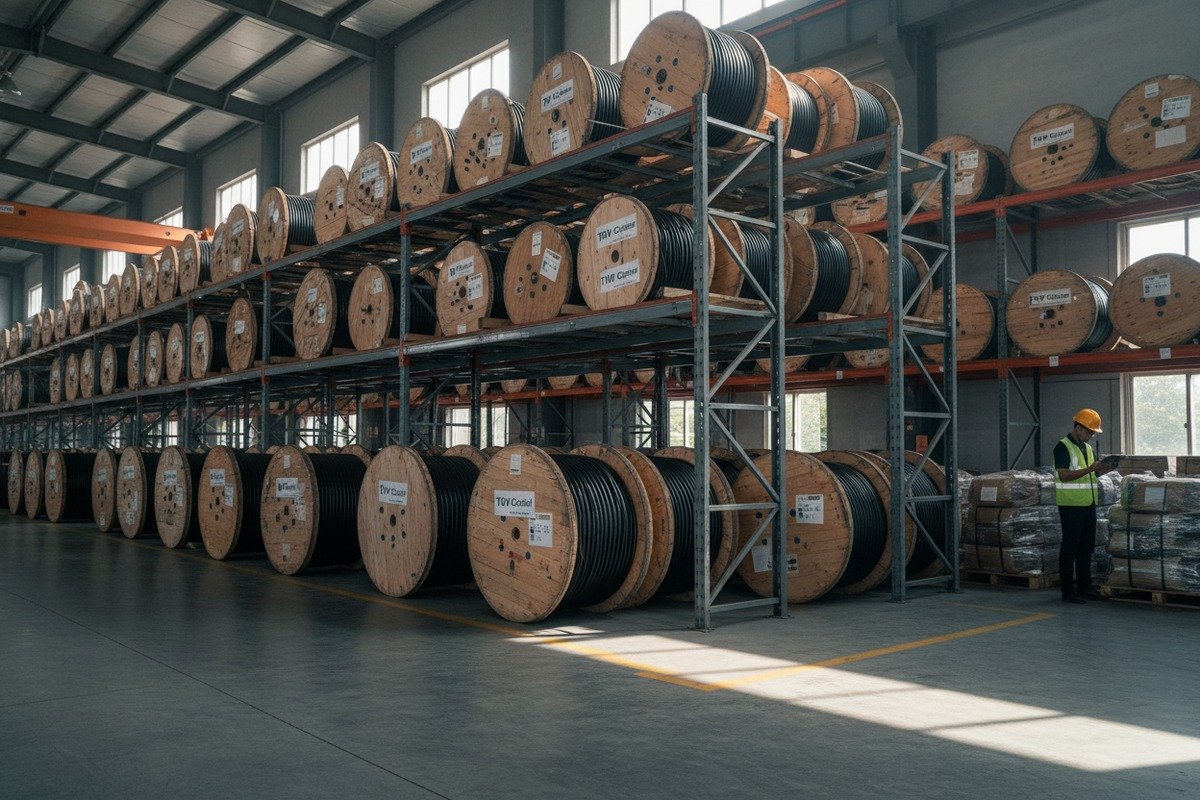
During factory audits at our 230,000 m² production facility, we walk visiting procurement teams through every stage of quality control. The thermal aging lab is always where they spend the most time — and ask the hardest questions. That is exactly as it should be.
During a supplier audit, look for in-house thermal aging ovens running per EN 60811-401, hot set test equipment per EN 60811-507, UV weathering chambers per ISO 4892, tensile testing machines for post-aging mechanical analysis, and documented batch-level test records with full traceability to raw material lots.
The Minimum Lab Equipment You Should See
A factory that takes quality seriously will have a dedicated testing laboratory. It does not need to be massive, but it must have the right equipment. Here is what to look for when you walk the floor:
Thermal Aging Ovens: These should be forced-air circulation ovens capable of maintaining temperatures from 100°C to 200°C with ±2°C accuracy. The oven should have calibration stickers with recent dates. Ask to see the calibration certificate. If the last calibration was more than 12 months ago, the test data from that oven is unreliable.
Hot Set Test Apparatus: This is a simple but critical device. It suspends a cable sample in an oven at 200°C with a weight attached. It measures how much the insulation stretches under load (elongation) and how much it recovers after cooling (permanent set). A well-cross-linked XLPO insulation will show ≤175% elongation and ≤15% permanent set. If the factory does not perform this test on every batch, walk away.
Tensile Testing Machine: After aging samples in the oven, the factory must measure tensile strength and elongation at break. The machine should be digital with calibrated load cells. Compare the post-aging values to the pre-aging baseline. Retention of at least 70% in both metrics is the standard threshold.
Batch-Level Traceability
Every test should be linked to a specific production batch. During our production process, we assign a unique lot number to each drum of cable. That lot number traces back to the raw XLPO compound supplier, the extrusion date, the extrusion operator, and the test results. If a problem appears in the field five years later, we can trace it back to the exact batch of raw material.
Ask to see this traceability system during your audit. If the factory cannot show you how they track materials from incoming inspection to finished goods, their quality control is incomplete.
What Questions to Ask the Lab Manager
When you meet the lab manager, ask these direct questions:
- How often do you run thermal aging tests? (Answer should be: every production batch.)
- What is your rejection rate on hot set tests? (A zero rejection rate is suspicious — it may mean they are not testing rigorously.)
- Can you show me a failed test report? (A factory that has never failed a test is either not testing or not being honest.)
- Do you perform any non-destructive testing like dielectric spectroscopy? (Advanced factories are beginning to adopt this for quality screening.)
Red Flags During Factory Audits
Watch for these warning signs:
- Testing equipment that looks unused or dusty.
- No climate-controlled sample storage area.
- Lab staff who cannot explain the test procedures.
- Test reports that all show identical values across multiple batches (copy-paste fraud).
- Reluctance to let you observe a live test.
Our facility runs live hot set tests and tensile tests during audits so visitors can see the process in real time. We find this builds more trust than any marketing brochure ever could.
Conclusion
Choosing PV cables for high-temperature environments demands more than reading a datasheet. Verify insulation quality through real test reports, audit the factory lab, and never assume a certificate alone guarantees 25 years of reliable performance.
Footnotes
1. Scientific overview of the molecular forces that stabilize cross-linked polymers. ↩︎
2. Technical explanation of how the degree of cross-linking affects polymer properties. ↩︎
3. International standard for testing cross-linking quality in cable insulation materials. ↩︎
4. Standardized testing procedures for UV exposure and weathering of polymers. ↩︎
5. Global standard for determining the tensile stress-strain properties of vulcanized rubber. ↩︎
6. Replaced HTTP 404 link with an authoritative TUV Rheinland page detailing wire and cable testing and certification, including PV cables. ↩︎
7. Replaced HTTP 404 ISO link with the official IEC standard (IEC 60811-2-1:1998) that specifies test methods for ozone resistance in elastomeric compounds for cables, which is highly authoritative and relevant. ↩︎
8. EU regulatory framework ensuring safety and performance standards for construction materials. ↩︎
9. Replaced HTTP 404 NREL link with an authoritative Department of Energy page providing basic information about solar radiation. ↩︎
10. Information on how salt-laden humidity impacts material corrosion in coastal environments. ↩︎