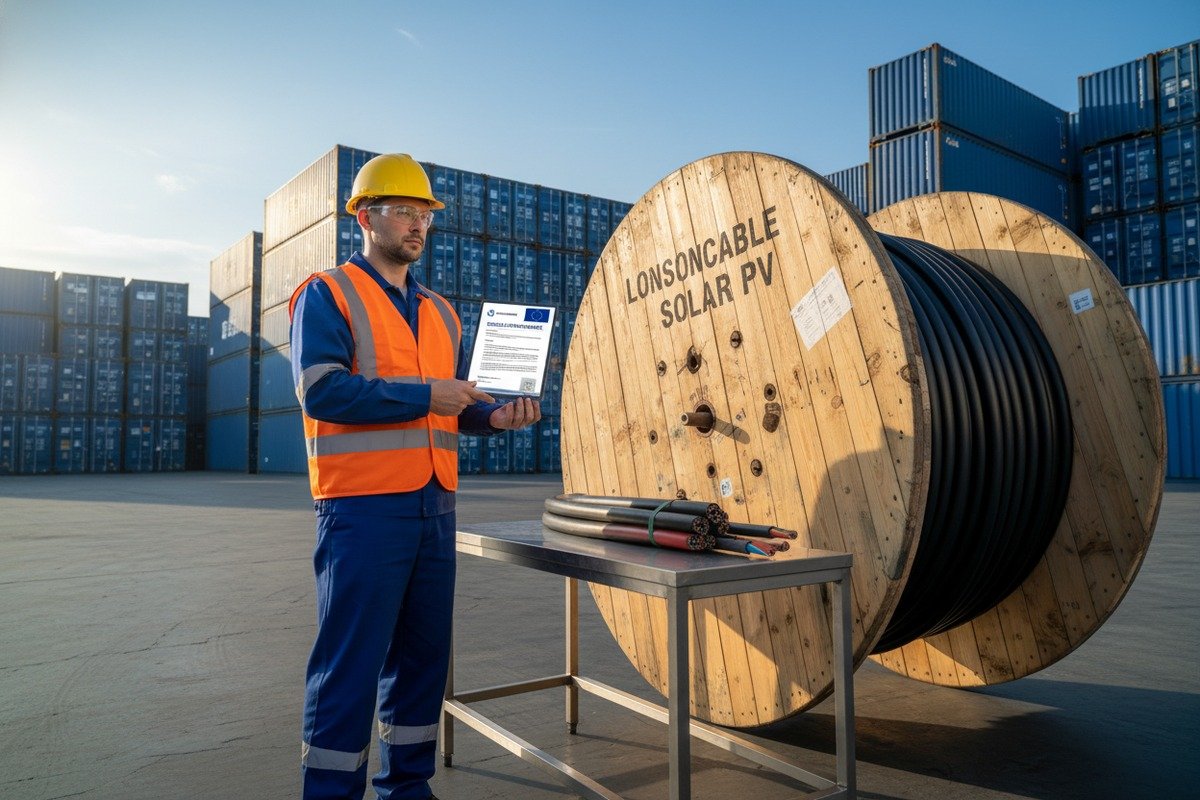
Every year, we see European buyers reject entire container loads of solar PV cables 1 at customs. The reason? Failed CPR compliance. It is a costly mistake that ruins timelines and budgets.
To ensure solar PV cables from China meet EU CPR standards, buyers must verify authentic TUV and CE certifications, demand valid Declarations of Performance, audit factory production controls, and confirm Euroclass fire ratings through independent third-party testing before shipment leaves the port.
This guide breaks down every step you need to take TUV and CE certifications 2. We will cover certification verification, fire safety class testing, factory audits, and the exact documents you need for smooth EU customs clearance. Let us get into the details.
How can I verify that my Chinese supplier's TUV and CPR certifications are authentic and currently valid?
We have shipped H1Z2Z2-K solar cables 3 to over 30 countries, and the number one question our European partners ask is about certification trust Declarations of Performance 4. Fake certificates are everywhere. The risk is real, and the consequences are severe.
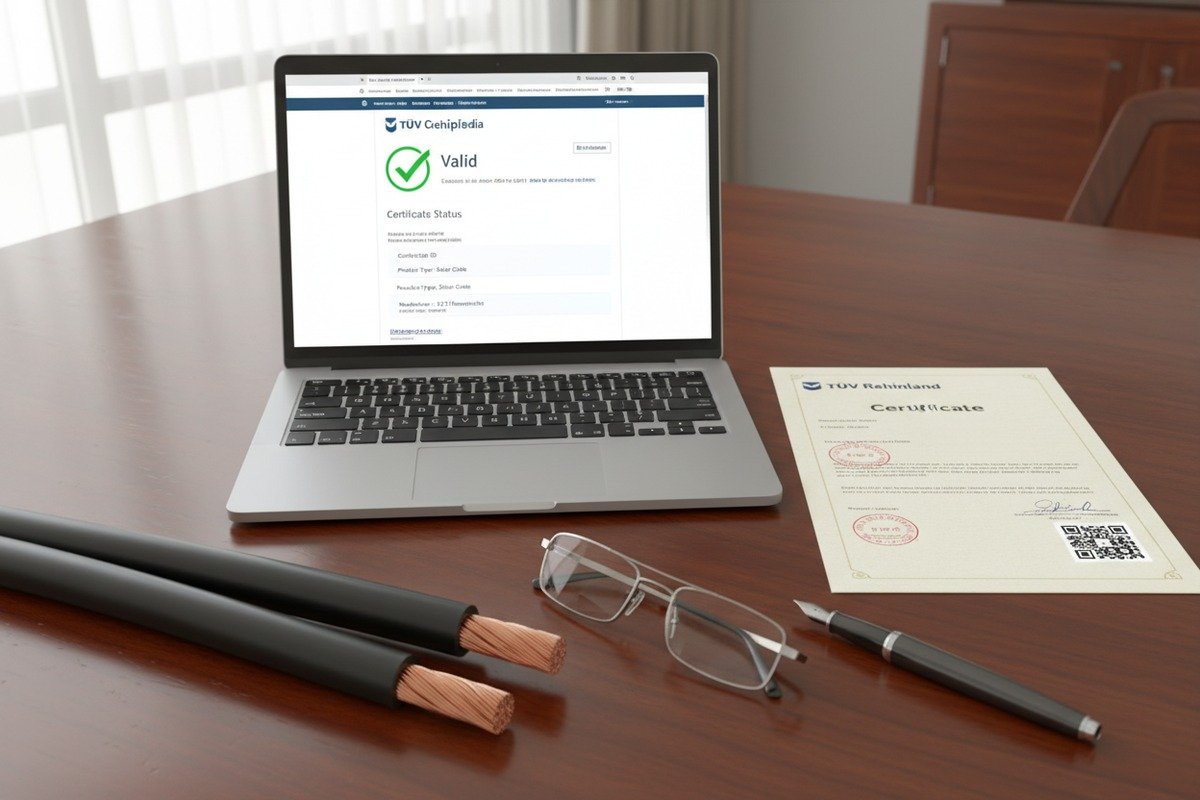
Verify TUV certificates directly on the TUV issuing body's online database using the certificate number. Cross-check that the company name, product model, factory address, and certification scope match your supplier's details exactly. Confirm the expiry date has not passed and the certificate covers CPR-relevant fire classifications.
Why Fake Certificates Are So Common
The solar cable market is booming. China supplies over 80% of the world's PV cables. This creates a massive incentive for bad actors. Some suppliers photoshop certificate numbers. Others use expired documents. A few even buy certificates from third parties who no longer manufacture the product Euroclass fire ratings 5.
Here is the problem: a fake TUV certificate looks almost identical to a real one. You cannot tell the difference just by looking at the PDF low-smoke zero-halogen (LSZH) insulation materials 6. You must go to the source.
Step-by-Step Verification Process
Start with the certificate number. Every legitimate TUV certificate has a unique ID. Go to the official TUV website (e.g., TUV Rheinland's Certipedia 7 or TUV SUD's database) and search that number. The result should show:
- The exact manufacturer name and factory address
- The product model and standard (EN 50618 or EN 50575)
- The Euroclass fire rating (e.g., B2ca-s1a,d1,a1)
- The issue date and expiry date
If anything does not match, stop the order immediately EN 50399 and EN 60332-1-2 test reports 8.
Key Details to Cross-Check
| Verification Point | What to Look For | Red Flag |
|---|---|---|
| Company Name | Must match supplier's legal entity exactly | Slight spelling differences or trade name only |
| Factory Address | Must match the actual production site | Office address listed instead of factory |
| Product Model | Must match the cable you are ordering | Generic model or different variant listed |
| Fire Classification | Must show CPR Euroclass (e.g., Dca, Cca, B2ca) | No fire class or "pending" status |
| Expiry Date | Must be current | Expired by months or years |
| Notified Body Number | Must match a real EU Notified Body | Fake or unrecognized body number |
Contact the Notified Body Directly
When in doubt, email or call the Notified Body listed on the certificate Factory Production Control (FPC) manual 9. Ask them to confirm the certificate is active. This takes 2-3 business days. It is worth the wait.
At our facility, we keep all original certificates available for buyer inspection. We also provide direct contact details for our certifying bodies. Any reputable manufacturer will do the same. If a supplier refuses, that is your answer.
Watch for Scope Limitations
A TUV certificate might be valid but only cover certain conductor sizes or voltage ratings. For example, a certificate for 4mm² H1Z2Z2-K cable does not automatically cover 6mm² or 10mm² versions. Each product variant needs its own scope entry. Always match the exact specification you are purchasing against the certificate scope.
What steps should I take to ensure the cable insulation consistently meets strict Dca or Cca fire safety classes?
Fire safety is not optional in the EU. Our engineering team spends significant resources on insulation compound formulation because even small changes in raw materials can shift a cable's fire performance from Cca to Eca—or worse.
To ensure consistent Dca or Cca fire class compliance, specify low-smoke zero-halogen (LSZH) insulation materials, require EN 50399 and EN 60332-1-2 test reports for every production batch, and mandate that your supplier uses a fixed, pre-approved compound formula with no substitutions between batches.

Understanding Euroclass Fire Ratings for PV Cables
The CPR fire classification system runs from Aca (best) to Fca (worst). For solar PV cables used in EU buildings and structures, the most commonly required classes are B2ca, Cca, and Dca. Each class has sub-classifications for smoke (s), flaming droplets (d), and acidity (a).
| Euroclass | Flame Spread | Heat Release | Smoke Production | Typical Use Case |
|---|---|---|---|---|
| B2ca-s1a,d1,a1 | Very limited | < 2 MJ | Very low, low acidity | Rooftop PV, bundled installations |
| Cca-s1b,d1,a1 | Limited | Moderate | Low | Commercial PV arrays |
| Dca-s2,d2,a2 | Moderate | Higher | Moderate | Ground-mount, open-air PV farms |
| Eca | Basic pass | Not classified | Not classified | Minimal fire risk environments |
The Insulation Material Is Everything
The insulation and sheathing compound determines fire performance. For CPR-compliant solar cables, cross-linked polyolefin (XLPO) or cross-linked low-smoke zero-halogen (XLSZH) materials are standard. PVC-based insulation will not meet B2ca or Cca requirements.
Here is what matters:
- Base polymer: Must be halogen-free. PVC contains chlorine and fails acidity tests.
- Flame retardant additives: Aluminum trihydrate (ATH) or magnesium hydroxide (MDH) must be present in the correct ratio.
- Cross-linking degree: Higher cross-linking improves heat resistance and fire performance. Target ≥ 65% gel content.
Why Batches Fail
The most common reason for fire class failure between batches is compound substitution. A supplier might pass initial type testing with premium LSZH compound, then quietly switch to a cheaper formula for production runs. The cable looks identical. It performs differently in fire.
We solve this problem by locking our compound suppliers into fixed formulations with batch traceability. Every compound delivery gets tested against the approved specification before it enters our extrusion lines. This costs more, but it prevents the kind of failures that destroy buyer relationships.
Pre-Shipment Fire Testing
Do not rely solely on the manufacturer's initial type test. Request pre-shipment sample testing at an independent EU-accredited laboratory. Key tests include:
- EN 60332-1-2: Single vertical flame propagation
- EN 50399: Heat release rate and flame spread for bundled cables
- EN 61034: Smoke density
- EN 60754-2: Halogen acid gas emission (acidity)
These tests cost €10,000–€50,000 per product family. Budget for them. They are your insurance against a rejected shipment worth many times more.
How do I audit a manufacturer's internal testing procedures to avoid batch failures during independent European inspections?
Our quality control team runs over 15 in-line tests on every production batch. But we know that not every factory operates the same way. When our European buyers visit, they often tell us horror stories about other suppliers who had zero internal testing protocols.
To audit a manufacturer's testing procedures, conduct unannounced factory visits, review their Factory Production Control (FPC) manual, verify calibration records for all test equipment, inspect raw material incoming quality checks, and compare internal test results against independent third-party lab reports for the same batch samples.
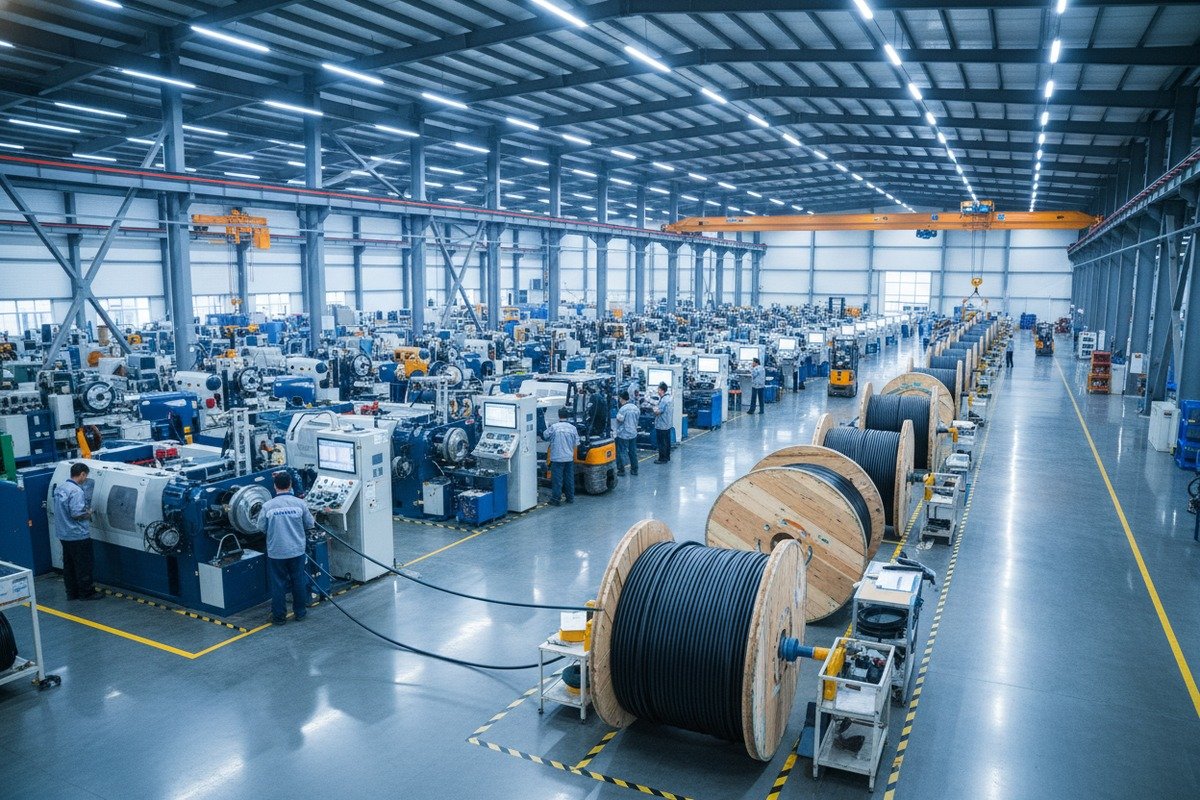
What Is Factory Production Control (FPC)?
Under the CPR's Assessment and Verification of Constancy of Performance (AVCP) system, manufacturers must maintain a documented FPC system. For higher fire classes like B2ca, AVCP System 1+ applies. This means:
- A Notified Body performs the initial type test
- A Notified Body inspects and certifies the FPC system
- The Notified Body conducts ongoing surveillance of FPC
- The manufacturer maintains continuous internal quality control
Ask for the FPC certificate. It should be issued by the same Notified Body on the product certificate. If the manufacturer cannot produce an FPC certificate, they cannot legally claim CPR compliance 10.
Critical Audit Checkpoints
When you visit the factory (or send an auditor), focus on these areas:
| Audit Area | What to Check | Why It Matters |
|---|---|---|
| Raw Material Inspection | Incoming compound test reports, supplier COAs | Prevents substandard materials entering production |
| Extrusion Line Monitoring | Temperature records, line speed logs, thickness gauges | Ensures consistent insulation thickness and cross-linking |
| Cross-Linking Verification | Gel content test results (target ≥ 65%) | Directly impacts fire resistance and cable lifespan |
| Electrical Testing | Spark test logs, insulation resistance, voltage withstand | Catches defective insulation before packaging |
| Dimensional Checks | Conductor diameter, insulation thickness, overall diameter | Verifies compliance with EN 50618 tolerances |
| Marking Verification | Print legibility, correct CE marking, Euroclass, batch code | Ensures traceability and regulatory compliance |
| Traceability System | Batch-to-raw-material linkage, production date records | Enables root cause analysis if problems arise |
Unannounced Visits Are Essential
Scheduled audits give factories time to prepare. They clean up. They pull the best samples. They stage their documentation. An unannounced visit shows you reality.
If your supplier resists unannounced audits, consider that a serious warning sign. At our 230,000 m² production facility, we welcome buyer inspections at any time. We have nothing to hide because our processes run the same way every day.
Compare Internal vs. External Results
Ask the manufacturer for their internal test data on a specific batch. Then send samples from that same batch to an independent European lab (such as KEMA, BASEC, or LPCB). Compare the results. If internal data consistently shows higher performance than independent results, the manufacturer is either using different test methods or cherry-picking samples.
Calibration and Equipment Standards
Every piece of test equipment must have valid calibration certificates. Check the calibration dates. Expired calibrations mean unreliable data. Key equipment includes:
- High-voltage test sets (for spark and withstand testing)
- Micrometers and calipers (for dimensional checks)
- Oxygen index testers (for flame retardancy screening)
- Tensile strength machines (for mechanical performance)
- Ovens (for aging and cross-linking tests)
Our lab equipment is calibrated annually by certified metrology agencies. We keep every calibration certificate on file and make them available to auditors immediately.
Which specific Declaration of Performance (DoP) documents must I demand to ensure my shipment clears EU customs smoothly?
We prepare DoP documents for every cable model we export to Europe. Yet we still get calls from buyers who purchased from other suppliers and got stuck at customs because the paperwork was wrong. The DoP is not optional. It is the legal backbone of CPR compliance.
You must demand a valid Declaration of Performance (DoP) that includes the unique product identification code, the manufacturer's registered details, the harmonized standard reference (EN 50575), the declared Euroclass fire rating, the Notified Body identification number, and the manufacturer's authorized signature—all matching the exact product in your shipment.
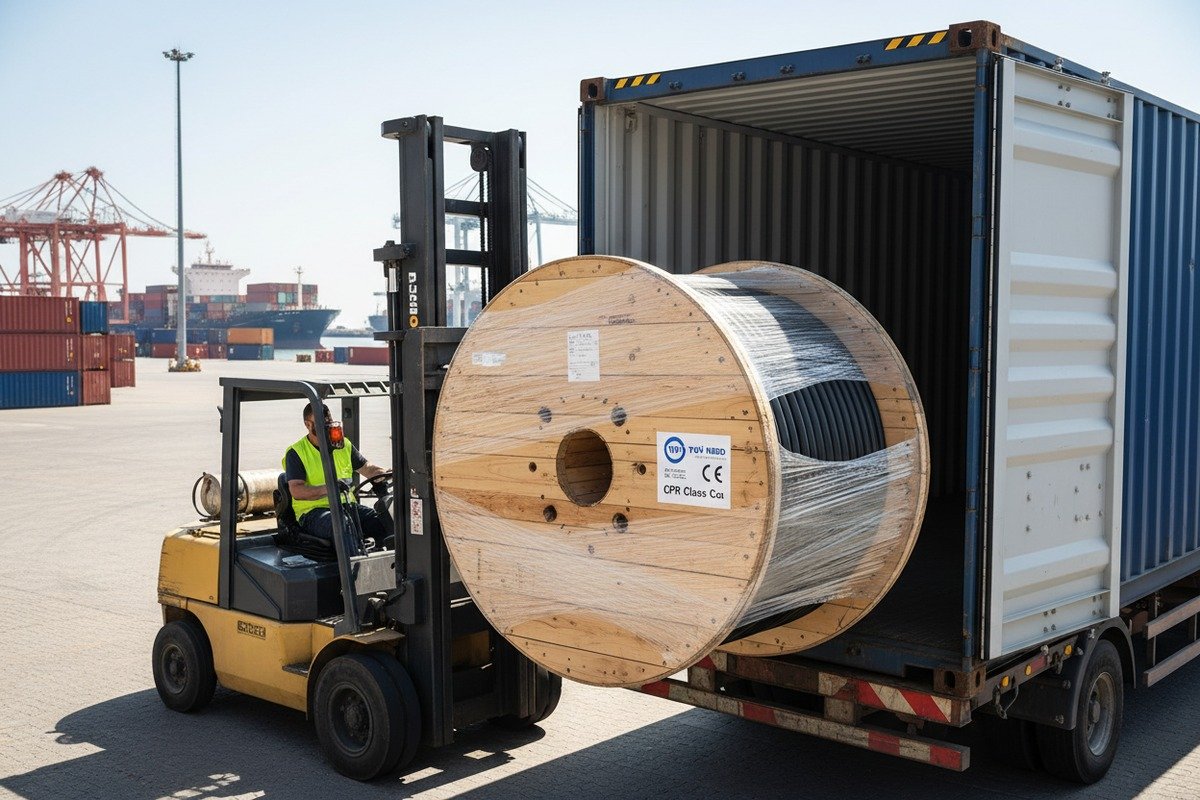
What Exactly Is a DoP?
The Declaration of Performance is a legal document required under EU Regulation No 305/2011 (CPR). It declares the essential characteristics of a construction product. For cables, the primary essential characteristic is reaction to fire.
Without a valid DoP, the CE marking on the cable is meaningless. Customs authorities can seize shipments that lack a proper DoP. Building inspectors can reject installed cables. Insurance companies can void coverage.
Mandatory DoP Contents
Every DoP for a CPR-compliant solar PV cable must contain these elements:
| DoP Element | Description | Example |
|---|---|---|
| DoP Reference Number | Unique identifier for the declaration | DoP-LSZH-H1Z2Z2K-2025-001 |
| Product Type | Unique identification code of the product type | H1Z2Z2-K 1x6mm² |
| Intended Use | The intended use of the construction product | Power cable for permanent installation in buildings |
| Manufacturer Details | Name, registered trade name, contact address | Full legal entity name and factory address |
| Authorized Representative | If applicable, name and address | EU-based importer or representative |
| AVCP System | System used for assessment | System 1+ |
| Harmonized Standard | The technical standard reference | EN 50575:2014+A1:2016 |
| Notified Body | Name and identification number | e.g., TUV Rheinland, NB 0123 |
| Declared Performance | The Euroclass and sub-classifications | B2ca-s1a,d1,a1 |
| Signature | Signed by authorized person with date | Name, title, date |
Common DoP Mistakes That Block Customs
Here are the errors we see most often:
- Mismatched product codes: The DoP says H1Z2Z2-K 4mm² but the shipment contains 6mm². Each size needs its own DoP or a DoP covering the full product family.
- Missing Notified Body number: Without the NB ID, customs cannot verify third-party involvement.
- Outdated standard references: Citing withdrawn standards (e.g., old EN 50575 without the A1 amendment) triggers holds.
- No signature or date: An unsigned DoP is not legally valid.
- Wrong manufacturer address: The DoP address must match the factory that produced the cables, not a sales office.
Keep DoPs Accessible
EU regulations require manufacturers to keep DoPs available for 10 years after the product is placed on the market. As a buyer, you should keep copies in your own records too. Some EU countries now require digital DoP access via QR codes on cable packaging.
We provide all DoP documents in digital format with every shipment. Each DoP links directly to the corresponding test report and FPC certificate. This gives our buyers a complete compliance package that customs authorities can verify quickly.
Additional Supporting Documents
Beyond the DoP itself, prepare these supporting documents for customs:
- Test report from the Notified Body (matching the DoP reference)
- FPC certificate (proving ongoing factory quality control)
- CE marking confirmation (showing the CE mark on the cable, reel, and packaging)
- Commercial invoice with correct product descriptions and HS codes
- Packing list with batch numbers matching DoP references
Having all documents ready and consistent dramatically reduces the chance of customs delays. We typically prepare a full compliance folder for each shipment destined for EU ports. Our delivery timeline of 15-20 days for stock items includes document preparation.
Conclusion
CPR compliance for Chinese-sourced solar PV cables requires verified certifications, consistent fire-rated insulation, rigorous factory audits, and complete DoP documentation. Take every step seriously, and your shipments will clear EU customs without surprises.
Footnotes
1. Replaced with a relevant article on solar and wind farm cables from the same domain. ↩︎
2. Clarifies the meaning and importance of CE marking for products in the European market. ↩︎
3. Provides technical specifications and standards for H1Z2Z2-K photovoltaic cables. ↩︎
4. Explains the mandatory legal document for construction products under EU CPR. ↩︎
5. Details the standardized European system for classifying cable fire behavior. ↩︎
6. Describes the properties and fire safety benefits of LSZH cable insulation. ↩︎
7. Direct link to the official TUV Rheinland database for verifying product certifications. ↩︎
8. Explains the European standard for measuring heat release and smoke production in cable fire tests. ↩︎
9. Defines the documented internal control system required for construction products under CPR. ↩︎
10. Provides an overview of the Construction Products Regulation for cables in the EU. ↩︎