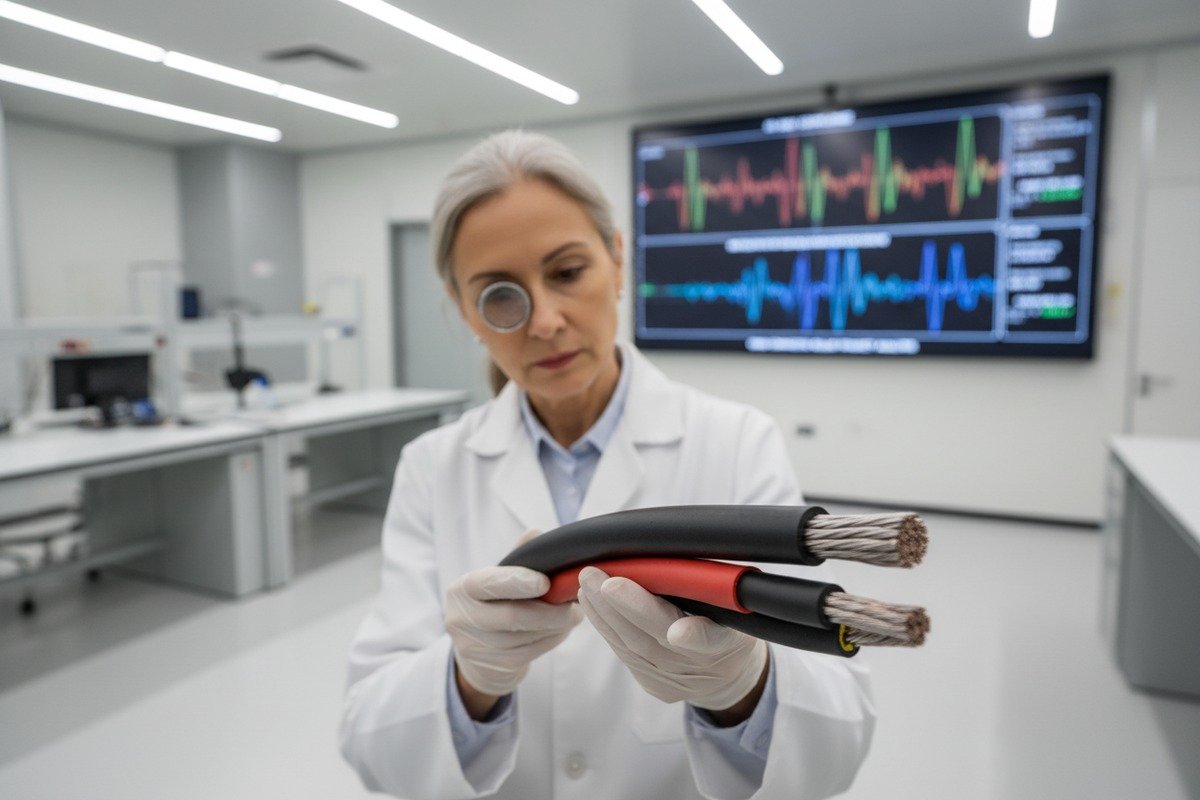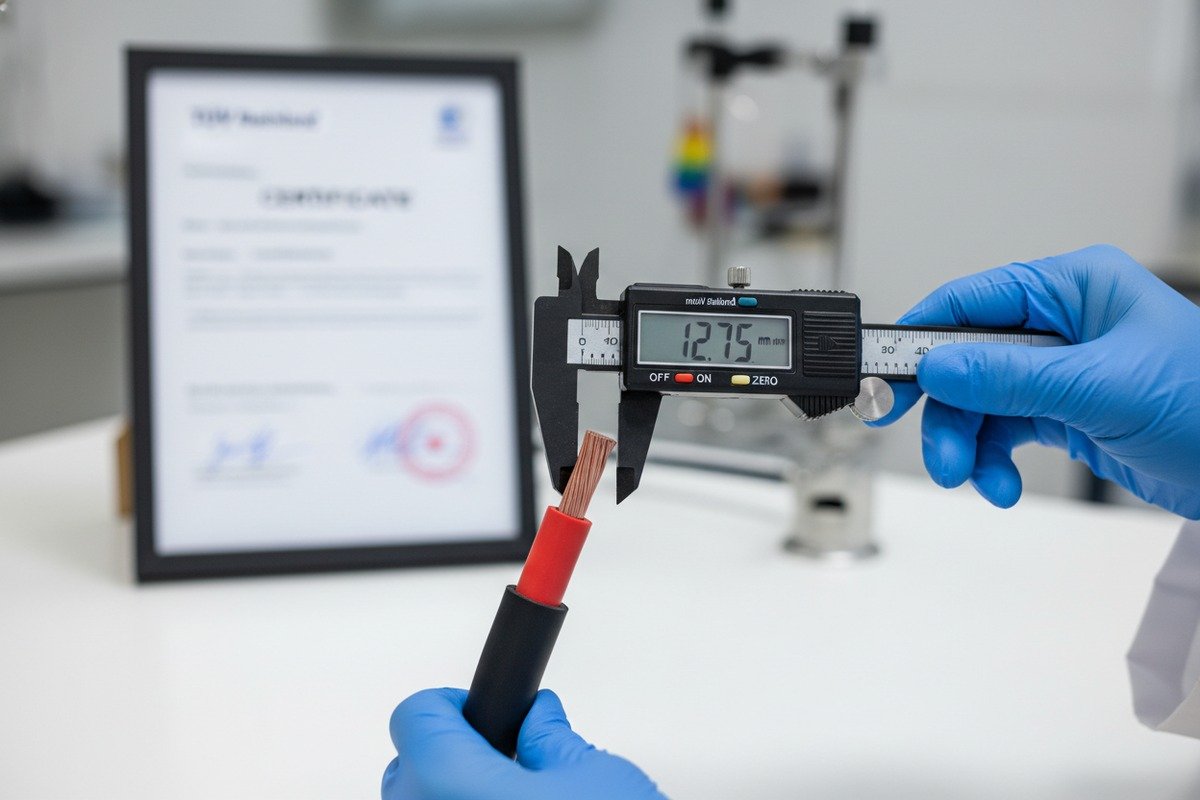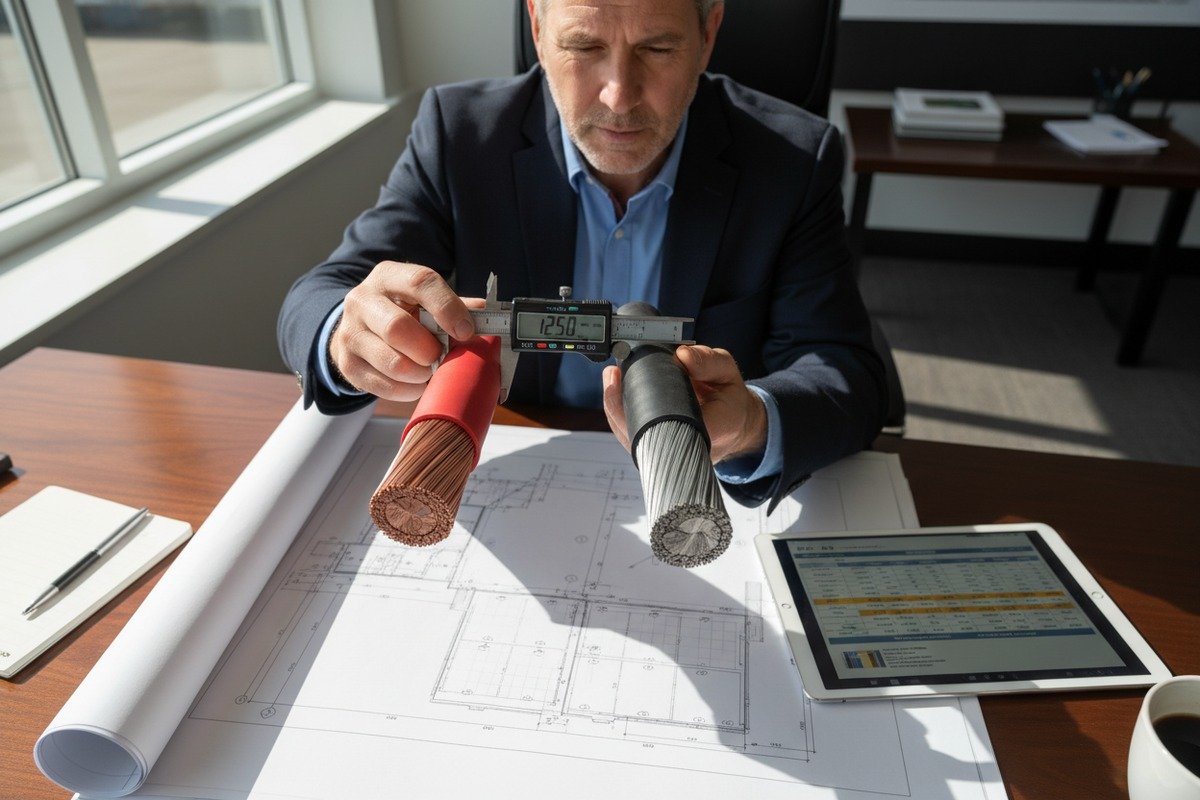

Every year, we see US contractors receive ADSS cable 1 shipments that look perfect on the outside but fail within months on the line. Our production team has spent three decades learning that the difference between a 25-year cable and a 5-year cable hides inside—in the fiber brand, the aramid yarn 2, and the jacket compound. If you are sourcing ADSS cable from China, this gap can cost you millions in re-stringing and downtime.
To ensure ADSS optical cable quality from China, US customers should verify fiber brands through factory OTDR reports, request IEEE 1222 and EN 50305 test data, confirm aramid yarn traceability, match mechanical span calculations to local project conditions, and implement independent pre-shipment inspections before export.
This guide walks you through every step—from verifying raw materials to reading test reports to protecting your delivery schedule. Let's start with the most common concern: are the materials inside your cable actually what you paid for?
How can I verify that the aramid yarn and fiber brands in my ADSS cable are genuine?
When our sales team talks with US procurement managers, the first question is almost always about material authenticity. It makes sense. You are paying a premium for Corning or YOFC fiber, but how do you know it is actually inside the cable?
Verify aramid yarn and fiber brands by requesting manufacturer certificates of origin for each raw material lot, cross-referencing fiber serial numbers with the brand's official database, and conducting independent OTDR testing on sample drums before full shipment release.
Why Material Verification Matters
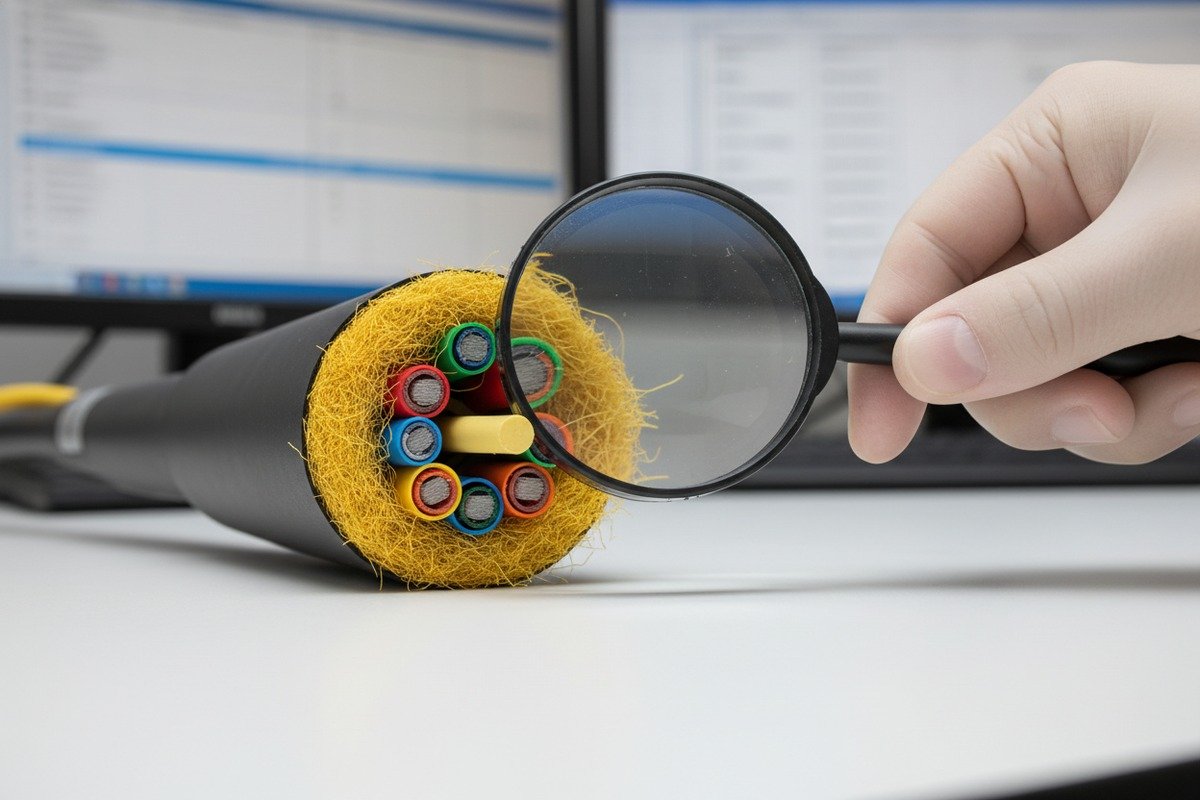
ADSS cables rely on two critical internal components: the optical fiber itself and the aramid yarn that provides tensile strength. The fiber determines your signal quality and lifespan. The aramid yarn determines whether your cable survives wind, ice, and vibration over decades. If either component is downgraded, your cable will fail early.
Some suppliers substitute tier-one fiber brands with cheaper alternatives after the contract is signed. The outer jacket looks identical. The cable passes a quick visual check. But once installed, attenuation creeps up, and the cable cannot hold its rated span tension.
How to Trace Fiber Brands
Every major fiber manufacturer—Corning, Fujikura, YOFC, Hengtong—prints identification marks on the fiber coating at regular intervals. When we spool fiber into loose tubes on our production line, these markings remain visible under magnification. You can request a sample cut from any drum and verify the ink markings match the claimed brand.
Additionally, ask your supplier for the fiber purchase invoice or certificate of origin from the fiber manufacturer. Reputable factories keep these records for every production batch. If a supplier hesitates to share this documentation, that is a red flag.
Aramid Yarn Traceability
Genuine aramid yarn from DuPont (Kevlar) or Teijin (Twaron) comes with lot numbers and tensile strength certificates. Our warehouse logs every spool of aramid yarn by lot number and links it to specific cable production orders. US customers should ask for this traceability chain. The key specification to check: strength yarns should be rated at 1,200 MPa with 1.5% elongation, and there should be no splices throughout the entire 4 km drum length.
Quick Verification Checklist
| Verification Step | What to Request | Red Flag if Missing |
|---|---|---|
| Fiber brand confirmation | Ink marking photos from sample cut | Supplier refuses sample access |
| Fiber certificate of origin | Purchase invoice from Corning/YOFC/Fujikura | Only generic "fiber spec sheet" provided |
| Aramid yarn lot number | DuPont/Teijin lot certificate | No lot traceability available |
| Tensile strength test | Third-party lab report on yarn sample | Only in-house "pass" certificate |
| Splice check | X-ray or visual inspection of full drum | Splices found within 4 km length |
Independent Testing as a Safety Net
Even with documentation, the safest approach is independent verification. Hire a third-party inspection company in China—SGS, Bureau Veritas, or TÜV—to pull samples from your production run and test them. An OTDR test on a sample drum will confirm actual fiber attenuation and reveal any hidden splices or defects. This costs a fraction of the cable order but protects your entire investment.
What specific factory OTDR test reports and certifications should I request to guarantee quality?
Our quality control lab runs OTDR tests on every single drum before it leaves the factory floor. But not every Chinese manufacturer does the same—and some issue certificates that do not reflect actual testing. Knowing which documents to demand is your first line of defense.
Request factory OTDR test reports for every drum showing attenuation at 1310 nm and 1550 nm, plus IEEE 1222 tracking resistance reports, EN 50305 UV aging data, ITU-T G.652.D fiber compliance certificates, and ISO 9001:2015 quality management system documentation.

Understanding OTDR Reports
An OTDR (Optical Time Domain Reflectometer) 3 test sends a pulse of light through the fiber and measures reflections. The resulting trace shows attenuation per kilometer, splice points, and any anomalies. For ADSS cable, you want to see:
- Attenuation at 1310 nm: ≤ 0.35 dB/km
- Attenuation at 1550 nm: ≤ 0.21 dB/km
- Attenuation margin: 0.05 dB/km to account for 25-year aging
Each drum should have its own individual OTDR report, not a generic "type test" applied to the entire order. If a factory provides one report for 50 drums, that is not real quality control—it means they tested one drum and assumed the rest are the same.
Key Certifications to Verify
| Certification / Standard | What It Covers | Why It Matters for US Projects |
|---|---|---|
| IEEE 1222 4 | Tracking resistance at 67 kV for 1,000 hours | Validates jacket performance near high-voltage lines |
| EN 50305 | UV aging at 0.5 W/m² for 720 hours | Confirms jacket durability under sun exposure |
| ITU-T G.652.D 5 | Standard single-mode fiber specifications | Ensures fiber meets international telecom standards |
| ITU-T G.657 | Bend-insensitive fiber specifications | Required for tight installations and pole attachments |
| ISO 9001:2015 6 | Quality management system | Confirms systematic production and QC processes |
| UL Listing | Product safety for US market | May be required by local utility specifications |
| RoHS / REACH | Hazardous substance restrictions | Ensures environmental compliance for US import |
The Gap Between Certificates and Reality
Here is something we have learned from competing in international markets for 30 years: some laboratories issue "pass" certificates without testing the actual jacket compound from your specific order. They test a generic sample once, then reissue the certificate for future orders. This is particularly common with IEEE 1222 tracking resistance and EN 50305 UV aging tests.
To protect yourself, request that the test report reference your specific purchase order number and production date. Ask for photographs of the test setup with your cable samples visible. Better yet, specify in your contract that you have the right to send samples to a US-based lab (such as Intertek or UL) for independent verification.
Reading an OTDR Trace
When you receive an OTDR report, look for these details:
- Fiber length matches the drum length on the label
- No unexpected events (spikes or drops in the trace) that indicate splices or damage
- End-of-fiber reflection is clean, confirming the full length was tested
- Wavelength tested matches your operational wavelength (1310 nm, 1550 nm, or both)
If the trace shows a splice event within a continuous drum, reject that drum. Splices within a single cable length indicate manufacturing defects or material shortages that were patched.
How do I ensure the cable's mechanical design and span calculations match my local US project needs?
When our engineering team reviews project specifications from US customers, we often find that the cable model initially requested does not match the actual route conditions. A 200-meter rated cable on a 250-meter span is a recipe for failure. Getting this right before production starts saves enormous cost and risk.
Match mechanical design to your project by providing your supplier with exact span lengths, wind and ice loading data, attachment heights, and line voltage. Request span-tension charts, sag calculations, and cross-section diagrams specific to your route before approving production.

Why Generic ADSS Cables Fail on Specific Routes
ADSS cable is not one-size-fits-all. The mechanical design—including the amount of aramid yarn, the cable diameter, and the weight per meter—must match your actual span lengths and environmental loads. A cable designed for 100-meter spans in a mild climate will sag dangerously or even break on a 300-meter span in a northern US state with heavy ice loading.
The core rule is simple: your cable's maximum working tension should not exceed 45% of its rated tensile strength (RTS). If your longest span pushes the cable beyond this threshold, you need a stronger design.
Span Selection Rules
A practical approach our engineering team recommends:
- Measure the longest span on your route.
- Add a 10% safety buffer. If your longest span is 160 meters, specify a cable rated for at least 200 meters.
- Factor in ice and wind. NESC (National Electrical Safety Code) 7 loading districts in the US define heavy, medium, and light loading zones. Your cable's mechanical design must handle the worst-case scenario for your district.
Design Types and Their Applications
| Design Type | Fiber Count | Typical Span | Best For |
|---|---|---|---|
| Central tube | 2–12 fibers | Under 200 m | Short spans, light loads, rural distribution |
| Stranded loose tube | 12–144 fibers | 200–800 m | Medium spans, utility backbone, suburban |
| Heavy-duty stranded | 48–144 fibers | 800–1,500 m | Long spans, river crossings, mountain terrain |
For most US utility deployments in the 200–400 meter range, a stranded loose tube design with adequate aramid yarn is the standard choice. If your project includes any spans over 400 meters, you should discuss heavy-duty designs with reinforced strength members.
What to Request from Your Supplier
Before you approve production, ask for these project-specific documents:
- Span-tension chart: Shows the relationship between span length and cable tension under various loading conditions (bare, ice, wind, combined).
- Sag table: Predicts how much the cable will sag at different temperatures and loading conditions for your specific spans.
- Cross-section diagram: A detailed drawing showing every layer of the cable—fiber tubes, aramid yarn quantity, water-blocking tape, and jacket thickness.
- Pull-tension limits: The maximum tension during installation to prevent fiber damage.
If your supplier cannot produce these documents for your specific project parameters, they are selling you a generic product—not an engineered solution. Our team provides these calculations within 48 hours of receiving route data because we understand that US contractors need precise engineering before they can schedule installation crews.
Environmental Jacket Selection
Your route environment also dictates jacket material. For lines below 110 kV, standard PE with 2.2% carbon black for UV stability is sufficient. For lines above 110 kV, tracking-resistant AT sheathing is essential to resist electrical corrosion from dry-band arcing. In fire-protection zones, specify LSZH (Low Smoke Zero Halogen) jackets 8. For routes through forested areas, rodent-proof armoring should be considered.
The cable's operating temperature range should cover your local extremes. Standard ADSS cables operate from −40°C to +70°C, which covers most US locations, but verify this with your supplier for extreme northern or desert installations.
What steps can I take to avoid material downgrading and ensure my order is delivered on time?
One of the most frustrating situations our US customers describe is placing an order with clear specifications and receiving cable that technically matches the datasheet but uses cheaper substitute materials. On top of that, delays push their installation crews into idle time, and shipping costs spike. We have built specific processes to prevent both problems—and you should demand the same from any supplier.
Prevent material downgrading by specifying exact brand names and lot traceability in your purchase contract, scheduling mid-production inspections, and requiring pre-shipment third-party testing. Ensure on-time delivery by confirming production slot availability, agreeing on milestone updates, and including penalty clauses for late shipment.
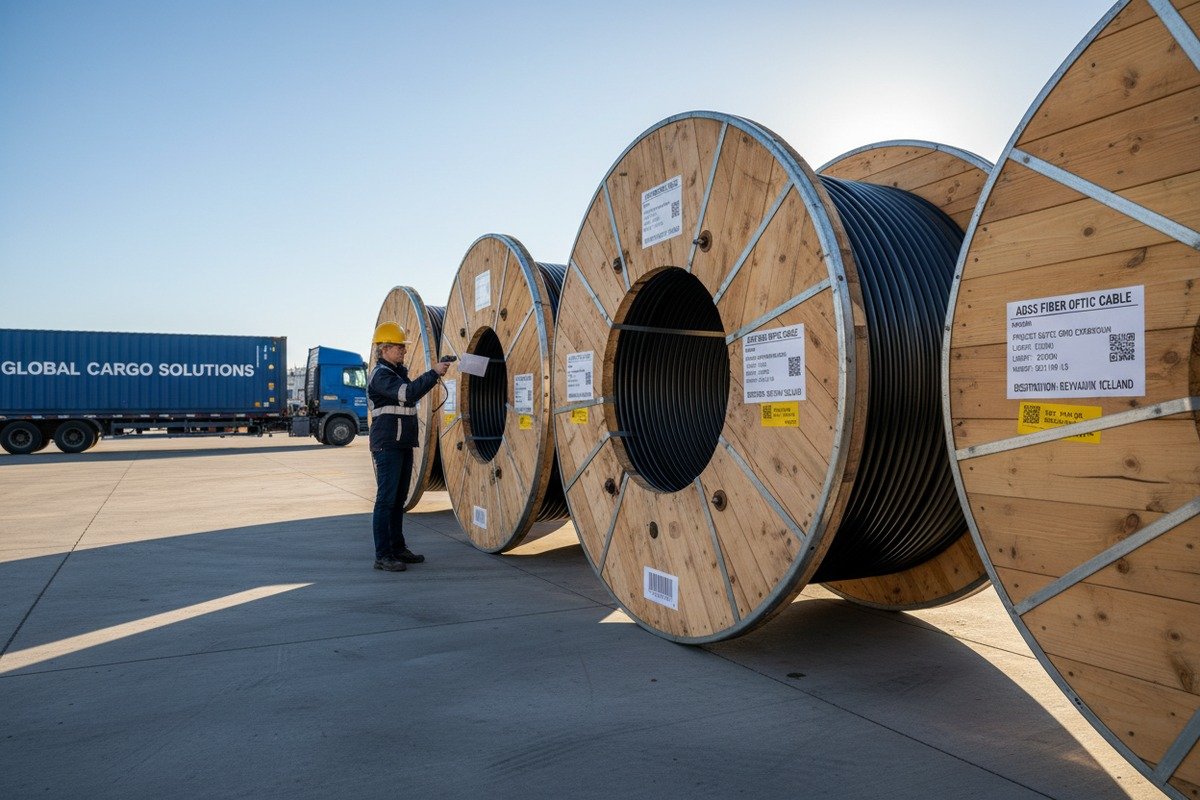
How Material Downgrading Happens
Material downgrading is rarely obvious. A supplier might replace Corning SMF-28 fiber with a lesser-known Chinese brand that has similar specs on paper but worse long-term attenuation stability. They might reduce the aramid yarn count from 24 strands to 18 strands—enough to pass a quick tensile test but insufficient for your actual span loads over 25 years. They might use recycled PE for the jacket instead of virgin HDPE, resulting in poor UV resistance that causes cracking within 5 years.
The motivation is cost. In competitive bidding, some factories win contracts at prices that only work if they cut material costs after the deal is signed. This is why the lowest-price bid from China is often the most expensive bid over a 25-year cable lifespan.
Contractual Protections
Your purchase contract should include:
- Exact fiber brand and model (e.g., "Corning SMF-28e+ 9" or "YOFC SSF-G.652.D")
- Aramid yarn brand and quantity (e.g., "DuPont Kevlar 49, minimum 24 strands")
- Jacket material specification (e.g., "Virgin HDPE, carbon black content ≥ 2.2%, MFI ≤ 0.3 g/10 min")
- Right to mid-production inspection at the factory at your cost
- Right to third-party pre-shipment inspection with sample testing
- Penalty clause for material substitution (e.g., full order rejection or 15% price reduction)
Inspection Timeline
Build inspections into your production schedule. Here is a recommended timeline:
| Stage | Timing | Inspection Focus |
|---|---|---|
| Raw material verification | Before production starts | Fiber brand, aramid yarn lot numbers, jacket compound certificates |
| Mid-production check | 50% completion | Cable cross-section sample, OTDR test on first completed drums |
| Pre-shipment inspection (PSI) | After production, before packing | Full OTDR on random drums, tensile test, jacket thickness measurement |
| Loading supervision | At port/warehouse | Drum condition, packing quality, container loading method |
Delivery Reliability
Late delivery is a separate but equally damaging problem. When a factory prioritizes large domestic orders or experiences raw material shortages, export orders often get pushed back. Our facility maintains dedicated production lines for international orders specifically to avoid this conflict, but not all factories operate this way.
To protect your timeline:
- Confirm production slot availability before signing the contract. Ask when your order enters the production queue.
- Require weekly progress updates with photos of your order on the production line.
- Agree on a fixed delivery date with a penalty clause (typically 1% per week of delay, capped at 10%).
- Specify packaging requirements in advance. Wooden cable drums must be fumigation-treated (ISPM 15 compliant 10) for US customs. Poor packaging causes damage during ocean freight and delays at the port.
- Book freight early. If you are buying FOB, book your container as soon as production reaches 70% completion to align vessel scheduling with factory output.
Packaging and Freight Considerations
We have seen entire drum shipments rejected at US ports because the wooden reels were not heat-treated per ISPM 15 requirements. We have also seen drums collapse during ocean transit because the cable was wound too loosely or the reel structure was inadequate for the cable weight. Specify steel-reinforced wooden drums for heavy cables and require shrink-wrapping for moisture protection. Ask for loading photos showing how drums are secured inside the container.
The total cost of a failed shipment—re-manufacturing, re-shipping, crew idle time, and project penalties—can exceed the cost of the original order. Investing in proper inspections and contractual protections is not an expense. It is insurance.
Conclusion
Quality assurance for ADSS cable from China requires active verification—not passive trust. Specify materials by brand name, demand per-drum OTDR reports, match mechanical designs to your exact route, and build inspection milestones into every order. Your infrastructure deserves nothing less.
Footnotes
1. Wikipedia provides a comprehensive overview of ADSS cable, its definition, and applications. ↩︎
2. Reference 2. ↩︎
3. Reference 7. ↩︎
4. Reference 4. ↩︎
5. The official ITU-T recommendation for single-mode optical fiber characteristics. ↩︎
6. The official ISO page for the ISO 9001:2015 quality management system standard. ↩︎
7. Reference 8. ↩︎
8. Reference 9. ↩︎
9. Corning's official product page for SMF-28e+ optical fiber, a widely used brand. ↩︎
10. Reference 10. ↩︎