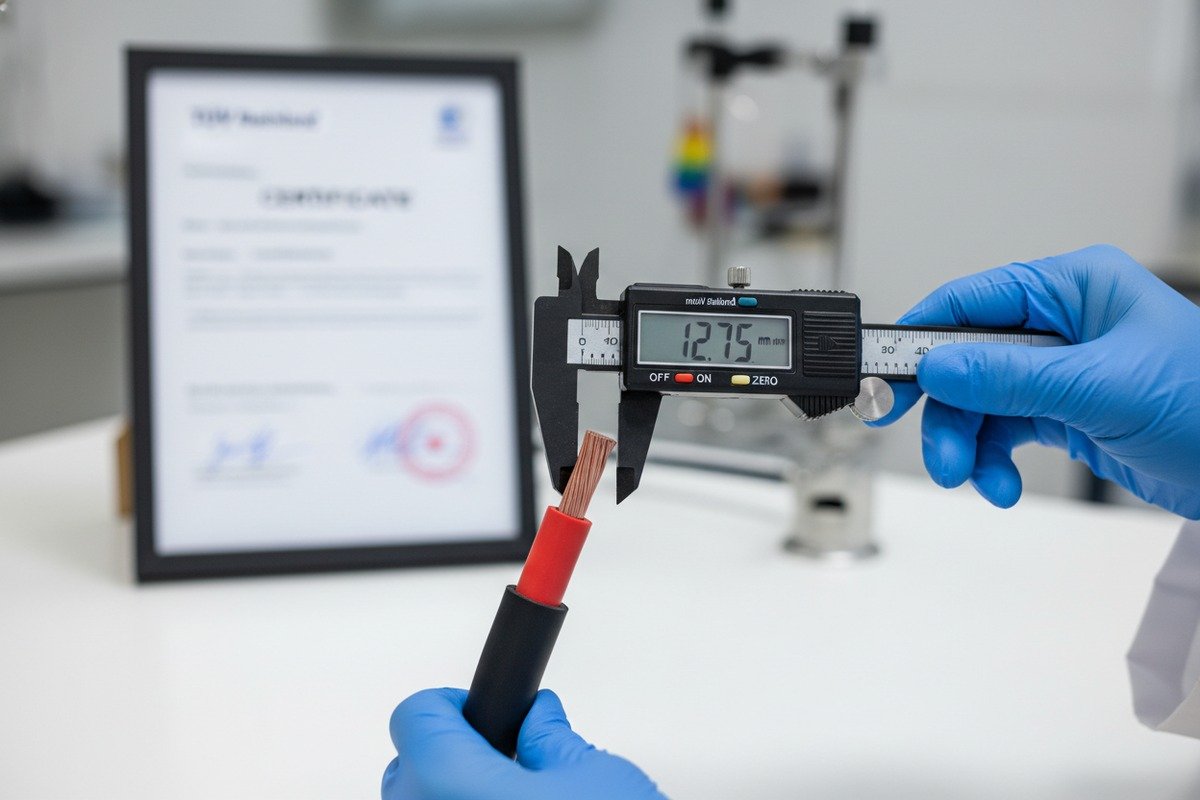

Shipping deadlines keep our production planners up at night. Every week, we load containers of H1Z2Z2-K 1 and EN 50618 solar PV cables at both Shanghai and Ningbo ports. The wrong port choice can silently add thousands of dollars to your landed cost—or worse, push your grid-connection date past the penalty window. If you have ever watched a vessel skip your cargo because of a data mismatch at the terminal, you know this pain is real.
To compare Shanghai and Ningbo port efficiency for solar PV cable sourcing, evaluate four factors: transit time to your destination, local drayage and terminal handling charges, cargo-handling safety for heavy cable drums, and vessel schedule reliability. Ningbo typically offers 10–15% lower logistics costs and faster local trucking, while Shanghai provides broader carrier options and superior global connectivity.
Below, we break down each factor so you can make a confident port selection for your next bulk PV cable order. Let's start with the one that matters most to EPC buyers: lead times.
Which port offers the fastest lead times to ensure my solar cable shipment meets European grid-connection deadlines?
Missing a grid-connection window can trigger penalties of €10,000 or more per day. Our logistics team has coordinated over 300 container shipments to European ports in the past two years, and we have learned that the port you choose at origin shapes your entire project timeline.
Ningbo generally delivers faster transit times to Rotterdam by 1–2 days compared to Shanghai, while Shanghai offers more frequent weekly sailings and carrier choices. For time-critical European solar projects, Ningbo's shorter local drayage time plus marginally faster ocean transit can save up to 3 days on total lead time.
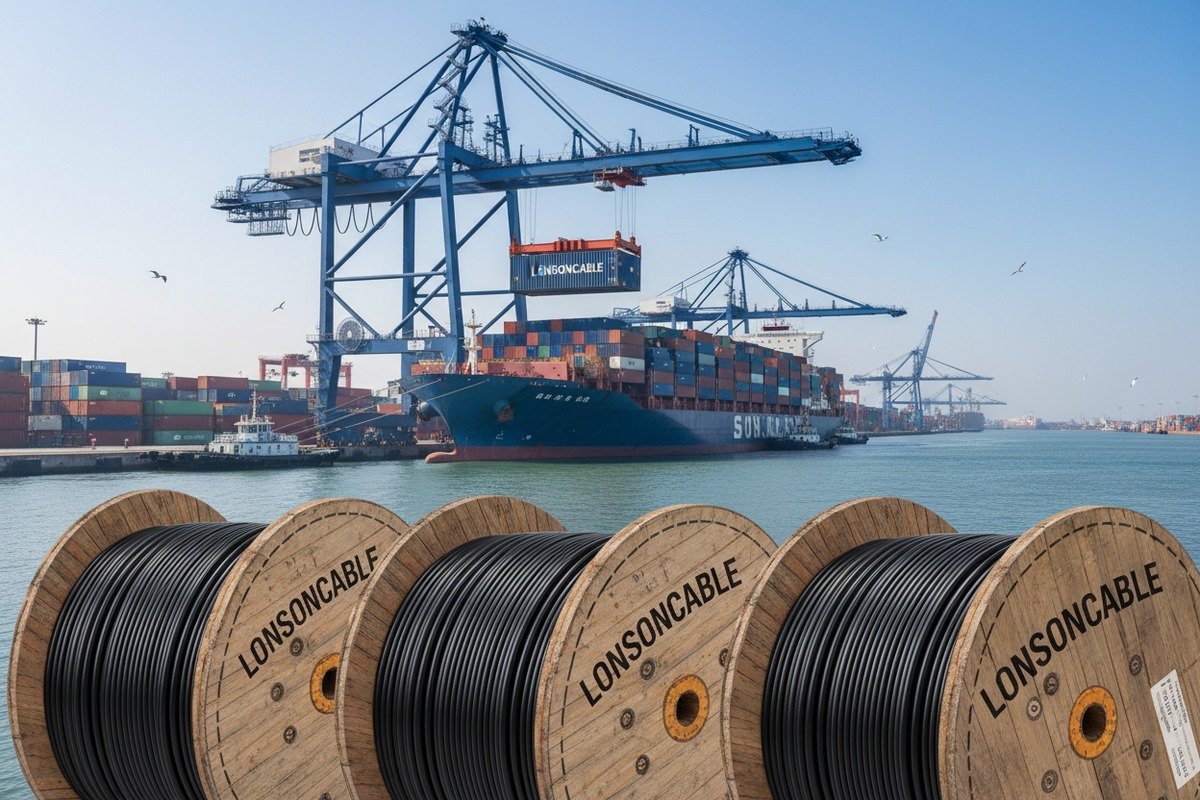
Breaking Down the Total Lead Time
Total lead time is not just ocean transit. It includes factory-to-port trucking, terminal processing, customs clearance, vessel waiting, ocean transit, and destination discharge. Each step adds hours or days.
Our factory in China sits roughly 220 kilometers from Ningbo and 310 kilometers from Shanghai. That distance gap alone creates a measurable difference in the first leg of the journey.
Trucking and Terminal Processing
Getting cable drums from the factory gate onto a vessel involves two distinct time blocks: inland trucking and terminal handling.
| Lead Time Component | Shanghai | Ningbo |
|---|---|---|
| Average trucking time (factory to port) | ~4.5 hours | ~3.5 hours |
| Terminal gate-in to vessel loading | 24–48 hours | 18–36 hours |
| EDI manifest submission | Immediate after booking confirmation | Requires container number first |
| Customs clearance (standard) | 1–2 business days | 1–2 business days |
Shanghai's EDI system allows manifest data submission right after confirming shipping space and bill of lading numbers. That sounds faster on paper. But Ningbo's terminal congestion is lower, meaning your container spends less idle time on the yard before loading.
Ocean Transit to Key European Ports
For European destinations—Rotterdam 2, Hamburg, Piraeus—both ports perform within a narrow band. But the small differences add up when you are racing against a commissioning date.
| Destination | Ningbo Transit (days) | Shanghai Transit (days) |
|---|---|---|
| Rotterdam | 28–32 | 29–33 |
| Hamburg 3 | 30–34 | 31–35 |
| Piraeus (Greece) | 22–26 | 23–27 |
| Felixstowe (UK) | 30–34 | 31–35 |
These numbers come from recent sailing schedules. The 1-day difference on ocean transit, combined with the 1-hour trucking advantage and shorter terminal dwell time at Ningbo, can total 2–3 days saved.
Shanghai's Advantage: Sailing Frequency
Shanghai compensates with sheer volume. More carriers call at Shanghai, which means more weekly departures. If you miss one vessel at Ningbo, the next one might be 5–7 days away. At Shanghai, you could catch a sailing 2–3 days later.
For our European clients managing strict deadlines, we typically recommend Ningbo for planned shipments with confirmed schedules and Shanghai as a backup when a last-minute vessel change is needed. Both ports now feature smart port technologies—AI-driven berth allocation and 5G-enabled yard management—that continue to shorten processing times.
Shanghai has also introduced a "New Energy Equipment Green Clearance Channel" that fast-tracks customs for photovoltaic-related products. If your shipment includes inverters or smart meters alongside PV cables, this channel can shave a full day off clearance.
How do local drayage and terminal handling charges at Shanghai versus Ningbo impact my total landed cost for bulk PV cable orders?
Cost control is non-negotiable in solar EPC. When we quote DDP pricing 4 to European clients, every dollar at the origin port feeds directly into the per-meter cable cost. The difference between Shanghai and Ningbo is not trivial—it compounds across multiple shipments per year.
Ningbo reduces total origin-side logistics costs by approximately 10–15% compared to Shanghai for standard 40HQ container shipments of solar PV cables. Lower trucking fees (roughly USD 450 vs. USD 550), reduced terminal congestion surcharges, and shorter waiting times drive this saving, which can exceed USD 2,000 annually for regular importers.
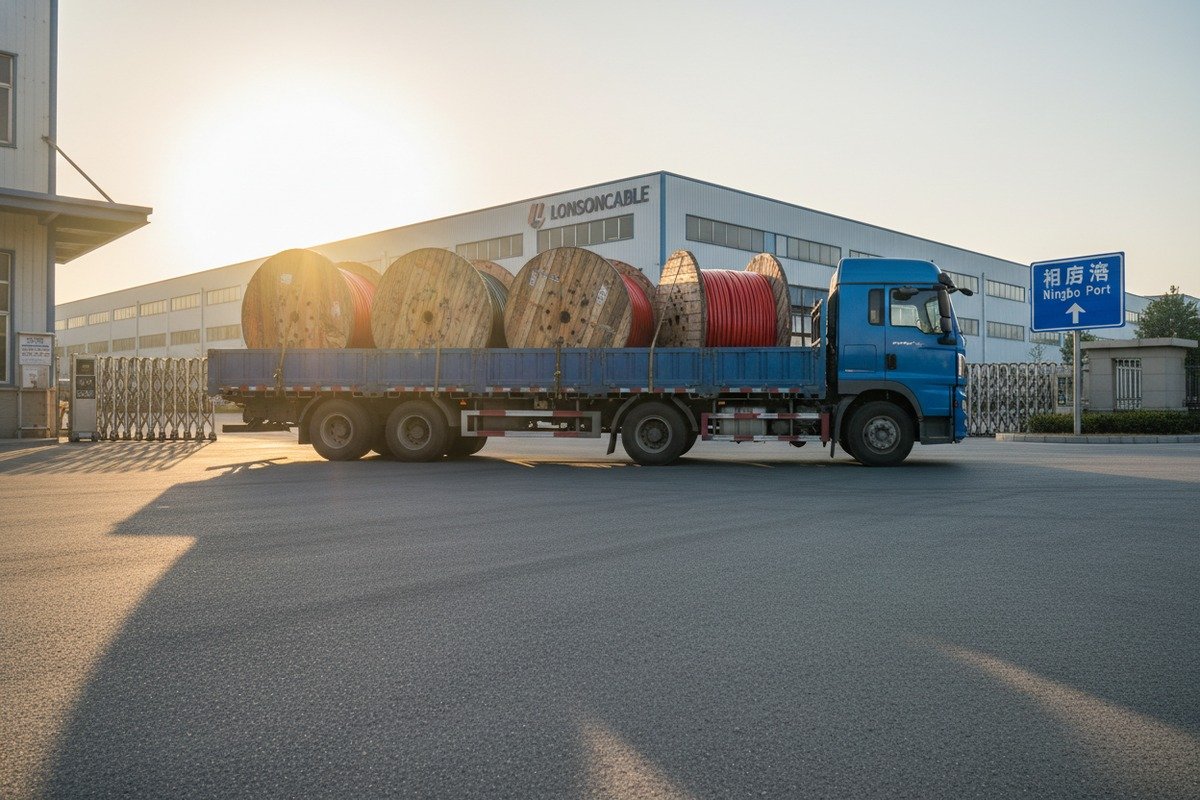
Drayage Cost Breakdown
Drayage—the short truck haul from factory to port—is the most visible cost difference. For a fully loaded 40HQ container carrying roughly 8–10 wooden drums of H1Z2Z2-K cable, the numbers look like this:
| Cost Element | Shanghai (USD) | Ningbo (USD) | Difference |
|---|---|---|---|
| Trucking (40HQ, factory to terminal) | ~550 | ~450 | ~100 saved |
| Terminal handling charge 5 (THC) | 180–220 | 150–190 | ~30 saved |
| Port congestion surcharge (peak season) | 50–150 | 0–50 | ~50–100 saved |
| Documentation and port entry fees | 40–60 | 35–50 | ~10 saved |
| Estimated total origin charges | 820–980 | 635–740 | ~185–240 saved |
These figures apply to standard shipments. For oversized or overweight cable drums, Shanghai sometimes charges additional handling fees due to stricter yard management policies.
Hidden Costs: Waiting and Demurrage
Terminal congestion at Shanghai during Q3 and Q4—when solar installations surge across Europe—can cause containers to sit for an extra 24–48 hours. If that pushes past your free storage window, demurrage charges 6 kick in at USD 75–150 per day per container. Ningbo's lower congestion means this risk is significantly smaller.
When Shanghai Wins on Cost
Shanghai's cost advantage appears with large-volume, multi-destination consolidation. If you are shipping 20 or more containers per quarter to different European ports, Shanghai's greater carrier competition can yield ocean freight rates that are USD 100–200 lower per container. That volume discount can outweigh the higher drayage and THC costs.
Our recommendation: if you order fewer than 10 containers per quarter, Ningbo is almost always cheaper. Above that threshold, get quotes from both ports and compare the total landed cost including ocean freight.
Cumulative Impact on Project Budgets
A European EPC firm sourcing 50 containers of solar PV cable annually could save USD 9,000–12,000 by routing through Ningbo. That saving alone covers the cost of additional quality inspections or pre-shipment testing—money better spent on ensuring cable performance than on port fees.
Will choosing one port over the other reduce the risk of damage to my heavy wooden cable drums during the loading process?
Collapsed cable drums are one of the most frustrating problems we deal with. A single damaged drum can halt an installation crew for days while replacement cables are sourced. Our quality control team inspects every drum before dispatch, but what happens between our warehouse and the vessel matters just as much.
Both ports handle heavy wooden cable drums competently, but Ningbo's lower terminal congestion means fewer container repositioning movements and shorter yard dwell times, reducing the number of times your cargo is physically moved. Shanghai's stricter handling protocols, however, provide more standardized procedures that can benefit non-standard oversized drums.
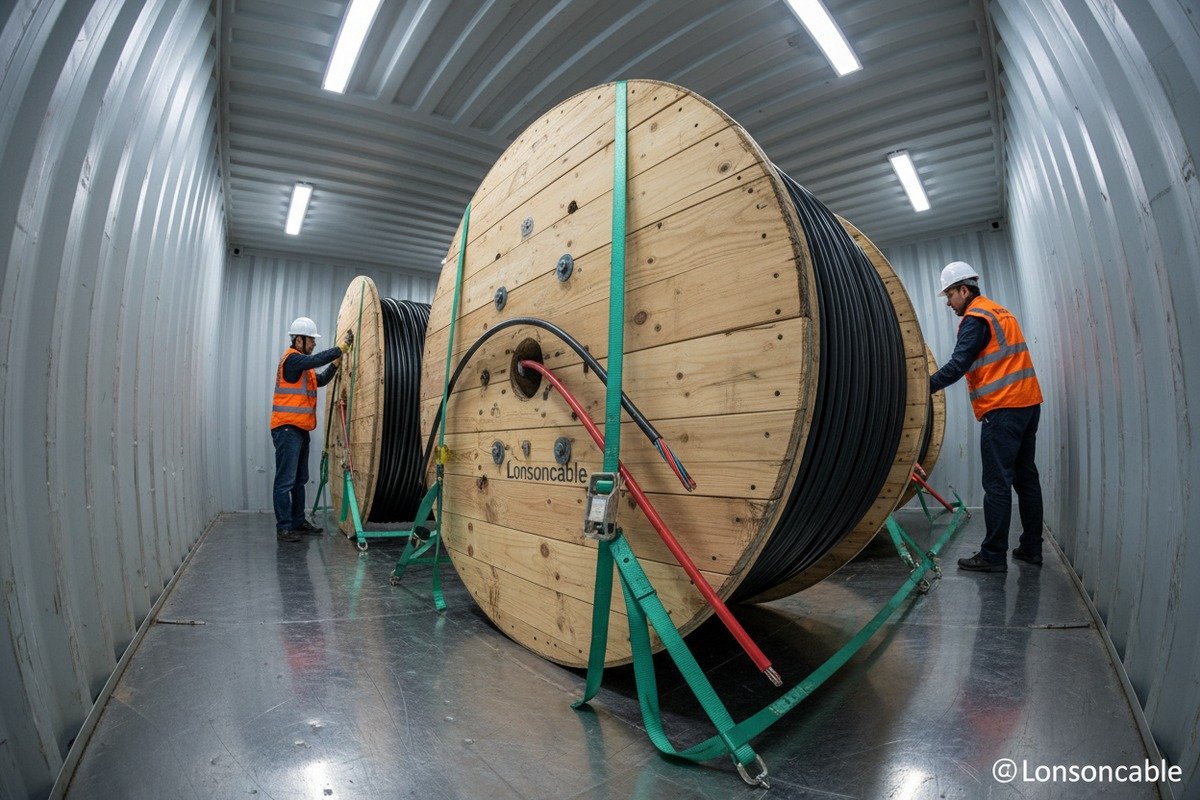
Why Cable Drums Get Damaged
Solar PV cables 7 like our EN 50618 8 and H1Z2Z2-K products ship on heavy wooden drums that can weigh 800–1,500 kg each. These drums are vulnerable at three points: forklift loading at the factory, transfer at the terminal yard, and container stuffing at the port.
The most common damage modes are:
- Flange cracking from side impacts during forklift handling
- Core shifting when drums are stacked without proper bracing
- Moisture damage from prolonged yard exposure during rain
Port-Specific Handling Characteristics
Shanghai enforces strict yard management rules. Containers are tracked through every movement, and data consistency between port entry documents, customs declarations, and manifest records is mandatory. This rigor means fewer "surprise" container relocations that jolt cargo.
Ningbo's approach is more flexible. Containers move through the yard faster because of lower volume, but the handling standards are less uniformly enforced. That said, fewer total movements mean fewer opportunities for damage.
What We Do to Minimize Risk
From our production line, every drum gets steel banding, corner protectors, and moisture-barrier wrapping before leaving the factory. We also specify container loading diagrams that show our freight forwarders exactly how drums should be positioned and braced inside the 40HQ.
For European clients who require cable drums compatible with automated cable-laying machines, drum dimensional accuracy is critical. A drum that arrives with a cracked flange cannot mount onto the dispensing spindle, forcing expensive manual handling on-site.
Our Practical Advice
If your drums are standard size (up to 1,200 mm diameter), both ports handle them safely. For oversized drums exceeding 1,500 mm diameter—common with large cross-section aluminum solar cables—Shanghai's more structured handling procedures offer a slight edge. We also recommend requesting photographic load verification from your freight forwarder at either port.
Specialized warehousing at both ports now includes covered storage areas that protect drums from rain exposure. This is a relatively recent improvement at Ningbo, where open yard storage was more common before 2023.
How can I determine which port provides better schedule reliability to avoid the financial penalties associated with project delays?
When we sit down with European EPC procurement teams, schedule reliability 9 always ranks above price. A single week of delay on a 50 MW solar farm can trigger penalty clauses that dwarf any logistics savings. Our shipping department tracks on-time performance at both ports because our clients depend on it.
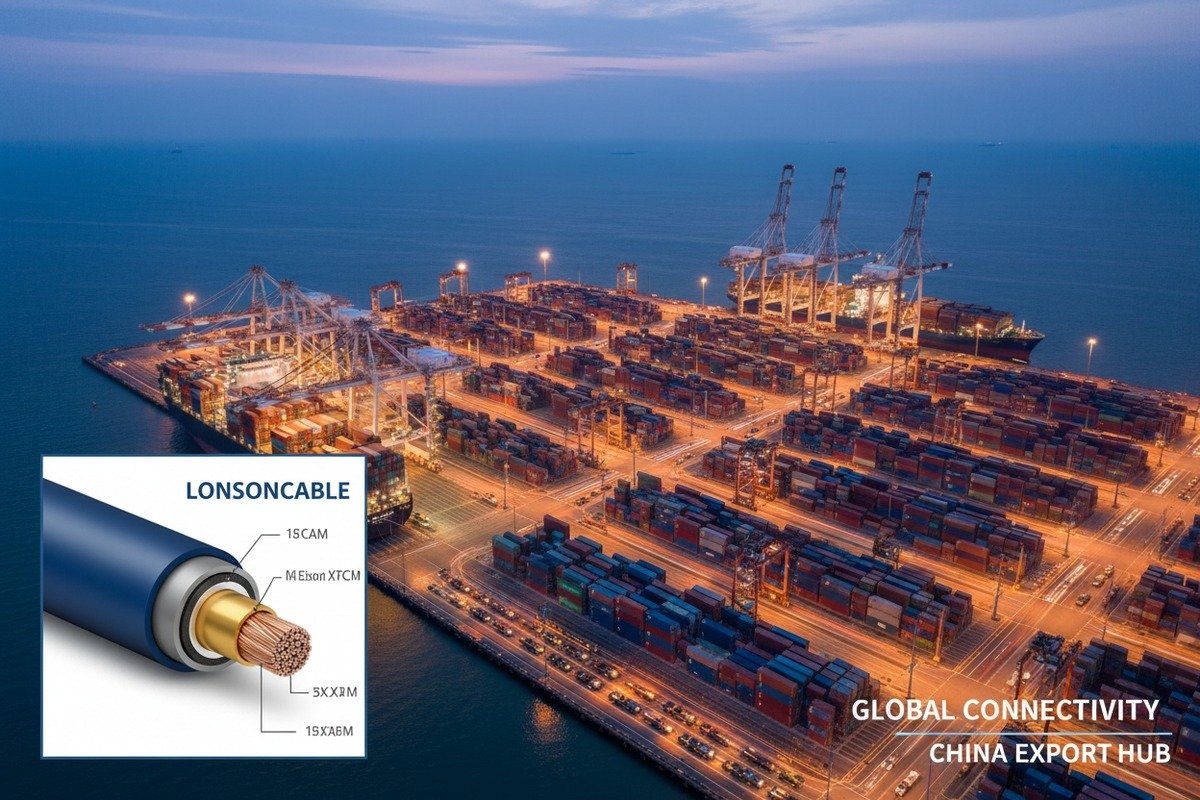
Shanghai offers more recovery options when schedules slip due to its higher sailing frequency and broader carrier network, while Ningbo delivers more consistent on-time departures with fewer cancellations. For maximum schedule reliability, use Ningbo as your primary port and Shanghai as a contingency route to catch the next available vessel.
What Schedule Reliability Actually Means
Schedule reliability measures the percentage of vessels that depart and arrive within the published window. It is not just about the vessel leaving on time—it includes whether your container made it onto that vessel. A vessel can depart "on schedule" while your cargo sits on the yard because of a documentation error or gate cutoff issue.
Comparing Reliability Metrics
Both ports have invested heavily in digital coordination since 2020. The Yangtze River Delta port coordination system now shares real-time data between Shanghai and Ningbo-Zhoushan, optimizing berth allocation and reducing vessel idle times.
Key reliability indicators include:
- Vessel on-time departure rate: Ningbo averages slightly higher due to lower berth competition
- Container rollover rate: Shanghai sees more container rollovers during peak season (Q3–Q4) because of yard congestion
- Blank sailing frequency: Both ports experience blank sailings, but Shanghai's larger carrier pool means alternatives are available faster
Building a Dual-Port Strategy
The smartest approach we have seen from experienced importers is a dual-port strategy. Here is how it works:
- Primary routing through Ningbo for standard scheduled shipments with confirmed production dates
- Shanghai as backup when production delays push cargo past the Ningbo vessel cutoff
- Split shipments across both ports when ordering 10+ containers to reduce single-point-of-failure risk
This strategy also provides negotiating leverage. When your freight forwarder knows you can route through either port, they are more motivated to secure competitive rates and prioritize your bookings.
Digital Tools That Help
Both ports now support blockchain-based documentation platforms that provide real-time container tracking from gate-in to vessel loading. Shanghai's system is more mature, with integration across more carriers. Ningbo's platform is newer but growing rapidly.
We provide our clients with real-time tracking links for every shipment. When a vessel schedule changes, our logistics team can reroute to the alternative port within 24 hours if the cargo has not yet passed the terminal gate.
Resilience Beyond Daily Operations
Geopolitical disruptions, typhoons, and energy shortages can affect either port. The 2024 Red Sea crisis rerouted many Europe-bound vessels, adding 10–15 days to transit times from both Shanghai and Ningbo equally. In such scenarios, the port of origin matters less than the shipping line's routing decisions. What matters more is having a logistics partner who can react quickly—something our team prioritizes for every order.
For German and European EPC buyers managing strict grid-connection timelines, we recommend building a 7–10 day buffer into your logistics plan regardless of port choice. That buffer absorbs most schedule disruptions without triggering penalty clauses.
Conclusion
Choosing between Shanghai and Ningbo for your solar PV cable shipments comes down to your order volume, timeline sensitivity, and cost priorities. Use both ports strategically, and your supply chain becomes a competitive advantage rather than a liability.
Footnotes
1. Defines the harmonized European standard for solar cables. ↩︎
2. Official website for Europe's largest seaport. ↩︎
3. Official website for Germany's largest seaport. ↩︎
4. Explains the Delivered Duty Paid (DDP) Incoterm rule. ↩︎
5. Explains the meaning and calculation of Terminal Handling Charges. ↩︎
6. Defines demurrage charges in the context of shipping. ↩︎
7. Explains the definition and key features of solar PV cables. ↩︎
8. Provides details on the European standard for PV cables. ↩︎
9. Explains the concept of vessel schedule reliability in shipping. ↩︎