
Choosing the wrong ADSS cable specification 1 can stall a project for weeks. Over 30 years on our production lines, we have seen procurement teams struggle to match core counts and span ratings to real field conditions.
To compare ADSS fiber optic cable core counts and span specifications, evaluate your current bandwidth needs alongside projected growth, match tensile strength and aramid yarn volume to your actual span distance and environmental loads, and verify supplier material quality through certified test reports and mechanical calculation data.
This guide breaks down the four most common comparison challenges our export customers face. Each section gives you practical steps, data tables, and insider tips so you can make a confident procurement decision.
How do I choose the right fiber core count to balance my project budget with future network expansion?
Every year, our sales engineers field calls from contractors who installed 12-core cables two years ago and now need 48 cores. fiber core count 2 Replacing aerial cable is expensive. The pain is real, and it is avoidable.
Choose a core count that covers your current subscriber or endpoint demand plus 30–50% headroom for growth. Lower counts (6–24) suit rural access links. Mid-range counts (36–72) fit regional backbones. High counts (96–144+) serve metro trunks and data center interconnects where future-proofing justifies higher upfront cost.
Start With Your Endpoint Count
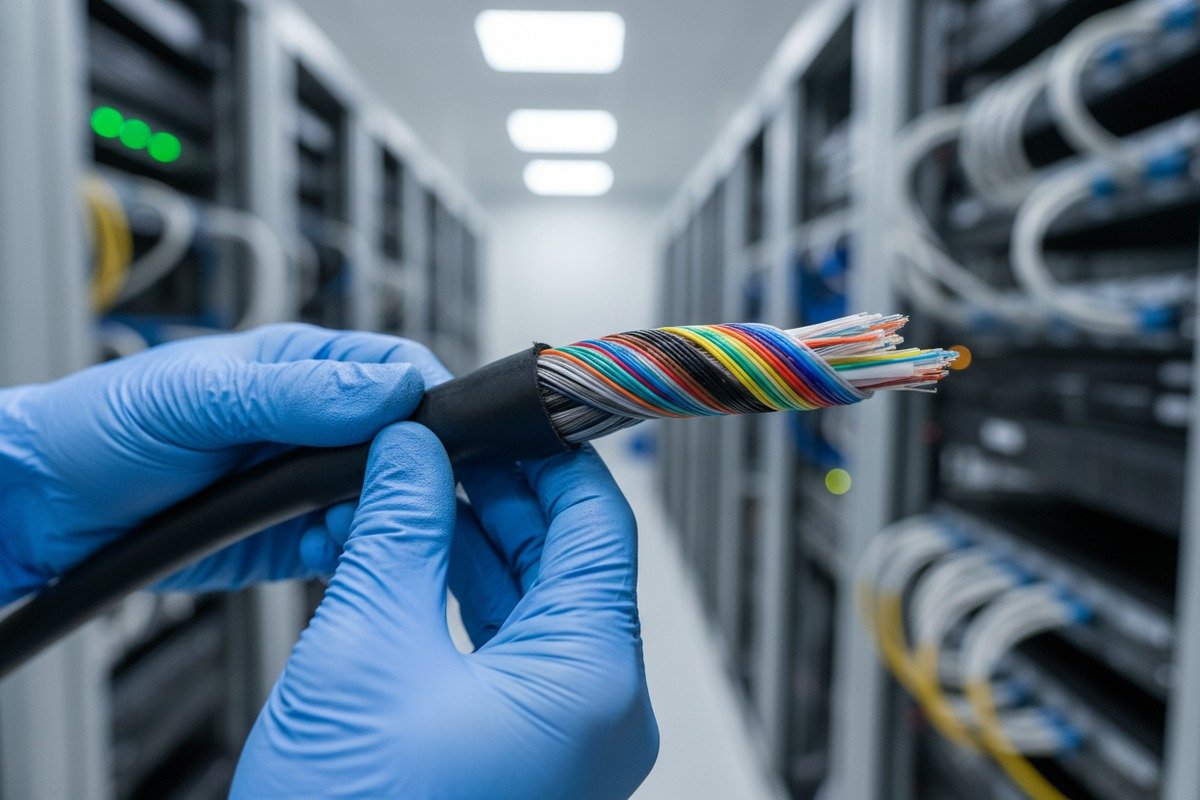
The simplest way to size a cable is to count endpoints. Each FTTX splitter port, each substation relay, each cell tower backhaul link consumes at least one fiber. List every current connection point, then add planned connections for the next five years. That total is your baseline core requirement.
The Growth Multiplier
We recommend a 1.3× to 1.5× multiplier on that baseline. Why? Because pulling a second cable later costs far more than adding unused fibers today. The fiber itself is a small fraction of total cable cost. The aramid yarn 3, PE jacket, and installation labor dominate the budget.
Core Count Decision Table
| Network Type | Typical Endpoints | Recommended Core Count | Budget Impact |
|---|---|---|---|
| Rural last-mile access | 10–30 | 12–24 cores | Low |
| Regional backbone | 30–80 | 36–72 cores | Medium |
| Metro trunk / utility ring | 80–200 | 96–144 cores | Medium-High |
| Data center interconnect | 200+ | 144–288 cores | High |
Central Tube vs. Layered Twist
For 24 cores or fewer, a central tube design 4 keeps the cable diameter small and the cost low. Once you exceed 24 cores, a layered twist 5 (stranded loose tube) structure is the better choice. It distributes fibers across multiple tubes, making mid-span access easier and reducing the risk of micro-bending under load.
Single-Mode Is Almost Always the Answer
ADSS cables for aerial spans nearly always use G.652D single-mode fiber 6. Multimode fiber has its place inside buildings, but over aerial distances of hundreds of meters, single-mode delivers attenuation as low as 0.22 dB/km at 1550 nm. That performance gap matters when you need to push signals across long rural spans without repeaters.
Don't Forget Spare Fibers for Maintenance
We allocate at least two spare fibers per tube during production. If a fiber is damaged during installation or a splice degrades over time, a spare fiber lets you restore service without pulling new cable. This small addition saves enormous headaches down the road.
How does the span distance affect the amount of aramid yarn and the overall durability of my ADSS cable?
When our engineering team designs a cable for a 600-meter span versus a 200-meter span, the internal structure changes dramatically. The most significant change is the volume of aramid yarn. Understanding this relationship helps you avoid over-spending or, worse, under-specifying.
Longer spans impose greater gravitational sag and higher wind loads on the cable, requiring substantially more aramid yarn to achieve the necessary tensile strength. A 200-meter span may need only 3–4 kN rated strength, while a 600-meter span can demand 10–15 kN or more, roughly tripling the aramid yarn content and increasing cable weight and cost proportionally.
Why Aramid Yarn Is the Key Material
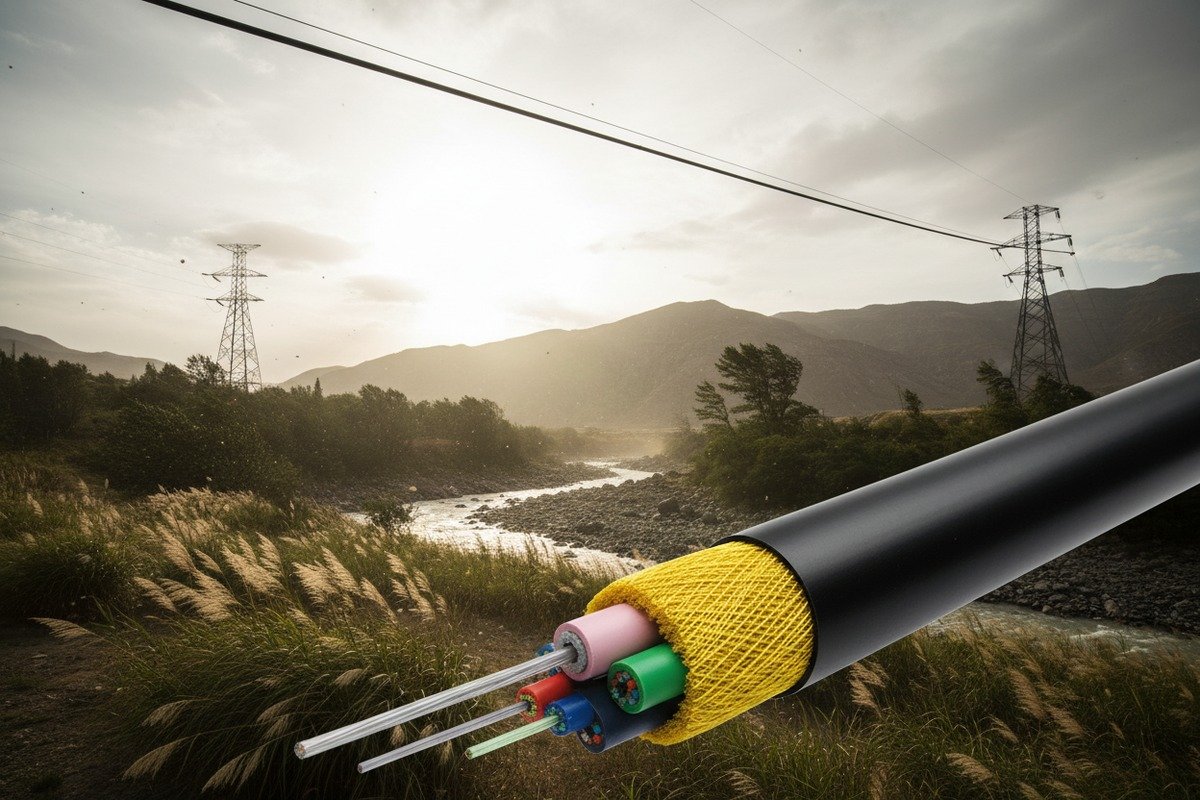
Aramid yarn (commonly known by the brand name Kevlar) provides the tensile strength that lets ADSS cable hang between poles without a metal messenger wire. It is lightweight, non-conductive, and incredibly strong. In our factory, we wind aramid yarn in precise layers around the cable core. More layers mean more strength—and more cost.
Span Length vs. Tensile Strength Requirements
| Span Length (meters) | Minimum Tensile Strength (kN) | Approximate Aramid Yarn Layers | Typical Cable Weight (kg/km) |
|---|---|---|---|
| 100–200 | 2.0–4.0 | 1–2 | 60–90 |
| 200–400 | 4.0–8.0 | 2–4 | 90–130 |
| 400–700 | 8.0–14.0 | 4–6 | 130–180 |
| 700–1000 | 14.0–20.0 | 6–8+ | 180–220 |
These are general guidelines. The exact yarn count also depends on the cable's outer diameter, core count, and the environmental load conditions at the installation site.
The Sag Factor
Every self-supporting cable sags under its own weight. Longer spans produce deeper sag. Deeper sag creates higher tension at the attachment points. If the cable lacks sufficient aramid yarn, it will either stretch permanently or snap under heavy ice and wind loads. Our sag-tension calculation software models these forces before we finalize the yarn specification for each custom order.
Durability Beyond Tensile Strength
Aramid yarn also contributes to crush resistance and vibration fatigue resistance. Wind-induced vibration (aeolian vibration) is a slow killer of aerial cables. More aramid yarn dampens these vibrations and extends service life. We have tested cables on our vibration bench for over 10 million cycles. Cables with proper aramid content show no measurable degradation.
Anti-Tracking Jackets for High-Voltage Corridors
If your ADSS cable runs near high-voltage power lines, the electric field can cause surface tracking on standard PE jackets. Our AT (anti-tracking) sheath option uses a special compound that resists this degradation. This does not change the aramid yarn calculation, but it is a critical durability factor for power utility customers.
Cost Implications
Aramid yarn is one of the most expensive raw materials in ADSS production. When a customer asks us to quote a 700-meter span cable, the yarn cost alone can be 40–50% of the total material bill. This is why accurate span data is essential. If your actual spans are 400 meters, there is no reason to pay for a 700-meter rating.
How can I ensure the cable's mechanical calculations are accurate for the wind and ice loads in my region?
One of the most common frustrations we hear from US-based procurement managers is that their supplier's sales team cannot explain the sag-tension math. Without accurate mechanical calculations, your cable may fail in its first winter storm.
Request detailed sag-tension calculation sheets from your supplier that account for NESC Heavy, Medium, or Light loading conditions specific to your region. Verify that calculations include cable weight, wind pressure at your design speed, radial ice thickness, and temperature range. Cross-check the supplier's rated tensile strength against the maximum working tension shown in these calculations.

Understanding NESC Load Districts
The National Electrical Safety Code 8 divides the United States into three primary loading districts. Each district specifies different ice thickness, wind pressure, and temperature assumptions that directly affect cable design.
| NESC Loading District | Radial Ice Thickness (mm) | Wind Pressure (Pa) | Temperature (°C) | Typical Regions |
|---|---|---|---|---|
| Heavy | 12.5 | 190 | -20 | Northern US, mountainous areas |
| Medium | 6.5 | 190 | -10 | Central US, mid-latitudes |
| Light | 0 | 430 | -1 | Southern US, coastal areas |
Notice that the Light district has zero ice but higher wind pressure, reflecting hurricane-prone coastal zones. Each district produces a different maximum load on the cable, and therefore a different required tensile strength.
What a Good Sag-Tension Report Looks Like
When we prepare a sag-tension report for a customer, it includes at least five loading scenarios: initial stringing condition, everyday condition (15°C, no wind, no ice), NESC district load, maximum wind load, and maximum ice load. For each scenario, the report shows the calculated tension at the support point and the mid-span sag. The maximum tension under any condition must stay below the cable's rated maximum allowable tension—typically 40–50% of the ultimate tensile strength.
How to Cross-Check the Numbers
You do not need to be a structural engineer to verify the basics. First, confirm that the cable weight in the calculation matches the supplier's datasheet. Second, check that the span length and elevation difference between poles are correct. Third, confirm that the environmental parameters match your NESC district. If any of these inputs are wrong, the entire calculation is unreliable.
Ask for Software Output, Not Just a Summary
Our engineering team uses professional sag-tension software (such as PLS-CADD or SAG10) to model each span. We share the raw software output with customers who request it. If your supplier only provides a one-page summary without showing input parameters, ask for the full calculation file. A reputable supplier will have no problem sharing this data.
Temperature Range Matters
ADSS cable stretches and contracts with temperature changes. A cable strung tightly in summer may become dangerously taut in winter as it contracts. Conversely, a cable strung in cold weather may sag excessively in summer heat. The sag-tension calculation must model the full temperature range of your installation site, typically -40°C to +60°C for northern US deployments.
The Consequence of Getting It Wrong
If the cable is under-specified for your actual loads, you risk mid-span failure—the cable snaps or sags so far it contacts vegetation or traffic. If the cable is over-specified, you waste money on excess aramid yarn and heavier hardware. Accurate mechanical calculations are the bridge between these two extremes.
What specific technical details should I compare to verify that my supplier is using high-quality materials for my custom span?
In our experience exporting to over 30 countries, one of the biggest fears buyers share is material downgrading—a supplier promises premium components but secretly substitutes cheaper alternatives to win on price. Here is how to protect yourself.
Compare fiber attenuation test results against ITU-T G.652D standards, verify aramid yarn brand and weight per kilometer, request factory OTDR test reports for every reel, confirm jacket material composition through third-party lab testing, and check that all certifications (UL, CSA, CE, ISO9001) are current and verifiable with the issuing body.
The Five Critical Checkpoints
When you receive a quotation or sample from any ADSS cable supplier, focus on these five areas. Each one reveals whether the supplier is using genuine, high-quality materials or cutting corners.
Checkpoint 1: Fiber Attenuation
Every reel of ADSS cable should come with an OTDR (Optical Time Domain Reflectometer) test report. This report shows the attenuation of each fiber across the full reel length. For G.652D single-mode fiber at 1550 nm, attenuation must be ≤0.22 dB/km. At 1310 nm, it must be ≤0.35 dB/km. If the report shows values above these thresholds, the fiber may be recycled or off-spec.
Checkpoint 2: Aramid Yarn Verification
Ask your supplier to declare the brand and weight of aramid yarn per kilometer. Premium suppliers use DuPont Kevlar or Teijin Twaron. The weight should match the tensile strength rating on the datasheet. For example, a 10 kN rated cable typically contains 400–600 grams of aramid yarn per meter. If the declared weight seems low for the rated strength, request a third-party pull test.
Checkpoint 3: Jacket Material
The outer jacket should be high-density polyethylene (HDPE) for standard installations or AT-sheath compound for high-voltage environments. Ask for material safety datasheets (MSDS) and UV stabilizer content. Poor-quality PE jackets crack within 2–3 years of UV exposure. Our jackets contain carbon black at 2.5–3.0% concentration, which provides UV resistance for 25+ years of outdoor service.
Checkpoint 4: Water-Blocking Technology
Modern ADSS cables use either water-blocking gel (jelly-filled) or dry water-blocking tape. Dry water-blocking is cleaner and faster to splice. Gel-filled designs are proven but messy. Whichever type your supplier offers, the cable must pass the IEC 60794-1-2 water penetration test. Ask for the test certificate.
Checkpoint 5: Certifications
Verify that the supplier's certifications are current. An ISO 9001 certificate 9 should show the most recent audit date. UL and CSA listings can be verified directly on the UL or CSA websites by searching the supplier's file number. If the supplier cannot provide verifiable certification numbers, treat that as a serious red flag.
Quick Comparison Checklist
| Quality Parameter | What to Request | Acceptable Standard |
|---|---|---|
| Fiber attenuation (1550 nm) | OTDR test report 10 per reel | ≤0.22 dB/km |
| Fiber attenuation (1310 nm) | OTDR test report per reel | ≤0.35 dB/km |
| Aramid yarn brand | Material declaration letter | DuPont Kevlar or Teijin Twaron |
| Tensile strength | Third-party pull test certificate | Matches datasheet rating (±5%) |
| Jacket UV resistance | Carbon black content report | 2.5–3.0% carbon black |
| Water penetration | IEC 60794-1-2 test report | Zero penetration at 1 meter head, 24 hours |
| Certifications | Certificate copies with file numbers | UL, CSA, CE, ISO 9001 (current) |
Beyond the Datasheet
Numbers on a datasheet are only as reliable as the supplier behind them. Visit the factory if possible. If you cannot visit, request a video tour of the production line showing the aramid yarn winding station, the fiber coloring line, and the final jacket extrusion. At our facility, we welcome remote factory audits over video call—transparency builds trust faster than any marketing brochure.
Packaging and Shipping Quality
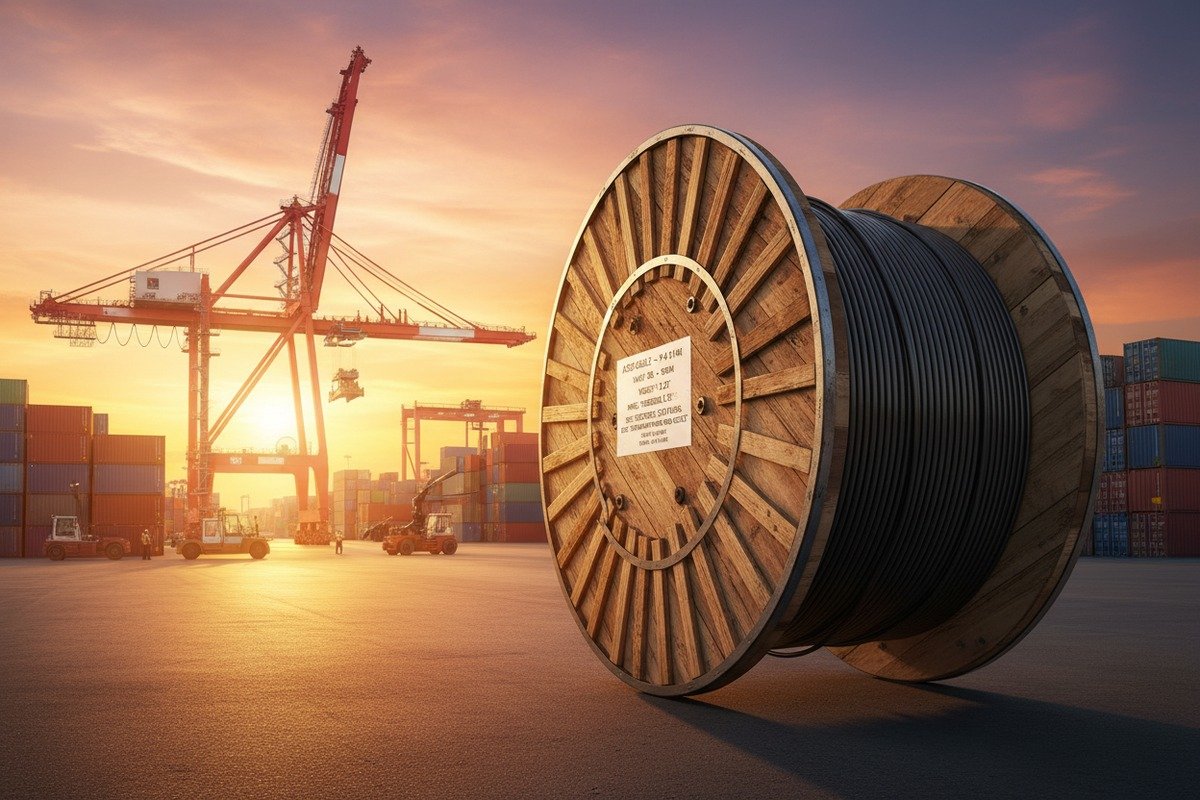
Even the best cable is useless if it arrives damaged. Verify that the supplier uses steel-reinforced wooden drums rated for ocean freight. Ask for photos of packed reels before shipment. We wrap each reel in moisture-barrier film and reinforce the drum flanges with steel bands to prevent collapse during container loading and sea transit.
Conclusion
Comparing ADSS cable specs comes down to four things: right core count, proper span engineering, verified mechanical calculations, and confirmed material quality. Get these right, and your aerial network will serve reliably for decades.
Footnotes
1. Explains crucial factors and significance of ADSS cable specifications for network design. ↩︎
2. Details different fiber optic cable types and their typical strand counts for various applications. ↩︎
3. Explains the application and advantages of aramid yarn in fiber optic cable reinforcement and protection. ↩︎
4. Describes central tube construction, its protective features, and common applications in fiber optic cables. ↩︎
5. Explains the robust design and applications of stranded loose tube fiber optic cables for various installations. ↩︎
6. Official ITU-T recommendation describing characteristics of G.652D single-mode optical fiber and cable. ↩︎
7. Discusses tensile strength as a key factor for fiber optic cable durability and resistance to loads. ↩︎
8. Official source for the National Electrical Safety Code, outlining its purpose and guidelines. ↩︎
9. The International Organization for Standardization (ISO) is the most authoritative source for information on the ISO 9001 standard and certification. ↩︎
10. Explains OTDR testing, its purpose, and how it helps troubleshoot and maintain fiber optic networks. ↩︎