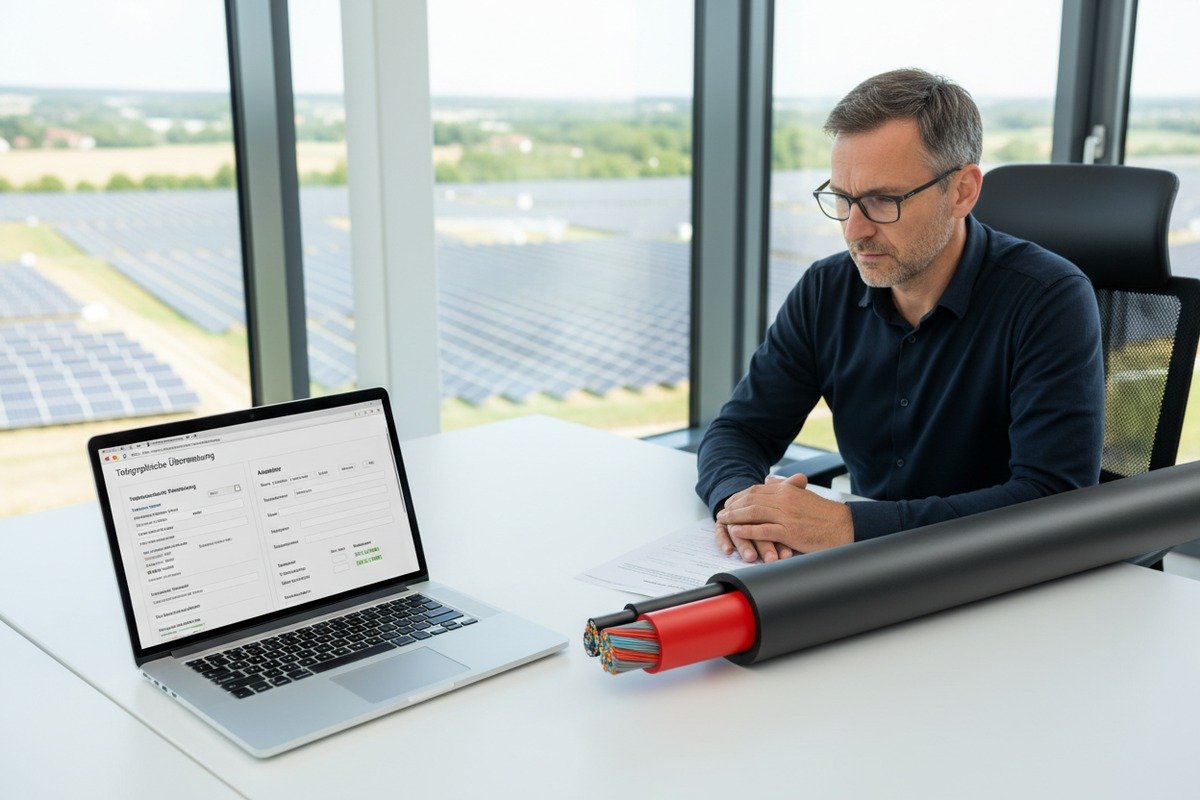
Every week, our sales team fields the same question from procurement managers placing their first container orders for H1Z2Z2-K or EN50618 solar cables 1: should I pay by L/C or T/T?
For solar PV cable orders under $50,000 with a trusted supplier, T/T with a 30/70 split is usually the best choice. For orders above $100,000 or with a new supplier, an L/C provides critical bank-backed protection. The right method depends on order size, supplier trust, cash flow needs, and project deadlines.
Both methods have clear strengths and real drawbacks Letter of Credit 2. The wrong choice can freeze your cash, delay your project, or leave you exposed to quality risks. Below, we break down four key angles to help you decide with confidence.
How do I decide if a Letter of Credit is worth the extra cost to protect my large-scale solar cable investment?
When our logistics department processes large European orders—20 or 30 containers of PV cable headed to solar farms in Germany or Spain—the payment method conversation always gets serious fast third-party inspector 3.
An L/C is worth the extra cost when your single order exceeds $100,000, when you are working with a new supplier, or when your project faces strict grid-connection deadlines. The bank guarantee ensures you only pay for goods that match your documented specifications, protecting your investment against non-delivery and quality shortfalls.

What Does an L/C Actually Cost You?
An L/C is not free insurance. Banks charge fees to open, amend, and process the credit. These costs vary, but here is a realistic breakdown for solar cable importers:
| Cost Item | Typical Range | Notes |
|---|---|---|
| L/C Opening Fee 4 | 0.5%–2% of order value | Charged by buyer's bank |
| Amendment Fee | $50–$200 per amendment | Each spec change costs money |
| Advising Fee | $50–$150 | Charged by seller's bank |
| Discrepancy Fee | $50–$100 per discrepancy | If documents don't match exactly |
| Total on a $200,000 order | $1,500–$5,000+ | Roughly 1%–2.5% of order value |
For a $200,000 shipment of H1Z2Z2-K cable, you might spend $2,000 to $4,000 on L/C fees. That sounds like a lot. But compare it to the cost of receiving 40,000 meters of cable that fails TUV inspection 5 at the port of Hamburg. The rework, re-shipping, and project delay penalties can easily exceed $50,000.
When the Math Clearly Favors L/C
The breakeven point is straightforward. If your potential loss from a failed shipment far exceeds the L/C fee, the credit pays for itself. Here are scenarios where L/C makes strong financial sense:
- First order with a new Chinese supplier. You have no track record. Trust is unproven.
- Order value above $100,000. The L/C fee becomes a small percentage of total exposure.
- Strict project deadlines with financial penalties. Grid-connection delays in Europe can cost €500–€1,000 per day. An L/C with clearly stated shipping deadlines gives you contractual leverage.
- Complex technical specifications. If your cables require specific CPR fire ratings 6 (Dca or Cca), UV resistance certification, or custom conductor sizes, an L/C ties payment to documented compliance.
When L/C May Not Be Worth It
For repeat orders with a supplier you've worked with for two or three years, L/C adds friction without proportional benefit. Our long-term clients in the Netherlands and Italy often switch to T/T after the second or third successful shipment. The relationship has been tested. The cable quality is proven. At that point, the L/C fee becomes an unnecessary expense.
Also, smaller orders under $30,000 rarely justify L/C overhead. The fees eat into your margin, and the document preparation time slows down production scheduling on our end as well.
What are the specific risks I face when using T/T for high-value H1Z2Z2-K cable shipments from China?
Our export team has seen the good side and the bad side of T/T payments 7 over 30 years of shipping solar cables worldwide. The method is simple, but simplicity does not mean safety.
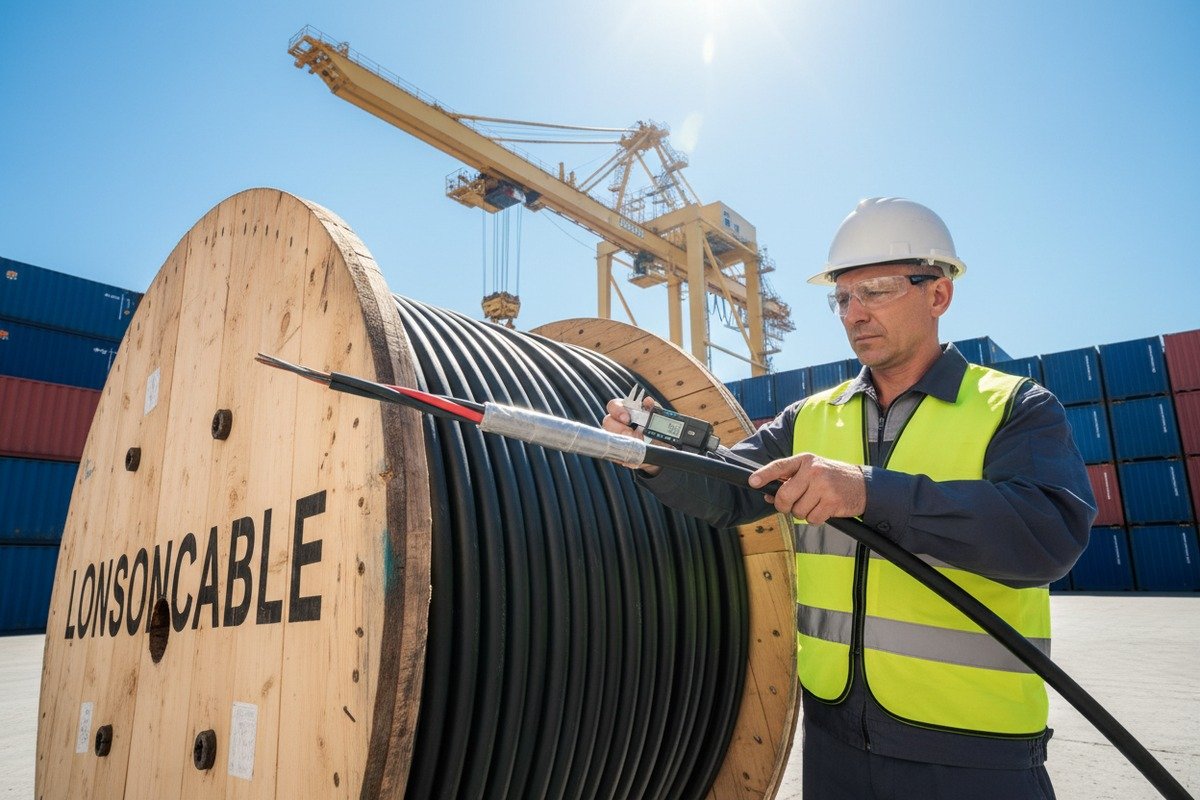
T/T exposes buyers to deposit loss if the supplier defaults, quality risks if no pre-shipment inspection is arranged, and delivery delays with no bank-enforced accountability. For high-value H1Z2Z2-K shipments, the primary risks are paying 30% upfront to an unverified supplier, receiving substandard cable that fails European certification, and having no formal recourse mechanism.
The Risk Breakdown by Payment Stage
T/T risk is not uniform. It shifts dramatically depending on when you pay. Let's map this out clearly:
| T/T Structure | Buyer Risk Level | Seller Risk Level | Best For |
|---|---|---|---|
| 100% advance | Very High | Very Low | Never recommended for new suppliers |
| 30% deposit + 70% before shipment | Moderate-High | Low | Established suppliers, standard specs |
| 30% deposit + 70% against B/L copy | Moderate | Moderate | New suppliers, with inspection clause |
| 50% deposit + 50% after delivery | Low-Moderate | High | Rare; only offered by very motivated sellers |
The most common structure—30% deposit, 70% before shipment—still leaves you exposed after you wire the initial 30%. If the supplier delays production, uses cheaper XLPO insulation 8, or substitutes copper conductor grades, you have limited leverage. Your deposit is already spent.
Specific Risks for H1Z2Z2-K Cable Orders
H1Z2Z2-K is the European standard solar cable. It must meet TUV certification, specific voltage ratings (1,000V or 1,500V DC), and strict UV/ozone resistance requirements. Here is where T/T risk becomes very concrete:
Material substitution. Without an L/C's document verification, a dishonest supplier could swap certified XLPO insulation for cheaper compounds. The cable looks identical on the outside. It only fails when tested—or worse, when it degrades on a rooftop three years later.
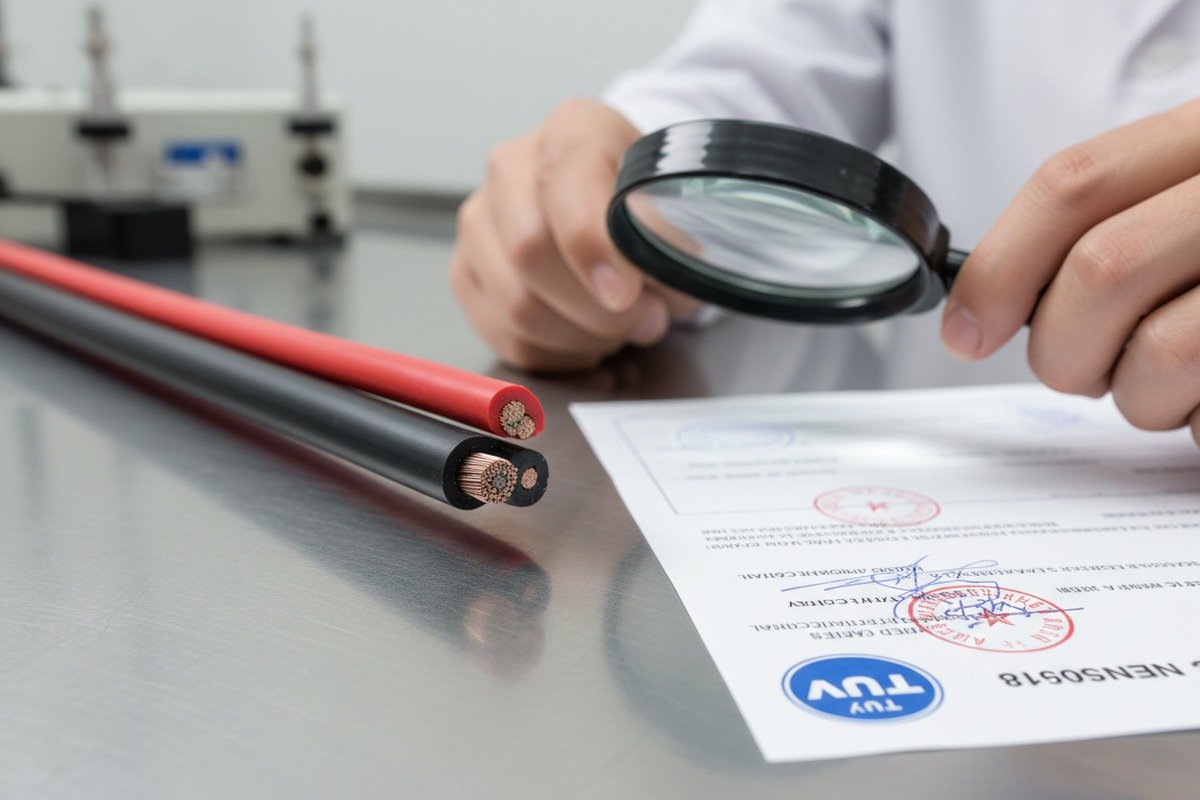
Fake or expired TUV certificates. We have heard from buyers who discovered their previous supplier's TUV certificate was photocopied from another manufacturer. Under T/T, there is no bank checking the authenticity of attached documents.
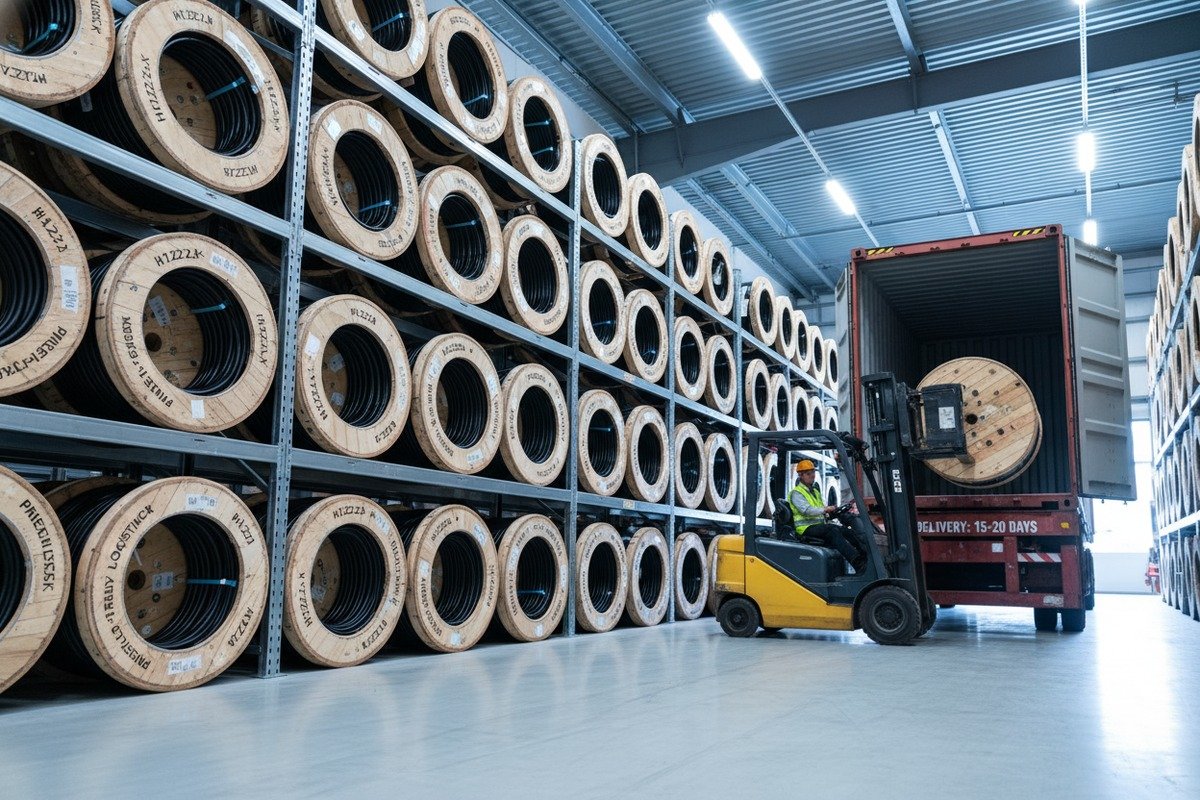
Packaging failures. T/T payments include no formal mechanism for verifying packaging quality. We have invested heavily in reinforced wooden cable drums rated for sea freight and automated cable-laying machines. But not all suppliers do. Collapsed drums during ocean transit can damage thousands of meters of cable, and under T/T, the buyer bears that loss.
How to Reduce T/T Risk Without Switching to L/C
The smartest buyers we work with use a hybrid approach:
- Hire a third-party inspector (SGS, Bureau Veritas, or TUV Rheinland) to check cable specs and packaging before releasing the 70% balance.
- Negotiate a 30/70 split where the 70% is payable against B/L copy, not before shipment.
- Request production samples from each batch for independent lab testing.
- Include penalty clauses in the purchase contract for late delivery or specification failures.
These steps don't cost as much as an L/C, but they close the biggest gaps in buyer protection.
How can I use payment terms to ensure my supplier meets strict European quality standards and delivery deadlines?
When we prepare shipments destined for German or Dutch solar farms, our quality control team runs every batch through internal TUV-aligned testing before it leaves the factory floor. But not every supplier operates this way—and your payment terms can enforce the standards you need.
Structure your payment terms with quality checkpoints built in. Hold 10%–30% of the total payment until after a third-party inspection confirms TUV certification, CPR fire ratings, and conductor specifications. For L/C, list all required certificates as mandatory documents. For T/T, tie balance payment to inspection approval and B/L presentation.
Building Quality Gates Into Your Payment Schedule
The key principle is simple: money is your strongest negotiation tool. Release it in stages, and each stage becomes a quality gate. Here is a practical payment structure designed for European-standard solar cable procurement:
| Payment Stage | Percentage | Trigger Condition | Quality Gate |
|---|---|---|---|
| Production deposit | 30% | Order confirmation + signed contract | Supplier commits to BOM, TUV cert, CPR class |
| Mid-production payment | 20% | Factory inspection report (third-party) | Conductor cross-section, insulation thickness verified |
| Pre-shipment balance | 40% | Final inspection + B/L copy | Full electrical testing, packaging check, cert verification |
| Retention / warranty hold | 10% | 30 days after delivery | No claims, goods match order exactly |
This four-stage structure is more complex than a standard 30/70 T/T split. Not every supplier will accept it. But from our experience, reputable manufacturers welcome this transparency because it demonstrates the buyer's seriousness and long-term intent.
Using L/C Documents as Quality Enforcement
An L/C's real power lies in its document requirements. When you open the credit, you specify exactly which documents the seller must present to receive payment. For solar PV cables, your L/C should require:
- Original TUV certificate matching the exact cable model and production batch.
- CPR Declaration of Performance (DoP) with the correct fire classification (Dca-s2,d2,a2 or better).
- Third-party inspection report from SGS, Bureau Veritas, or another accredited body.
- Packing list with drum specifications confirming compatibility with automated laying equipment.
- Certificate of Origin for customs compliance.
If any document is missing or inconsistent, the bank will not release payment. This creates automatic enforcement of your quality requirements without you needing to argue with the supplier.
Delivery Deadline Enforcement
Late delivery kills solar projects. In Europe, missing a grid-connection window can cost hundreds of thousands of euros in penalties and lost feed-in tariff revenue.
Under an L/C, you set a latest shipment date. If the supplier misses it, the credit expires and they receive nothing. This is extremely powerful motivation.
Under T/T, you lack this automatic mechanism. Instead, include explicit penalty clauses in your contract—for example, a 1% price reduction per week of delay, capped at 10%. Combine this with holding the 10% retention payment until on-time delivery is confirmed.
Practical Tip: Combine Methods for Maximum Control
Some of our European clients use a hybrid approach. They pay 30% by T/T as a deposit to start production quickly, then open an L/C for the remaining 70% with full document requirements. This gives the supplier fast initial cash flow while preserving bank-backed quality enforcement for the bulk of the payment.
Which payment method should I choose to maintain healthy cash flow while sourcing containers of solar PV cables?
Cash flow is the lifeblood of any solar procurement operation. Our clients who manage multiple EPC projects simultaneously tell us that how they pay suppliers directly affects how many projects they can fund at once.
T/T preserves cash flow better than L/C for most buyers. A 30/70 T/T split ties up only 30% of the order value during production, while an L/C may require a 100% margin deposit that freezes the full order amount in your bank account. Choose T/T for cash flow flexibility and L/C only when the security justifies the capital lockup.
The Hidden Cash Flow Cost of L/C
Most buyers focus on L/C banking fees—the 1%–2% opening charge. But the bigger cost is often invisible: the margin requirement. When your bank opens an L/C, it typically requires you to deposit 80%–100% of the credit value as collateral. That money is frozen until the L/C is settled.
For a $300,000 solar cable order, that means $240,000–$300,000 locked in your bank for the entire production and shipping cycle—potentially 60–90 days. That capital could otherwise fund deposits on two or three additional projects.
Cash Flow Comparison: T/T vs L/C
Here is a side-by-side comparison for a $200,000 H1Z2Z2-K cable order with a 45-day production cycle and 30-day shipping time:
| Factor | T/T (30/70 Split) | L/C (Sight) |
|---|---|---|
| Capital locked at order placement | $60,000 (30% deposit) | $160,000–$200,000 (margin deposit) |
| Capital locked during production | $60,000 | $160,000–$200,000 |
| Balance payment timing | Day 45 (before shipment) | Day 45 (upon document presentation) |
| Total days capital is tied up | 30% for 75 days; 70% for 30 days | 80–100% for 75+ days |
| Banking fees | $25–$50 wire fee | $2,000–$5,000 in L/C fees |
| Working capital freed for other projects | High | Low |
Strategies to Optimize Cash Flow Under Each Method
If you choose T/T:
- Negotiate the longest possible gap between deposit and balance payment. Ask for 30% deposit and 70% against B/L copy. This delays your major cash outlay by 2–3 weeks compared to paying 70% before shipment.
- Time your orders to align with your project payment milestones. If your EPC client pays you 30% at contract signing, use that to fund your supplier deposit.
- For repeat orders, negotiate 20/80 or even 10/90 splits. Reliable suppliers will accommodate loyal buyers.
If you choose L/C:
- Ask your bank about reduced margin requirement 10s. If your company has strong credit history, some banks will open L/Cs with only 50%–70% margin deposits.
- Use a deferred payment L/C (e.g., 60 or 90 days after B/L date). This means the supplier ships the goods, presents documents, and receives payment 60–90 days later. You receive the cables, potentially install them, and even collect partial payment from your client before the L/C matures.
- Explore revolving L/Cs for ongoing supply relationships. One credit covers multiple shipments, reducing repeated fee payments and margin deposits.
Currency Risk and Timing
Solar cable orders often have 45–90 day lead times. During that window, EUR/USD or EUR/CNY exchange rates can shift 2%–5%. Under T/T, your currency exposure exists in two chunks (deposit and balance), and you can hedge each separately. Under L/C, the full amount is committed at opening, but actual conversion may happen weeks later. Work with your bank's forex desk to lock in forward rates at the time of order placement, regardless of payment method.
Conclusion
Choosing between L/C and T/T for solar PV cable sourcing comes down to order size, supplier trust, and your project's financial structure. Use the frameworks and tables above to match your specific situation to the right payment method—or combine both for maximum protection and flexibility.
Footnotes
1. Replaced with a manufacturer's page detailing H1Z2Z2-K and EN50618 compliant solar cables. ↩︎
2. Replaced with an authoritative government source (International Trade Administration) defining Letter of Credit. ↩︎
3. Replaced with a page from Intertek, a major global inspection company, detailing their third-party inspection services. ↩︎
4. Details the typical costs associated with opening a Letter of Credit from a banking perspective. ↩︎
5. Describes the scope and importance of TUV product inspection services for quality assurance. ↩︎
6. Explains the Construction Products Regulation and its fire safety classifications for cables. ↩︎
7. Replaced with a recent and comprehensive explanation of Telegraphic Transfers (T/T payments) from a financial services company. ↩︎
8. Explains the material properties and common use of XLPO in cable manufacturing. ↩︎
9. Provides a clear definition and purpose of a Bill of Lading in international shipping. ↩︎
10. Explains the collateral or margin requirements often associated with Letters of Credit. ↩︎