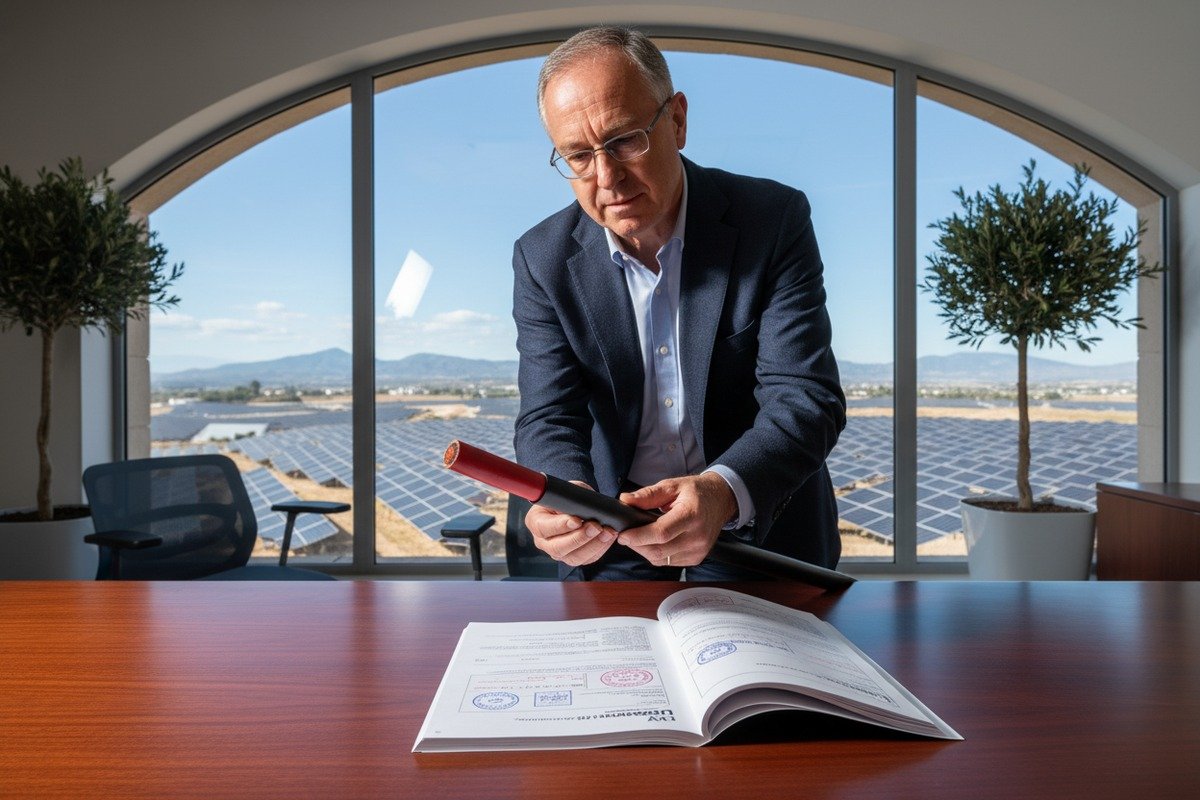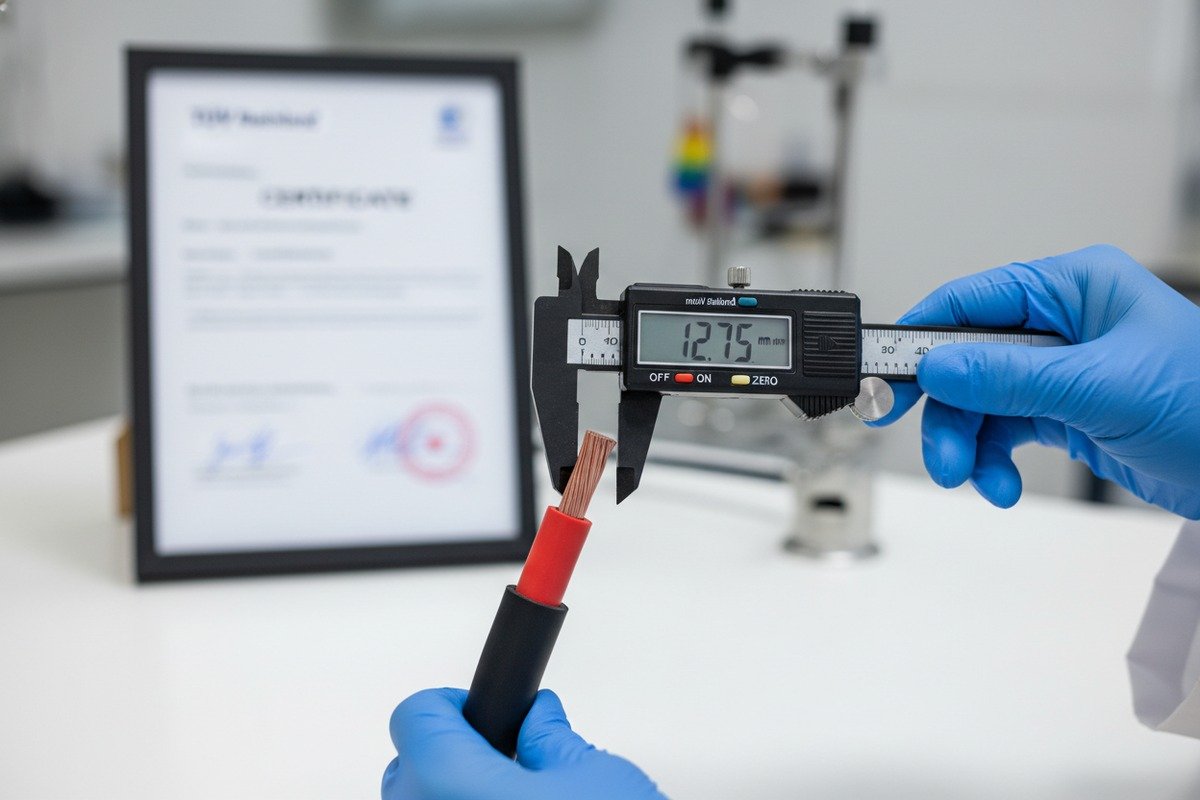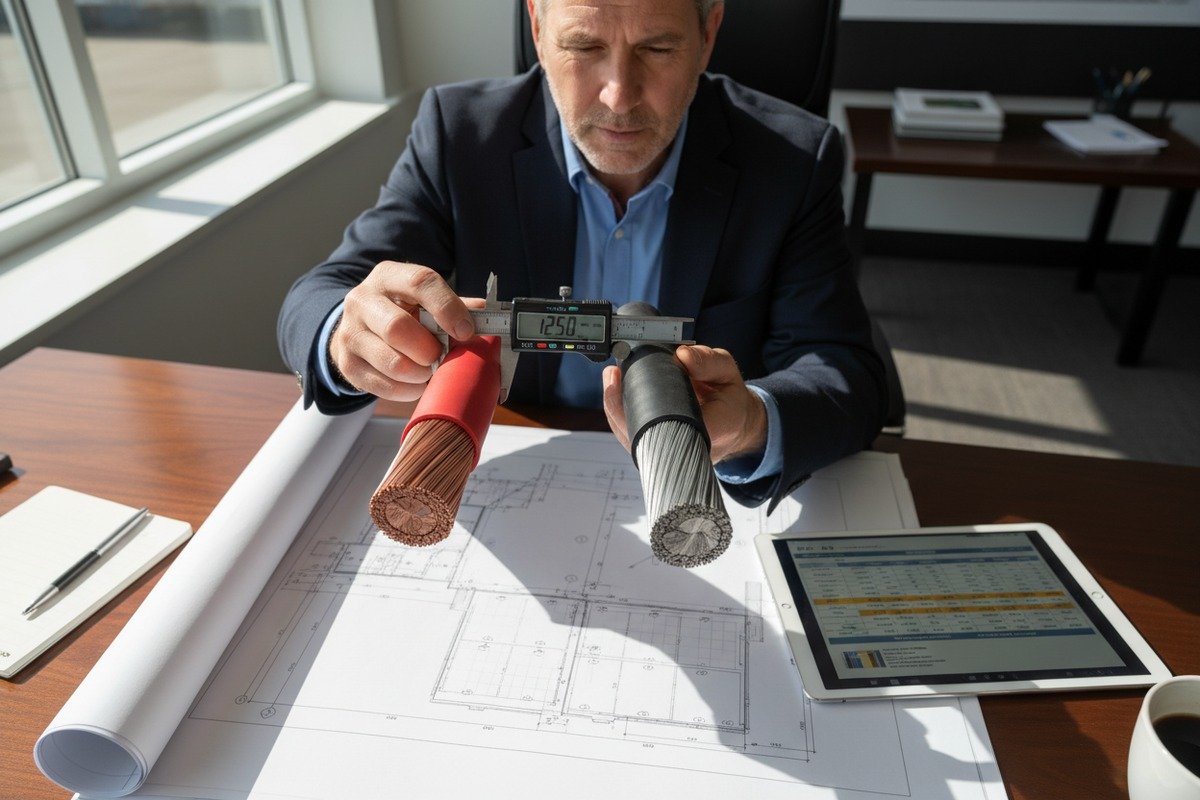

Every year, our shipping dock sends out thousands of ADSS cable drums to over 40 countries — and we have seen what happens when the wrong forwarder handles them.
To choose a reliable freight forwarder for ADSS fiber optic cables from China, verify their fiber optic handling experience, demand transparent DDP quotes with no hidden fees, confirm container loading supervision protocols, and check their track record for on-time delivery to your specific destination country.
Choosing the wrong logistics partner can turn a perfect production run into a costly nightmare NVOCC or FIATA certifications 1. Crushed reels, missed deadlines, and surprise customs charges are all avoidable. This guide walks you through the exact questions to ask and red flags to spot before you commit to any forwarder.
How can I verify if a freight forwarder has experience handling my heavy ADSS fiber optic cable reels?
When we load containers at our Hainan facility, the difference between an experienced forwarder and a novice shows up in the first five minutes — how they position the reel cradles tells us everything.
Request the forwarder's cargo handling portfolio, ask for references from previous fiber optic cable shipments, verify their NVOCC or FIATA certifications, and confirm they use reel-specific securing equipment like cradles, strapping, and vibration dampeners to prevent bending damage during transit.
Why ADSS Cables Need Special Handling
ADSS (All-Dielectric Self-Supporting) cables 2 are lightweight compared to armored cables. But that does not mean they are easy to ship. The all-dielectric design means no metal components — which is great for aerial installation near power lines. However, it also means the cable relies on aramid yarn and PE sheathing for structural strength. One bad bend during transit, and the optical fibers inside can suffer micro-bending losses 3 that degrade signal performance permanently.
Our quality control team has documented cases where buyers received perfectly manufactured ADSS cables with insertion loss values 0.3 dB higher than factory test results. The cause was not production error. It was rough handling during shipping — reels stacked without cradles, straps cutting into the sheath, and no vibration padding on a 35-day sea voyage.
What to Ask Your Forwarder
Here is a straightforward checklist. Do not skip any of these items.
| Verification Item | What to Request | Why It Matters |
|---|---|---|
| Handling portfolio | Photos or case studies of previous fiber optic cable shipments | Proves real experience, not just claims |
| Certifications | NVOCC license, FIATA membership, ISO 9001 4 | Confirms legal authority and quality systems |
| Equipment list | Reel cradles, anti-vibration pads, tensioned polyester strapping | Prevents bending and crush damage |
| References | Contact details of 2–3 past clients who shipped cables | Independent verification of performance |
| Insurance policy | Cargo insurance with coverage for attenuation loss or fiber breakage | Protects your investment beyond physical damage |
| Damage claims rate | Historical percentage of damaged shipments | Industry benchmark: below 1% for reliable forwarders |
How to Test Before You Commit
Start with a small shipment. Send one or two reels — say, 2–5 km of 24-fiber ADSS — as a trial. Monitor the entire journey. Check the cable's optical performance on arrival against the factory OTDR report. If the forwarder handles a small load well, they earn the right to handle your full container. This approach costs you very little but reveals everything about their process.
Also, ask if the forwarder has a local agent near the factory. Our facility is in China, and many of our buyers have found that forwarders with strong inland logistics networks can pick up cargo faster and cheaper. A forwarder based only in the destination country might add 3–5 days just for the factory-to-port leg.
Our export team prepares DDP documentation every week, and we have seen buyers get burned by quotes that looked cheap on paper but ballooned by 30% at the destination port.
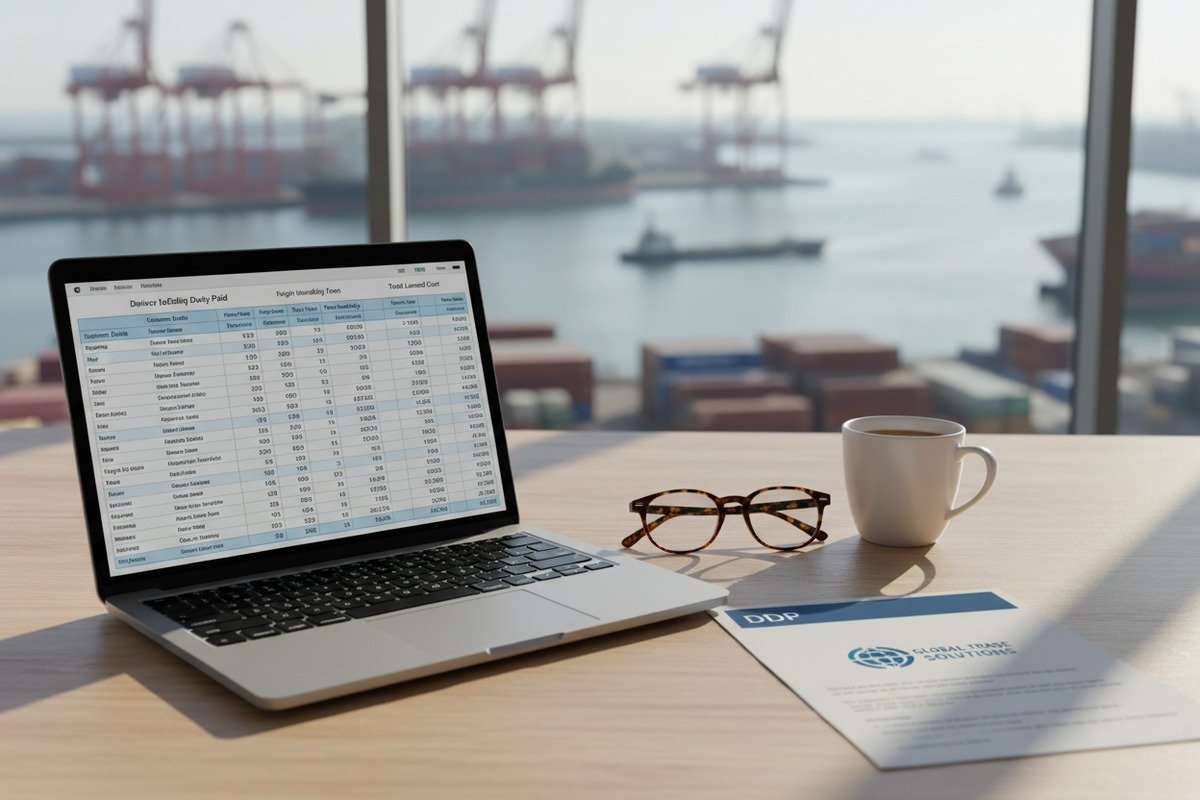
A reliable DDP quote should itemize freight charges, origin handling fees, customs duties, destination delivery costs, insurance, and any surcharges. Compare at least three quotes line-by-line, and reject any quote that bundles costs into a single lump sum without transparent breakdowns.
Understanding DDP for Cable Imports
DDP — Delivered Duty Paid 5 — means your forwarder handles everything from factory door to your warehouse door. You pay one price, and theoretically, there are no surprises. But "theoretically" is the key word. Many forwarders offer DDP quotes that exclude fuel surcharges, terminal handling charges, or last-mile delivery fees. These costs appear later as add-ons.
When our buyers opt for DDP, we always recommend they request a fully itemized quote. This way, every cost component is visible and can be challenged or compared.
Line-by-Line Cost Breakdown
Here is what a complete DDP quote for ADSS cable should include:
| Cost Component | Typical Range (Shanghai to LA, 20ft FCL) | Notes |
|---|---|---|
| Ocean freight | $2,000–$3,500 | Varies by season and carrier |
| Origin handling & documentation | $200–$400 | Export customs, bill of lading |
| Inland haulage (China side) | $150–$350 | Factory to port, depends on distance |
| Customs duties (US side) | 0%–6.5% of declared value | ADSS cables with no metal may qualify for lower duty codes |
| Destination port handling | $300–$600 | THC, chassis fees, container drayage |
| Last-mile delivery | $200–$800 | Depends on distance from port to warehouse |
| Cargo insurance | 0.3%–0.5% of cargo value | Ensure it covers fiber attenuation damage |
| Fuel/security surcharges | $100–$300 | Often hidden in vague "miscellaneous" lines |
| Total estimated range | $3,500–$6,500+ | Excluding product cost |
Common Traps to Avoid
First, watch out for quotes that say "duties estimated" without specifying the HS code 6. For ADSS fiber optic cables, the correct classification matters. A wrong code can mean paying 10% more duty than necessary — or triggering a customs audit that delays your shipment by weeks.
Second, be cautious of forwarders who do not mention demurrage and detention fees. If your container sits at port because of a paperwork error, you could face $150–$300 per day in penalties. A trustworthy forwarder will mention these risks upfront and explain how they prevent them.
Third, compare Incoterms 7 carefully. Some buyers find that FOB combined with their own forwarder at the destination actually costs less than a full DDP quote from a China-based agent. The hybrid approach — FOB from the Chinese side, with your own trusted customs broker handling import — gives you more control. We work with both models and can coordinate either way from our end.
Finally, always confirm whether the DDP quote includes post-2024 tariff adjustments. US-China tariffs and EU CBAM regulations change the math significantly. A forwarder with tariff engineering expertise can sometimes reclassify or route goods to minimize duty exposure legally.
How do I ensure my logistics provider will properly supervise the container loading to protect my fiber optic drums?
Loading supervision is where we have the most control — and the most visibility into how a forwarder actually operates. At our production facility, we invite forwarder representatives to be present during every container load.
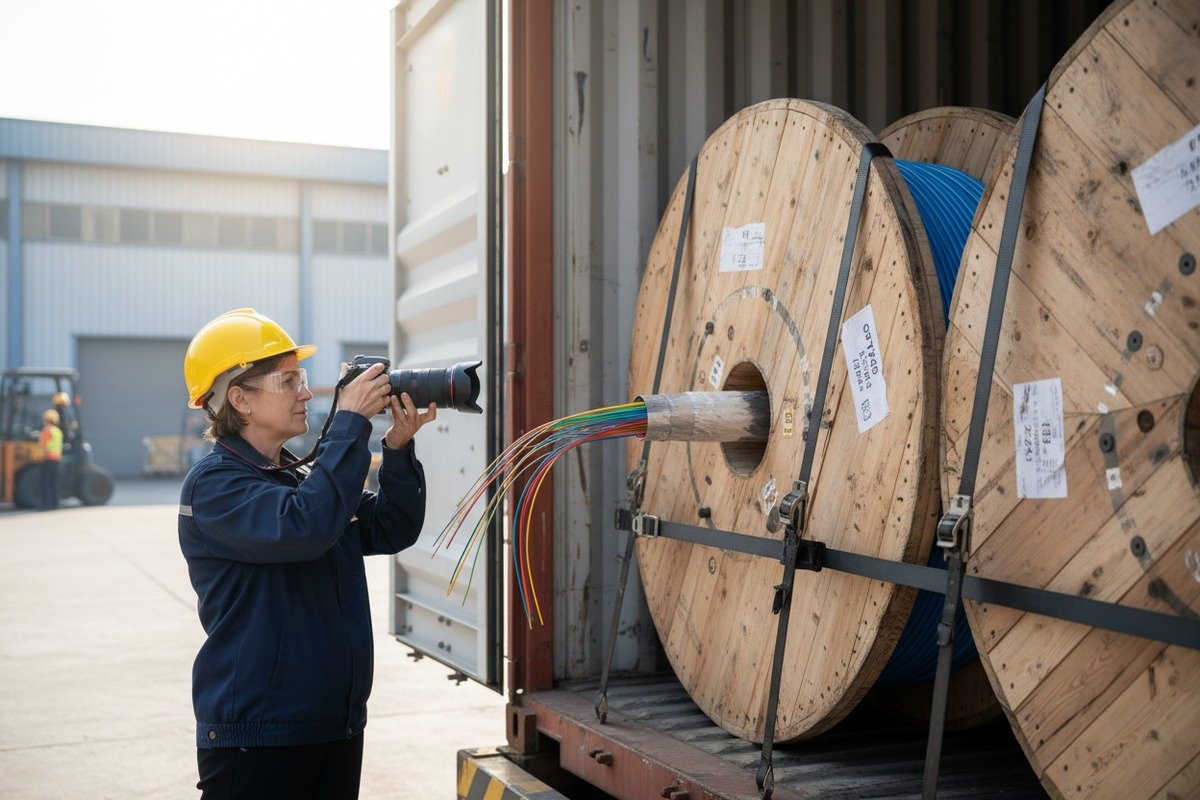
Require your forwarder to provide on-site loading supervision with photographic documentation, use reel-specific bracing and chocking techniques, verify that minimum bending radius requirements are maintained, and send you a detailed loading report before the container is sealed.
Why Loading Supervision Is Non-Negotiable
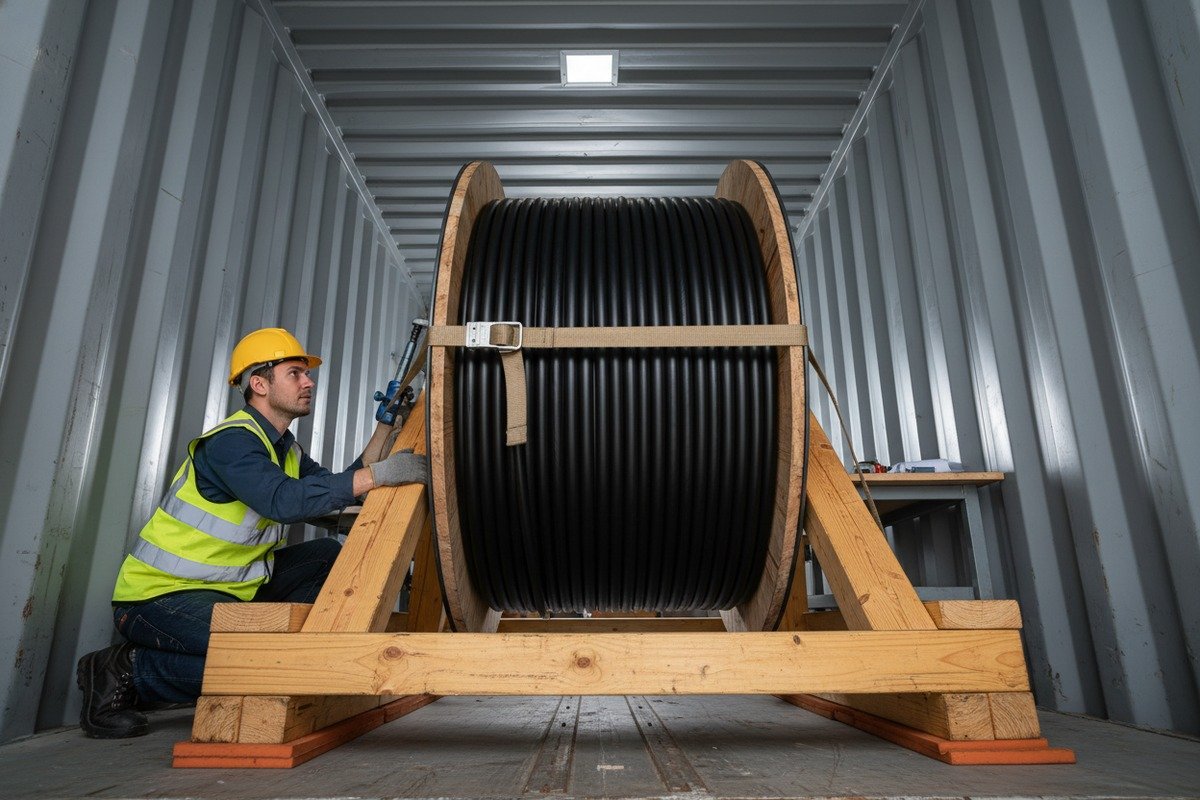
A single ADSS cable drum can weigh between 200 kg and over 1,000 kg depending on cable length and fiber count. These drums need to sit upright on cradles, not stacked on their sides. The minimum bending radius 8 for most ADSS cables is 20 times the cable diameter. Violate that during loading, and you risk permanent damage that does not show up until installation.
Our warehouse team has a strict loading protocol. We position each drum with at least 10 cm clearance from container walls. We use wooden chocks and tensioned polyester strapping — never metal banding, which can dig into the PE sheath. We also photograph every drum's position from multiple angles before the container doors close.
What a Good Loading Report Includes
A professional forwarder should send you a loading report that covers:
- Number of drums loaded and their serial numbers
- Position map showing where each drum sits inside the container
- Photos of strapping, chocking, and padding
- Verification that no drum exceeds the minimum bending radius
- Container seal number and timestamp
- Any anomalies or concerns noted during loading
If your forwarder cannot produce this document, consider that a deal-breaker.
Third-Party Inspection as Backup
Some buyers hire third-party inspection companies 9 like SGS or Bureau Veritas to supervise loading independently. This adds $300–$500 per container but gives you an unbiased report. For high-value shipments — say, 144-fiber ADSS cables at $10–$20 per meter — that cost is negligible compared to a single damaged drum.
We always welcome third-party inspectors at our facility. In fact, we encourage it. When a buyer invests in inspection, it tells us they take quality seriously, and it builds mutual trust for the long-term partnership.
Temperature and Humidity Considerations
ADSS cables with AT (anti-tracking) sheaths are more sensitive to UV and heat exposure during transit. If your shipment passes through tropical routes or sits in a sun-exposed yard for days, the container interior can reach 60°C or higher. While ADSS cables are rated for outdoor use, prolonged exposure to extreme heat inside a sealed metal box can accelerate sheath degradation. Ask your forwarder if they offer ventilated containers or can guarantee shaded storage during port layovers.
What red flags should I watch out for to ensure my shipping partner can meet my project's strict delivery timeline?
Our production team can turn around a custom ADSS order in 15–20 days. But that speed means nothing if the forwarder adds three weeks of delays with poor planning or port-side mismanagement.
Red flags include vague transit time estimates without port-specific details, no contingency plan for customs holds or port congestion, inability to provide real-time tracking, refusal to commit to contractual delivery penalties, and a history of blaming delays on external factors without offering proactive solutions.
The Real Cost of Late Delivery
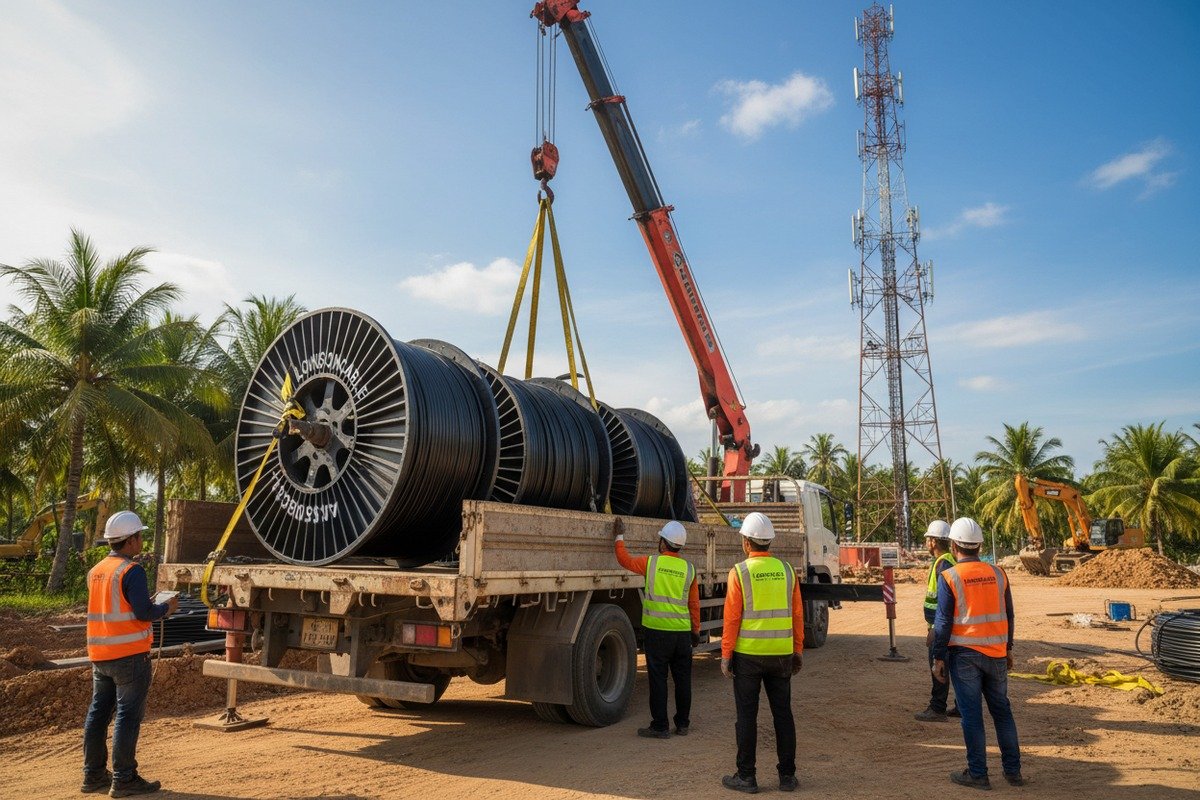
When your ADSS cables arrive late, your construction crew sits idle. Tower climbers, splicers, and project managers are on the clock whether the cable is there or not. A one-week delay on a telecom deployment can cost $10,000–$50,000 in idle labor alone — not counting penalties from your end client or lost revenue from delayed network activation.
We have seen buyers lose entire contracts because a forwarder failed to account for Lunar New Year port shutdowns in China. Ports like Shanghai and Ningbo slow down dramatically for 2–3 weeks around late January or early February. If your forwarder does not plan around this, your timeline is already broken.
Red Flags Checklist
Here are the warning signs that a forwarder will not meet your deadline:
| Red Flag | What It Signals | What to Do Instead |
|---|---|---|
| "Transit time: approximately 25–35 days" | No specific routing or carrier commitment | Demand exact vessel name, departure date, and port pair |
| No tracking portal or only manual email updates | Lack of digital infrastructure | Choose forwarders on platforms like Flexport or Freightos with real-time dashboards |
| Cannot name their customs broker at destination | No established local network | Require the broker's name, license number, and average clearance time |
| Blames all delays on "port congestion" | No proactive risk management | Ask for their contingency routing plan and alternative port options |
| Refuses service-level agreements (SLAs) with penalties | Low confidence in their own performance | Negotiate contractual delivery windows with financial accountability |
| No mention of seasonal disruptions | Inexperience with China export cycles | Confirm they plan around Lunar New Year, Golden Week, and monsoon seasons |
Digital Tracking Is No Longer Optional
In 2026, any forwarder without real-time digital tracking is behind the curve. AI-driven route optimization platforms now reduce delays by 20–25% compared to traditional manual booking. When you can see your container's exact position, estimated arrival, and any route changes in real time, you can adjust your project schedule proactively instead of reacting to surprises.
Ask your forwarder if they integrate with platforms like CargoSmart, project44, or their own proprietary tracking system. If the answer is "we'll email you updates," that is a red flag.
Build Buffer Time — But Hold the Forwarder Accountable
Even with the best forwarder, sea freight has variables. Weather, port strikes, and vessel mechanical issues happen. Smart buyers build 5–7 days of buffer into their project timeline. But — and this is important — that buffer should not be an excuse for the forwarder to be sloppy. Set clear expectations in writing. Define what "on time" means. And include a clause that triggers a discount or credit if delivery exceeds the agreed window by more than 3 business days.
We coordinate closely with our buyers' forwarders to ensure factory-side readiness never causes a bottleneck. Our standard lead time for stock ADSS configurations is 15–20 days. For custom span ratings or special sheath materials, it extends to 25–30 days. We communicate these timelines transparently so the forwarder can book vessels and reserve container slots well in advance.
Conclusion
Choosing the right freight forwarder for your ADSS cables from China comes down to experience, transparency, supervision, and accountability — get these four right, and your project stays on track.
Footnotes
1. Details the importance and requirements of FIATA memberships for freight forwarders. ↩︎
2. Explains the definition and characteristics of ADSS fiber optic cables. ↩︎
3. Explains how small bends in fiber optic cables cause signal degradation. ↩︎
4. Provides information on the international standard for quality management systems. ↩︎
5. Defines DDP Incoterm, outlining seller's maximum responsibility in international shipping. ↩︎
6. Explains Harmonized System codes for classifying goods in international trade. ↩︎
7. The International Trade Administration, a U.S. government agency, offers an authoritative guide to Incoterms, defining their purpose and importance. ↩︎
8. Details the critical bend limits for fiber optic cables to prevent damage. ↩︎
9. Describes the role of independent companies in ensuring product quality and compliance in supply chains. ↩︎