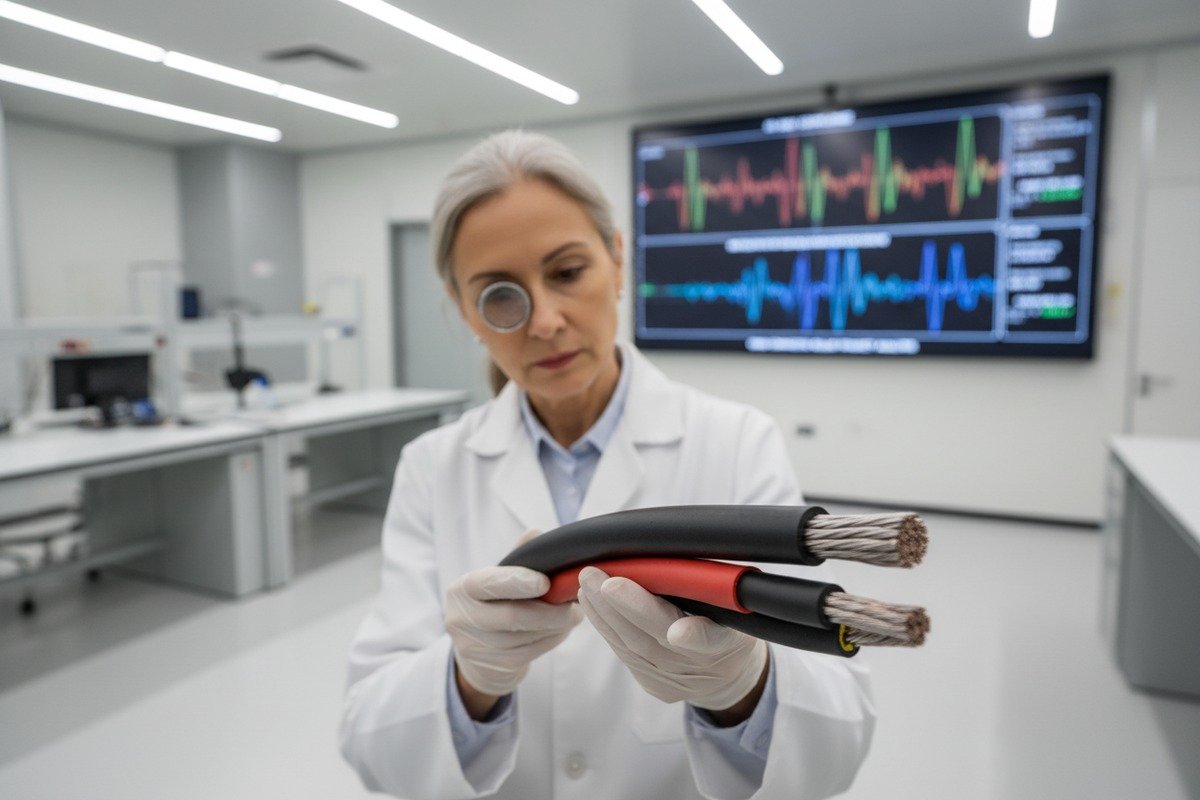
Every week, our quality team reviews cable failure reports from solar projects worldwide arc faults 1. One recurring cause stands out: damaged cables from bends that were too tight.
Bending radius directly impacts solar PV cable performance and lifespan. When sourcing H1Z2Z2-K or similar cables, buyers must verify that the minimum bending radius—typically 4 to 6 times the cable's outer diameter—matches their installation layout. Ignoring this specification leads to insulation cracks, conductor fatigue, power losses, and premature system failure.
This article breaks down exactly how bending radius affects your sourcing decisions, your project timeline, and your bottom line. We will walk through the technical details, the real risks, and the practical steps you can take right now.
How do I determine the correct minimum bending radius for the H1Z2Z2-K cables I am sourcing?
Our engineering team gets this question from European EPC buyers almost daily. The answer seems simple, but the details matter more than most procurement teams realize.
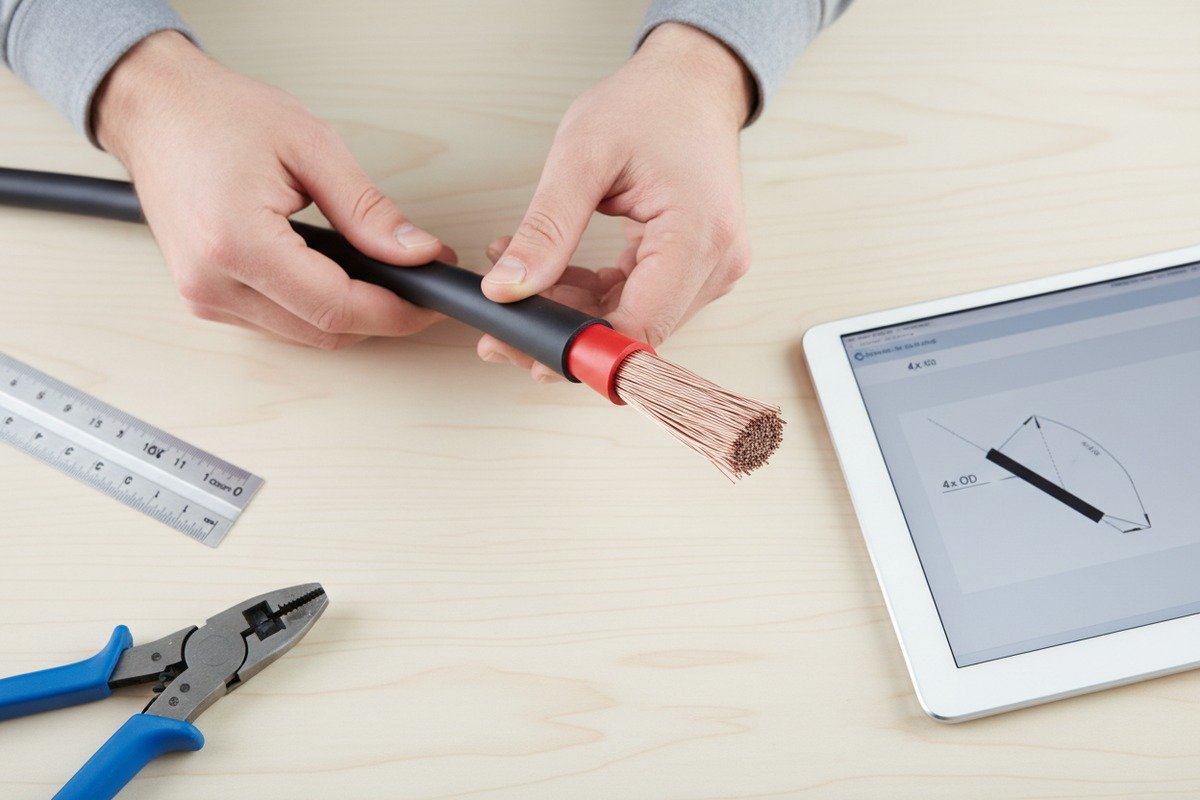
To determine the correct minimum bending radius for H1Z2Z2-K cables, check the manufacturer's datasheet for the outer diameter (OD), then multiply it by the specified factor—usually 4x OD during installation and 3x OD during fixed operation. Larger cross-sections like 6mm² or 10mm² require proportionally larger radii.
Start With the Outer Diameter
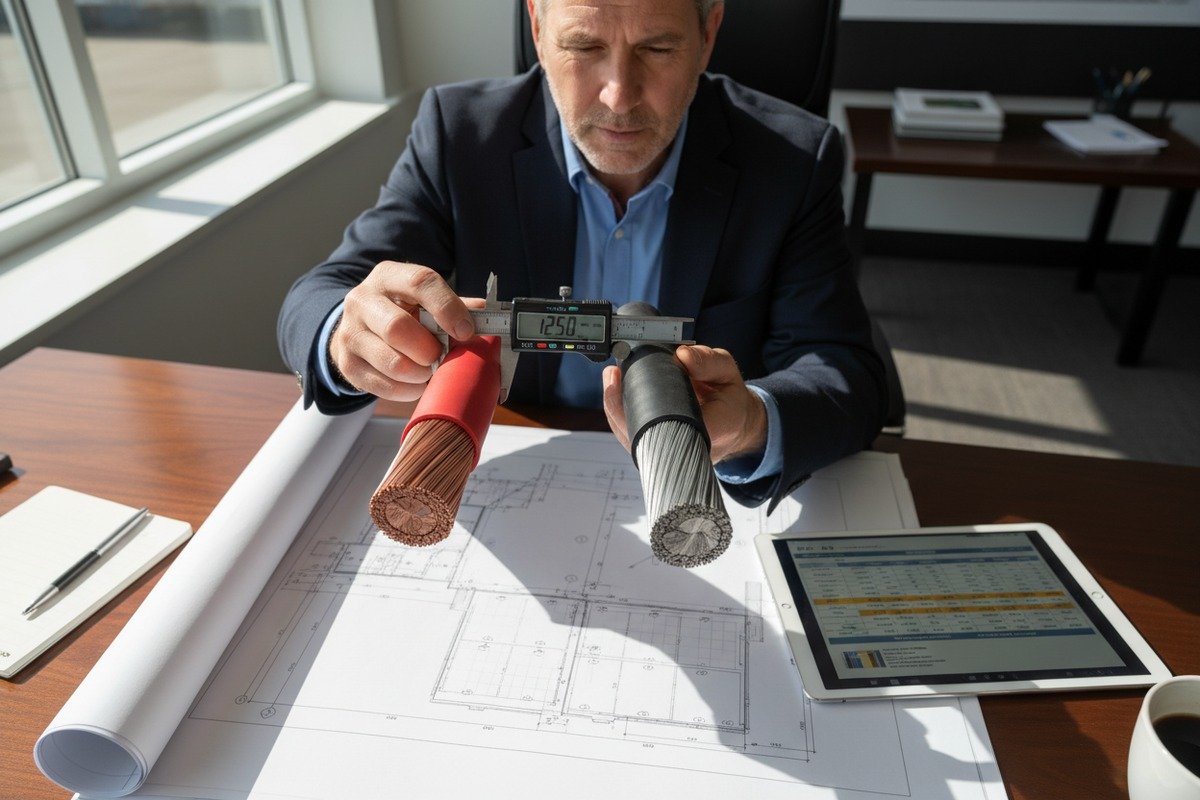
The outer diameter is the foundation of every bending radius calculation. Each cable cross-section has a different OD. A 4mm² H1Z2Z2-K 2 cable has a smaller OD than a 10mm² version. This means the minimum bend radius changes with every cable size you source.
Here is a practical reference table based on common H1Z2Z2-K specifications from our production lines:
| Cross-Section (mm²) | Typical Outer Diameter (mm) | Min. Bending Radius – Installation (4x OD) | Min. Bending Radius – Fixed Operation (3x OD) |
|---|---|---|---|
| 2.5 | 5.4 | 21.6 mm | 16.2 mm |
| 4.0 | 5.9 | 23.6 mm | 17.7 mm |
| 6.0 | 6.6 | 26.4 mm | 19.8 mm |
| 10.0 | 7.8 | 31.2 mm | 23.4 mm |
| 16.0 | 9.0 | 36.0 mm | 27.0 mm |
| 35.0 | 12.0 | 48.0 mm | 36.0 mm |
These numbers are not arbitrary. They come from the mechanical limits of the XLPE (cross-linked polyethylene) insulation 3 and the tinned copper conductor inside the cable. Push past these limits, and the internal structure starts to deform.
Installation Radius vs. Operating Radius
There is an important distinction that many buyers miss. The installation bending radius is always larger than the operating bending radius. Why? During installation, cables undergo dynamic stress. Installers pull, twist, and route them through conduits, trays, and tight corners. This movement creates more strain than a cable sitting in a fixed position for 25 years.
Once installed and secured, the cable is static. It no longer moves. So a slightly tighter curve is acceptable for permanent operation. But during the pulling and routing phase, you need that extra margin.
How to Read the Datasheet Correctly
When you request a datasheet from your supplier, look for these specific line items:
- Outer Diameter (OD): Listed in millimeters.
- Minimum Bending Radius (dynamic/installation): Usually 4x or 5x OD.
- Minimum Bending Radius (static/fixed): Usually 3x or 4x OD.
- Conductor Class: Class 5 (flexible stranded) 4 is standard for H1Z2Z2-K.
If a supplier cannot provide these values clearly, that is a red flag. When we ship cables to projects in Germany or the Netherlands, our datasheets include all four values plus a visual bending guide. Transparency here protects both the buyer and the installer.
The Enphase Rule and Other Minimums
Some system component manufacturers set their own hard minimums. Enphase 5, for example, specifies a minimum bend radius of 6 cm (60 mm) regardless of what the cable math says. If your calculated radius is smaller than 60 mm, you must still use 60 mm. Always cross-reference the cable datasheet with the racking system and inverter manufacturer requirements.
What are the risks to my project's long-term reliability if I ignore bending radius limits during installation?
We have seen project managers dismiss bending radius as a minor detail—until a string of panels goes offline two years into a 25-year project.
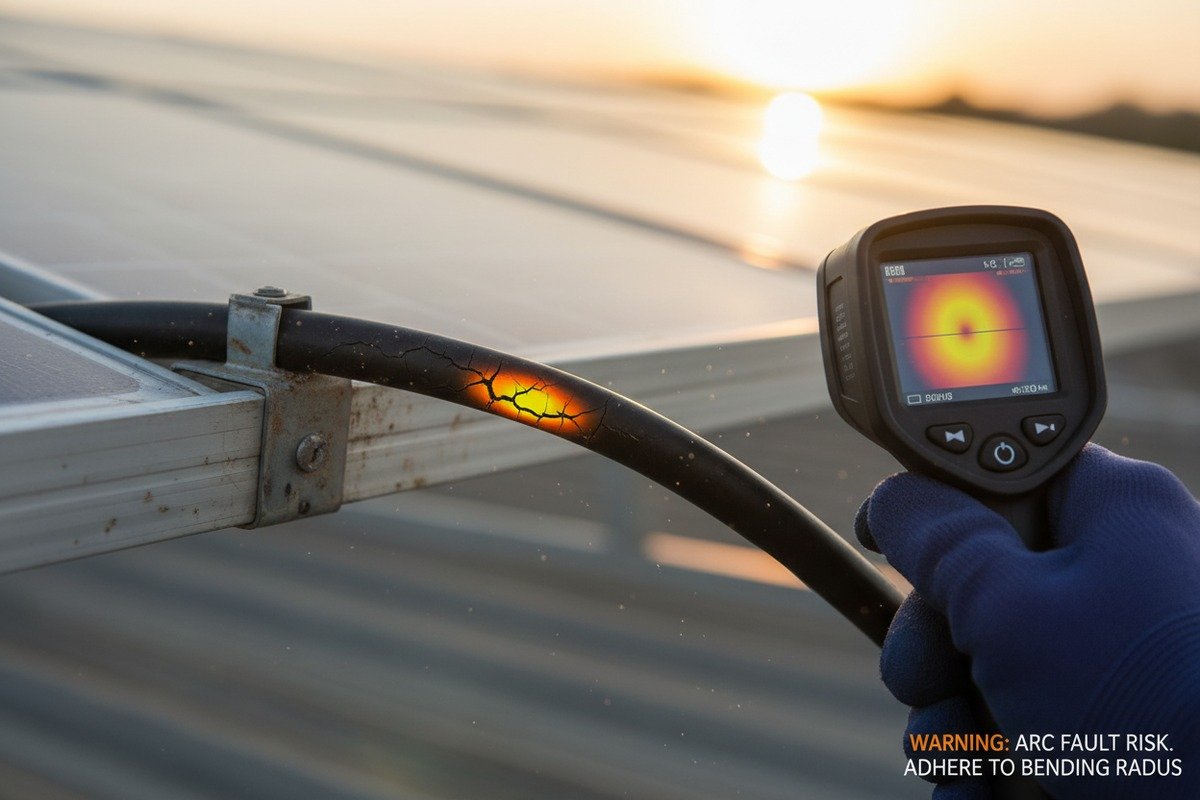
Ignoring bending radius limits causes insulation micro-cracks, conductor fatigue, increased electrical resistance, and eventual cable failure. These defects often remain invisible at commissioning but degrade steadily, leading to power losses, safety hazards, arc faults, and costly unplanned maintenance over the system's lifetime.
The Hidden Damage You Cannot See
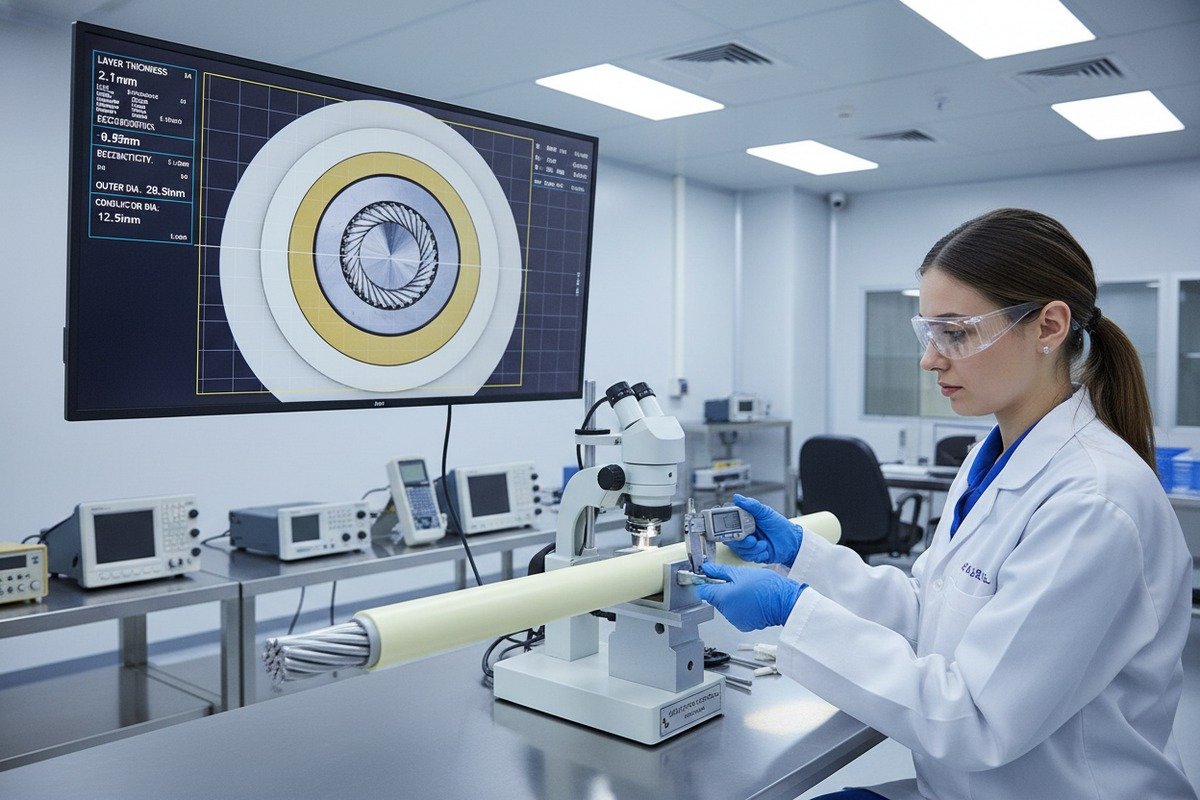
When a cable is bent too tightly, the copper strands on the outer edge of the bend stretch. The strands on the inner edge compress. This creates internal stress. Over time, individual strands can break. You will not see this from outside. The outer sheath looks fine. But inside, the conductor cross-section is effectively shrinking.
Reduced conductor cross-section means higher resistance. Higher resistance means more heat. More heat means faster insulation degradation. This is a slow, silent chain reaction.
Insulation Micro-Cracks
XLPE insulation is tough, but it has limits. A bend tighter than the specified minimum creates tiny cracks in the insulation layer. These cracks may be invisible to the naked eye at first. But moisture, UV radiation, and thermal cycling will widen them over months and years.
Once the insulation is compromised, current leakage begins. In a PV system, this can trigger ground faults, trip inverters, and reduce energy yield. In the worst case, it can cause an arc fault—a serious fire risk.
Quantifying the Financial Risk
Here is a simple risk comparison table for a typical 1 MW rooftop solar project:
| Scenario | Estimated Annual Energy Loss | Maintenance Cost Increase | Risk of System Downtime |
|---|---|---|---|
| All cables within bending radius spec | 0% (baseline) | 0% (baseline) | Low |
| 10% of cable runs exceed limits by 20% | 0.5–1.5% | 15–25% higher | Moderate |
| 30%+ of cable runs exceed limits | 2–5% | 40–60% higher | High |
These are conservative estimates. On a utility-scale project, even a 1% annual energy loss translates to thousands of euros in lost revenue over 25 years.
Cold Weather Makes It Worse
In northern European climates—where many of our German and Scandinavian clients operate—cold temperatures make cables stiffer. XLPE insulation becomes less flexible below 0°C. If an installer tries to force a bend in cold weather, the risk of cracking multiplies. This is why we always recommend scheduling cable routing during milder conditions or pre-warming cables before installation in winter months.
Vibration and Wind Load
Rooftop and tracker-mounted systems experience vibration from wind. If a cable is already stressed from a tight bend, the repeated micro-movements from wind load accelerate fatigue. A cable that might last 25 years under proper bending conditions could fail in 8–12 years if it is both over-bent and exposed to vibration.
How can I verify that my supplier's cable flexibility meets the specific requirements of my solar racking system?
When our export team works with integrators building on Mounting Systems or Schletter racking, the first document we exchange is the racking manufacturer's cable routing specification.
To verify cable flexibility, request the supplier's certified test reports showing bending radius performance per IEC 62930 or EN 50618, then cross-reference these values against your racking system's cable channel dimensions and routing geometry. Physical sample testing on a short section of cable is the most reliable verification method.
Step 1: Get the Racking Specs First
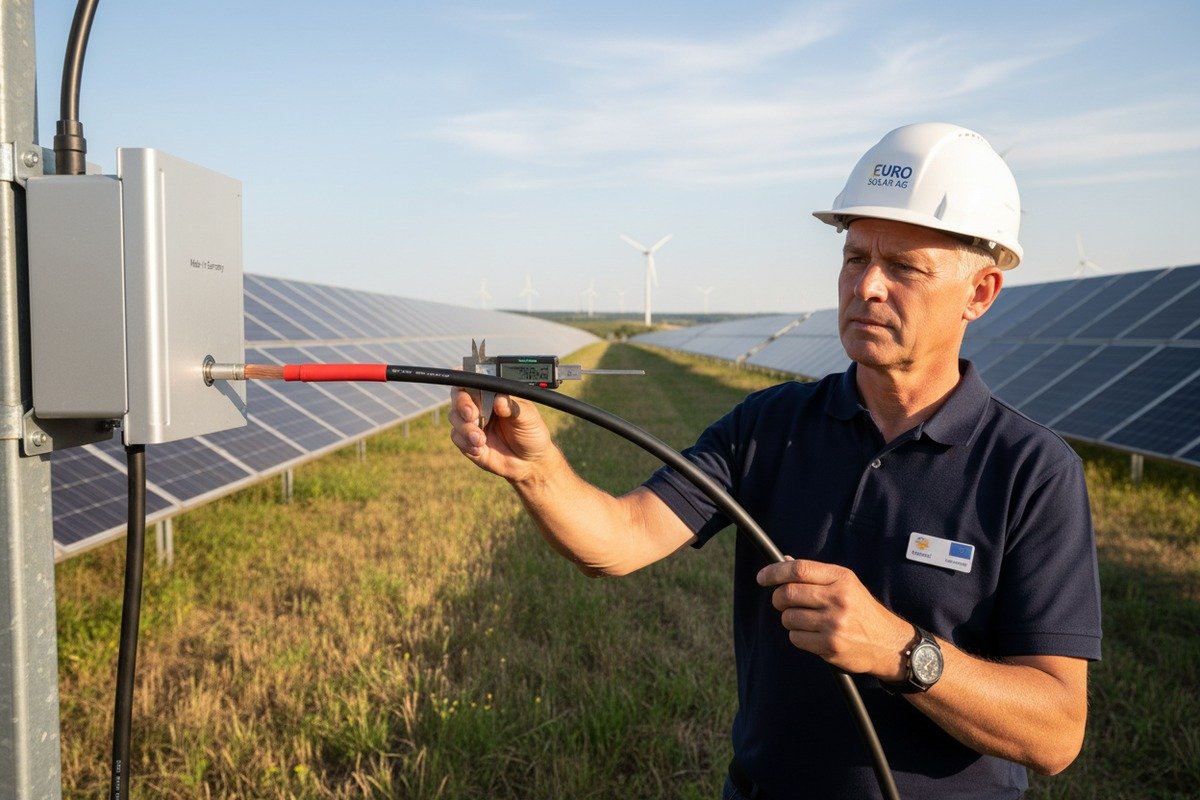
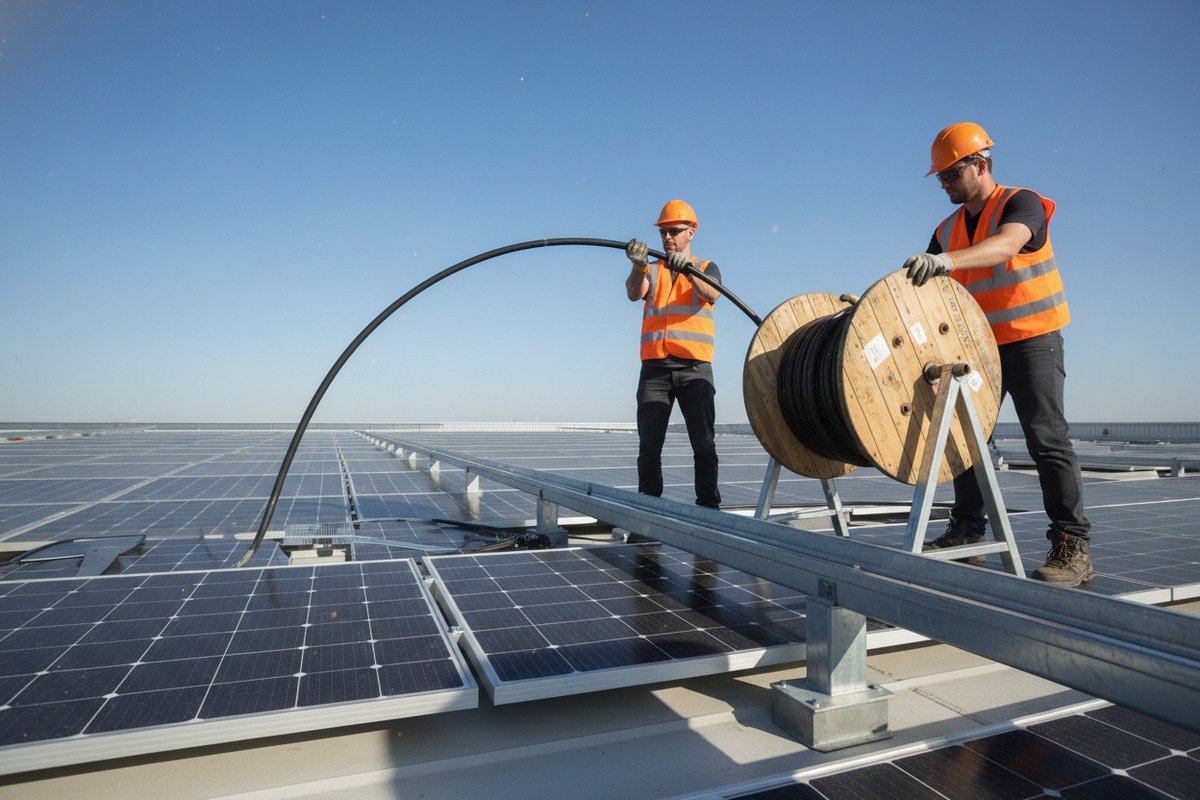
Every racking system has different cable management channels, clips, and routing paths. Some aluminum rail systems have wide, gentle curves. Others—especially compact residential systems—have tight 90-degree corners and narrow channels. Before you evaluate any cable supplier, you need the exact routing geometry from your racking manufacturer.
Key dimensions to collect:
- Minimum channel width (mm)
- Smallest turn radius in the cable tray (mm)
- Entry and exit angles at junction boxes
- Distance between cable clips or tie-down points
Step 2: Request Certified Test Reports
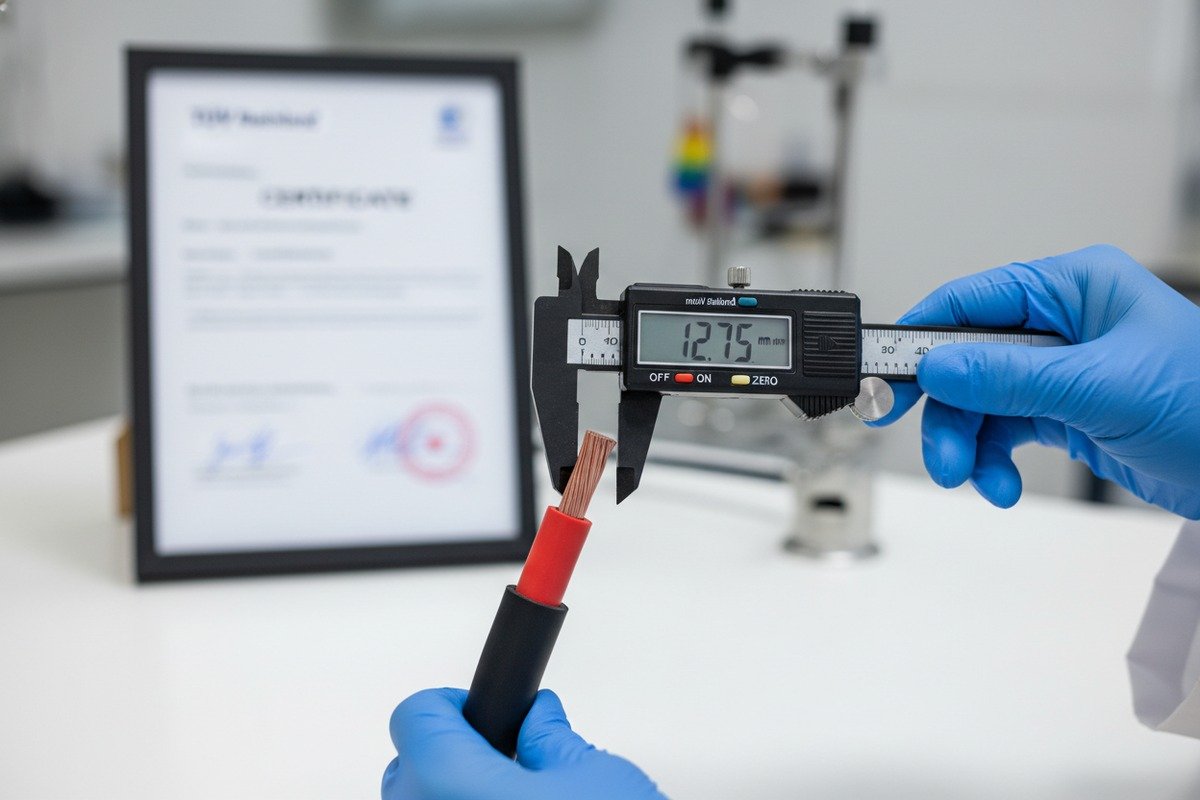
A reliable supplier will provide test reports from an accredited lab—not just a datasheet. At our facility, we test bending performance according to EN 50618 7 and IEC 62930 8. These tests verify that the cable can withstand repeated bending cycles at the rated minimum radius without insulation failure or conductor damage.
Here is a checklist for evaluating supplier documentation:
| Verification Item | What to Look For | Red Flag |
|---|---|---|
| Bending radius on datasheet | Clear values for both dynamic and static radius | Missing or vague ("flexible") |
| Test standard reference | EN 50618, IEC 62930, or TUV 2PfG 1169 | No standard cited |
| Third-party lab report | Accredited lab name, test date, sample ID | Self-declared only |
| Conductor class | Class 5 flexible stranded | Class 2 solid or rigid |
| Insulation material | XLPE or electron-beam cross-linked polyolefin | PVC or uncrosslinked PE |
| TUV certificate validity | Current, verifiable on TUV database | Expired or unverifiable |
Step 3: Test a Physical Sample
Numbers on paper are important. But nothing replaces a hands-on test. Order a 2–3 meter sample before committing to a full order. Bend it around a pipe or mandrel that matches your racking system's tightest radius. Check for:
- Any visible wrinkling on the outer sheath
- Any resistance or "springback" that suggests internal stress
- Any cracking sounds during bending
Our team often ships sample kits to European buyers specifically for this purpose. We include cables in multiple cross-sections so the buyer can test each one against their specific racking layout.
Step 4: Confirm Cold-Temperature Flexibility
If your project site experiences temperatures below -10°C during installation season, ask for cold bend test results. The EN 50618 standard includes a low-temperature flexibility test at -40°C. This is not optional for Nordic or Alpine projects. A cable that bends smoothly at 20°C may crack at -15°C if the insulation compound is not properly formulated.
Step 5: Match Cable to Automated Laying Equipment
For large ground-mount projects using cable-laying machines, the cable must feed smoothly through rollers and guides. If the bending radius is too large, it jams. If it is too small and the cable is stiff, the machine forces it and causes damage. Confirm with both your equipment operator and your cable supplier that the specifications align.
Will choosing a cable with a tighter bending radius help me reduce my overall installation time and costs?
In our 30 years of manufacturing solar cables, the cost conversation has shifted. Buyers used to focus only on price per meter. Now, the smartest procurement teams calculate total installed cost.
Yes, cables with a tighter permissible bending radius significantly reduce installation time and costs. Flexible cables are easier to route through tight spaces, require fewer support accessories, and reduce labor hours. For large-scale projects, this can lower total cable installation costs by 10–20% compared to stiffer alternatives.
How Flexibility Translates to Labor Savings
Installers work faster with flexible cables. They spend less time wrestling stiff cables around corners. They need fewer people to pull cables through conduits. And they make fewer mistakes—because a flexible cable naturally follows the routing path without fighting back.
On a 500 kW rooftop project, our clients in the Philippines and Indonesia have reported saving 1–2 full labor days simply by switching from a rigid PV cable to our H1Z2Z2-K with Class 5 stranded conductors. At typical labor rates for skilled electricians, that adds up quickly.
Fewer Accessories, Lower Material Costs
When a cable bends easily, you need fewer support brackets, cable guides, and strain relief fittings. Stiff cables require additional hardware at every turn to hold them in position. Each bracket costs money—not just the part, but the time to install it.
Here is a comparison based on a typical 100 kW commercial rooftop installation:
| Cost Category | Stiff Cable (6x OD min. radius) | Flexible Cable (4x OD min. radius) | Savings with Flexible Cable |
|---|---|---|---|
| Cable material cost | €1,800 | €1,950 | -€150 (slightly higher) |
| Support brackets & guides | €420 | €260 | +€160 |
| Labor hours (cable routing) | 48 hours | 36 hours | +12 hours saved |
| Labor cost (€35/hr) | €1,680 | €1,260 | +€420 |
| Total installed cost | €3,900 | €3,470 | +€430 net savings |
The flexible cable costs slightly more per meter. But the total installed cost is lower. This is the calculation that matters.
Reducing Risk of Rework
Stiff cables that do not bend properly often get forced into position. This leads to over-bending, which we discussed earlier. Over-bending leads to failures. Failures lead to rework 10. Rework is the most expensive cost on any construction site.
A single cable replacement on an operational rooftop array can cost €500–€2,000 when you factor in scaffolding, safety equipment, electrician time, system downtime, and re-commissioning. Avoiding just one rework event pays for the premium on flexible cable many times over.
Compatibility with Automated Installation
The solar industry is moving toward automation. Cable-laying robots and semi-automated tools are becoming common on utility-scale projects. These machines work best with cables that have consistent, predictable flexibility. A cable with a tighter bending radius feeds through automated systems more smoothly, reducing jams and manual interventions.
The Drum and Logistics Advantage
Flexible cables with smaller bending radii can be wound onto smaller drums. Smaller drums are easier to transport, store, and handle on site. For projects in remote locations—common in Africa and Latin America where we ship regularly—this logistics advantage is significant. Smaller drums mean lower freight costs and less risk of damage during transit.
Total Cost of Ownership Thinking
Smart sourcing is not about the cheapest cable. It is about the lowest total cost over 25 years. A cable that is slightly more expensive per meter but saves labor, reduces accessories, avoids rework, and lasts the full design life is always the better investment.
Conclusion
Bending radius is not a minor specification. It is a critical sourcing criterion that directly affects installation speed, long-term reliability, and total project cost. Verify it before you order.
Footnotes
1. Explains what arc faults are in solar PV systems and their safety implications. ↩︎
2. Replaced with an authoritative product page for H1Z2Z2-K cable from a reputable manufacturer, LAPP. ↩︎
3. Replaced with an accessible and relevant article on XLPE insulation from the original domain, KrisTech Wire. ↩︎
4. Defines Class 5 flexible stranded conductors as per relevant cable standards. ↩︎
5. Provides technical documentation and resources for Enphase products, relevant to installation requirements. ↩︎
6. Explains what minimum bending radius is and how it's calculated for cables. ↩︎
7. Details the European standard for cables used in photovoltaic systems. ↩︎
8. Official standard for electric cables used in photovoltaic systems. ↩︎
9. Provides an overview of various methods used for material testing and quality control. ↩︎
10. Explains the definition, causes, and costs associated with rework in construction projects. ↩︎