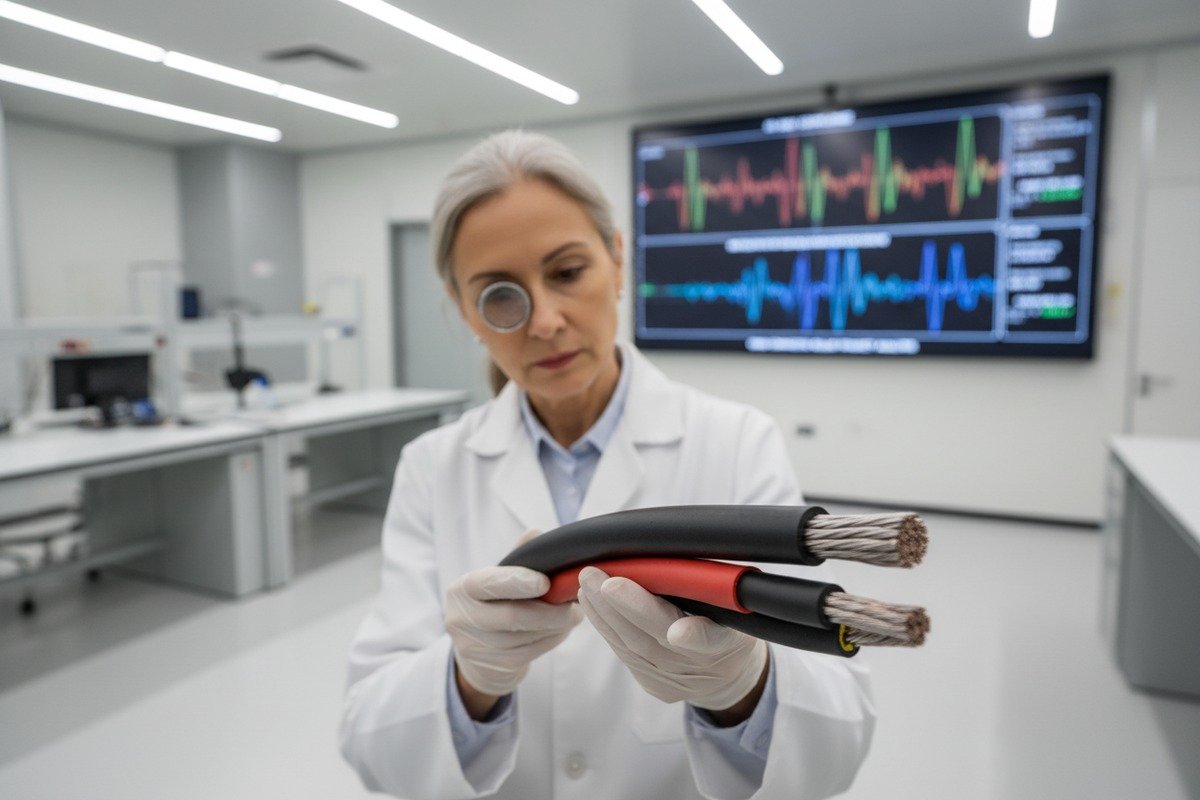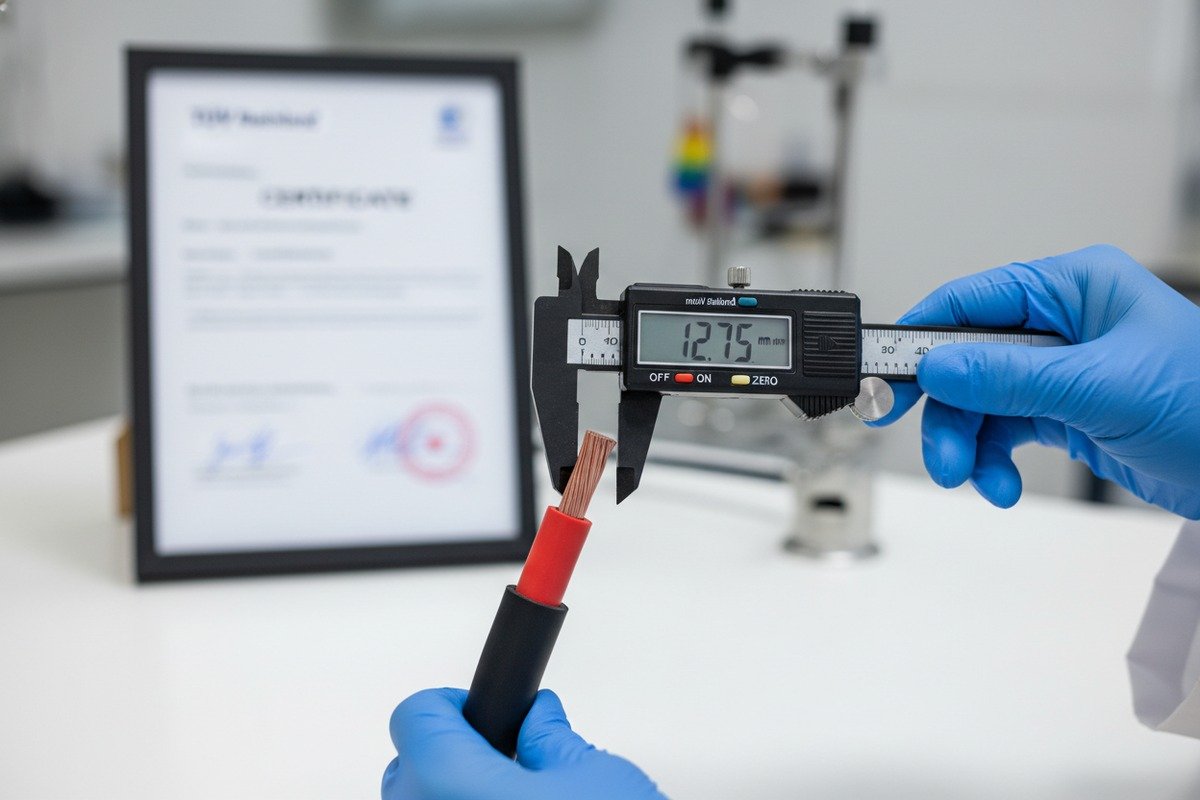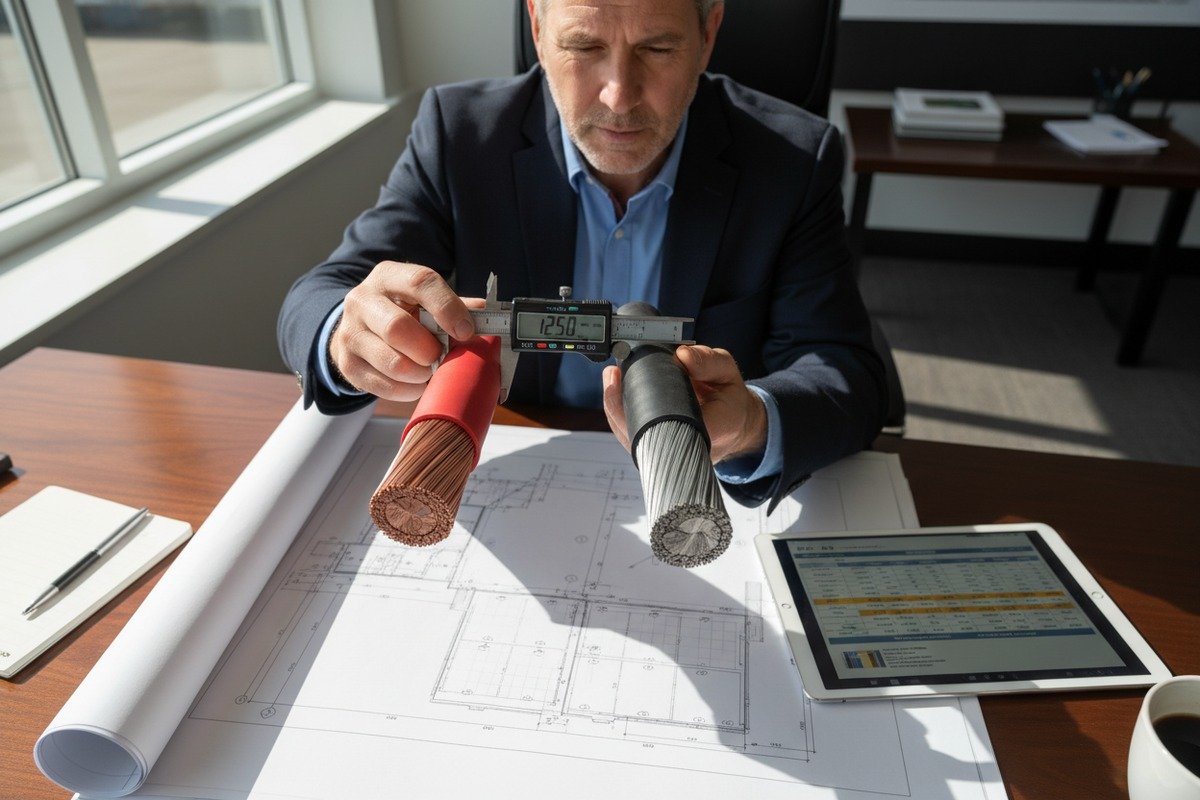
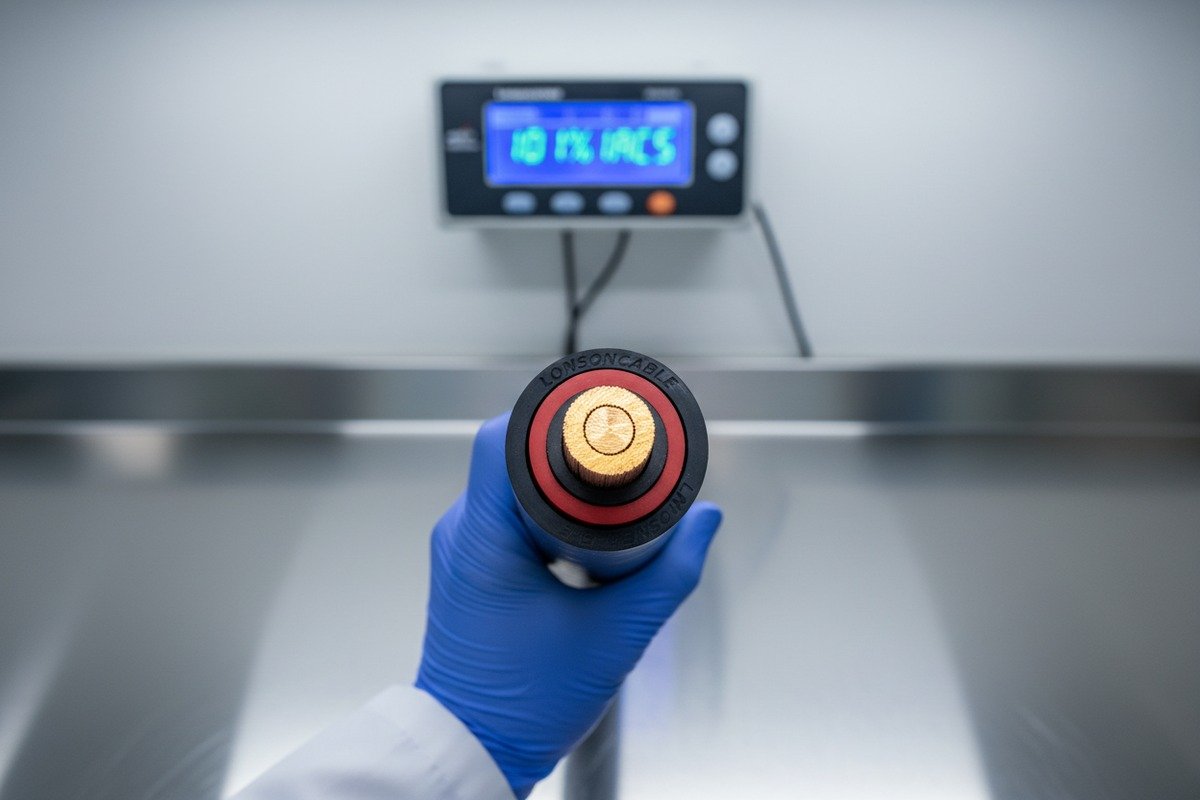
Every week, our quality control team rejects copper rod samples that fail purity benchmarks. The reason is simple: impure conductors silently steal energy from solar installations.
Conductor purity directly determines the electrical conductivity of solar PV cables. High-purity oxygen-free copper (OFC) achieves up to 101% IACS conductivity, while impurities increase resistance and cause measurable power losses. Over a 25-year system lifespan, even small purity differences translate into significant energy and revenue losses for project owners.
This article breaks down exactly how conductor purity impacts your solar cable performance, your system's lifespan, how to verify supplier claims, and whether the price premium is justified. Let's get into the details.
How much power loss will I experience if my solar cable conductors aren't high-purity copper?
When our engineers run side-by-side resistance tests on production batches, the numbers tell a clear story. Lower-purity copper always shows higher resistance — and that means real watts lost before power ever reaches your inverter.
If your solar cables use standard or impure copper instead of high-purity OFC, you can expect 2–3 times more power loss due to increased electrical resistance. Over long cable runs in utility-scale projects, this can reduce annual energy yield by several percentage points, directly cutting into your project's financial returns.
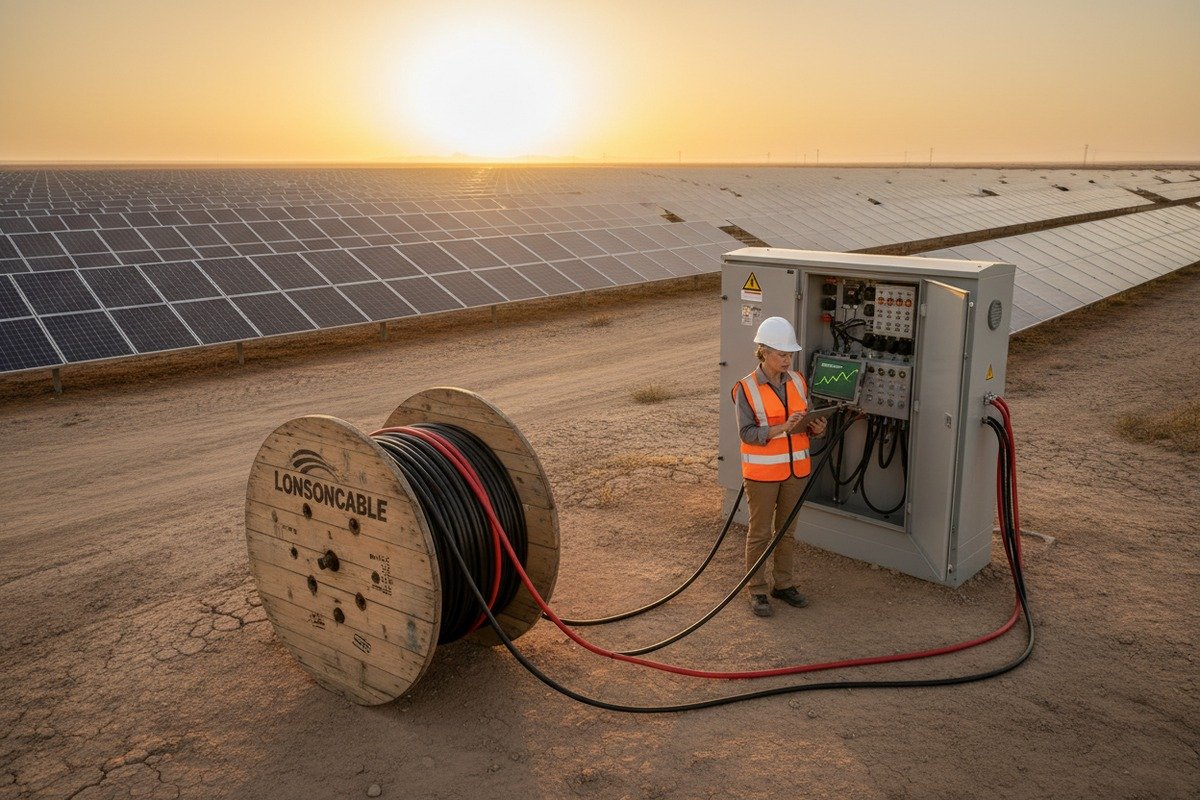
Why Impurities Increase Resistance
At the atomic level, copper conductivity 1 depends on how freely electrons can move through the metal's crystalline lattice 2. When impurities like oxygen, sulfur, or phosphorus are present, they disrupt this lattice. Each disruption acts like a tiny roadblock. Electrons collide with these impurity atoms, converting kinetic energy into heat instead of useful current flow.
Oxygen is the most common culprit. Standard electrolytic tough pitch 3 (ETP) copper contains around 0.02–0.04% oxygen. That may sound tiny, but at high temperatures or in outdoor environments, this oxygen forms copper oxide inclusions. These oxides are poor conductors. They reduce the effective cross-sectional area of the conductor and raise resistance.
High-purity OFC, by contrast, is refined in controlled oxygen-free environments. Its oxygen content sits below 0.003%. The result is a cleaner crystalline structure and conductivity ratings up to 101% IACS 4 — above the standard benchmark.
Quantifying the Power Loss
Let's put numbers to this. Consider a 1 MW ground-mounted solar array with cable runs averaging 200 meters. Here's a simplified comparison:
| Parameter | High-Purity OFC (C10100) | Standard ETP Copper | Low-Grade Copper |
|---|---|---|---|
| Conductivity (% IACS) | 101% | 97–100% | 90–95% |
| Resistance per km (Ω/km, 6mm²) | ~3.08 | ~3.20 | ~3.45+ |
| Estimated annual power loss | ~1.0% | ~1.5% | ~2.5–3.0% |
| 25-year cumulative energy loss (MWh) | ~250 | ~375 | ~625–750 |
These figures matter enormously at scale. For a 50 MW solar farm with thousands of kilometers of cabling, that gap between 1.0% and 3.0% loss represents millions of kilowatt-hours — and millions of euros — over the project lifetime.
The Voltage Drop Problem
Power loss is only half the story. Increased resistance also causes voltage drop 5 along the cable length. If voltage at the inverter input falls below the minimum operating window, the inverter either loses efficiency or shuts down entirely. We've seen project audits where voltage drop issues traced back to substandard conductor purity forced costly cable replacements mid-construction.
For long cable runs — common in utility-scale PV plants — even a few percentage points of extra resistance can push voltage drop beyond the typical 3% design threshold. This forces engineers to either upsize cable cross-sections (adding cost and weight) or accept lower system performance.
Cumulative Impact on Grid-Scale Projects
For a project like Klaus's European EPC operations, the cumulative effect is stark. Across tens of thousands of cable meters, slight conductivity differences compound. Our production data consistently shows that investing in C10100-grade OFC conductors keeps resistance tight and predictable across every drum we ship.
Will using lower-grade conductor materials compromise the 25-year lifespan of my PV installation?
On our production floor, we age-test cable samples in accelerated weathering chambers that simulate decades of UV, heat, and humidity exposure. The conductor material consistently determines whether a cable degrades gracefully or fails prematurely.
Yes, lower-grade conductor materials significantly compromise long-term cable reliability. Impure copper is more susceptible to oxidation, corrosion, and thermal degradation. Over 25 years of outdoor exposure, these effects increase resistance, weaken connections, and can cause insulation breakdown — ultimately threatening the safety and output of your entire PV system.
How Oxidation Destroys Conductors Over Time
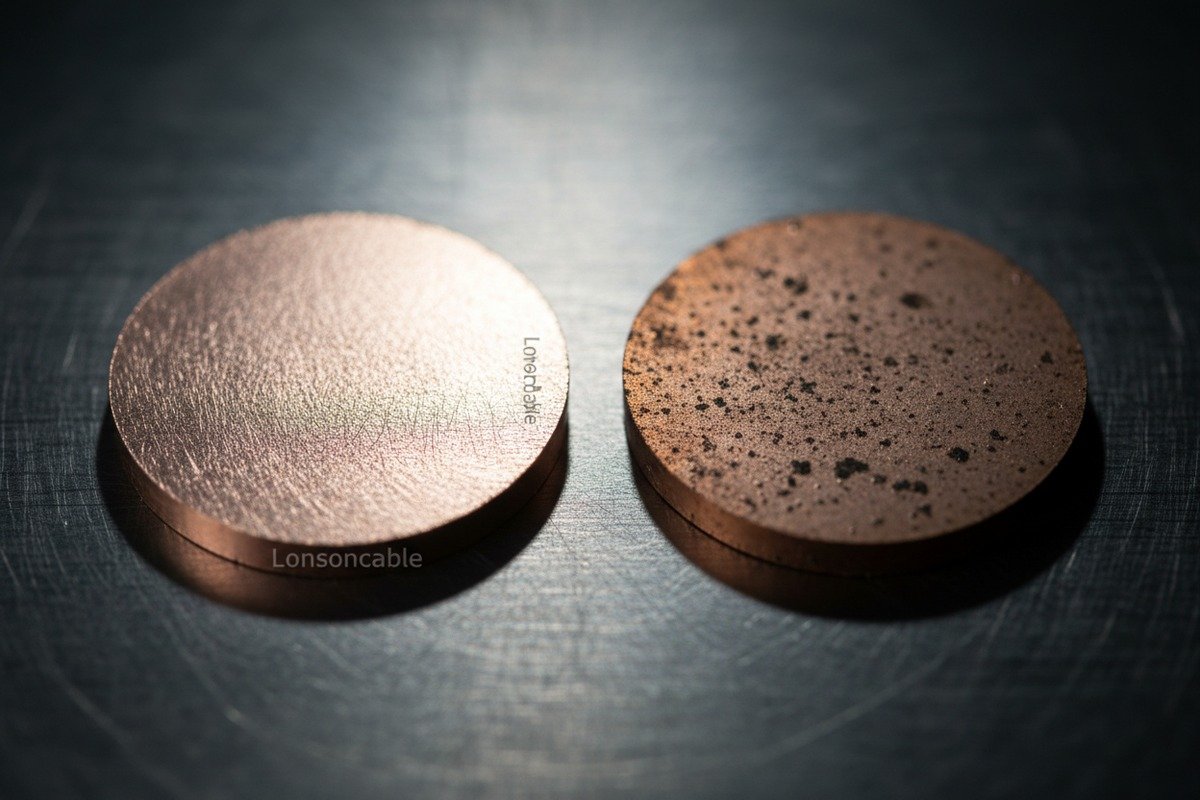
Copper naturally resists corrosion, but it is not immune. When standard copper contains higher oxygen levels, exposure to heat and moisture accelerates the formation of copper oxides at grain boundaries within the metal. These oxides are brittle and electrically resistive. Over years, they spread deeper into the conductor cross-section.
High-purity OFC, with oxygen content below 0.003%, resists this process far more effectively. Its clean grain structure gives oxidation fewer pathways to propagate. This is why EN50618-compliant cables 6 specify conductor quality — the standard exists to guarantee 25+ year performance in harsh outdoor conditions.
Thermal Cycling and Fatigue
Solar cables endure daily temperature swings. Rooftop installations can see conductor temperatures from -40°C to +90°C or higher. Each thermal cycle expands and contracts the metal. thermal cycling 7 In lower-grade copper with impurity inclusions, these stress points become micro-cracks over thousands of cycles. Cracks increase resistance locally, generate hot spots, and eventually lead to conductor failure.
OFC's uniform crystalline structure distributes thermal stress more evenly, dramatically reducing fatigue cracking risk.
Corrosion in Harsh Environments
For installations in coastal, tropical, or industrial environments, corrosion is a major concern. Salt spray, humidity, and chemical pollutants attack exposed copper at connection points. Tinned copper — where a thin tin layer protects the conductor surface — adds an extra defense. But the base copper quality still matters. Low-purity copper with surface impurities corrodes faster, even under a tin coating.
| Environmental Factor | High-Purity OFC | Standard Copper | Low-Grade Copper |
|---|---|---|---|
| Oxidation resistance | Excellent | Moderate | Poor |
| Salt spray corrosion resistance | High (especially tinned) | Moderate | Low |
| Thermal fatigue resistance | High | Moderate | Low |
| Expected conductor lifespan | 30+ years | 20–25 years | 10–15 years |
| Connection point degradation | Minimal | Gradual | Accelerated |
Connection Integrity Over Decades
Every cable termination and junction point is a potential failure site. OFC forms tighter, more consistent welds and crimps with lower contact resistance. This means connections stay secure and cool over decades. Lower-grade copper produces weaker joints that gradually loosen and heat up, increasing fire risk and maintenance costs.
We've supplied cables to projects in Southeast Asia and the Middle East where ambient temperatures regularly exceed 45°C. In post-installation audits, our OFC-conductor cables maintained connection resistance within spec after years of service. Competitors using lower-grade copper showed measurable degradation at the same sites.
What This Means for Your 25-Year Warranty
If you're an EPC contractor or distributor promising a 25-year system warranty, the conductor purity of your cables is foundational. A cable that degrades in year 10 doesn't just reduce output — it creates a warranty liability, a safety risk, and a reputation problem. Choosing verified high-purity conductors is insurance against all three.
How can I verify that my supplier is actually using 99.9% oxygen-free copper to meet EN50618 standards?
During factory audits at our Hainan facility, European buyers often tell us that verifying conductor purity is one of their biggest sourcing headaches. Claims on datasheets are easy to make. Proving them requires a structured approach.
To verify 99.9% OFC compliance, request third-party mill certificates for the copper rod stock, confirm C10100 or C10200 grade designations, demand independent lab conductivity testing (targeting ≥100% IACS), and insist on TUV or equivalent certification that specifically covers conductor material. Cross-check certificates against the certifying body's online database to detect fraud.
Step 1: Demand Copper Rod Mill Certificates
Every batch of copper rod used in cable manufacturing comes with a mill test certificate 8 (MTC) from the smelter or refinery. This document states the chemical composition, including oxygen content, impurity levels, and the copper grade (e.g., C10100 or C10200).
Ask your supplier to provide MTCs that correspond to the specific production batch of cables you're ordering. Generic or undated certificates are a red flag. Legitimate manufacturers — like our operation — maintain full traceability from copper rod receipt to finished cable drum.
Step 2: Understand the Grade Designations
Not all "oxygen-free copper 9" is equal. Here's a quick reference:
| Grade | Copper Purity | Oxygen Content | Conductivity (% IACS) | Typical Application |
|---|---|---|---|---|
| C10100 (OFE) | 99.99% | <0.0005% | 101% | Premium PV cables, aerospace |
| C10200 (OF) | 99.95% | <0.003% | 100% | High-quality PV cables |
| C11000 (ETP) | 99.90% | 0.02–0.04% | 97–100% | General electrical wiring |
| C12200 (DHP) | 99.90% | <0.003% (phosphorus deoxidized) | 85–90% | Plumbing, not suitable for PV |
For EN50618 solar cables, C10100 or C10200 grades 10 are the target. If your supplier can't specify which grade they use — or deflects the question — that's a warning sign.
Step 3: Request Independent Conductivity Testing
A conductivity test measures how well the finished conductor actually performs, regardless of what the paperwork says. Ask for test results from an independent, accredited lab — not the supplier's own in-house lab. The result should show conductivity at or above 100% IACS for OFC-grade cables.
Our quality team runs conductivity tests on every production batch using calibrated Kelvin bridge instruments. We provide these results to buyers alongside the TUV certification package. If a supplier hesitates to share batch-level test data, that's a concern.
Step 4: Verify Certifications Against Official Databases
TUV certificates for EN50618 cables can be counterfeited. We've heard from buyers who discovered fake TUV marks only after cables arrived in Europe and failed inspection. To protect yourself:
- Check the certificate number on the TUV Rheinland or TUV SÜD online verification portal.
- Confirm that the certificate covers the specific cable model and cross-section you're ordering.
- Verify that the certificate is current and not expired.
- Ask for the scope of certification — does it explicitly cover conductor material requirements?
Step 5: Conduct Factory Audits
For large-scale procurement, nothing replaces a physical factory audit. During your visit, inspect raw material storage, review incoming copper rod documentation, observe the drawing and stranding process, and verify that quality control checkpoints are real and functioning.
When buyers visit our 230,000 m² facility, we walk them through the entire production chain — from copper rod warehouse to finished cable testing and drum packaging. Transparency at this level is how trust is built.
Our sales team fields this question from nearly every procurement director we work with. The upfront cost difference is real. But when we sit down and calculate the 25-year numbers together, the answer becomes clear.
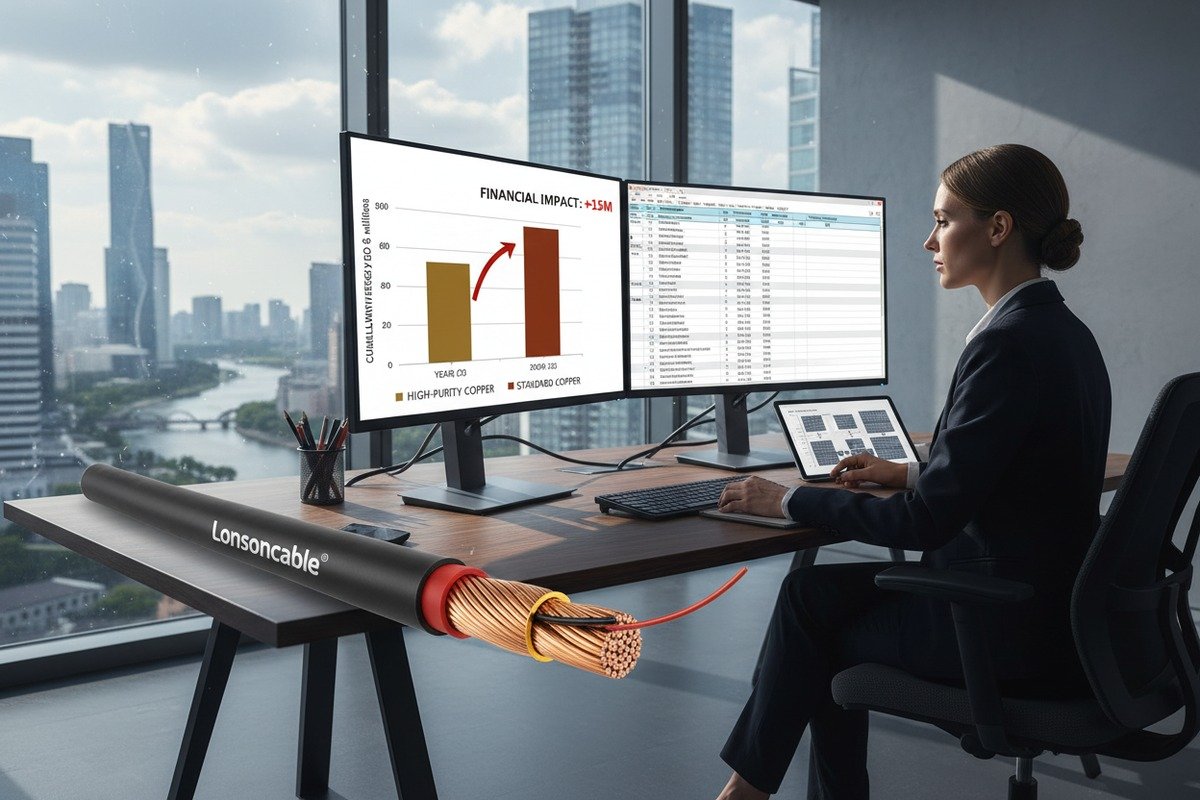
The price premium for high-purity OFC conductors is typically 8–15% above standard copper cables. However, the reduced power losses, lower maintenance costs, and extended system lifespan generate returns that far exceed this premium — often recovering the extra investment within 3–5 years on utility-scale projects through increased energy yield alone.
Breaking Down the Cost Difference
The raw material cost of C10100 OFC copper rod is higher than standard ETP copper because of the additional refining steps and controlled-atmosphere processing required. This cost flows through to the finished cable price. But let's put it in perspective.
For a 10 MW solar farm, total cable costs typically represent 3–5% of total project CAPEX. The premium for OFC over standard copper adds roughly 8–15% to the cable line item — meaning the total project cost increase is less than 1%.
The Energy Yield Equation
Now consider the revenue side. If OFC cables reduce annual power losses by even 1% compared to standard copper, here's what that looks like:
Assume:
- 10 MW system producing ~15,000 MWh/year
- Electricity value: €0.08/kWh (wholesale European rate)
- 1% efficiency gain = 150 MWh/year = €12,000/year
Over 25 years, that's €300,000 in additional revenue — from a cable upgrade that cost perhaps €20,000–€40,000 more upfront. The ROI is compelling.
Maintenance and Replacement Savings
High-purity conductors also reduce maintenance costs. Fewer hot spots at connections mean fewer thermal inspections and repairs. Better corrosion resistance means fewer cable replacements in harsh environments. These avoided costs are harder to quantify upfront but real in practice.
We've seen projects in the Middle East where low-grade cables required partial replacement within 8 years due to conductor degradation. The cost of excavating, removing, and re-laying cables — including system downtime — dwarfed any savings from cheaper initial cable purchases.
Comparing Conductor Material Options
For buyers weighing copper against aluminum or copper-clad aluminum (CCA), the decision depends on project type and scale:
| Factor | High-Purity OFC | Tinned OFC | Aluminum | CCA |
|---|---|---|---|---|
| Conductivity | 101% IACS | ~100% IACS | ~61% IACS | 65–75% IACS |
| Required cross-section (same current) | Baseline | Baseline | ~1.6× larger | ~1.4× larger |
| Weight per meter | Higher | Higher | ~50% less | ~40% less |
| Corrosion resistance | Good | Excellent | Moderate (needs protection) | Poor at exposed ends |
| 25-year reliability | Excellent | Excellent | Good (if properly sized) | Variable |
| Upfront cable cost | Highest | High | Lowest | Low–moderate |
| Best suited for | Rooftop, C&I, harsh environments | Coastal, humid climates | Large utility-scale ground mount | Not recommended for PV |
For utility-scale ground-mounted systems where cost-to-performance ratio is critical and cable trays can accommodate larger diameters, properly sized aluminum cables can be a rational choice. But for rooftop systems, harsh environments, or any application where space, weight, and long-term reliability are priorities, high-purity OFC remains the gold standard.
The Bottom Line for Project Financiers
When we present these numbers to EPC procurement teams, the conversation usually shifts quickly from "Is it worth it?" to "Can you guarantee supply and delivery?" The premium pays for itself. The real risk is buying cheap cables that underperform for 25 years.
Our 30 years of manufacturing experience, $800 million annual production capacity, and 15–20 day delivery on stock items mean that choosing high-purity conductors doesn't have to mean delays or supply uncertainty. We help project teams lock in both quality and timelines.
Conclusion
Conductor purity is not a minor specification detail — it is a core driver of solar PV system performance, safety, and financial returns over 25 years. Choose verified high-purity OFC, verify every claim, and protect your investment.
Footnotes
1. Explains copper's high electrical conductivity due to atomic structure, making it optimal for wiring. ↩︎
2. Explains how electron movement through copper's crystalline lattice directly impacts its electrical conductivity. ↩︎
3. Describes electrolytic tough pitch copper (ETP) and its common use in electrical applications due to conductivity. ↩︎
4. Replaced with authoritative Wikipedia page. ↩︎
5. Replaced with authoritative Wikipedia page. ↩︎
6. Replaced with a direct description of the EN 50618:2014 standard from an authoritative standards website. ↩︎
7. Discusses thermal cycling as repeated stress from expansion and contraction, leading to fatigue and potential failure. ↩︎
8. Replaced with authoritative Wikipedia page. ↩︎
9. Replaced with authoritative Wikipedia page. ↩︎
10. Provides specifications for C10100 and C10200 copper grades, crucial for high-quality, oxygen-free applications. ↩︎