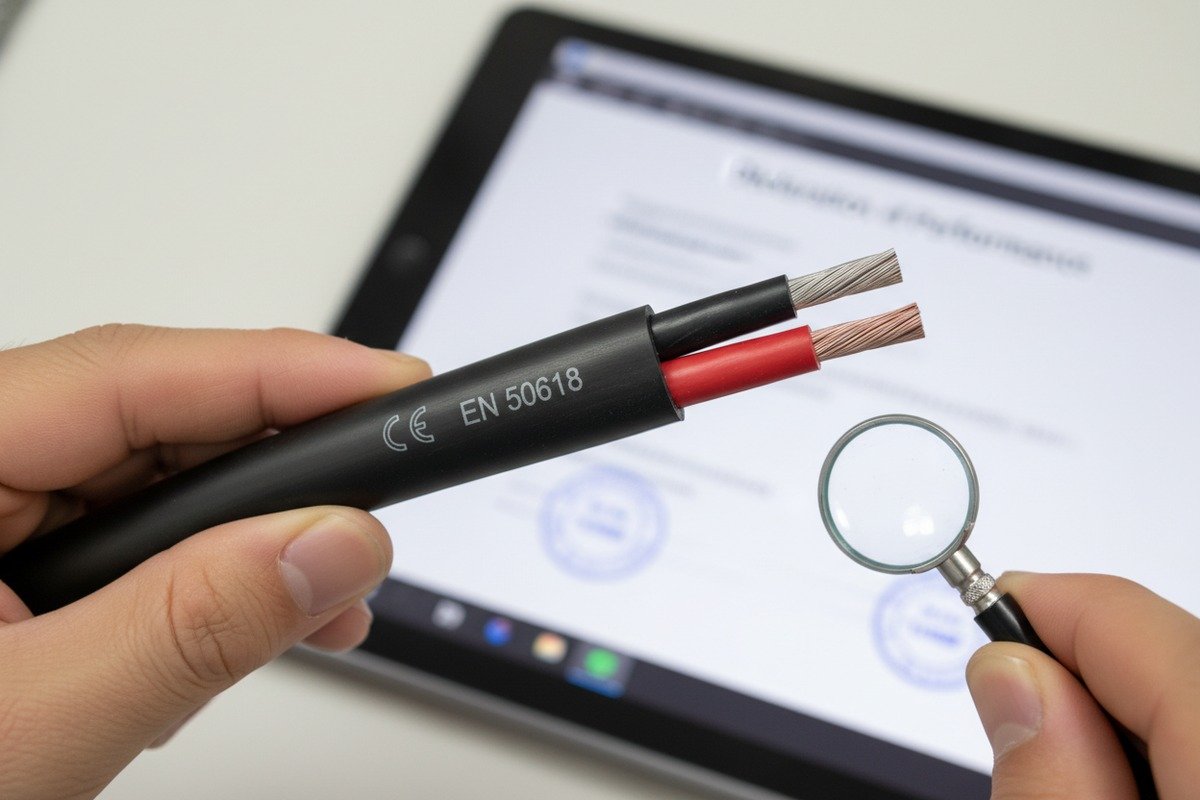
Every year, our quality team fields dozens of urgent calls from European EPC buyers who discover their imported solar cables fail local fire inspections—after the containers have already arrived at the job site CPR 305/2011/EU 1. European construction regulations 2
To verify solar PV cable flame retardant ratings for European construction regulations, check the CE marking, request the manufacturer's Declaration of Performance (DoP) referencing the correct Euroclass, confirm third-party testing by a Notified Body under EN 50399, and cross-reference compliance with EN 50618 and CPR 305/2011/EU.
This guide walks you through every step of the verification process. We will cover DoP authentication, Euroclass selection, XLPO insulation testing, and what happens when cables fail inspection. Let's get into the details.
How can I verify that my supplier's Declaration of Performance (DoP) is authentic under EU CPR rules?
When we ship H1Z2Z2-K cables to Germany or the Netherlands, the first document our buyers request is the DoP—and for good reason. A fake or incomplete DoP can shut down an entire project.
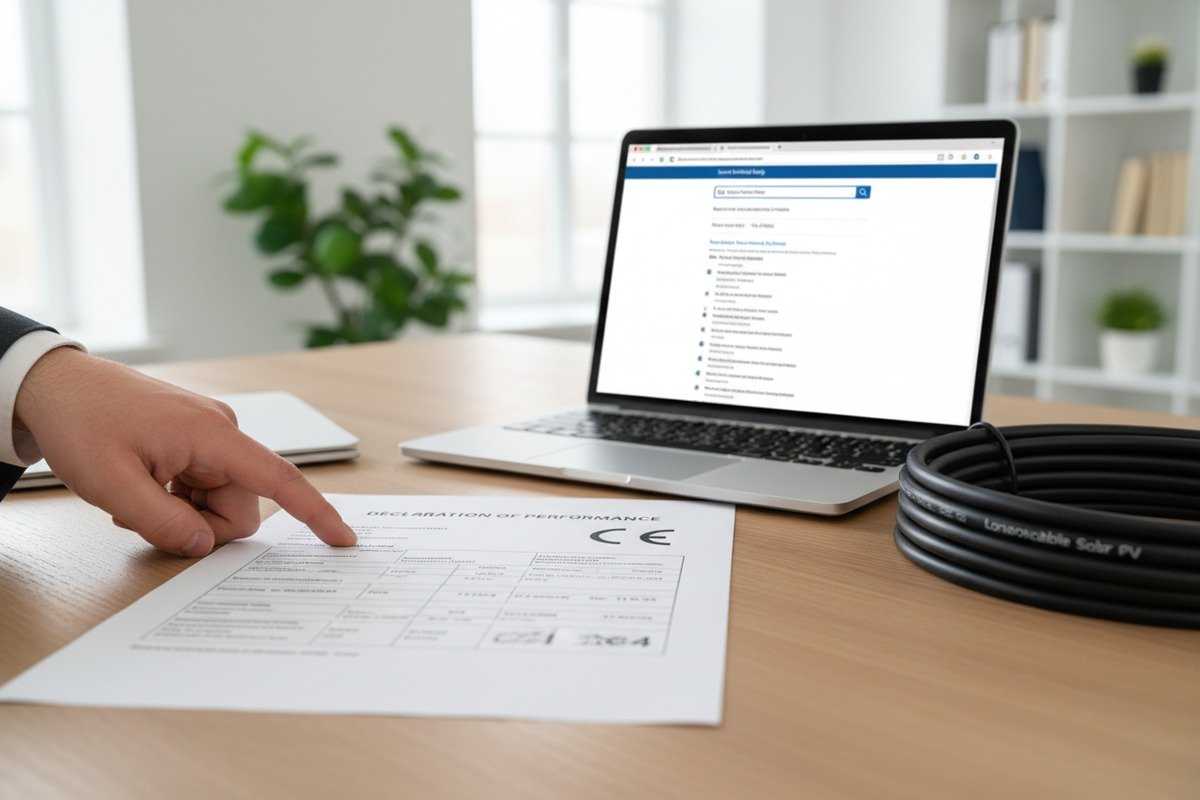
To verify a DoP's authenticity, confirm it references a specific Notified Body number, lists the correct harmonized European standard (hEN), includes a unique product identification code, and matches the CE marking on the cable itself. You can cross-check the Notified Body via the EU NANDO database.
What a Valid DoP Must Contain
A Declaration of Performance is not a generic quality certificate. Declaration of Performance (DoP) 3 It is a legal document required under CPR 305/2011/EU. Every cable permanently installed in a European building must have one. Here is what to look for:
| DoP Element | What to Check | Red Flag |
|---|---|---|
| Unique identification code | Must match the cable product type exactly | Generic or missing code |
| Notified Body 4 number | Four-digit number verifiable on NANDO database | No number listed or number doesn't match any body |
| Harmonized standard reference | Should cite EN 50575 for fire performance | References only IEC standards without EN equivalent |
| Euroclass declaration | Specific class like B2ca-s1a,d1,a1 | Vague terms like "flame retardant" with no class |
| Manufacturer details | Full legal name, address, production site | Only a brand name with no traceable address |
| Factory Production Control (FPC) | Evidence of ongoing third-party surveillance | One-time test report only |
How to Use the NANDO Database
The European Commission maintains the NANDO database (New Approach Notified and Designated Organisations). You can search it online for free. Enter the four-digit Notified Body number from the DoP. The database will show you which organization it belongs to, what products they are authorized to certify, and under which regulation. If the number does not appear, the DoP is likely fraudulent.
Common Tricks We Have Seen
In our experience exporting over 30 years, we have encountered suppliers who copy legitimate DoP formats but swap in their own product names. Others use expired test reports. Some list a Notified Body that only certifies construction steel, not cables. The safest approach is to request the original test report from the Notified Body directly. A legitimate manufacturer will have no problem facilitating this.
Post-July 2017 Enforcement
Since July 1, 2017, all cables placed permanently in EU construction works must carry CE marking 5 with a valid DoP. Cables manufactured before that date and still in stock were exempt, but that grace period is long gone. Any solar PV cable entering a European building today without a proper DoP is non-compliant. Period.
Our engineering team always recommends buyers request digital DoP copies before placing orders. We provide ours proactively because transparency saves everyone time and money.
Which fire safety class, like Dca or Cca, do I actually need for my commercial solar installation?
Our production lines manufacture solar cables across several Euroclasses, and we frequently guide buyers through the selection process. Choosing too low a class wastes your project budget on rework. Choosing too high a class wastes it on unnecessary material costs.
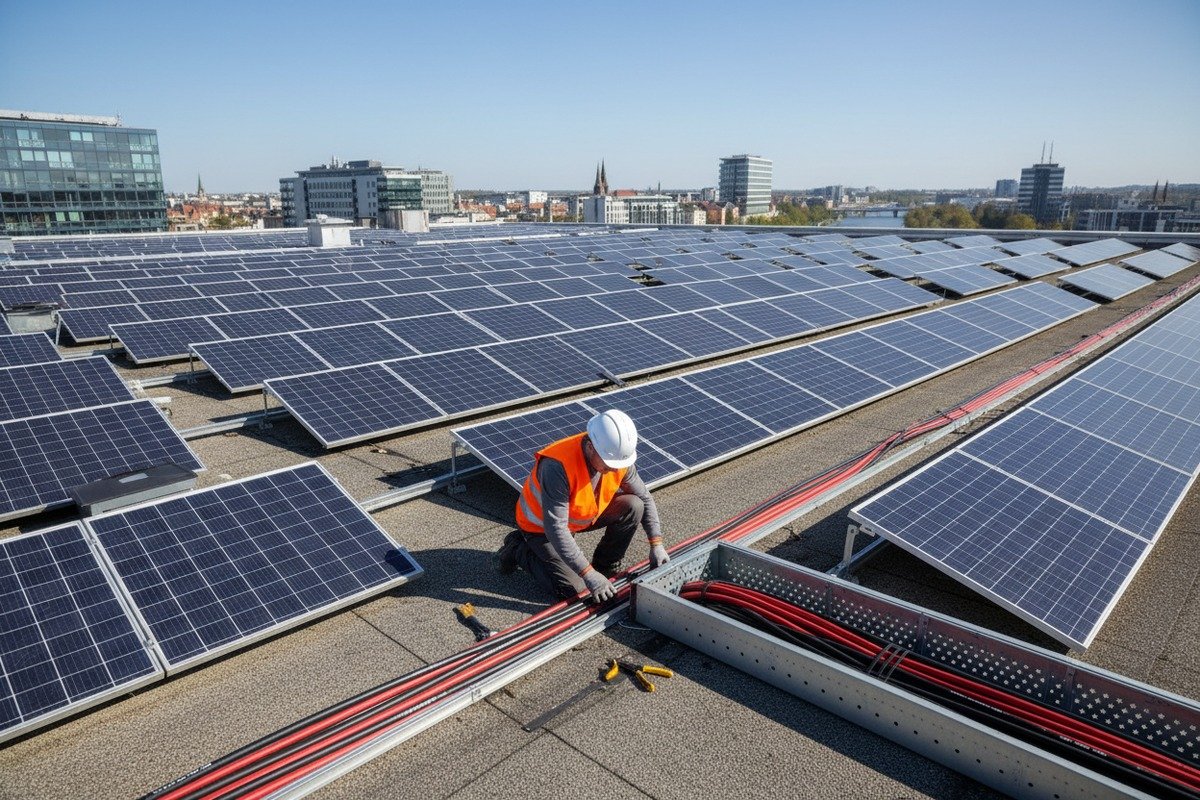
The Euroclass you need depends on the installation location. Most commercial rooftop and building-integrated solar installations in Europe require at least B2ca-rated cables. Ground-mount solar farms with cables outside buildings may only need Eca, while cables in escape routes, hospitals, or tunnels often require Cca or B2ca with strict smoke and acidity sub-classifications.
Understanding the Euroclass Scale
The CPR Euroclass system rates cables from Aca (non-combustible) down to Fca (no performance determined). Each class is tested differently, and higher classes face more demanding bundled-cable fire tests.
| Euroclass | Flame Spread | Smoke/Droplet Requirements | Typical Solar Application |
|---|---|---|---|
| Aca | Non-combustible | None needed | Rarely used for PV cables |
| B1ca | Very limited | s1/s2/s3, d0/d1/d2, a1/a2/a3 | Critical infrastructure, tunnels |
| B2ca | Limited | s1/s2/s3, d0/d1/d2, a1/a2/a3 | Standard commercial rooftop PV |
| Cca | Moderate | s1/s2/s3, d0/d1/d2, a1/a2/a3 | Budget commercial installs |
| Dca | Higher spread | s1/s2/s3, d0/d1/d2, a1/a2/a3 | Limited indoor use |
| Eca | Basic pass | No sub-classifications | Outdoor ground-mount only |
| Fca | No performance | None | Not suitable for construction |
What the Sub-Classifications Mean
When you see a rating like B2ca-s1a,d1,a1, the letters after the dash matter enormously.
- s1, s2, s3: Smoke production. s1 is the lowest smoke output. Many European building codes require s1a or s1b for enclosed spaces.
- d0, d1, d2: Flaming droplets. d0 means no burning droplets fall from the cable during fire. This is critical near escape routes.
- a1, a2, a3: Acidity of combustion gases. a1 produces the least corrosive fumes. Hospitals and data centers often mandate a1.
National Variations
Here is something many buyers miss: CPR sets the framework, but individual EU member states set the minimum Euroclass for different building types. Germany, France, and the Netherlands each have their own national annexes. For example, a German commercial rooftop project may mandate B2ca-s1,d1,a1, while a similar project in Spain might accept Cca. Always check the local building authority requirements before ordering.
When to Exceed Minimums
Our recommendation is simple. If your cables run through risers, plenums, false ceilings, or anywhere near evacuation paths, go higher than the minimum. The cost difference between Cca and B2ca is modest compared to the cost of replacing cables after a failed inspection. We have seen projects delayed by three months over a single Euroclass step.
How do I ensure the XLPO insulation on my H1Z2Z2-K cables truly meets European flame retardant standards?
When we develop our XLPO (cross-linked polyolefin) 7 compounds in-house, we run internal flame tests before any batch leaves the factory. But internal tests are not enough for European compliance. Third-party verification is the only thing that counts.
To confirm XLPO insulation meets European flame retardant standards, request independent test reports for EN 50399 (bundled cable fire reaction), EN 60332-1-2 (single cable vertical flame), and material composition analysis confirming halogen-free, low-smoke properties. The tests must be conducted by an accredited laboratory linked to a CPR Notified Body.
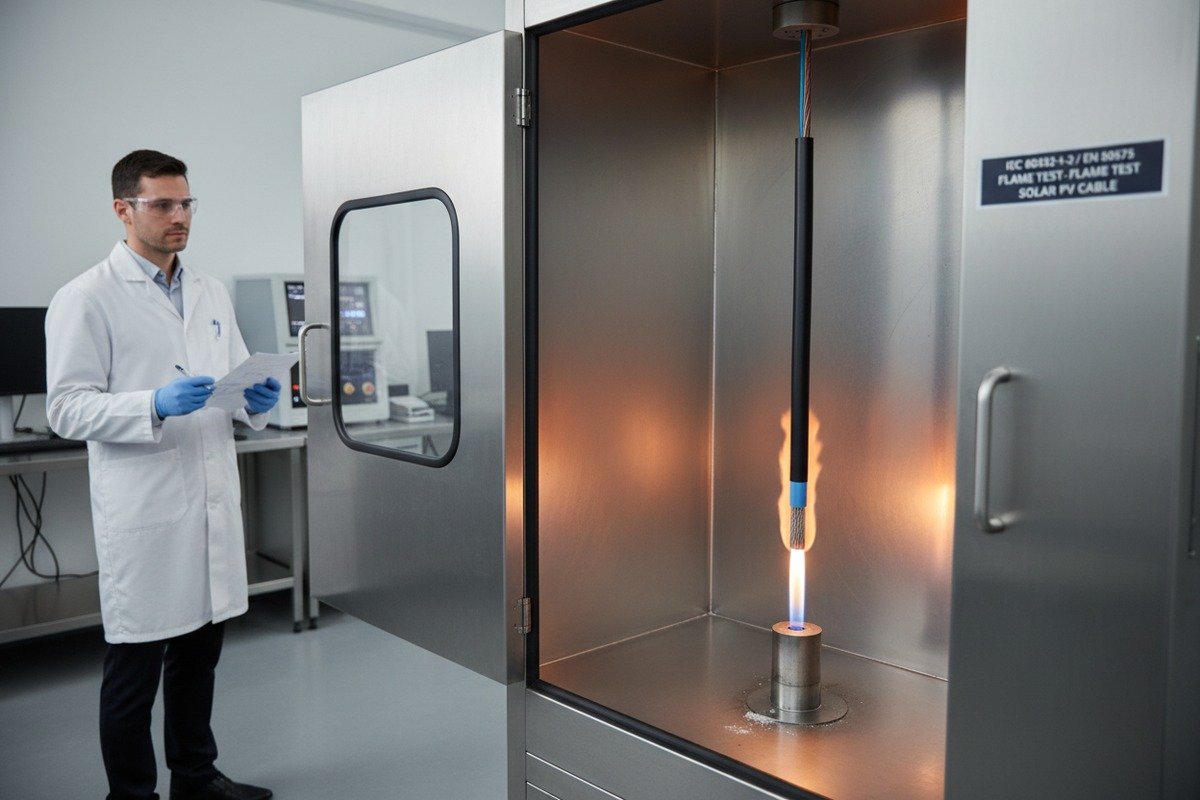
Why XLPO Matters for Fire Safety
XLPO insulation is the standard for modern solar PV cables because it combines flexibility, UV resistance, and flame retardancy. Unlike PVC, which releases toxic hydrogen chloride gas when burning, XLPO is halogen-free. halogen-free, low-smoke properties 8 This means lower smoke density, less corrosive fumes, and reduced toxicity during a fire event. These properties directly feed into the smoke (s), droplet (d), and acidity (a) sub-classifications of the Euroclass system.
However, not all XLPO is equal. The cross-linking process, the base polymer quality, and the flame retardant additives all affect performance. A cable that passes EN 60332-1-2 (single wire flame test) may still fail EN 50399 9 (bundled cable test), which simulates real-world installation conditions where cables are grouped together on trays.
Key Tests and What They Measure
| Test Standard | What It Measures | Pass Criteria for B2ca |
|---|---|---|
| EN 50399 | Fire spread, heat release, smoke in bundled cables | Flame height zone < 0.5m, THR and TSP within limits |
| EN 60332-1-2 | Single cable vertical flame propagation | Self-extinguishes, char length within limit |
| EN 61034 | Smoke density | Light transmittance ≥ 60% for s1b rating |
| EN 50267-2-3 | Acidity of combustion gases | pH > 4.3 and conductivity < 10 µS/mm for a1 |
How to Spot Substandard XLPO
We have tested competitor samples that arrived with correct-looking certificates but failed our own lab screening. Here are common warning signs:
- The cable jacket feels unusually stiff or brittle at low temperatures. Genuine XLPO stays flexible down to -40°C.
- The insulation cracks after UV exposure testing. EN 50618 requires cables to withstand prolonged UV per HD 605/A1.
- The cross-linking degree is below 70% when tested per EN 60811-507. Under-cured XLPO will deform under heat and lose its flame retardant properties.
Request a Material Data Sheet
Beyond the fire test reports, ask your supplier for a material data sheet or compound specification for the XLPO used. It should state the polymer base (typically polyolefin elastomer), the flame retardant filler type (usually ATH—aluminium trihydrate), and the cross-linking method (electron beam or chemical). If the supplier cannot provide this, treat it as a red flag.
Our factory maintains full traceability from compound supplier to finished cable. Every production batch is linked to a compound lot number, and we can provide this documentation within 24 hours of request. This level of transparency is what European EPCs like Klaus's team expect and deserve.
What are the risks to my project if the solar cables I import fail local fire safety inspections?
We once had a prospective customer come to us after their previous supplier's cables were rejected at a building inspection in the Netherlands. The project was a 2MW commercial rooftop array. The delay cost them over €150,000 in penalties alone.
If imported solar cables fail European fire safety inspections, the consequences include forced cable removal and replacement, project delays triggering grid-connection penalty clauses, customs seizure of non-compliant shipments, invalidated building insurance, potential legal liability under EU product safety law, and lasting damage to your professional reputation.
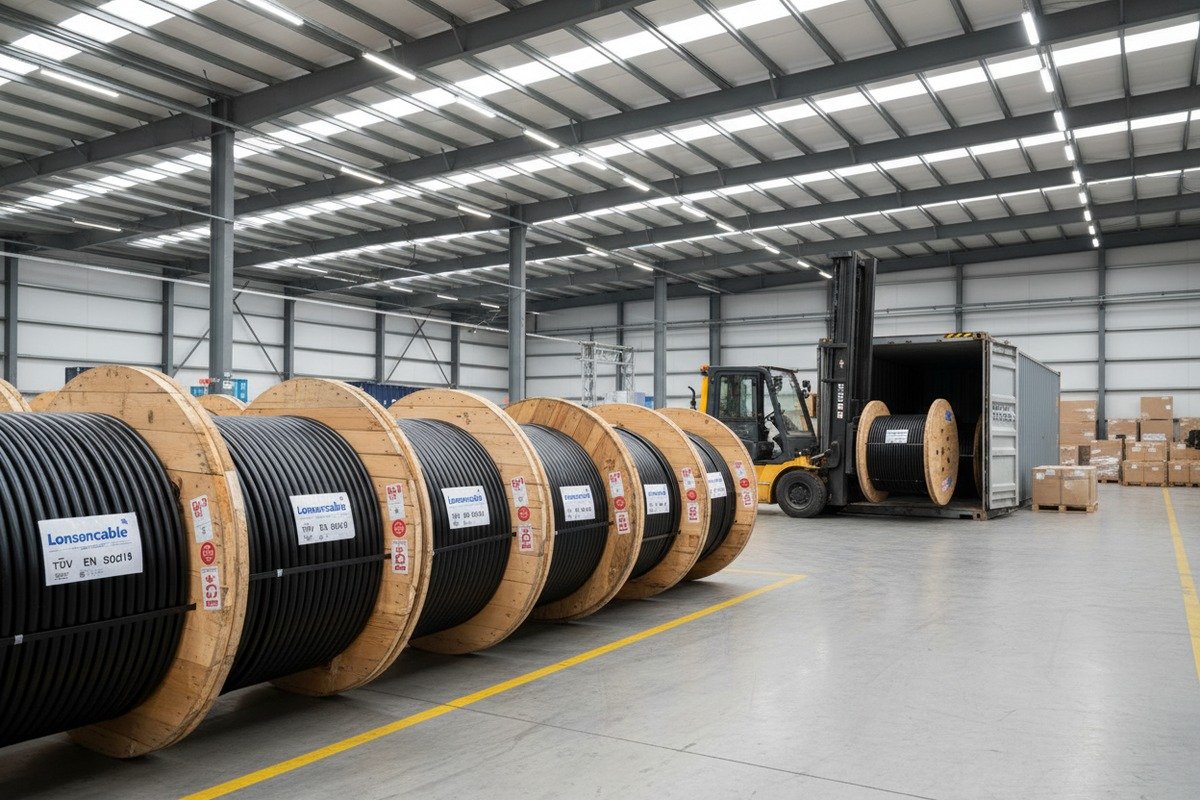
Financial Impact: More Than Just Cable Cost
The cable itself is often less than 5% of a solar project's total budget. But when those cables fail inspection, the financial ripple effect is enormous.
First, you must remove the installed cables. On a commercial rooftop, this means labor crews, crane rentals, and potential damage to modules and mounting systems. Then you need to source compliant replacement cables, which may take weeks. During this time, the grid-connection deadline slips. In many European feed-in tariff or PPA structures, missing the deadline means losing the contracted electricity price for the entire quarter—or even the year.
Legal Exposure Under EU Law
CPR is not a suggestion. It is a regulation with legal force across all EU member states. If a fire occurs in a building where non-compliant cables were installed, the liability chain extends from the installer to the distributor to the importer. In some jurisdictions, the project's EPC company faces criminal prosecution, not just civil claims.
Market surveillance authorities in countries like Germany (DIBt), France (CSTB), and the Netherlands conduct random sampling of construction products. If your cables are pulled from a site and tested, and they fail, the authority can issue a market ban on that product and publish the finding publicly.
Insurance Consequences
Building insurers in Europe increasingly require proof of CPR compliance for all permanently installed cables. If your cables lack a valid DoP or carry an incorrect Euroclass, the insurer may void coverage for fire-related claims. This is not a hypothetical scenario. It has happened on multiple solar projects in recent years.
Reputational Damage
For EPC companies and distributors, a single failed inspection can cost you future tenders. European project developers share supplier blacklists. Once your name appears on one, winning bids in that market becomes extremely difficult.
How to Protect Yourself
The best protection is prevention. Here is a simple checklist:
- Verify the DoP and CE marking before signing the purchase order.
- Request third-party test reports from the Notified Body, not just the manufacturer.
- Conduct pre-shipment inspection with an independent surveyor.
- Keep all documentation organized for the building authority and insurer.
- Work with manufacturers who welcome audits and provide full traceability.
Our team at Lonsoncable provides a complete compliance package with every European order: DoP, CE certificate, Notified Body test reports, material traceability records, and FPC surveillance documentation. We do this because we understand that our buyer's reputation rides on every drum of cable we ship.
Conclusion
Verifying solar PV cable flame retardant ratings for Europe requires checking the DoP, confirming the correct Euroclass, validating XLPO insulation through third-party testing, and understanding the serious consequences of non-compliance.
Footnotes
1. Official, consolidated text of Regulation (EU) No 305/2011 from EUR-Lex, the EU's legal information portal. ↩︎
2. Explains the regulatory framework for construction products in the EU. ↩︎
3. Details the legal document required for construction products in the EU. ↩︎
4. Defines the independent organizations assessing product conformity in the EU. ↩︎
5. Provides official EU guidance on the mandatory CE marking for products. ↩︎
6. Provides access to the official EU database for verifying certification bodies. ↩︎
7. Provides scientific information on the properties and composition of XLPO materials. ↩︎
8. Explains the characteristics and importance of halogen-free, low-smoke materials in cables. ↩︎
9. Explains the key European standard for bundled cable fire performance testing. ↩︎