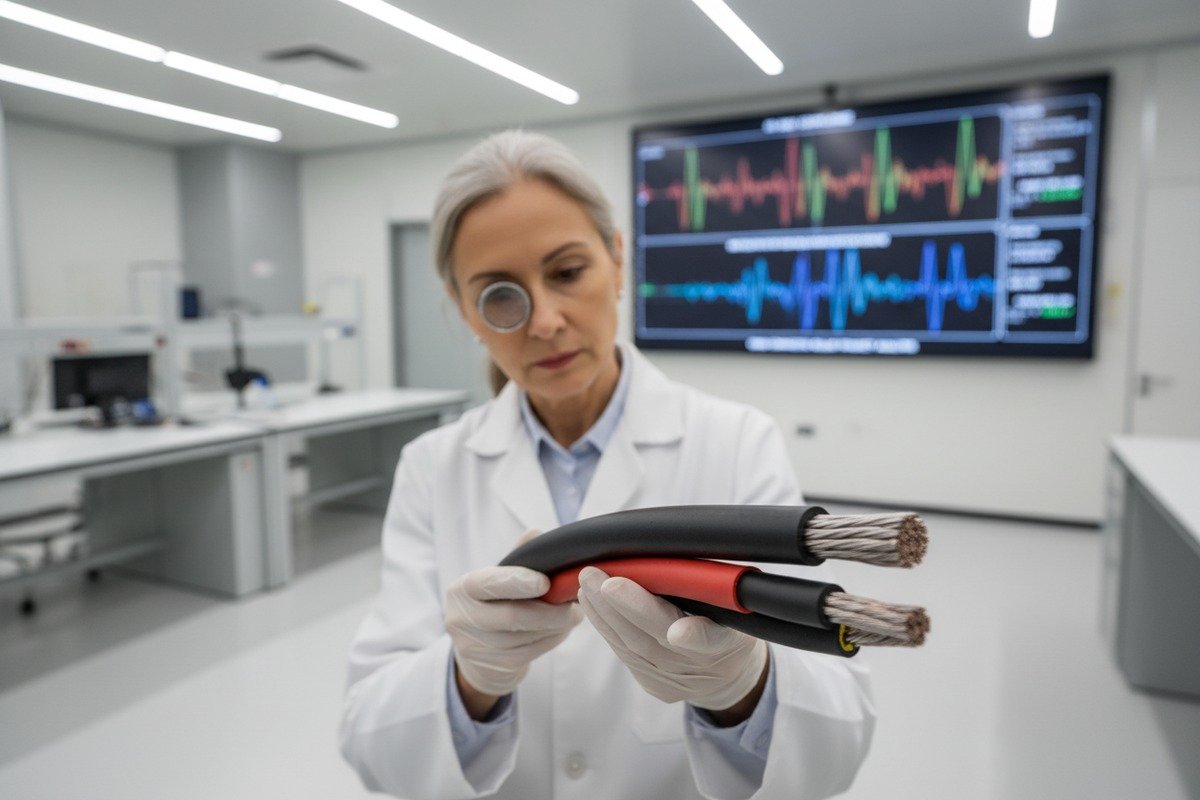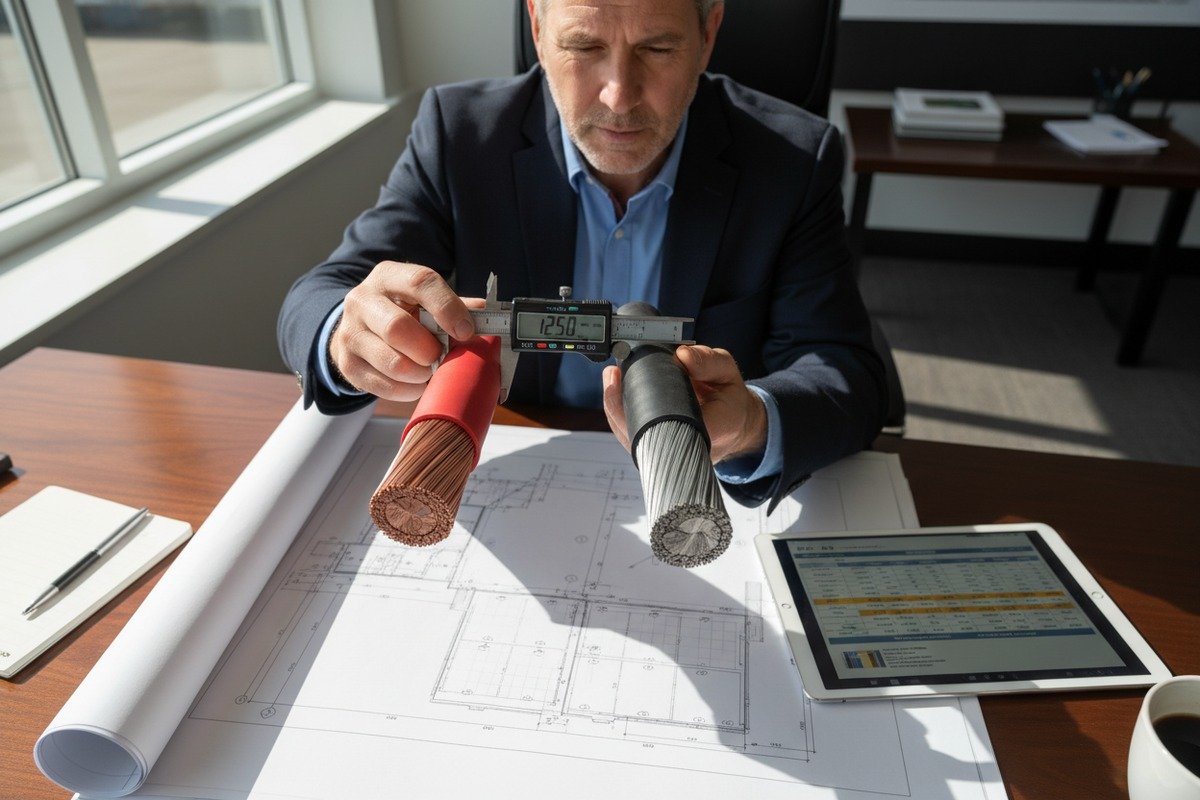
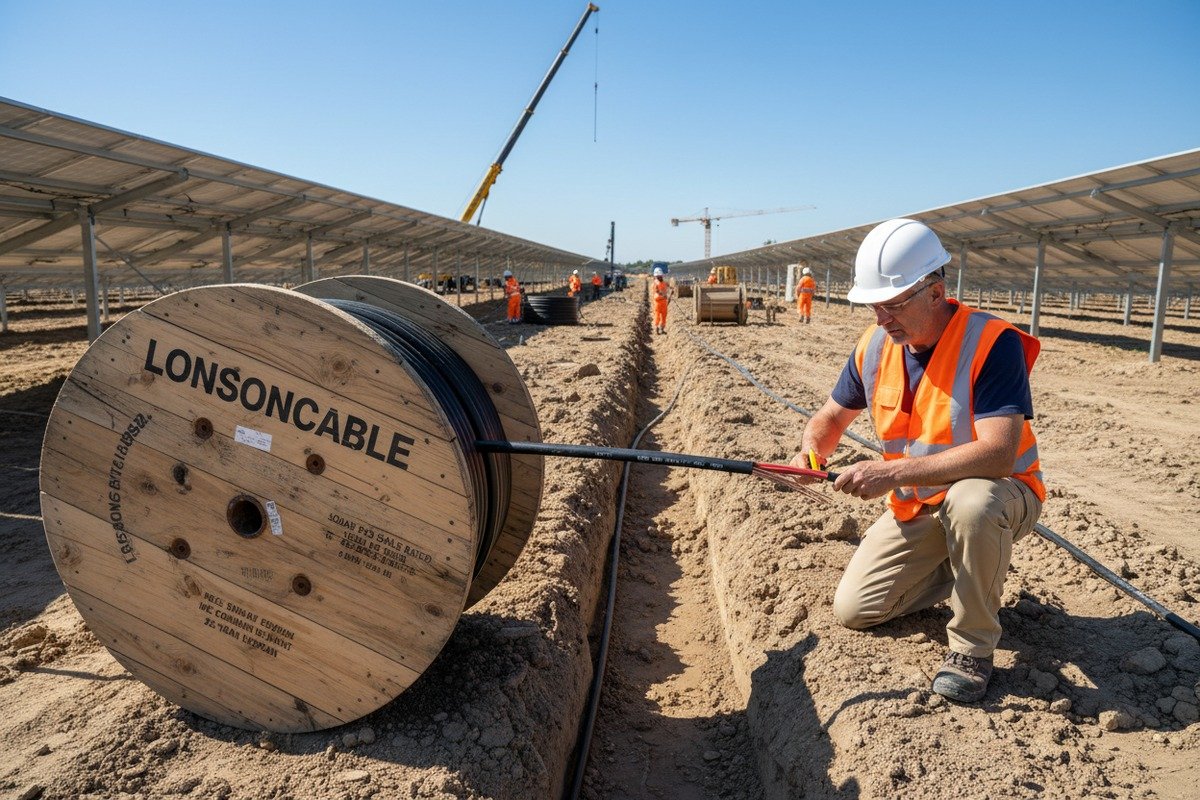
Every year, our production team sees returned cables that failed underground — cracked insulation, corroded conductors, moisture intrusion XLPE or EPR insulation 1. The root cause is almost always the same: someone picked the wrong cable for direct burial.
To choose the right solar PV cable for outdoor direct burial, select cables rated USE-2 or UL 4703 PV Wire with XLPE or EPR insulation, sized to 125–150% of short-circuit current per NEC, and verify UL/TUV direct burial certification. Copper stranded conductors and proper burial depth ensure a 25-year lifespan.
This guide walks you through every step — from certification checks to insulation materials, lifespan planning, and supplier test reports. Let's dig in.
How do I verify if a solar cable is officially certified for outdoor direct burial?
We have shipped PV cables to over 40 countries, and the single most common question from EPC buyers is about certification. A wrong assumption here can halt an entire project at inspection.
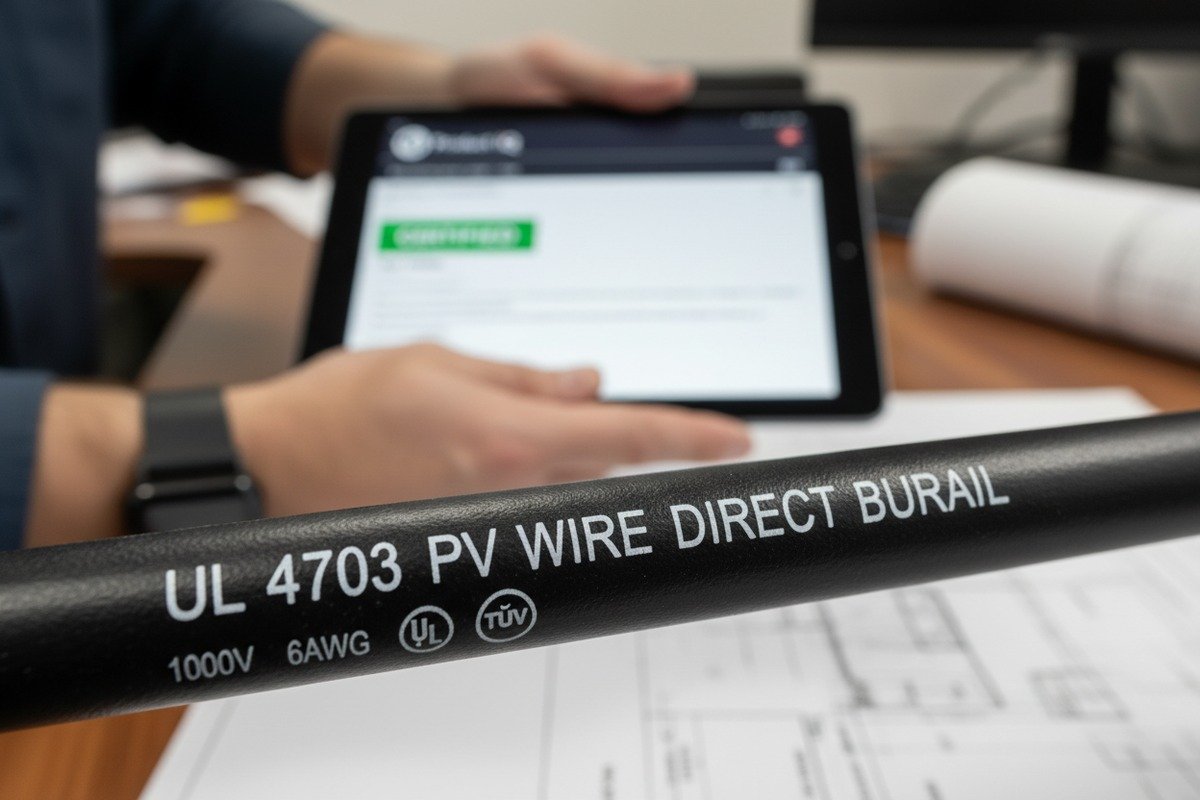
To verify direct burial certification, check for UL 4703 (PV Wire) or USE-2 markings printed on the cable jacket. Request the supplier's UL or TUV certificate with the specific listing number, then cross-check it on the UL Product iQ database or TUV's online registry to confirm it is active and authentic.
Why Printed Markings Matter
Every certified cable has markings printed directly on its outer jacket. These markings tell you the cable type, voltage rating, temperature rating, and whether it is rated for direct burial. If you see "PV Wire," "USE-2," or "RHW-2" on the jacket, that cable has passed crush, moisture, and abrasion tests for underground use.
But markings alone are not enough. In our experience exporting to European and North American markets, we have encountered counterfeit markings more than once. That is why cross-referencing the certificate number online is critical.
How to Cross-Check Certificates
Go to the UL Product iQ website (productiq.ulprospector.com). UL Product iQ database 2 Enter the supplier's UL file number. The database will show you the exact product scope, including whether direct burial is covered. For TUV-certified cables (common in European projects), use the TUV Rheinland Certipedia portal 3.
If a supplier cannot provide a traceable certificate number, walk away.
Key Certifications by Region
| Region | Certification Standard | Direct Burial Indicator |
|---|---|---|
| North America | UL 4703 (PV Wire), UL 854 (USE-2) | "Direct Burial" or "DB" on jacket |
| Europe | TUV 2PfG 1169, EN 50618 | TUV certificate scope includes underground |
| International | IEC 62930 | Check test report for buried installation |
PV Wire vs. USE-2 vs. RHW-2
All three can be used underground. PV Wire (UL 4703) has the thickest insulation and is rated for 90°C wet and 150°C dry. USE-2 is rated for 90°C wet and dry, and is commonly used for underground service entrance. RHW-2 shares similar ratings. However, PV Wire is the only one also rated for exposed rooftop runs with UV resistance built in. If your project has both above-ground and below-ground sections, PV Wire simplifies things.
Our engineers always recommend asking for the full UL listing details — not just a certificate image. A PDF certificate can be faked. A live database entry cannot.
Watch for These Red Flags
- Certificate is expired or shows a different product category.
- Cable jacket has no printed markings at all.
- Supplier refuses to share the UL file number or TUV ID.
- The certificate lists a factory address that does not match the supplier.
Certification fraud is a real pain point for procurement managers. When we prepare shipments, every reel includes traceable batch codes linked back to our TUV and UL listings, so our customers can verify authenticity before the cable ever enters a trench.
Which insulation materials will best protect my underground PV cables from moisture and soil?
Choosing the wrong insulation for a buried cable is like putting paper shoes on a marathon runner. When we develop cable formulations in our R&D lab, the insulation compound is the single most critical decision for underground performance.
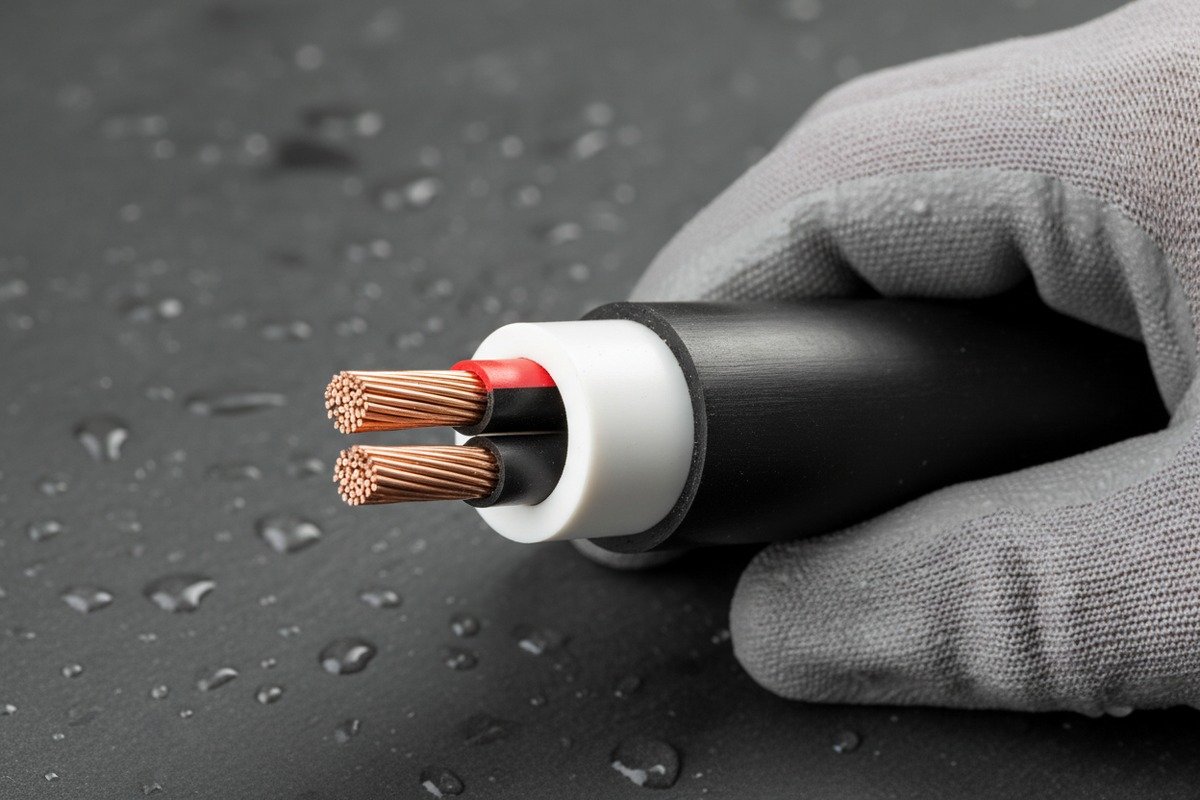
XLPE (cross-linked polyethylene) and EPR (ethylene propylene rubber) are the best insulation materials for underground solar PV cables. XLPE offers excellent moisture resistance and mechanical strength, while EPR provides superior flexibility in cold temperatures. Both outperform standard PVC in long-term underground durability.
Understanding the Insulation Layer
The insulation wraps around the copper or aluminum conductor. It must block moisture, resist chemical attack from soil, handle temperature swings, and survive decades of pressure from the earth above it. Underground, there is no UV exposure, but there is constant contact with water, minerals, and sometimes rodents.
XLPE vs. EPR vs. PVC
| Property | XLPE | EPR | PVC |
|---|---|---|---|
| Moisture Resistance | Excellent | Excellent | Moderate |
| Temperature Range | -40°C to 90°C (wet) | -40°C to 90°C (wet) | -10°C to 70°C |
| Flexibility | Moderate | High | Low to moderate |
| Chemical Resistance | High | High | Moderate |
| Mechanical Strength | High | Moderate | Low |
| Cost | Mid-range | Higher | Lowest |
| Typical Lifespan (buried) | 25–30 years | 25–30 years | 10–15 years |
XLPE is the workhorse. It handles moisture well, resists soil chemicals, and holds up mechanically. Most UL 4703 PV Wire and EN 50618 cables use XLPE insulation for exactly these reasons.
EPR is the premium choice for projects in extreme climates. If your site experiences severe cold (Nordic regions, high-altitude installations), EPR stays flexible where XLPE might stiffen. It is also more forgiving during installation — bending around obstacles underground is easier.
PVC is the budget option. It works fine for short-term or low-stakes applications. But it degrades faster underground and becomes brittle over time. For a 25-year solar project, PVC is a gamble most professionals avoid.
The Role of the Outer Jacket
Beyond the insulation, the outer jacket (sheath) adds another layer of protection. On our production lines, we use halogen-free, flame-retardant LSZH (Low Smoke Zero Halogen) or robust polyolefin jackets for direct burial cables. This outer layer fights abrasion from rocks, resists rodent gnawing, and provides an extra moisture barrier.
Soil Type Changes Everything
Soft, sandy soil is gentle on cables. Rocky or gravelly soil can cut through weak insulation over time. Chemically active soils — near agricultural land with fertilizers or in industrial brownfields — attack PVC much faster than XLPE. If you do not know your soil conditions, default to XLPE with a thick outer jacket. It is the safest bet.
Moisture Ingress: The Silent Killer
Water does not just sit on the surface of a cable. It migrates through micro-cracks and weak spots over years. This is called "water treeing 5," and it slowly degrades insulation from inside. XLPE has the best resistance to water treeing among common insulation types. Our quality control team runs accelerated water immersion tests on every batch to ensure this barrier holds.
When we consult with European EPC customers like those managing large solar farms in Germany or the Netherlands, the conversation always lands on XLPE as the default. EPR gets specified for Scandinavian or alpine projects. PVC rarely makes the cut.
How can I ensure my buried solar cables will last for the full 25-year project lifespan?
A 25-year lifespan is not just a marketing number — it is a contractual obligation for most solar projects. When we design cables at our 230,000 m² manufacturing facility, every material choice is stress-tested against that timeline.
To ensure a 25-year lifespan for buried solar cables, use XLPE or EPR-insulated copper stranded conductors rated USE-2 or PV Wire, size them at 125–150% of Isc per NEC, bury at 18–24 inches with sand bedding, and select cables with verified UL or TUV direct burial certification for crush, moisture, and chemical resistance.
Proper Cable Sizing Prevents Premature Failure
Undersized cables overheat. Overheating degrades insulation from the inside. Over years, this creates hot spots, power loss, and eventually failure. The NEC requires sizing solar cables at 125% of the panel's short-circuit current 6 (Isc). Many engineers go to 150% for added safety.
Here is a practical sizing example:
| Panel Rating | Isc | 125% Safety Margin | Recommended AWG | Current Capacity (AWG) |
|---|---|---|---|---|
| 200W | 10–11A | 13.75A | 10 AWG | 30A (at 90°C) |
| 400W | 13–14A | 17.5A | 8 AWG | 40A (at 90°C) |
| 600W (string) | 18–20A | 25A | 6 AWG | 55A (at 90°C) |
Always account for voltage drop on long runs. A cable that handles the current just fine might still lose 3–5% of power over 100 meters if the gauge is too small. For runs over 50 meters, step up one gauge size.
Copper vs. Aluminum: A 25-Year Perspective
Copper is the clear winner for longevity underground. It conducts electricity better, flexes without breaking, and resists corrosion in wet soil. Aluminum is cheaper per meter, but it expands and contracts more with temperature changes, loosening connections over time. For residential and commercial projects, we almost always recommend copper stranded conductors 7.
Stranded conductors outperform solid conductors underground. They flex during soil settlement without cracking. They also handle the skin effect better in AC systems, though for DC solar circuits, the primary advantage is mechanical durability.
Installation Practices That Extend Life
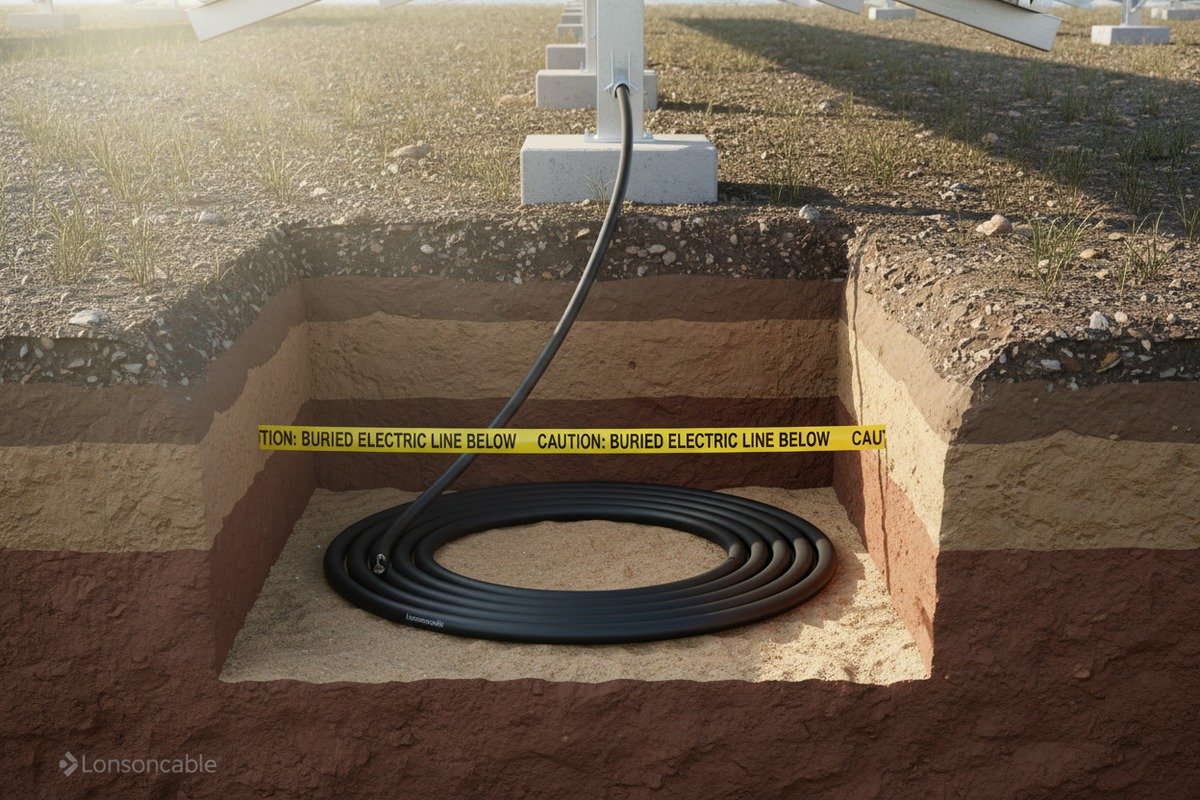
The trench matters as much as the cable. Bury cables at a minimum of 18 inches. In areas with heavy vehicle traffic above, go to 24 inches or deeper. Line the bottom of the trench with 3–4 inches of clean sand. This cushions the cable against rocks and sharp objects.
After laying the cable, cover it with another layer of sand before backfilling with native soil. Place a warning tape 12 inches above the cable. This simple step prevents accidental damage from future excavation.
In rocky or chemically active soils, conduit is not optional — it is essential. PVC conduit adds a physical barrier that extends cable life significantly in harsh conditions. For brownfield sites or coastal installations with salt-laden soil, we recommend conduit even when the cable itself is rated for direct burial.
Monitoring for Early Degradation Signs
Even the best cable can develop problems. Schedule infrared thermography scans 8 every 3–5 years on accessible junction points. Look for abnormal heat signatures that indicate increased resistance from moisture ingress or conductor damage. If power output from a string drops by more than 5% without panel shading changes, the underground cable run should be investigated.
Our customers who follow these practices consistently report cable performance that meets or exceeds the 25-year mark. The upfront cost of doing it right is always less than the cost of digging up and replacing failed cables mid-project.
What specific test reports should I request from my supplier to guarantee direct burial compliance?
Over 30 years of manufacturing solar cables, our quality assurance team has learned that trust is built on documentation, not promises. When a buyer asks us for proof of direct burial compliance, we welcome it — because we have nothing to hide.
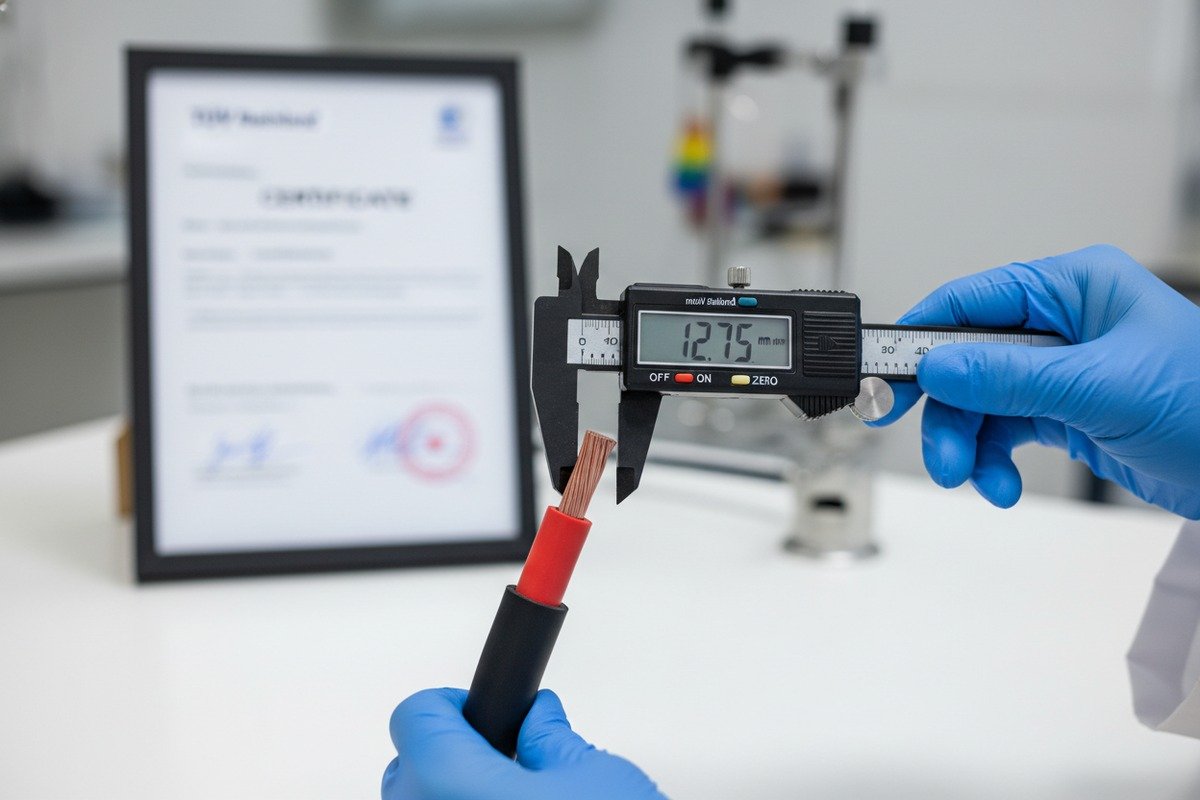
Request these specific test reports from your supplier: UL 4703 or EN 50618 type test reports, crush resistance (ICEA S-107-698), moisture absorption testing, insulation resistance after water immersion, UV resistance (if dual-rated), flame retardancy (VW-1 or CPR classification), and an accelerated aging test report confirming performance at rated temperature for the equivalent of 25 years.
The Essential Test Report Checklist
Not all test reports are equal. Some suppliers hand you a generic material data sheet and call it certification. That is not enough. Here is what to demand:
| Test Report | What It Proves | Standard Reference |
|---|---|---|
| Type Test Certificate (UL/TUV) | Cable meets full product standard | UL 4703, EN 50618, TUV 2PfG 1169 |
| Crush Resistance | Survives soil/rock pressure underground | ICEA S-107-698 |
| Water Immersion / Moisture Absorption | Insulation blocks moisture after prolonged submersion | IEC 60502-1, UL 4703 Sec. 7 |
| Insulation Resistance (after aging) | Electrical integrity holds over time | IEC 60811 |
| Tensile Strength & Elongation | Insulation does not crack when stretched or bent | IEC 60811-501 |
| UV Resistance (if above-ground too) | Jacket withstands sunlight exposure | UL 4703, EN 50618 |
| Flame Retardancy | Fire safety compliance | VW-1 (UL), CPR Dca/Cca (EU) |
| Accelerated Aging | Simulates 25-year performance | IEC 60216 |
| Conductor Resistance | Copper/aluminum meets conductivity specs | IEC 60228 |
Why Crush Resistance Is Non-Negotiable
Underground cables face constant mechanical stress. Soil shifts. Rocks press against the jacket. Frost heave pushes and pulls. The crush resistance test 10 applies a defined force per unit length to the cable and checks for insulation failure. If your supplier cannot show you this report, their cable was not tested for direct burial — regardless of what the jacket says.
Moisture Tests: The Most Overlooked Report
Many buyers check for UL certification but skip the moisture test details. The water immersion test submerges the cable for extended periods (typically 7–14 days at elevated temperature) and then measures insulation resistance. A cable that passes this test will handle decades of groundwater contact without breakdown.
At our facility, we run these tests on every production batch — not just during initial type testing. Batch-level testing catches material inconsistencies before they reach your project site.
CPR Compliance for European Projects
European buyers — particularly those in Germany, the Netherlands, and France — need to pay special attention to Construction Products Regulation (CPR) fire classifications. A cable rated Dca-s2,d2,a2 means it has limited fire spread, smoke production, and acid gas emission. If your project requires Cca or higher, make sure the test report comes from a notified body recognized under EU regulation, not just the manufacturer's in-house lab.
We have seen cases where cables were claimed to meet Dca but failed independent batch testing at European customs. The result: entire container shipments rejected, project delays of 4–6 weeks, and massive financial penalties. Always request the Declaration of Performance (DoP) along with the CPR test report.
How to Spot a Fake Test Report
- Check the testing laboratory name. It should be an accredited lab (ILAC member or nationally recognized).
- Look for the specific cable model and construction listed on the report. Generic reports covering broad product families are a red flag.
- Verify the report date. Reports older than 5 years may not reflect current production quality.
- Contact the testing lab directly with the report number to confirm its authenticity.
Our approach is simple: we provide full traceability. Every reel we ship carries a batch number linked to raw material certificates, production records, and test results. If a buyer wants to verify, they can trace the cable from the conductor drawing stage to the finished coil. This is the standard that serious EPC and distribution buyers should expect.
Conclusion
Choosing the right solar PV cable for direct burial comes down to four pillars: verified certification, proven insulation materials, correct sizing with proper installation, and transparent supplier documentation. Get these right, and your cables will outlast the panels above them.
Footnotes
1. IEEE Xplore provides an authoritative comparison of XLPE and EPR insulation for high voltage cables. ↩︎
2. Provides access to UL's official product certification database. ↩︎
3. Links to TÜV Rheinland's official certificate verification portal. ↩︎
4. Provides official information on the UL 4703 standard for PV wire. ↩︎
5. Explains the phenomenon of water treeing and its impact on cable insulation. ↩︎
6. Explains how short-circuit current is used for solar cable sizing per NEC. ↩︎
7. Discusses the advantages of copper stranded conductors in electrical applications. ↩︎
8. The Department of Energy provides an authoritative overview of thermographic inspections, including for electrical systems. ↩︎
9. This is the official NFPA page for the National Electrical Code (NFPA 70). ↩︎
10. Illustrates the methodology and importance of cable crush resistance testing. ↩︎