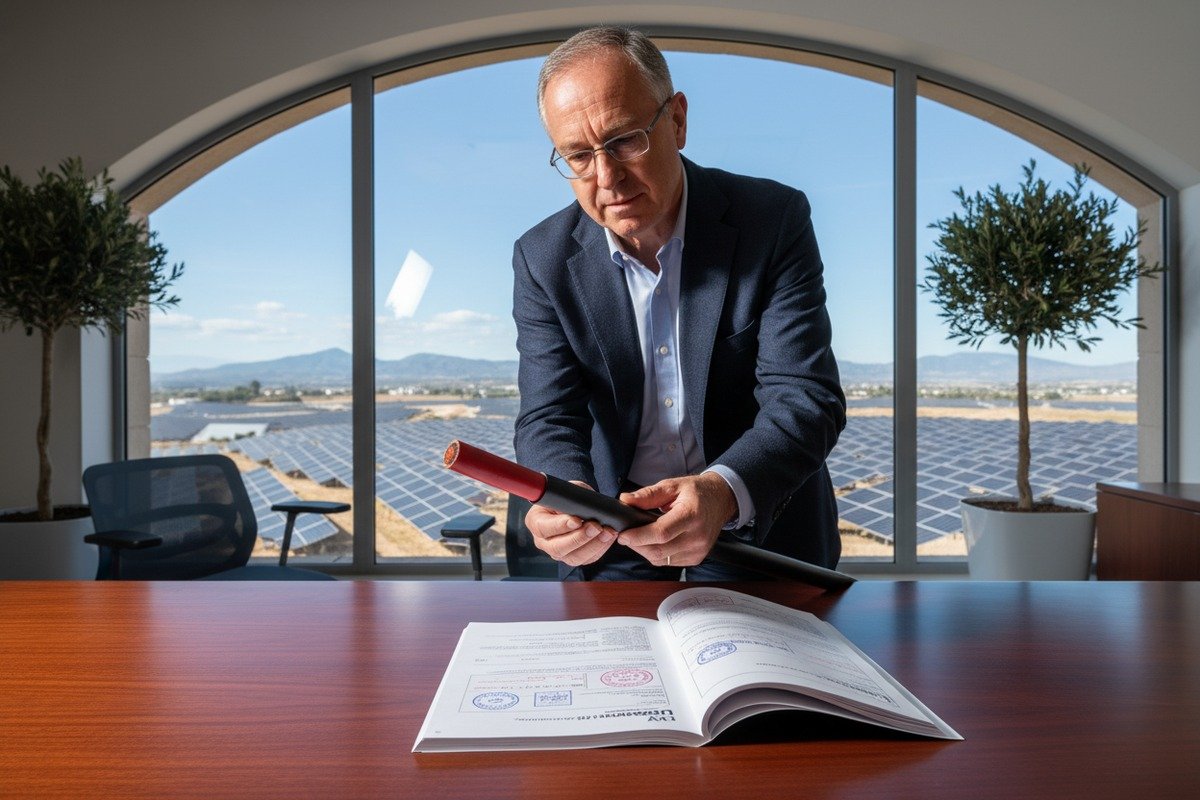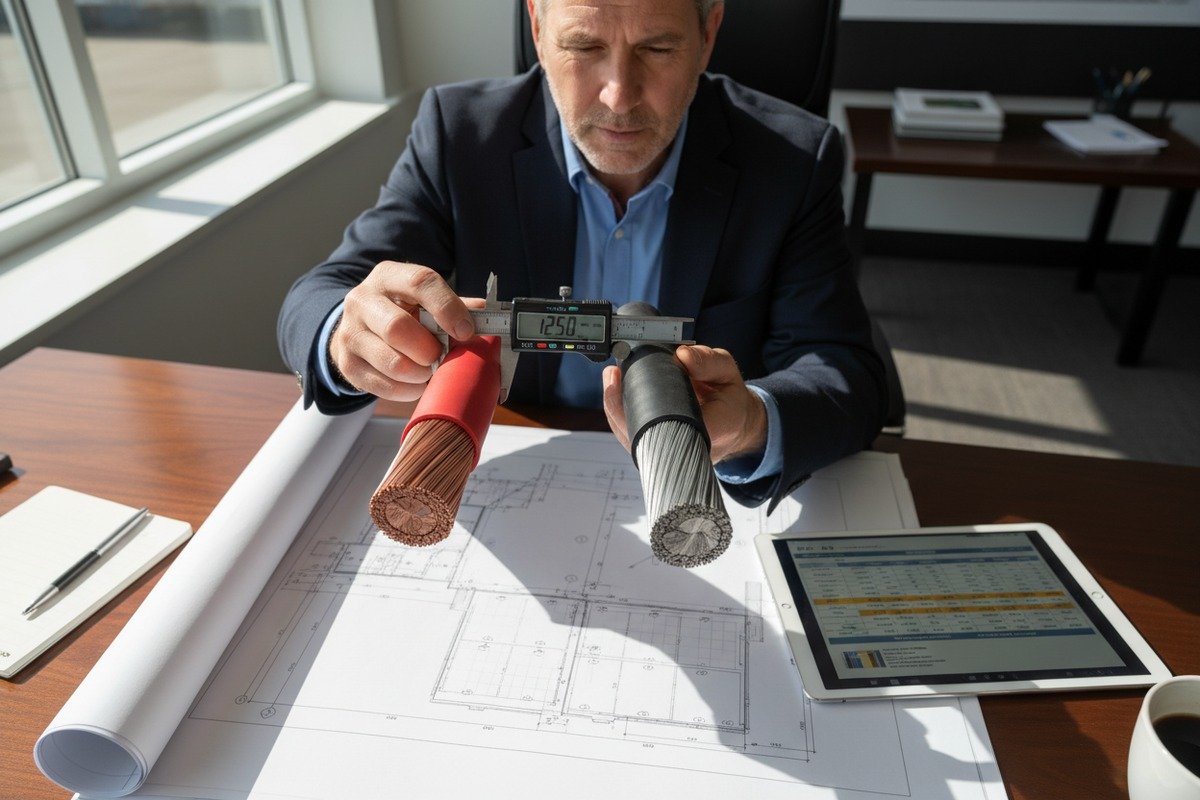

Every year, our technical support team receives hundreds of emails from overseas contractors who received their ADSS cable shipment — but found the manual was in Chinese only, or worse, missing entirely IEEE/IEC-compliant technical datasheets 1. That gap between delivery and deployment can stall an entire project, costing thousands per day in idle labor and equipment rental fees.
To request English manuals and installation guides for ADSS fiber optic cables, contact your supplier before placing your order, specify English-language documentation requirements in your purchase contract, and request IEEE/IEC-compliant technical datasheets, sag-tension charts, OTDR test reports, and step-by-step installation guides tailored to your project conditions.
This guide walks you through the exact process, from drafting your first email to verifying every page of the documentation you receive ISO 9001 2. Let's break it down section by section.
How do I effectively request a detailed English installation guide for my ADSS fiber optic cable order?
Many contractors assume English documentation comes standard with international orders Maximum Allowable Tension 3. In our experience shipping to over 40 countries, that assumption causes more project delays than any other single issue.
Write a detailed specification email to your supplier before order confirmation, listing every document you need in English — including installation guides, OTDR reports, packing lists, and compliance certificates — and embed these requirements directly into your purchase agreement to ensure accountability.

Start with a Clear Documentation Request Email
The simplest step is often the most overlooked. When you first contact a supplier, don't just ask about price and lead time Minimum Bending Radius 4. State your documentation needs upfront. Here is a sample structure for your request:
- Subject line: "Request for English ADSS Installation Manual – 144-Core, 500m Span Project"
- Body: Specify the cable model, fiber count, span length, and operating environment. Then list every document you need.
- Deadline: Ask for a response within 3 business days.
Our export team typically responds within 24–48 hours when the request is specific. Vague requests like "send me the manual" often lead to generic PDFs that don't match your project.
What Documents Should You Request?
Here is a checklist of key documents to include in your initial email:
| Document Type | Purpose | Format to Request |
|---|---|---|
| Installation Guide (English) | Step-by-step field procedures | PDF or printed booklet |
| Technical Datasheet | Cable specs, fiber type, sheath material | PDF with diagrams |
| Sag-Tension Chart | Proper tensioning per span length | Excel or PDF (project-specific) |
| OTDR Test Report | Verify optical performance before shipping | PDF with raw data |
| Packing List | Confirm quantities, reel dimensions, weights | PDF or Excel |
| Compliance Certificates | IEC 60794 5, ISO 9001, UL, CE | Scanned originals in PDF |
| Cross-Section Diagram | Visual breakdown of cable layers | CAD or high-res image |
Embed Requirements in Your Purchase Contract
Verbal promises fade. Written contracts don't. When we finalize orders with international buyers, we include a documentation clause that lists each deliverable, the language, and the delivery timeline. If documentation is late or incomplete, the clause gives you leverage.
One practical tip: ask for a draft manual before full production starts. This lets you review the content, flag translation errors, and request additions — all before your cable ships. Most reputable manufacturers, including our team at Lonsoncable, welcome this approach because it reduces post-delivery disputes.
Consider Digital and Interactive Options
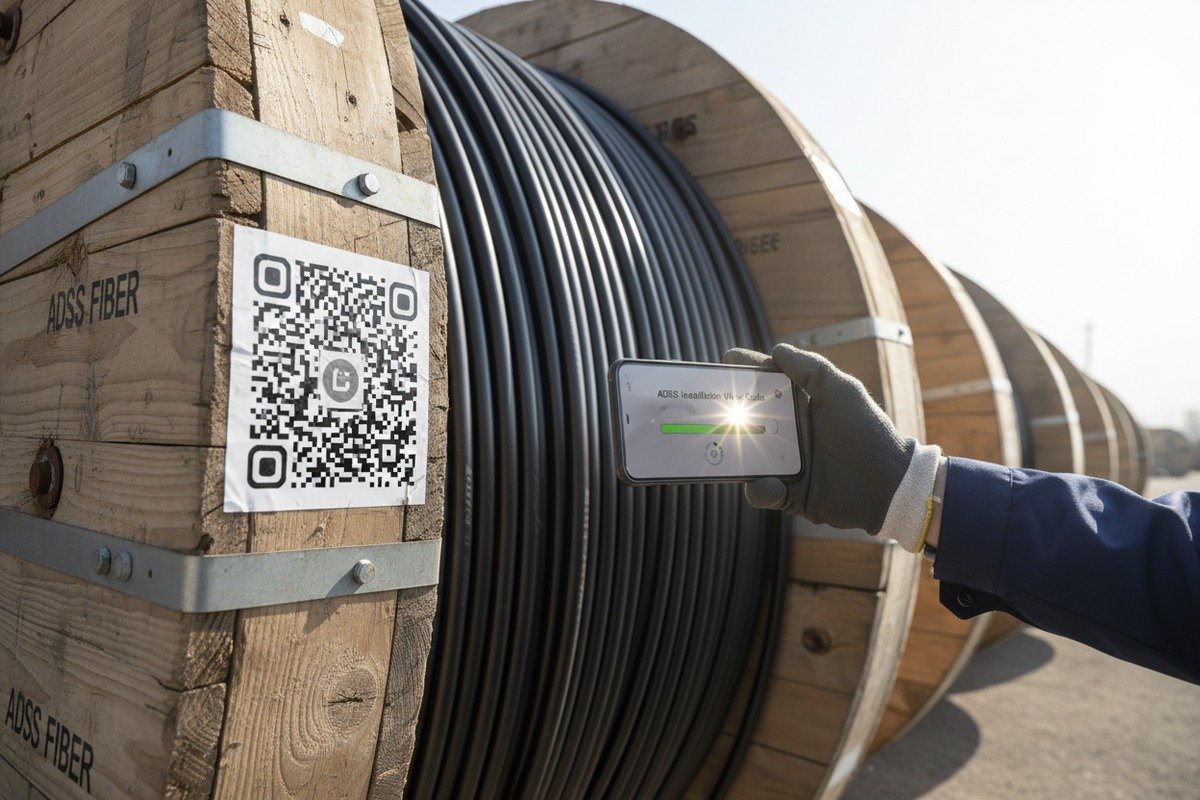
Beyond static PDFs, some suppliers now offer searchable digital manuals, video walkthroughs, and even QR codes printed on the cable reel that link to online installation resources. When we began offering video installation guides for ADSS projects in Southeast Asia, field error rates dropped noticeably. Ask your supplier if these options exist — they save enormous time in the field.
What technical details should I look for in my supplier's manual to ensure a safe installation?
When our engineers audit returned installation failures, the root cause is almost never a defective cable. Nine times out of ten, it's a missing detail in the manual — or a detail that was there but got ignored because it wasn't clearly presented.
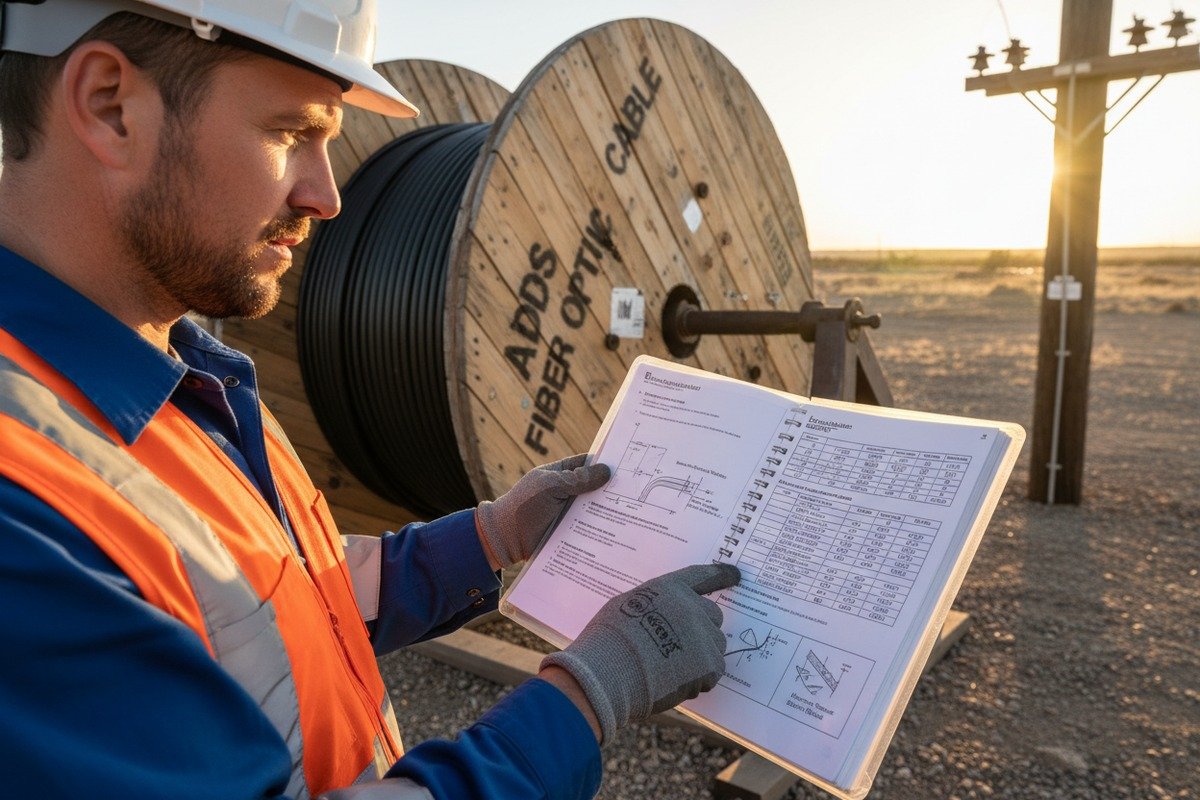
A safe ADSS installation manual must include cable mechanical properties, maximum allowable tension, minimum bending radius, sag-tension tables for your specific span, hardware compatibility specifications, pre-installation OTDR verification procedures, and safety precautions for working near energized power lines.
Mechanical Properties Section
This is the backbone of any installation guide. You need to verify that the manual provides:
- Maximum Rated Cable Strength (MRCS): The breaking load of the cable.
- Maximum Allowable Tension (MAT): Typically 40–60% of MRCS, depending on the standard.
- Minimum Bending Radius: Usually 20× the cable outer diameter for dynamic bending (during installation) and 10× for static (after clamping).
- Cable Weight per Meter: Critical for sag calculations.
If any of these are missing, flag it immediately. Our production team includes all four in every English-language datasheet we ship, because omitting even one can lead to over-tensioning and fiber micro-bending losses.
Sag-Tension Tables and Environmental Parameters
Generic sag tables are dangerous. Your manual should include calculations based on:
| Parameter | Why It Matters |
|---|---|
| Span length (meters) | Determines total cable weight between towers |
| Ice loading (mm radial) | Adds weight and wind cross-section |
| Wind speed (m/s) | Creates horizontal load on cable |
| Temperature range (°C) | Affects cable elongation and sag |
| Elevation / terrain | Impacts wind exposure and ice accumulation |
If the manual only provides a single "standard" sag-tension chart, ask your supplier to recalculate based on your local meteorological data. At our facility, we run simulations using customer-provided environmental data and deliver project-specific charts as part of the standard documentation package.
Pre-Installation Testing Procedures
A good manual tells you to verify the cable before you string it. Look for these instructions:
- Visual inspection of the reel for shipping damage.
- Seal cap verification — all cable ends must be sealed to prevent moisture ingress.
- OTDR testing — compare field results against the factory OTDR report. If attenuation values differ by more than 0.05 dB/km, contact the supplier before proceeding.
- Continuity check on all fibers.
Safety Precautions Near Power Lines
ADSS cables are all-dielectric, meaning they contain no metal. But they are installed on or near energized power structures. The manual must address:
- Minimum approach distances for different voltage levels.
- Grounding procedures for installation equipment.
- Dry-band arcing risks and how sheath material (AT or PE) mitigates them.
- Emergency protocols if a cable contacts an energized conductor.
Standards like IEEE Std 1222-2004 6 and IEEE 524-2003 provide the framework. Your manual should reference these explicitly. If it doesn't, ask why.
Can I ask for customized cross-section diagrams and mechanical calculations in my English documentation?
One of the most frequent frustrations we hear from procurement managers — especially those sourcing from China for the first time — is receiving a beautiful-looking manual with cross-section diagrams that don't actually match the cable they ordered. The diagram shows 48 fibers; the shipment contains 96.
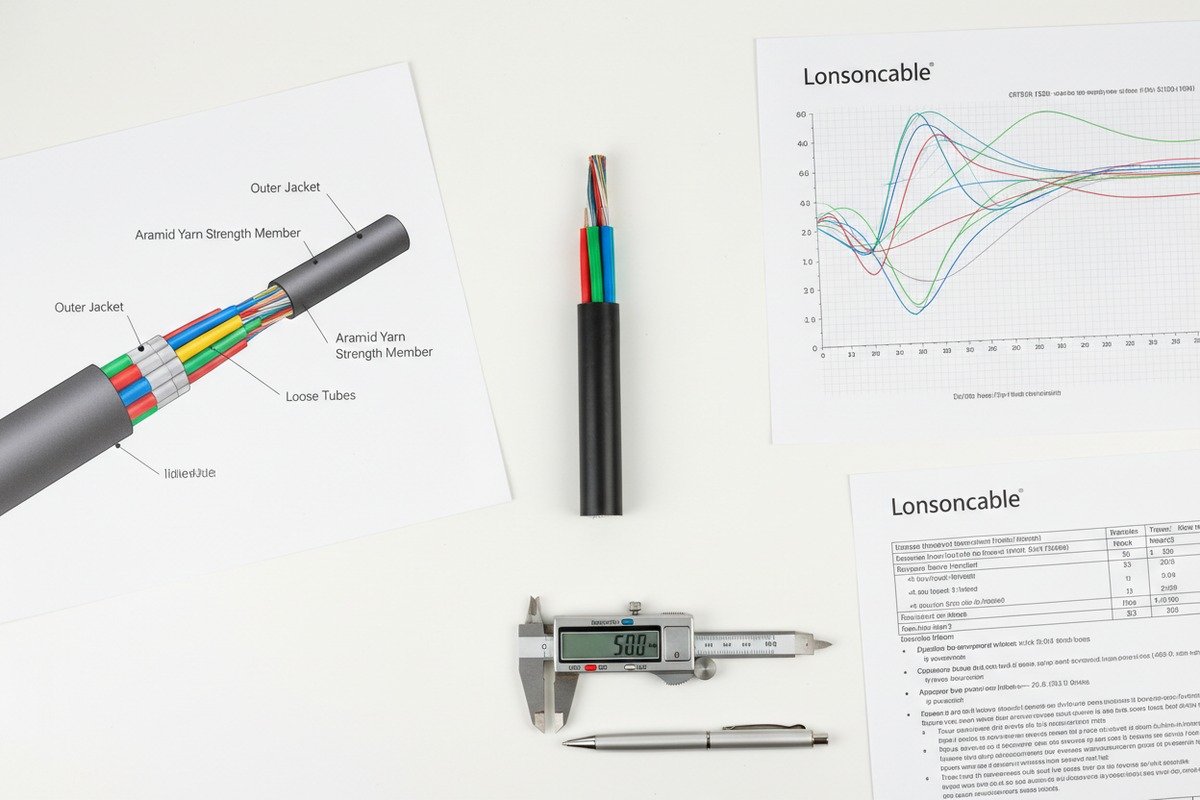
Yes, you can and should request customized cross-section diagrams and mechanical calculations. Reputable ADSS manufacturers will provide cable-specific diagrams showing exact layer construction, aramid yarn placement, fiber tube count, and outer sheath dimensions, along with tensile strength and elongation calculations tailored to your ordered configuration.
Why Generic Diagrams Cause Problems
A cross-section diagram is not just a marketing illustration. It is a technical reference that your installation crew and project engineers use to:
- Identify each layer during mid-span splicing.
- Verify that the correct number of loose tubes and filler rods are present.
- Confirm aramid yarn volume matches the rated tensile strength.
- Plan stripping lengths for dead-end and suspension hardware.
If the diagram doesn't match the actual cable, every one of these tasks becomes a guessing game.
What to Specify in Your Customization Request
When you email your supplier, be explicit. Here is a template of specifications to include:
| Specification | Example Value | Notes |
|---|---|---|
| Fiber count | 96 fibers (8 tubes × 12 fibers) | Must match tube color coding |
| Fiber type | ITU-T G.652D 7 | Or G.657A1 for tight bends |
| Aramid yarn layer | 45 kN rated tensile | Specify MRCS requirement |
| Outer sheath material | AT (Anti-Tracking) | For high-voltage zones |
| Outer diameter | 14.2 mm | Must match hardware bore size |
| Cable weight | 185 kg/km | For sag calculations |
| Water-blocking method | Dry water-blocking tape | Or petroleum jelly fill |
Mechanical Calculations You Should Expect
Beyond the cross-section, ask for a mechanical calculation sheet that includes:
- Ultimate Tensile Strength (UTS): The load at which the cable breaks.
- Every Day Stress (EDS): The long-term operating tension, typically 16–25% of UTS.
- Maximum Working Tension: Under worst-case ice and wind loading.
- Creep coefficient: How much the cable elongates permanently over its lifetime.
- Vibration fatigue data: Especially important for long spans exposed to aeolian vibration.
Our engineering team generates these calculations using finite element modeling software. We can adjust inputs based on your tower geometry, ruling span, and local weather data. This level of customization is not unusual — it's standard practice for any manufacturer serious about export quality.
OEM/ODM Documentation Branding
Some buyers also request that documentation carry their company logo, project name, or internal part numbers. This is common in large utility tenders where the end client audits documentation. At Lonsoncable, we offer this as part of our OEM/ODM service at no additional charge. Simply provide your branding guidelines along with your technical specifications, and we include them in the final manual package.
How can I verify that the English manuals provided by my manufacturer meet my local project specifications?
We once had a contractor in Brazil reject a perfectly good ADSS shipment because the manual referenced Chinese standard DL/T 547-94 but did not mention the ANEEL regulations required for his local utility tender. The cable itself was compliant — the documentation simply didn't prove it in terms his client understood.
Verify your English manuals by cross-referencing them against your local regulatory standards (e.g., IEEE, IEC, NEC, or regional utility codes), confirming that sag-tension data matches your project's environmental inputs, validating OTDR reports against independent field tests, and having a qualified local engineer review the documentation before installation begins.
Step-by-Step Verification Process
Verification is not a single check. It is a structured process. Here is how we recommend our buyers approach it:
- Receive the documentation package — Confirm all requested items are present and in English.
- Standards cross-reference — Match each specification claim against IEC 60794, IEEE 1222, or your national equivalent.
- Sag-tension review — Input the supplier's cable weight and mechanical data into your own modeling software. Compare outputs.
- OTDR comparison — Run your own OTDR test on the first reel. Compare attenuation, splice loss, and event markers against the factory report.
- Hardware compatibility check — Verify that suspension clamps, dead-end fittings, and splice enclosures listed in the manual match the hardware you have on site.
- Local engineer sign-off — Have a licensed professional engineer review and stamp the documentation before construction starts.
Common Standards to Cross-Reference
| Standard | Scope | Region |
|---|---|---|
| IEEE Std 1222-2004 | All-dielectric self-supporting cable testing | International (US origin) |
| IEEE 524-2003 | Overhead transmission line installation | International (US origin) |
| IEC 60794 | Optical fiber cable construction and testing | Global |
| ITU-T G.652D | Single-mode fiber specifications | Global |
| ANSI C119 | Connector and hardware standards | USA |
| DL/T 547-94 | Power line construction regulations | China |
| NEC Article 770 | Optical fiber cable and raceways | USA |
If your project requires compliance with a standard not listed in the manual, ask the supplier to provide a compliance matrix. This is a document that maps each standard clause to the corresponding cable test result. Our quality assurance department prepares these routinely for North American and European projects.
Red Flags to Watch For
Be cautious if you encounter any of the following:
- Machine-translated text with obvious grammar errors or nonsensical sentences. This suggests the supplier did not invest in professional technical translation.
- Missing test data. If the manual references a test but provides no numerical results, push back.
- Outdated standard references. For example, citing ANSI/IEEE 524-1980 instead of the 2003 revision.
- No version control. The manual should have a revision date and document number. If it doesn't, you have no way to track updates.
Request Updates and Revisions
Standards change. Cable designs evolve. Establish a process with your supplier for receiving updated manuals when revisions occur. At Lonsoncable, we maintain a documentation registry for repeat buyers. When we update a manual — due to a standards revision, material change, or improved installation method — we proactively send the new version to all affected customers.
This is especially important for multi-phase projects where installation spans months or years. The manual your crew used in Phase 1 may not reflect improvements or corrections relevant to Phase 3.
Conclusion
Requesting proper English manuals for ADSS fiber optic cables 9 is not optional — it is essential for safe, compliant, and efficient installation. Specify your documentation needs early, embed them in your contract, and verify every detail before your crew climbs the first tower.
Footnotes
1. Lists various IEEE standards related to fiber optic cables and their applications. ↩︎
2. Official page for ISO 9001, the international standard for quality management systems. ↩︎
3. Defines Maximum Allowable Tension (MAT) in the context of fiber optic cable datasheets. ↩︎
4. Explains the concept of minimum bend radius for fiber optic cables and its impact on performance. ↩︎
5. Official page for IEC, which publishes standards for optical fiber cables. ↩︎
6. Official IEEE page for the standard on All-Dielectric Self-Supporting Fiber Optic Cable. ↩︎
7. Official ITU-T recommendation for characteristics of a single-mode optical fiber and cable, including G.652.D. ↩︎
8. Explains what OTDR testing is, how it works, and its importance in fiber optic networks. ↩︎
9. Provides a general overview and definition of ADSS fiber optic cables. ↩︎