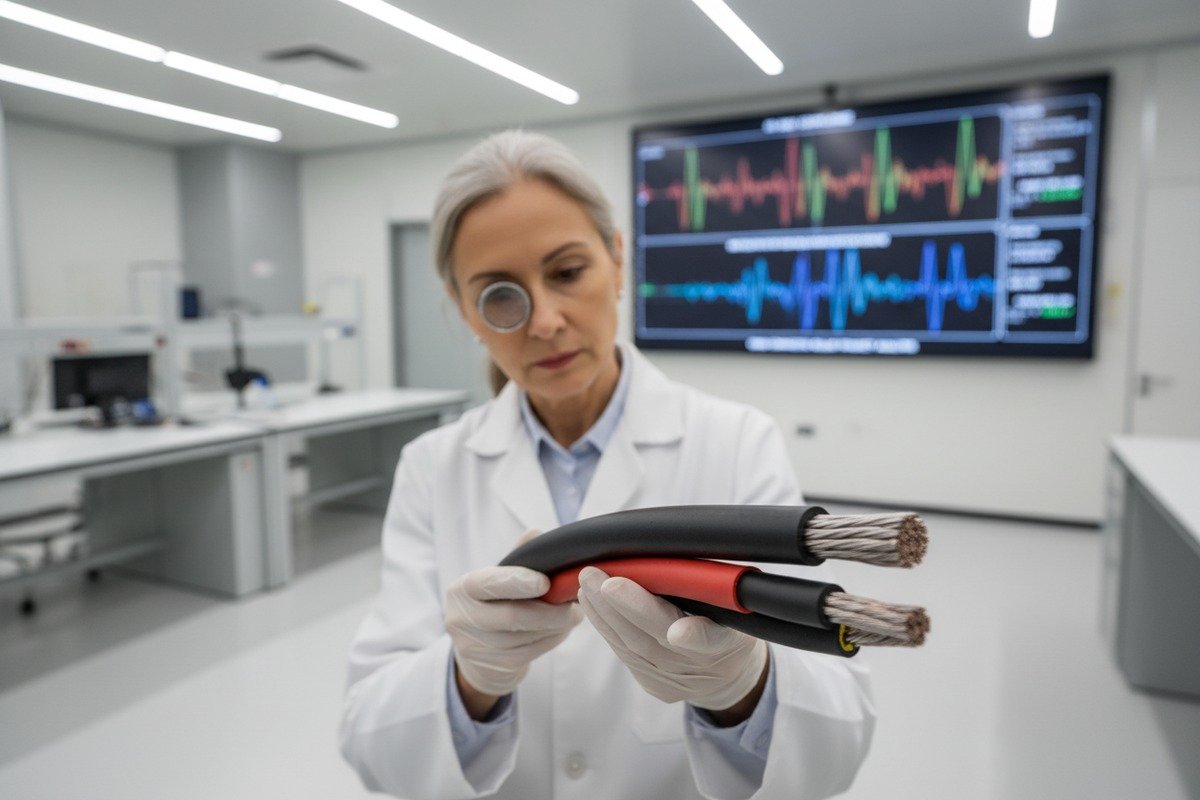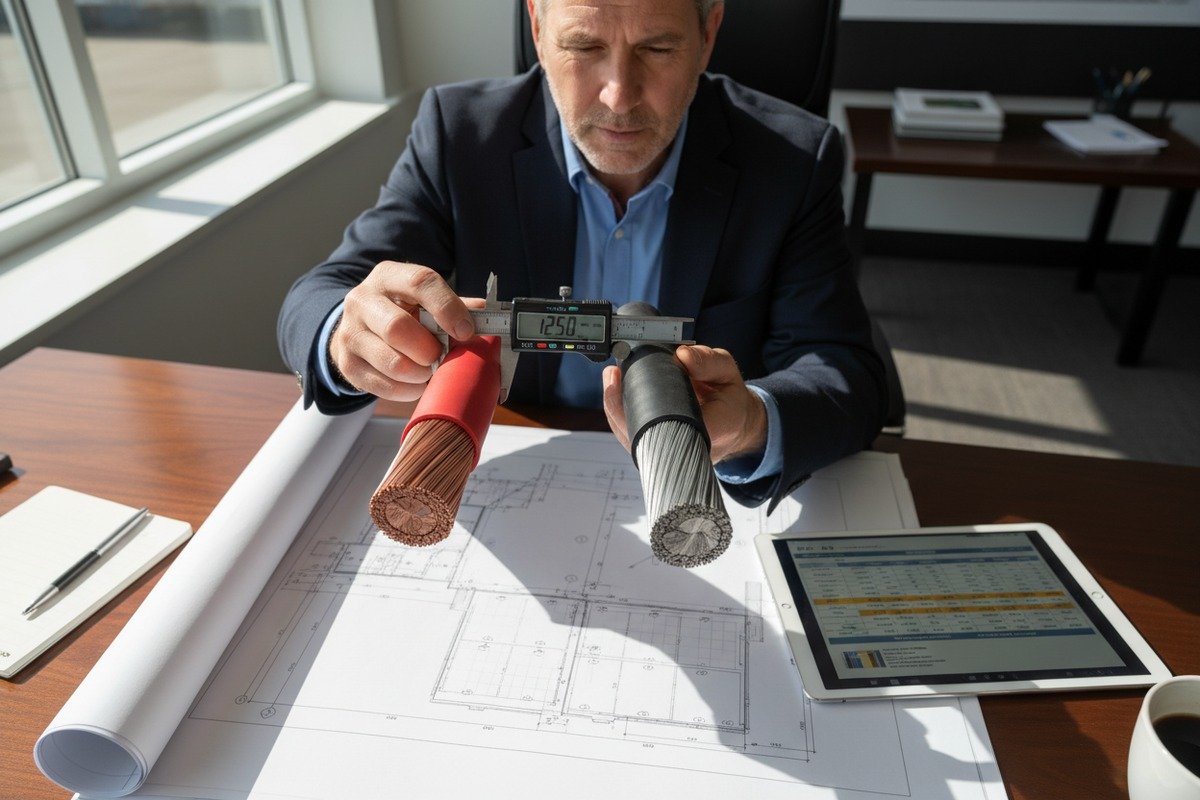

Every year, we ship thousands of kilometers of ADSS cable from our factory to buyers across the US. ADSS optic cable 1 The one thing that causes the most delays? Missing paperwork.
To import ADSS optic cable from China to the US, you need a commercial invoice, packing list, bill of lading, Certificate of Origin, customs bond, Importer Security Filing (ISF), and proper HTSUS classification under code 8544.70.00.00. You may also need UL certifications, OTDR test reports, and technical compliance documents depending on your project requirements.
This guide breaks down every document, permit, and compliance step you need. We will cover customs paperwork, certification verification, tariff calculations, and technical report requirements so your ADSS cable shipment clears US ports without costly delays.
What specific customs documents must I prepare for my ADSS cable shipment to the US?
When our logistics team prepares an export shipment, we always double-check the document package first. One missing form can hold your cable drums at port for weeks, and storage fees add up fast.
You must prepare a commercial invoice, packing list, bill of lading, Certificate of Origin, customs bond, and an Importer Security Filing (ISF or "10+2"). The commercial invoice declares shipment value for duty calculation, while the ISF must be submitted to CBP at least 24–48 hours before vessel departure from China.

The Core Document Checklist
Let's walk through each document one by one. These are non-negotiable. If you miss any of them, US Customs and Border Protection (CBP) will flag your shipment.
Commercial Invoice: This is the most important document for duty calculation. It must include the seller's name, buyer's name, product description, quantity, unit price, total value, and Incoterms. Our team always includes the fiber count, cable type (ADSS), and span rating on the invoice to prevent classification confusion.
Packing List: This details the physical shipment — number of drums, weight per drum, cable length per drum, and total gross weight. A single 4km drum of ADSS cable can weigh over 500kg. Accurate weight matters because it affects freight costs and port handling.
Bill of Lading (B/L): This is your proof of ownership and the shipping contract between you and the carrier. You need the original B/L to release cargo at the US port.
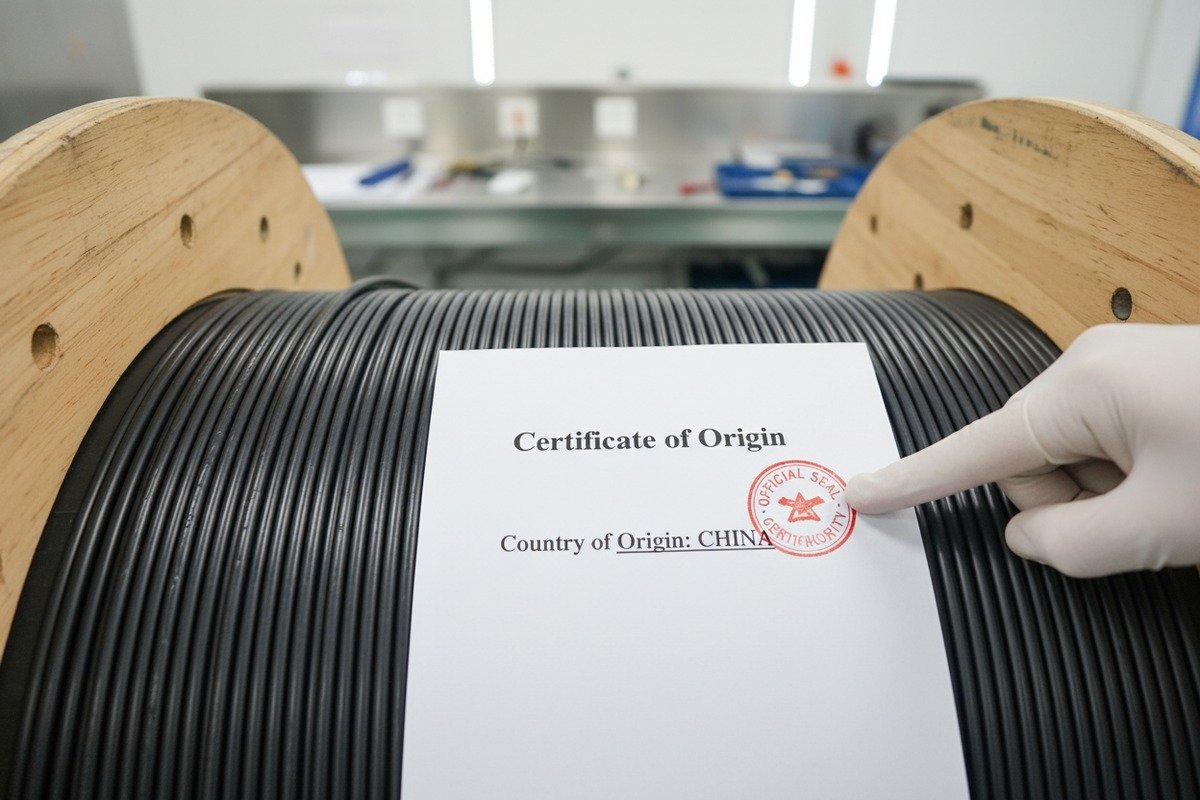
Certificate of Origin (CO): This document confirms the cable was manufactured in China. It directly determines which tariffs apply. Given current US-China trade tensions, this document triggers Section 301 tariff assessments.
Documents Many Importers Forget
Customs Bond: This is a financial guarantee to CBP. If your shipment value exceeds $2,500, you need either a single-entry bond or a continuous bond. Without it, your goods will not be released.
Importer Security Filing (ISF): Also called "10+2," this must be filed electronically at least 24–48 hours before the vessel leaves the foreign port. Late filing can result in penalties of $5,000 or more per violation.
| Document | Purpose | Who Provides It | Filing Deadline |
|---|---|---|---|
| Commercial Invoice 2 | Declares value for duty calculation | Supplier (Seller) | Before shipment |
| Packing List 3 | Details physical cargo specifications | Supplier (Seller) | Before shipment |
| Bill of Lading 4 (B/L) | Proof of ownership and shipping contract | Shipping carrier | At vessel departure |
| Certificate of Origin 5 | Confirms country of manufacture | Supplier or chamber of commerce | Before shipment |
| Customs Bond 6 | Financial guarantee to CBP | Importer (via surety company) | Before cargo arrives |
| ISF (10+2) | Security filing for ocean shipments | Importer or customs broker | 24–48 hours before departure |
| Insurance Certificate | Protects against transit damage | Importer or supplier | Before shipment |
Why HS Code Classification Is Critical
The HTSUS code for ADSS fiber optic cable is 8544.70.00.00. This code covers optical fiber cables made up of individually sheathed fibers. Getting this wrong is a common and expensive mistake. If you classify your cable under the wrong code, you may overpay duties or trigger a CBP audit. Always verify the exact code with a licensed US customs broker before your first shipment.
From our side, we include the HS code on both the commercial invoice and the packing list. This small step saves our buyers hours of back-and-forth at customs.
Pro Tips for First-Time Importers
Make sure all documents are in English. Chinese-language documents will cause delays. Ask your supplier to provide bilingual documents. Also, ensure that the declared value on the commercial invoice matches the value on the bill of lading. Discrepancies are a red flag for CBP and can trigger a full inspection.
How do I verify if my Chinese supplier's UL and ISO certifications meet US safety standards?
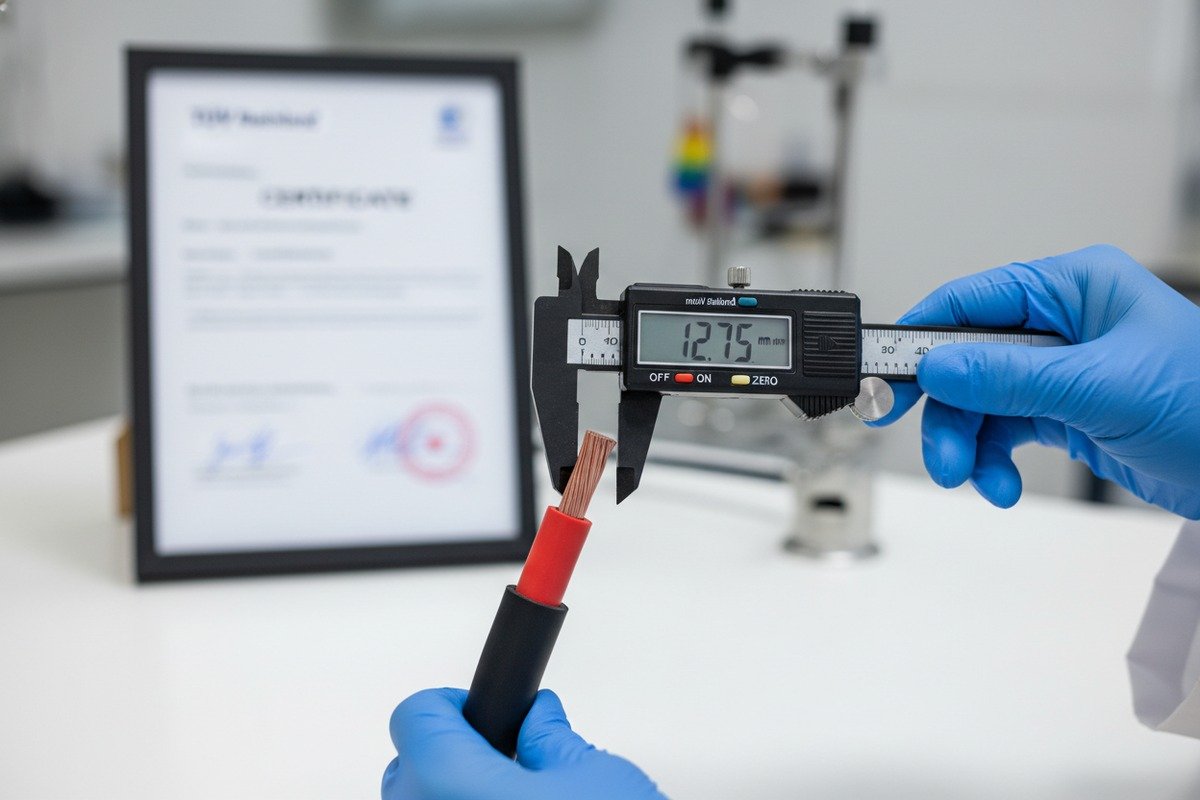
Our quality lab runs continuous testing on every batch we produce. But we also understand that a certificate on paper means nothing if you cannot verify it independently. Trust, but verify.
To verify your Chinese supplier's UL and ISO certifications, check UL certificates directly on UL's online certification directory (UL Product iQ), confirm ISO 9001 accreditation through the issuing body's database, and request original certificates with traceable registration numbers. Authentic certifications will have verifiable audit dates, scope descriptions, and accreditation body logos.
Understanding UL Certification for Fiber Optic Cable
UL (Underwriters Laboratories) certification is one of the most recognized safety marks in the United States. For fiber optic cables, UL certification confirms that the product has been tested for fire resistance, material safety, and electrical performance. Many US utilities and contractors require UL-listed cables for infrastructure projects.
Here is how to verify a UL certificate:
- Visit UL Product iQ at productiq.ulprospector.com.
- Enter the supplier's UL file number or company name.
- Check the product category and scope. Make sure it covers the specific cable type you are purchasing (ADSS, not just generic fiber cable).
- Verify the certificate has not expired.
If the supplier cannot provide a UL file number, that is a serious red flag. Walk away or request third-party testing before placing your order.
ISO 9001 and Other Quality System Certifications
ISO 9001 certification 8 means the manufacturer has a quality management system in place. It does not test the product itself — it audits the process. This is an important distinction.
To verify ISO 9001:
- Ask for the certificate with the registration number and issuing body name.
- Check the issuing body's website or contact them directly.
- Confirm the certificate scope covers fiber optic cable manufacturing, not just "cable" or "wire" in general.
| Certification | What It Covers | How to Verify | Why It Matters for US Import |
|---|---|---|---|
| UL | Product safety testing (fire, materials) | UL Product iQ 9 online directory | Required by many US utilities and contractors |
| ISO 9001 | Quality management system | Issuing body's online database | Demonstrates consistent manufacturing quality |
| CE | European conformity (not US-specific) | EU NANDO database | Useful but does not replace UL for US projects |
| CSA | Canadian/North American safety | CSA Group online directory | Accepted in some US jurisdictions |
| IEC/ITU compliance | International technical standards | Request type-test reports | Validates cable performance specifications |
Red Flags to Watch For
Over the years, we have seen competitors present fake or expired certifications. Here are warning signs:
- The certificate has no registration number or QR code.
- The issuing body is not accredited by a recognized accreditation authority (like ANAB or UKAS).
- The scope is vague — for example, it says "cables" instead of specifying "fiber optic cables."
- The supplier refuses to let you verify the certificate independently.
Our factory holds UL, CSA, CE, and ISO 9001 certifications. We encourage every buyer to verify them directly. Legitimate manufacturers welcome this scrutiny.
Matching Certifications to Project Requirements
Different US projects have different requirements. A rural broadband expansion funded by federal grants may require specific certifications. A private utility project might have its own supplier qualification process. Always check your project specifications before finalizing an order. Ask your supplier to provide a compliance matrix showing which certifications apply to your specific cable model and application.
What are the current import duties and Section 301 tariffs I should expect for fiber optic cables?
When we quote DDP pricing for our US customers, tariff calculations are the most complex part of the equation. The numbers change frequently, and getting them wrong means budget overruns or compliance issues.
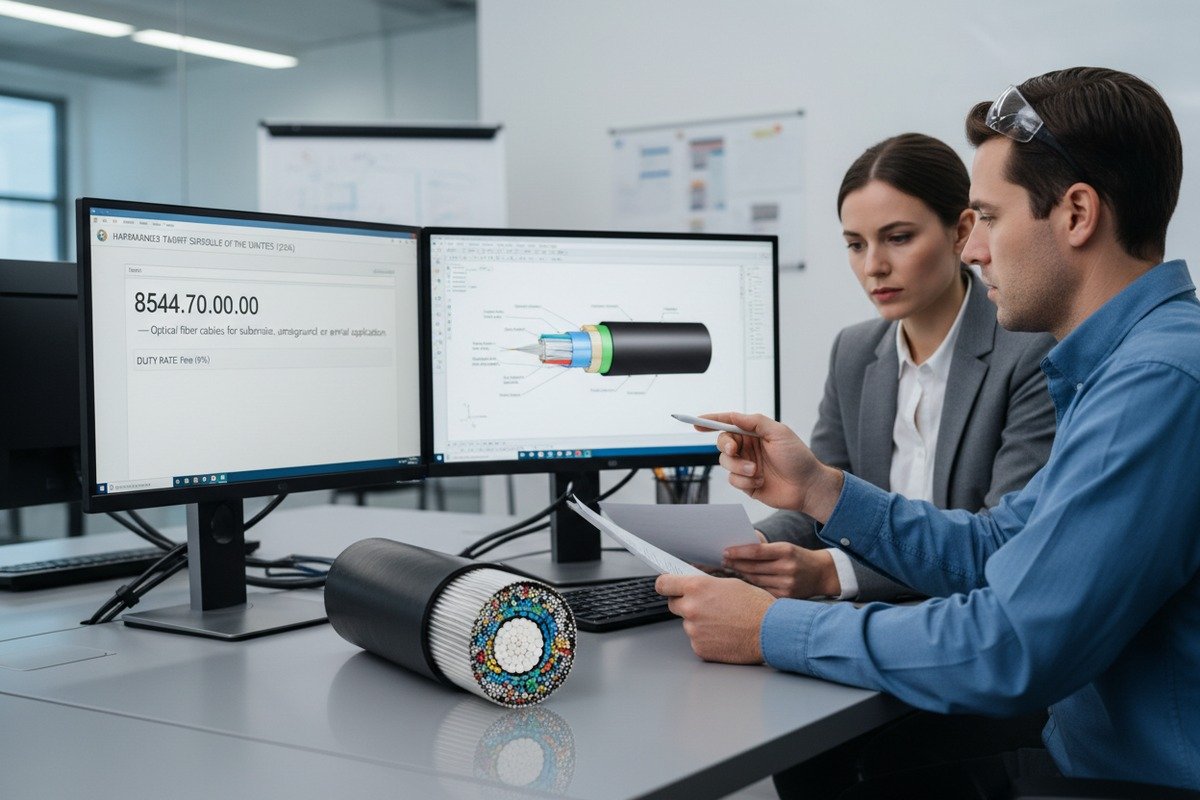
ADSS fiber optic cables classified under HTSUS 8544.70.00.00 face standard import duties plus Section 301 tariffs on Chinese-origin goods. Combined tariff rates can exceed 100% of the declared value, including base duties and additional Section 301 and IEEPA-related tariffs. Consult a licensed customs broker for the most current rates, as these change with trade policy shifts.
Breaking Down the Tariff Layers
US import duties on Chinese fiber optic cables are not a single number. They stack in layers, and each layer has its own legal basis.
Base Import Duty: The standard Most Favored Nation (MFN) duty rate for HTSUS 8544.70.00.00. This is the baseline tariff that applies regardless of trade disputes.
Section 301 Tariffs: These were imposed as part of the US-China trade war. Fiber optic cables fall under List 3 or List 4 of Section 301 tariffs 10, adding a significant percentage on top of the base duty. These tariffs have been modified multiple times, so the exact rate depends on the current trade policy.
IEEPA Tariffs: More recent executive actions under the International Emergency Economic Powers Act have added additional tariff layers on Chinese goods. These can push total duties well above 100% of the product value.
Estimated Tariff Structure
| Tariff Layer | Legal Basis | Estimated Rate | Notes |
|---|---|---|---|
| Base MFN Duty | HTSUS 8544.70.00.00 | ~3.5%–6% | Standard rate for fiber optic cables |
| Section 301 Tariff | US Trade Act of 1974 | 25%+ | Applied to Chinese-origin goods; subject to change |
| IEEPA Tariff | Executive Order | Varies (potentially 20%+) | Newer layer; check current status |
| Merchandise Processing Fee | US customs fee | 0.3464% (min $31.67) | Applies to all imports |
| Harbor Maintenance Fee | US port fee | 0.125% | Applies to ocean shipments |
These rates are estimates and can change rapidly. The total landed cost of your ADSS cable could be more than double the FOB price after all tariffs and fees are applied.
How to Calculate Your Total Landed Cost
Start with the FOB (Free on Board) price from your supplier. Add ocean freight, insurance, and port handling charges to get the CIF (Cost, Insurance, Freight) value. Then apply each tariff layer to the CIF or transaction value as required by CBP rules.
For example, if your ADSS cable shipment has a CIF value of $50,000 and the combined tariff rate is 55%, your duty payment would be $27,500. Add freight, insurance, customs broker fees, and domestic trucking, and the total landed cost could reach $85,000 or more.
Strategies for Managing Tariff Costs
- Work with a licensed customs broker who specializes in telecommunications equipment. They track tariff changes daily.
- Explore tariff exclusions. Some product categories have temporary exclusions. Check the US Trade Representative's website for current exclusion lists.
- Consider Foreign Trade Zones (FTZ). Importing cable into an FTZ can defer or reduce duties if the cable is re-exported or used in manufacturing.
- Negotiate DDP terms with your supplier. At our factory, we offer DDP pricing that includes all duties, so our buyers know the exact cost upfront with no surprises.
- Diversify sourcing as a long-term strategy. While Chinese ADSS cable offers excellent value, having alternative sources reduces your exposure to tariff volatility.
The Certificate of Origin Factor
The Certificate of Origin directly triggers tariff calculations. If your cable was manufactured in China, Section 301 tariffs apply. There is no workaround. Some importers have tried transshipping through third countries, but CBP actively investigates this. Transshipment fraud carries severe penalties, including fines and import bans. Always declare the true country of origin.
How can I ensure my supplier provides the necessary OTDR test reports and technical diagrams for US compliance?
From our production floor, every drum of ADSS cable goes through OTDR testing before it leaves the factory. But not every manufacturer does this, and not every test report tells the full story. Knowing what to ask for makes all the difference.
Request factory OTDR test reports for every drum showing attenuation at 1310nm and 1550nm wavelengths, plus fiber length verification. Also require cable cross-section diagrams, mechanical calculation sheets, and IEC/ITU type-test reports. Specify these requirements in your purchase contract before production begins to ensure your supplier delivers complete technical documentation.

What Is an OTDR Test Report and Why Does It Matter?
An OTDR (Optical Time-Domain Reflectometer) test measures the optical performance of each fiber inside your cable. It shows attenuation (signal loss), splice points, and any defects along the fiber length. For US infrastructure projects, these reports serve as proof that the cable meets the specified optical performance standards.
Every drum should have its own individual test report. If a supplier offers only a "sample" report or a generic batch report, push back. Individual drum reports are the industry standard.
What to Look for in an OTDR Report
- Attenuation values at 1310nm and 1550nm for single-mode fibers (typically ≤0.36 dB/km at 1310nm and ≤0.22 dB/km at 1550nm for G.652D fiber).
- Fiber length verification — confirming that the cable drum contains the stated length.
- Event markers — the report should show a clean trace with no unexpected events (breaks, macro-bends, or high-loss splices).
- Test date and operator ID — proves the test was actually performed, not copied from another batch.
Technical Diagrams and Mechanical Documentation
Beyond OTDR reports, US project specifications often require detailed technical drawings and calculations. Here is what you should request:
Cable Cross-Section Diagram: A detailed drawing showing every layer of the cable — fibers, loose tubes, strength members (aramid yarn), water-blocking materials, and the outer jacket. This drawing should include dimensions and material specifications.
Mechanical Calculation Sheet: For ADSS cable, this document shows the maximum allowable span, sag calculations, and tensile load ratings based on the specific cable design. Different span lengths require different cable constructions. A 200-meter span cable cannot be used for a 500-meter span.
IEC/ITU Type-Test Reports: These reports demonstrate that the cable design has passed standardized tests for:
- Tensile strength
- Crush resistance
- Temperature cycling
- Water penetration
- UV resistance
- Tracking resistance (for cables near power lines)
How to Secure These Documents Contractually
The best time to request technical documentation is before you sign the purchase order. Include a documentation clause in your contract that lists every required document. Here is a sample checklist you can include:
| Document | Format | Delivery Timing | Required For |
|---|---|---|---|
| OTDR test report (per drum) | PDF with trace image | Before shipment | Quality verification |
| Cable cross-section diagram | CAD drawing or PDF | With order confirmation | Project engineering approval |
| Mechanical calculation sheet | PDF or Excel | With order confirmation | Span design verification |
| IEC type-test reports | PDF with lab certification | Before order (if available) | Bidding and compliance |
| Material certificates (aramid, jacket) | Before shipment | Quality assurance | |
| Fiber specification sheet (G.652D/G.657) | With order confirmation | Network design compatibility |
At our factory, we provide all of these documents as standard practice. We even include QR codes on our drum labels that link to the digital OTDR report for that specific drum. This makes field verification simple for installation crews.
Dealing with Suppliers Who Resist Documentation Requests
If a supplier hesitates to provide OTDR reports or cross-section diagrams, treat it as a warning sign. Common excuses include "proprietary design" or "we only provide reports after delivery." Neither is acceptable. Legitimate manufacturers have nothing to hide. In fact, comprehensive documentation is a competitive advantage — it shows the supplier is confident in their product quality.
One practical approach is to request sample reports during the quotation stage. Before committing to a large order, ask for an OTDR report and cross-section diagram from a recent production run. This gives you a clear picture of the supplier's documentation standards without any financial commitment.
Conclusion
Importing ADSS cable from China to the US requires careful attention to customs documents, certification verification, tariff calculations, and technical compliance reports. Prepare every document before shipment, verify all certifications independently, and work with a licensed customs broker to navigate current tariff structures confidently.
Footnotes
1. Provides a comprehensive definition and overview of ADSS cable technology. ↩︎
2. Replaced HTTP 403 link with an authoritative .gov source from the International Trade Administration. ↩︎
3. Replaced HTTP 403 link with an authoritative .gov source from the International Trade Administration. ↩︎
4. Replaced HTTP 404 link with a comprehensive and authoritative Wikipedia article. ↩︎
5. Replaced HTTP 403 link with a comprehensive and authoritative Wikipedia article. ↩︎
6. Explains customs bonds as a financial guarantee to CBP for import compliance. ↩︎
7. Replaced HTTP 403 link with a comprehensive and authoritative Wikipedia article explaining '10+2' which refers to ISF. ↩︎
8. Official ISO page explaining the ISO 9001 standard for quality management systems. ↩︎
9. Direct link to UL's online certification directory for verifying product safety certifications. ↩︎
10. Official USTR page providing information on Section 301 investigations and tariffs. ↩︎