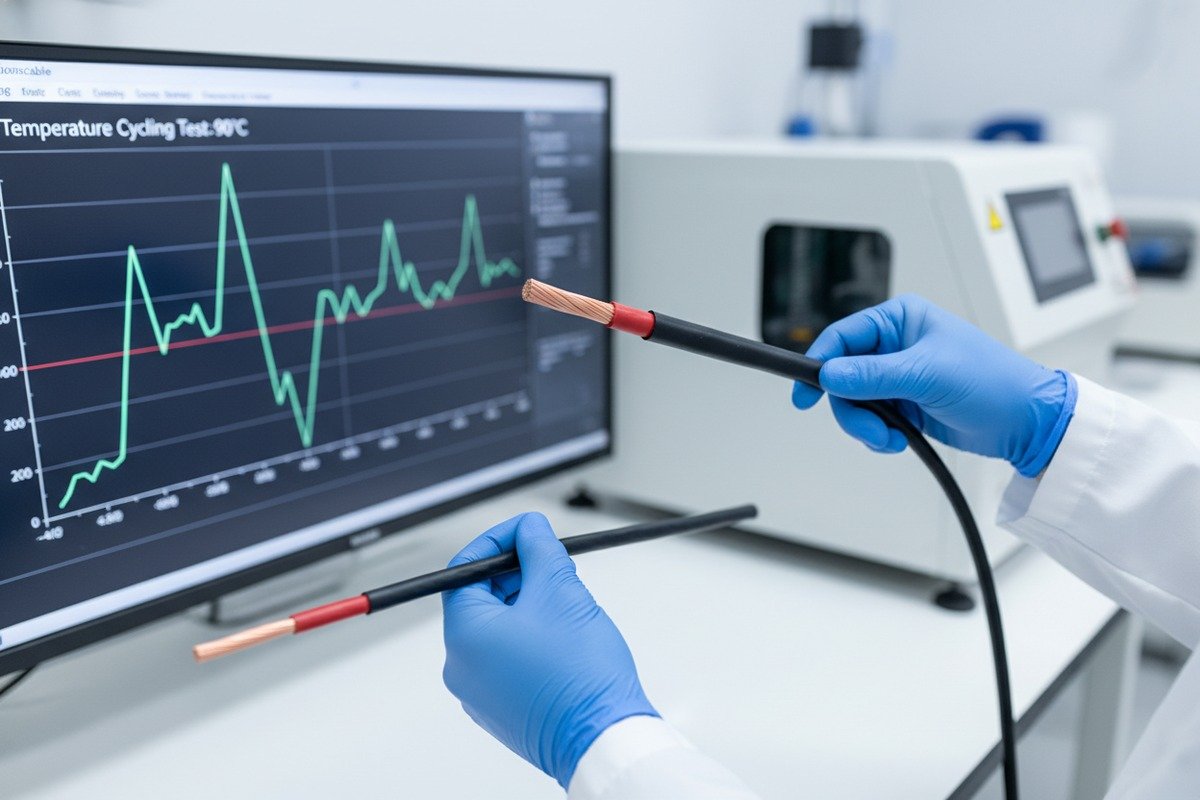
Every year, our technical support team receives dozens of photos from project sites showing cables chewed down to bare copper multi-layer sheath construction 1. Rodents 2, termites, and rough terrain destroy standard solar cables faster than most buyers expect. The damage leads to short circuits, fire risks, and costly downtime that can derail an entire project timeline.
To evaluate solar PV cable resistance to animal biting and mechanical impact, check for multi-layer sheath construction, request documented rodent and abrasion test reports from the manufacturer, verify TUV or UL certifications for mechanical properties, and compare armored versus standard cable options based on your site's specific risk profile.
This guide walks you through the exact steps to assess cable durability before you place an order UL certifications 3. We cover sheath materials, testing standards, armored cable economics, and compatibility with automated installation equipment. Let's dig in.
How can I verify if a solar cable's outer sheath is truly resistant to rodent biting and mechanical abrasion?
When we ship cables to agricultural solar farms in Southeast Asia and Latin America, rodent damage is among the top three warranty-related complaints we hear Steel Wire Armor (SWA) 4. The problem is real, and standard product datasheets rarely tell the full story.
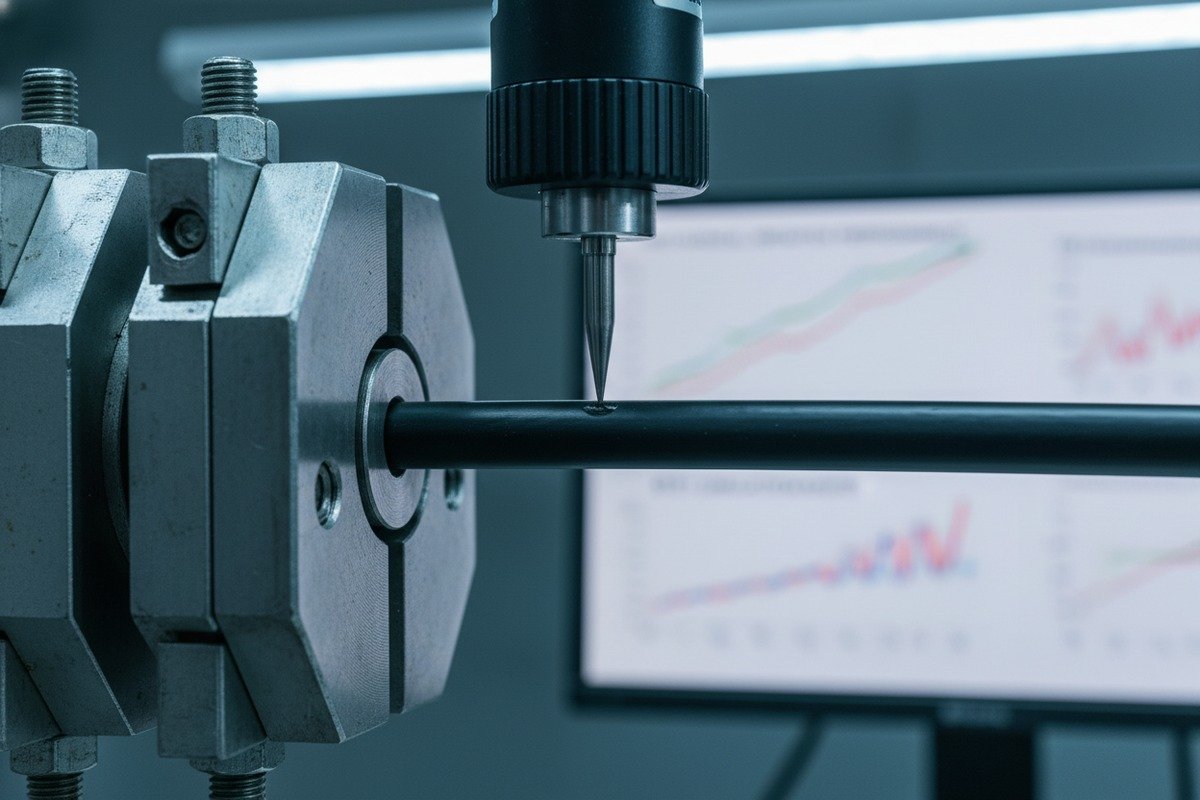
To verify rodent and abrasion resistance, request the manufacturer's in-house bite simulation test data, check for anti-rodent additive certifications, inspect the sheath hardness (Shore D rating), and ask for third-party lab reports confirming mechanical abrasion performance under EN or IEC protocols.
Why Standard Sheaths Fail
Most H1Z2Z2-K solar cables use cross-linked polyolefin (XLPO) 5 or rubber-based outer sheaths. These materials are excellent for UV resistance and flexibility. But they are soft enough for rodents to gnaw through in a single night. Squirrels, rabbits, mice, and pack rats chew cables for two reasons: nesting material and tooth maintenance. Termites in tropical regions devour insulation for cellulose content. Once the sheath is breached, moisture enters. Then UV degrades the exposed insulation layer. The cable fails months or even weeks later.
What to Ask Your Supplier
Here is a practical checklist when you evaluate a supplier's claims about rodent and abrasion resistance:
- Anti-rodent additives: Ask if the sheath compound includes aromatic or bitter-tasting deterrents. Our production line can blend plant-based repellents into the XLPO compound on request. These are non-toxic and eco-friendly, which matters for European CPR compliance 6.
- Shore hardness rating: A harder sheath resists biting better. But too hard means the cable loses flexibility. Look for Shore D 45–55 as a balanced range. Shore D rating 7
- Abrasion test results: Request data from standardized abrasion tests. The cable should survive a minimum number of cycles on a rotating drum abrader without exposing the conductor.
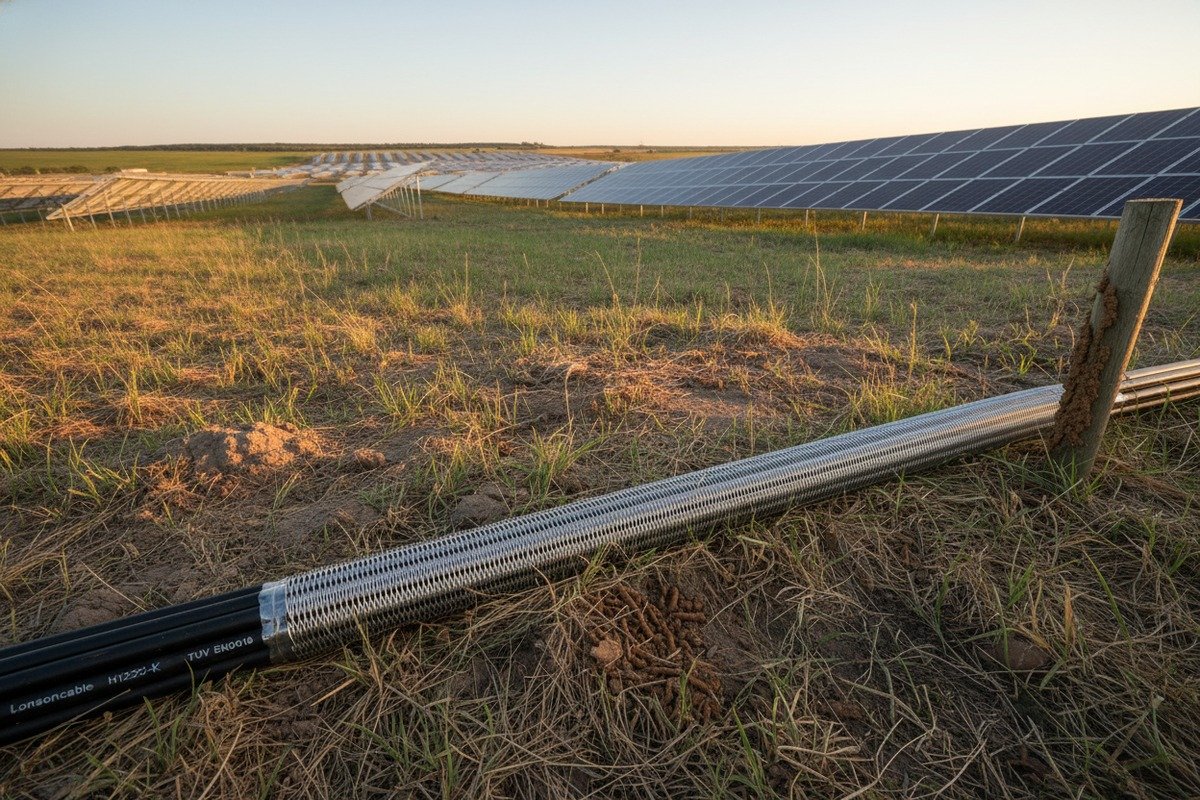
- Stainless steel braid or mesh: For high-risk sites, a metallic layer beneath the outer sheath physically blocks rodent teeth. Our anti-rodent cable series uses a stainless steel braid rated from -40°C to 120°C.
Sheath Material Comparison Table
| Feature | Standard XLPO Sheath | XLPO with Anti-Rodent Additive | Stainless Steel Braid + XLPO |
|---|---|---|---|
| Rodent Bite Resistance | Low | Moderate | High |
| Termite Resistance | Low | Moderate (with insect additive) | High |
| Mechanical Abrasion | Moderate | Moderate | Very High |
| Flexibility | High | High | Moderate |
| Cost Premium vs. Standard | Baseline | +8–15% | +25–40% |
| Weight | Light | Light | Heavier |
| Typical Use Case | Low-risk rooftop | Ground-mount, moderate risk | Agricultural, tropical, high risk |
Surface Texture and Bio-Mimicry Approaches
Some newer cable designs use micro-grooved or textured surfaces that make it harder for rodents to grip the cable with their teeth. This is still an emerging technology. In our R&D lab, we have tested ribbed sheath profiles and found they reduce initial bite attempts. But determined rodents can adapt. So we recommend combining surface texture with chemical deterrents for the best results.
There is no universal international standard specifically for rodent resistance in PV cables. This means you must rely on the manufacturer's own testing and third-party lab validation. Always ask: "Can you show me the test protocol and results?" If the answer is vague, move on to another supplier.
What specific TUV or UL testing standards should I check to confirm the impact resistance of my PV cables?
Our engineering team in Hainan frequently fields questions from European and North American buyers about which certificate numbers actually matter. The alphabet soup of TUV, UL, IEC, and EN standards can be confusing, especially when some suppliers present certificates that are expired or irrelevant.
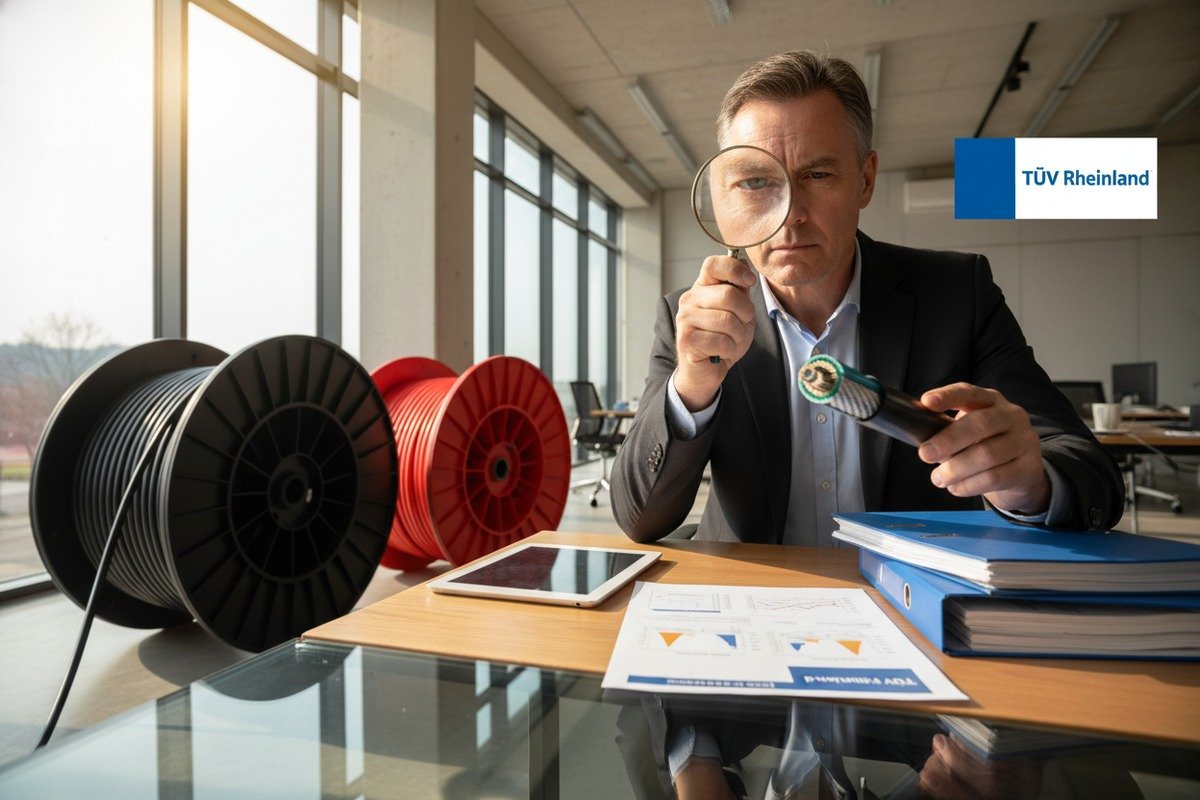
Check for TUV certification to EN 50618 or TUV 2PfG 1169 for European projects, and UL 4703 for North American installations. These standards include mechanical property tests such as tensile strength, elongation, crush resistance, and impact resistance that confirm your cable can handle real-world physical stress.
Breaking Down the Key Standards
Let's look at what each standard actually tests regarding mechanical and impact performance.
EN 50618 is the harmonized European standard for solar cables. It covers insulation and sheath material requirements, including mechanical tests for tensile strength, elongation at break, and resistance to heat aging. It also tests for UV resistance and ozone resistance. However, it does not include a specific rodent bite test.
TUV 2PfG 1169 is an older German standard that was widely used before EN 50618 8. It has similar mechanical requirements. Many buyers still request it because their existing project specifications reference it.
UL 4703 is the North American standard for photovoltaic wire. It includes flame tests (VW-1 or FT2), cold bend tests, crush resistance, and impact resistance. The impact test involves dropping a specific weight from a defined height onto the cable to check for conductor exposure.
IEC 62930 is the international equivalent, harmonized with EN 50618. If your project spans multiple continents, IEC 62930 9 is a good baseline to reference.
Standards Comparison for Mechanical Properties
| Test Property | EN 50618 | UL 4703 | IEC 62930 | TUV 2PfG 1169 |
|---|---|---|---|---|
| Tensile Strength | Yes | Yes | Yes | Yes |
| Elongation at Break | Yes | Yes | Yes | Yes |
| Impact/Crush Resistance | Limited | Yes (specific drop test) | Limited | Limited |
| Cold Bend Test | Yes (-40°C) | Yes (-40°C) | Yes (-40°C) | Yes (-40°C) |
| UV Resistance | Yes (720 hours min.) | Yes (720 hours min.) | Yes | Yes |
| Flame Retardancy | Yes | Yes (VW-1/FT2) | Yes | Yes |
| Rodent Bite Test | No | No | No | No |
| Ozone Resistance | Yes | No | Yes | Yes |
What to Do When Standards Fall Short
As the table shows, none of these major standards include a rodent bite test. This is a gap in the industry. So how do you fill it?
First, make sure the cable passes all mechanical tests in the relevant standard for your market. This gives you a strong baseline. A cable that fails crush resistance will certainly fail against a rodent.
Second, ask the manufacturer for supplementary test reports. At our facility, we perform in-house rodent simulation tests using spring-loaded bite force apparatus calibrated to approximate the jaw pressure of common rodents. We also commission third-party labs for independent validation. These reports are available to buyers who request them.
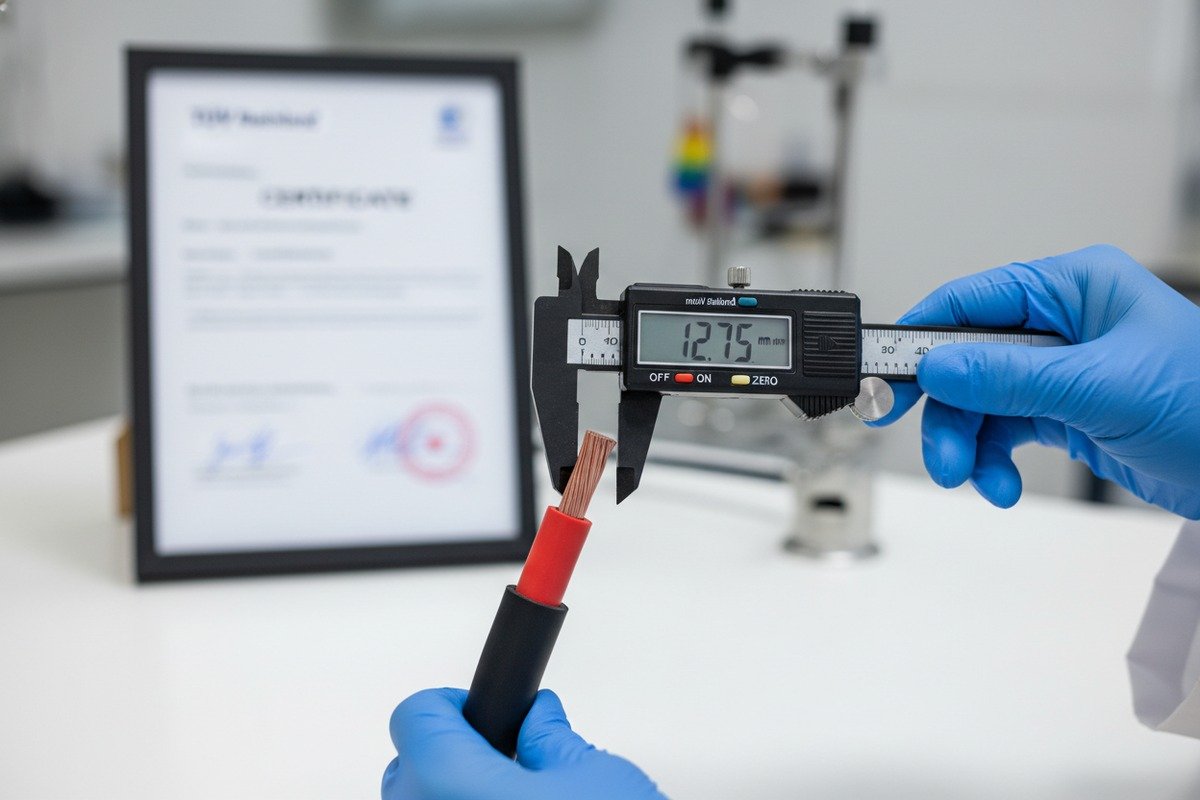
Third, verify the certificate is current. TUV certificates have expiration dates. UL listings can be checked on the UL Product iQ database. We have seen competitors present certificates that expired two years prior. Always verify directly with the certifying body.
CPR Fire Safety: An Often-Overlooked Layer
For European projects, the Construction Products Regulation (CPR) 10 adds another layer. Cables installed in buildings must meet a fire classification (Eca, Dca, Cca, etc.). A cable with Dca or higher classification has passed rigorous smoke, heat, and flame spread tests. This does not directly test for animal resistance, but it indicates the sheath material has superior physical properties. If a cable meets Cca, it is inherently tougher than one that barely passes Eca.
Should I invest in armored solar cables to prevent long-term maintenance costs from animal damage in ground-mount systems?
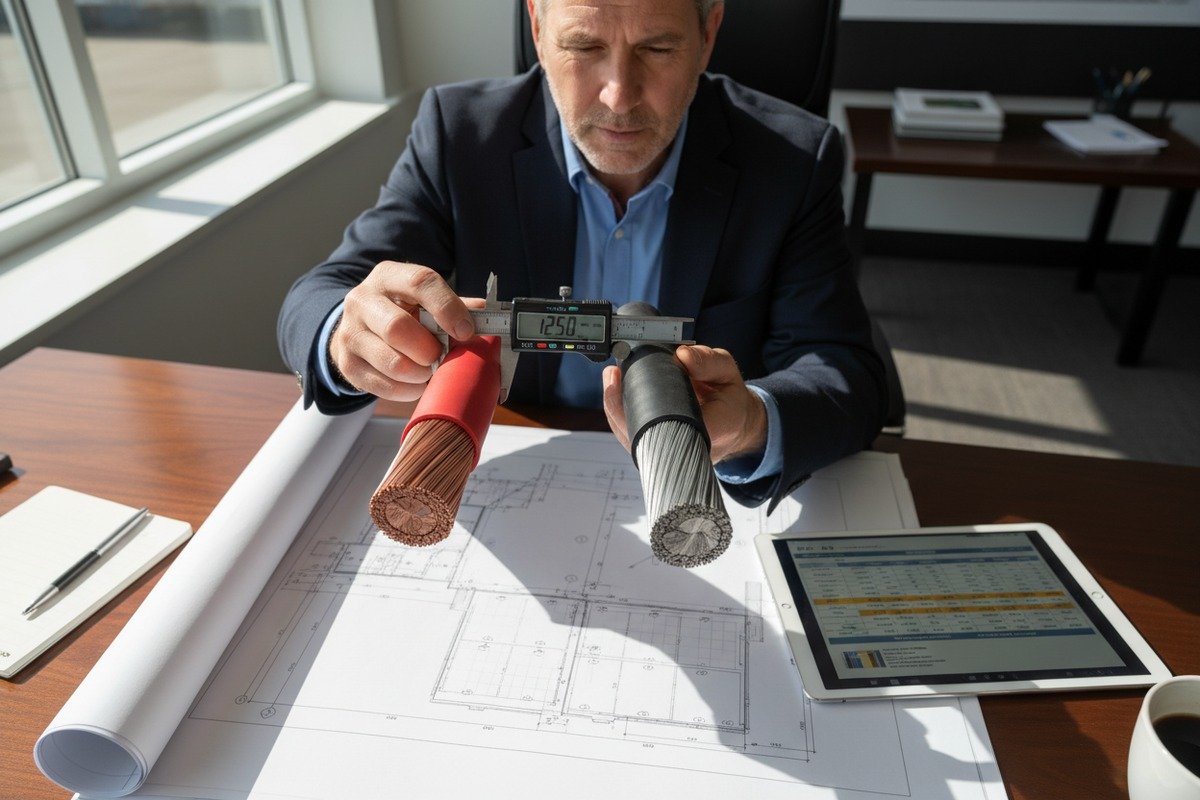
During a recent project consultation for a 50 MW ground-mount farm in the Philippines, our sales team ran a total cost of ownership analysis comparing standard and armored cables. The results surprised even our own engineers.
Yes, armored solar cables are a worthwhile investment for ground-mount systems in high-risk environments. The upfront cost premium of 25–40% is typically recovered within 3–5 years through reduced maintenance, fewer emergency repairs, lower downtime losses, and extended cable lifespan beyond 25 years.
When Armor Makes Financial Sense
Not every project needs armored cables. A rooftop system in an urban area with no rodent history probably does not justify the extra cost. But ground-mount systems in agricultural zones, tropical forests, desert edges, and regions with known rodent or termite populations are a different story.
Here is how to think about it. A single cable failure from rodent damage costs you:
- Replacement cable and labor
- System downtime (lost energy revenue)
- Possible fire investigation and insurance claims
- Potential grid-connection deadline penalties
For large European EPC projects, missing a grid-connection deadline can mean financial penalties of tens of thousands of euros per day. One prevented cable failure can pay for the entire armor upgrade across the project.
Armor Types and Their Trade-offs
There are two main types of cable armor used in solar applications:
Steel Wire Armor (SWA): Galvanized steel wires wrapped helically around the cable core. Provides excellent crush and impact resistance. Heavier and less flexible.
Aluminum Wire Armor (AWA): Lighter than SWA but still provides strong mechanical protection. Preferred in corrosive environments where steel might rust despite galvanization.
Stainless Steel Braid: A woven mesh rather than individual wires. Lighter than SWA, more flexible, and highly resistant to corrosion. This is the option we recommend most often for solar applications because it balances protection with cable handling during installation.
Cost-Benefit Analysis Table
| Cost Factor | Standard H1Z2Z2-K | H1Z2Z2-K with Armor |
|---|---|---|
| Cable Cost per Meter (4mm²) | $0.45–$0.65 | $0.60–$0.95 |
| Expected Lifespan | 20–25 years | 25–30+ years |
| Average Repairs per 10 Years (High-Risk Site) | 3–5 incidents | 0–1 incident |
| Estimated Repair Cost per Incident | $500–$2,000 | $500–$2,000 |
| Downtime Revenue Loss per Incident | $1,000–$10,000+ | $1,000–$10,000+ |
| 25-Year Total Cost of Ownership (per km) | Higher due to repairs | Lower despite premium |
The Counter-Argument
Some experienced installers argue that conduits and physical barriers are enough. They prefer running standard cables through metal conduit (EMT or rigid metal conduit) and saving on the cable itself. This approach works well when:
- The conduit system is properly sealed at every junction
- Regular inspections are scheduled (monthly in pest-prone areas)
- The site has active pest management (bait stations, cleared vegetation)
However, conduits add their own labor cost during installation. And any gap or unsealed entry point becomes a highway for rodents. In our experience shipping to farms in Indonesia and Brazil, the combination of armored cable plus conduit at high-exposure segments offers the best protection. You do not need to armor every meter of cable — just the sections that run at ground level, enter combiner boxes, or pass through areas with visible pest activity.
A Practical Decision Framework
Ask yourself these questions:
- Is this a ground-mount or rooftop system?
- Is the site near agricultural land, forests, or known rodent habitats?
- Is the site in a tropical or humid region with termite risk?
- What are the financial penalties for system downtime?
- What is my maintenance access frequency?
If you answered "ground-mount," "yes," "yes," "high," and "infrequent," then armored cables are almost certainly the right choice.
How do I ensure the manufacturer's material quality can withstand the physical stress of automated cable-laying machines?
One of the most frustrating problems our European buyers report has nothing to do with rodents. It happens on day one of installation: the cable drum collapses, the sheath tears during machine feeding, or the cable kinks and becomes unusable. These failures waste hours of expensive crew time on site.
To ensure cable compatibility with automated laying machines, verify the cable's minimum bend radius, check drum packaging specifications against your machine's spindle requirements, request sheath abrasion and tear resistance test data, and confirm the manufacturer uses consistent extrusion quality control across production batches.
Why Machine Compatibility Matters More Than You Think
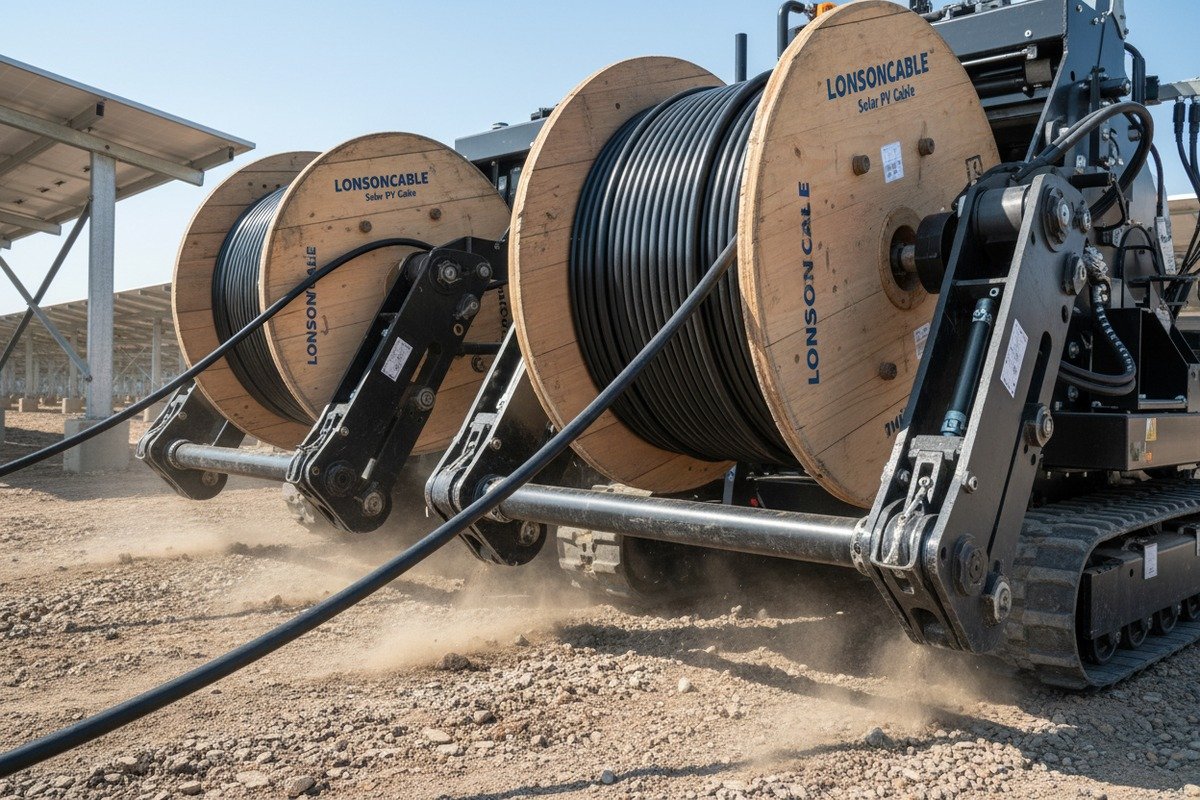
Modern utility-scale solar farms use automated or semi-automated cable-laying equipment to speed up installation. These machines pull cable from drums at high speed, bend it around corners, and feed it through conduits under tension. The cable must handle:
- Pulling tension without stretching or deforming the conductor
- Bending at tight radii without cracking the sheath
- Surface friction from guide rollers and conduit edges without abrasion damage
- Cold temperatures during winter installations without becoming brittle
If the cable fails any of these, your installation crew stops. In a large project, even a four-hour delay can cost thousands in labor alone.
Key Specifications to Verify
Here are the specific numbers you should ask for:
Minimum bend radius: For most solar cables, this is 4× to 6× the outer diameter for fixed installations, and 6× to 8× for dynamic (moving) applications. If your laying machine makes tighter bends, the cable will kink.
Tensile strength of conductor: Copper conductors should meet IEC 60228 Class 5 (flexible stranded). This ensures the conductor survives pulling force without breaking individual strands.
Sheath tear resistance: Ask for the Newton-per-millimeter rating. Higher is better. Our XLPO sheaths are tested to maintain integrity at loads that exceed the pulling force of standard laying machines.
Drum quality: This is often ignored. At our factory, we use reinforced wooden drums with steel flanges rated for sea freight stacking. The drum's inner diameter must match the cable's minimum bend radius. The drum's flange diameter must fit your machine's spindle. We have seen projects delayed by weeks because the drums from another supplier were 5 cm too wide for the machine.
Production Consistency Checks
Material quality varies between batches if the manufacturer does not control the process. Here is what to look for:
- Extrusion line monitoring: Does the factory use laser micrometers to measure sheath thickness in real time? We do, on every line.
- Batch testing: Are tensile, elongation, and abrasion samples pulled from every production run, or only periodically?
- Raw material traceability: Can the manufacturer trace the XLPO compound and copper back to specific suppliers and lots? This matters if you ever need to investigate a field failure.
- Factory audit availability: A manufacturer confident in their quality will welcome third-party or buyer audits. Our 230,000 m² facility in Hainan is open to scheduled visits from any buyer.
Pre-Shipment Inspection Checklist
Before your cable leaves the factory, insist on these checks:
- Drum dimensions match your machine specifications
- Cable length per drum matches the purchase order (short drums waste machine setup time)
- No visible sheath damage, kinks, or flat spots from storage
- Test certificates for the specific batch (not generic certificates)
- Proper labeling with meter markings for easy field verification
The goal is simple: when the drum arrives on site and goes onto the machine, everything works the first time. No surprises, no delays, no penalties.
Conclusion
Protecting your solar investment starts at the sourcing stage. Evaluate sheath materials, demand real test data, compare armored options for high-risk sites, and verify machine compatibility before you order. The right cable choice today prevents costly failures for decades.
Footnotes
1. Explains the concept of multi-layer insulation and jacket materials in cables. ↩︎
2. Provides general information about rodents, their characteristics, and common species. ↩︎
3. Details what UL certification means for wire and cable products and their safety. ↩︎
4. Explains steel wire armored cable (SWA) and its use in electrical power distribution. ↩︎
5. Provides information on cross-linked polyolefin (XLPO) as a cable insulation material. ↩︎
6. Discusses the European Construction Products Regulation (CPR) and its relevance for cables. ↩︎
7. Explains the Shore D hardness scale, its measurement, and industrial applications for materials. ↩︎
8. Describes the EN 50618 standard for electric cables used in photovoltaic systems. ↩︎
9. Provides the official standard document for electric cables for photovoltaic systems. ↩︎
10. Official European Commission page explaining the Construction Products Regulation. ↩︎