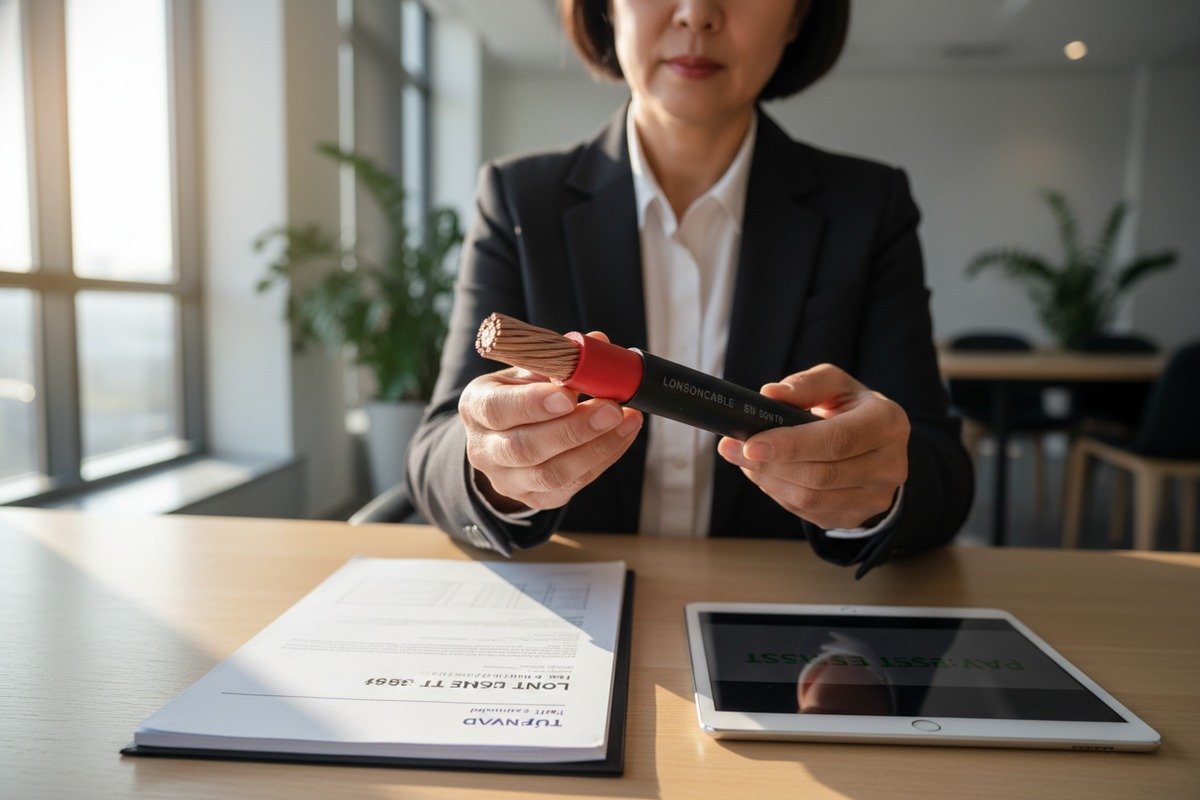
Every year, our production team sees returned cable samples from overseas projects where the insulation has cracked, softened, or completely failed — and almost every time, the root cause traces back to poor cross-linking degree 1 in the polymer insulation.
To verify solar PV cable cross-linking degree meets standards, buyers should request third-party TUV or UL test reports showing hot set test results and gel content analysis, conduct on-site factory inspections for process controls, and compare insulation performance data against EN 50618 or UL 4703 benchmarks before placing orders.
This guide walks you through the exact steps — from understanding the science behind cross-linking to reading test reports and spotting red flags at the factory gate EN 50618 requirements 2. Let's break it down section by section.
How do I use the hot set test to verify the cross-linking degree of my solar PV cables?
When we run quality audits on our XLPO insulation lines, the hot set test 3 is the single most reliable checkpoint our engineers trust to confirm cross-linking has reached the required threshold.
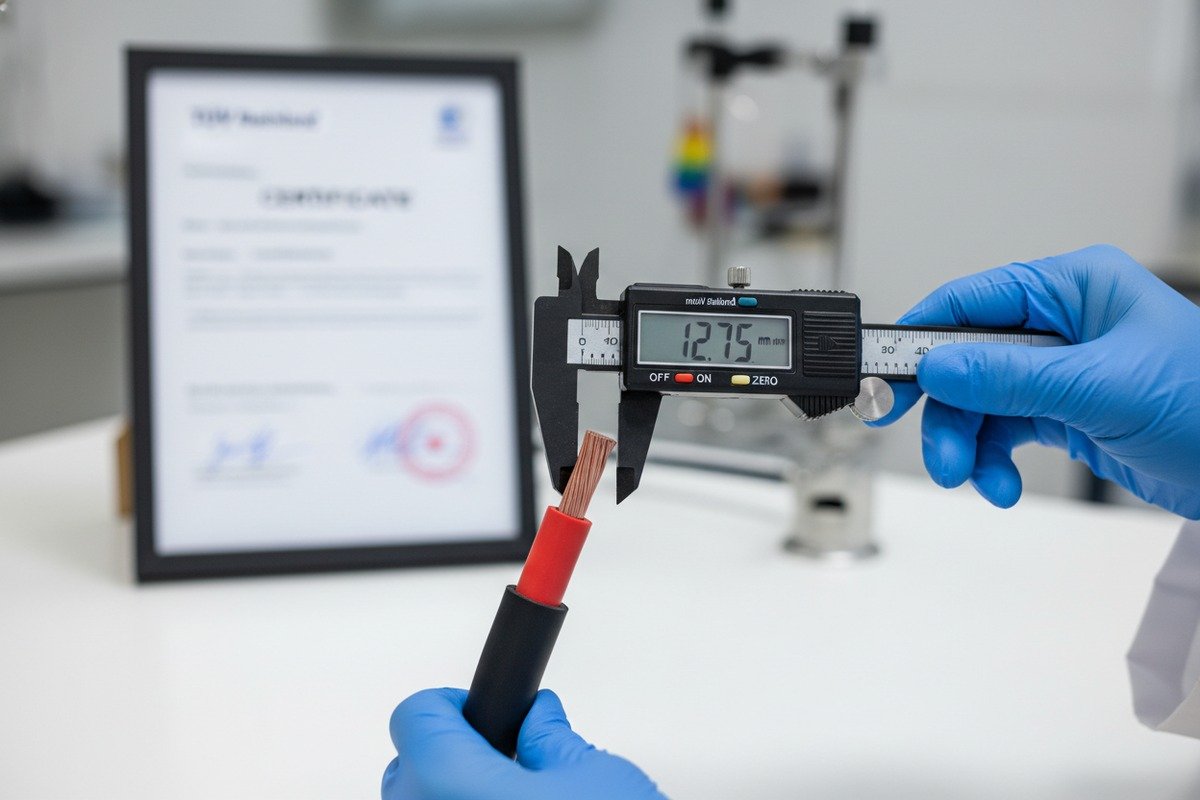
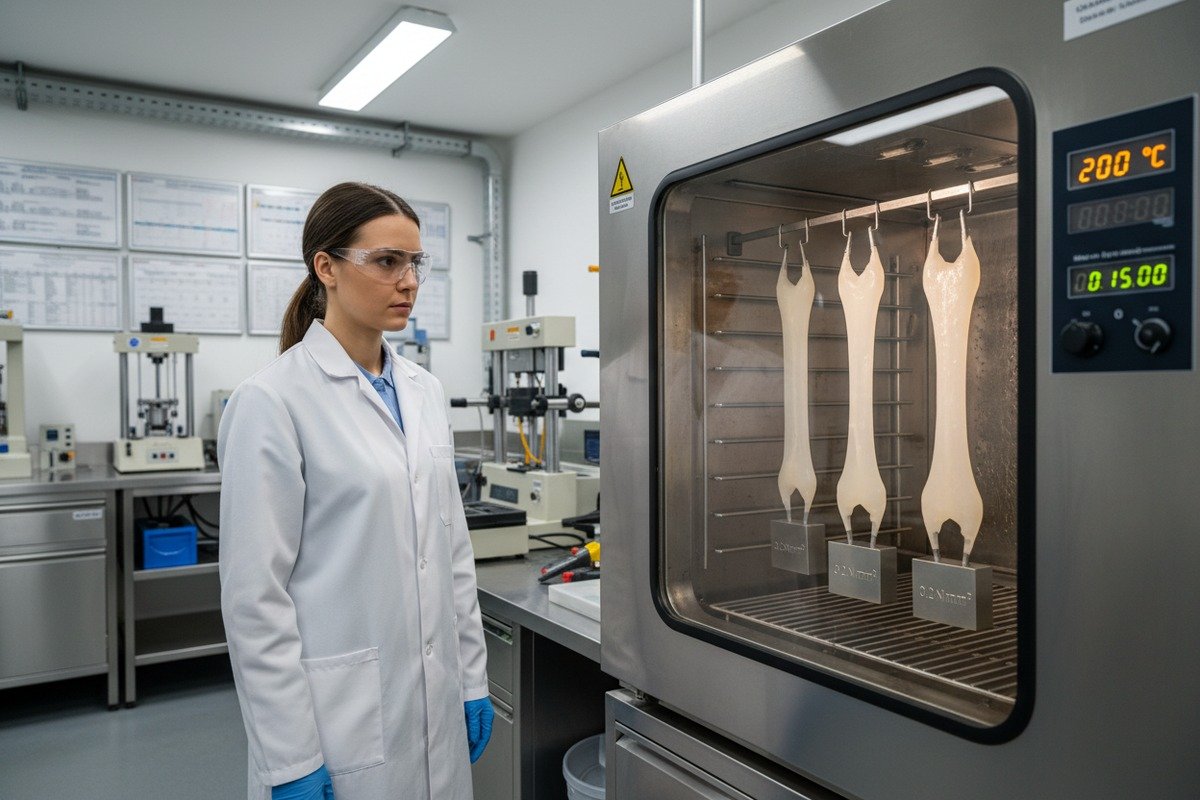
The hot set test verifies cross-linking by suspending a cable insulation sample under a fixed load at 200°C for 15 minutes, then measuring elongation and permanent set after cooling. Properly cross-linked XLPO should show less than 175% elongation and under 15% permanent set to pass EN 50618 requirements.
What Exactly Happens During the Hot Set Test?
The hot set test — sometimes called the thermal elongation test 4 — is a destructive lab method. A technician cuts a dumbbell-shaped sample from the cable insulation. This sample hangs inside a high-temperature oven at 200°C with a weight attached to it. The weight creates a tensile stress of 0.2 N/mm². After 15 minutes, the technician measures how much the sample has stretched. This is the "elongation under load."
Then the weight is removed, and the sample cools to room temperature. The technician measures again to find the "permanent set" — how much deformation remains. A well-cross-linked insulation bounces back. A poorly cross-linked one stays stretched or even breaks.
Pass/Fail Criteria You Need to Know
| Parameter | EN 50618 Requirement | Typical Good Result | Fail Indicator |
|---|---|---|---|
| Elongation under load (200°C) | ≤ 175% | 50–120% | > 175% or sample breaks |
| Permanent set (after cooling) | ≤ 15% | 0–10% | > 15% |
| Test temperature | 200°C | 200°C | Lower temp used to hide defects |
| Load stress | 0.2 N/mm² | 0.2 N/mm² | Reduced load masks poor cross-linking |
Why You Should Not Skip This Test
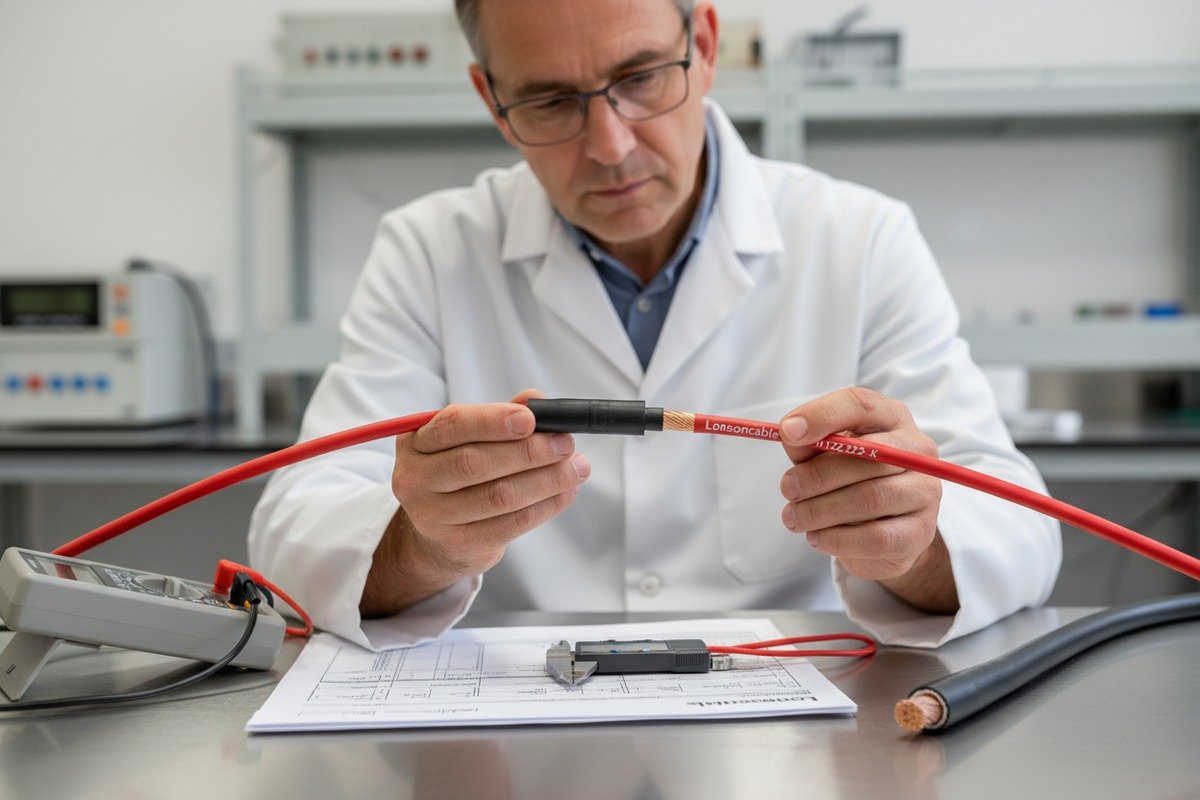
Some buyers assume that if a cable has a TUV logo on the jacket, the cross-linking is fine. That is a dangerous shortcut. We have seen cases where cables carry printed markings of "H1Z2Z2-K" but the insulation melts at 150°C. The hot set test is the only way to objectively confirm the polymer is truly thermoset and not just a thermoplastic disguised with a label.
If you are sourcing cables from any supplier, request the hot set test data from their most recent production batch — not from a sample made months ago for certification. Cross-linking quality can drift if the electron-beam machine is miscalibrated or if the raw XLPO compound changes between batches. At our facility, we run hot set tests on every production lot and keep records available for buyer review.
Gel Content Analysis as a Complementary Check
Beyond the hot set test, gel content analysis 5 (per ASTM D2765) measures the actual percentage of cross-linked polymer. You dissolve a sample in a solvent like xylene. The portion that does not dissolve is the "gel fraction" — the cross-linked part. EN 50618 typically demands 65–80% gel content. Anything below 50% is a serious concern.
| Test Method | What It Measures | Standard Reference | Typical Threshold |
|---|---|---|---|
| Hot set test | Thermal elongation and recovery | EN 60811-507 | ≤ 175% elongation, ≤ 15% set |
| Gel content (swell test) | Percentage of cross-linked polymer | ASTM D2765 6 | ≥ 65% gel fraction |
| DSC thermal analysis | Melting behavior and crystallinity | ISO 11357 | No sharp melting peak |
These three tests together give you a complete picture. If your supplier can provide all three, you are dealing with someone serious about quality.
Which TUV test reports should I request to ensure the XLPO insulation meets EN 50618 standards?
Our export team fields this question every week from European EPC buyers, and the answer matters more than most people realize — because a fake certificate can cost you an entire project.
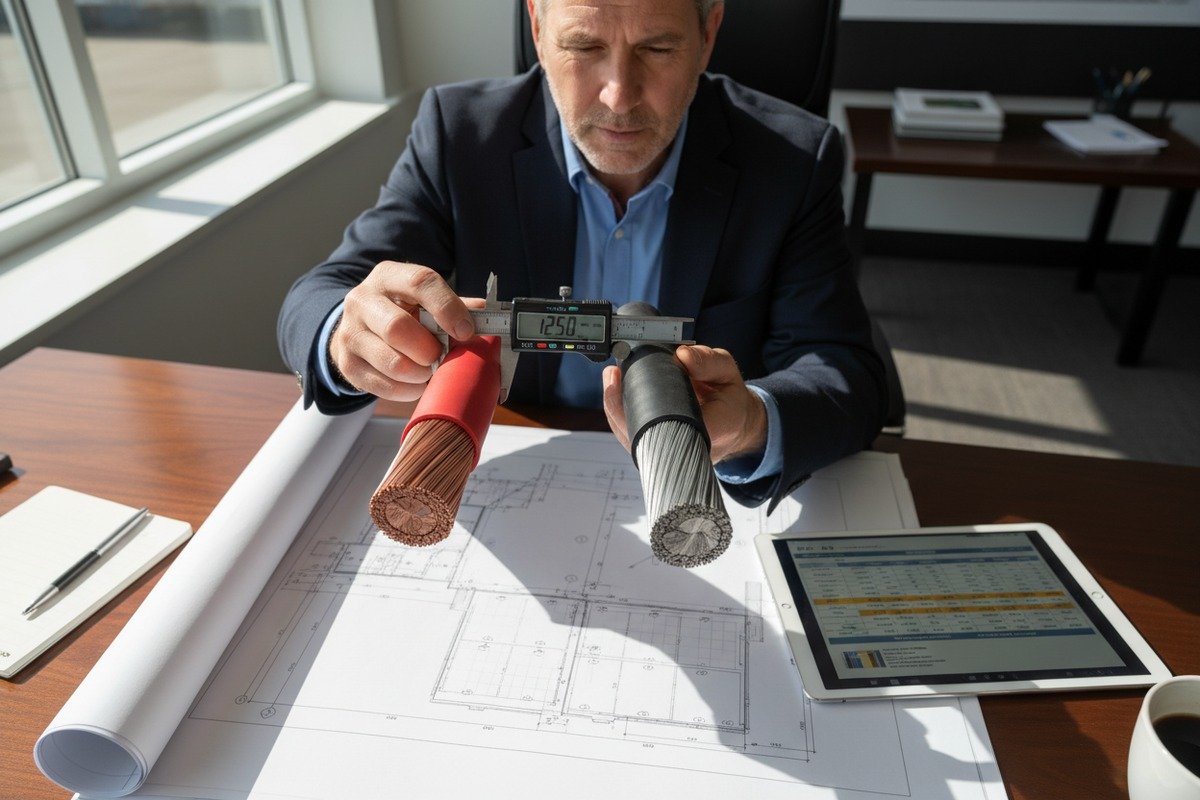
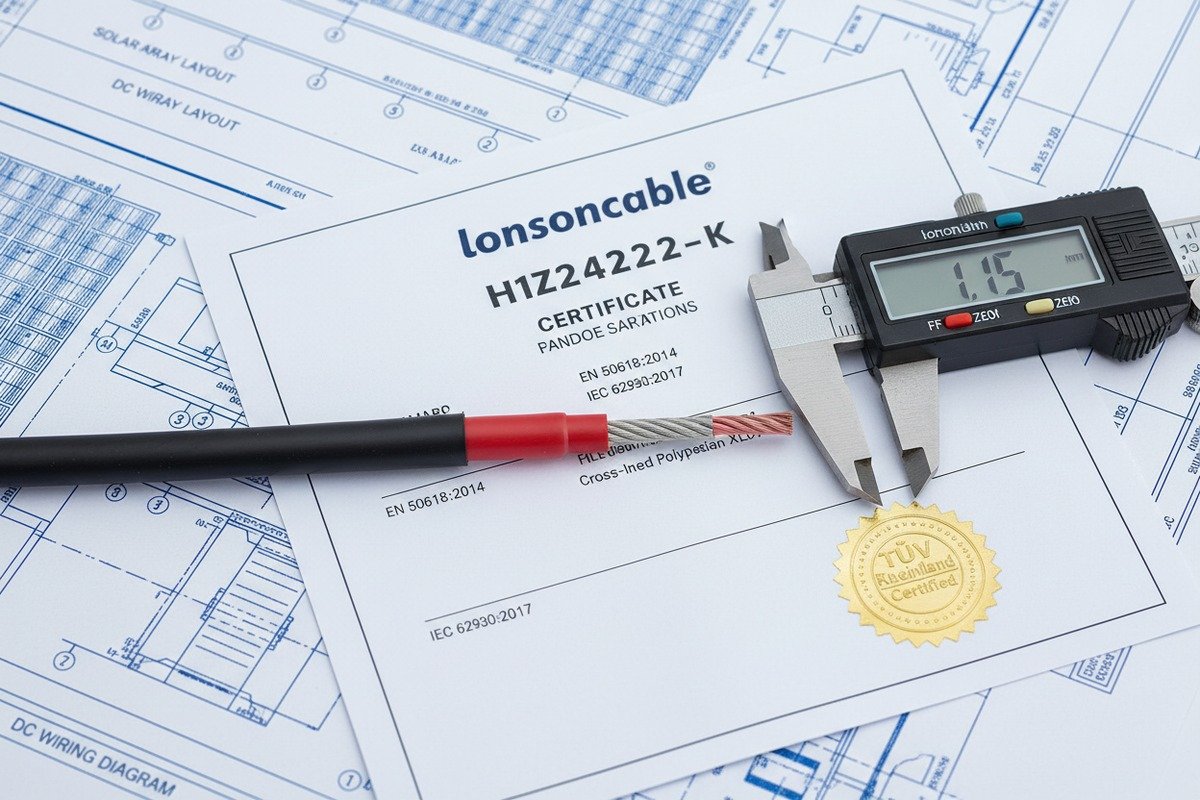
Request the original TUV certificate with a unique certificate number, the full type test report covering hot set, UV aging, ozone resistance, and halogen-free fire tests, plus a valid factory production surveillance report confirming ongoing compliance with EN 50618 for H1Z2Z2-K cable specifications.

The Three Documents You Must Collect
There is no single report that covers everything. You need three separate documents from your supplier to have full confidence:
1. TUV Type Test Certificate. This confirms the cable design passed all initial laboratory tests per EN 50618. It includes the certificate number, cable model, rated voltage (typically 1.5 kV DC), temperature range, and the testing laboratory name. Always verify this number directly on the TUV Rheinland or TUV SÜD online database. If the number does not appear, the certificate is fake.
2. Full Type Test Report. This is the detailed lab report behind the certificate. It lists every individual test result: hot set elongation values, gel content percentage, UV weathering hours completed, ozone exposure results, fire reaction class (e.g., Dca under CPR), insulation resistance, voltage withstand, and mechanical tests. This is the document where you can actually see the cross-linking numbers.
3. Factory Surveillance Report. TUV conducts annual or semi-annual factory audits. This report confirms the manufacturer still produces cables under the same conditions as when the type test was done. Without this, the type test certificate is just a historical snapshot that may no longer reflect current production quality.
What Specific Test Results to Look For
Inside the type test report, focus on these sections:
| Test Category | Specific Test | EN 50618 Requirement | What to Check |
|---|---|---|---|
| Cross-linking | Hot set elongation | ≤ 175% at 200°C | Actual measured value, not just "pass" |
| Cross-linking | Gel content | ≥ 65% | Lab method (ASTM D2765 or equivalent) |
| UV resistance | Accelerated weathering | 720 hours minimum | No cracking, color change within limits |
| Fire safety | CPR classification | Dca-s2,d2,a2 or better | Verified by notified body |
| Ozone resistance | Ozone chamber test | No cracking at 25 pphm | Duration and temperature recorded |
| Halogen-free | HCl gas emission | ≤ 0.5% | IEC 60754-1 method |
Red Flags in Supplier Documentation
Watch for these warning signs. If the certificate shows a test date older than 5 years with no renewal, be cautious. If the factory name on the certificate does not match the factory you are purchasing from, the cable may be produced by a completely different plant operating under a borrowed or resold certificate. We have seen this happen with alarming frequency in our industry.
Also check whether the certificate covers the exact cross-section size you are ordering. A supplier may hold a valid TUV certificate for 4 mm² cable but not for 6 mm² or 10 mm². Each size must be tested and listed.
How to Verify Online
Go to the TUV Rheinland Certipedia 7 website or TUV SÜD's certificate database. Enter the certificate number. The result should show the manufacturer name, product type, standard (EN 50618), and validity dates. If nothing appears, contact TUV directly. This takes five minutes and can save you from a six-figure mistake.
How can I identify signs of poor cross-linking during my on-site factory inspection?
During factory visits from our European and Latin American partners, our quality control team walks them through the production floor specifically to demonstrate how cross-linking controls work — because what you see on the line tells you a lot about what ends up inside the cable.
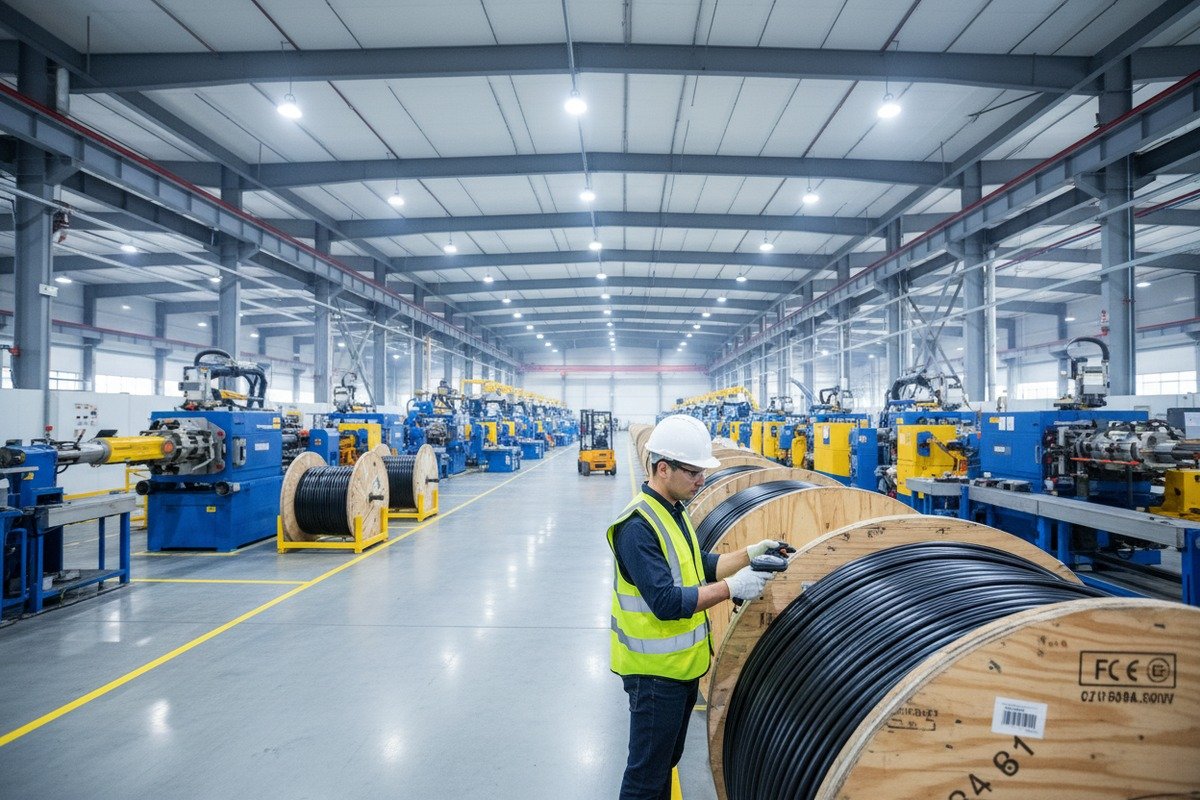
During an on-site inspection, check the electron-beam irradiation equipment calibration records, observe insulation surface quality for bubbles or discoloration, request real-time hot set samples from active production runs, and examine raw material traceability logs to confirm XLPO compound grades match the certified formulation.
Visual Indicators on the Cable Itself
You do not need a laboratory to spot some problems. Pick up a finished cable sample from the production run — not a sample prepared in advance for visitors. Bend it sharply. Properly cross-linked XLPO insulation bends smoothly without whitening or cracking at the fold point. If you see white stress marks or surface cracks, the cross-linking degree is likely too low.
Next, try the fingernail test. Press your thumbnail firmly into the insulation surface. On well-cross-linked material, the indent should spring back within seconds. If it stays dented, the material may be under-cured. This is a rough field proxy, not a lab test, but it catches obvious failures.
Look at the insulation color consistency. Good electron-beam cross-linking produces a uniform color throughout the batch. If you see color variations — lighter patches, yellow spots, or a waxy sheen — the material may have been exposed to uneven irradiation or the wrong compound was used.
Production Process Checks
Ask to see the electron-beam irradiation machine 8. This is the heart of the cross-linking process for high-quality H1Z2Z2-K cables. Check whether the machine has digital dosimetry records. The radiation dose (measured in kGy — kilograys) must fall within a specific window for the XLPO compound being used. Too low a dose means under-cross-linking. Too high causes polymer degradation 9.
Ask the operator to show you the dose calibration log from the current week. If they cannot produce it, or if the records are handwritten without timestamps, treat this as a red flag.
What to Request from the QC Lab
Every serious cable factory has an on-site QC lab. Ask them to cut a sample from the cable currently being produced and run a hot set test while you wait. This takes about 30 minutes. If the factory refuses, or offers to "send results later," they may be hiding a problem.
Also request the incoming material inspection records for the XLPO compound. The compound supplier should provide a Certificate of Analysis (CoA) with each batch, listing the base resin type, additive package, and recommended irradiation dose. Compare this against the factory's actual irradiation settings.
Warehouse and Storage Red Flags
Walk through the finished goods warehouse. Cables should be stored on proper wooden or steel drums, away from direct sunlight and heat sources. If cables are piled loosely on the ground, the insulation can deform under its own weight — especially if cross-linking is borderline. Deformed insulation on the drum is a sign that the material is behaving more like a thermoplastic than a thermoset.
What are the long-term risks to my solar project if the cable cross-linking is insufficient?
Our after-sales engineering team has documented cases across three continents where under-cross-linked cables led to catastrophic failures — some within just 3 to 5 years of installation instead of the expected 25-year service life.
Insufficient cable cross-linking causes insulation degradation under UV and heat exposure, leading to electrical faults, ground faults, arc faults, and potential fire hazards within 5–10 years, dramatically reducing system lifespan, voiding insurance coverage, and triggering costly full cable replacement across the entire solar array.
Thermal Degradation and Insulation Failure
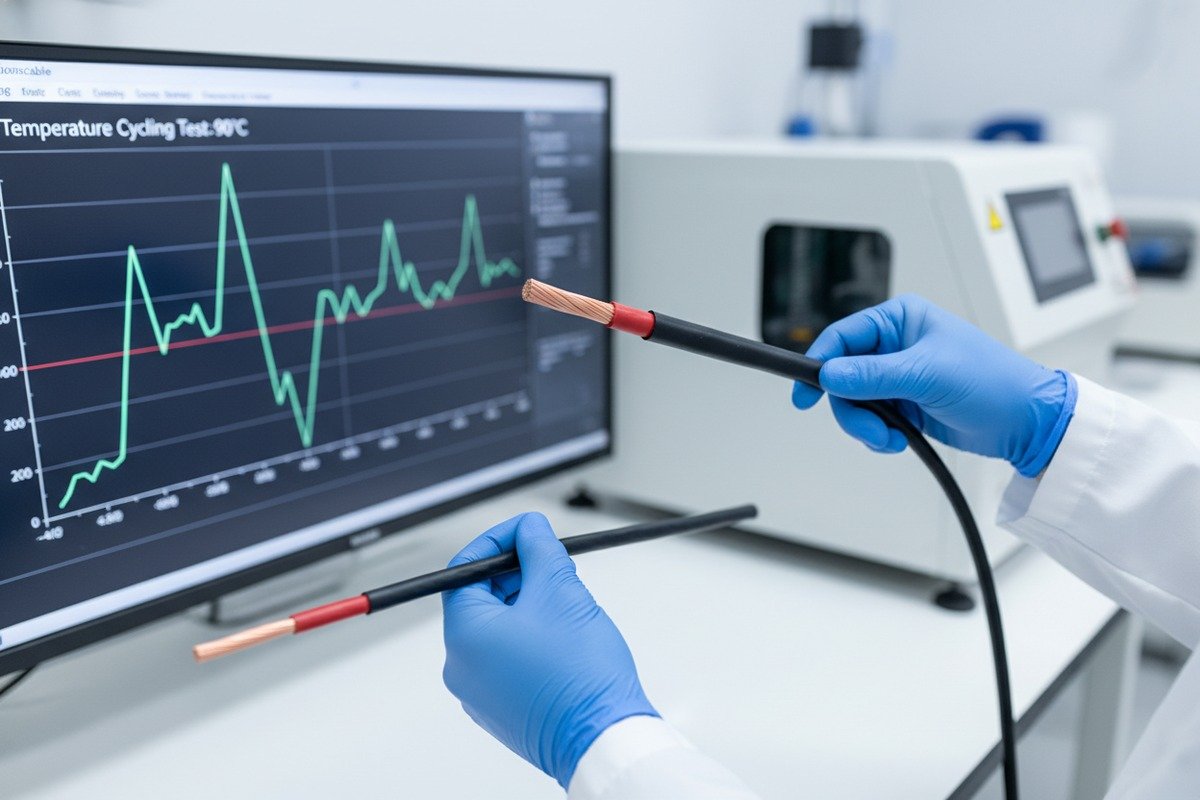
Solar PV cables operate in harsh conditions. Rooftop arrays can push cable surface temperatures above 90°C. In desert installations, ambient temperatures alone exceed 50°C. Properly cross-linked XLPO insulation handles these conditions because the chemical bonds between polymer chains prevent the material from softening or flowing.
When cross-linking is insufficient, the insulation begins to soften at temperatures well below its rated limit. Over months and years, this softening leads to thinning at contact points — where the cable touches a roof edge, a cable tray, or another cable. Once the insulation thins enough, the conductor is exposed. This creates ground fault risk and potential arcing.
UV and Weathering Damage Timeline
UV radiation 10 breaks polymer chains. In a well-cross-linked cable, the bonded network resists this degradation. In an under-cross-linked cable, free polymer chains break down much faster. The visible symptom is surface crazing — tiny cracks that propagate inward over time.
| Cross-Linking Level | Expected UV Lifespan | Failure Mode | Typical Onset |
|---|---|---|---|
| High (≥ 70% gel content) | 25–30 years | Gradual surface aging, no cracking | No failure expected in service life |
| Moderate (50–65% gel content) | 10–15 years | Surface crazing, brittleness | 8–12 years |
| Low (< 50% gel content) | 3–7 years | Deep cracking, insulation split | 3–5 years |
| Thermoplastic (no cross-linking) | 1–3 years | Melting, complete insulation loss | 1–2 years in hot climates |
Financial Impact on Your Project
Replacing cables in an operating solar farm is extremely expensive. You cannot simply pull new cables through existing conduit in most utility-scale designs. The array must be partially de-energized. Modules must be disconnected. Labor costs for cable replacement can exceed the original cable material cost by 5 to 10 times.
Beyond direct replacement costs, consider lost energy production during downtime. A 10 MW solar farm generates roughly $3,000–$5,000 per day in revenue depending on location and tariff. Every day of downtime during cable replacement is direct revenue loss.
Insurance companies are also becoming more sophisticated. Many now require proof of cable certification compliance as part of their policy conditions. If a fire or failure is traced to non-compliant cables, the insurer may deny the claim entirely. This leaves the project owner bearing the full cost.
Compliance and Grid Connection Risks
In Europe, grid operators increasingly require proof that all BOS (Balance of System) components — including cables — meet EN 50618. If an inspection reveals under-specification cables, the grid connection can be delayed or revoked. For EPC contractors facing grid-connection deadlines with financial penalties, this is a nightmare scenario. One of our German distribution partners reported a case where a 5 MW project missed its feed-in tariff deadline by 6 weeks due to cable compliance failure, resulting in over €200,000 in lost incentives.
The bottom line is simple. The cable is one of the lowest-cost components in a solar system, but it carries disproportionate risk when it fails. Spending a small amount more on verified, properly cross-linked cable from a trustworthy source prevents losses that can be hundreds of times larger.
Conclusion
Verifying cross-linking degree is not optional — it is the most critical quality checkpoint when sourcing solar PV cables for any project that must last 25 years.
Footnotes
1. Replaced with a Wikipedia article section that defines and explains the measurement of cross-linking degree, an authoritative source. ↩︎
2. Provides details on the European standard for photovoltaic cables. ↩︎
3. Explains the hot set test procedure and its importance for cable insulation. ↩︎
4. Explains the purpose and methodology of the thermal elongation test. ↩︎
5. Describes the method for determining the cross-linked polymer percentage. ↩︎
6. Links to the official standard for gel content and swell ratio. ↩︎
7. Replaced with the official TÜV Rheinland Certipedia database page, providing information on certifications. ↩︎
8. Explains the process and benefits of electron-beam cross-linking. ↩︎
9. Defines polymer degradation and its various causes. ↩︎
10. Explains how UV radiation causes degradation in polymers. ↩︎